The right preparation can turn an interview into an opportunity to showcase your expertise. This guide to Experience with preventative maintenance and predictive maintenance interview questions is your ultimate resource, providing key insights and tips to help you ace your responses and stand out as a top candidate.
Questions Asked in Experience with preventative maintenance and predictive maintenance Interview
Q 1. Explain the difference between preventative and predictive maintenance.
Preventative maintenance (PM) and predictive maintenance (PdM) are both proactive approaches to equipment maintenance, but they differ significantly in their approach. PM is scheduled maintenance performed at predetermined intervals, regardless of the equipment’s actual condition. Think of it like changing your car’s oil every 3,000 miles, even if it seems to be running perfectly. PdM, on the other hand, uses data and analytics to predict when maintenance is needed. It’s like having a sophisticated sensor in your car that monitors oil quality and predicts when an oil change is truly necessary, avoiding unnecessary maintenance.
In short: PM is time-based; PdM is condition-based. PM helps prevent failures, while PdM aims to prevent failures and optimize maintenance costs by only performing work when truly required.
Q 2. Describe your experience with a Computerized Maintenance Management System (CMMS).
I have extensive experience using CMMS software, primarily in managing and optimizing maintenance activities across large-scale manufacturing facilities. My experience encompasses all aspects of CMMS implementation, from data entry and work order management to reporting and analysis. For example, in my previous role, we utilized a CMMS to track all preventative maintenance tasks for over 500 pieces of equipment. This included scheduling lubrication, inspections, and other preventative measures. The system allowed us to generate reports on equipment uptime, maintenance costs, and overall equipment effectiveness (OEE), enabling data-driven decision-making. We also used the CMMS to manage work orders, track parts inventory, and assign tasks to technicians. We integrated the CMMS with our ERP system to improve data accuracy and streamline workflow. The software’s reporting capabilities were crucial for demonstrating the ROI of our maintenance strategies to upper management.
Q 3. What key performance indicators (KPIs) do you use to measure the effectiveness of maintenance programs?
Effective maintenance programs are measured by several key performance indicators (KPIs). These include:
- Mean Time Between Failures (MTBF): This metric indicates the average time between equipment failures. A higher MTBF suggests a more effective maintenance program.
- Mean Time To Repair (MTTR): This measures the average time it takes to repair a failed piece of equipment. Lower MTTR is desirable.
- Overall Equipment Effectiveness (OEE): This holistic KPI considers availability, performance, and quality rate to measure the effectiveness of equipment usage.
- Maintenance Costs per Unit Produced: This shows the efficiency of maintenance spending in relation to output.
- Preventative Maintenance Compliance Rate: This measures the percentage of scheduled PM tasks completed on time.
- Downtime Percentage: This directly measures the time equipment is unavailable due to malfunction.
By tracking these KPIs, we can identify areas for improvement and demonstrate the value of the maintenance program.
Q 4. How do you prioritize maintenance tasks?
Prioritizing maintenance tasks involves a multi-faceted approach. I typically use a combination of methods, including:
- Criticality Analysis: Assessing the impact of equipment failure on production, safety, or other critical operations. Equipment vital to production receives higher priority.
- Risk Assessment: Evaluating the likelihood and potential consequences of failure. High-risk equipment requires more frequent maintenance.
- Cost-Benefit Analysis: Weighing the cost of maintenance against the potential cost of failure. Preventive maintenance for expensive equipment is generally prioritized.
- Urgency: Addressing immediate needs and addressing urgent failures first.
- CMMS Scheduling Tools: Utilizing the CMMS’s built-in scheduling features to optimize work orders based on the above criteria.
This approach ensures that the most critical and high-risk equipment receives the necessary attention, minimizing downtime and maximizing efficiency.
Q 5. Describe a time you identified a potential equipment failure before it occurred.
In a previous role, we were monitoring a critical compressor using vibration analysis. The system detected an anomaly in the vibration pattern – a slight increase in amplitude at a specific frequency. While the compressor was still functioning normally, this subtle change indicated potential bearing wear. We immediately scheduled a preventative maintenance intervention, replacing the bearings before they failed completely. This prevented a costly and disruptive production shutdown. Had we relied solely on reactive maintenance, the compressor failure would have caused significant downtime and production losses.
Q 6. What methods do you use for predictive maintenance (e.g., vibration analysis, oil analysis)?
Predictive maintenance relies on a variety of methods to anticipate equipment failure. I’m proficient in several techniques, including:
- Vibration Analysis: Using sensors to measure vibrations to detect imbalances, misalignments, and bearing wear.
- Oil Analysis: Analyzing oil samples to identify contaminants, wear particles, and degradation products that can indicate impending failure.
- Thermography (Infrared Imaging): Detecting overheating components which are often early indicators of problems.
- Ultrasonic Testing: Detecting leaks, partial discharges, and other anomalies using ultrasonic waves.
- Motor Current Signature Analysis (MCSA): Monitoring electrical current to detect motor problems.
The choice of method depends on the specific equipment and the potential failure modes. Often, a combination of techniques provides the most comprehensive assessment.
Q 7. How do you handle unexpected equipment failures?
Unexpected equipment failures require a swift and systematic response. My approach involves:
- Immediate Response: Quickly assessing the situation to determine the severity of the failure and its impact on operations.
- Safety First: Ensuring the safety of personnel and preventing further damage.
- Troubleshooting: Identifying the root cause of the failure to prevent recurrence.
- Repair or Replacement: Implementing the necessary repairs or replacing faulty components.
- Documentation: Thoroughly documenting the failure, repair process, and any lessons learned.
- Root Cause Analysis (RCA): Conducting a formal RCA to understand the underlying factors that contributed to the failure and implementing corrective actions to prevent future occurrences.
Effective communication and collaboration with maintenance teams and other relevant departments are crucial during these situations.
Q 8. Explain your experience with root cause analysis.
Root cause analysis (RCA) is a systematic approach to identifying the underlying causes of problems, not just the symptoms. It’s crucial for preventing recurring issues and improving overall system reliability. My approach involves using a combination of techniques, often starting with a 5 Whys analysis. This involves repeatedly asking ‘why’ to drill down to the root cause. For example, if a pump fails, we might ask:
- Why did the pump fail? (Bearing failure)
- Why did the bearing fail? (Lack of lubrication)
- Why was there a lack of lubrication? (Faulty lubrication system)
- Why was the lubrication system faulty? (Lack of preventative maintenance)
- Why was there a lack of preventative maintenance? (Insufficient training for maintenance personnel)
Beyond the 5 Whys, I utilize Fishbone diagrams (Ishikawa diagrams) to visually represent potential causes categorized by different factors (e.g., manpower, materials, methods, machines, environment). This helps to brainstorm comprehensively and ensures we don’t miss potential contributing factors. Following this, I often employ Fault Tree Analysis (FTA) for complex systems, building a tree that shows how various failures can combine to lead to a major system failure. Finally, documenting the findings with clear recommendations and corrective actions is critical to prevent future occurrences.
Q 9. How do you develop and implement a preventative maintenance schedule?
Developing a preventative maintenance (PM) schedule is a multi-step process. It begins with a thorough equipment assessment, identifying critical components and their failure modes. I then consult manufacturer recommendations, industry best practices, and historical maintenance data (Mean Time Between Failures – MTBF, Mean Time To Repair – MTTR) to determine optimal maintenance intervals. This information is used to create a customized PM schedule, specifying tasks, frequencies, required resources, and responsible personnel. For example, a conveyor belt might require lubrication every week, a visual inspection monthly, and a major overhaul every year. This schedule is documented using a Computerized Maintenance Management System (CMMS), a software tool that streamlines scheduling, tracking work orders, and managing spare parts. Regular review and adjustments are key – the schedule should be a dynamic document reflecting operational changes and equipment performance. Finally, Key Performance Indicators (KPIs) such as PM completion rate, equipment uptime, and maintenance costs are tracked to evaluate the effectiveness of the schedule and make improvements.
Q 10. What are some common causes of equipment failure in your industry?
Common causes of equipment failure vary across industries but some frequent culprits include:
- Wear and tear: Friction, abrasion, and fatigue from constant operation inevitably lead to component degradation.
- Lubrication issues: Insufficient or contaminated lubricants lead to excessive friction and premature failure of bearings, gears, and other moving parts.
- Corrosion: Exposure to moisture, chemicals, or other corrosive agents can damage equipment components.
- Overloading: Operating equipment beyond its designed capacity can cause premature failure.
- Improper installation or maintenance: Errors during installation or inadequate maintenance practices significantly impact equipment lifespan.
- Environmental factors: Extreme temperatures, humidity, or vibration can accelerate wear and tear.
- Electrical faults: Short circuits, overloads, and insulation failure can lead to component damage or fires.
In my experience, a significant portion of equipment failures stem from neglecting preventative maintenance. A proactive approach significantly minimizes these issues.
Q 11. How do you manage maintenance costs?
Managing maintenance costs requires a balanced approach. The goal isn’t just to minimize immediate expenses but to optimize the total cost of ownership. This includes:
- Preventative maintenance optimization: Effective PM programs reduce the frequency and severity of costly repairs.
- Strategic sourcing: Negotiating favorable contracts with suppliers for maintenance services and parts.
- Inventory management: Maintaining an optimal stock of spare parts avoids costly downtime from delays in procuring parts, but prevents excessive storage costs.
- Data analysis: Tracking maintenance costs and identifying areas for improvement (e.g., inefficient repair practices, excessive part consumption).
- Outsourcing vs. in-house maintenance: Evaluating the cost-effectiveness of outsourcing specific tasks versus performing them in-house.
- Training and development: Investing in the training and development of maintenance personnel improves efficiency and reduces errors.
I’ve found that leveraging data analytics to predict maintenance needs and optimize resource allocation is particularly impactful in controlling maintenance costs.
Q 12. Describe your experience with spare parts management.
Effective spare parts management is crucial for minimizing downtime. My approach involves:
- Criticality analysis: Classifying parts based on their criticality to operation (e.g., high-impact, medium-impact, low-impact). This helps prioritize inventory levels.
- Demand forecasting: Predicting future demand for parts based on historical data, equipment age, and planned maintenance activities.
- Inventory optimization: Striking a balance between minimizing storage costs and ensuring sufficient parts to meet demand. This often involves implementing techniques like ABC analysis (classifying inventory based on usage value).
- Vendor management: Establishing strong relationships with reliable vendors to ensure timely delivery and competitive pricing.
- Part tracking and control: Using a CMMS to track part usage, location, and remaining inventory.
- Regular inventory audits: Verifying physical inventory against records to detect discrepancies and prevent stockouts.
Implementing a robust spare parts management system significantly contributes to maintaining high equipment availability.
Q 13. How do you ensure compliance with safety regulations during maintenance activities?
Ensuring compliance with safety regulations during maintenance is paramount. My approach includes:
- Lockout/Tagout (LOTO) procedures: Strict adherence to LOTO procedures to isolate energy sources before commencing maintenance, preventing accidental starts or releases of hazardous energy.
- Permit-to-work systems: Using permit-to-work systems to control access to hazardous areas and ensure all safety precautions are taken before commencing work.
- Risk assessments: Conducting thorough risk assessments before any maintenance activity to identify potential hazards and implement control measures.
- Personal Protective Equipment (PPE): Ensuring that maintenance personnel use appropriate PPE, such as safety glasses, gloves, and hearing protection.
- Training and competency: Providing comprehensive safety training to maintenance personnel and regularly assessing their competency.
- Incident reporting and investigation: Implementing a system for reporting and investigating incidents to identify root causes and prevent recurrence.
- Compliance audits: Conducting regular safety audits to ensure compliance with relevant regulations and best practices.
Safety is not just a priority; it’s a non-negotiable aspect of every maintenance operation.
Q 14. How do you communicate maintenance schedules and updates to other teams?
Clear and effective communication is vital in maintenance management. I utilize several strategies:
- CMMS notifications: The CMMS system automatically generates notifications about scheduled maintenance, work order updates, and any delays.
- Regular meetings: Conducting regular meetings with relevant teams (operations, production, etc.) to discuss maintenance plans, progress, and any issues.
- Visual dashboards: Using dashboards to display key maintenance metrics (e.g., equipment uptime, PM completion rate) to provide transparency and facilitate communication.
- Email and instant messaging: Using email and instant messaging to provide timely updates and address urgent issues.
- Documentation: Maintaining comprehensive documentation of maintenance schedules, work orders, and reports to ensure everyone has access to the necessary information.
By employing diverse communication channels and ensuring transparency, I facilitate efficient collaboration and reduce potential disruptions.
Q 15. What are your preferred methods for documenting maintenance activities?
Effective documentation is crucial for maintaining a history of equipment performance and ensuring consistent maintenance practices. My preferred method involves a combination of digital and physical documentation. I utilize Computerized Maintenance Management Systems (CMMS) like IBM Maximo or SAP PM for tracking work orders, scheduling, parts inventory, and generating reports. These systems provide a centralized repository for all maintenance data, accessible to the entire team. In addition to the CMMS, I maintain detailed, paper-based logs for each piece of equipment, including visual inspections, measurements, and any unusual observations. These logs serve as a valuable backup and offer a quick reference during troubleshooting. For example, I meticulously document the exact location of a crack on a pump, along with a photo, which aids in later repair decisions. A CMMS would store the overall work order, but the detailed physical log provides a tangible, high-resolution record for contextual information.
Career Expert Tips:
- Ace those interviews! Prepare effectively by reviewing the Top 50 Most Common Interview Questions on ResumeGemini.
- Navigate your job search with confidence! Explore a wide range of Career Tips on ResumeGemini. Learn about common challenges and recommendations to overcome them.
- Craft the perfect resume! Master the Art of Resume Writing with ResumeGemini’s guide. Showcase your unique qualifications and achievements effectively.
- Don’t miss out on holiday savings! Build your dream resume with ResumeGemini’s ATS optimized templates.
Q 16. Explain your experience with different types of lubrication and their application.
Lubrication is vital for reducing friction and wear, extending equipment lifespan. My experience encompasses various lubrication types, each suited to specific applications. I’m proficient in using mineral-based oils for general-purpose machinery, where cost-effectiveness is a priority. For high-temperature applications, synthetic oils are employed, offering superior thermal stability. Grease lubrication is excellent for applications with limited access or high dust environments, preventing lubricant loss. I’ve also worked extensively with specialty greases containing solid lubricants like molybdenum disulfide (MoS2) for extreme pressure conditions. For example, in a previous role, we switched from a general-purpose grease to a lithium-based grease with molybdenum disulfide in a conveyor system operating under heavy load. This resulted in a 20% reduction in component failure rate. The selection process considers factors such as operating temperature, load, speed, and environmental conditions. Using the wrong lubricant can lead to premature wear, equipment failure, and increased maintenance costs.
Q 17. Describe your experience using data analytics to improve maintenance processes.
Data analytics plays a critical role in optimizing maintenance strategies. My experience includes using data from CMMS, sensors, and other sources to identify trends, predict failures, and improve maintenance scheduling. For instance, I analyzed historical equipment failure data to identify recurring issues, resulting in the implementation of preventive maintenance tasks that significantly reduced downtime. We also used vibration analysis data from sensors to predict bearing failures before they occurred, allowing for timely repairs and preventing catastrophic breakdowns. Specifically, using statistical process control (SPC) charts, we could spot deviations from normal operating parameters well in advance, triggering proactive intervention. These initiatives led to a 15% reduction in maintenance costs and a 10% increase in overall equipment effectiveness (OEE). The key is to visualize data appropriately—dashboards, charts, and reports—to quickly understand patterns and make informed decisions.
Q 18. What software or tools are you proficient in for preventative or predictive maintenance?
I’m proficient in various software and tools for both preventative and predictive maintenance. My expertise includes CMMS platforms like IBM Maximo and SAP PM, as mentioned before. For predictive maintenance, I have experience with vibration analysis software (e.g., specialized modules within CMMS, or independent software such as those from Fluke), and thermal imaging software. I also utilize data visualization tools such as Tableau and Power BI to create dashboards that provide insightful views of equipment health and maintenance performance. Finally, I am comfortable working with data from various sensors and industrial IoT platforms to feed predictive models. The specific software depends on the complexity of the system being monitored and the organization’s IT infrastructure. But in all cases, ensuring data accuracy and proper reporting is a central aspect of my workflow.
Q 19. How do you stay up-to-date on the latest maintenance technologies and techniques?
Staying current in this rapidly evolving field requires a multi-pronged approach. I actively participate in professional organizations like the Society for Maintenance & Reliability Professionals (SMRP), attending conferences and webinars to learn about the latest technologies and best practices. I also regularly read industry publications, journals, and online resources, such as articles from reputable maintenance-focused websites. Furthermore, I actively seek out training opportunities on new software and techniques. Continuous learning ensures that I’m equipped to handle the challenges of modern maintenance and leverage the best available tools and strategies. This proactive approach ensures that my skill set remains relevant and that I’m always improving my efficiency and effectiveness.
Q 20. Describe your experience working with cross-functional teams during maintenance projects.
Cross-functional collaboration is essential for successful maintenance projects. My experience involves working closely with operations, engineering, procurement, and safety teams. For instance, during a major equipment upgrade, I worked with the operations team to plan and execute the shutdown and startup procedures, minimizing downtime and ensuring a smooth transition. I coordinated with the engineering team to review technical specifications and ensure proper installation, and with the procurement team to source necessary parts and materials. Regular meetings and clear communication were key to ensuring everyone was aligned and informed. Successful cross-functional collaboration depends on fostering trust, mutual respect, and clear communication channels. It’s about understanding each team’s perspective and working together to achieve a common goal, which often leads to innovative solutions and improved outcomes.
Q 21. How do you handle conflicting priorities in maintenance scheduling?
Conflicting priorities are a common challenge in maintenance scheduling. To address this, I utilize a prioritization framework that considers several factors, including criticality of equipment, potential impact of failure, cost of downtime, and regulatory requirements. I employ a risk-based approach, prioritizing tasks that pose the highest risk to operations. For example, I might prioritize repairing a critical compressor over a less urgent task, even if it involves delaying the latter. Transparency is critical, and I communicate these prioritization decisions to all stakeholders, explaining the rationale behind them. Sometimes, compromise is necessary. For instance, I might break down a large task into smaller, more manageable components to address multiple priorities concurrently. Using a CMMS with robust scheduling features is indispensable, enabling efficient resource allocation and optimizing the maintenance schedule dynamically to react to evolving situations.
Q 22. What is your approach to training maintenance technicians?
My approach to training maintenance technicians is multifaceted and focuses on both theoretical knowledge and practical skills. It begins with a needs assessment to identify skill gaps and tailor the training accordingly. I believe in a blended learning approach, combining classroom instruction with hands-on training in a simulated or real-world environment.
- Classroom Instruction: This covers safety procedures, relevant regulations, theoretical understanding of machinery, and preventative/predictive maintenance techniques. We utilize interactive sessions, presentations, and case studies to ensure engagement.
- On-the-Job Training (OJT): Mentorship and shadowing experienced technicians is crucial. This allows trainees to learn by observing best practices and applying their knowledge under supervision. We use structured OJT programs with clear learning objectives and performance evaluations.
- Simulations and Software Training: To minimize risk and maximize learning efficiency, we utilize specialized software and simulations that replicate real-world scenarios. This allows technicians to practice troubleshooting and maintenance procedures in a safe environment.
- Continuous Learning and Development: Maintenance is a constantly evolving field. We encourage continuous professional development through online courses, workshops, and attendance at industry conferences to stay up-to-date with the latest technologies and best practices.
For example, when training technicians on a new piece of equipment, we’d start with classroom sessions covering its operation, potential failure points, and preventative maintenance schedules. Then, they would shadow an experienced technician, gradually taking on more responsibility under supervision. Finally, they’d perform maintenance tasks independently in a simulated environment before working on the actual equipment.
Q 23. How do you evaluate the success of a preventative maintenance program?
Evaluating the success of a preventative maintenance (PM) program relies on several key performance indicators (KPIs). It’s not simply about reducing downtime; it’s about improving overall equipment effectiveness (OEE).
- Reduced Downtime: A primary measure is the decrease in unplanned downtime due to equipment failures. We track the mean time between failures (MTBF) and mean time to repair (MTTR).
- Improved Equipment Effectiveness: OEE considers availability, performance, and quality. A successful PM program should lead to higher OEE, demonstrating improved efficiency and productivity.
- Cost Savings: We analyze maintenance costs, including labor, parts, and lost production. A successful PM program should reduce these costs over time.
- Safety Improvements: A reduction in workplace accidents related to equipment malfunction is a crucial indicator of PM program success.
- Maintenance Backlog Reduction: Monitoring the backlog of maintenance tasks helps assess whether the PM program is keeping pace with equipment needs.
For example, if our MTBF for a specific machine increases by 20% and our maintenance costs decrease by 15% after implementing a PM program, it demonstrates a positive impact. We also regularly review maintenance records and conduct surveys to gather feedback from technicians on the effectiveness of the program.
Q 24. Explain your experience with risk assessment in maintenance.
Risk assessment in maintenance is crucial for identifying potential hazards and implementing preventative measures. My approach involves a systematic process:
- Hazard Identification: We systematically identify potential hazards associated with each piece of equipment, including electrical hazards, mechanical hazards, and chemical hazards. This often involves using checklists and conducting thorough inspections.
- Risk Analysis: We evaluate the likelihood and severity of each hazard. This might involve using a risk matrix to categorize risks as low, medium, or high.
- Risk Control: Once risks are identified and assessed, we develop control measures to mitigate them. These controls could include engineering controls (e.g., guarding machinery), administrative controls (e.g., implementing lockout/tagout procedures), and personal protective equipment (PPE).
- Documentation and Monitoring: We meticulously document our risk assessment findings, control measures, and any changes made. Regular monitoring and review of the risk assessment are essential to ensure its effectiveness.
For instance, when working on a high-voltage electrical system, our risk assessment would highlight the risk of electrical shock. The control measures would include lockout/tagout procedures, the use of insulated tools, and personal protective equipment such as rubber gloves and safety glasses.
Q 25. Describe a time you had to make a difficult decision regarding maintenance priorities.
In a previous role, we had a critical piece of equipment, a vital part of our production line, fail unexpectedly. We had two major maintenance tasks competing for resources: repairing this critical equipment and performing scheduled preventative maintenance on another important, but less critical, machine. The decision was difficult because delaying either task could have significant consequences.
My approach was to first analyze the potential impact of delaying each task. Repairing the critical equipment was paramount to avoid significant production losses and potential safety risks. Delaying the preventative maintenance on the other machine carried a lower risk in the short term, though it increased the long-term probability of a future failure. After careful consideration of the potential costs and risks associated with each option, we prioritized the repair of the critical equipment. We then implemented a revised schedule to catch up on the preventative maintenance as quickly as possible, minimizing the overall risk to production.
This decision highlighted the importance of having a robust risk assessment process and a clearly defined maintenance prioritization strategy. It also reinforced the value of clearly communicating the decision and its rationale to all stakeholders.
Q 26. How do you ensure the accuracy of maintenance records?
Ensuring the accuracy of maintenance records is paramount for effective maintenance management. My approach is based on a combination of technology and procedural measures:
- Computerized Maintenance Management System (CMMS): We utilize a CMMS to store all maintenance records electronically. This system provides a centralized repository of information and minimizes the risk of errors associated with manual record-keeping.
- Standard Operating Procedures (SOPs): Clear SOPs for recording maintenance activities are in place. This ensures that technicians record information consistently and accurately.
- Regular Audits: We regularly audit the maintenance records to verify accuracy and completeness. This involves cross-checking the CMMS data against physical inspections and work orders.
- Technician Training: Technicians receive training on the proper use of the CMMS and the importance of maintaining accurate records.
- Data Validation: The CMMS may include features for data validation, ensuring that entered data adheres to pre-defined formats and constraints.
For instance, we might require technicians to scan barcodes on equipment or parts to avoid manual data entry errors. We also perform regular data backups to prevent loss of information.
Q 27. How do you handle resistance to change when implementing new maintenance procedures?
Resistance to change is a common challenge when implementing new maintenance procedures. Addressing this requires a thoughtful and collaborative approach:
- Communication and Education: Clearly communicate the rationale behind the changes and the benefits they will bring. Address concerns and provide opportunities for feedback.
- Involvement and Participation: Involve technicians in the process of designing and implementing the new procedures. This fosters a sense of ownership and increases the likelihood of buy-in.
- Pilot Programs: Implement the new procedures on a small scale initially. This allows for testing and refinement before full-scale implementation. The success of a pilot program can help overcome resistance.
- Incentives and Recognition: Recognize and reward technicians who embrace the new procedures. This could involve financial incentives or public acknowledgement of their contributions.
- Address Concerns Directly: Actively listen to concerns and work collaboratively to address any issues or challenges that arise during the transition.
For example, when introducing a new predictive maintenance software, we started with a pilot program involving a small team. We provided comprehensive training, addressed their concerns about the software’s usability, and provided ongoing support. This approach helped gain their trust and resulted in a smoother implementation across the entire team.
Q 28. What are your salary expectations?
My salary expectations are in line with the industry standard for a maintenance expert with my experience and skillset. I am flexible and open to discussing compensation based on the specific requirements of the role and the overall compensation package. I am more interested in a position where I can make a significant contribution and continue to grow professionally.
Key Topics to Learn for Experience with Preventative and Predictive Maintenance Interviews
- Preventative Maintenance (PM) Strategies: Understanding various PM schedules (time-based, condition-based), developing and implementing PM plans, managing PM documentation and tracking systems, and optimizing PM processes for cost-effectiveness and efficiency.
- Predictive Maintenance (PdM) Techniques: Familiarity with PdM technologies (vibration analysis, oil analysis, thermal imaging), data acquisition and interpretation, using PdM data to predict equipment failures, and integrating PdM into overall maintenance strategies.
- Root Cause Analysis (RCA): Applying RCA methodologies (e.g., 5 Whys, Fishbone diagrams) to identify the underlying causes of equipment failures, preventing recurrence through improved PM and PdM strategies, and documenting RCA findings for future reference.
- CMMS/EAM Systems: Experience using Computerized Maintenance Management Systems (CMMS) or Enterprise Asset Management (EAM) software for scheduling, tracking, and reporting on PM and PdM activities. Understanding data management within these systems and their role in optimizing maintenance operations.
- Metrics and KPIs: Defining and tracking key performance indicators (KPIs) related to PM and PdM effectiveness, such as mean time between failures (MTBF), mean time to repair (MTTR), and overall equipment effectiveness (OEE). Using data-driven insights to improve maintenance strategies.
- Safety and Compliance: Understanding relevant safety regulations and compliance standards related to maintenance practices, implementing safe work procedures, and ensuring adherence to company policies and best practices.
- Problem-Solving and Decision-Making: Demonstrating the ability to analyze maintenance-related problems, identify optimal solutions, and make informed decisions based on available data and resources. This includes prioritizing tasks, managing resources effectively, and adapting to changing circumstances.
Next Steps
Mastering preventative and predictive maintenance techniques is crucial for career advancement in many industries. It demonstrates a valuable skillset focused on efficiency, cost savings, and safety. To significantly boost your job prospects, create an ATS-friendly resume that highlights your relevant skills and experience. ResumeGemini is a trusted resource to help you build a professional and impactful resume. We provide examples of resumes tailored to experience with preventative and predictive maintenance to help guide you.
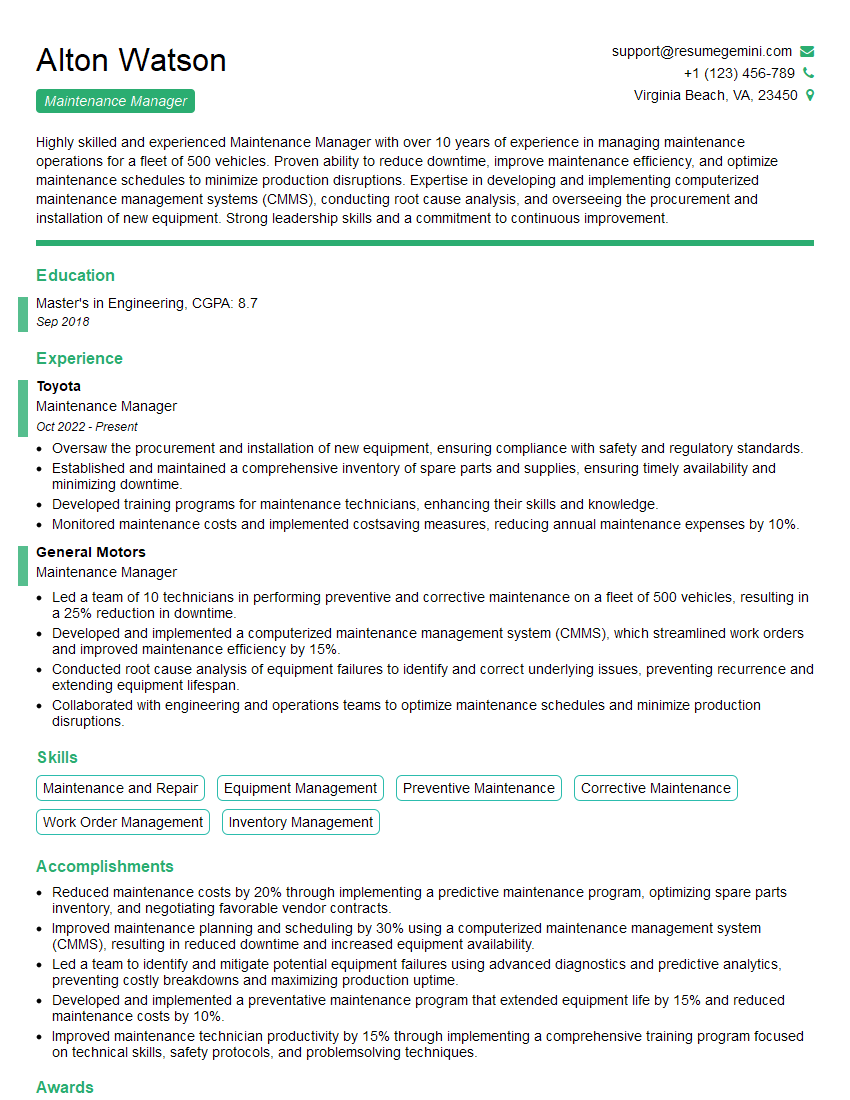
Maintenance Manager Resume Sample
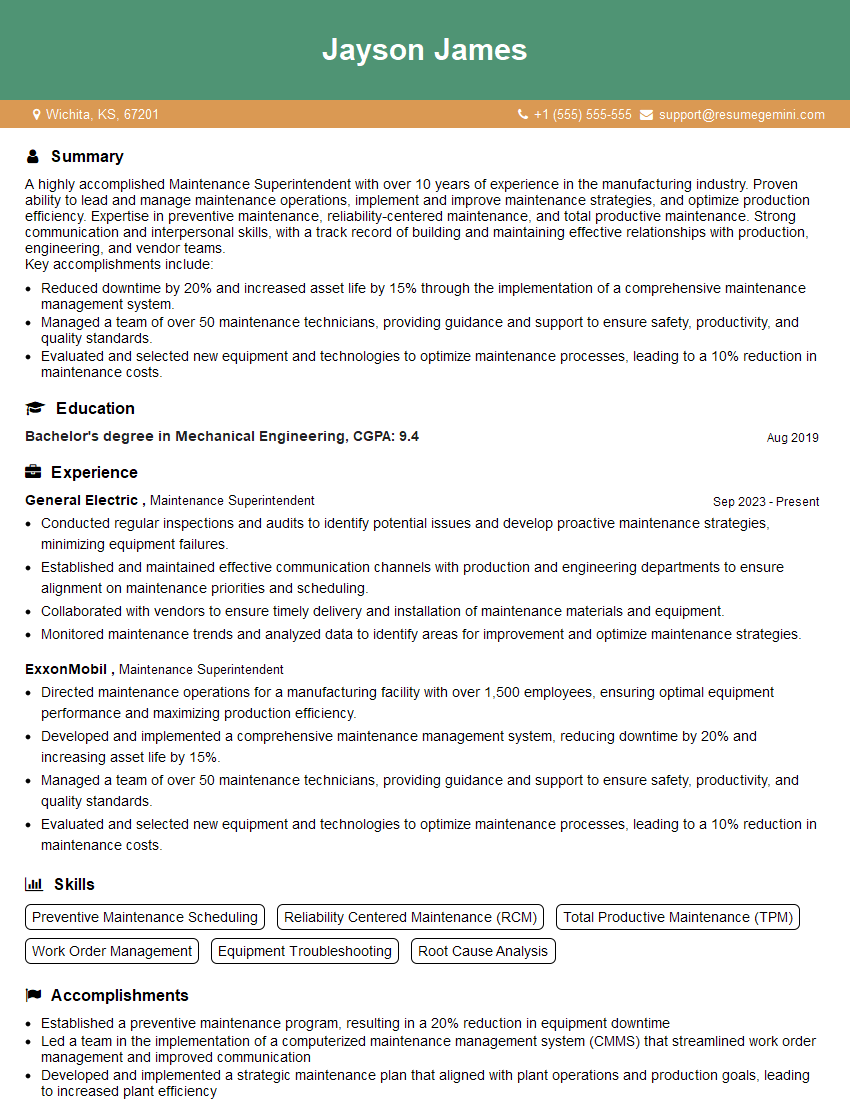
Maintenance Superintendent Resume Sample
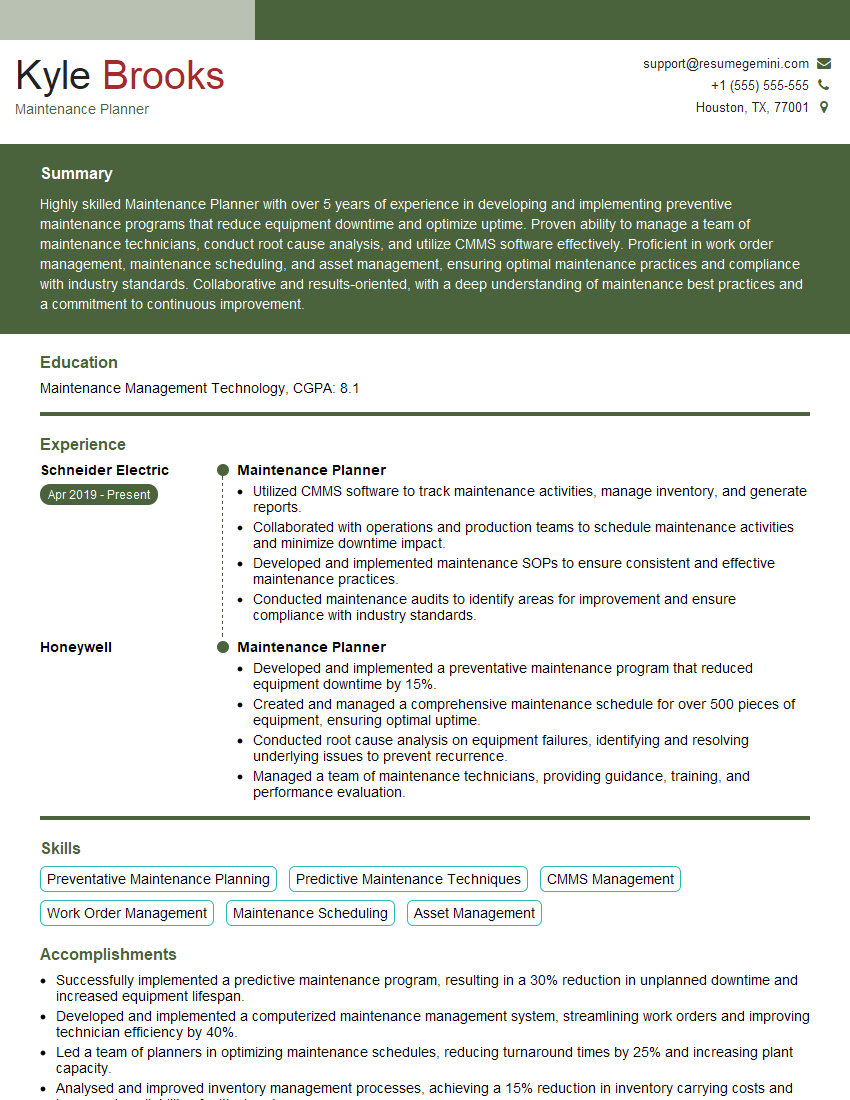
Maintenance Planner Resume Sample
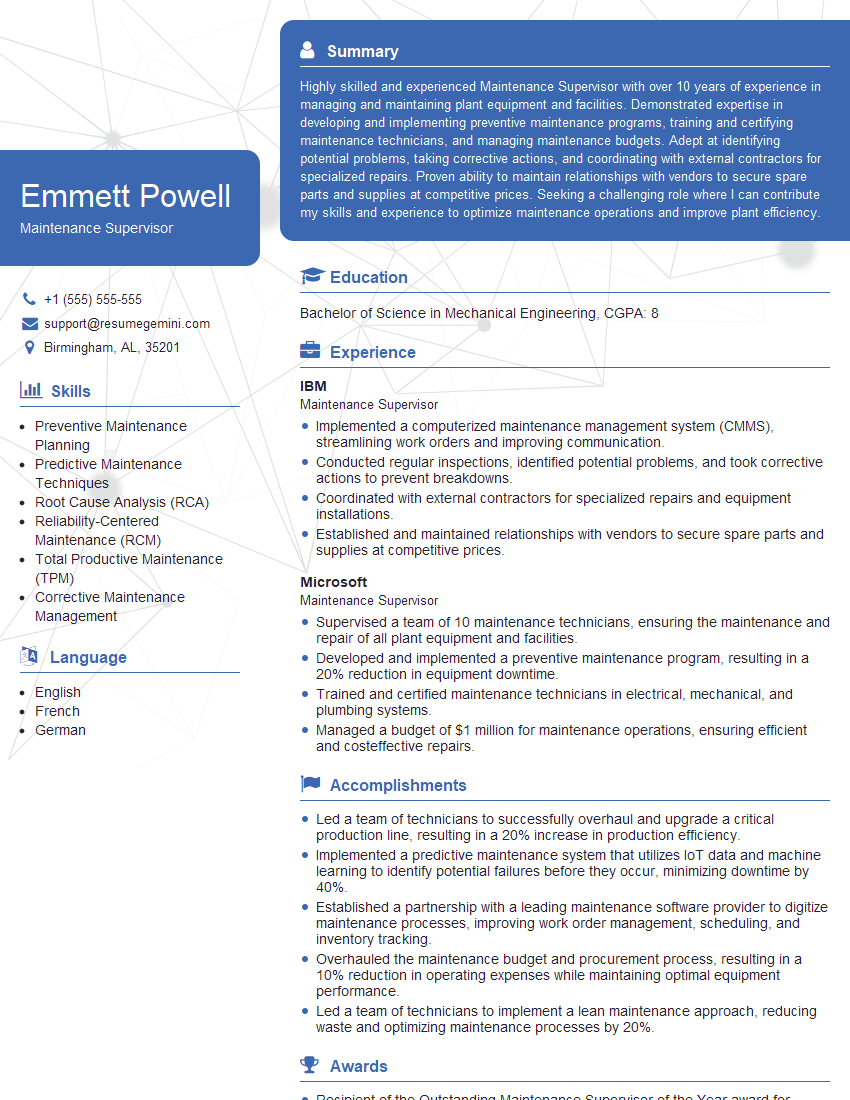
Maintenance Supervisor Resume Sample
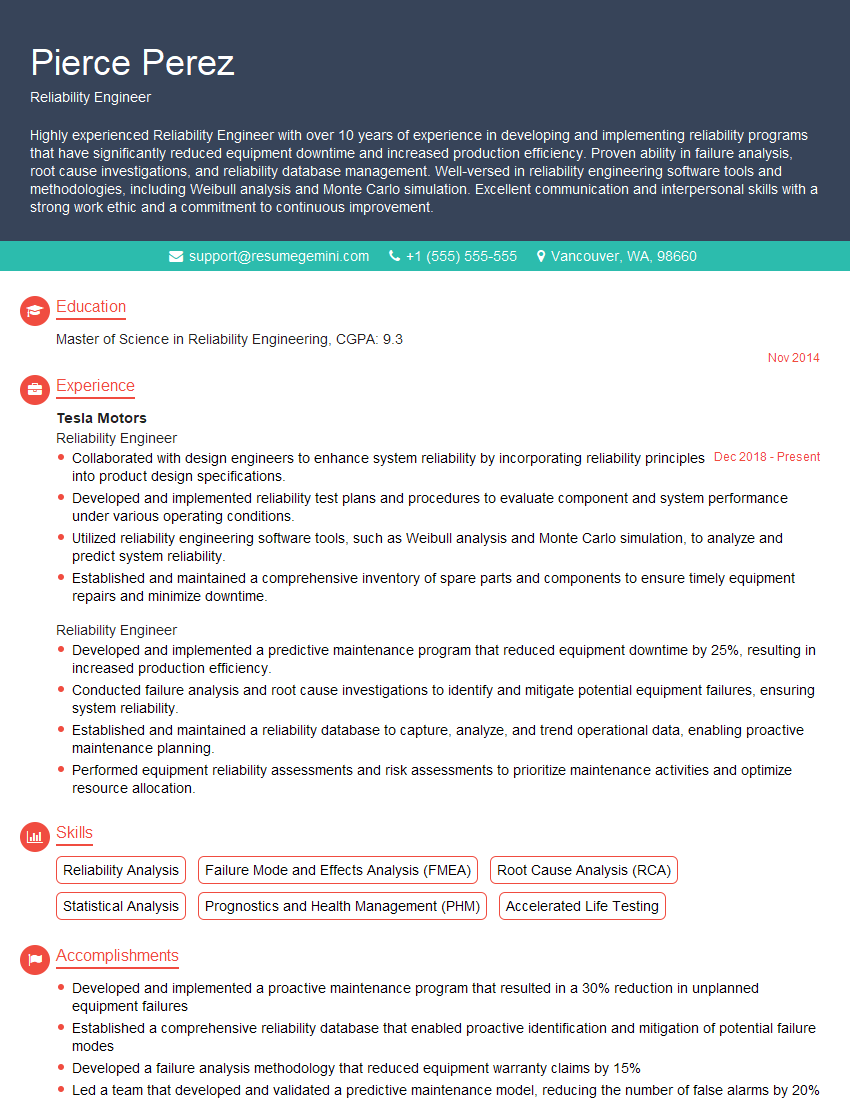
Reliability Engineer Resume Sample
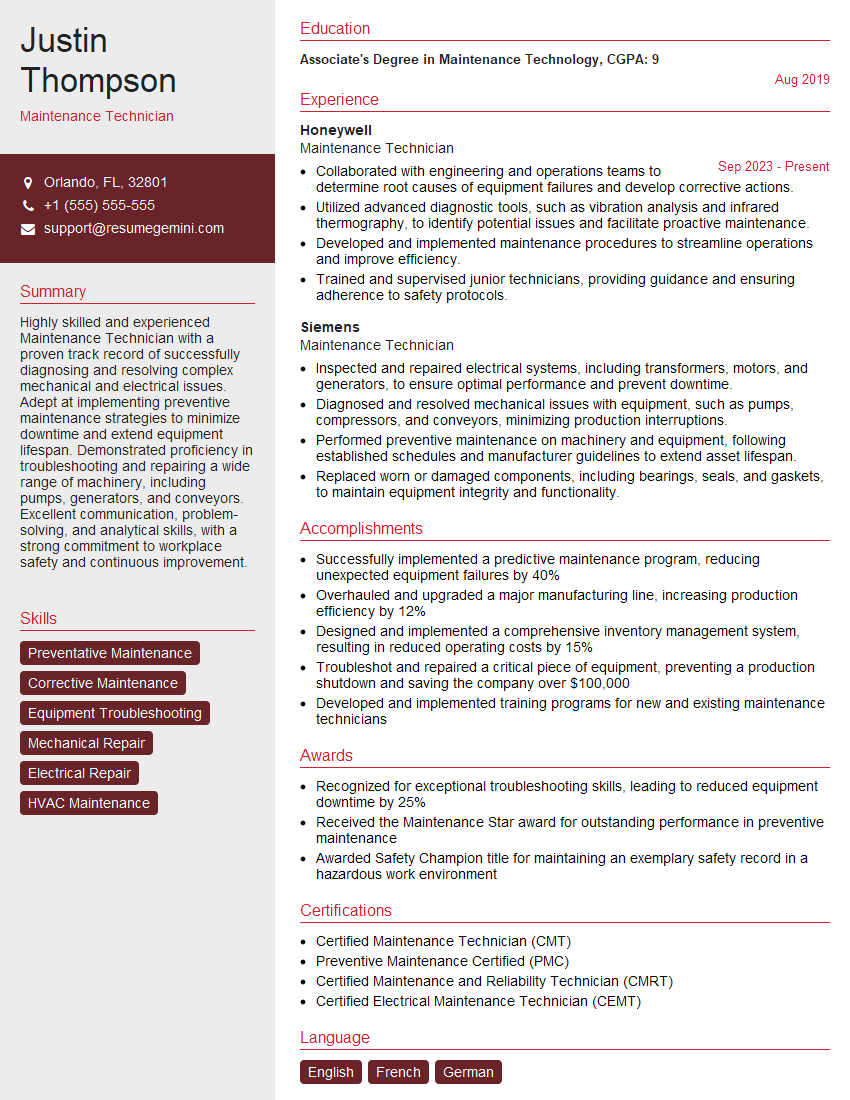
Maintenance Technician Resume Sample
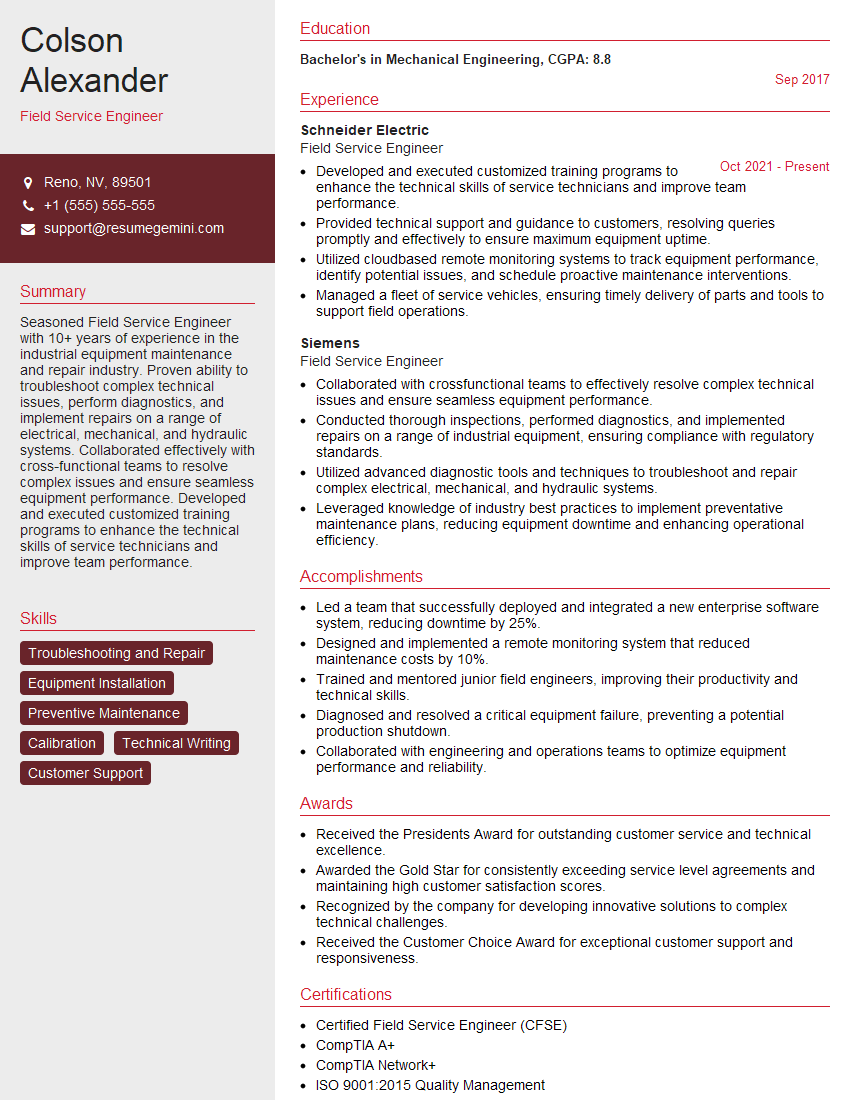
Field Service Engineer Resume Sample
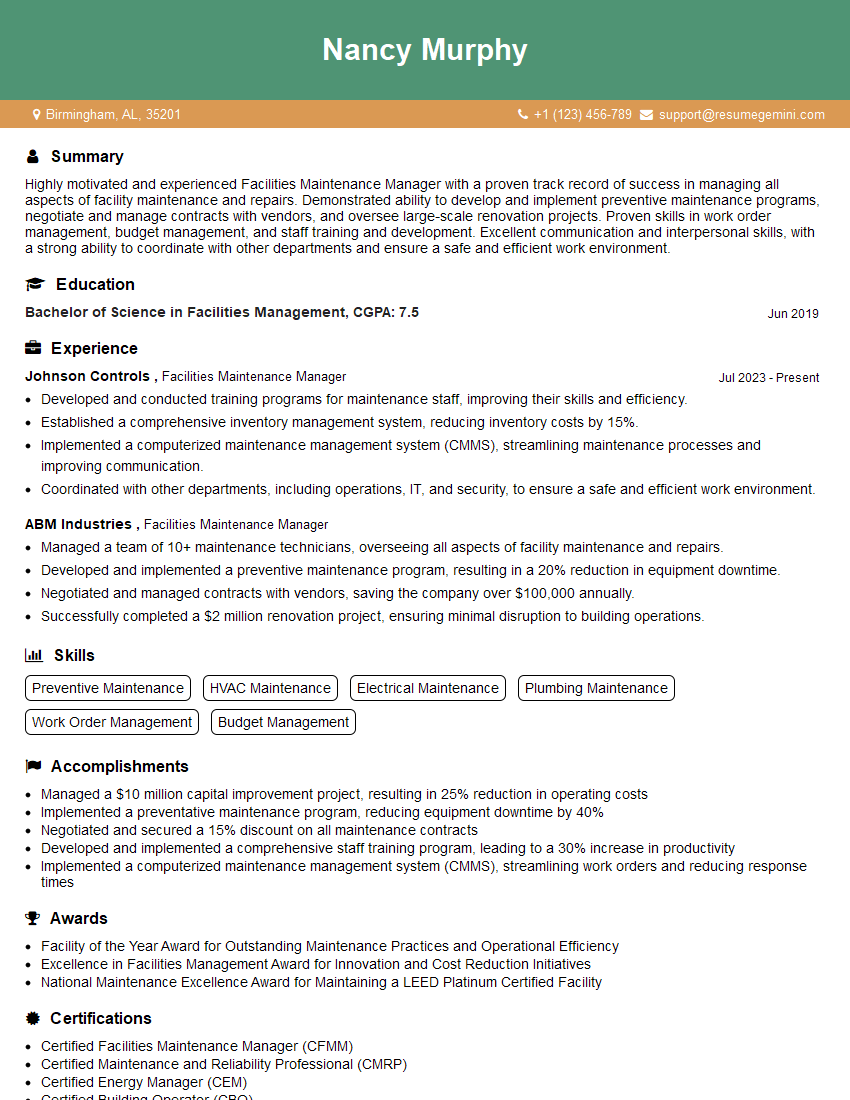
Facilities Maintenance Manager Resume Sample
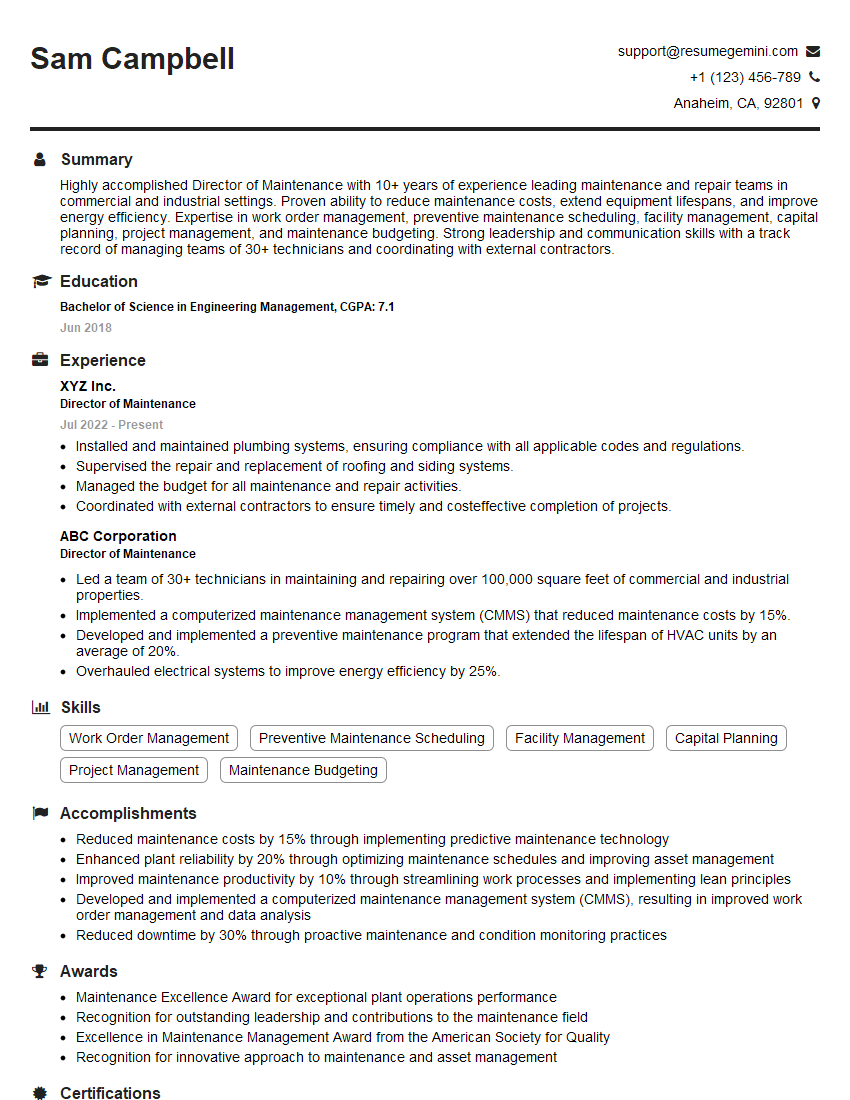
Director of Maintenance Resume Sample
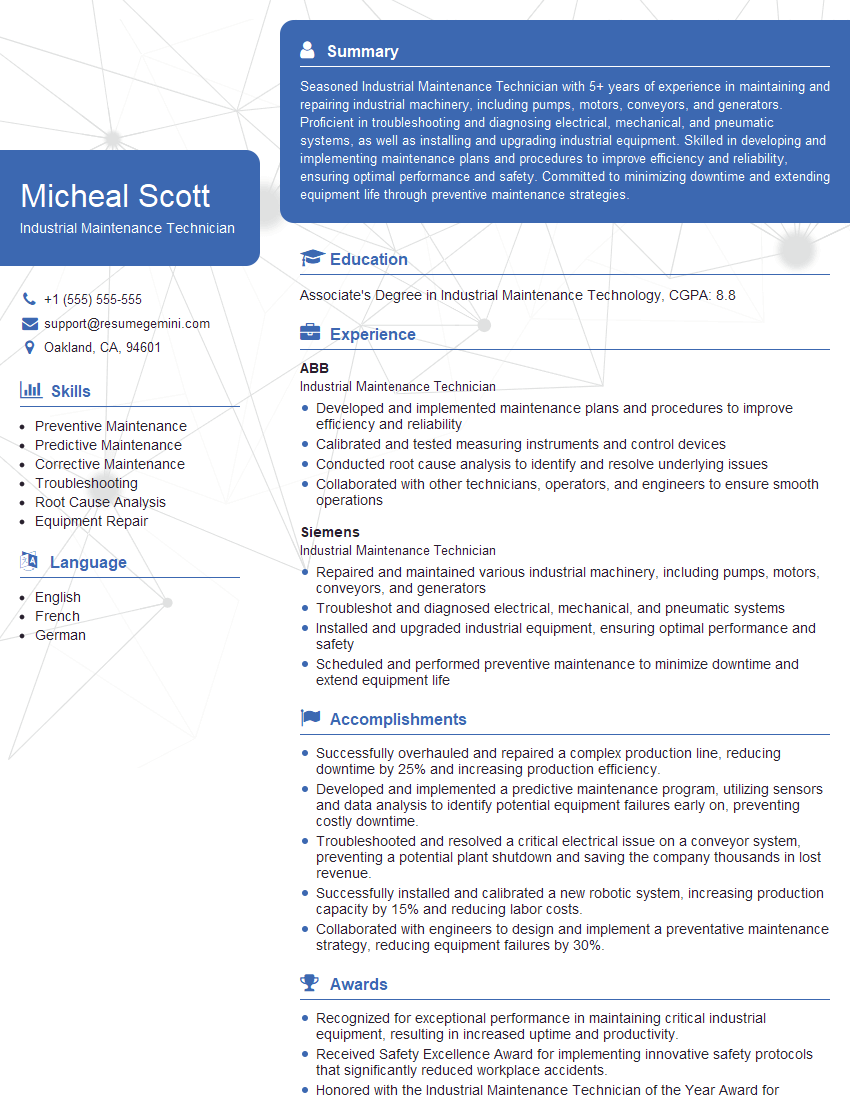
Industrial Maintenance Technician Resume Sample
Explore more articles
Users Rating of Our Blogs
Share Your Experience
We value your feedback! Please rate our content and share your thoughts (optional).
What Readers Say About Our Blog
Amazing blog
hello,
Our consultant firm based in the USA and our client are interested in your products.
Could you provide your company brochure and respond from your official email id (if different from the current in use), so i can send you the client’s requirement.
Payment before production.
I await your answer.
Regards,
MrSmith
hello,
Our consultant firm based in the USA and our client are interested in your products.
Could you provide your company brochure and respond from your official email id (if different from the current in use), so i can send you the client’s requirement.
Payment before production.
I await your answer.
Regards,
MrSmith
These apartments are so amazing, posting them online would break the algorithm.
https://bit.ly/Lovely2BedsApartmentHudsonYards
Reach out at BENSON@LONDONFOSTER.COM and let’s get started!
Take a look at this stunning 2-bedroom apartment perfectly situated NYC’s coveted Hudson Yards!
https://bit.ly/Lovely2BedsApartmentHudsonYards
Live Rent Free!
https://bit.ly/LiveRentFREE
Interesting Article, I liked the depth of knowledge you’ve shared.
Helpful, thanks for sharing.
Hi, I represent a social media marketing agency and liked your blog
Hi, I represent an SEO company that specialises in getting you AI citations and higher rankings on Google. I’d like to offer you a 100% free SEO audit for your website. Would you be interested?