Unlock your full potential by mastering the most common FCC Regulations and Compliance interview questions. This blog offers a deep dive into the critical topics, ensuring you’re not only prepared to answer but to excel. With these insights, you’ll approach your interview with clarity and confidence.
Questions Asked in FCC Regulations and Compliance Interview
Q 1. Explain the difference between Part 15 and Part 18 of the FCC rules.
Parts 15 and 18 of the FCC rules both govern unintentional radiators, meaning devices that emit radio frequencies as a byproduct of their operation, but they cater to different types of devices and have distinct requirements.
Part 15 covers unlicensed devices, meaning they don’t require a specific license from the FCC to operate. Think of things like Wi-Fi routers, Bluetooth devices, and many consumer electronics. These devices must meet specific emission limits to prevent interference with licensed services. Compliance is typically demonstrated through testing and declaration of conformity.
Part 18, on the other hand, regulates industrial, scientific, and medical (ISM) devices that operate within specific frequency bands allocated for such purposes. Examples include microwave ovens, medical diathermy equipment, and some industrial heating devices. While these devices are also unintentional radiators, the rules under Part 18 are often less stringent regarding emission limits because they operate in designated bands where interference is less critical, but they still have to meet specific requirements for safe operation.
The key difference lies in licensing and the level of scrutiny. Part 15 devices undergo a simpler certification process, while Part 18 devices, while often not requiring explicit licensing for the device itself, are subject to detailed requirements regarding their operational parameters and potential for interference within their designated band.
Q 2. Describe the process of obtaining FCC certification for a new wireless device.
Obtaining FCC certification for a new wireless device is a multi-step process that involves testing, documentation, and submission to the FCC. It’s crucial to engage with a knowledgeable testing laboratory early in the design phase.
- Product Design and Testing: The device must be designed to meet all applicable FCC rules, including emission limits, SAR limits (for devices that radiate near the body), and other relevant requirements. Thorough testing by an FCC-recognized laboratory is vital to ensure compliance.
- Documentation Preparation: This is a critical step. You need a comprehensive documentation package including the device’s technical specifications, test reports from the accredited lab, a user manual (if applicable), and a declaration of conformity (DoC). The DoC is a formal statement by the manufacturer that their device complies with the FCC rules. Any discrepancies here can lead to delays or rejection.
- Submission to the FCC: The completed documentation package is submitted electronically via the FCC’s online system. The FCC reviews the documentation and may request further information or clarification. This phase can take significant time.
- Grant of Certification: Upon successful review, the FCC grants a certification, which means the device can be legally marketed and sold in the United States.
It’s vital to remember that the process can take several months, so planning and proactive engagement with the FCC regulations are key. Failing to properly address issues can significantly delay the product launch.
Q 3. What are the key requirements for FCC compliance regarding electromagnetic compatibility (EMC)?
FCC compliance regarding electromagnetic compatibility (EMC) focuses on ensuring that a device does not cause harmful interference to other devices or systems, and is not susceptible to interference from other sources. Key requirements include:
- Emission Limits: The device must meet specific limits on the amount of radio frequency energy it radiates. These limits vary depending on the device’s operating frequency and power levels. Testing in a controlled environment is necessary to demonstrate compliance.
- Susceptibility Limits: The device must be able to withstand exposure to electromagnetic fields from other sources without malfunctioning. Testing involves exposing the device to various levels and types of interference to ensure its robustness.
- Specific Absorption Rate (SAR): For devices that operate near the body (like cell phones), stringent SAR limits must be met to ensure safety by limiting RF energy absorbed by human tissue. This involves sophisticated testing methodologies.
- Proper Labeling: The device must have the correct FCC ID label clearly visible, indicating that it has been certified. This allows for easy identification and tracing in case of any interference issues.
Non-compliance with EMC requirements can lead to significant penalties and market withdrawal of the non-compliant product.
Q 4. How do you handle an FCC violation or non-compliance issue?
Handling an FCC violation or non-compliance issue requires a prompt and professional response. The severity of the action depends on the nature and extent of the violation. The steps usually include:
- Identify the Problem: Determine the specific FCC rule violated and the extent of the non-compliance.
- Stop Sales: Immediately cease the sale and distribution of the non-compliant devices. This prevents further violations and potential penalties.
- Internal Investigation: Conduct a thorough internal investigation to understand the root cause of the problem. This is crucial to prevent future occurrences.
- Corrective Actions: Develop and implement corrective actions to bring the device into compliance. This could involve redesigning parts of the device, implementing improved testing procedures, or changing manufacturing processes.
- Communication with the FCC: Contact the FCC to report the issue and cooperate fully with their investigation. Proactive communication demonstrates responsibility and can mitigate penalties.
- Corrective Action Report (CAR): In some cases, a formal CAR is required, documenting the non-compliance, the root cause analysis, the corrective actions taken, and verification of the effectiveness of those actions.
- Retesting and Resubmission: After corrective actions are implemented, the device should be retested by an accredited laboratory and resubmitted to the FCC for certification.
Open communication and timely corrective action are crucial in minimizing the impact of any FCC non-compliance issue.
Q 5. Explain the significance of the FCC’s specific absorption rate (SAR) limits.
The FCC’s Specific Absorption Rate (SAR) limits are critical for public health and safety. SAR measures the rate at which the body absorbs radio frequency (RF) energy from a wireless device. Exposure to high levels of RF energy can potentially cause health problems. Therefore, the FCC sets limits on the amount of RF energy that a device can emit, ensuring that exposure remains within safe levels.
These limits are particularly important for devices held close to the body, such as cell phones. The FCC requires manufacturers to test their devices and demonstrate compliance with the SAR limits before they can be marketed. Exceeding these limits can result in significant penalties, product recalls, and damage to the manufacturer’s reputation.
The SAR limits are regularly reviewed and updated as new scientific evidence becomes available and technology changes. The FCC’s stringent SAR regulations assure the public that the RF energy emitted from wireless devices remains within safe limits, protecting users from potential health risks.
Q 6. What are the different types of FCC licenses and permits?
The FCC grants various licenses and permits for different types of radio frequency operations. Some of the most common types include:
- Station Licenses: These are granted for specific radio stations, like AM, FM broadcast stations, or television stations. They involve detailed technical specifications and operational requirements.
- Individual Licenses: These are issued to individuals for specific purposes, such as amateur radio operation (ham radio). These often have limitations on power and operating frequencies.
- Construction Permits: These are required before constructing or modifying a radio station. They ensure that the proposed station will meet the FCC’s technical standards and not cause harmful interference.
- Experimental Licenses: These are issued for research and development purposes to experiment with new technologies or techniques. They often have specific conditions and time limits.
- Temporary Permits: These are for temporary operations, such as special events or short-term projects, allowing the use of radio frequencies for a limited time.
The specific type of license or permit required depends on the intended use of the radio frequencies and the type of equipment involved. Each license type carries its own set of requirements and responsibilities for the licensee.
Q 7. Describe your experience with FCC reporting and documentation requirements.
My experience with FCC reporting and documentation requirements is extensive. I’ve been involved in numerous projects requiring FCC compliance, from simple Part 15 devices to more complex Part 18 applications. This has involved:
- Preparing comprehensive documentation packages: This includes meticulously creating and assembling all necessary documentation, ensuring accuracy and completeness to avoid delays or rejections by the FCC.
- Managing FCC test reports: I’ve overseen the testing process, ensuring that tests are conducted by FCC-recognized laboratories, following all applicable standards and requirements.
- Maintaining detailed records: Keeping accurate records of all testing, certifications, and communication with the FCC is crucial for demonstrating compliance and handling any potential issues.
- Ensuring compliance with labeling requirements: I’ve ensured devices carry the correct FCC ID labels and any other necessary markings as required by the regulations.
- Handling FCC inquiries and investigations: I have a proven track record of effectively and professionally responding to any inquiries or investigations from the FCC, ensuring transparent and complete cooperation.
My experience highlights the critical importance of meticulous record-keeping, proactive communication, and thorough understanding of the ever-evolving FCC regulations to ensure seamless compliance.
Q 8. How familiar are you with the FCC’s rules regarding radio frequency interference (RFI)?
My familiarity with the FCC’s RFI rules is extensive. I understand that the FCC’s regulations, primarily found in Part 15 and Part 18 of Title 47 of the Code of Federal Regulations, are designed to prevent harmful interference between different radio frequency devices. These rules establish emission limits for various types of devices, covering everything from unintentional radiators (like computers and peripherals) to intentional radiators (like radio transmitters). I’ve worked extensively with both, understanding the nuances of different classes of devices and their corresponding compliance requirements. For example, I’ve handled cases involving unintentional radiators exceeding emission limits, requiring investigation into the source of the interference and implementation of mitigation strategies, such as shielding or filtering.
I’m also well-versed in the concepts of conducted and radiated emissions and how to measure them using appropriate testing equipment. Understanding the difference between these types of emissions is crucial for effective troubleshooting and compliance. Conducted emissions are measured at the device’s power cord, while radiated emissions are measured in a controlled environment (like an anechoic chamber) to assess the electromagnetic field emitted by the device.
Q 9. What is your experience with FCC testing procedures and laboratories?
Throughout my career, I’ve been heavily involved in all aspects of FCC testing. This includes selecting appropriate FCC-recognized testing laboratories, overseeing the testing process, interpreting test reports, and managing the relationship with the labs. I’ve worked with several accredited labs, understanding their capabilities and limitations. The selection of a lab depends heavily on the specific equipment being tested and the complexity of the testing requirements. For example, a simple device might only need basic testing for radiated emissions, while complex devices may require more extensive testing, potentially involving specialized chambers and expertise.
My experience extends to both initial testing for certification and ongoing compliance testing. I understand the importance of maintaining thorough documentation of the entire process, ensuring traceability and facilitating audits. This documentation is critical should there ever be a need for demonstrating compliance to the FCC.
Q 10. Explain the concept of ‘substantial compliance’ with FCC regulations.
The term ‘substantial compliance’ is frequently misunderstood. It doesn’t mean a device is partially compliant; rather, it indicates that a device may have minor deviations from the strict letter of the FCC rules but still operates within the spirit of the regulations and doesn’t pose a significant risk of causing harmful interference. The FCC uses a case-by-case evaluation of whether a deviation from the technical specifications is ‘substantial’.
For example, if a device’s radiated emission slightly exceeds the limit by a small margin, but this is deemed unlikely to cause real-world interference, the FCC might consider it substantially compliant. However, this is a complex area, and it’s crucial to remember that obtaining a formal determination of substantial compliance requires interaction with the FCC, typically involving detailed justifications and potentially further testing. It’s always best to strive for full compliance whenever possible.
Q 11. How would you ensure ongoing FCC compliance for a product line?
Ensuring ongoing FCC compliance for a product line requires a proactive, multi-faceted approach. It’s not a one-time event; it’s an ongoing process. My strategy would involve:
- Regular testing: Implementing a schedule for routine compliance testing to detect any potential issues early. This might include both internal testing and periodic testing at an accredited laboratory.
- Design for compliance: Integrating FCC compliance considerations into the product design process from the outset. This includes selecting components that meet the emission limits and incorporating appropriate shielding and filtering.
- Component management: Maintaining strict control over the components used in the product line, ensuring that any changes or substitutions do not affect compliance. Using approved vendor lists is very helpful here.
- Documentation control: Maintaining detailed and accurate documentation of all testing, design changes, and compliance-related activities. This is essential for audits and responding to inquiries from the FCC.
- Monitoring of FCC updates: Staying abreast of any changes in FCC rules and regulations to proactively adapt the product line and testing procedures.
- Supplier engagement: Working closely with component suppliers to ensure that their products meet the necessary compliance requirements.
Through this meticulous system, potential issues are identified and addressed before they become major problems.
Q 12. Describe your experience with managing FCC compliance budgets and resources.
My experience includes developing and managing FCC compliance budgets. This involves accurately estimating costs associated with testing, legal consultation (if needed), and the time commitment of internal engineers. I’ve successfully prioritized tasks and allocated resources effectively to maximize efficiency and minimize costs. I have a proven track record of staying within allocated budget constraints without compromising compliance. For example, I’ve used a combination of internal testing and external testing to find the most cost-effective balance for various product lines.
Furthermore, I’m skilled in resource allocation. This includes assigning personnel to tasks based on expertise and workload, leveraging both internal expertise and external consultants when necessary to meet deadlines without compromising quality. Project management skills are key here. A well-defined project plan with clear timelines and milestones ensures efficient resource utilization.
Q 13. What is your experience with FCC enforcement actions?
While I’ve thankfully not experienced direct FCC enforcement actions against products I’ve managed, I’m very familiar with the process and potential consequences. I’ve studied numerous cases of FCC enforcement and have a deep understanding of the various actions the FCC can take, ranging from warning letters to substantial fines and product recalls. Understanding the potential consequences is a key driver in proactively maintaining compliance.
My approach emphasizes prevention over remediation. This means focusing on proactively adhering to the rules and regulations, which is far less costly and disruptive than having to react to an enforcement action. This preventative focus reduces risk considerably.
Q 14. How do you stay updated on changes and new rules from the FCC?
Staying updated on FCC changes is crucial. My approach is multi-pronged:
- Regularly reviewing the FCC website: I consistently check the FCC’s official website for announcements, rule changes, and updates to the Code of Federal Regulations (CFR).
- Subscribing to relevant newsletters and publications: I subscribe to newsletters and publications that provide updates on FCC regulations and compliance matters.
- Participating in industry events and conferences: Attending industry conferences and workshops provides valuable opportunities to learn about new rules and best practices.
- Networking with industry professionals: Maintaining a network of contacts within the industry allows for the sharing of information and insights regarding FCC changes.
- Using specialized compliance databases: There are commercial services that track regulatory changes. I’ve used such services in the past to efficiently stay abreast of the latest updates.
A proactive and layered approach ensures that I’m well-informed about any changes that could affect the products I manage.
Q 15. Explain the difference between intentional and unintentional radiators.
The distinction between intentional and unintentional radiators hinges on the purpose of the emitted electromagnetic radiation (EMR). Intentional radiators are devices designed to emit EMR for a specific purpose, such as transmitting data (like a Wi-Fi router) or broadcasting signals (like a radio station). They must comply with stringent FCC regulations regarding power output, frequency, and emission limits to prevent interference with other devices and services.
Unintentional radiators, conversely, are devices that emit EMR as a byproduct of their operation. This radiation isn’t their primary function; it’s an unavoidable consequence. Think of a computer monitor or a power supply. While they don’t intend to radiate, they do, and FCC regulations address these emissions to ensure they don’t cause harmful interference. These regulations are often less stringent than those for intentional radiators but still crucial for maintaining a clean electromagnetic environment.
The key difference lies in the regulatory requirements. Intentional radiators undergo more rigorous testing and certification processes, often requiring specific licenses or certifications. Unintentional radiators still need to meet emission limits, but the testing and certification procedures are typically less extensive. A failure to comply can lead to significant penalties for both types, however.
Career Expert Tips:
- Ace those interviews! Prepare effectively by reviewing the Top 50 Most Common Interview Questions on ResumeGemini.
- Navigate your job search with confidence! Explore a wide range of Career Tips on ResumeGemini. Learn about common challenges and recommendations to overcome them.
- Craft the perfect resume! Master the Art of Resume Writing with ResumeGemini’s guide. Showcase your unique qualifications and achievements effectively.
- Don’t miss out on holiday savings! Build your dream resume with ResumeGemini’s ATS optimized templates.
Q 16. What are the key considerations for FCC compliance in international markets?
Navigating FCC compliance in international markets requires a multifaceted approach. Simply meeting FCC standards is insufficient; each country or region has its own regulatory bodies and specific rules. For example, while a device might meet FCC Part 15 (unintentional radiators) requirements, it might not adhere to the equivalent standards in the European Union (CE marking) or those set by the Japanese Ministry of Internal Affairs and Communications (MIC).
Key considerations include:
- Identifying applicable regulations: Thoroughly research the specific requirements of the target market. This may involve consulting local regulatory authorities, reviewing relevant technical standards, and seeking expert guidance.
- Testing and certification: Most international markets require testing and certification by accredited testing labs recognized by the relevant regulatory bodies. This ensures compliance and can be a costly and time-consuming process.
- Documentation: Maintain comprehensive documentation related to testing, compliance, and certification. This is often necessary to demonstrate adherence to regulations and is crucial if an issue arises.
- Labeling: Ensure that the product carries the appropriate markings and labels required by the target market. Incorrect labeling can lead to legal issues and market access limitations.
- Ongoing monitoring: Regulations can change, so continuous monitoring is necessary. This ensures the product remains compliant over its lifespan.
Failing to account for these differences can result in significant delays, fines, and even product recalls.
Q 17. How familiar are you with the FCC’s rules concerning call blocking and spam?
The FCC’s involvement in call blocking and spam is primarily focused on protecting consumers from unwanted calls and messages. They’ve implemented several regulations and initiatives aimed at curbing these nuisances. The Truth in Caller ID Act, for instance, requires carriers to accurately display caller ID information, making it more difficult for spammers to spoof numbers. This helps consumers identify and avoid potentially fraudulent or harassing calls.
The FCC also actively works with telephone companies to develop and enforce policies against illegal robocalling and other forms of unwanted communication. They encourage the use of call-blocking technologies and promote initiatives that allow consumers to report unwanted calls easily. Penalties for violating these regulations can be substantial and include hefty fines for companies engaging in deceptive or harmful calling practices.
My understanding extends to the technical aspects involved in identifying and blocking unwanted calls, including the use of STIR/SHAKEN protocols to authenticate calls and reduce the prevalence of spoofed numbers. I am familiar with the ongoing efforts to further strengthen these measures and combat evolving spam tactics.
Q 18. Describe your experience with preparing for and participating in FCC audits.
I have extensive experience in preparing for and participating in FCC audits. This includes conducting thorough internal audits to identify potential compliance gaps before any external audit. I’ve developed and implemented comprehensive documentation systems, ensuring that all relevant records (testing reports, design specifications, and certification documentation) are readily accessible and auditable.
During an FCC audit, I’ve actively collaborated with auditors, addressing their inquiries effectively and demonstrating complete transparency. I understand the importance of maintaining clear and concise communication throughout the audit process. This includes providing explanations for all findings, promptly addressing any discrepancies, and implementing corrective actions as necessary.
One example involved an audit focusing on our compliance with Part 15 rules for a newly released wireless device. By having meticulously maintained our documentation, we were able to quickly provide the auditors with all the required information, resulting in a smooth and successful audit. Preparing for audits isn’t simply about checking boxes; it’s about demonstrating a culture of compliance within the organization.
Q 19. What methods do you use to identify potential FCC compliance risks?
Identifying potential FCC compliance risks requires a proactive and multi-faceted approach. My strategy involves a combination of risk assessment methodologies, ongoing monitoring, and continuous improvement processes.
- Risk assessment: We use a structured approach to identify potential risks. This involves reviewing the design specifications and operational characteristics of our products to determine areas of potential non-compliance. We also factor in changes to FCC regulations and industry best practices.
- Regular testing and monitoring: We conduct regular testing to verify continued compliance throughout the product lifecycle. This includes electromagnetic compatibility (EMC) testing, radio frequency (RF) testing, and other relevant tests depending on the product.
- Staying informed: Keeping abreast of changes in FCC regulations and industry best practices is crucial. We subscribe to relevant publications, attend industry conferences, and leverage the expertise of regulatory consultants.
- Supplier management: We evaluate our suppliers for their compliance with relevant regulations. This ensures that the components we use meet the required standards.
By employing these methods, we can proactively address potential issues and minimize the risk of non-compliance.
Q 20. How do you ensure that your company’s products meet all relevant FCC standards?
Ensuring our products meet FCC standards is a continuous process that requires a commitment to compliance throughout the product development lifecycle. This starts with design considerations and extends through manufacturing, testing, and post-market surveillance.
Our approach involves:
- Design for compliance: We incorporate FCC compliance requirements into the design phase itself, minimizing potential issues later in the process. This often involves using certified components and adhering to design guidelines that minimize unwanted emissions.
- Rigorous testing: We conduct comprehensive testing at various stages of the product development lifecycle, including pre-compliance testing, regulatory testing at accredited labs, and ongoing monitoring of in-market products.
- Documentation and record-keeping: Meticulous record-keeping is vital. We maintain detailed records of all testing results, design specifications, and certification documentation, which are essential for demonstrating compliance to auditors and regulatory agencies.
- Continuous improvement: We constantly review our processes to identify areas for improvement and enhance our compliance efforts. This includes staying updated on the latest regulations, industry best practices, and technological advancements.
By implementing these measures, we aim to not only meet but exceed FCC requirements, ensuring our products are safe, reliable, and compliant.
Q 21. What are your experiences with working on FCC-related projects?
My FCC-related project experiences span a broad range of activities, from designing and testing wireless devices to developing and implementing compliance programs. I’ve led teams in achieving FCC certification for numerous products, navigating the complexities of different FCC rules and regulations (Parts 15, 18, 22, etc.), and resolving compliance issues.
For example, I was involved in a project where we successfully resolved a compliance issue with a new cellular modem by working closely with the manufacturer and regulatory compliance labs. This included redesigning the PCB layout and undertaking extensive RF testing to meet FCC emission standards, ultimately preventing a costly recall. This demonstrates my problem-solving skills and attention to detail in ensuring compliance. I’ve also spearheaded the development of our company’s FCC compliance program, establishing internal procedures and training that ensured consistent adherence to regulations across all product lines.
My experience extends to working with external regulatory consultants and testing laboratories to achieve certification, demonstrating my capacity to manage and successfully navigate complex regulatory environments.
Q 22. Explain the process of conducting a FCC compliance review.
An FCC compliance review is a systematic process to ensure a product or system adheres to the Federal Communications Commission’s regulations. It’s like a thorough health check for your device, making sure it plays nicely with others and doesn’t interfere with essential communications. The process typically involves several key steps:
- Pre-compliance testing: This involves initial testing to identify potential issues early in the product development cycle. This is much cheaper than fixing issues later.
- Gap analysis: Comparing your product’s specifications against the relevant FCC rules (part 15 for unintentional radiators, part 18 for industrial, scientific, and medical equipment, etc.). This pinpoints areas needing attention.
- Formal testing: Engaging a FCC-recognized testing laboratory (also known as a Telecommunications Certification Body or TCB) to conduct rigorous testing based on the specific FCC rules applicable to your product. They will generate a test report.
- Documentation: Preparing the necessary documentation, including the test report, user manuals, and declarations of conformity, required by the FCC to demonstrate compliance.
- Submission: Submitting the completed documentation to the FCC, either through an online portal or directly, depending on the specific requirements of your device and compliance pathway (e.g., Declaration of Conformity, FCC ID application).
- Grant of Compliance/Certification: Receiving the FCC’s confirmation that your product meets the necessary regulations.
Failing to follow these steps can lead to delays, increased costs, and even legal issues.
Q 23. How familiar are you with the different FCC forms and applications?
My familiarity with FCC forms and applications is extensive. I’ve worked extensively with:
- FCC Form 731: Used for applications related to low-power radio services.
- FCC Form 153/159: Related to amateur radio licensing.
- FCC Form 442: Used to register radio stations.
- Online portals and databases: I’m proficient in using the FCC’s online systems for filing applications, tracking status, and accessing regulatory information, including the FCC’s ID search tools.
- Declarations of Conformity (DoC): I’m very experienced in preparing and submitting DoCs, the most common way of self-certifying compliance for many consumer electronics.
Understanding these forms and applications is critical to successfully navigating the FCC compliance process. Each form has specific requirements, and missing even minor details can result in delays or rejection.
Q 24. Describe your experience in analyzing technical specifications against FCC rules.
I have significant experience analyzing technical specifications against FCC rules. This often involves comparing measured emissions, conducted emissions, and other performance characteristics against FCC limits specified in parts 15, 18, and other relevant sections of the FCC rules. For example:
- Part 15 Subpart B: I’ve analyzed radiated emissions and conducted emissions for unintentional radiators (like Wi-Fi devices) to make sure they don’t exceed the specified limits in the frequency bands of operation.
- Part 15 Subpart C: I have experience in analyzing intentional radiators’ performance parameters (power, bandwidth, etc.) to ensure they comply with specific requirements for different frequency bands.
- Part 18: I’ve reviewed specifications for industrial, scientific, and medical (ISM) equipment to ensure their emissions fall within allowed ranges. This often involves understanding the specific requirements for different ISM frequencies and the necessary safety precautions.
This analysis often requires a deep understanding of both the product design and the relevant FCC regulations. It’s not merely a matter of comparing numbers; it involves understanding the methodologies behind the measurements and potential sources of non-compliance.
Q 25. How do you interpret and apply the FCC’s technical requirements?
Interpreting and applying FCC technical requirements involves more than just reading the rules. It necessitates a thorough understanding of the underlying engineering principles and the context in which the rules are applied. This requires attention to detail and technical expertise. For example, the rules provide limits on radiated emissions in dBuV/m at a certain distance. This requires an understanding of antenna factors, cable loss, and other measurement uncertainties. Similarly, understanding the difference between peak and average power and their implications on compliance is crucial.
I approach this by:
- Thorough review of the relevant FCC part: Understanding the specific requirements for the product category and frequency band.
- Careful analysis of test methods: Using standardized test procedures (like ANSI C63.4 and CISPR 22) to ensure accurate measurements.
- Considering measurement uncertainties: Accounting for potential errors and variations in testing.
- Understanding the impact of design changes: How modifications to the product’s design might affect its compliance.
In essence, it’s about translating complex technical language and standards into practical actions that ensure compliance.
Q 26. What are the potential consequences of non-compliance with FCC regulations?
The consequences of non-compliance with FCC regulations can be severe and range from:
- Warning Letters and Fines: The FCC can issue warning letters, escalating to significant fines. The amount of the fine depends on the severity of the violation and the company’s history.
- Product Recall: If the non-compliance poses a significant risk to public safety or interference with other communications, the FCC can mandate a product recall.
- Equipment Seizure: In serious cases, the FCC can seize non-compliant equipment.
- Legal Action: The FCC can pursue civil or criminal penalties against companies or individuals involved in violations.
- Market Access Restrictions: Non-compliance can prevent products from being sold legally in the United States.
- Reputational Damage: Non-compliance can severely damage a company’s reputation and erode consumer trust.
Avoiding non-compliance through thorough testing and adherence to all regulations is crucial for any company operating in the US market.
Q 27. How would you handle a situation where a product fails to meet FCC standards?
If a product fails to meet FCC standards, a structured approach is crucial. Panic won’t fix the problem! My approach would involve:
- Identify the root cause: Conduct a thorough investigation to pinpoint why the product failed. Was it a design flaw, a manufacturing issue, or an error in testing?
- Re-evaluate the design: Modify the product design or manufacturing process to address the identified issues. This may involve adding shielding, changing components, or optimizing the antenna design.
- Re-testing: Retest the modified product with an FCC-recognized laboratory to verify that the corrections resolved the non-compliance issues. Thorough retesting is absolutely crucial to ensure that the problem is truly fixed.
- Update documentation: Update all relevant documentation to reflect the changes made and ensure the new design complies with all FCC regulations.
- Resubmit the application: Resubmit the application to the FCC, including the updated test reports and documentation.
- Inform customers: If the product has already been released to the market, inform customers about the issue and any necessary corrective actions. This will maintain transparency and prevent more serious problems.
Transparency and a proactive approach are essential to mitigating the risks associated with non-compliance.
Q 28. How do you prioritize different FCC compliance tasks and responsibilities?
Prioritizing FCC compliance tasks is crucial for efficient management. My approach involves:
- Regulatory deadlines: Tasks with imminent deadlines always take precedence. This avoids potential penalties for late submissions.
- Risk assessment: Tasks associated with products that pose a higher risk of non-compliance are prioritized. This ensures that the most critical areas are addressed first.
- Resource allocation: The availability of resources (personnel, testing facilities, etc.) guides the task prioritization. It’s important to be realistic about what can be achieved with the available resources.
- Project timelines: Compliance tasks are integrated into the overall product development timeline. This ensures compliance activities are not overlooked.
- Product lifecycle: Compliance activities for products nearing end-of-life might be given a lower priority than those for newer, more prominent products.
Using a project management tool helps maintain a clear overview of all tasks, their deadlines, and their assigned resources. It ensures nothing falls through the cracks.
Key Topics to Learn for FCC Regulations and Compliance Interview
- Radio Frequency (RF) Safety: Understanding SAR limits, exposure guidelines, and compliance testing methodologies. Practical application: Analyzing test results and identifying potential non-compliance issues.
- Equipment Authorization (Certification): The process of obtaining FCC ID, including Declaration of Conformity (DoC) and testing requirements. Practical application: Navigating the FCC’s online filing system and understanding different certification processes.
- Emission Standards: Familiarity with different emission limits for various devices and frequency bands. Practical application: Troubleshooting emission issues in electronic devices and implementing solutions to meet compliance.
- Specific Absorption Rate (SAR): Understanding the biological effects of RF exposure and the methods for measuring and controlling SAR levels in devices. Practical application: Designing and testing devices to meet SAR limits and comply with FCC regulations.
- Electromagnetic Compatibility (EMC): Understanding conducted and radiated emissions, susceptibility, and immunity testing. Practical application: Identifying and resolving EMC issues to prevent interference with other devices.
- Licensing and Registration: Understanding different licensing requirements for various types of radio frequencies and devices. Practical application: Determining the appropriate licensing procedures for specific applications.
- Compliance Monitoring and Reporting: Understanding the importance of ongoing compliance monitoring and reporting requirements to the FCC. Practical application: Developing and implementing effective compliance programs and documentation strategies.
- Regulatory Changes and Updates: Staying informed about changes in FCC regulations and their impact on existing and future products and services. Practical application: Proactively updating processes and products to maintain ongoing compliance.
Next Steps
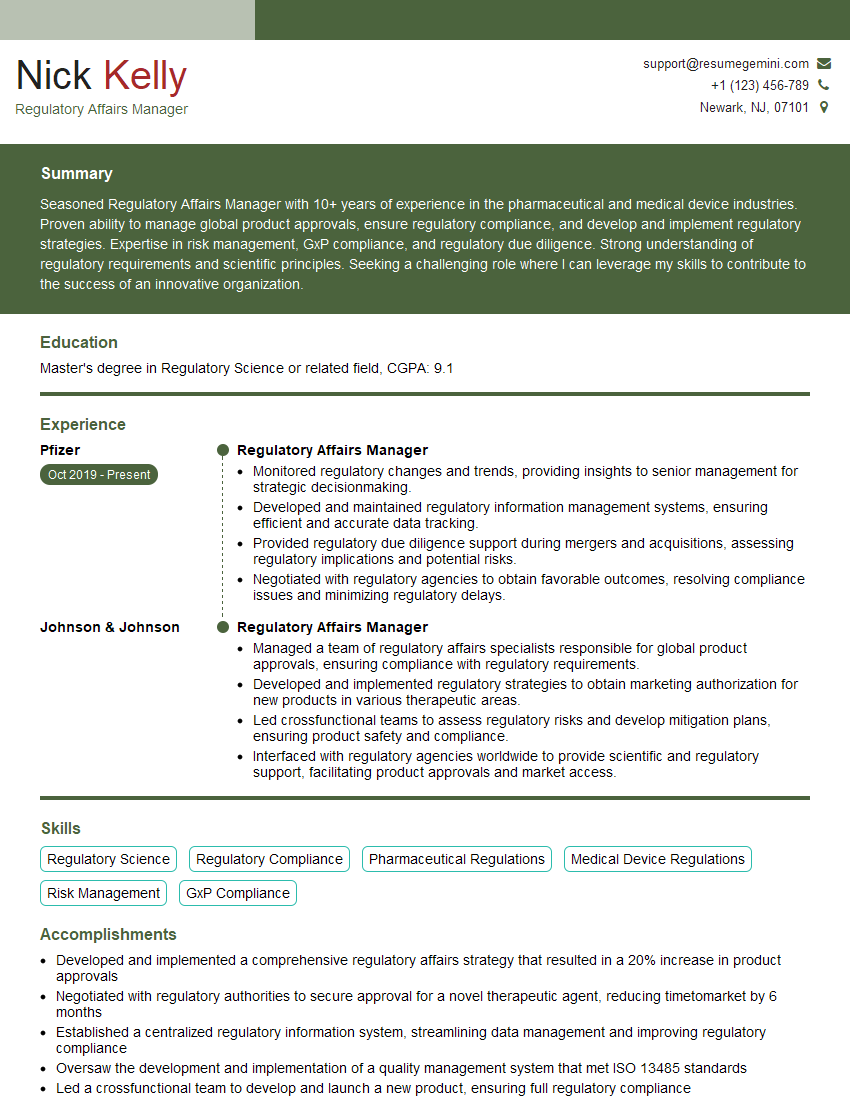
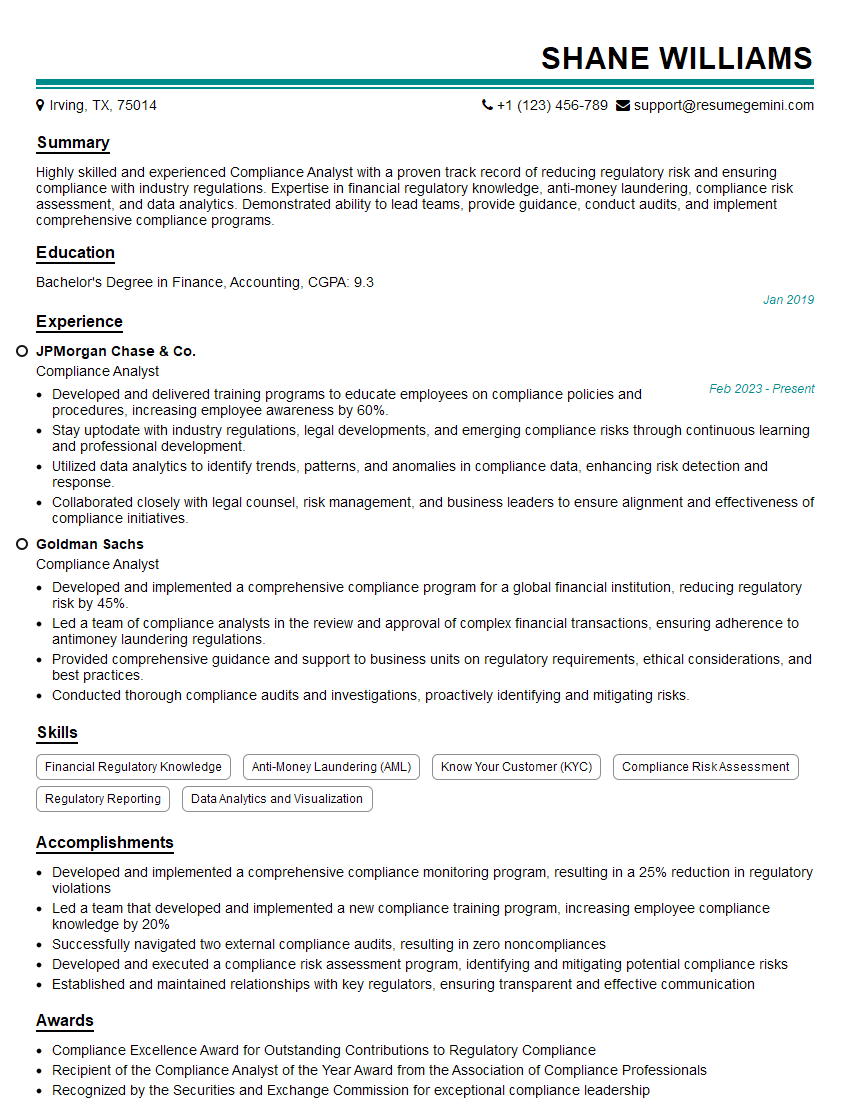
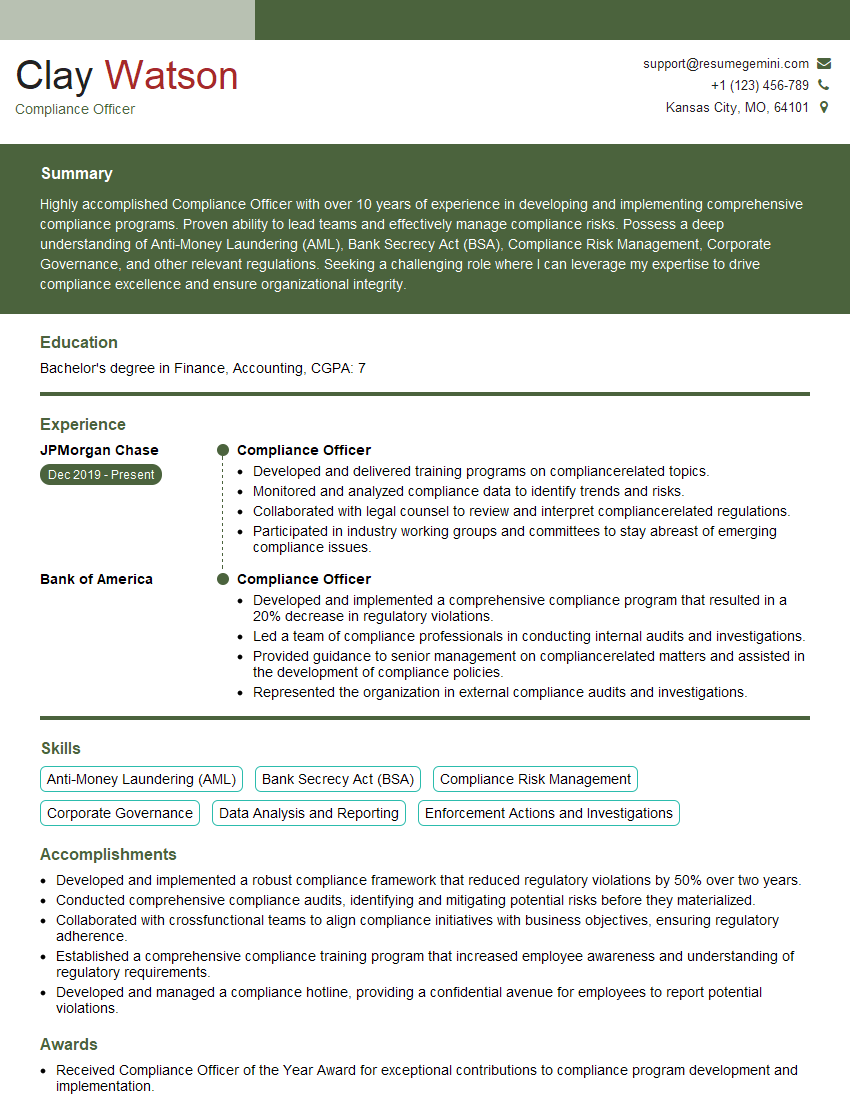
Mastering FCC Regulations and Compliance opens doors to exciting career opportunities in a rapidly evolving technological landscape. A strong understanding of these regulations is highly valued by employers, significantly enhancing your career prospects. To stand out, build an ATS-friendly resume that highlights your skills and experience effectively. ResumeGemini is a trusted resource that can help you create a professional and impactful resume. Take advantage of their tools and resources, including examples of resumes tailored to FCC Regulations and Compliance, to showcase your expertise and land your dream job.
Explore more articles
Users Rating of Our Blogs
Share Your Experience
We value your feedback! Please rate our content and share your thoughts (optional).
What Readers Say About Our Blog
Amazing blog
Interesting Article, I liked the depth of knowledge you’ve shared.
Helpful, thanks for sharing.