Are you ready to stand out in your next interview? Understanding and preparing for Fur Alterations interview questions is a game-changer. In this blog, we’ve compiled key questions and expert advice to help you showcase your skills with confidence and precision. Let’s get started on your journey to acing the interview.
Questions Asked in Fur Alterations Interview
Q 1. What types of fur are you experienced working with?
My experience encompasses a wide range of furs, from the common, like mink and fox, to more exotic varieties such as sable, chinchilla, and lynx. I’ve also worked extensively with sheared furs like beaver and lamb, and even faux furs, understanding their unique properties and requiring different handling techniques. Each fur has a distinct texture, density, and durability which dictates the approach to alterations.
- Mink: A popular choice, known for its luxurious sheen and relatively durable nature.
- Fox: A longer-haired fur that requires careful handling to avoid matting or damage to the guard hairs.
- Sable: An exceptionally luxurious and delicate fur requiring specialized care and techniques.
- Faux Fur: Requires different stitching techniques and attention to avoid tearing the synthetic fibers.
Q 2. Describe your experience with fur repair techniques.
Fur repair demands precision and patience. My experience includes repairing tears, replacing worn patches, and reconstructing damaged seams. I’m adept at techniques like invisible mending, using specialized needles and threads that match the fur’s color and texture. For instance, I once repaired a significant tear in a vintage mink coat using a near-invisible stitch that blended perfectly with the surrounding fur. I also handle the more complex repairs involving leather or suede sections common in many fur garments. The key is always to maintain the garment’s original integrity and aesthetic.
- Invisible Mending: Using fine needles and matching thread to seamlessly repair tears.
- Patching: Replacing damaged sections with carefully matched fur pieces.
- Seam Reconstruction: Repairing broken or damaged seams with reinforced stitching.
Q 3. How do you handle different fur textures and densities during alterations?
Different fur textures and densities require specialized techniques. For example, thick, dense furs like beaver might necessitate stronger stitches and different needle sizes compared to the delicate, thin furs like chinchilla. I adjust my stitching pressure and needle size to avoid pulling or damaging the fur. I also consider the direction of the fur’s nap (the way the hairs lie) to ensure a seamless and natural-looking finish. Think of it like painting – you wouldn’t use the same brush for every stroke. Similarly, I adapt my approach for each fur’s unique characteristics.
For instance, working with long-haired furs like fox requires careful handling to avoid matting the fur. I often use specialized tools like teasing combs to separate the hairs before stitching to prevent any pulling or damage.
Q 4. Explain your process for evaluating the condition of a fur garment before alterations.
My evaluation process is meticulous. It begins with a thorough visual inspection, checking for tears, worn areas, and any signs of damage. I examine the lining, carefully checking for any weakness or damage that could affect the integrity of the garment during alterations. I assess the overall condition of the leather or suede elements present in many fur garments. I’ll also test the strength of the existing seams by gently pulling on them. The goal is to identify potential problems early on and plan accordingly to ensure a successful alteration.
I’ll also discuss the client’s desired alteration, noting any specific concerns they have about the fur garment. This ensures that both the client and I are on the same page regarding expectations and potential challenges. This collaborative approach is crucial to delivering exceptional results.
Q 5. What methods do you use for cleaning and prepping fur before work?
Cleaning and prepping are essential steps. Depending on the type of fur and its condition, I might use specialized fur cleaning solutions or opt for professional dry cleaning. The goal is to remove any dirt, debris, or excess oils that could interfere with the alteration process or damage the fur during work. After cleaning, the fur is thoroughly air-dried away from direct heat or sunlight to prevent damage. For particularly delicate furs, I might employ specialized techniques to ensure preservation of the fur’s integrity and quality.
Think of it like preparing a canvas before painting – you need a clean and even surface to work with for the best results.
Q 6. Describe your experience with fur pattern making and adjustments.
I’m experienced in fur pattern making and adjustment, essential for creating new styles or modifying existing ones. This involves understanding the unique drape and properties of each fur type. Unlike fabric, fur doesn’t drape in the same way, requiring careful consideration of the nap and the way the hairs lie. I utilize specialized pattern-making techniques tailored for the three-dimensional nature of fur, ensuring precise fitting and a flawless final product. This often involves creating a muslin mock-up before cutting into the valuable fur itself.
For example, altering a fur coat to fit a smaller size requires careful adjustments to the pattern to avoid distortion or loss of the fur’s natural shape. It’s about precision and understanding of how the fur will behave throughout the process.
Q 7. How do you ensure the structural integrity of a fur garment during alterations?
Maintaining structural integrity is paramount. I use reinforced stitching techniques, particularly at stress points like seams and shoulder areas. I select high-quality threads and needles appropriate for the fur type. When necessary, I’ll reinforce seams with additional layers of fabric or specialized interfacing to ensure the garment holds its shape and resists stretching or tearing. I also meticulously examine the original construction techniques, replicating them to maintain the garment’s original integrity, providing structural support where needed.
Imagine a building – it needs a strong foundation. Similarly, a fur garment’s structural integrity is crucial to its longevity and aesthetic appeal. My approach is to strengthen and support the garment’s existing structure, using techniques that are both durable and invisible.
Q 8. What tools and equipment are essential in your fur alterations workflow?
My fur alteration workflow relies on a specialized set of tools and equipment. Precision is paramount, so having the right tools is crucial for achieving high-quality results and preserving the integrity of the fur.
- Sharp Shears: Different types are needed – fine shears for intricate cutting, larger shears for bulkier tasks. Blunt shears will damage the fur.
- Sewing Machines: A walking foot sewing machine is essential for evenly feeding the fur through, preventing slippage and creating even stitches. A specialized fur sewing machine with longer stitches is ideal.
- Needles: Various sizes and types of needles are vital. For example, micro-tex needles are better for finer furs, while heavier-duty needles are needed for thicker pelts.
- Cutting Mats: Self-healing cutting mats protect both the tools and the work surface, preventing damage to the fur.
- Measuring Tools: Accurate measuring tools like rulers, tape measures, and pattern-making equipment are essential for precise alterations.
- Pliers: For working with clasps, hooks, and other metal components.
- Brushes: Specialized brushes for cleaning and grooming the fur are essential for maintaining its quality and appearance. A soft brush is needed for cleaning, and a more robust brush may be needed for finishing depending on the fur type.
- Iron and Pressing Cloth: For carefully pressing seams to ensure a professional finish (always use a pressing cloth to protect the fur).
The condition of these tools significantly impacts the quality of the work. Regular maintenance, sharpening, and cleaning are integral to my process.
Q 9. How do you handle complex fur repairs, such as patching or seam reconstruction?
Complex fur repairs require meticulous attention to detail and a deep understanding of fur construction. Patching, for instance, needs to be seamless and undetectable. I often utilize techniques like invisible mending, where I carefully match the fur’s texture, color, and direction of the pile to seamlessly integrate the patch.
Seam reconstruction requires patience and skill. I start by carefully dissecting the damaged seam, removing any broken or damaged fur. Then, I precisely match the original stitching, considering the type of stitch (e.g., saddle stitch is common for fur) and tension. For extensive damage, I might need to insert a small, well-hidden patch to provide extra support.
One challenging repair I remember involved a vintage fox stole with a significant tear. I spent many hours carefully selecting a matching patch from a remnant of the same fur (fortunately, the client had some leftover material). The repair was so precise that even under close inspection, the damage was imperceptible.
Q 10. Explain your understanding of fur dyeing and its potential risks.
Fur dyeing is a specialized process that can dramatically alter a garment’s appearance but carries significant risks if not done correctly. It’s important to use professional-grade dyes specifically formulated for fur.
Understanding the Process: Fur dyeing involves immersing the fur in a dye bath, ensuring even saturation for consistent color. Different furs respond differently to dye, so careful testing is essential.
Potential Risks:
- Damage to Fur: Incorrect dye concentration, temperature, or processing time can severely damage the fur, leading to dryness, brittleness, or irreversible color changes.
- Uneven Dyeing: Improper agitation or inadequate dye penetration can result in blotchy or uneven coloration.
- Allergic Reactions: Many dyes contain chemicals that can cause allergic reactions in sensitive individuals. Proper ventilation and protective gear are absolutely crucial.
- Color Fading: The dyed color might not be permanent and could fade over time, particularly with exposure to sunlight or moisture.
I always perform a small, inconspicuous test dye on a hidden area of the garment before proceeding with the full piece. This allows me to assess the dye’s effect on the fur and make any necessary adjustments to the process.
Q 11. Describe your experience with fur storage and preservation techniques.
Proper storage and preservation are crucial for extending the life of fur garments. Neglect can lead to damage from pests, dust, or moisture.
Storage Techniques:
- Cleanliness: Ensure the fur is thoroughly cleaned and any stains are treated before storage.
- Proper Packaging: Use acid-free tissue paper or muslin bags to wrap the garment. This protects it from dust and abrasions.
- Cool, Dry Environment: Store the fur in a cool, dark, dry place away from direct sunlight or heat. Fluctuations in temperature and humidity can damage the fur.
- Pest Control: Cedar chips or commercially available moth repellents can help deter pests. Regular inspection is also recommended.
- Avoid Compression: Store the fur loosely to avoid compression or crushing, which can flatten the fur’s pile.
Ideally, fur should be stored in breathable bags in a climate-controlled environment.
I’ve found that following these guidelines significantly increases a garment’s longevity and preserves its value.
Q 12. How do you handle customer inquiries and address concerns about alterations?
Handling customer inquiries requires patience, clear communication, and a thorough understanding of their needs. I start by actively listening to their concerns, asking clarifying questions to fully grasp the desired alterations and any potential issues.
For instance, if a customer wants a fur coat shortened, I’ll discuss the best method, considering the fur’s pattern, texture, and overall design. I’ll also explain potential challenges, like matching the lining, and provide realistic timeframes and cost estimates.
Addressing concerns involves transparency and honesty. If a repair is beyond my capabilities, I’ll refer the client to a specialist. If there’s a risk of damage, I clearly outline those risks and discuss alternative solutions.
I believe in building trust by openly communicating throughout the entire process – from the initial consultation to the final delivery.
Q 13. What safety precautions do you take when working with fur and chemicals?
Safety is paramount when working with fur and chemicals. My workspace is well-ventilated to minimize exposure to fumes from dyes or cleaning solutions.
Precautions I Take:
- Protective Gear: I always wear gloves, a mask, and eye protection when handling chemicals.
- Ventilation: I work in a well-ventilated area, or use a respirator for tasks involving strong fumes.
- Chemical Storage: Chemicals are stored properly, away from heat and moisture, following manufacturer instructions.
- Proper Disposal: Chemical waste is disposed of according to local regulations.
- Fire Safety: I’m aware of fire hazards associated with solvents and take precautions to prevent accidents.
- Sharp Object Handling: Shears and needles are handled with care, and sharp objects are stored safely to avoid injuries.
Safety training and adherence to safety protocols are crucial aspects of my practice.
Q 14. Describe your experience with different stitching techniques for fur.
Different stitching techniques are used in fur alterations, each chosen based on the fur’s type, thickness, and the desired outcome. The goal is to create strong, durable, and visually appealing seams while minimizing damage to the fur.
Common Techniques:
- Saddle Stitch: This is perhaps the most widely used stitch in fur work. It creates a strong, flexible seam by passing the needle through the leather or skin side of the fur, creating a neat, inconspicuous stitch.
- Slip Stitch: Used for invisible repairs and joining pieces of fur. It’s very fine and almost undetectable.
- Running Stitch: For faster sewing of linings or certain types of fur repairs.
- Blind Stitch: Common for attaching linings or invisible repairs, the stitch is hidden from view.
The choice of stitch depends heavily on the project’s specifics. For example, a saddle stitch is ideal for seams in a thick fur coat, while a slip stitch might be preferred for delicate fur repairs. My experience allows me to select the most appropriate stitching technique for each project to ensure its longevity and beauty.
Q 15. How do you deal with challenging or unusual alteration requests?
Challenging alteration requests are the spice of life for a furrier! I approach them with a systematic process. First, I thoroughly consult with the client, understanding their vision and any concerns. Then, I carefully assess the fur garment itself – its type, condition, and construction. This includes checking for any existing damage that might complicate the alteration. For instance, a request to shorten a heavily beaded mink coat requires a meticulous plan to preserve the beadwork. Once I’ve fully grasped the challenge, I propose a solution, outlining the process and potential complications. Sometimes, I might suggest alternatives if the initial request poses significant risks to the fur’s integrity. Transparency and open communication are key here. For example, if a client wants a drastic redesign of a vintage sable stole, I’ll explain the potential cost and time involved, as well as any inherent risks of damaging such a delicate piece.
I always create detailed sketches and mockups, particularly for complex alterations, so the client can visualize the final result. This minimizes misunderstandings and ensures everyone is on the same page before we begin. I believe this collaborative approach not only safeguards the garment but also fosters trust and satisfaction.
Career Expert Tips:
- Ace those interviews! Prepare effectively by reviewing the Top 50 Most Common Interview Questions on ResumeGemini.
- Navigate your job search with confidence! Explore a wide range of Career Tips on ResumeGemini. Learn about common challenges and recommendations to overcome them.
- Craft the perfect resume! Master the Art of Resume Writing with ResumeGemini’s guide. Showcase your unique qualifications and achievements effectively.
- Don’t miss out on holiday savings! Build your dream resume with ResumeGemini’s ATS optimized templates.
Q 16. What is your experience with working on vintage or antique furs?
Working with vintage and antique furs is a rewarding experience, demanding a high degree of skill and sensitivity. These pieces often hold significant sentimental value, and their age adds layers of complexity. The techniques used to construct older furs differ significantly from modern methods. For instance, vintage furs might utilize hand-stitching that’s incredibly delicate. Understanding the historical construction techniques is crucial for successful alteration. I approach each vintage piece with an initial assessment, carefully noting the materials, construction, and any signs of age-related wear and tear. I might need to employ specialized techniques like using antique-compatible thread or employing hand-stitching to maintain the garment’s integrity and authenticity.
One memorable experience involved altering a 1920s fox stole. The fur was incredibly fragile, and the original stitching was almost invisible. Using archival-quality materials and meticulous hand-sewing, I was able to shorten the stole and perfectly re-attach the clasp, preserving its beauty and historical significance. The client was ecstatic, highlighting the importance of specialized expertise for such delicate projects.
Q 17. How do you determine the appropriate pricing for fur alterations?
Pricing fur alterations is a multi-faceted process. It’s not simply about the time involved but also considers several key factors. First, the type of fur plays a significant role. Rare or exotic furs, such as sable or chinchilla, command higher prices than more common furs like fox or rabbit. The complexity of the alteration also greatly impacts the cost. A simple shortening is less expensive than a complete restyling or redesign that might involve pattern adjustments, new linings, and intricate hand-sewing. The condition of the fur is another critical consideration. Damaged or worn fur requires more time and effort for repair and restoration, hence a higher price. Finally, the overall size and scale of the garment impacts the overall time and material cost.
I provide a detailed breakdown of the costs, including labor, materials, and any potential unforeseen complications. Transparency ensures the client understands the value of my expertise and the delicate nature of working with fur.
Q 18. Describe your experience with managing multiple projects simultaneously.
Managing multiple projects simultaneously is a regular part of my workflow. I utilize a project management system that tracks each project’s progress, deadlines, and specific requirements. This involves meticulous organization and prioritization. I use a combination of digital tools and physical trackers to maintain a clear overview. Each project has its own designated workspace to prevent any cross-contamination of materials or tools. I set realistic deadlines for each project, factoring in potential delays or unforeseen issues. Communication with clients is crucial throughout this process to keep them informed of the progress and address any concerns proactively.
For example, I might have a rush order for a simple repair alongside a more complex restyling project. My system helps me allocate time efficiently, ensuring that both projects are completed to the highest standards and within their respective deadlines.
Q 19. How do you handle alterations requiring significant creativity and problem-solving?
Alterations demanding creativity and problem-solving are some of the most exciting challenges. These projects often involve transforming a garment completely, perhaps turning an outdated coat into a modern vest, or adding unique design elements to a classic piece. My approach involves a detailed consultation with the client to define their vision. Then, I start sketching and creating detailed patterns. This stage involves substantial problem-solving—finding creative ways to incorporate new designs while preserving the integrity of the original garment. I might need to experiment with different techniques or materials to achieve the desired look and feel. It’s crucial to be flexible and adaptable throughout this process.
For example, I once transformed a dated mink coat into a stylish and modern bolero jacket. This required significant pattern adjustments, creative use of existing materials, and the addition of new details. The result was a unique garment that reflected the client’s vision and enhanced the value of the original mink.
Q 20. How do you maintain the quality and consistency of your fur alteration work?
Maintaining quality and consistency is paramount. This begins with using only high-quality materials – premium threads, linings, and any necessary interfacing materials. My tools are meticulously maintained and regularly cleaned. I follow precise stitching techniques to ensure strong and durable seams. Regular quality checks are an integral part of my process, from the initial assessment to the final fitting. I pay close attention to detail, carefully examining each stitch, ensuring the fur is handled with care to prevent damage, and verifying that the finished product meets the highest standards.
Continuous learning and professional development are key to maintaining my skills and staying up-to-date with the latest techniques and technologies in fur handling and alteration.
Q 21. What are the common challenges you encounter in fur alterations, and how do you overcome them?
Common challenges include dealing with damaged fur, working with unusual fur types, and meeting tight deadlines. Damaged fur requires careful repair, sometimes involving specialized techniques to match the texture and color. Unusual fur types might require researching the best methods for handling and alteration. Tight deadlines necessitate efficient planning and prioritization, which is why a robust project management system is vital. I overcome these challenges by employing my comprehensive knowledge of fur types, utilizing appropriate techniques for each situation, and prioritizing effective time management.
For instance, I recently encountered a coat with significant water damage. Through meticulous cleaning and repair, coupled with careful color matching, I was able to restore the coat to a near-perfect condition. This involved a significant amount of patience and specialized knowledge to save the garment.
Q 22. Describe your knowledge of different fur types and their characteristics.
Understanding fur types is fundamental to successful alterations. Different furs possess unique characteristics impacting how they react to manipulation. For instance, mink is known for its luxurious sheen and relatively durable nature, making it suitable for various alterations. However, it’s also delicate and prone to stretching if not handled carefully. Conversely, fox, with its longer, thicker guard hairs, requires a different approach. Its robust nature allows for more aggressive alterations, but requires meticulous attention to maintain the natural drape. Sable, prized for its dense, lustrous underfur, is exceptionally delicate and demands the utmost care. Finally, shearling, with its distinct leather backing and fluffy fleece, necessitates techniques that account for the backing’s inherent strength and the fleece’s softness.
- Mink: Delicate, luxurious sheen, prone to stretching.
- Fox: Robust, long guard hairs, requires careful attention to drape.
- Sable: Exceptionally delicate, dense underfur.
- Shearling: Leather backing and fluffy fleece, needs specific handling.
Q 23. How do you ensure the proper fit and drape of a fur garment after alterations?
Achieving the proper fit and drape after fur alterations is crucial. It requires a keen eye for detail and a thorough understanding of the fur’s characteristics. Before any alteration, I carefully assess the garment’s current fit and the desired outcome. This includes measuring the garment meticulously and consulting with the client about their specific needs. Then, I use specialized techniques like careful seam ripping, precise pattern adjustments, and the strategic placement of new seams to achieve the perfect fit. To maintain drape, I often utilize specialized blocking techniques using professional forms that mirror the natural shape of the garment. Steam is employed cautiously to relax fibers and help the fur settle into its new shape. Finally, a careful fitting session ensures the final result is both comfortable and aesthetically pleasing.
For example, if a fur coat is too large in the shoulders, I wouldn’t simply take it in at the seams. Instead, I’d carefully adjust the shoulder pads and reshape the seam lines, ensuring the fur maintains its natural flow and doesn’t appear puckered or distorted.
Q 24. What is your experience with working with different types of fur linings?
Experience with various fur linings is essential. Different linings serve different purposes, and choosing the right one significantly impacts the garment’s longevity, comfort, and aesthetic appeal. I’ve worked extensively with silk linings, which are luxurious and smooth against the skin, but require delicate handling during alterations. I’ve also used other materials like satin, which offer a similar luxurious feel, as well as more durable options like cotton twill or even leather. The choice depends on the fur type, the garment’s style, and the client’s preferences. For instance, a heavier, more robust fur coat might benefit from a durable cotton lining, while a delicate sable garment would ideally use a soft silk lining. The key is selecting a lining that complements the fur without compromising its quality or drape.
Q 25. Explain your knowledge of appropriate techniques for repairing damaged fur pelts.
Repairing damaged fur pelts requires specialized skills and knowledge. The approach varies significantly depending on the type of damage. For example, minor tears can often be seamlessly repaired using fine stitching and matching fur pieces from inconspicuous areas. More extensive damage, such as larger rips or burns, might necessitate more complex repair techniques. This could involve replacing sections of the pelt with carefully matched fur, often sourced from a reputable furrier. I have expertise in using various methods for repairing different types of fur damage, from carefully matching the fur texture and color for seamless repairs to employing specialist techniques for reconstructing damaged areas. Each repair method requires careful consideration of the fur’s characteristics and the overall integrity of the garment.
For instance, a small tear in a mink coat might be repaired by carefully stitching together the torn edges with a fine needle and thread matching the fur’s color, followed by a gentle steaming process to re-align the fibers. A more substantial damage may require a more extensive repair involving a fur patch from a similar pelt.
Q 26. How do you stay updated on new trends and techniques in fur alterations?
Staying updated in the field of fur alterations is crucial. I actively participate in industry workshops and conferences, attending seminars and lectures by renowned furriers and designers. I regularly subscribe to and read relevant trade publications, staying informed on the latest techniques and innovations in materials and repair methods. Online resources and educational videos also play a significant role in my continuous professional development. By actively seeking out new knowledge and best practices, I can refine my skills and offer my clients the most up-to-date and effective services.
Q 27. What is your approach to troubleshooting during a fur alteration project?
My approach to troubleshooting during a fur alteration project is systematic. First, I carefully examine the problem and identify the root cause. This might involve closely inspecting the damaged area, analyzing the garment’s construction, or even consulting with other experts if necessary. Once the cause is understood, I explore potential solutions, weighing the pros and cons of each. I always prioritize methods that preserve the integrity of the fur and maintain its natural beauty. This often involves testing different techniques on a small, inconspicuous area before applying them to the main garment. Effective communication with the client throughout the troubleshooting process is also essential, keeping them informed of progress and any potential challenges.
Q 28. Describe a time you had to adapt your approach to a challenging fur alteration.
I once received a vintage chinchilla coat with extensive moth damage. The traditional repair methods would have been visible and affected the garment’s aesthetic value. Instead of simply patching the damaged areas, I devised a creative solution. I carefully removed the damaged sections and replaced them with carefully selected pieces of similar chinchilla, making the repair almost imperceptible. I also took the opportunity to subtly modernize the garment’s silhouette, giving it a more contemporary look while preserving its inherent elegance. The client was absolutely thrilled with the results, exceeding her expectations. This experience highlighted the importance of combining technical skill with creative problem-solving to deliver exceptional results.
Key Topics to Learn for Fur Alterations Interview
- Understanding Fur Types: Learn to identify different fur types (e.g., natural, synthetic, long-haired, short-haired) and their unique properties impacting alteration techniques.
- Repair Techniques: Master various repair methods such as patching, darning, seam repair, and fur replacement, considering the specific challenges posed by different fur textures.
- Cleaning and Preparation: Understand appropriate cleaning methods for different fur types to avoid damage and prepare the fur for alterations. This includes pre-treatment and stain removal techniques.
- Pattern Making and Drafting: Develop skills in adapting existing patterns and creating new ones specifically for fur garments, considering the unique drape and handling characteristics of fur.
- Sewing Techniques: Become proficient in specialized sewing techniques for fur, including hand-sewing, machine sewing with appropriate needles and stitch types, and techniques for minimizing damage to the fur during stitching.
- Fitting and Alterations: Gain expertise in assessing fit, making precise adjustments to fur garments, and applying techniques to maintain the integrity and luxurious feel of the fur.
- Working with Linings and Interfacings: Understand how to properly incorporate linings and interfacings to support the fur and enhance the garment’s structure and durability.
- Tools and Equipment: Familiarize yourself with essential tools and equipment used in fur alteration, including specialized needles, shears, and sewing machines.
- Problem-Solving and Troubleshooting: Develop the ability to identify and resolve common issues encountered during fur alteration, such as damaged fur, uneven seams, and fit problems.
- Health and Safety: Understand and follow safety protocols when working with fur, including handling hazardous materials and using specialized equipment.
Next Steps
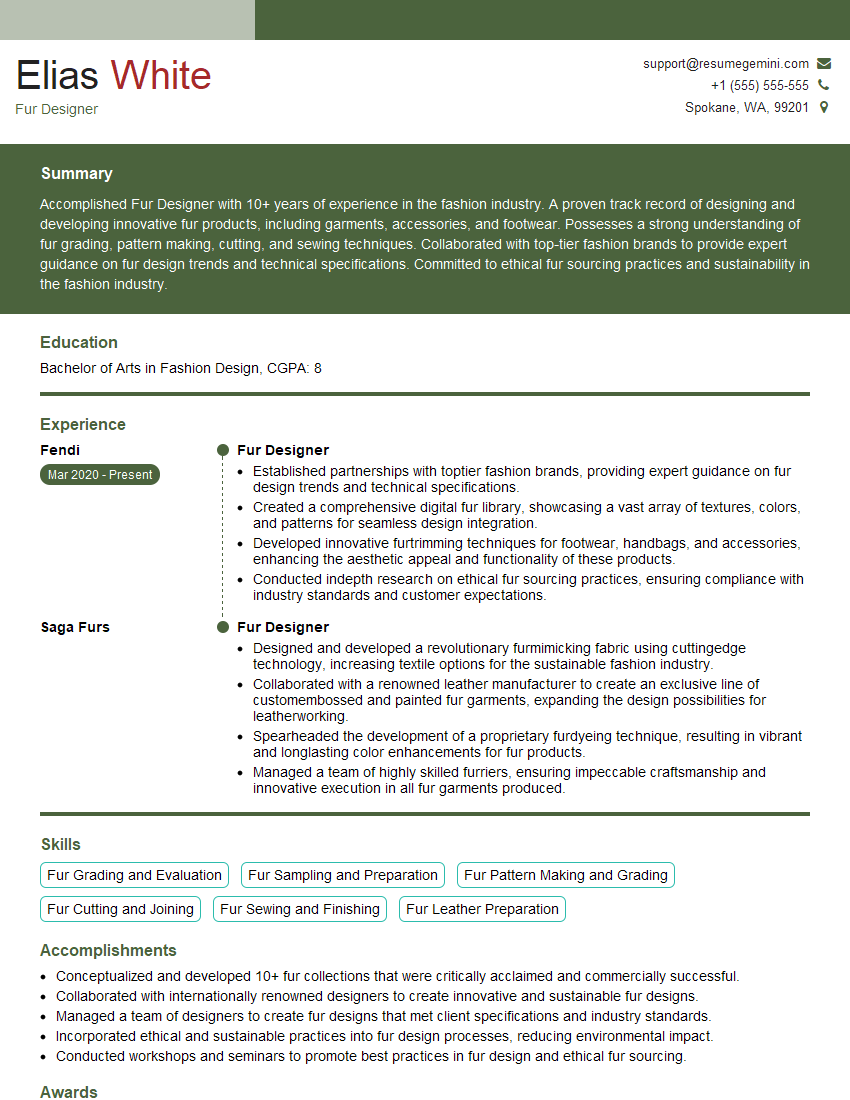
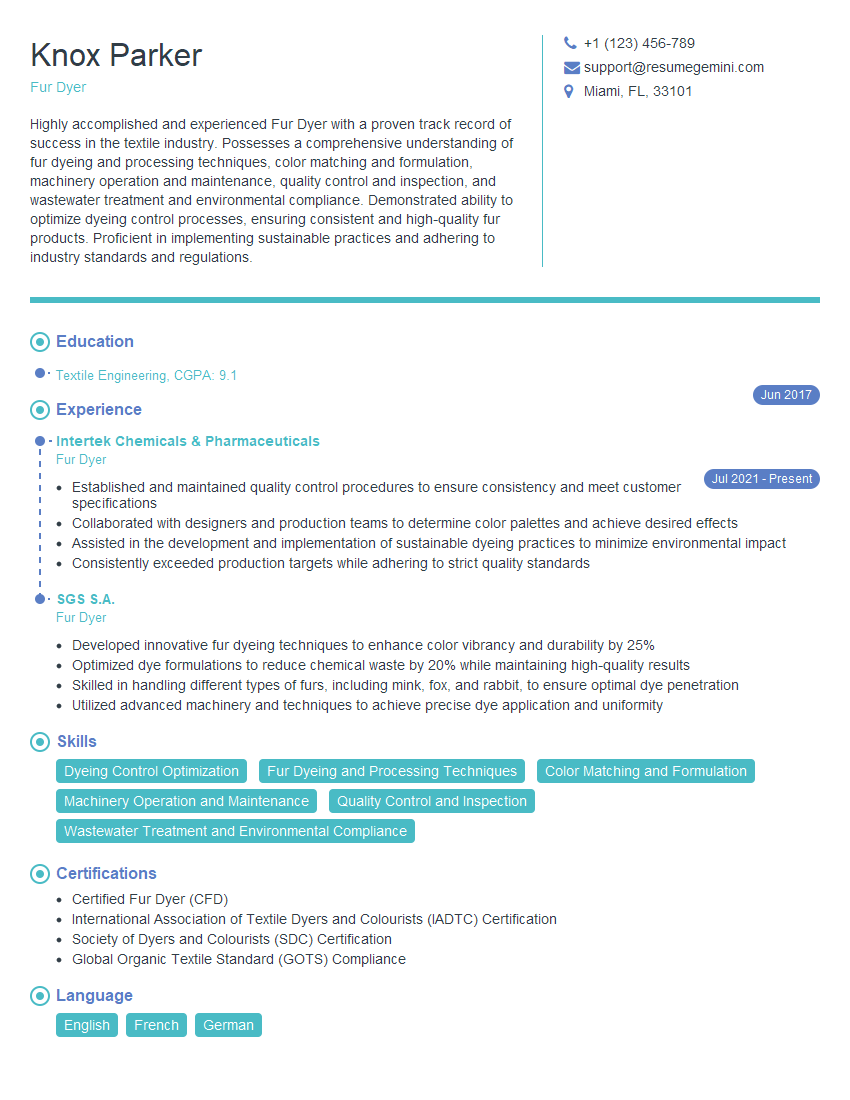
Mastering fur alteration techniques significantly enhances your skillset and opens doors to rewarding career opportunities in the fashion and design industry. A strong understanding of these techniques will make you a highly sought-after candidate. To maximize your job prospects, create an ATS-friendly resume that highlights your expertise. We highly recommend using ResumeGemini to build a professional and impactful resume that will catch the eye of recruiters. ResumeGemini provides examples of resumes tailored to the fur alterations field, ensuring your application stands out from the competition.



Explore more articles
Users Rating of Our Blogs
Share Your Experience
We value your feedback! Please rate our content and share your thoughts (optional).
What Readers Say About Our Blog
Amazing blog
Interesting Article, I liked the depth of knowledge you’ve shared.
Helpful, thanks for sharing.