Every successful interview starts with knowing what to expect. In this blog, we’ll take you through the top Inserting zippers, buttons, and other closures interview questions, breaking them down with expert tips to help you deliver impactful answers. Step into your next interview fully prepared and ready to succeed.
Questions Asked in Inserting zippers, buttons, and other closures Interview
Q 1. What types of zippers are you familiar with (e.g., coil, metal, invisible)?
I’m familiar with a wide range of zippers, each with its own unique properties and applications. The most common types include:
- Coil zippers: These are lightweight, flexible, and less prone to breakage than metal zippers. They are ideal for a variety of garments, especially those requiring a smooth, subtle closure.
- Metal zippers: Known for their durability and strength, metal zippers are a great choice for heavy-duty garments or outdoor apparel where resilience is crucial. However, they can be heavier and potentially more noisy.
- Invisible zippers: As their name suggests, these zippers are designed to be virtually hidden when sewn into a garment. This creates a clean, seamless look, perfect for dresses, skirts, and other items where a discrete closure is desired.
- Separating zippers: These zippers have two slider pulls and can be separated fully.
- Non-separating zippers: These zippers have one slider pull and cannot be fully separated.
Beyond these, there are also variations in zipper teeth (size, shape, and material) and tape (fabric type and color), influencing the overall feel and suitability for different projects.
Q 2. Describe the process of inserting a standard center zipper into a garment.
Inserting a center zipper is a fundamental skill in garment construction. Here’s a step-by-step process:
- Prepare the zipper and fabric: Press the zipper open and lay it face down on the wrong side of one garment piece. Align the zipper tape with the seam allowance.
- Baste the zipper: Using a long basting stitch, stitch the zipper tape to the garment along the seam line. Repeat for the other side.
- Close the zipper: Close the zipper and check for alignment. Pin the two garment pieces together, aligning the raw edges and the zipper.
- Stitch the seam: Using a zipper foot, stitch along the seam, close to the zipper teeth. Be careful not to sew over the zipper pull.
- Top stitch (optional): A topstitch along each side of the zipper adds extra durability and a finished look.
- Finishing: Trim seam allowances and press the garment.
Remember, a slow and steady pace ensures accuracy and a professional finish. Using the correct needle and thread type, along with a good quality zipper, will contribute to a successful outcome.
Q 3. How do you handle zipper alignment issues?
Zipper alignment problems often stem from imprecise pinning or stitching. If the zipper is crooked, I will carefully unpick the stitching and re-pin, ensuring the zipper is perfectly centered and aligned before resewing. This usually resolves most issues. For more complex misalignments, it may be necessary to completely remove the zipper and start again, double-checking each step of the process.
In some cases, the problem may be with the zipper itself – for example, if the zipper teeth are damaged or uneven. It’s crucial to use high-quality zippers to minimize such problems.
Q 4. What tools and techniques do you use for inserting invisible zippers?
Inserting an invisible zipper requires precision and specialized tools. Here’s what I use:
- Invisible zipper foot: This foot is essential, as it allows for precise stitching close to the zipper teeth without catching the fabric.
- Sharp needles: Fine needles prevent fabric damage.
- Matching thread: Using thread that blends in with the fabric is crucial for an invisible finish.
- Small, sharp pins: Precision is key when pinning an invisible zipper.
The process is similar to installing a regular zipper, but with careful attention to detail. The zipper is typically basted in place before being stitched with the zipper foot. Small, even stitches are crucial to maintaining the zipper’s discreet appearance. Any extra fabric near the zipper teeth needs to be trimmed carefully.
Q 5. What are common problems encountered when inserting zippers, and how do you troubleshoot them?
Common zipper insertion problems include crooked zippers, uneven stitching, broken teeth, and difficulty closing the zipper.
- Crooked zippers: This is typically caused by poor alignment during pinning or stitching. Repinning and re-stitching usually resolves this.
- Uneven stitching: Using a zipper foot and maintaining a consistent stitch length prevents this.
- Broken teeth: This indicates the use of a low-quality zipper or excessive stress during usage. Replacing the zipper is the solution.
- Zipper difficulty closing: This can be due to several factors such as tension on the zipper tape, a jammed slider, or misalignment of the teeth. Check each of these aspects to identify the cause.
Troubleshooting involves carefully examining the stitching and the zipper itself. Knowing how to unpick stitches neatly and accurately is a crucial part of problem-solving.
Q 6. How do you sew buttons securely onto various fabric types?
Sewing buttons securely depends on the fabric type and button type. For delicate fabrics like silk or lace, I would use a smaller needle and a finer thread, perhaps even hand-sewing for added control. For sturdier fabrics like denim or canvas, a heavier needle and thread would be appropriate.
Before sewing, I always pre-mark the button placement with tailor’s tacks or a fabric marker. I generally use a knot at the beginning of my thread, and multiple stitches through the button and fabric to ensure the button is firmly attached. I finish by securing the thread with several small knots and possibly a dab of fabric glue, especially for lighter fabrics.
Q 7. Explain different button attachment methods (e.g., shank buttons, sew-through buttons).
Different buttons require different attachment methods:
- Sew-through buttons: These are the most common type and are sewn directly through the button holes. Multiple stitches are used to ensure security.
- Shank buttons: These buttons have a small loop or shank on the back. The shank creates space between the button and the fabric, preventing pressure and potential fabric damage. They are sewn through the shank loop rather than the button directly.
- Buttons with four holes: Stitching through these is typically done in an X pattern or parallel lines, again with multiple passes for security.
The choice of method depends on the type of button and the fabric’s weight and texture. Selecting the right technique ensures a strong and lasting attachment.
Q 8. How do you adapt your button sewing technique for different button sizes and fabrics?
Adapting my button sewing technique to different button sizes and fabrics involves understanding the interplay between the button’s size and weight, and the fabric’s thickness and texture. For instance, tiny buttons on delicate silk require a finer needle and thread, and possibly a gentler hand-sewing technique to avoid damaging the fabric. Larger, heavier buttons on sturdy denim might need a sturdier needle and perhaps a backstitch for extra security.
Fabric Considerations:
- Lightweight Fabrics (silk, chiffon): Use a fine needle (size 70/10 or smaller), lightweight thread, and a small number of stitches to secure the button. A knot on the back is often sufficient.
- Medium-Weight Fabrics (cotton, linen): A medium-sized needle (size 80/12) and a medium-weight thread are usually suitable. I often use a button shank (explained further in Question 2) here for added durability.
- Heavyweight Fabrics (denim, canvas): A heavier needle (size 90/14 or larger) and strong thread are necessary. Multiple stitches are vital to prevent the button from tearing through the fabric. I would also be more inclined to use a button shank here.
Button Size Considerations:
- Small Buttons: Require precise placement and fewer stitches; a magnifying glass can be helpful.
- Large Buttons: Need more stitches and possibly a reinforcement fabric underneath to prevent them from pulling through the garment.
Essentially, it’s about choosing the right tools and adjusting your stitch density based on the specific requirements of the fabric and button.
Q 9. What are some common issues when attaching buttons, and how do you prevent them?
Common issues when attaching buttons include loose buttons, broken threads, and uneven placement. These can be prevented with careful preparation and technique.
- Loose Buttons: This often stems from insufficient stitches or using the wrong type of thread. Using a button shank (a small loop of thread between the button and the fabric) is an excellent way to improve durability and prevent the button from pulling through. For a button shank, I wrap thread around the needle several times before securing it to the fabric.
- Broken Threads: Employing high-quality thread that matches the fabric’s weight is crucial. Using a knot at the beginning and end of the stitching also helps prevent breakage. Over-tightening stitches can also contribute to breakage.
- Uneven Placement: Using marking tools like tailor’s chalk or pins ensures accurate button placement before sewing. Using a template can also be beneficial when attaching several buttons.
Example: Imagine sewing buttons on a child’s shirt. Ensuring strong button attachments is paramount to prevent accidents. I would absolutely use a button shank to make those buttons durable.
Q 10. How do you determine the correct placement of buttons and buttonholes?
Determining the correct placement of buttons and buttonholes is crucial for garment functionality and aesthetics. It’s a matter of precision and understanding garment construction.
Process:
- Check the Pattern: The pattern usually provides markings for button and buttonhole placement. These markings should be carefully transferred to the fabric.
- Consider Garment Closure: The buttons and buttonholes must align perfectly when the garment is closed. This is where precise measuring and marking are essential.
- Maintain Even Spacing: Buttons and buttonholes should be evenly spaced to avoid stress on one area of the closure.
- Test Fit: After placing the buttons, it’s crucial to test-close the garment to ensure proper alignment and comfortable closure.
Example: When attaching buttons to a tailored shirt front, the spacing between buttons should be consistent for symmetry and to maintain the fabric’s drape. A slight mismatch can affect the overall garment drape and aesthetics.
Q 11. Describe your experience with different types of closures (e.g., hooks and eyes, snaps, Velcro).
My experience encompasses a wide range of closures, each with its unique application and advantages.
- Hooks and Eyes: Ideal for close-fitting garments where a secure, discrete fastening is required. They are commonly used in bras, dresses, and jackets.
- Snaps: Offer quick and easy fastening, making them suitable for casual wear and children’s clothing. They are relatively simple to attach, but need to be appropriately sized for fabric weight.
- Velcro: A convenient, versatile closure often used in sportswear, children’s clothing, and bags. Easy to open and close, but less elegant than other closures and prone to wear over time.
Selecting the right closure depends on factors like the garment type, the desired level of security, and the aesthetic considerations. A formal dress, for example, would benefit from hooks and eyes for a clean, tailored finish, while a child’s play shirt might favor snaps for durability and ease of use.
Q 12. How do you attach hooks and eyes to ensure durability?
Attaching hooks and eyes for durability requires careful selection and precise placement. I always use a needle that is appropriate for the fabric weight. Using a strong thread, such as nylon or polyester thread, is crucial. The key is strong and secure stitching, ensuring that the hook and eye are firmly fixed to the fabric.
Steps:
- Pre-mark Placement: Precisely mark the location of hooks and eyes on both sides of the garment.
- Secure Stitching: Use several small, secure stitches to attach each hook and eye, ensuring the closure remains sturdy. The stitching should pass through the hook and eye’s metal components for optimum grip.
- Reinforcement: Consider reinforcing the area with interfacing or a lightweight fabric patch, especially if dealing with delicate or stretchy fabrics to prevent tearing under strain.
- Test Functionality: Always test the closure’s strength and ease of use after attaching.
Durability is paramount; a poorly attached hook and eye can lead to frustration and garment damage. Think of a well-fitted coat – the hooks and eyes are often under considerable strain, so security is key.
Q 13. What techniques do you use for attaching snaps efficiently?
Efficient snap attachment involves the right tools and a steady hand. I typically use a snap fastener setting tool which significantly speeds up the process and ensures uniform application. The tool compresses the snap components together, creating a firm and lasting connection.
Steps:
- Prepare the Fabric: Mark the precise location for the snaps, ensuring proper alignment. Consider reinforcing the fabric with a small piece of interfacing for extra support, especially if the fabric is thin.
- Position Snap Components: Place the socket (female) part of the snap on one piece of fabric and the stud (male) part on the other. Use the setting tool’s appropriate setting to firmly attach the snaps to the fabric.
- Check Alignment: Always check that the snaps align and close securely after setting.
The setting tool is indispensable for neat, uniform results. Manually setting snaps is possible, but prone to misalignment and weaker attachments. For large-scale projects, a heavy-duty snap setting tool ensures efficiency and consistency.
Q 14. What are the advantages and disadvantages of using Velcro closures?
Velcro closures offer several advantages and disadvantages.
Advantages:
- Ease of Use: Velcro is very easy to open and close, making it suitable for garments intended for people with limited mobility or children’s clothes.
- Versatility: It can be used on a wide range of fabrics and garment types.
- Washability: Generally machine washable if properly applied.
Disadvantages:
- Durability: Can lose its stickiness over time, especially with frequent use or washing.
- Appearance: Can be less aesthetically pleasing than other closures, making it less suitable for formal wear.
- Adhesiveness: Can sometimes leave residue on fabrics or other surfaces it touches.
The choice of using Velcro should consider the garment’s intended use and the acceptable level of longevity and aesthetics. It’s great for outdoor gear or children’s clothing, where ease of use and wash-ability are paramount, but less suited to formalwear.
Q 15. How do you ensure consistent quality in the application of closures?
Consistent quality in closure application hinges on meticulous preparation and precise execution. It’s about establishing a standardized process and sticking to it.
- Pre-preparation: This includes carefully pre-measuring and marking fabric, ensuring the closures are the correct size and type for the garment, and selecting the appropriate needles and thread.
- Consistent stitching: Maintaining a consistent stitch length, tension, and speed throughout the process is crucial. Think of it like baking a cake – a slightly different temperature or baking time can dramatically impact the result. Using a sewing machine with adjustable settings allows for precise control.
- Quality control checks: Regularly inspect your work, checking for even stitching, proper closure alignment, and the absence of skipped stitches or puckering. A quick check after each closure application helps catch mistakes early on and prevents rework.
- Machine maintenance: A well-maintained machine is essential. Regular cleaning, lubrication, and needle changes prevent malfunctions and ensure consistent stitch quality.
For example, when attaching zippers, consistent quality means the zipper is centered, the stitching is neat and even on both sides, and the zipper functions smoothly. Inconsistency might result in a crooked zipper, uneven stitching, or a zipper that gets stuck.
Career Expert Tips:
- Ace those interviews! Prepare effectively by reviewing the Top 50 Most Common Interview Questions on ResumeGemini.
- Navigate your job search with confidence! Explore a wide range of Career Tips on ResumeGemini. Learn about common challenges and recommendations to overcome them.
- Craft the perfect resume! Master the Art of Resume Writing with ResumeGemini’s guide. Showcase your unique qualifications and achievements effectively.
- Don’t miss out on holiday savings! Build your dream resume with ResumeGemini’s ATS optimized templates.
Q 16. What is your experience with industrial sewing machines for closure insertion?
My experience with industrial sewing machines for closure insertion is extensive. I’m proficient in operating various models, from single-needle machines to those with specialized attachments for specific closures like zippers or buttons.
I’ve worked with machines from brands such as Juki, Singer, and Durkopp Adler, and am familiar with their unique features and maintenance requirements. I understand how to adjust the stitch length, tension, and pressure foot settings to accommodate different fabrics and closure types. For instance, heavier fabrics might require a stronger needle and increased pressure, while delicate fabrics necessitate a finer needle and lighter pressure. My expertise includes using specialized attachments, such as zipper feet and button-sewing attachments, that significantly increase efficiency and accuracy.
I’m also comfortable troubleshooting common machine issues and performing routine maintenance to ensure optimal performance. This includes tasks such as oiling, cleaning, and replacing needles and belts as needed.
Q 17. How do you maintain sewing machine needles and prevent damage during closure insertion?
Maintaining sewing machine needles is paramount for preventing damage during closure insertion and ensuring high-quality results. A dull or damaged needle can lead to skipped stitches, broken threads, and even fabric damage.
- Regular inspection: I inspect needles before each use, checking for bending, burrs, or damage. Even microscopic imperfections can impact stitch quality.
- Proper needle selection: I choose the correct needle size and type based on the fabric weight and closure material. Using the wrong needle can lead to broken needles and fabric damage.
- Needle changes: I change needles regularly, even if they appear undamaged, to maintain consistent stitch quality. Think of it like sharpening a pencil – it eventually wears down and needs replacing.
- Storage: I store needles in a safe, organized manner to prevent damage.
For instance, using a fine needle on heavy denim will result in a broken needle, while using a heavy needle on fine silk will cause damage to the fabric. Regular needle changes ensure consistent stitching and prevent costly mistakes.
Q 18. How do you troubleshoot a jammed sewing machine during closure insertion?
Troubleshooting a jammed sewing machine requires a systematic approach. Panicking only makes things worse.
- Safety First: Unplug the machine before attempting any repairs.
- Identify the Problem: Is the needle jammed? Is there thread buildup? Is the bobbin case causing issues? Carefully examine the machine to pinpoint the exact location of the jam.
- Clear the Jam: Gently remove any obstructions such as broken needles, thread tangles, or fabric scraps. Use tweezers or a small brush to remove debris.
- Check the Bobbin Case: Ensure the bobbin is properly wound and inserted, and that the bobbin case is correctly positioned.
- Check the Needle: Make sure the needle is correctly inserted and not bent or damaged.
- Test the Machine: After addressing the apparent issue, test the machine to ensure it functions correctly. If the problem persists, it might require professional attention.
For example, if the machine keeps jamming, the problem might be due to improper threading, a damaged bobbin case, or a blunt needle. Addressing these issues one by one is key to resolving the jam.
Q 19. How do you handle different fabric thicknesses when inserting closures?
Handling different fabric thicknesses requires adjusting the sewing machine settings and possibly using different needles and threads.
- Needle Selection: Heavier fabrics need stronger needles, while lighter fabrics require finer needles. For example, a size 16 needle might be suitable for heavy denim, while a size 9 needle is better for silk.
- Stitch Length: Shorter stitch lengths are generally preferred for heavier fabrics to increase durability, whereas longer stitch lengths can work well with lighter fabrics.
- Pressure Foot Adjustment: The pressure foot needs to apply enough pressure to feed the fabric smoothly through the machine. Too much pressure on lightweight fabrics can cause puckering, while too little pressure on heavy fabrics can lead to uneven stitching.
- Thread Type: Thicker threads are generally used with heavier fabrics for added strength.
For example, sewing a zipper into a heavy wool coat requires a stronger needle, shorter stitch length, and potentially a heavier-weight thread than sewing the same zipper onto a light cotton blouse. Adjusting these factors ensures that the stitching is strong and the fabric is not damaged during the process.
Q 20. What safety precautions do you observe when working with sewing machines and sharp objects?
Safety is paramount when working with sewing machines and sharp objects. A moment’s carelessness can result in serious injury.
- Machine Safety: Always unplug the sewing machine before cleaning, maintenance, or repairs. Keep fingers clear of moving parts. Use the appropriate safety guards and attachments provided by the manufacturer.
- Needle Safety: Handle needles with care, using a needle minder or a magnetic needle holder to prevent accidental pricks. Never leave needles lying around.
- Fabric Handling: Always use fabric scissors, not household scissors, and maintain a clean, organized workspace to avoid accidents. Keep long hair tied back.
- Eye Protection: Consider safety glasses, especially when working with delicate fabrics or when performing high-speed sewing.
Ignoring these safety measures can lead to needle-related injuries, cuts from sharp scissors, or even entanglement in moving machine parts. Prioritizing safety ensures a safe and productive work environment.
Q 21. How do you determine the correct thread type and tension for different closures?
Choosing the correct thread type and tension is crucial for achieving professional-looking and durable closure applications. The wrong thread can lead to broken stitches, uneven stitching, and ultimately, a poorly functioning closure.
- Thread Type: Consider the fabric weight and the closure type. Heavier fabrics generally require stronger, thicker threads, while lighter fabrics can utilize thinner threads. For example, polyester thread is strong and durable, suitable for many types of closures and fabrics. Cotton thread is softer and better suited for delicate fabrics.
- Thread Tension: Appropriate thread tension ensures that the top and bottom threads interlock properly, creating a secure and even stitch. Too much tension can cause puckering or thread breakage, while too little tension can result in loose stitches.
- Testing: Before beginning a project, always test the thread and tension settings on a scrap piece of the same fabric to ensure the quality and strength of the stitches.
For example, when attaching buttons, using a thread that’s too thin might cause the buttons to pull off easily, whereas using thread that’s too thick might damage the fabric or create an unsightly stitch. The correct thread tension will ensure the buttons are firmly attached without straining the fabric.
Q 22. Describe your experience with quality control procedures for closure insertion.
Quality control in closure insertion is paramount for producing high-quality garments. My approach involves a multi-stage process, starting with inspecting the closures themselves for any defects before they even reach the sewing machine. This includes checking for damage, inconsistencies in size or color, and ensuring they meet the required specifications. During the sewing process, I regularly check the stitching for consistency, ensuring the correct stitch type and tension are used. I also visually inspect each garment for proper alignment and evenness of the closures. Finally, I perform a functional test, ensuring zippers zip smoothly, buttons are securely fastened, and other closures perform as expected. This layered approach ensures we catch problems early and prevent defective items from reaching the customer.
I maintain detailed records of inspections, documenting any issues encountered and the corrective actions taken. This data helps identify trends and allows us to refine our processes, continuously improving our quality control standards.
Q 23. How do you identify defects in closure application?
Identifying defects in closure application requires a keen eye and attention to detail. Common defects include uneven stitching, skipped stitches, incorrect placement of the closure, loose or insecure attachment, and damage to the fabric surrounding the closure. I check for these issues by carefully examining each garment visually under good lighting. I also perform a functional test to ensure zippers work smoothly, buttons fasten securely, and hook-and-eye closures latch correctly. A consistent and systematic approach minimizes the risk of overlooking even small imperfections.
For example, a slightly misaligned zipper could cause the garment to look uneven or the zipper to bind, rendering it unusable. Similarly, a button sewn on too loosely could easily fall off.
Q 24. How do you handle damaged or defective closures?
Handling damaged or defective closures depends on the nature of the defect and the stage of production. If a closure is damaged before sewing, I promptly replace it with a new, functional closure. If the defect occurs during sewing, such as broken stitching, I carefully remove the faulty stitching and re-sew the closure. If the fabric is damaged during closure application, repair may be necessary, or the garment may be considered beyond repair, depending on the severity of the damage. In either case, I meticulously document each instance of damage and the solution implemented, contributing to our continuous improvement process. Any rejected closures are carefully stored and labelled according to the type of defect, allowing us to analyze potential underlying causes and prevent recurrence.
Q 25. What is your experience with different sewing machine stitch types for various closures?
My experience encompasses a variety of sewing machine stitch types for different closures. For zippers, I utilize a strong, durable stitch like a lockstitch (301) or a zigzag stitch (11) to ensure a secure and resilient attachment. The choice depends on the fabric weight and zipper type. For buttons, I often use a sturdy blanket stitch (401 or similar) for added strength and aesthetic appeal. For smaller closures like hooks and eyes, a fine lockstitch is usually sufficient. I adjust stitch length and tension depending on the fabric and closure material to prevent damage and maintain consistent quality. Understanding the strengths and weaknesses of different stitch types is crucial for achieving long-lasting, reliable closure attachments.
Q 26. How do you ensure consistent spacing between buttons or other closures?
Consistent spacing between buttons or other closures is essential for a professional finish. I use a variety of techniques, depending on the project. For buttons, I often use a tailor’s gauge or a ruler to precisely measure the spacing between each button. Alternatively, I can mark the locations using tailor’s chalk or a washable marker before stitching. For zippers or other linear closures, I ensure consistent spacing by carefully following the garment pattern and checking alignment frequently. Utilizing a sewing guide or template on the sewing machine can also aid in achieving perfectly spaced closures. Paying attention to detail and using appropriate measuring tools is essential for maintaining uniformity and avoiding an unprofessional appearance.
Q 27. How do you measure and mark the placement of closures accurately?
Accurate measurement and marking of closure placements is foundational to successful closure insertion. I begin by carefully examining the garment pattern and noting the precise location for each closure. I use a variety of tools, including rulers, measuring tapes, tailor’s chalk, and disappearing ink markers to mark the intended positions on the garment. I double-check measurements to avoid errors. For symmetrical placements, I often fold the garment in half and mark the center point before calculating the positions of closures on either side. Precise marking guarantees the closure is accurately aligned and avoids potential issues like misalignment or uneven spacing.
Q 28. Describe a time you had to troubleshoot a difficult closure application.
I once encountered a challenging situation involving a heavy-duty, metal zipper on a thick leather jacket. The leather was exceptionally stiff, making it difficult to feed the zipper tape through the machine without causing puckering or damage. I first tried using different needle sizes and stitch types to find the optimal configuration to penetrate the thick leather without breaking the needle or damaging the fabric. However, the puckering persisted. Then I decided to use a walking foot on the machine, which helped evenly feed the layers of leather through the sewing machine. Finally, I used a lower sewing speed and carefully guided the fabric, preventing uneven feed and tension. The combination of the walking foot and adjusting the speed resulted in a clean, durable zipper installation. This experience highlighted the importance of adaptability and problem-solving skills in this profession.
Key Topics to Learn for Inserting Zippers, Buttons, and Other Closures Interview
- Understanding Fabric Types and Their Properties: Knowing how different fabrics (e.g., denim, silk, leather) affect closure insertion techniques is crucial. This includes understanding fabric weight, stretch, and drape.
- Mastering Zipper Insertion Techniques: This includes various zipper types (invisible, metal, plastic), methods of inserting zippers (hand-sewing, machine sewing), and troubleshooting common issues like zipper jams or uneven stitching.
- Button Attachment Methods: Explore different button types (e.g., shank, flat), sewing techniques (e.g., hand-sewing, machine sewing with specialized feet), and understanding appropriate thread types and needle sizes.
- Working with Other Closures: Gain proficiency in using hooks and eyes, snaps, Velcro, and other fastening mechanisms. Understand the strengths and weaknesses of each closure type and their suitability for different garments.
- Seam Finishing and Reinforcement: Learn techniques for creating strong, durable seams around closures to prevent unraveling and extend the garment’s lifespan. This includes techniques like reinforcing bartacks and using interfacing.
- Quality Control and Inspection: Develop a keen eye for detail to ensure closures are securely attached, properly aligned, and function smoothly. Understanding quality standards in the garment industry is essential.
- Troubleshooting and Problem-Solving: Develop strategies for identifying and resolving common problems encountered during closure insertion, such as broken needles, skipped stitches, or incorrectly positioned closures.
- Safety Practices and Equipment Usage: Understand safe operating procedures for sewing machines and other relevant tools. This includes proper needle handling and maintenance.
Next Steps
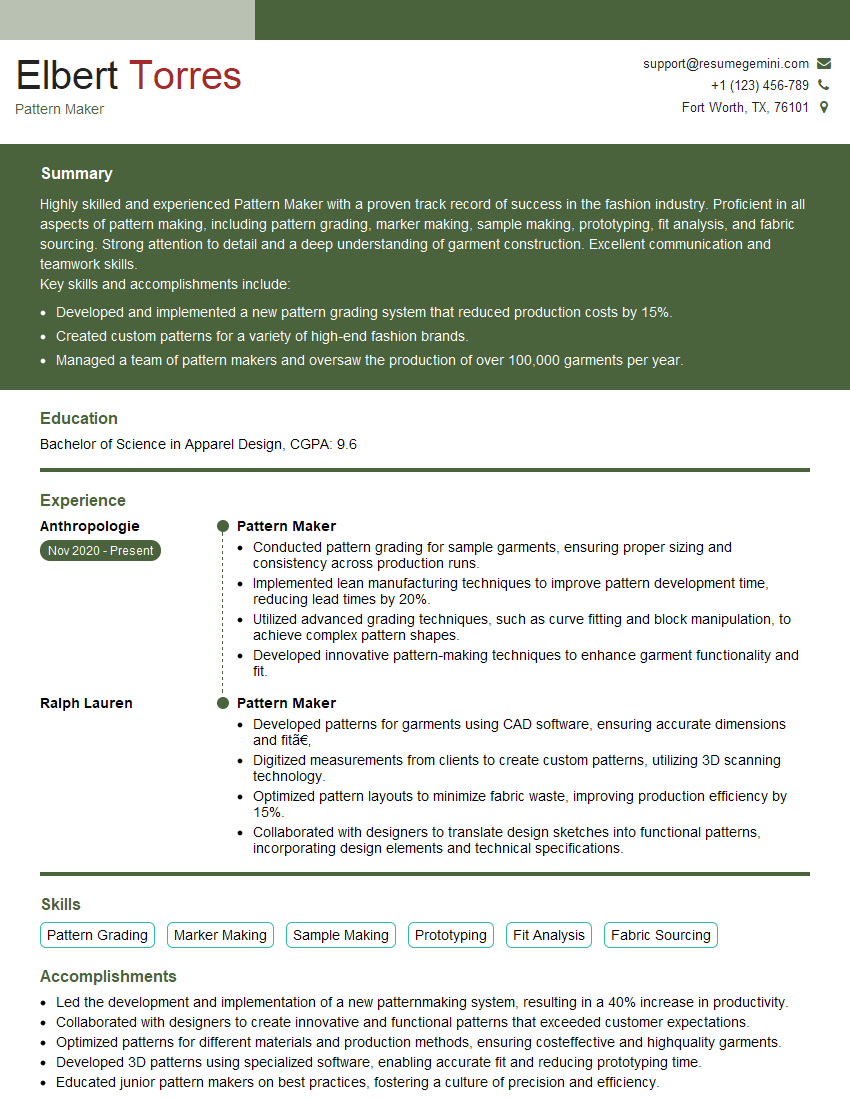
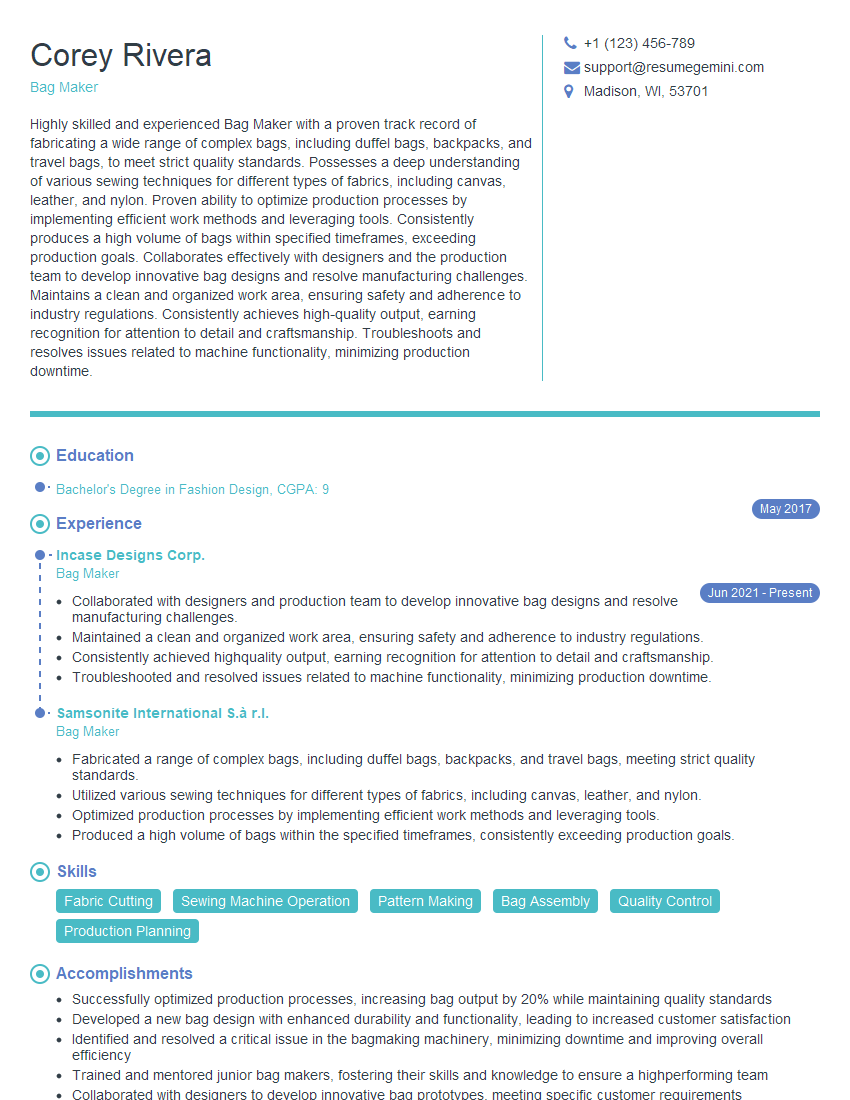
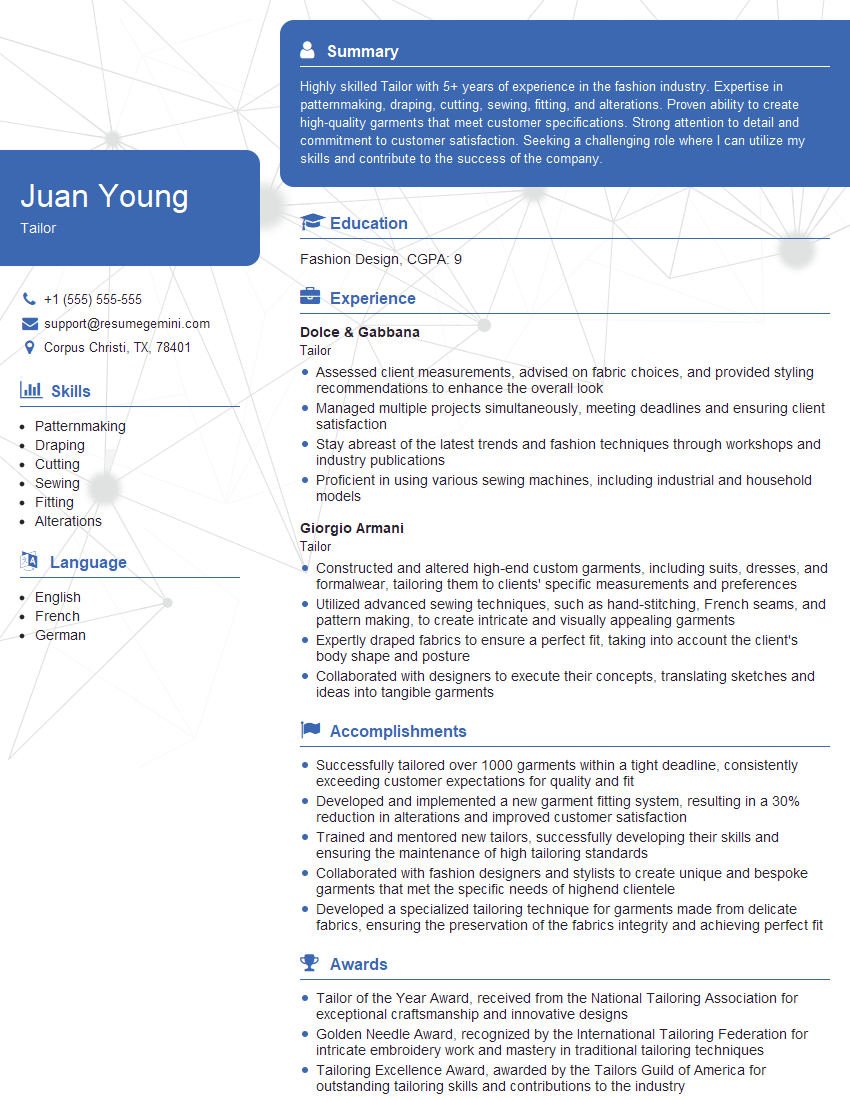
Mastering the art of inserting zippers, buttons, and other closures is a highly valuable skill that significantly enhances your employability in the garment manufacturing and related industries. It demonstrates precision, attention to detail, and practical expertise. To further boost your job prospects, creating a strong, ATS-friendly resume is paramount. ResumeGemini is a trusted resource to help you build a professional resume that highlights your skills and experience effectively. Examples of resumes tailored to showcasing expertise in inserting zippers, buttons, and other closures are available to guide you.






Explore more articles
Users Rating of Our Blogs
Share Your Experience
We value your feedback! Please rate our content and share your thoughts (optional).
What Readers Say About Our Blog
Amazing blog
hello,
Our consultant firm based in the USA and our client are interested in your products.
Could you provide your company brochure and respond from your official email id (if different from the current in use), so i can send you the client’s requirement.
Payment before production.
I await your answer.
Regards,
MrSmith
hello,
Our consultant firm based in the USA and our client are interested in your products.
Could you provide your company brochure and respond from your official email id (if different from the current in use), so i can send you the client’s requirement.
Payment before production.
I await your answer.
Regards,
MrSmith
These apartments are so amazing, posting them online would break the algorithm.
https://bit.ly/Lovely2BedsApartmentHudsonYards
Reach out at BENSON@LONDONFOSTER.COM and let’s get started!
Take a look at this stunning 2-bedroom apartment perfectly situated NYC’s coveted Hudson Yards!
https://bit.ly/Lovely2BedsApartmentHudsonYards
Live Rent Free!
https://bit.ly/LiveRentFREE
Interesting Article, I liked the depth of knowledge you’ve shared.
Helpful, thanks for sharing.
Hi, I represent a social media marketing agency and liked your blog
Hi, I represent an SEO company that specialises in getting you AI citations and higher rankings on Google. I’d like to offer you a 100% free SEO audit for your website. Would you be interested?