Are you ready to stand out in your next interview? Understanding and preparing for Knowledge of Boarding Procedures interview questions is a game-changer. In this blog, we’ve compiled key questions and expert advice to help you showcase your skills with confidence and precision. Let’s get started on your journey to acing the interview.
Questions Asked in Knowledge of Boarding Procedures Interview
Q 1. Explain the difference between zone boarding and back-to-front boarding.
Zone boarding and back-to-front boarding are two distinct methods for organizing passenger flow onto an aircraft. They differ significantly in their approach to seat assignment and boarding order.
Zone boarding divides the aircraft into numbered zones, typically corresponding to sections of the cabin. Passengers are called to board according to their assigned zone, allowing for more efficient filling of overhead bins and minimizing aisle congestion. Think of it like filling a stadium section by section. This method is generally faster than other methods due to its organized approach.
Back-to-front boarding, conversely, prioritizes passengers seated furthest from the entrance (at the back of the plane). They board first, followed by passengers progressively closer to the front. This strategy aims to minimize disruption to already seated passengers and allows those seated further back quicker access to their luggage. However, it often leads to longer overall boarding times, as many passengers may still be waiting near the front even after the back is full.
In practice, airlines often choose the boarding method they feel best suits their aircraft type, passenger volume, and operational goals.
Q 2. Describe the procedure for handling a passenger with special needs during boarding.
Handling passengers with special needs during boarding requires a proactive and compassionate approach. It’s crucial to anticipate their specific requirements and provide assistance throughout the process.
- Pre-Boarding Assistance: Airlines often provide pre-boarding access for passengers needing extra time or assistance. This allows them to settle comfortably before the general boarding rush.
- Wheelchair Assistance: Passengers requiring wheelchairs should be met by ground staff who provide safe and timely transport to the aircraft and assist with boarding and stowing mobility devices.
- Medical Needs: Passengers with medical conditions needing oxygen or other specialized care should have their requirements communicated to the cabin crew well in advance. Coordination with medical personnel on the ground might also be necessary.
- Communication: Clear and empathetic communication with the passenger is key, ensuring they understand each step of the process. Providing updates and reassurance helps to alleviate anxiety.
- Documentation: Proper documentation of passenger’s specific needs and the assistance provided is essential for safety and accountability. This record helps in case of any unforeseen issues.
Essentially, we strive to make the boarding experience as comfortable and stress-free as possible for passengers with special needs, adjusting the process to meet their individual requirements.
Q 3. What are the key safety considerations during the boarding process?
Safety during boarding is paramount. The following considerations are critical:
- Clear Communication: Instructions must be clear, concise, and understood by all passengers. This includes announcements, signage, and instructions from gate agents.
- Controlled Movement: Maintaining an orderly flow of passengers prevents collisions and crowding. Clear pathways and designated waiting areas are essential.
- Proper Baggage Handling: Passengers should be guided on properly stowing carry-on luggage. Oversized or improperly stowed bags can pose safety risks.
- Emergency Procedures: Staff must be aware of emergency procedures and evacuation routes in case of an unforeseen event. This involves regular training and drills.
- Passenger Awareness: Passengers should be educated about safety regulations, such as the use of seatbelts during taxiing and the location of emergency exits.
In essence, safety is prioritized by creating a structured, organized, and informed environment at the gate and on the aircraft.
Q 4. How do you manage passenger flow to avoid delays during boarding?
Managing passenger flow efficiently requires a multifaceted approach. It starts with effective pre-boarding planning and extends to on-site coordination.
- Boarding Pass Technology: Utilizing advanced boarding pass scanning technology expedites the process. This can include barcode or QR code scanners.
- Group Boarding Strategies: Employing efficient boarding strategies like zone boarding or modified back-to-front approaches can minimize delays.
- Gate Staff Coordination: Well-trained gate agents and crew can guide passengers effectively, reducing congestion.
- Clear Signage and Announcements: Clear instructions and announcements help passengers understand the process and their role in keeping things moving.
- Pre-boarding for Special Needs: Providing pre-boarding for passengers with disabilities ensures they are settled before the general boarding rush.
For example, I’ve seen airlines successfully use algorithms to optimize boarding order based on passenger seat assignment. The goal is to maximize passenger throughput and minimize wait times.
Q 5. What is your experience with different boarding pass scanning technologies?
I have extensive experience with various boarding pass scanning technologies. I’ve worked with barcode scanners, QR code scanners, and more recently, systems using biometric identification.
- Barcode Scanners: These are reliable and widely used, but can be slower compared to newer technologies.
- QR Code Scanners: These are faster and more efficient, and have become increasingly common.
- Biometric Scanners: These offer the potential for even greater efficiency and improved security by identifying passengers through fingerprint or facial recognition. However, they require significant investment and potentially raise privacy concerns that need careful management.
My experience shows that the choice of technology often depends on factors such as budget, passenger volume, and the airline’s technological infrastructure. Each system has its own advantages and disadvantages, and effective implementation requires proper training and maintenance.
Q 6. Describe your experience with addressing passenger complaints during boarding.
Addressing passenger complaints during boarding requires a calm and professional approach. Empathy and understanding are crucial.
- Active Listening: The first step is to listen carefully to the passenger’s concerns without interruption. Show them you are understanding.
- Acknowledge Concerns: Acknowledge the validity of their feelings, even if you can’t immediately solve the problem.
- Problem Solving: Try to find a solution that satisfies both parties. This might involve providing alternative seating arrangements, offering compensation, or escalating the issue to a supervisor.
- Documentation: Document the complaint and any actions taken. This helps in identifying recurring issues or improving procedures.
- Follow-Up: When appropriate, following up with the passenger to ensure their concerns have been addressed demonstrates a commitment to customer service.
I recall an instance where a passenger was frustrated by a delayed flight. By actively listening to their concerns and offering a sincere apology, I was able to de-escalate the situation and offer a drink voucher, leaving the passenger with a more positive impression despite the initial frustration.
Q 7. Explain the importance of pre-boarding announcements.
Pre-boarding announcements are crucial for a smooth and safe boarding process. They serve several vital functions:
- Information Dissemination: They inform passengers about procedures, gate changes, and any delays.
- Organized Boarding: They direct passengers to their designated zones or boarding groups, maintaining order and minimizing confusion.
- Safety Instructions: They can reiterate important safety information, such as carry-on baggage restrictions and emergency procedures.
- Passenger Preparation: They provide passengers with time to gather their belongings and prepare for boarding.
- Reduced Stress: Clear and timely announcements alleviate passenger anxiety and contribute to a more positive boarding experience.
Clear, concise, and well-timed announcements are essential for a seamless and safe boarding process. This shows attention to detail and concern for passenger comfort.
Q 8. How do you ensure all passengers and their baggage are accounted for before departure?
Ensuring all passengers and their baggage are accounted for before departure is paramount for safety and operational efficiency. This involves a multi-layered approach starting well before boarding commences.
- Gate Agent Verification: Gate agents meticulously cross-reference the passenger manifest with boarding passes scanned at the gate. Any discrepancies trigger immediate investigation. This is akin to a restaurant taking final orders to make sure no customer is missed.
- Baggage Reconciliation: The number of checked bags is meticulously compared against the passenger manifest. Any discrepancies necessitate a thorough search of the baggage handling system. This might involve checking baggage carousels or contacting baggage handlers.
- Last Call Announcements: Clear and timely announcements are made for passengers who have yet to board. These are crucial and repeated several times to ensure nobody is left behind.
- Visual Confirmation: While not a foolproof method, a gate agent’s visual observation of the aircraft cabin helps in determining if all passengers are seated. This is essentially a final, visual check to confirm everything is in order.
By combining these methods, we establish a robust system for accurately accounting for everyone before the flight departs. A failure in any of these steps would cause a delay and even a potential safety hazard.
Q 9. What is your process for handling overbooked flights and passenger re-accommodation?
Handling overbooked flights requires a delicate balance of customer service and operational efficiency. The process involves several steps.
- Identifying Overbooking: Sophisticated algorithms and reservation systems predict potential overbooking. However, unexpected events (e.g., no-shows, last-minute cancellations) can still result in overbooked flights.
- Volunteer Program: We first offer incentives – such as complimentary flights, hotel stays, or cash compensation – to passengers willing to voluntarily give up their seats. This is the preferred method as it is mutually beneficial.
- Involuntary Bumping (Last Resort): If not enough volunteers are found, involuntary bumping becomes necessary. We adhere strictly to established prioritization criteria (e.g., frequent flyer status, ticket purchase date) to determine who is bumped.
- Reaccommodation: Bumped passengers are promptly rebooked on the next available flight to their destination, or they can opt for a full refund. We strive to minimize disruption and offer as much assistance as possible.
- Documentation & Communication: All steps are meticulously documented and passengers are kept informed at every stage of the process to ensure transparency and avoid misunderstandings.
For example, I once had to manage an overbooked flight during a major snowstorm. By offering generous incentives, we secured enough volunteers, avoiding the stressful situation of involuntary bumping.
Q 10. How do you manage security protocols during the boarding process?
Security protocols during boarding are non-negotiable. They are a collaborative effort between airline personnel, airport security, and passengers.
- Passenger Screening: Prior to reaching the gate, all passengers undergo security screening which includes baggage checks and body scans. This is overseen by airport security personnel, ensuring adherence to stringent regulations.
- Boarding Pass Verification: Gate agents meticulously check boarding passes against official identification to verify passenger identity, thwarting potential security threats.
- Controlled Access: Access to the gate area is strictly controlled, restricting entry to authorized personnel and passengers with valid boarding passes. This limits unauthorized access to sensitive areas.
- Security Alerts: We have protocols for responding to security alerts, including immediate communication with airport security and enforcement of evacuation procedures if necessary.
- Staff Training: Our staff receive regular training on security protocols, including identifying suspicious behavior and handling security breaches. This training is regularly updated to address emerging threats.
These layered security measures create a secure boarding environment. These measures, while thorough, are designed to be seamless to passengers without compromising security.
Q 11. What are the common causes of boarding delays, and how do you mitigate them?
Boarding delays can stem from various factors, but effective mitigation strategies are crucial.
- Late-Arriving Passengers: This is a frequent cause of delays. Strategies include strict adherence to boarding deadlines and pre-boarding for passengers with special needs.
- Baggage Handling Issues: Misplaced or delayed bags can disrupt boarding as passengers may need to resolve baggage problems before boarding. Efficient baggage handling systems and clear communication are crucial.
- Aircraft Maintenance Issues: Unexpected mechanical problems require attention, delaying departure. Regular aircraft maintenance and prompt troubleshooting are key for minimizing disruptions.
- Crew Delays: Flight crew delays due to unforeseen circumstances can delay the flight’s departure. Well-established communication channels and backup crew arrangements mitigate these scenarios.
- Air Traffic Control Delays: Air traffic congestion or unforeseen weather conditions can cause delays beyond the airline’s direct control. Continuous communication with air traffic control is vital for updates.
Proactive communication with passengers regarding delays, along with providing alternative solutions when possible, is paramount to minimizing dissatisfaction.
Q 12. Describe your experience with handling irate or disruptive passengers during boarding.
Handling irate or disruptive passengers during boarding requires patience, diplomacy, and a clear understanding of established protocols.
- De-escalation Techniques: Calmly approaching the passenger, actively listening to their concerns, and empathetically addressing their issues are essential. The goal is to de-escalate the situation.
- Clear Communication: Providing clear and concise explanations for any delays or inconveniences helps to manage expectations and diffuse anger.
- Seeking Assistance: If the situation escalates beyond our capacity to manage, we immediately alert airport security or law enforcement for assistance. Passenger safety is the top priority.
- Documentation: Thorough documentation of the incident, including the passenger’s behavior, steps taken, and any witnesses, is crucial for future reference and potential legal action if needed.
For example, I once managed a situation with a passenger who was upset about a missed connection. By actively listening and offering alternative travel arrangements, I was able to resolve the issue peacefully.
Q 13. How familiar are you with IATA (International Air Transport Association) boarding procedures?
I am very familiar with IATA (International Air Transport Association) boarding procedures. IATA sets industry best practices and standards for boarding processes, enhancing safety and efficiency.
My understanding extends to their recommendations on:
- Boarding Pass Standards: The format, information included, and security features of boarding passes.
- Boarding Methods: Different boarding strategies like back-to-front, zone-based, and other efficient boarding methods for improving passenger flow and minimizing delays.
- Passenger Handling: Best practices for handling passengers with special needs, disabilities, and those requiring assistance.
- Safety Procedures: Standard operating procedures for handling emergencies or disruptions during boarding.
Adhering to IATA guidelines ensures a standardized and globally recognized approach to boarding procedures, facilitating smoother transitions for passengers and airlines.
Q 14. Explain the procedure for handling lost or misplaced boarding passes.
Handling lost or misplaced boarding passes requires a swift and efficient process to minimize disruption for the passenger.
- Verification: We verify the passenger’s identity using official documentation like a passport or driver’s license.
- Database Check: We check our reservation system to confirm the passenger’s booking and flight details.
- Issuing a Replacement: If the booking is confirmed, we issue a replacement boarding pass after thorough identity verification. This might involve additional security checks.
- Exceptional Cases: In exceptional circumstances where identity verification is challenging, we may need to contact the passenger’s travel agency or other relevant parties to ensure security measures are followed. The goal is to balance passenger assistance with maintaining security protocols.
In essence, it involves verifying identity, confirming their booking, and then issuing a replacement. It’s critical to balance passenger convenience with security.
Q 15. What are the regulations surrounding boarding passengers with restricted items?
Regulations surrounding passengers with restricted items are stringent and vary depending on the airline, the destination, and international aviation regulations. Generally, prohibited items include hazardous materials (explosives, flammable liquids, etc.), weapons, and certain sharp objects. Restricted items, while allowed under certain conditions, often require special handling and may be subject to limitations on quantity. For example, liquids are typically restricted to 3.4 ounces (100ml) containers and must be placed in a transparent, quart-sized bag. The process involves thorough screening at security checkpoints before boarding. Passengers attempting to board with prohibited items will have those items confiscated, and depending on the severity, may face legal repercussions. Passengers with restricted items will need to declare them and may be subject to additional security checks.
Think of it like this: prohibited items are like bringing a bomb onto a plane – absolutely not allowed. Restricted items are like bringing a bottle of water; you can bring it, but it must be within the rules and regulations. Airlines provide detailed lists of prohibited and restricted items on their websites and mobile apps.
Career Expert Tips:
- Ace those interviews! Prepare effectively by reviewing the Top 50 Most Common Interview Questions on ResumeGemini.
- Navigate your job search with confidence! Explore a wide range of Career Tips on ResumeGemini. Learn about common challenges and recommendations to overcome them.
- Craft the perfect resume! Master the Art of Resume Writing with ResumeGemini’s guide. Showcase your unique qualifications and achievements effectively.
- Don’t miss out on holiday savings! Build your dream resume with ResumeGemini’s ATS optimized templates.
Q 16. How do you verify passenger identification during boarding?
Passenger identification verification is a crucial security measure. We primarily use boarding passes, which are linked to passenger manifests and databases, containing passport or identification details. Upon arrival at the gate, gate agents visually check the passenger’s photo identification against their boarding pass photo. In cases where there is a discrepancy or if the identification is invalid, we follow strict protocols to ensure the passenger’s identity is confirmed beyond any doubt, often involving contacting security personnel or airline supervisors. This may involve verifying the passenger’s travel documents, such as passports or other government-issued IDs, against an official database. Additional security measures may be employed in heightened security situations.
Q 17. Describe a time you had to adapt boarding procedures due to an unforeseen circumstance.
During a severe snowstorm, our airport experienced significant delays and cancellations. Several connecting flights were delayed, causing a backlog of passengers for our flight. We initially planned to follow our standard boarding procedure, but the large number of late arrivals jeopardized our on-time departure. To adapt, we coordinated with the ground crew, pilots, and other gate agents to implement a prioritized boarding system. We boarded passengers with connecting flights first, then proceeded with the rest of the passengers according to boarding groups. We communicated the changes clearly and calmly to the passengers, reassuring them. This ensured a smooth boarding process despite the unforeseen challenges, minimizing delays and maximizing passenger comfort under stressful conditions. We also proactively communicated with the airline’s operational center to provide real-time updates on the situation.
Q 18. How do you communicate effectively with pilots and other ground crew during boarding?
Effective communication with pilots and ground crew is essential for smooth boarding. We primarily use established communication channels: radio communication for immediate updates and quick problem solving and internal airline systems (like dedicated messaging platforms) for longer communication and record keeping. Clear, concise messages are crucial. For instance, we might say: “Flight 123, Gate A5, ready for boarding,” or “Flight 123, Gate A5, requesting a delay due to passenger backlog.” We use standardized terminology to avoid misunderstandings. Before boarding, we confirm passenger counts with the pilots and ground crew to ensure everyone is accounted for. During boarding, we report any issues, such as delayed passengers or wheelchair assistance needed. Post-boarding, we confirm that all passengers and baggage are onboard.
Q 19. What are the key performance indicators (KPIs) you use to measure the efficiency of the boarding process?
Key Performance Indicators (KPIs) for boarding efficiency include:
- On-time departure rate: Percentage of flights departing on schedule.
- Boarding completion time: Average time taken to complete the boarding process.
- Passenger throughput: Number of passengers boarded per hour.
- Passenger satisfaction: Measured through surveys or feedback, reflecting passenger experience during boarding.
- Number of delayed or missed connections due to boarding issues.
Q 20. What software or systems are you familiar with for managing boarding procedures?
I’m familiar with various software and systems used for managing boarding procedures, including Computer Reservation Systems (CRS), Airport Operational Databases (AODB), and Passenger Service Systems (PSS). These systems allow for the creation and management of passenger manifests, assigning boarding passes and seats, tracking baggage, and integrating with other airport systems. Example: AODB may provide real-time updates on aircraft arrival and gate assignments, impacting boarding times. PSS allow for advanced passenger information which may impact boarding, eg: assistance needed.
Q 21. How do you ensure compliance with all relevant safety regulations during boarding?
Ensuring safety compliance during boarding is paramount. This involves rigorous adherence to guidelines set by aviation authorities (like the FAA or EASA). We follow strict security protocols, including thorough passenger and baggage screening before boarding and frequent safety checks throughout the process. We maintain a safe and organized boarding environment by controlling passenger flow and providing clear instructions. We’re trained to handle emergency situations, such as medical emergencies or security threats, using established procedures and emergency response plans. Regular safety audits and training sessions ensure our team stays updated on regulations and best practices, minimizing risks and maintaining a high standard of safety.
Q 22. Describe your experience in training new employees on boarding procedures.
Training new employees on boarding procedures is crucial for a smooth and efficient passenger experience. My approach is multifaceted, combining theoretical knowledge with practical, hands-on training. I begin with a comprehensive overview of the boarding process, covering various aspects such as passenger check-in, baggage handling, security protocols, and gate management. This is followed by role-playing exercises where trainees simulate different scenarios, including dealing with challenging passengers or unexpected situations.
- Classroom Training: We use presentations, videos, and interactive modules to cover the airline’s specific boarding policies, procedures, and safety regulations.
- On-the-Job Training: New employees shadow experienced staff members, observing and participating in real-life boarding procedures. This allows them to learn by doing and adapt to the dynamic nature of the airport environment.
- Scenario-Based Training: We use case studies and simulations to prepare them for unexpected events, like a passenger with a medical emergency or a delayed flight. This helps them develop problem-solving skills and quick thinking under pressure.
- Feedback and Assessment: Regular feedback and performance evaluations are crucial. We provide constructive criticism and identify areas for improvement, ensuring consistent adherence to safety and efficiency standards.
For example, I once trained a new employee who struggled with managing passenger anxieties during a delayed boarding. By role-playing various scenarios, we were able to hone their communication skills and develop strategies for effectively addressing passenger concerns.
Q 23. How do you handle situations where passengers are boarding with oversized or overweight baggage?
Handling oversized or overweight baggage requires a delicate balance between passenger convenience and safety regulations. The first step is to politely and professionally inform the passenger about the airline’s baggage allowance policies. We clearly explain the size and weight restrictions, and the potential fees associated with exceeding these limits.
- Measurement and Weighing: We accurately measure and weigh the baggage using appropriate equipment to determine if it falls outside the permitted dimensions or weight.
- Options for the Passenger: We provide the passenger with different options: they can choose to gate-check the oversized/overweight baggage (if possible and permitted), remove some items to reduce the weight, or pay the excess baggage fee.
- Documentation and Transparency: All actions are properly documented, including the passenger’s choices and any additional charges incurred. Transparency is paramount to maintaining a positive passenger experience.
- Exceptional Circumstances: In exceptional circumstances (e.g., medical equipment), we liaise with supervisors to explore alternative solutions to ensure a compassionate and accommodating approach.
Imagine a passenger arrives with a large musical instrument exceeding the weight limit. I’d calmly explain the airline’s policy, present options such as gate-checking or paying the fee, and perhaps suggest ways to repack their belongings to reduce weight, ensuring a smooth and fair resolution.
Q 24. How do you deal with a situation where a passenger misses their flight due to boarding delays?
When a passenger misses their flight due to boarding delays, it’s crucial to respond with empathy and efficiency. Our immediate priority is to understand the reasons behind the delay to identify any areas for improvement in our boarding process. Then we assist the passenger with rebooking options.
- Apology and Explanation: I begin by sincerely apologizing for the inconvenience and clearly explain what caused the delay.
- Rebooking Assistance: I help them explore available options for the next flight to their destination, taking into account their preferences and any connecting flights.
- Compensation (if applicable): If the delay was the airline’s fault, I’ll explain their rights to compensation or other forms of assistance as per the airline’s policies.
- Documentation: I document the entire incident, including the reason for the delay, the passenger’s complaint and the actions taken to mitigate the situation.
For instance, if a significant delay occurred due to a technical issue with the boarding gate, I would immediately offer my sincere apologies and work diligently to find them the next available flight. I would also ensure they understand the airline’s policy regarding compensation for missed connections.
Q 25. Explain your understanding of emergency procedures during boarding.
Emergency procedures during boarding are critical for passenger and crew safety. My understanding encompasses a wide range of scenarios, from minor incidents like medical emergencies to more serious events like security threats or evacuations.
- Knowledge of Emergency Exits: I’m thoroughly familiar with the location and operation of all emergency exits on the aircraft.
- Emergency Response Training: I’ve received extensive training on how to respond to various emergency situations, including fire, medical emergencies, and security threats. This includes first aid, CPR, and the use of emergency equipment.
- Communication Protocols: I understand and can effectively communicate emergency procedures to passengers and crew using clear, concise instructions.
- Coordination with Emergency Services: I know how to effectively coordinate with airport emergency services and follow established communication protocols.
For instance, if a passenger suffers a medical emergency during boarding, I would immediately notify the airport medical team, direct passengers to provide assistance as needed (if safe and appropriate), and ensure the safety and well-being of the affected passenger.
Q 26. What is your process for collecting feedback on boarding procedures from passengers?
Collecting feedback on boarding procedures is essential for continuous improvement. We use various methods to gather passenger opinions, ensuring a representative sample across diverse demographics.
- Passenger Surveys: We distribute short, online surveys to passengers after their flight, providing an opportunity to rate their boarding experience and offer suggestions.
- Comment Cards: Physical comment cards at boarding gates allow passengers to provide immediate feedback.
- Social Media Monitoring: Tracking mentions of the airline on social media platforms allows us to identify issues and sentiments related to the boarding process.
- Focus Groups: Occasionally, we conduct focus groups with selected passengers to gain in-depth insights into their experiences.
Analyzing this feedback helps us to identify bottlenecks, address passenger concerns, and refine our boarding procedures for a more efficient and positive experience. For example, consistent feedback about long queues at a specific gate might prompt us to investigate whether additional staff or improved queue management strategies are needed.
Q 27. How do you ensure a smooth and efficient transition from boarding to departure?
A smooth transition from boarding to departure hinges on effective coordination and clear communication between ground staff and the flight crew. This requires meticulous planning and execution.
- Timely Gate Closure: Ensuring the gate is closed at the designated time is crucial to maintain the flight schedule.
- Communication with Flight Crew: Clear communication with the flight crew is essential to ensure they receive accurate information about passenger numbers, baggage loading, and any unusual circumstances.
- Passenger Flow Management: Effective passenger flow management through the gate area reduces congestion and allows for a quicker boarding process.
- Pre-Departure Checks: Conducting thorough pre-departure checks, including baggage checks and cabin preparation, avoids delays and ensures flight safety.
Imagine the last passenger is boarding just as the door is about to close. I would ensure that all passengers are safely seated, that the cabin crew are prepared for departure, and that the pilot has received all necessary information before giving the “all clear” for departure. This seamless coordination prevents delays and ensures a safe and efficient flight.
Key Topics to Learn for Knowledge of Boarding Procedures Interview
- Passenger Processing: Understanding the various passenger categories (e.g., connecting, international, domestic), document verification procedures, and handling special needs passengers.
- Security Procedures: Knowledge of TSA regulations, screening processes, and how to identify and handle potential security threats. Practical application: Describe a scenario where you had to address a security concern during boarding.
- Boarding Pass Verification and Management: Efficiently verifying boarding passes, resolving discrepancies, and managing passenger flow at the gate.
- Gate Management: Understanding gate assignments, coordinating with other ground staff (e.g., baggage handlers, cleaning crews), and managing on-time departures.
- Emergency Procedures: Familiarity with emergency protocols, evacuation plans, and how to react calmly and effectively in crisis situations. Problem-solving approach: Describe how you would handle an unexpected delay impacting boarding.
- Aircraft Boarding Processes: Knowledge of different boarding methods (e.g., zone boarding, back-to-front), their advantages and disadvantages, and efficient passenger flow management.
- Customer Service and Communication: Effectively communicating with passengers, providing assistance, and resolving passenger concerns with professionalism and patience.
- Technology and Systems: Familiarity with common airline boarding systems, passenger tracking software, and other relevant technologies.
Next Steps
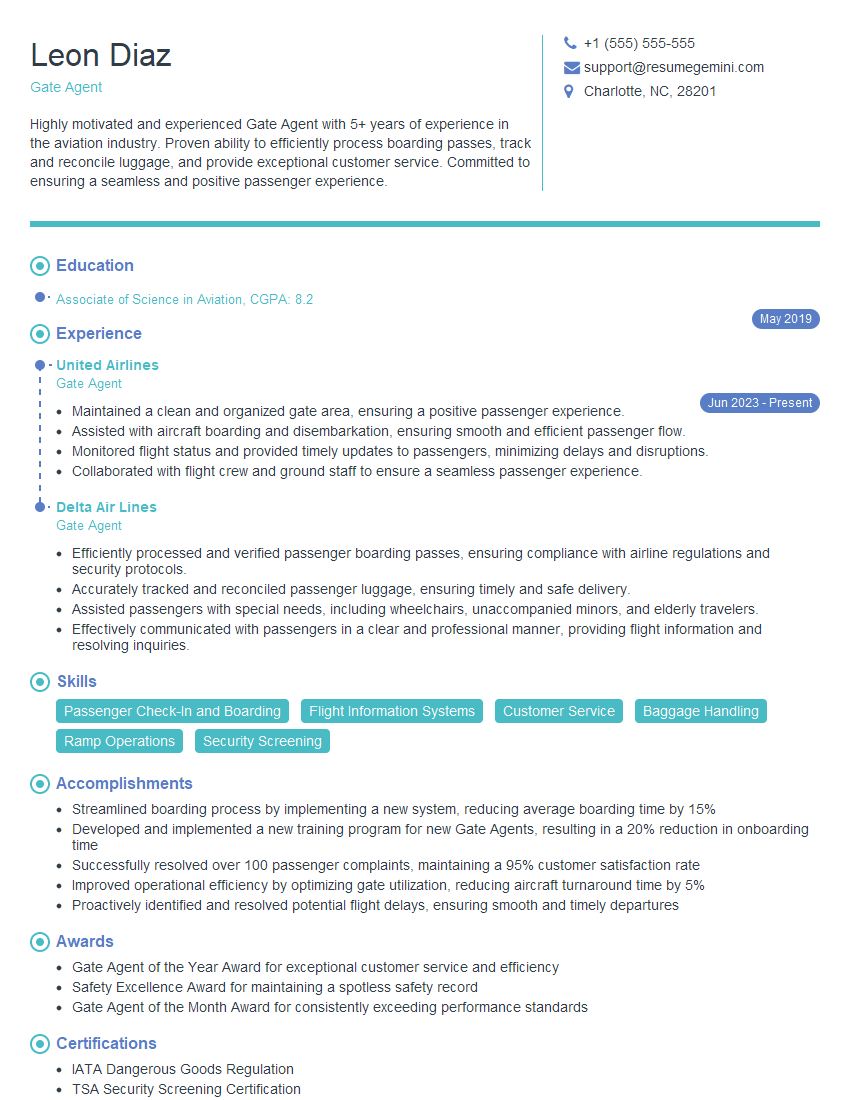
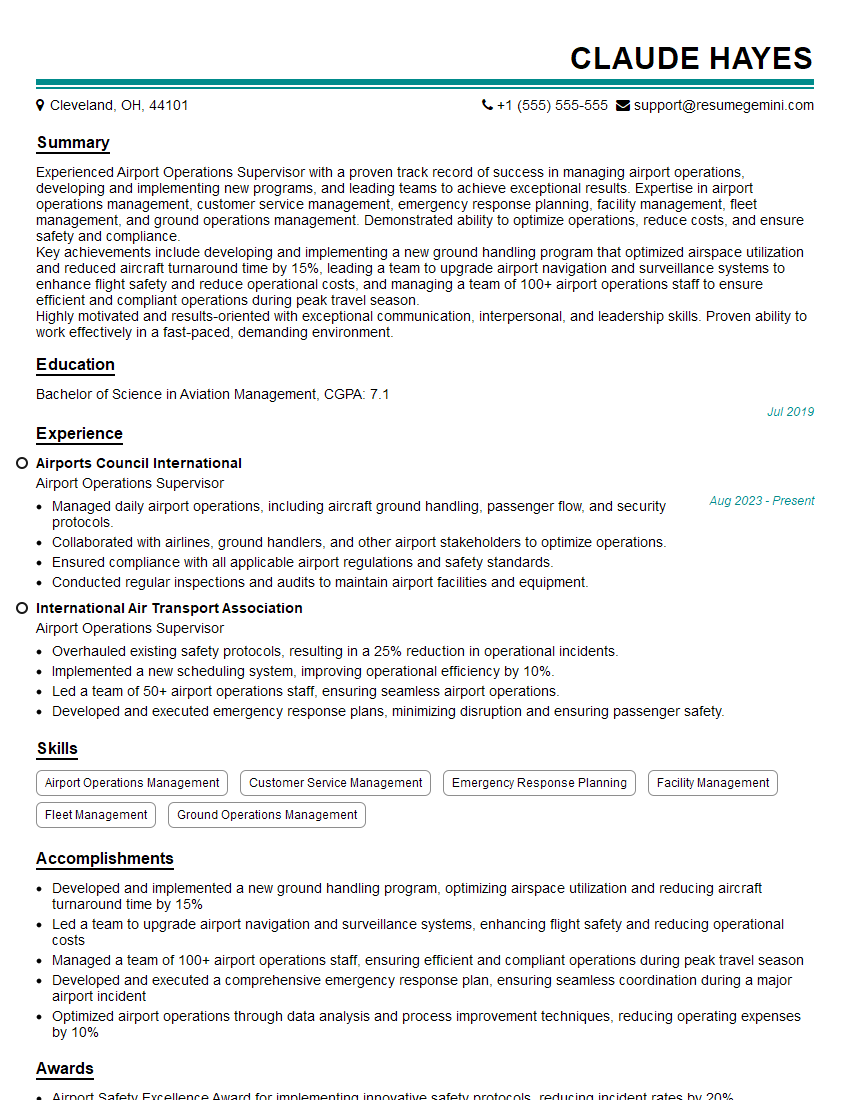
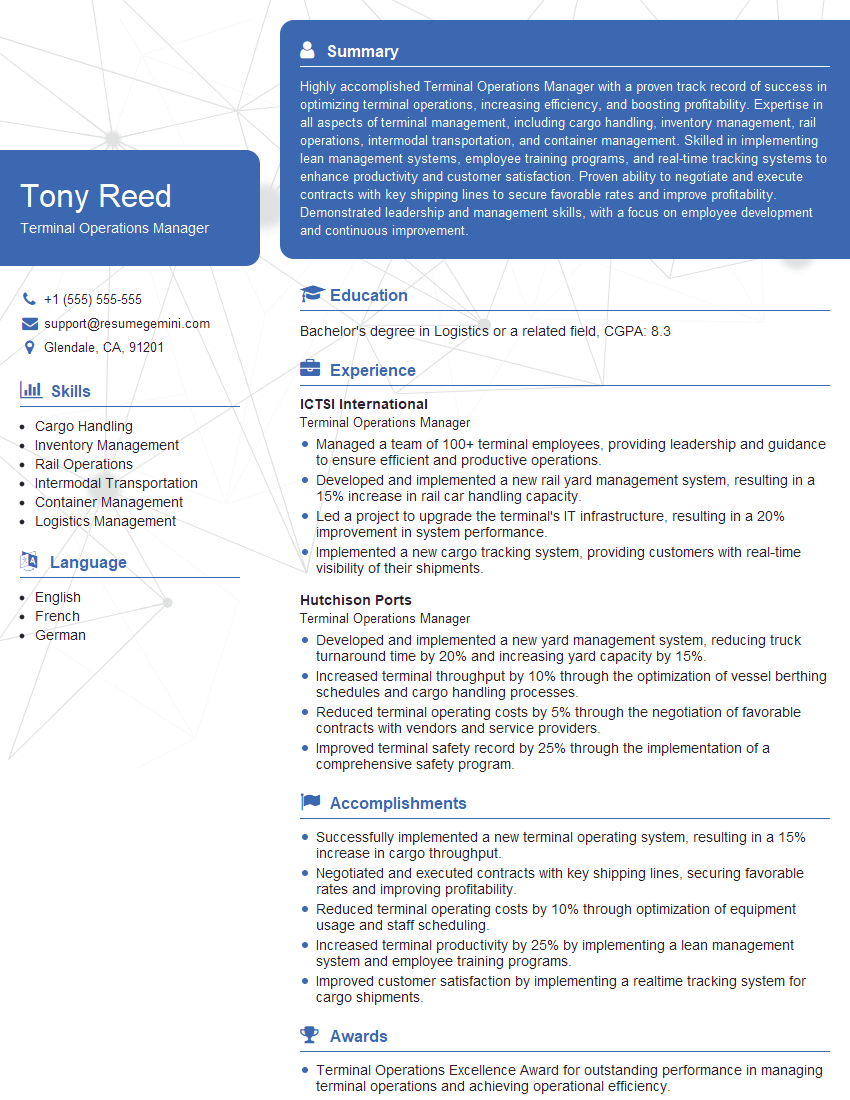
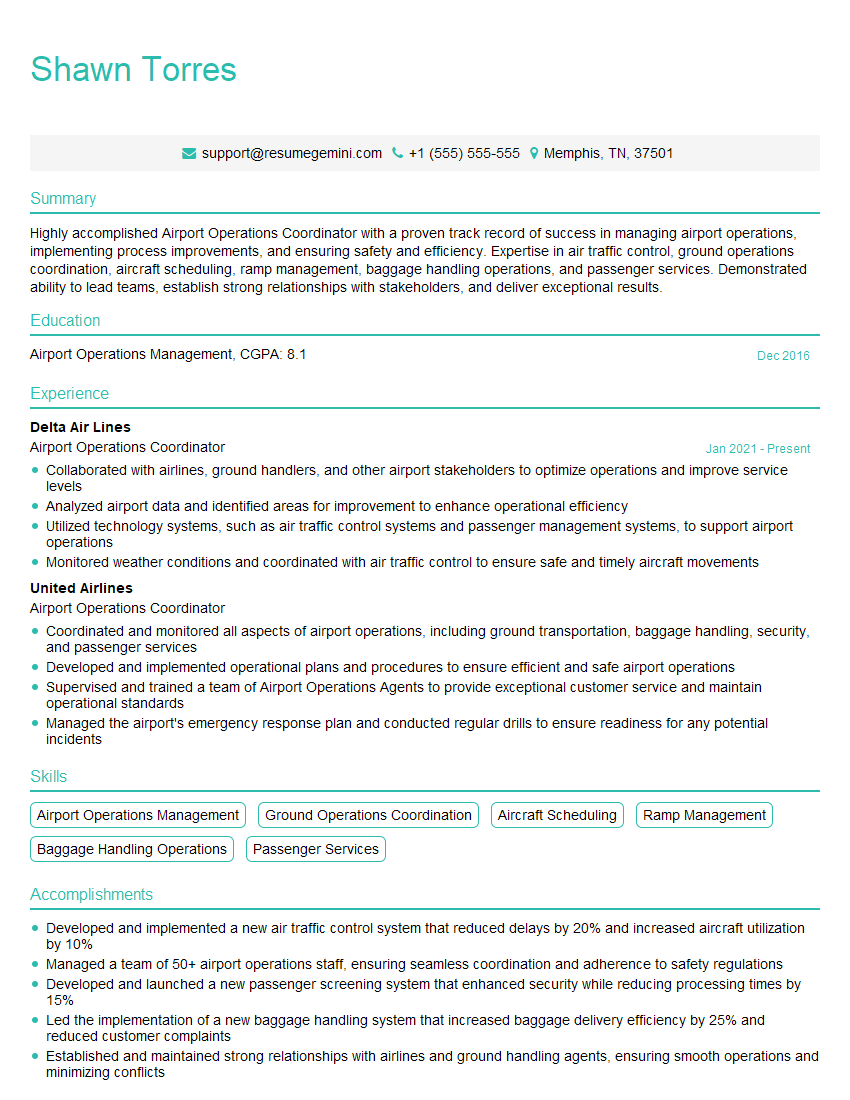
Mastering knowledge of boarding procedures is crucial for career advancement in the aviation industry, opening doors to roles with greater responsibility and higher earning potential. A strong resume is your key to unlocking these opportunities. Creating an ATS-friendly resume is essential to get noticed by recruiters. ResumeGemini is a trusted resource to help you build a professional, impactful resume that highlights your skills and experience effectively. Examples of resumes tailored to Knowledge of Boarding Procedures are available within ResumeGemini to guide you.
Explore more articles
Users Rating of Our Blogs
Share Your Experience
We value your feedback! Please rate our content and share your thoughts (optional).
What Readers Say About Our Blog
Amazing blog
Interesting Article, I liked the depth of knowledge you’ve shared.
Helpful, thanks for sharing.