Cracking a skill-specific interview, like one for Knowledge of Electrical and Electronic Controls, requires understanding the nuances of the role. In this blog, we present the questions you’re most likely to encounter, along with insights into how to answer them effectively. Let’s ensure you’re ready to make a strong impression.
Questions Asked in Knowledge of Electrical and Electronic Controls Interview
Q 1. Explain the difference between open-loop and closed-loop control systems.
The core difference between open-loop and closed-loop control systems lies in their feedback mechanisms. An open-loop system, also known as a feedforward system, operates without feedback. It simply executes a pre-programmed sequence of actions based on the initial input. Think of a toaster: you set the time, and it runs for that duration regardless of whether the bread is actually toasted. The output is not monitored or adjusted.
In contrast, a closed-loop system, also called a feedback system, continuously monitors its output and uses this information to adjust its control actions to achieve the desired result. Imagine a cruise control system in a car: it continuously monitors the car’s speed and adjusts the throttle to maintain the set speed, compensating for inclines or headwinds. The feedback loop ensures the system remains accurate and robust against disturbances.
- Open-loop Example: A simple timer controlling a motor for a specific duration.
- Closed-loop Example: A temperature controller regulating a furnace using a thermostat as the feedback sensor.
In essence, closed-loop systems are more accurate and adaptable than open-loop systems because they self-correct based on real-time feedback, making them ideal for applications requiring precise control.
Q 2. Describe your experience with Programmable Logic Controllers (PLCs).
I have extensive experience with Programmable Logic Controllers (PLCs) across various industrial settings. My experience encompasses programming PLCs from multiple manufacturers (Allen-Bradley, Siemens, Schneider Electric) using different programming languages like Ladder Logic, Function Block Diagram (FBD), and Structured Text. I’ve been involved in the entire PLC lifecycle, from initial design and programming to commissioning, troubleshooting, and maintenance.
For instance, I worked on a project involving the automation of a packaging line. I programmed PLCs to control conveyor belts, robotic arms, and labeling machines, ensuring precise synchronization and efficient operation. This required meticulous attention to detail and understanding of various safety protocols. Another project involved designing and implementing a PLC-based monitoring system for a water treatment plant, involving real-time data acquisition and alarm management. This project necessitated a deep understanding of SCADA integration and data visualization. I am proficient in utilizing PLC simulation software to test and debug programs before deployment, minimizing downtime and ensuring optimal performance.
Q 3. What are the different types of sensors used in control systems?
Control systems utilize a wide range of sensors to gather real-time information about the process being controlled. The choice of sensor depends on the specific application and the physical quantity being measured.
- Temperature Sensors: Thermocouples, RTDs (Resistance Temperature Detectors), thermistors, and infrared sensors measure temperature.
- Pressure Sensors: Piezoresistive, capacitive, and strain gauge sensors measure pressure.
- Flow Sensors: Various types such as ultrasonic, vortex shedding, and differential pressure sensors measure fluid flow.
- Level Sensors: Ultrasonic, capacitive, float switches, and radar sensors measure liquid levels.
- Position Sensors: Potentiometers, encoders (rotary and linear), and LVDTs (Linear Variable Differential Transformers) measure position and displacement.
- Proximity Sensors: Inductive, capacitive, and photoelectric sensors detect the presence or absence of an object.
Beyond these, specialized sensors exist for various other parameters, such as light intensity, humidity, gas concentration, and acceleration. Selecting the appropriate sensor is crucial for accurate control system performance. For example, in a high-temperature furnace, a thermocouple would be preferred over a thermistor for accurate and reliable temperature measurement.
Q 4. Explain the function of a Supervisory Control and Data Acquisition (SCADA) system.
A Supervisory Control and Data Acquisition (SCADA) system is a centralized system used to monitor and control industrial processes, such as power generation, water treatment, and manufacturing. It combines hardware and software components to gather data from various field devices (sensors, actuators), process the data, and provide operators with a user-friendly interface to monitor and control the process.
Key Functions of a SCADA system include:
- Data Acquisition: Gathering real-time data from various field devices through communication protocols like Modbus, Profibus, or Ethernet/IP.
- Data Processing: Filtering, analyzing, and converting raw data into meaningful information.
- Supervisory Control: Allowing operators to remotely monitor and control the process through a Human-Machine Interface (HMI).
- Alarm Management: Generating alerts and notifications in case of abnormal conditions.
- Historical Data Logging: Storing and archiving process data for analysis and reporting.
SCADA systems greatly enhance operational efficiency, improve safety, and provide valuable insights into the process, enabling better decision-making. For example, in a power grid, a SCADA system monitors voltage, current, and frequency across the network, allowing operators to respond quickly to any disruptions and maintain system stability.
Q 5. How do you troubleshoot a malfunctioning control system?
Troubleshooting a malfunctioning control system is a systematic process requiring a combination of analytical skills and practical experience. I typically follow these steps:
- Safety First: Ensure the system is safely de-energized before commencing any troubleshooting.
- Gather Information: Identify the specific problem, gather information from error logs, operator reports, and historical data. Understand the sequence of events leading to the malfunction.
- Inspect Hardware: Visually inspect wiring, connections, sensors, actuators, and other components for damage or loose connections.
- Check Sensor Readings: Validate sensor readings to ensure they are within the expected range. Verify sensor calibration if necessary.
- Review PLC Program: Analyze the PLC program logic for any errors or inconsistencies. Utilize simulation tools to isolate the faulty part of the code.
- Test Individual Components: Test individual components (sensors, actuators, etc.) to isolate the faulty element.
- Communication Check: Verify communication between the PLC and other devices using appropriate tools and techniques.
- Document Findings: Thoroughly document all findings, including the problem, troubleshooting steps, and corrective actions.
For example, if a conveyor belt stops unexpectedly, I’d first check the power supply, then the motor’s status through the PLC program, followed by inspecting the sensors monitoring the belt’s position and the emergency stop circuits. This systematic approach ensures the problem is quickly identified and resolved efficiently.
Q 6. What is PID control and how does it work?
PID control, or Proportional-Integral-Derivative control, is a widely used feedback control algorithm that adjusts the controller output based on three separate parameters: Proportional, Integral, and Derivative.
Proportional (P): This term provides an immediate response proportional to the error (difference between the setpoint and the process variable). A larger error results in a larger corrective action. However, it might lead to a persistent steady-state error.
Integral (I): This term compensates for the steady-state error by accumulating the error over time. It eliminates the persistent offset but may cause overshoot or oscillations.
Derivative (D): This term predicts future error based on the rate of change of the error. It improves the system’s response by anticipating changes, reducing overshoot and settling time.
The PID controller output is the sum of these three terms: Output = Kp * error + Ki * ∫error dt + Kd * d(error)/dt, where Kp, Ki, and Kd are the tuning parameters (gain constants) that determine the controller’s performance.
Tuning the PID controller is crucial for optimal performance. The proper tuning of Kp, Ki, and Kd values depends on the specific process and desired response characteristics. Incorrect tuning can result in instability, oscillations, or poor performance. Various tuning methods, such as Ziegler-Nichols and Cohen-Coon methods, exist to help determine appropriate values.
Q 7. Describe your experience with different communication protocols (e.g., Modbus, Profibus, Ethernet/IP).
I have practical experience with various industrial communication protocols, including Modbus, Profibus, and Ethernet/IP. My familiarity extends beyond simply using these protocols to understanding their strengths and limitations, and how to select the most appropriate protocol for a given application.
- Modbus: A widely used, simple, and reliable protocol. It’s particularly useful for smaller systems and applications where ease of implementation is prioritized. I’ve used Modbus in several projects involving data exchange between PLCs and HMIs.
- Profibus: A high-speed, robust fieldbus system typically used in larger industrial automation systems requiring high-speed data transfer and deterministic communication. I’ve worked with Profibus in complex automation projects requiring precise synchronization between multiple devices.
- Ethernet/IP: A powerful, open-standard protocol based on Ethernet, offering high bandwidth and flexibility. I’ve integrated Ethernet/IP in systems with advanced functionalities, such as motion control and complex data processing, leveraging its capability for data-intensive applications.
My expertise encompasses the configuration, troubleshooting, and programming aspects of these protocols. For example, in a project where we needed to integrate a robot controller with a PLC, the high-speed data transfer capabilities of Ethernet/IP proved crucial for precise synchronization of robot movements and the rest of the production process. Choosing the correct protocol is a critical part of system design and I always consider factors like data throughput, real-time requirements, cost, and ease of implementation.
Q 8. What are the safety considerations when working with electrical and electronic control systems?
Safety is paramount when working with electrical and electronic control systems. High voltages, short circuits, and moving machinery pose significant risks. A layered safety approach is crucial, starting with proper risk assessment. This involves identifying potential hazards, such as exposed wires, faulty components, or unexpected energy releases. Next, we implement control measures. This includes using appropriate personal protective equipment (PPE) like insulated gloves and safety glasses; employing lockout/tagout procedures to de-energize equipment before maintenance; and utilizing safety interlocks and emergency stop buttons to prevent accidents. Regular inspections and maintenance are vital to identify and address potential issues before they escalate. Furthermore, adherence to relevant safety standards and regulations, like those set by OSHA or IEC, is non-negotiable. For instance, before working on any live circuit, I always ensure that the power is completely isolated and verified with a non-contact voltage tester. Failing to follow these safety protocols can lead to serious injury or even death.
Q 9. Explain the concept of feedback control and its importance.
Feedback control is a fundamental concept in control systems. Imagine you’re trying to maintain a specific room temperature. A feedback control system uses a sensor (like a thermometer) to measure the actual temperature and compares it to the desired temperature (your set point). The difference between the two, known as the error, is then used to adjust the heating or cooling system accordingly. If the room is too cold, the system increases heating; if it’s too hot, it reduces it. This continuous monitoring and adjustment ensures the system maintains the desired temperature despite external disturbances (like opening a window). The importance of feedback control lies in its ability to maintain stability, accuracy, and robustness in the face of uncertainty. It’s used extensively in industrial processes, robotics, automotive systems, and even our smartphones—for example, maintaining the precise speed of a motor or the temperature of a semiconductor chip.
Q 10. What are some common control system architectures?
Several control system architectures exist, each with its strengths and weaknesses. One common architecture is the hierarchical control system, where control tasks are organized into multiple levels. A higher level might oversee overall plant operation, while lower levels control individual subsystems. This approach is scalable and easier to manage in complex systems. Decentralized control systems distribute control functions among multiple independent controllers, enhancing robustness and reducing the impact of individual controller failures. Think of a large factory where each machine has its own controller. Distributed control systems (DCS) use multiple processors and communication networks to manage a process, often employing redundant systems for high reliability. These are frequently found in critical applications such as power plants and refineries. Finally, centralized control systems have a single controller overseeing the entire process; they are simpler to implement for smaller systems, but scaling them can be challenging. The best architecture depends heavily on the specific application requirements.
Q 11. How do you ensure the reliability and maintainability of a control system?
Ensuring reliability and maintainability is key for any control system. This requires a multi-faceted approach. First, we use high-quality components with proven track records and choose designs that incorporate redundancy where critical. This minimizes the risk of component failures. Second, proper documentation is crucial. Detailed schematics, wiring diagrams, and software code comments are essential for troubleshooting and future modifications. Implementing robust diagnostics is also necessary. This includes features like self-tests, fault detection, and alarm systems to immediately identify and alert us to potential issues. Modular designs allow for easier replacement or repair of individual components without disrupting the entire system. Finally, a comprehensive preventative maintenance program is vital. This involves regular inspections, cleaning, and calibration of sensors and actuators to prevent failures and prolong system life. Imagine a manufacturing process; regular maintenance ensures consistent product quality and prevents costly downtime.
Q 12. Describe your experience with ladder logic programming.
I have extensive experience with ladder logic programming, having used it extensively in designing and implementing Programmable Logic Controllers (PLCs) for various industrial applications. Ladder logic’s visual nature makes it intuitive and easy to understand, even for those without extensive programming experience. I’m proficient in creating and troubleshooting ladder logic programs for various functions, including sequencing, timing, counting, and data manipulation. For example, I recently developed a ladder logic program to control a complex automated assembly line, integrating sensor inputs, motor control, and safety interlocks. I’m familiar with various PLC programming software platforms and am comfortable working with both analog and digital I/O. The ability to quickly diagnose and fix errors in ladder logic is critical to ensure system reliability and is a skill I’ve developed over several years.
Q 13. What is a control algorithm, and how is it implemented?
A control algorithm is a set of instructions that dictate how a control system responds to inputs and achieves a desired output. It’s the heart of the control system, defining the mathematical or logical operations used to manipulate control signals. Algorithms can range from simple proportional controllers (adjusting the output proportionally to the error) to complex algorithms incorporating integral and derivative actions (PID controllers) for better performance. The implementation involves translating the algorithm into a form understandable by the control hardware (like a PLC or microcontroller). This often involves programming using languages like ladder logic, C, or specialized control system software. For example, a PID controller algorithm can be implemented in a PLC to regulate the speed of a motor precisely. Careful algorithm design and tuning are crucial to ensure stability and optimal performance of the control system.
Q 14. Explain the difference between analog and digital control systems.
Analog and digital control systems differ fundamentally in how they represent and process information. Analog systems use continuous signals, directly representing physical quantities like voltage or pressure. Think of a simple dimmer switch; the light intensity varies continuously with the switch position. Analog systems are often simpler and less expensive for basic control tasks but may be less precise and more susceptible to noise. Digital systems use discrete signals, representing quantities as binary numbers. Microcontrollers and PLCs are examples of digital control systems. Digital systems offer superior precision, noise immunity, and flexibility in implementing complex control algorithms. They are widely used in advanced control applications where precision and reliability are paramount. For example, modern robotic arms often use digital control to achieve precise and repeatable movements. The choice between analog and digital often depends on factors like cost, accuracy requirements, and the complexity of the control task.
Q 15. What are some common troubleshooting techniques for electrical circuits?
Troubleshooting electrical circuits involves a systematic approach combining visual inspection, measurement, and logical deduction. Think of it like detective work – you need to gather clues to find the culprit!
Visual Inspection: Start by carefully examining the circuit for obvious problems like loose connections, burnt components (resistors, capacitors, etc.), or damaged wires. Look for anything out of the ordinary, like discoloration or unusual smells.
Measurement: Use multimeters to check voltage, current, and resistance at various points in the circuit. Compare your readings to the expected values based on the circuit diagram. For example, if you expect 5V at a specific point and you measure 0V, you know there’s a break in the circuit before that point.
Continuity Testing: Use your multimeter’s continuity test function to verify the integrity of wires and connections. A continuous beep indicates a closed circuit, while no beep signifies an open circuit (a break).
Systematic Isolation: If the problem isn’t immediately obvious, divide the circuit into smaller sections and test each section individually. This helps narrow down the location of the fault. Imagine it like binary search – you halve the search space with each step.
Component Testing: If a particular component is suspected, remove it from the circuit and test it using a separate component tester or by measuring its characteristics (resistance, capacitance, etc.) with a multimeter. For example, a shorted capacitor can be easily identified this way.
Example: In a simple motor control circuit, if the motor doesn’t run, I might first check the power supply voltage to the motor driver. Then, I’d check for proper signal from the control circuit to the driver, and finally test the motor itself for continuity and winding resistance. This systematic approach prevents jumping to conclusions and ensures thorough diagnosis.
Career Expert Tips:
- Ace those interviews! Prepare effectively by reviewing the Top 50 Most Common Interview Questions on ResumeGemini.
- Navigate your job search with confidence! Explore a wide range of Career Tips on ResumeGemini. Learn about common challenges and recommendations to overcome them.
- Craft the perfect resume! Master the Art of Resume Writing with ResumeGemini’s guide. Showcase your unique qualifications and achievements effectively.
- Don’t miss out on holiday savings! Build your dream resume with ResumeGemini’s ATS optimized templates.
Q 16. How do you design a control system for a specific application?
Designing a control system involves a structured process focusing on understanding the application’s needs, selecting appropriate components, and implementing control algorithms. It’s like building a bridge – you need a solid foundation and a well-defined plan.
Define Requirements: Clearly specify the system’s goals, performance criteria (accuracy, speed, stability), constraints (size, cost, power consumption), and environmental conditions.
System Modeling: Develop a mathematical model of the system, representing its dynamics and behavior. This could involve transfer functions, state-space representations, or other suitable techniques. This step helps predict the system’s response to various inputs.
Sensor and Actuator Selection: Choose sensors to accurately measure the controlled variable(s) and actuators to effectively manipulate the system. Consider factors like accuracy, resolution, range, response time, and environmental robustness. For example, a precise temperature controller might use a thermocouple and a proportional valve.
Controller Design: Select a control algorithm (PID, fuzzy logic, model predictive control, etc.) based on the system’s characteristics and performance requirements. Tune the controller parameters to optimize performance. This involves iterative testing and adjustments to achieve desired results.
Implementation: Implement the control system using hardware and software components, integrating sensors, actuators, and the controller. This might involve using programmable logic controllers (PLCs), microcontrollers, or embedded systems.
Testing and Tuning: Test the system thoroughly and adjust controller parameters to meet the specified performance requirements. This usually involves observing the system’s response under various conditions and making necessary refinements.
Example: Designing a temperature control system for an industrial oven involves defining the desired temperature range, tolerance levels, and response time. A PID controller, using a thermocouple for temperature sensing and a heating element as the actuator, might be chosen and tuned through experiments to achieve the required temperature stability and settling time.
Q 17. Explain your experience with different types of actuators.
My experience encompasses a wide range of actuators, each with its own strengths and weaknesses. Choosing the right actuator is crucial for optimal system performance.
Electric Motors: I’ve extensively worked with DC motors (brushless and brushed), AC motors (induction and servo motors), and stepper motors. They offer precise control, high efficiency (especially brushless motors), and relatively simple integration with electronic control systems. However, they may require more complex drive circuitry and can be susceptible to electromagnetic interference.
Hydraulic Actuators: I have experience with hydraulic cylinders and motors, ideal for high-force applications requiring large power output. They are excellent for heavy machinery and robotics but can be less efficient and require more maintenance due to the use of hydraulic fluids.
Pneumatic Actuators: I’ve used pneumatic cylinders and rotary actuators in applications demanding fast response times and relatively simple control. They are clean and safe, but their power output is generally limited compared to hydraulic actuators.
Piezoelectric Actuators: I’ve also worked with piezoelectric actuators for precise, nanometer-scale positioning in specialized applications. They provide extremely high resolution but have a limited force output and relatively short travel distance.
Example: In a robotic arm application, servo motors might be ideal for precise joint control, while a hydraulic actuator might be chosen for the end effector if it needs to lift very heavy objects.
Q 18. What are the advantages and disadvantages of different control system architectures?
Control system architectures differ significantly in their complexity, scalability, and robustness. The choice depends heavily on the application’s requirements.
Centralized Architecture: All control functions are performed by a single controller (e.g., PLC). This simplifies programming and maintenance but can be a single point of failure. It’s suitable for smaller systems with less complex control requirements.
Distributed Architecture: Control functions are divided among multiple controllers, each responsible for a specific part of the system. This enhances modularity, scalability, and fault tolerance but increases complexity in system design and integration. It’s better for large, complex systems with multiple independent processes.
Hierarchical Architecture: Controllers are arranged in a hierarchical structure, with higher-level controllers supervising lower-level controllers. This allows for different levels of control sophistication and enhances system flexibility. This suits systems requiring multiple control loops with varying levels of autonomy.
Advantages and Disadvantages Summary:
| Architecture | Advantages | Disadvantages |
|---|---|---|
| Centralized | Simple, easy to maintain | Single point of failure, limited scalability |
| Distributed | Modular, scalable, fault-tolerant | Complex design and integration |
| Hierarchical | Flexible, sophisticated control | Increased complexity |
The best architecture is determined by a trade-off between these factors. A small, simple system may benefit from a centralized architecture, whereas a large industrial plant may require a distributed or hierarchical approach.
Q 19. How do you select appropriate sensors and actuators for a given application?
Selecting appropriate sensors and actuators requires careful consideration of several factors. It’s about finding the perfect match for the job!
Application Requirements: What needs to be measured or controlled? What is the required accuracy, resolution, range, and speed? For example, a high-precision position control system requires a sensor with high resolution, while a simple on/off control system may only need a simple switch.
Environmental Conditions: What is the operating temperature, pressure, humidity, and other environmental factors? Sensors and actuators must be able to withstand these conditions. For instance, a sensor used in a high-temperature environment must be designed for that temperature range.
Compatibility: Are the sensors and actuators compatible with the control system’s interface and communication protocols? Ensure that the signals from the sensors can be correctly processed and interpreted by the controller, and that the controller can provide suitable signals to the actuators.
Cost and Availability: Consider the cost and availability of different sensors and actuators. There’s often a trade-off between performance and cost; you may need to balance accuracy and budget considerations.
Example: In a water level control system, an ultrasonic sensor might be used to measure the water level, while a solenoid valve could be the actuator for controlling the inflow or outflow of water. The choice is based on the accuracy needed, the range of water levels, and the capacity of the valve.
Q 20. Describe your experience with industrial automation systems.
My experience with industrial automation systems spans various applications and technologies. I’ve worked on projects involving programmable logic controllers (PLCs), supervisory control and data acquisition (SCADA) systems, and robotic systems. I understand the importance of safety, reliability, and efficiency in these environments.
PLC Programming: I have extensive experience in programming PLCs (various brands like Siemens, Allen-Bradley, etc.) using ladder logic, function block diagrams, and structured text. I am proficient in developing control programs for various industrial processes, including material handling, packaging, and manufacturing.
SCADA Integration: I’ve worked on integrating PLCs with SCADA systems for real-time monitoring, data logging, and remote control of industrial processes. This includes configuring communication protocols (e.g., Modbus, Profibus, Ethernet/IP) and developing user interfaces for monitoring and controlling the system.
Robotic System Integration: I have participated in the integration of robotic systems into industrial processes. This involves programming robots, integrating them with PLCs and SCADA systems, and ensuring safe and efficient operation.
Safety Standards Compliance: I am familiar with relevant safety standards and regulations (e.g., IEC 61131-3, ANSI/RIA R15.06) and ensure that all automation systems meet the required safety requirements. Safety is paramount in industrial automation, and I always prioritize its implementation.
Example: I was involved in a project to automate a packaging line in a food processing plant. This involved designing and programming PLCs to control conveyors, robotic arms for picking and placing, and packaging machines. The system was integrated with a SCADA system for real-time monitoring and remote control, ensuring traceability and process optimization.
Q 21. What is the role of a Human-Machine Interface (HMI) in a control system?
The Human-Machine Interface (HMI) is the crucial link between human operators and the control system. Think of it as the control panel or dashboard of your system, allowing for easy monitoring and interaction. It’s essential for efficient operation and safety.
Monitoring: HMIs display real-time data from the control system, such as process variables, status indicators, and alarm messages. This allows operators to monitor the system’s performance and identify any potential problems.
Control: HMIs provide a means for operators to interact with and control the system. This can include setting parameters, starting and stopping processes, and adjusting control algorithms.
Data Logging and Reporting: HMIs can log data from the system for later analysis and reporting. This helps in identifying trends, optimizing processes, and troubleshooting problems.
Alarm Management: HMIs manage alarms generated by the control system, alerting operators to critical situations and helping them take appropriate corrective actions. This is critical for process safety and efficiency.
User-friendliness: Well-designed HMIs are intuitive and easy to use, minimizing operator errors and maximizing efficiency. This often involves graphical representations of the process and clear, concise information.
Example: In a power plant, the HMI might display turbine speed, generator output, and temperature readings. Operators can adjust parameters such as valve settings and monitor system status through the HMI. Alarms will alert operators to critical issues like temperature exceeding setpoints.
Q 22. Explain your experience with data acquisition and logging.
Data acquisition and logging are crucial for monitoring and analyzing the performance of control systems. My experience involves using various hardware and software to collect, process, and store real-time data from sensors and other system components. This data is then used for diagnostics, performance optimization, and predictive maintenance.
For instance, in a recent project involving a robotic assembly line, I implemented a system using NI LabVIEW to acquire data from multiple sensors (temperature, pressure, position, etc.). This data was logged to a database, allowing us to identify bottlenecks and improve the efficiency of the line by over 15%. We used a combination of hardware like NI cDAQ and software like LabVIEW’s data logging features along with custom-written code to handle the asynchronous data streams and timestamps. The data was visualized in real-time dashboards, facilitating immediate responses to anomalies.
Another example involved a smart grid application where I worked with Python and Pandas to process large volumes of power consumption data from smart meters. We used this data to create predictive models for peak demand, assisting utility companies in efficient grid management and preventing outages.
Q 23. How do you handle unexpected events or failures in a control system?
Handling unexpected events and failures is paramount in control systems. My approach involves a layered strategy incorporating robust error detection, fault tolerance, and recovery mechanisms. This starts with designing the system with redundancy and fail-safes in mind.
Firstly, I implement comprehensive error detection mechanisms. This can range from simple limit checks and plausibility tests to more sophisticated methods like Kalman filtering for noise reduction and outlier detection. When an error is detected, the system should enter a safe state, preventing further damage or harm. For example, if a motor overheats, the system might automatically shut it down.
Secondly, fault tolerance is built into the system architecture. This might involve redundant sensors or actuators, allowing the system to continue operating even if one component fails. A watchdog timer, regularly checking the status of critical components, is another vital aspect.
Finally, I ensure appropriate recovery mechanisms are in place. This could be automatic system restarts, error logging for diagnostics, or even human intervention through an alarm system. The choice of recovery depends on the criticality of the application. For example, in a critical application like a nuclear reactor control system, detailed procedures and multiple layers of safety are essential. In less critical applications, a simpler approach might suffice.
Q 24. What are the ethical considerations in the design and implementation of control systems?
Ethical considerations are paramount in control system design and implementation. We must consider safety, security, privacy, and environmental impact. A major aspect is ensuring the safety of the end-users and operators. This requires adherence to strict safety standards and thorough testing.
Security is another critical concern, especially in networked systems. Systems must be protected against unauthorized access and cyberattacks. This involves measures like secure network protocols, firewalls, intrusion detection systems, and regular security audits. The importance of data privacy needs careful consideration, especially when dealing with personal data.
Environmental impact should also be minimized. This involves designing energy-efficient systems and considering the lifecycle environmental impact of the components used. Finally, transparency and accountability are essential. Design decisions should be well-documented and auditable, allowing for scrutiny and enabling responsible innovation.
Q 25. Describe your experience with testing and commissioning control systems.
Testing and commissioning are crucial for ensuring the proper functioning of control systems. My experience involves a multi-stage process that goes beyond simple unit tests.
It begins with thorough unit testing of individual components, ensuring that each module works as expected. This might involve simulations or using test benches to verify functionality. Following this, integration testing ensures that different modules work seamlessly together. This is followed by system testing where the entire system is tested as a whole, often under simulated or real-world conditions.
Commissioning involves bringing the system into operation and verifying that it meets the specified requirements. This often involves on-site testing, adjustments, and training for operators. I’ve used various tools and techniques throughout this process, including automated testing frameworks, data acquisition systems for logging test results, and commissioning documentation that follows industry best practices.
For example, in a building automation project, we conducted extensive testing of the HVAC control system, simulating different weather conditions and occupancy scenarios to ensure optimal performance and energy efficiency before handover to the client. Thorough documentation of the testing phase and final results ensured seamless future maintenance.
Q 26. What software and tools are you proficient in for control system design and programming?
My proficiency spans a wide range of software and tools used in control system design and programming. I am highly skilled in using programming languages like C, C++, Python, and Ladder Logic (used in PLCs).
For control system design, I use simulation software such as MATLAB/Simulink to model and simulate systems, allowing for virtual testing and optimization before implementation. I am also proficient in using CAD software for designing electrical schematics and wiring diagrams. I use industrial automation software like Rockwell Automation’s Studio 5000 for PLC programming and HMI (Human Machine Interface) development. I also have experience with SCADA (Supervisory Control and Data Acquisition) systems and their associated software.
Furthermore, I utilize databases (SQL, NoSQL) for data storage and analysis. I’m comfortable working with version control systems (like Git) to manage code and documentation. I am also familiar with various hardware interfaces such as CAN bus, Modbus, and Ethernet/IP, which are crucial for communicating with sensors, actuators, and PLCs.
Q 27. Explain your experience with industrial communication networks.
Industrial communication networks are the backbone of modern control systems, enabling the exchange of data between different components. My experience encompasses various network protocols, including Ethernet/IP, Profibus, Modbus, CAN bus, and fieldbuses like Foundation Fieldbus.
I understand the intricacies of network topology, addressing schemes, and data transmission protocols. I’ve worked on projects involving both wired and wireless communication networks, choosing the appropriate solution based on factors like speed, reliability, and distance requirements. I’m experienced in troubleshooting network issues and ensuring optimal network performance, including implementing network security measures.
For example, in a manufacturing plant automation project, we used Ethernet/IP for high-speed data transfer between PLCs and other devices, ensuring real-time control of the production line. In another project, a wireless network based on Zigbee was implemented for monitoring environmental conditions in a remote location, offering a cost-effective solution for data acquisition in a challenging environment.
Q 28. How do you stay up-to-date with advancements in electrical and electronic control systems?
Staying current in the rapidly evolving field of electrical and electronic control systems is critical. I actively pursue several strategies to ensure my knowledge remains up-to-date.
I regularly read industry publications and research papers to stay abreast of the latest technologies and trends. This includes journals, online resources, and industry news websites. I actively participate in professional organizations such as IEEE and ISA, attending conferences, workshops, and webinars. This provides opportunities for networking with colleagues and learning from experts in the field.
I also actively participate in online courses and training programs to enhance my skills in specific areas. Hands-on experience is invaluable, so I actively seek opportunities to work on new projects that challenge my abilities and expose me to cutting-edge technologies. Finally, I engage in self-directed learning through online resources and independent projects. This allows for exploration of specialized areas of interest and the development of expertise in niche technologies.
Key Topics to Learn for Knowledge of Electrical and Electronic Controls Interview
- Fundamentals of Electrical Circuits: Understanding Ohm’s Law, Kirchhoff’s Laws, circuit analysis techniques (e.g., nodal analysis, mesh analysis), and AC/DC circuit behavior is foundational.
- Electronic Components and Devices: Become proficient with the operation and application of transistors (BJT, MOSFET), diodes, operational amplifiers (op-amps), and other common electronic components. Understand their role in control systems.
- Sensors and Transducers: Familiarize yourself with various sensor types (e.g., temperature, pressure, position) and their signal conditioning requirements. Understand how these sensors interface with control systems.
- Actuators: Grasp the principles and applications of different actuators (e.g., motors, solenoids, valves) and their control mechanisms. Be prepared to discuss their selection criteria for specific applications.
- Control System Architectures: Understand different control system architectures, including open-loop and closed-loop systems, and their advantages and disadvantages. Explore PID controllers and their tuning methods.
- PLC Programming (e.g., Ladder Logic): Demonstrate your understanding of programmable logic controllers (PLCs) and their programming languages. Be ready to discuss real-world applications and troubleshooting scenarios.
- Industrial Communication Protocols: Familiarity with common industrial communication protocols (e.g., Modbus, Profibus, Ethernet/IP) is crucial for understanding data acquisition and control system networking.
- Troubleshooting and Diagnostics: Practice your problem-solving skills. Be prepared to discuss systematic approaches to identifying and resolving faults in electrical and electronic control systems.
- Safety and Standards: Demonstrate awareness of relevant safety standards and regulations in the field of electrical and electronic controls.
- Practical Application Examples: Prepare examples from your experience or projects that showcase your understanding of these concepts in real-world scenarios. Think about how you applied theoretical knowledge to solve problems.
Next Steps
Mastering Knowledge of Electrical and Electronic Controls is vital for career advancement in automation, robotics, manufacturing, and many other high-demand industries. A strong understanding of these concepts will significantly enhance your job prospects and open doors to exciting opportunities. To maximize your chances of landing your dream role, focus on creating an ATS-friendly resume that highlights your skills and experience effectively. ResumeGemini is a trusted resource that can help you build a professional and impactful resume. We provide examples of resumes tailored to Knowledge of Electrical and Electronic Controls to help guide you through the process.
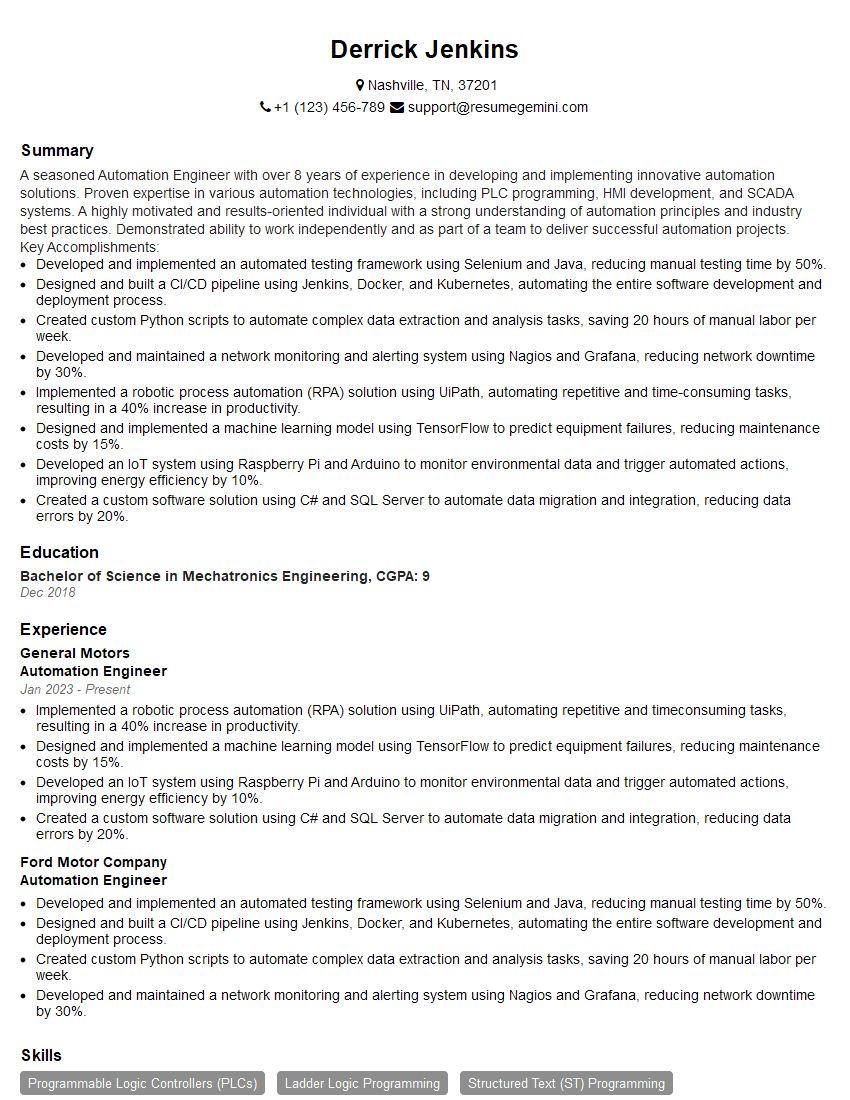
Automation Engineer Resume Sample
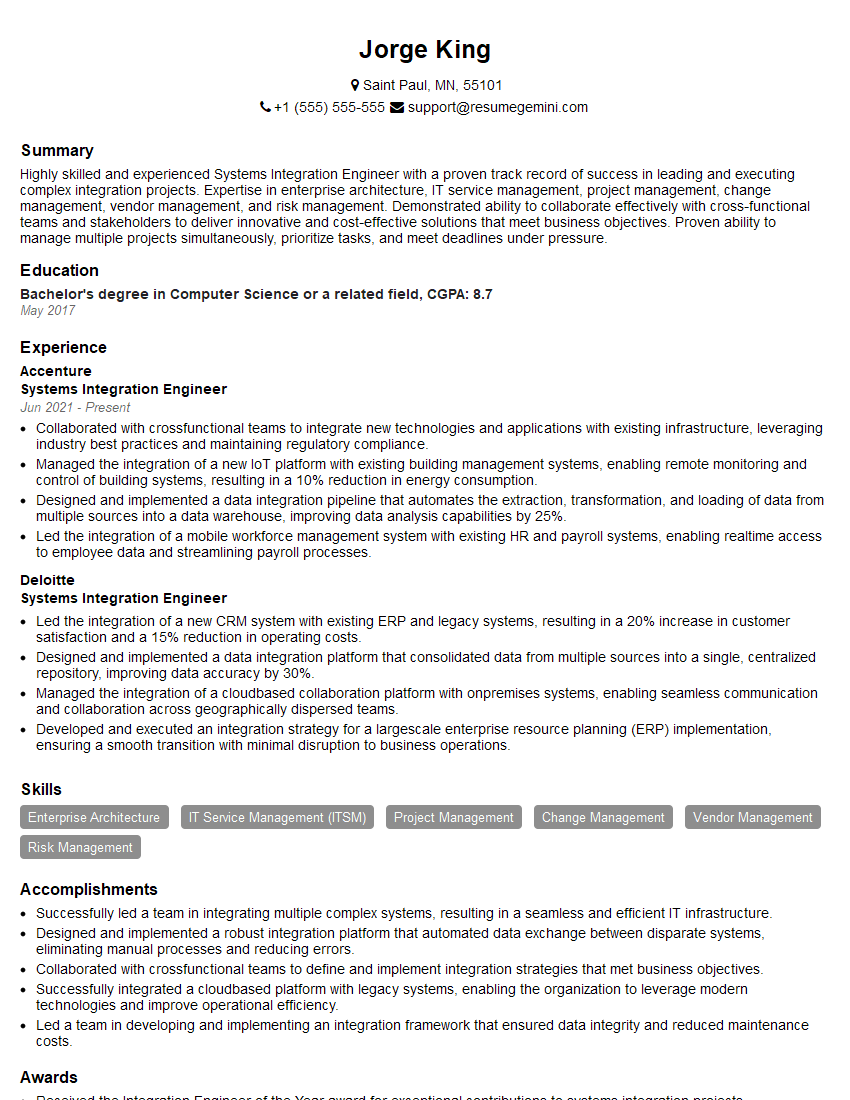
Systems Integration Engineer Resume Sample
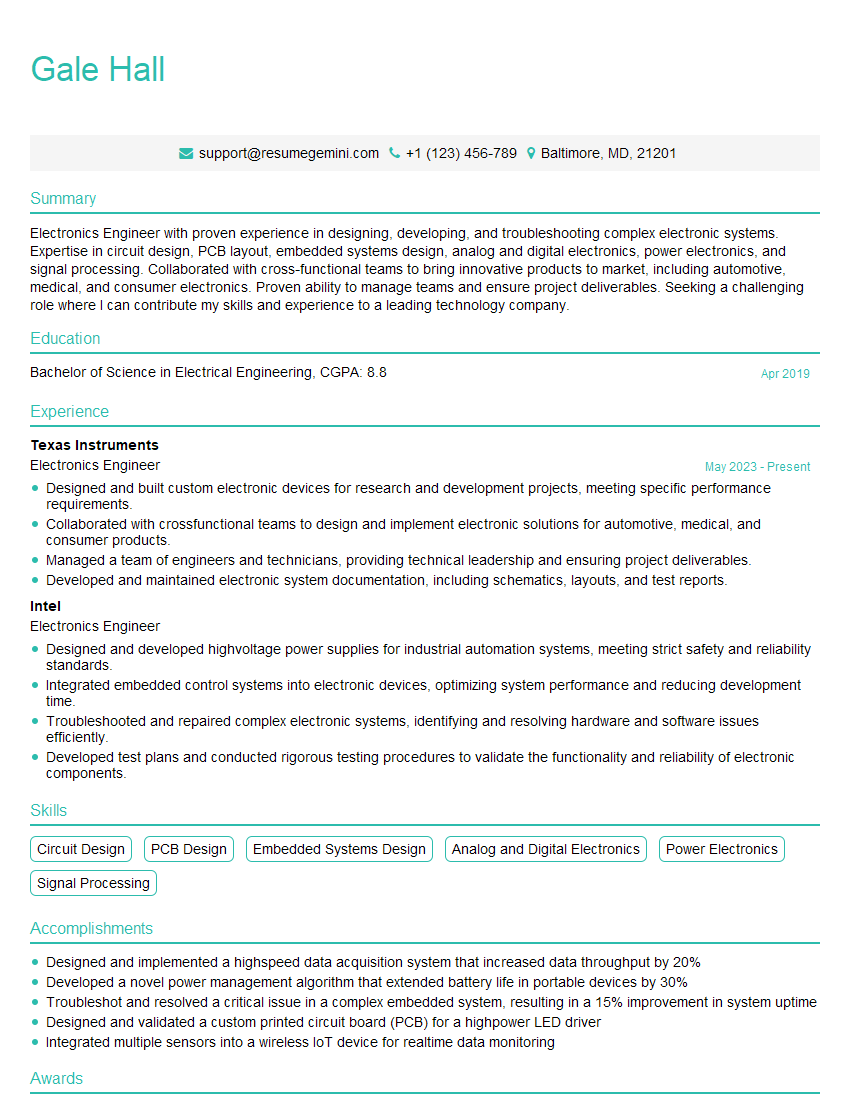
Electronics Engineer Resume Sample
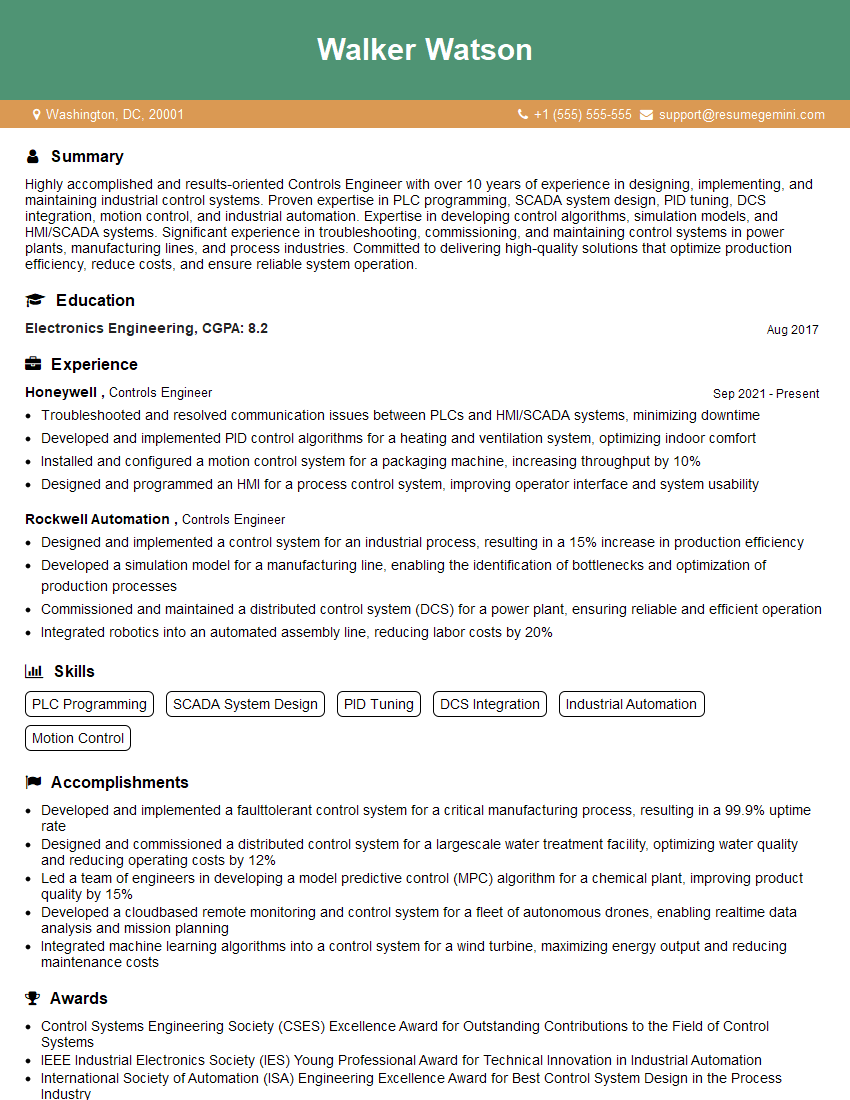
Controls Engineer Resume Sample
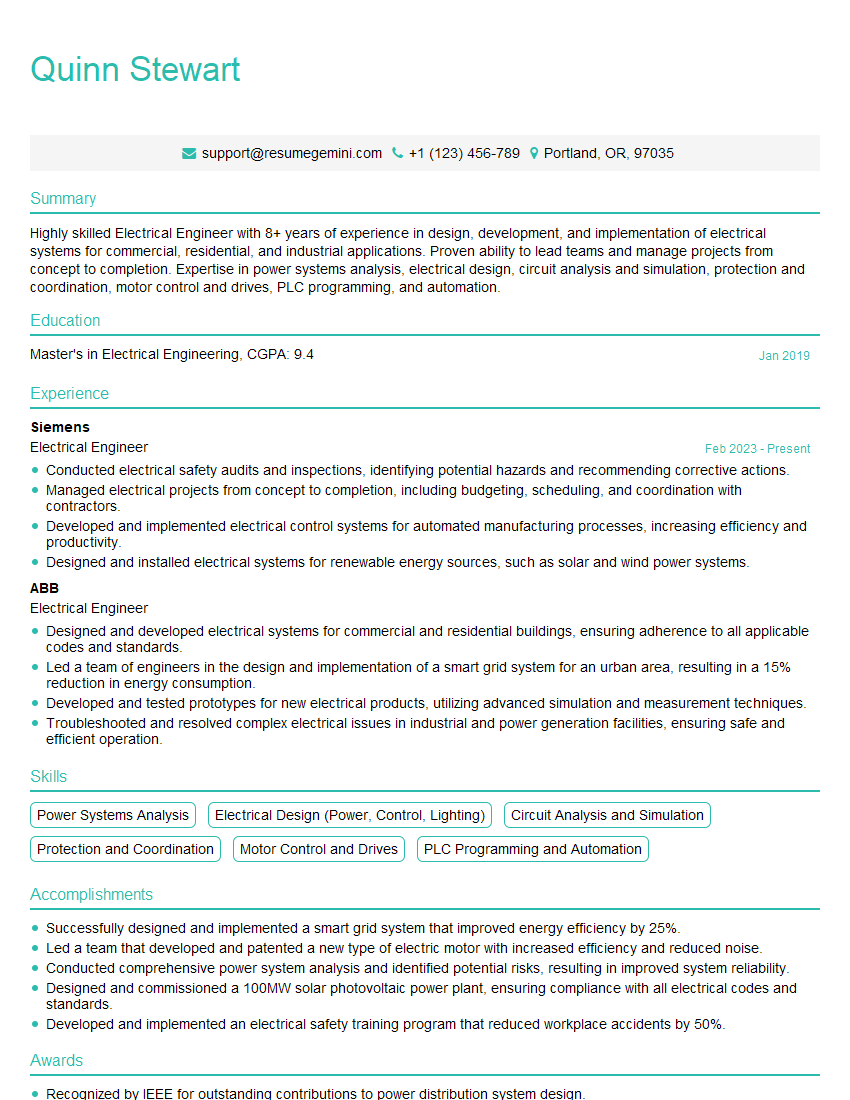
Electrical Engineer Resume Sample
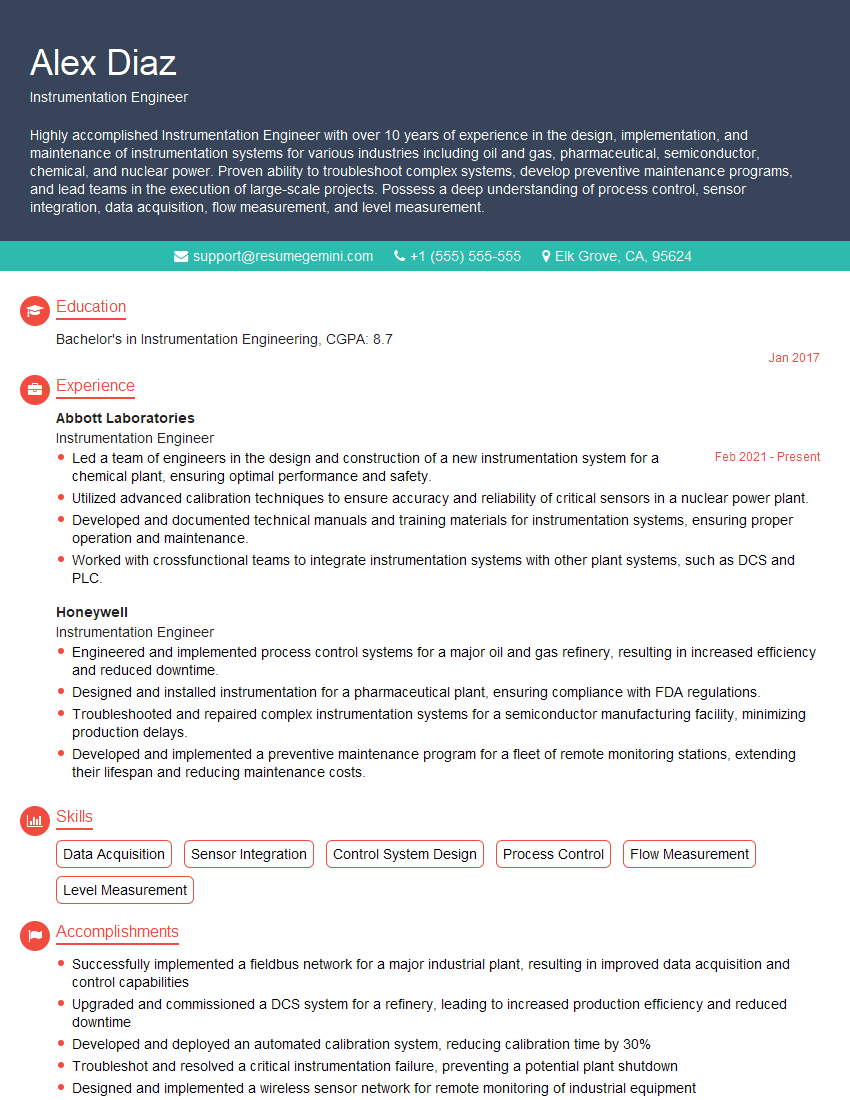
Instrumentation Engineer Resume Sample
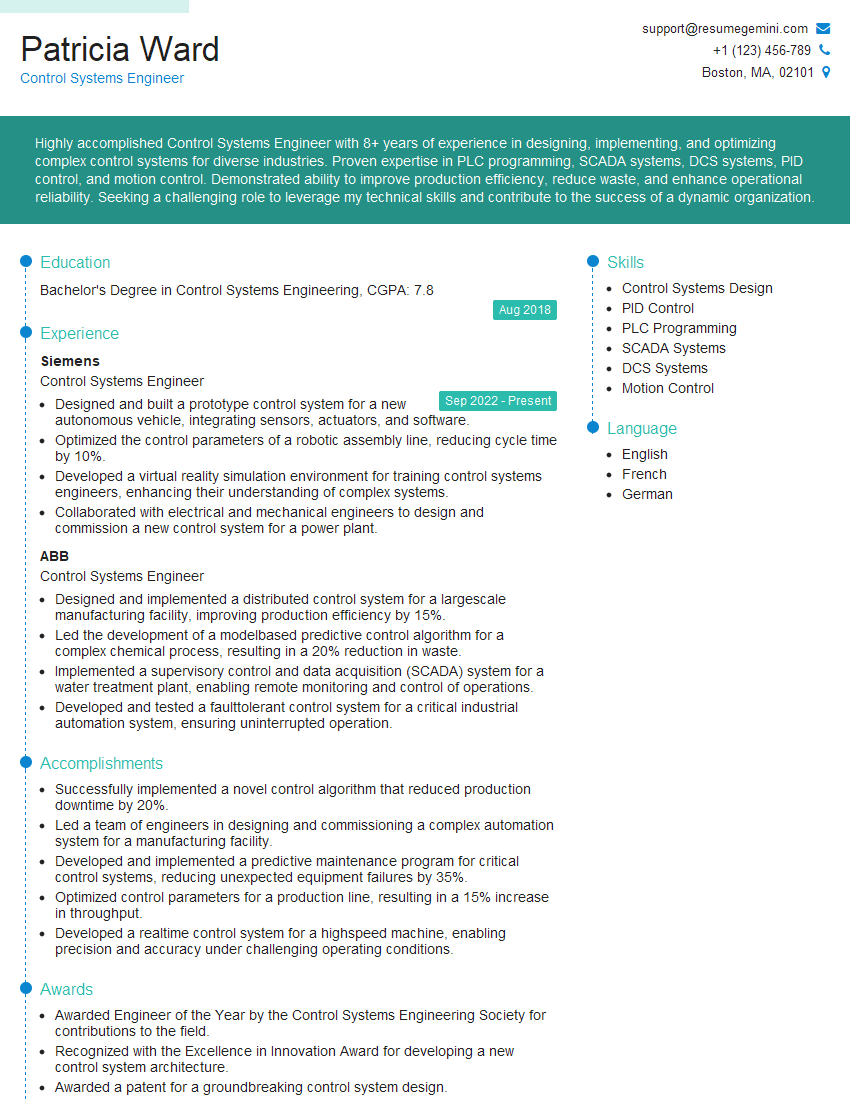
Control Systems Engineer Resume Sample
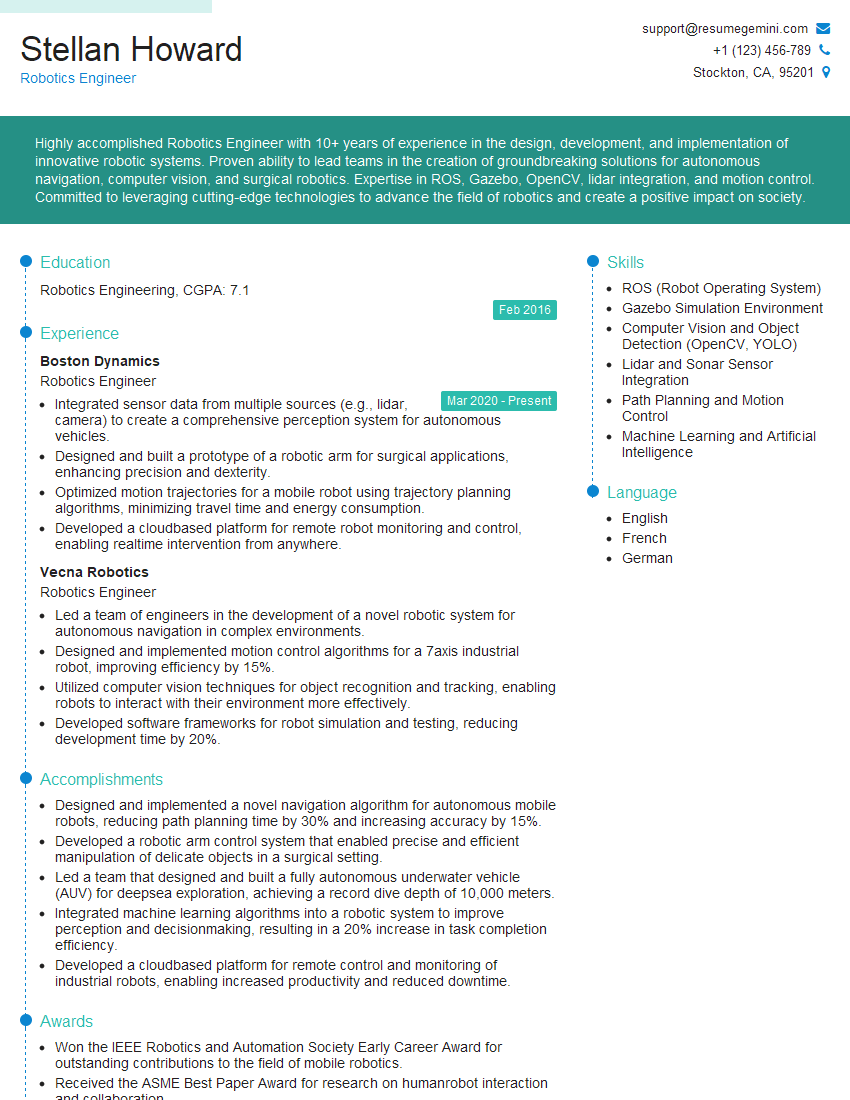
Robotics Engineer Resume Sample

Electronics Technician Resume Sample
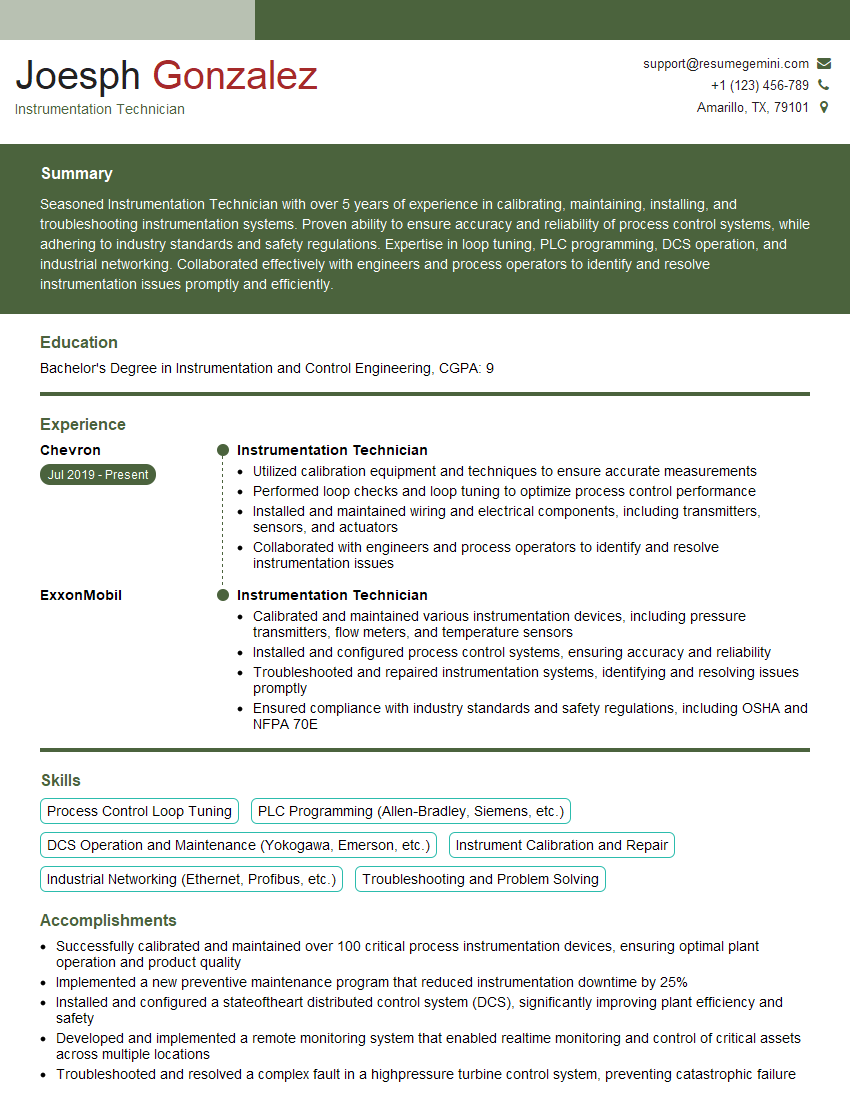
Instrumentation Technician Resume Sample
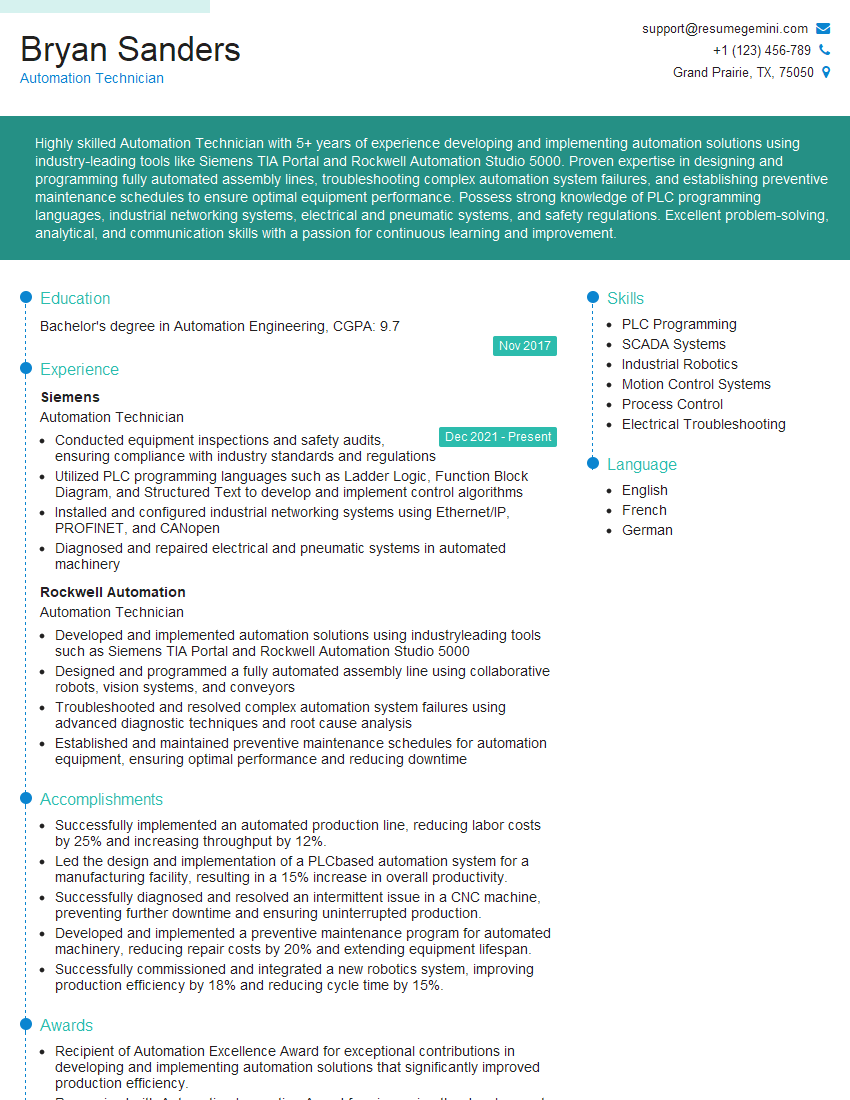
Automation Technician Resume Sample
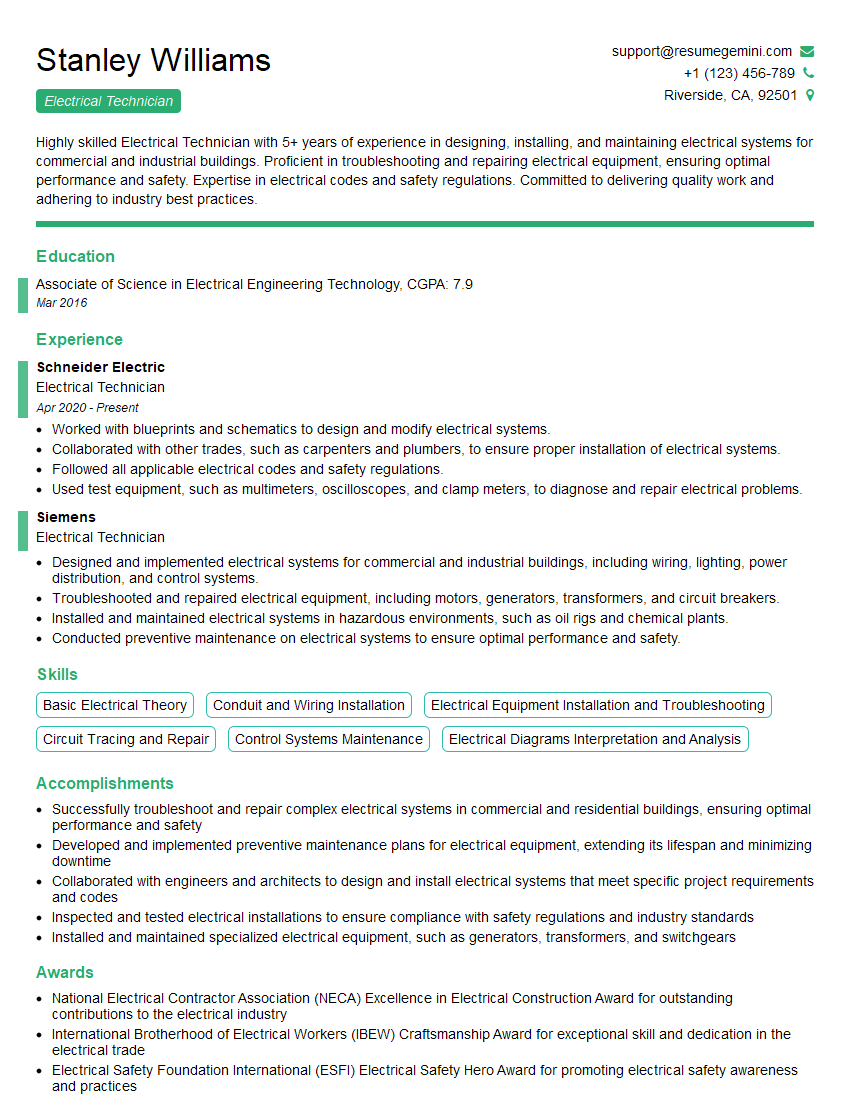
Electrical Technician Resume Sample
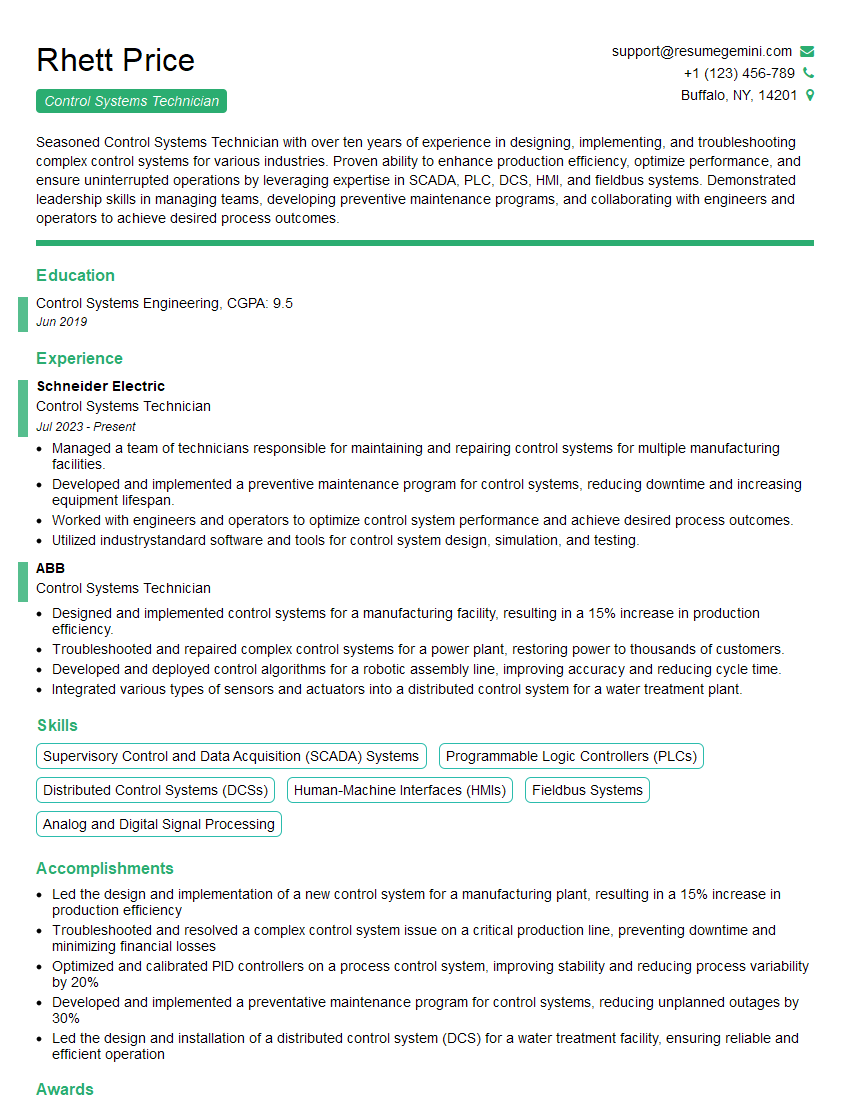
Control Systems Technician Resume Sample
Explore more articles
Users Rating of Our Blogs
Share Your Experience
We value your feedback! Please rate our content and share your thoughts (optional).
What Readers Say About Our Blog
Amazing blog
Interesting Article, I liked the depth of knowledge you’ve shared.
Helpful, thanks for sharing.