Are you ready to stand out in your next interview? Understanding and preparing for Make-Up and Hair interview questions is a game-changer. In this blog, we’ve compiled key questions and expert advice to help you showcase your skills with confidence and precision. Let’s get started on your journey to acing the interview.
Questions Asked in Make-Up and Hair Interview
Q 1. Describe your experience with different makeup application techniques (e.g., airbrush, sponge, brush).
My experience spans a wide range of makeup application techniques, each offering unique benefits. Airbrush makeup provides a flawless, even finish perfect for high-definition photography or events requiring long-lasting wear. It’s applied using an airbrush gun and compressor, creating a fine mist that settles onto the skin. The result is a very sheer, natural-looking finish, great for bridal makeup or photoshoots. However, it requires specialized equipment and training.
Sponge application, particularly with beauty blenders, allows for a seamless, buildable coverage. The damp sponge helps to blend products smoothly, offering a more diffused and natural look compared to brushes. It’s excellent for creating a dewy finish or blending cream products. For example, I frequently use a damp sponge to apply foundation and concealer for a natural, airbrushed effect.
Brush application offers the most versatility. Different brush shapes and sizes allow for precision in applying various products. For instance, a small, angled brush is perfect for applying eyeliner or contouring, while a large, fluffy brush is ideal for blending eyeshadow or powder. The technique itself depends on the product and desired outcome. A stippling brush helps with a more natural finish, while firm brushes can give precise lines. Mastering brush techniques enhances precision and control significantly.
Q 2. What are your go-to products for creating a natural, everyday makeup look?
For a natural, everyday look, my go-to products prioritize enhancing natural features rather than masking them. I start with a lightweight, tinted moisturizer or BB cream for sheer coverage, allowing the skin’s natural texture to show through. A creamy concealer is used sparingly to cover any blemishes or dark circles, blended flawlessly with a damp sponge. I then add a touch of bronzer to contour and define the face, followed by a subtle blush for a healthy flush. Mascara is essential for defining the lashes, and a tinted lip balm or a neutral-toned lipstick completes the look. The key is to focus on enhancing natural beauty with minimal product buildup.
Q 3. How do you adapt your makeup techniques for various skin tones and types?
Adapting makeup techniques for different skin tones and types is crucial for achieving the best results. Skin tone influences color choices; for example, foundation shades need to match the client’s skin perfectly. I use a color chart to assist in shade selection, ensuring the foundation blends seamlessly with the skin. For deeper skin tones, richer, warmer undertones are generally needed, while lighter skin tones might require cooler shades.
Skin type significantly impacts product selection and application methods. Oily skin needs oil-free, long-lasting products and may benefit from powder setting. Dry skin requires hydrating products, such as cream-based foundations and moisturizers applied before makeup. Sensitive skin needs hypoallergenic and fragrance-free cosmetics. I carefully consider these aspects while selecting and applying makeup, ensuring comfort and a beautiful, natural look for each client.
Q 4. Explain your process for consulting with clients to determine their desired look.
Client consultation is a vital step. I begin by having a conversation, establishing a rapport to understand their needs, preferences, and the occasion. I ask questions about their skin type, concerns, makeup experience, desired level of coverage, and the event for which the makeup is intended (e.g., wedding, casual outing, professional headshot). I show them a portfolio of my previous work, discussing different styles to gauge their taste. Using visual references—like magazine photos or mood boards—is immensely helpful. Importantly, I listen actively to understand their expectations and address any concerns they might have, ensuring a shared vision for the final look.
Q 5. How do you handle difficult clients or unexpected challenges during a makeup application?
Handling difficult clients or unexpected challenges requires professionalism, patience, and adaptability. For example, if a client is unhappy with a particular aspect of the makeup, I calmly ask for their feedback, explaining the rationale behind my choices and offering adjustments to better meet their needs. If there is a product malfunction, I have backup products on hand to ensure a smooth continuation of the service. Maintaining a calm and reassuring demeanor is key; a positive attitude and clear communication are vital to managing any situation gracefully and ensuring client satisfaction.
Q 6. What are the latest trends in makeup application and how do you incorporate them into your work?
Current makeup trends emphasize natural beauty, personalization, and inclusivity. Bold brows, luminous skin, and a focus on healthy-looking skin remain popular. The ‘no-makeup makeup’ look continues to be in demand, while other trends see the use of playful pops of color on the eyes or lips. I incorporate these trends by adapting my techniques. For example, I use techniques that create the effect of naturally fuller lips by overlining them subtly. I also incorporate skin-enhancing base products and employ creative techniques like using color corrector to tackle imperfections, effectively creating a luminous finish, while keeping the look natural and not overly done. Staying updated through industry magazines, social media, and attending workshops is paramount to keeping my skills sharp and techniques current.
Q 7. Describe your experience with various hair cutting techniques.
My hair cutting experience encompasses various techniques. I’m proficient in classic cutting methods like point cutting (for softening lines and adding texture), slide cutting (for creating soft layers and movement), and blunt cutting (for precise, sharp lines). I also utilize more modern techniques like dry cutting (to emphasize texture and shape), and razor cutting (for creating softness and volume). The choice of technique is dictated by the client’s hair type, desired style, and the overall look we’re aiming to achieve. For instance, thick, coarse hair benefits from texturizing techniques like point cutting, while fine hair might require more gentle approaches like slide cutting to avoid excessive thinning.
Q 8. How do you assess hair texture and condition to determine the best styling approach?
Assessing hair texture and condition is the cornerstone of any successful styling approach. I begin by visually inspecting the hair, noting its thickness (fine, medium, coarse), density (thin, medium, thick), and porosity (how well it absorbs moisture). I then touch the hair to feel its texture – is it smooth, wiry, straight, wavy, curly, or coily? The feel gives me clues about its elasticity and strength. Finally, I ask about the client’s hair history – has it been chemically treated (colored, permed, relaxed)? Does the client use heat styling tools frequently? This helps me understand its overall health and potential weaknesses. For example, fine, porous hair might be more prone to breakage and require gentler styling techniques compared to thick, resilient hair. A client with previously chemically treated hair might need specialized products and techniques to avoid further damage.
- Visual Inspection: Observing the hair’s overall appearance, shine, and presence of split ends or breakage.
- Tactile Assessment: Feeling the hair’s texture, elasticity, and strength.
- Client Consultation: Gathering information on hair history, routine, and any concerns.
Q 9. What are your preferred hair styling tools and products?
My preferred hair styling tools and products are chosen for their versatility and quality. I favor professional-grade tools for durability and precise control. This includes a selection of high-quality hair dryers with ionic technology for smoother, faster drying; various sized round brushes for creating volume and shaping; flat irons and curling irons with adjustable temperature settings for customized styling; and a range of combs and clips. In terms of products, I prefer products formulated with natural ingredients that are free from harsh sulfates and parabens. This includes moisturizing shampoos and conditioners, volumizing mousses, texturizing sprays, and holding sprays that cater to different hair types and desired styles. The choice of product greatly depends on the client’s hair type, condition, and desired style. For example, I might use a volumizing mousse on fine hair to add body, while opting for a smoothing serum on dry or damaged hair.
Q 10. Explain your process for coloring hair, including strand testing and color correction.
Hair coloring is a multi-step process requiring precision and attention to detail. I always begin with a thorough consultation, discussing the client’s desired color, reviewing their hair history, and performing a strand test. The strand test is crucial, as it allows me to assess how the hair reacts to the color, predict the final result, and identify any potential issues like uneven lifting or allergic reactions. Once the strand test is successful, I proceed with the coloring process, meticulously applying the color according to the manufacturer’s instructions, ensuring even distribution and precise timing. Color correction requires a careful analysis of the current color and the desired outcome. It often involves multiple steps, potentially including color removal, toning, and the application of multiple shades to achieve the desired results. Each step needs careful consideration and precise execution to avoid further damaging the hair. For example, correcting a brassy blonde might require a toner to neutralize the unwanted yellow tones.
Q 11. How do you handle clients with damaged or chemically treated hair?
Handling clients with damaged or chemically treated hair requires a gentler, more restorative approach. I start by assessing the level of damage, determining the underlying cause, and understanding the client’s hair history. Products with moisturizing and strengthening properties are vital. I use protein treatments and deep conditioning masks to repair and restore the hair’s structure, improving its elasticity and reducing breakage. Heat styling tools should be used sparingly or avoided altogether. If the client has significant damage, I might recommend a hair cut to remove the most damaged ends. I always educate the client on at-home care, recommending gentle, sulfate-free products and avoiding harsh treatments that could further compromise the hair’s health. For example, a client with severely bleached hair might benefit from a keratin treatment to improve its condition and manageability.
Q 12. What are the latest trends in hairstyling and how do you keep up-to-date?
The hairstyling world is constantly evolving! I stay updated through various methods. I subscribe to professional hair magazines and online resources; I regularly attend industry workshops and conferences to learn about new techniques and products; and I actively follow influential hairstylists on social media platforms like Instagram and Pinterest. Currently, some of the hottest trends include natural textures, incorporating braids and twists, face-framing layers, and bold color choices, such as vibrant shades or subtle balayage. I incorporate these trends into my work, always adapting them to the individual client’s face shape, hair type, and personal style to ensure a personalized and flattering look.
Q 13. Describe your experience with updos and other special occasion hairstyles.
I have extensive experience creating updos and special occasion hairstyles for weddings, proms, and other events. My approach begins with a detailed consultation to understand the client’s vision, dress style, and overall aesthetic. I consider the client’s hair length, texture, and condition to choose the most appropriate style and techniques. I use a variety of tools and techniques such as French braiding, fishtail braiding, twisting, pinning, and the use of extensions, if necessary. It’s crucial to ensure the hairstyle is comfortable, secure, and lasts throughout the event. For example, a classic chignon is a versatile choice, while a loose, romantic braid complements a boho-chic dress.
Q 14. How do you maintain a clean and sanitary work environment?
Maintaining a clean and sanitary work environment is paramount. I start with a thorough cleaning and disinfection of all surfaces and tools before and after each client. All tools that come into contact with the client’s hair are sanitized appropriately. Single-use items like combs, brushes and towels are disposed of properly after each client. I use clean towels, capes, and other linens for each client and maintain a tidy workspace throughout the day to prevent cross-contamination. I also adhere strictly to all local health and safety regulations, making sure to maintain high hygiene standards throughout my work practices.
Q 15. What are your skills in using various hair extensions and wigs?
My expertise in hair extensions and wigs spans a wide range of techniques and materials. I’m proficient in applying various types, including tape-in, sew-in, clip-in, and fusion extensions, as well as working with different wig caps and constructions like lace-front, full lace, and monofilament wigs. I understand the importance of matching the extension or wig color and texture to the client’s natural hair for a seamless and natural look. For example, when working with a client with fine hair, I would carefully select lightweight extensions and use application methods that minimize stress on the scalp, such as tape-ins or clip-ins. Conversely, for clients with thicker hair, I might opt for sew-in extensions or a full lace wig to achieve the desired volume and style. My skillset also includes customizing wigs—I can cut, style, and color wigs to achieve a bespoke look, ensuring the client’s overall vision is realized.
Beyond application, I’m adept at maintaining and caring for extensions and wigs, advising clients on appropriate aftercare routines to maximize their lifespan. This includes product recommendations for cleaning, conditioning, and styling, as well as demonstrations on proper brushing and storage techniques. For instance, I educate clients on the dangers of harsh heat styling on certain extensions and recommend gentle alternatives.
Career Expert Tips:
- Ace those interviews! Prepare effectively by reviewing the Top 50 Most Common Interview Questions on ResumeGemini.
- Navigate your job search with confidence! Explore a wide range of Career Tips on ResumeGemini. Learn about common challenges and recommendations to overcome them.
- Craft the perfect resume! Master the Art of Resume Writing with ResumeGemini’s guide. Showcase your unique qualifications and achievements effectively.
- Don’t miss out on holiday savings! Build your dream resume with ResumeGemini’s ATS optimized templates.
Q 16. How do you manage your time effectively when working on multiple clients?
Effective time management is crucial in my profession. I utilize a combination of strategies to ensure I stay on schedule and deliver exceptional service to all my clients. Before each appointment, I carefully review the client’s booking, noting the requested services and estimated time requirements. I prioritize tasks based on complexity and time constraints, ensuring I allocate sufficient time for each stage of the process. For example, intricate updos will require more time than a simple blowout. I also streamline my workflow by pre-preparing tools and products, having them readily available at each station. This reduces downtime between clients and keeps things moving efficiently. Moreover, clear and concise communication with clients about expected timelines and any potential delays prevents unnecessary stress.
On days with multiple clients, I utilize a detailed schedule, often using a digital calendar with reminders. I build in buffer time between appointments to account for unforeseen circumstances, such as styling challenges or client consultations. Furthermore, I communicate effectively with clients about appointment length to set realistic expectations and avoid rushing. Maintaining a calm and organized workspace further contributes to efficient time management.
Q 17. Describe your experience with bridal hair and makeup.
I have extensive experience in bridal hair and makeup, having worked on numerous weddings, ranging from intimate ceremonies to large-scale celebrations. My approach is highly collaborative, beginning with an in-depth consultation to understand the bride’s vision, dress style, and overall wedding theme. This includes discussing hair and makeup preferences, reviewing inspiration photos, and addressing any concerns or allergies. I specialize in creating timeless and elegant looks that complement the bride’s features and enhance her natural beauty. For example, I might suggest a romantic updo with soft waves for a classic look or a more modern sleek ponytail with subtle braids for a contemporary feel.
I’m also experienced in working with bridal parties, ensuring each bridesmaid’s makeup and hair aligns with the overall wedding aesthetic while still reflecting individual personalities. I often prepare trial runs for both the bride and bridal party, allowing for adjustments and ensuring everyone is comfortable and confident on the wedding day. I consider myself adept at managing the logistical aspects of bridal hair and makeup, including coordinating schedules, managing travel, and working effectively under pressure to deliver impeccable results within a timely manner. I understand the importance of the day and the need for everything to run smoothly.
Q 18. How do you handle difficult or demanding clients?
Handling demanding clients requires a calm and professional approach. My first priority is active listening – understanding their concerns and frustrations. I empathize with their perspective, even if I don’t necessarily agree. Then, I focus on problem-solving. For example, if a client is unhappy with a particular style, I’ll ask clarifying questions and explore alternative options. I demonstrate a willingness to make adjustments until they are satisfied. It’s about finding common ground and ultimately making them feel heard and valued. I also set clear boundaries while maintaining a respectful and professional demeanor. If a client becomes verbally abusive, I would politely but firmly explain my limits and the need for respectful communication.
Maintaining a positive attitude is key. I always strive to turn a negative situation into a positive outcome, focusing on finding a solution that meets both my client’s needs and my professional standards. Documentation is crucial; I meticulously maintain records of each appointment, including client feedback and any resolved issues.
Q 19. What is your approach to dealing with customer complaints?
My approach to customer complaints is one of empathy and proactive problem-solving. I listen attentively to the client’s concerns, acknowledging their feelings and validating their experience. I avoid interrupting or becoming defensive, even if I feel the complaint is unwarranted. I ask clarifying questions to fully understand the issue before offering a solution. For instance, if a client expresses dissatisfaction with a color application, I will inquire about specific aspects of the result they dislike, such as the shade, the texture or the application technique. This detailed understanding allows me to formulate a tailored solution.
Depending on the nature of the complaint, I may offer a complimentary service (such as a color correction) or a partial refund. My goal is to rectify the situation and restore client satisfaction. I always follow up to ensure the issue is fully resolved and that the client feels valued and understood. Finally, I use constructive criticism to improve my services and prevent similar issues from arising in the future. I maintain detailed records of all complaints and resolutions.
Q 20. How do you ensure you maintain the highest standards of hygiene and safety?
Maintaining the highest standards of hygiene and safety is paramount in my profession. I meticulously sterilize all tools and equipment between each client using a hospital-grade disinfectant. This includes brushes, combs, scissors, and any other implements that come into contact with the client’s hair or skin. I also use disposable applicators for makeup application whenever possible and replace them after each use. All makeup products are stored appropriately to prevent contamination, and I only use fresh, high-quality products.
My workspace is kept clean and organized at all times, minimizing the risk of cross-contamination. I wear clean gloves during all hair and makeup applications. Beyond cleanliness, I follow strict safety protocols when using chemical products such as hair dyes, ensuring proper ventilation and adhering to manufacturer’s instructions. I always inform clients about potential risks and allergies related to the products being used and obtain their informed consent. Continuous professional development ensures I stay updated on the latest hygiene and safety regulations in the industry.
Q 21. Explain your understanding of different hair types and textures.
Understanding different hair types and textures is fundamental to my work. Hair varies widely in terms of thickness, density, porosity, elasticity, and texture. For example, fine hair is delicate and requires gentle handling and lightweight products, while thick hair might need more robust styling techniques and products to manage volume. Porosity refers to the hair’s ability to absorb moisture; highly porous hair needs more intense hydration, while low-porosity hair requires lighter products to avoid product build-up.
I am familiar with various hair textures, including straight, wavy, curly, and coily. Each texture has unique characteristics that require specific techniques. For instance, curly hair needs techniques that maintain curl definition and prevent frizz, while coily hair requires even more gentle handling and hydrating products. My knowledge allows me to select the appropriate styling products and techniques that best suit each client’s hair type and desired style, ensuring the final result is healthy, manageable, and aesthetically pleasing. Regular professional development ensures I remain updated on the best practices for various hair types and textures.
Q 22. Describe your knowledge of different chemical processes involved in hair coloring and treatments.
Hair coloring and treatments involve a fascinating interplay of chemistry. At the core is the understanding of the hair’s structure – the cuticle (outer layer), cortex (middle layer containing melanin, the pigment responsible for hair color), and medulla (innermost layer). Many processes rely on altering the cortex.
Oxidation: Permanent hair color uses oxidation dyes. These are typically small molecules that are colorless until they penetrate the hair shaft and react with hydrogen peroxide (developer). This reaction causes the molecules to enlarge and bond together, creating larger, colored molecules that are trapped within the hair. The intensity of the color depends on the developer’s volume (concentration of hydrogen peroxide). Think of it like developing a photograph; the developer brings out the latent color.
Reduction: In contrast, some chemical hair relaxers utilize reduction. These break the disulfide bonds in the hair’s protein structure (keratin), changing its shape to create a straighter texture. The process is usually reversed by oxidation and re-formation of disulfide bonds over time, explaining why relaxed hair can become curlier again.
pH Levels: The pH level of the solutions is crucial. Highly alkaline (high pH) products tend to swell the hair cuticle, allowing better penetration of color molecules. Acidic (low pH) products seal the cuticle, making hair smoother and shinier. Understanding pH helps in selecting products that are appropriate for different hair types and conditions, minimizing damage.
Ammonia: Often found in permanent hair color, ammonia helps to lift the cuticle, allowing the color molecules to penetrate deeper into the hair shaft. It can be harsh, so ammonia-free options are now readily available.
A deep understanding of these chemical processes allows me to choose the right products, adjust processing times, and predict potential reactions, ensuring optimal results and minimizing damage to the hair.
Q 23. What are your skills in using various tools and equipment (e.g., curling irons, flat irons, hair dryers)?
My proficiency with various styling tools is extensive. I’m adept at using curling irons of different barrel sizes to create a range of curls, from tight ringlets to loose beach waves, adjusting temperature and technique based on hair type and desired outcome. I’m skilled in using flat irons for straightening, creating sleek styles, or adding subtle bends. My hair dryer technique ensures efficient and even drying, minimizing heat damage. I also expertly utilize diffusers to enhance natural curl patterns and other attachments for creating volume or directional styling. I understand the importance of proper heat protection products to minimize the risk of thermal damage.
For example, when using a curling iron on thick, coarse hair, I’d use a higher temperature and larger barrel, working with smaller sections to ensure even heat distribution and avoid creating crimped or frizzy texture. In contrast, fine hair requires lower temperatures and potentially smaller barrels, as too much heat can easily cause damage.
Q 24. How do you adapt your techniques to different hair lengths and styles?
Adapting my techniques to different hair lengths and styles is fundamental. Short hair requires precision and attention to detail; I might use smaller sections and different product application methods compared to longer hair. Long hair may require more time for drying, styling, and product application to avoid breakage. I use appropriate sectioning techniques for each length.
For example, a layered bob requires a different approach than long, straight hair. For the bob, I’d focus on precision cutting and precise styling to accentuate the layers. Long, straight hair might be styled with more emphasis on smoothing and creating a uniform shine.
Different styling requests, like creating updos, braids, or intricate designs, demand mastery of various braiding, pinning, and setting techniques. Each style necessitates careful consideration of the hair’s texture, density, and length to achieve the desired outcome.
Q 25. What is your experience with working in a team environment?
Teamwork is integral to my approach. In busy salon environments, effective communication and collaboration are essential for efficiency and client satisfaction. I thrive in a team environment, actively assisting colleagues when needed and sharing my knowledge to support the overall salon goals. I value open communication and believe in a supportive environment where everyone’s contributions are appreciated. I have extensive experience coordinating with other stylists, assistants, and receptionists to ensure smooth client flow and a positive work experience. For example, I actively help other stylists with more demanding tasks if time allows, or offer suggestions on product usage to improve efficiency and create a synergistic work atmosphere.
Q 26. How do you manage stress and pressure in a fast-paced environment?
Managing stress and pressure in a fast-paced environment requires strong organizational skills and a calm demeanor. I prioritize tasks effectively, manage my time efficiently, and remain focused under pressure. I utilize deep breathing techniques and mindfulness strategies to stay centered and maintain a positive attitude. I proactively anticipate potential issues and develop solutions before they arise. This proactive approach minimizes last-minute stress and ensures smooth transitions between clients. For example, if I notice I’m running behind schedule, I communicate with the client to manage expectations and prevent unnecessary anxiety.
Q 27. How do you stay updated on the latest industry trends and techniques?
Staying current with industry trends is paramount. I achieve this through continuous professional development activities: attending workshops and seminars, participating in advanced training sessions, reading industry publications, and following influential stylists and brands on social media. This approach allows me to stay informed on the latest techniques, product innovations, and emerging trends. I also actively participate in online forums and communities to expand my knowledge and share insights with fellow professionals.
For example, I recently participated in a Balayage workshop that introduced me to innovative coloring techniques and product application methods, directly improving my client’s color results.
Q 28. Describe your professional development goals and how you plan to achieve them.
My professional development goals include mastering advanced cutting techniques, such as precision cutting and long-layer cutting, and further developing my expertise in color correction and balayage. To achieve these goals, I plan to enroll in specialized courses, participate in masterclasses with renowned stylists, and continue researching and experimenting with innovative techniques. I aim to become a sought-after specialist in both cutting and coloring, known for my artistic skills and commitment to achieving exceptional results for my clients.
Key Topics to Learn for Your Make-Up and Hair Interview
- Skin Analysis and Preparation: Understanding different skin types, tones, and concerns; appropriate cleansing, toning, and moisturizing techniques; preparing the skin for makeup application.
- Makeup Application Techniques: Mastering foundation application, contouring and highlighting, eye shadow blending, eyeliner and mascara application, eyebrow shaping, lip application; adapting techniques for various occasions (bridal, editorial, etc.).
- Hair Styling Techniques: Understanding different hair textures and types; proficiency in various styling methods (updos, braids, blow-drying, curling, straightening); hair product knowledge and application.
- Color Theory and Application: Understanding color palettes, complementary and contrasting colors; choosing appropriate makeup and hair colors for different skin tones and hair textures; color correction techniques.
- Product Knowledge: Familiarity with high-quality makeup and hair product brands; understanding different product formulations and their uses; knowing ingredient lists and potential sensitivities.
- Hygiene and Sanitation: Maintaining a clean and organized workspace; practicing proper sanitation procedures; understanding the importance of hygiene for client safety and well-being.
- Client Consultation and Communication: Effective communication skills to understand client needs and preferences; building rapport and managing client expectations; providing professional recommendations.
- Problem-Solving and Adaptability: Troubleshooting common makeup and hair challenges; adapting techniques to address unexpected situations; maintaining composure under pressure.
- Industry Trends: Keeping up-to-date with current trends in makeup and hair; demonstrating knowledge of popular techniques and styles.
Next Steps
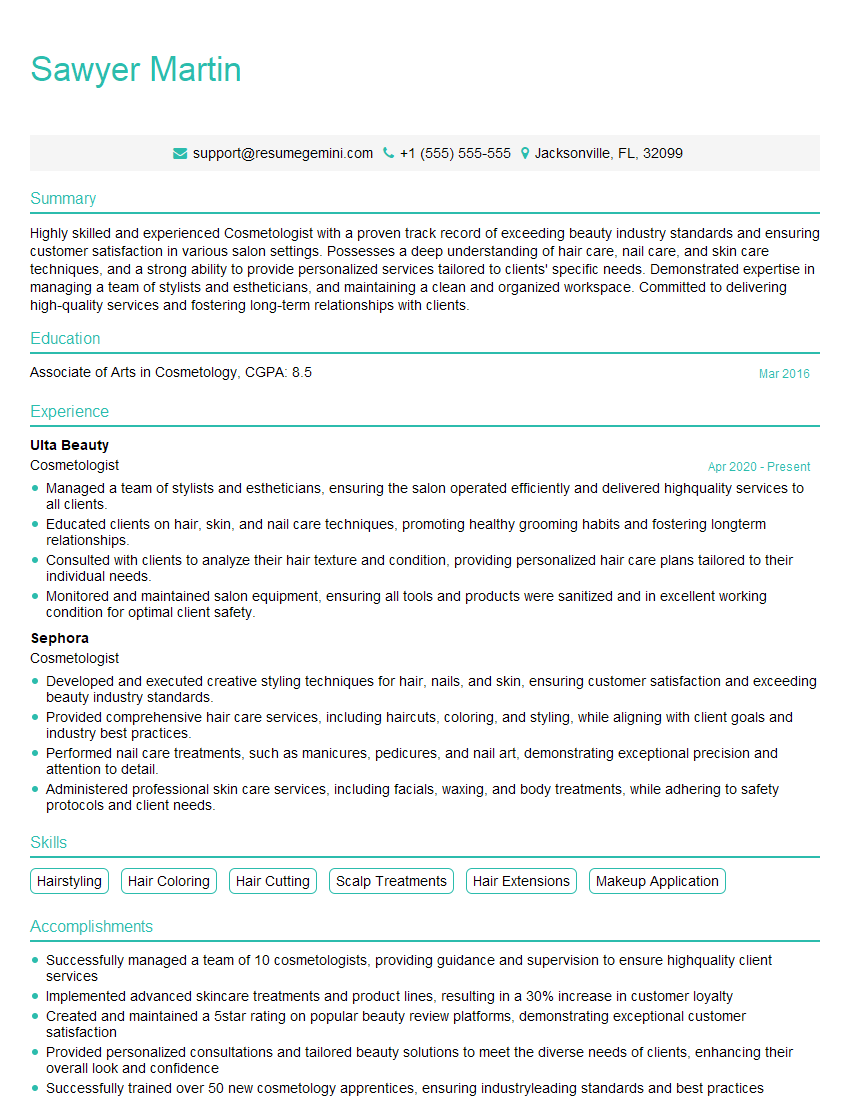
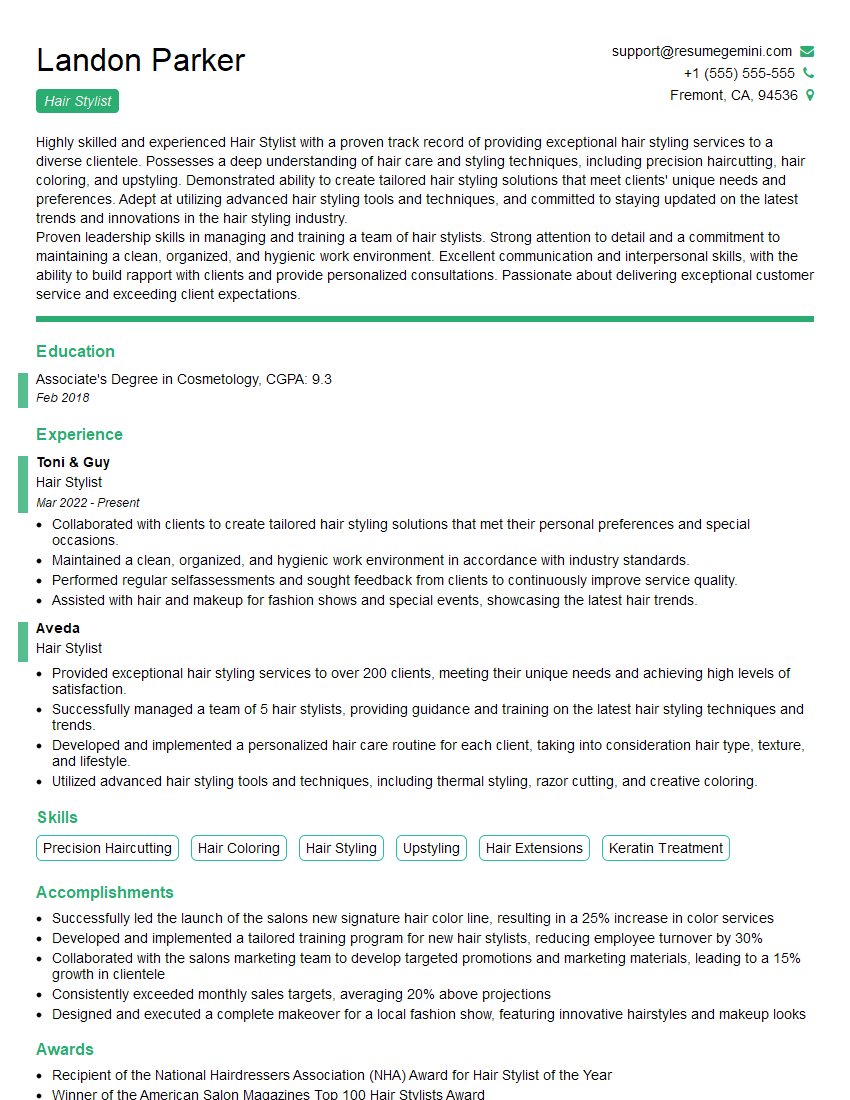
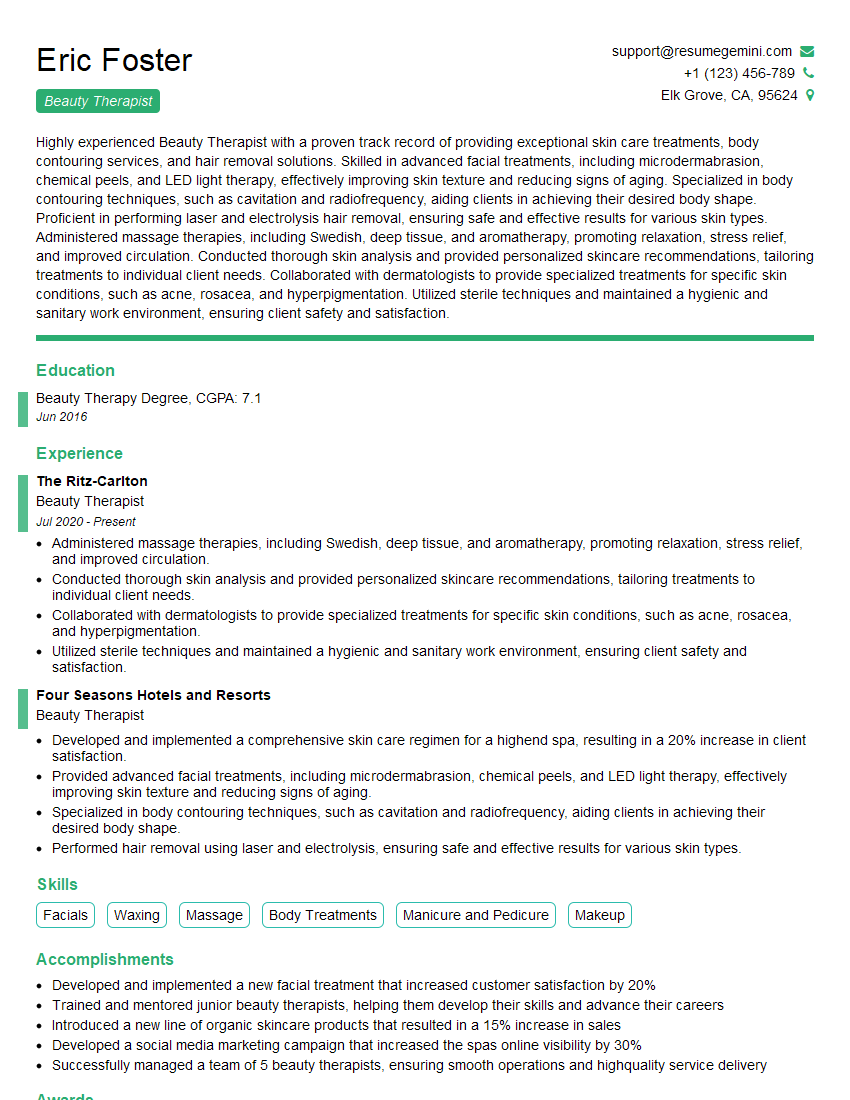
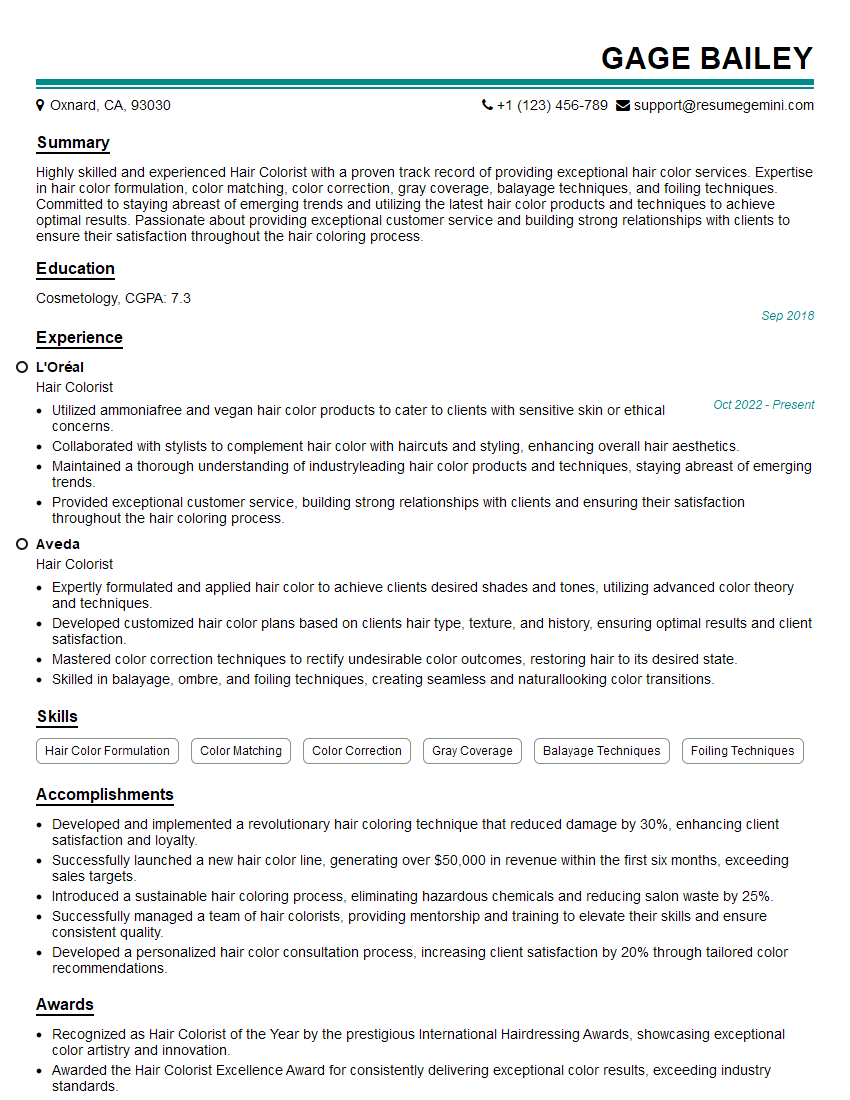
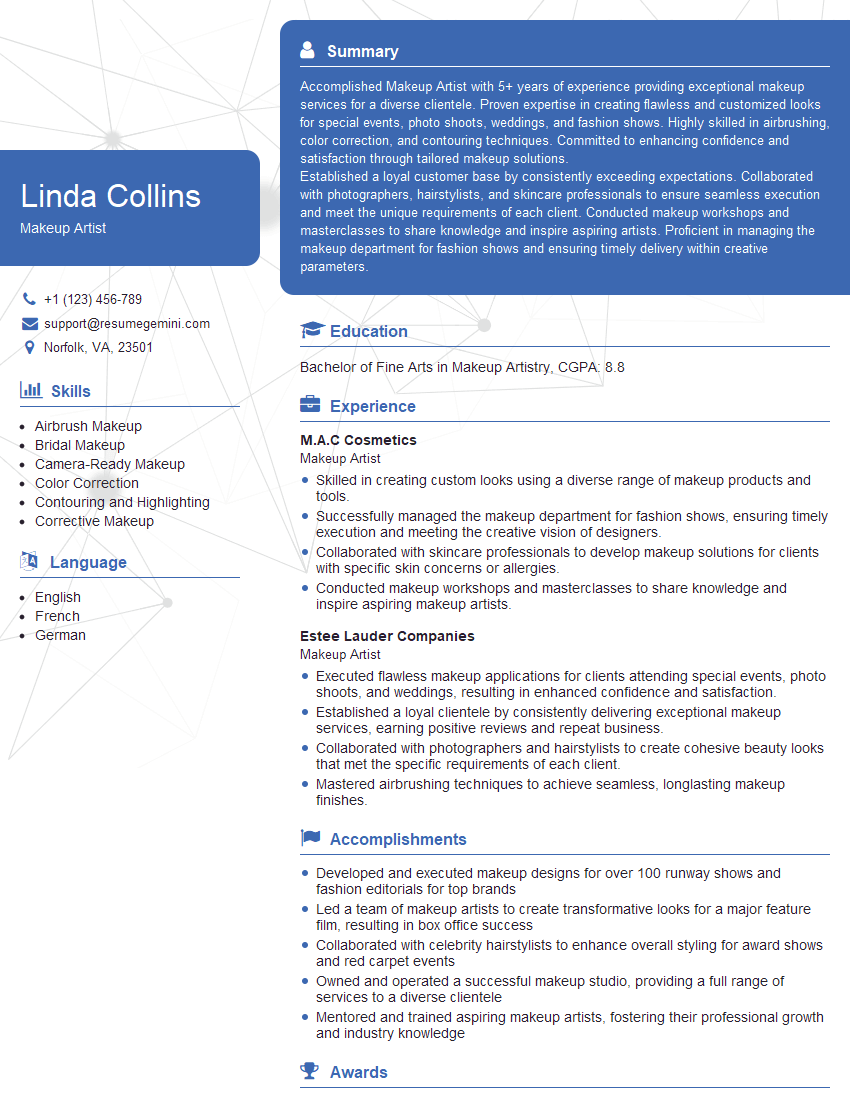
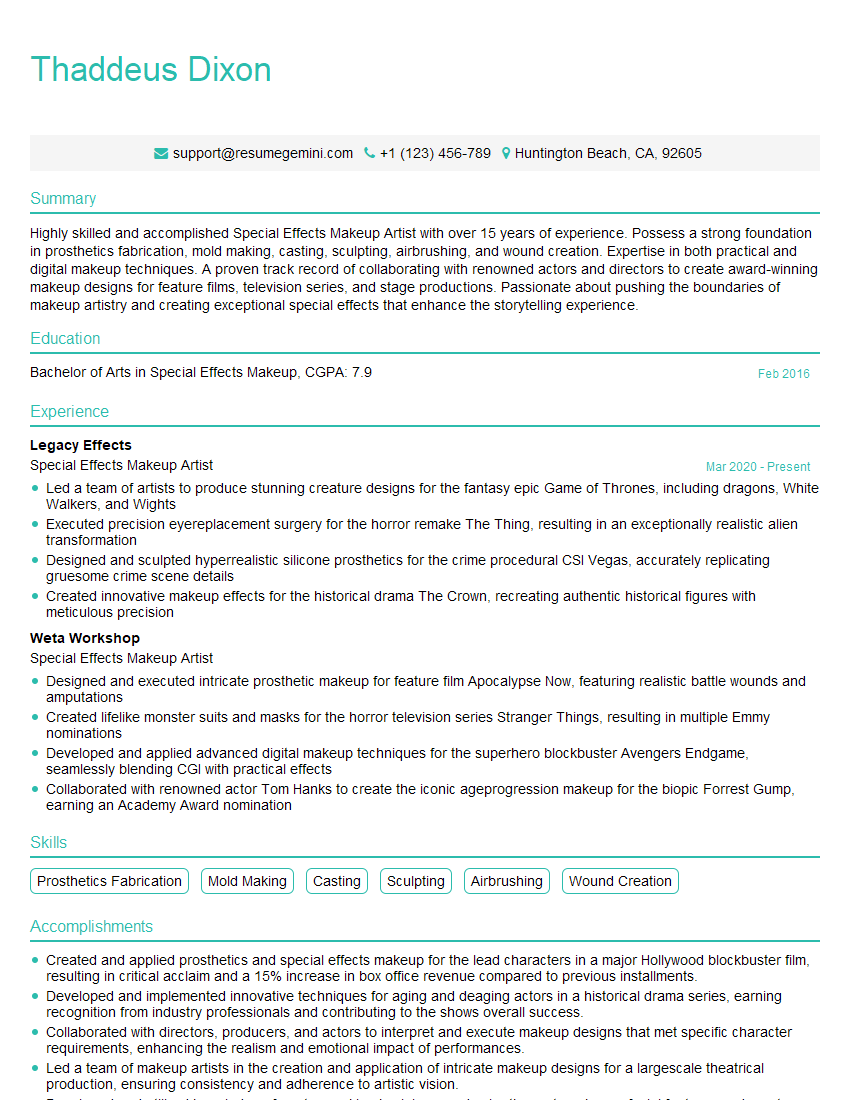
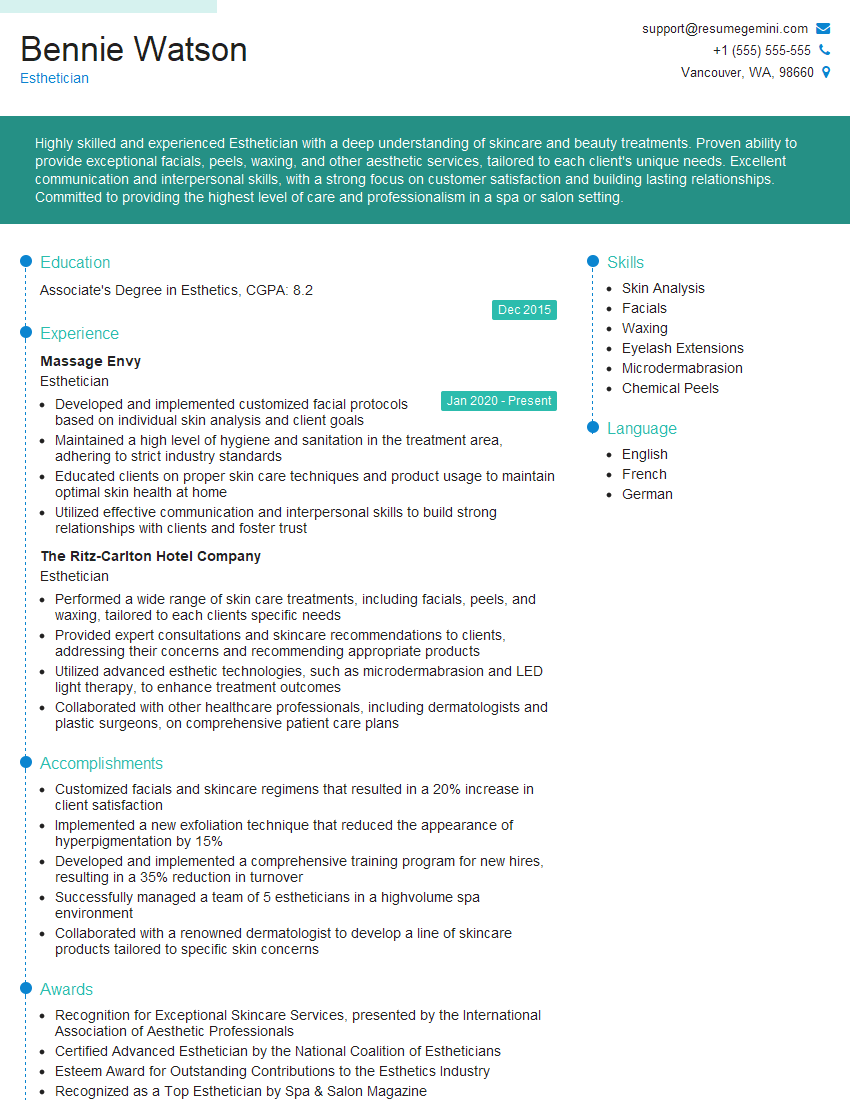
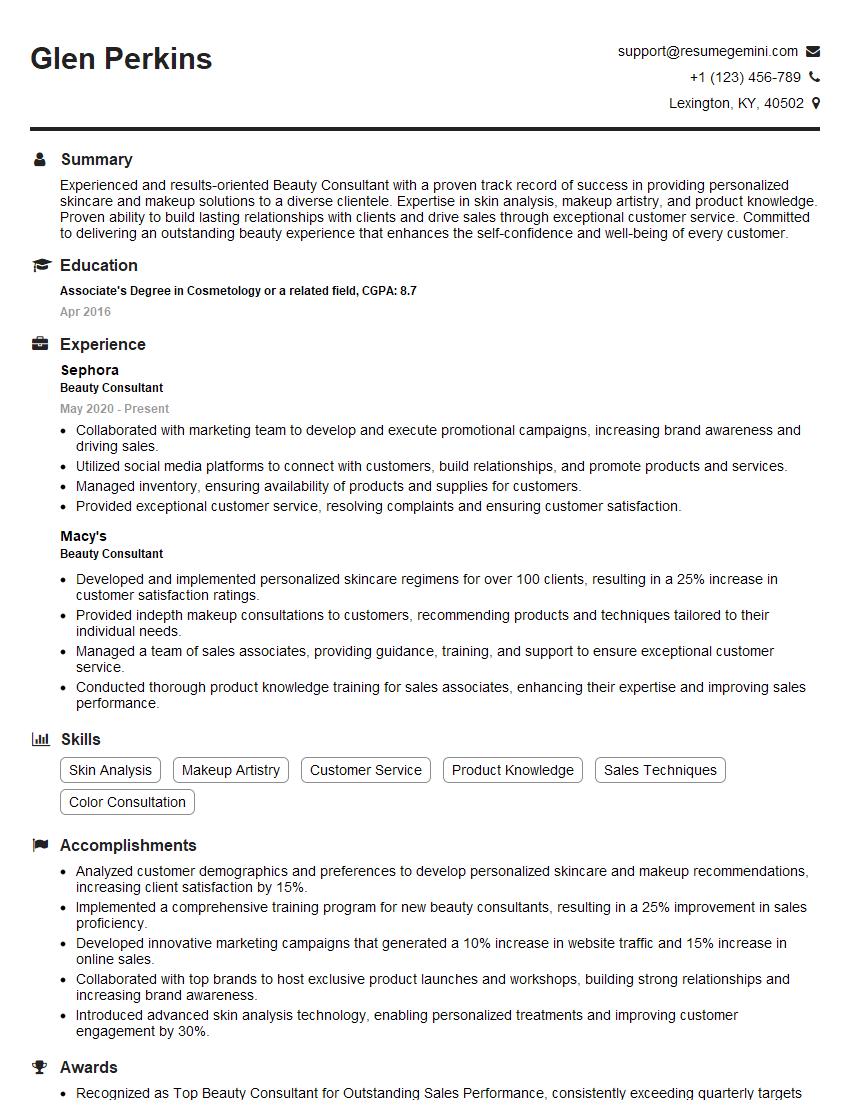
Mastering the art of Make-Up and Hair is crucial for a thriving career in this dynamic industry. Strong technical skills combined with excellent client communication are key to success. To significantly boost your job prospects, create a professional, ATS-friendly resume that highlights your skills and experience effectively. We highly recommend using ResumeGemini to build a compelling resume that showcases your unique abilities. ResumeGemini provides examples of resumes tailored specifically to the Make-Up and Hair industry, guiding you in creating a document that grabs the attention of recruiters.
Explore more articles
Users Rating of Our Blogs
Share Your Experience
We value your feedback! Please rate our content and share your thoughts (optional).
What Readers Say About Our Blog
Amazing blog
hello,
Our consultant firm based in the USA and our client are interested in your products.
Could you provide your company brochure and respond from your official email id (if different from the current in use), so i can send you the client’s requirement.
Payment before production.
I await your answer.
Regards,
MrSmith
hello,
Our consultant firm based in the USA and our client are interested in your products.
Could you provide your company brochure and respond from your official email id (if different from the current in use), so i can send you the client’s requirement.
Payment before production.
I await your answer.
Regards,
MrSmith
These apartments are so amazing, posting them online would break the algorithm.
https://bit.ly/Lovely2BedsApartmentHudsonYards
Reach out at BENSON@LONDONFOSTER.COM and let’s get started!
Take a look at this stunning 2-bedroom apartment perfectly situated NYC’s coveted Hudson Yards!
https://bit.ly/Lovely2BedsApartmentHudsonYards
Live Rent Free!
https://bit.ly/LiveRentFREE
Interesting Article, I liked the depth of knowledge you’ve shared.
Helpful, thanks for sharing.
Hi, I represent a social media marketing agency and liked your blog
Hi, I represent an SEO company that specialises in getting you AI citations and higher rankings on Google. I’d like to offer you a 100% free SEO audit for your website. Would you be interested?