The right preparation can turn an interview into an opportunity to showcase your expertise. This guide to Natural Resources Law Enforcement interview questions is your ultimate resource, providing key insights and tips to help you ace your responses and stand out as a top candidate.
Questions Asked in Natural Resources Law Enforcement Interview
Q 1. Describe your experience with enforcing regulations related to hunting and fishing licenses.
Enforcing hunting and fishing license regulations is a cornerstone of wildlife management. My experience involves a multifaceted approach, starting with proactive measures like license checks at access points and during patrols. I’ve conducted hundreds of license checks, both randomly and based on intelligence or observed suspicious activity. This involves verifying license validity, confirming species bag limits are adhered to, and ensuring compliance with other relevant regulations, such as seasons and methods of take.
Reactive enforcement involves responding to complaints about suspected violations. This often leads to investigations, requiring meticulous record-keeping, witness statements, and potentially seizing illegally harvested animals or equipment. For example, I once investigated a case of alleged license forgery. The investigation involved comparing the suspect’s license to official records, analyzing handwriting, and gathering witness testimonies, ultimately leading to a successful prosecution.
Beyond individual enforcement, I also participate in educational initiatives, such as hunter safety courses and outreach programs at community events. Educating the public about license requirements and conservation principles is crucial for long-term compliance and resource sustainability. The goal is not just to punish violators but to foster a culture of responsible hunting and fishing.
Q 2. Explain your understanding of the Endangered Species Act and its enforcement.
The Endangered Species Act (ESA) is a landmark piece of legislation designed to protect imperiled species and their habitats. My understanding of the ESA encompasses its core provisions, including the listing process for endangered and threatened species, critical habitat designation, and the prohibition of actions that jeopardize listed species. Enforcement involves investigating potential violations, which can range from habitat destruction to illegal trade of protected animals or plants.
Enforcement often relies on collaboration with other agencies like the Fish and Wildlife Service (FWS) and the National Oceanic and Atmospheric Administration (NOAA). Investigations often involve extensive fieldwork, analyzing data sets for patterns of illegal activity (e.g., satellite imagery analysis to detect deforestation in critical habitat), gathering evidence (e.g., DNA analysis to link confiscated items to a specific source), and coordinating with experts (e.g., botanists, zoologists) to accurately assess the impact of a violation.
For instance, I assisted in an investigation involving the illegal capture of a protected bird species. This involved coordinating with FWS agents, collecting evidence from the suspect’s property, and providing testimony in court, ultimately leading to fines and habitat restoration requirements. The ESA’s complexity necessitates a thorough understanding of both the legal framework and the biological intricacies of endangered species.
Q 3. How would you handle a situation involving illegal logging on public land?
Illegal logging on public land is a serious crime with devastating environmental consequences. My response would begin with securing the scene, which includes preventing further damage and identifying potential witnesses. Then, I would meticulously document the scene, taking photographs and measurements of the felled trees, noting the species, size, and location. I would also collect evidence, such as logging equipment, vehicle tracks, and any remaining tree stumps, ensuring proper chain-of-custody procedures are followed.
Identifying the perpetrators would involve investigating potential leads, such as reviewing logging permits, examining vehicle registration records, and interviewing potential witnesses or informants. Depending on the evidence, this might involve undercover operations, surveillance, or analyzing satellite imagery to trace logging activity. The case would involve collaboration with forestry experts to assess the environmental damage and determine the appropriate penalties and restoration measures.
Building a strong case involves securing warrants, collecting the necessary documentation, and preparing a detailed report for prosecution. The successful prosecution would ultimately seek to not only punish the offenders but also to restore the damaged ecosystem through reforestation or other conservation measures.
Q 4. Describe your experience investigating environmental crimes, such as pollution or illegal dumping.
Investigating environmental crimes like pollution and illegal dumping requires a systematic and multi-disciplinary approach. My experience includes cases involving industrial waste discharge, illegal dumping of hazardous materials, and oil spills. Investigations typically begin with a complaint or an observed violation. This is followed by a thorough assessment of the affected area, using various techniques to identify the source of the pollution. This may involve sampling water, soil, or air to analyze the pollutants and trace them back to their source.
The investigative process often involves analyzing records (e.g., industrial discharge permits, shipping manifests), interviewing potential witnesses and suspects, and using technological tools such as geographic information systems (GIS) to map the extent of the contamination and identify potential routes of transport. The ultimate goal is to identify the responsible party and hold them accountable. For example, I worked on a case where illegally dumped chemicals were contaminating a local waterway. We traced the chemicals to a local factory and obtained evidence that proved their negligence in handling waste materials. The subsequent legal action resulted in significant fines and substantial site remediation.
Effective investigation requires strong collaboration with various specialists, including environmental scientists, chemists, and legal professionals to ensure accurate analysis, thorough documentation, and effective prosecution.
Q 5. What methods do you use to identify and apprehend poachers?
Apprehending poachers demands a proactive and reactive strategy. Proactive measures include conducting regular patrols in known poaching hotspots, using surveillance technologies such as trail cameras and remote sensing devices, and collaborating with local communities to gather intelligence. Reactive measures involve responding to reports of poaching activity, often requiring quick action to prevent evidence destruction.
Identifying poachers involves analyzing evidence collected from the field, such as footprints, weapons, and carcasses. DNA analysis is increasingly important, allowing us to link confiscated wildlife products to specific animals and potentially to the poaching site. Technological tools such as GPS tracking devices implanted in animals are crucial in pinpointing poaching activity.
For example, I used trail cameras to monitor an area with high poaching activity, leading to the successful apprehension of several poachers in the act. The data collected from the cameras provided critical evidence for prosecution. Successful poaching enforcement also relies on building strong relationships with local communities and fostering a culture of reporting suspected illegal activity.
Q 6. Explain your knowledge of evidence collection and preservation techniques in environmental investigations.
Evidence collection and preservation in environmental investigations are paramount to ensuring successful prosecution. Maintaining a clear chain of custody is crucial. This involves meticulously documenting every step of the process, from collection to analysis, using detailed logs, photographs, and video recordings. Evidence must be properly labeled, packaged, stored, and transported to prevent contamination or degradation. Different types of evidence require specific handling procedures.
For example, soil samples might need to be collected in sterile containers to prevent contamination, while biological samples require careful preservation to prevent DNA degradation. Digital evidence, such as GPS data or satellite imagery, needs to be secured and authenticated using forensic techniques. Proper documentation helps ensure the admissibility of evidence in court. This includes not only proper labeling and chain-of-custody documentation but also ensuring the data is collected in a manner that is scientifically sound and legally defensible.
My experience in evidence handling ensures that all collected materials are admissible in court and meet the highest standards of accuracy and integrity. This includes understanding the legal and scientific requirements for preserving different types of evidence and knowing the proper procedures for its handling.
Q 7. How would you handle a confrontation with a suspect resisting arrest?
Confrontations with resisting suspects require a measured and controlled response, prioritizing officer and public safety. My training emphasizes de-escalation techniques, verbal communication skills, and the appropriate use of force. The initial approach would involve clear communication, identifying myself as a law enforcement officer and stating the reason for the arrest. I would strive to understand the suspect’s concerns and de-escalate any tension through calm and professional communication.
However, if the suspect actively resists arrest, physical force may become necessary. The use of force must be justified, proportional to the level of resistance, and documented meticulously. The appropriate use of force includes tactical maneuvers, defensive tactics, and potentially less-lethal weapons such as pepper spray or tasers, depending on the circumstances. Any use of force must be in accordance with departmental policies and relevant laws.
Following the apprehension, I would ensure the suspect’s safety and well-being, providing medical attention if necessary. A thorough report would be filed documenting the entire incident, including the events leading up to the arrest, the level of resistance encountered, the force used, and the rationale behind it. This ensures transparency and accountability and provides an accurate account of events for any subsequent internal review or legal proceedings.
Q 8. Describe your experience working with other law enforcement agencies or regulatory bodies.
Throughout my career, interagency collaboration has been paramount. I’ve worked extensively with state wildlife agencies, the U.S. Fish and Wildlife Service, the National Park Service, local police departments, and even the Coast Guard, depending on the nature of the case. For instance, during an investigation into illegal timber harvesting on national forest land, we partnered with the U.S. Forest Service to conduct aerial surveillance, while local law enforcement provided ground support. This collaborative approach is crucial for effective enforcement given the jurisdictional complexities involved in natural resource crimes. We often share intelligence, resources, and expertise to tackle issues that transcend agency boundaries. This includes joint training exercises which improve communication and operational efficiency during complex investigations and emergencies.
- Example 1: A poaching case involving multiple states required coordination with each state’s wildlife agency to track the suspect’s movements and trace the illegal wildlife products.
- Example 2: An oil spill investigation involved collaborating with the Coast Guard for maritime response and environmental assessment, alongside state environmental agencies for onshore cleanup and enforcement.
Q 9. How familiar are you with relevant state and federal laws regarding natural resources?
My familiarity with state and federal natural resource laws is comprehensive. I possess a deep understanding of statutes related to hunting and fishing regulations, endangered species protection (Endangered Species Act), timber harvesting regulations, mining laws (like the Mining Act of 1872 and the Surface Mining Control and Reclamation Act), water rights, and environmental protection laws (Clean Water Act, Clean Air Act). I stay abreast of updates and case law through ongoing professional development and participation in relevant legal and enforcement communities. I understand the specific nuances of laws within different jurisdictions, appreciating that regulations for hunting a deer in Pennsylvania differ significantly from those in California, for example. This understanding extends to the procedural aspects of law enforcement, such as obtaining search warrants and presenting evidence in court.
Q 10. Explain your understanding of search and seizure laws as they apply to natural resources enforcement.
Search and seizure in natural resources enforcement adheres to the Fourth Amendment’s protection against unreasonable searches and seizures. This means we must generally obtain a warrant before conducting a search, unless an exception applies (like exigent circumstances – an emergency situation – or plain view). For example, if we see illegal timber openly stacked and marked for sale without proper permits while performing a routine patrol, that could justify immediate seizure under the plain view doctrine. Warrants require probable cause, meaning we must present sufficient evidence to convince a judge that a crime has been or is being committed and that evidence of it is likely located in the place to be searched. The specificity of a warrant is essential – it must clearly describe the place to be searched and the items to be seized. The warrant process is precisely documented to ensure compliance with legal requirements. Failure to adhere to these protocols can lead to the exclusion of evidence in court, jeopardizing the entire case. I am highly experienced in crafting legally sound warrant applications and executing searches properly.
Q 11. What is your experience with using GPS technology and mapping software in field investigations?
GPS technology and mapping software are indispensable tools in my work. I regularly use handheld GPS units to precisely record the location of evidence, crime scenes, and suspect activity in the field. This data is then integrated with GIS (Geographic Information System) software to create detailed maps visualizing investigation findings, including possible patterns of illegal activity. For example, during a poaching investigation, plotting the GPS coordinates of discovered snares helped us identify potential poaching hotspots and connect various incidents. Furthermore, GPS data can support the tracking of vehicles or individuals suspected of illegal activity. Using specialized software and aerial imagery, we can analyze terrain and landscape features to assist in identifying potential areas for illegal activities, such as unauthorized logging or dumping sites. Accurate mapping is crucial for effectively presenting evidence in court.
Q 12. How do you prioritize competing demands and multiple cases?
Prioritizing competing demands requires a structured approach. I use a case management system that allows me to track cases based on factors like urgency, potential environmental impact, and severity of the crime. Cases involving imminent threats to public safety or significant environmental damage naturally take precedence. I also employ a system of prioritizing based on available resources, assigning higher priority to cases where success is likely given available time, manpower, and budget. I regularly review caseload to reassess priorities, ensuring that the most impactful cases are addressed efficiently. It’s a juggling act, requiring flexibility and excellent time management skills.
Q 13. Describe your proficiency in report writing and documentation.
Report writing is a cornerstone of my job, crucial for accurate documentation, evidence preservation, and successful prosecution. My reports are clear, concise, and comprehensive. They include detailed descriptions of the events, evidence collected (with chain of custody documentation), witness statements, and photographs. I adhere to established agency formats and legal standards. I ensure each report is accurate, unbiased, and readily understandable by others, including judges, juries, and other law enforcement personnel. Clear and accurate reporting prevents ambiguity and ensures the integrity of any subsequent investigation or legal proceedings.
Q 14. How would you handle a situation involving a dangerous animal encounter while on duty?
Dangerous animal encounters require immediate and decisive action. My training equips me to assess the situation, prioritize safety, and respond appropriately. This involves understanding animal behavior, maintaining a safe distance, and utilizing appropriate non-lethal deterrents (bear spray, loud noises). If the situation escalates and poses a direct threat, lethal force may be authorized as a last resort, always adhering to department policy and legal standards. Post-encounter, I would document the incident meticulously, including the animal’s species, behavior, and the actions taken. This documentation is vital for future safety protocols and potential investigation of any injury or property damage.
Q 15. Explain your understanding of the legal aspects of land and water rights.
Land and water rights are complex legal concepts governed by a patchwork of federal, state, and sometimes even local laws. Understanding them requires navigating property law, water law, and environmental regulations.
Land Rights: These typically revolve around ownership, use, and transfer of land. This includes fee simple ownership (absolute ownership), easements (rights to use another’s land for a specific purpose), and various leasehold interests. Land rights are often defined by deeds, surveys, and historical use. For example, a landowner may have the right to build on their land, but this right is often subject to zoning regulations and environmental protection laws, preventing activities that would damage wetlands or endangered species habitats. Disputes often arise over boundary lines, access rights, and mineral rights.
Water Rights: These are significantly more variable depending on location and legal tradition. In the eastern U.S., the riparian doctrine generally applies, granting water rights to landowners along a watercourse based on their proximity. In the western U.S., the prior appropriation doctrine often prevails, where water rights are granted based on historical use and priority of appropriation. This means the person who first started using the water for a beneficial purpose typically has the senior right to its continued use, even if others arrive later. These rights are often regulated by state water resource agencies and are crucial in managing scarce water resources, especially in arid regions. Over-allocation and drought can lead to intense legal battles over water use.
Understanding both land and water rights is essential in natural resources law enforcement because many violations involve improper land use impacting water quality, illegal diversions of water, or encroachment on protected areas.
Career Expert Tips:
- Ace those interviews! Prepare effectively by reviewing the Top 50 Most Common Interview Questions on ResumeGemini.
- Navigate your job search with confidence! Explore a wide range of Career Tips on ResumeGemini. Learn about common challenges and recommendations to overcome them.
- Craft the perfect resume! Master the Art of Resume Writing with ResumeGemini’s guide. Showcase your unique qualifications and achievements effectively.
- Don’t miss out on holiday savings! Build your dream resume with ResumeGemini’s ATS optimized templates.
Q 16. How do you stay updated on changes in environmental laws and regulations?
Staying current on environmental laws and regulations requires a multi-pronged approach. I utilize several key strategies:
- Subscription to legal databases and journals: I subscribe to services like Westlaw and LexisNexis to access updated case law, statutes, and regulations.
- Professional organizations and memberships: Active membership in organizations such as the Association of State Fish and Wildlife Agencies or similar organizations provides access to newsletters, conferences, and continuing education opportunities.
- Government agency websites: Regularly checking the websites of the EPA, relevant state environmental agencies, and other federal agencies responsible for environmental law enforcement provides direct access to updates and proposed rule changes.
- Legal and environmental news sources: Staying informed about current events through reputable news sources specializing in environmental law provides context and alerts on emerging issues.
- Continuing legal education: I actively participate in continuing legal education courses and workshops focused on environmental law to keep abreast of the latest developments and court decisions.
This comprehensive approach ensures that I’m not only aware of changes but also understand their implications for my work and can adapt my enforcement strategies effectively.
Q 17. How would you effectively communicate complex environmental issues to the public?
Communicating complex environmental issues effectively to the public requires simplifying technical information while maintaining accuracy and clarity. I employ these techniques:
- Use plain language: Avoid jargon and technical terms whenever possible. If technical terms are necessary, define them clearly and concisely.
- Visual aids: Charts, graphs, maps, and images can greatly enhance understanding and make information more memorable. For example, a map showing the extent of an oil spill is more impactful than a written description.
- Storytelling: Using real-world examples and narratives can make abstract concepts more relatable. Instead of discussing general water pollution statistics, sharing a story about a local community affected by polluted water can make the issue more tangible.
- Interactive engagement: Question-and-answer sessions, town halls, and workshops create opportunities for public interaction and address specific concerns.
- Tailor messaging to the audience: The approach should differ depending on the audience. A presentation to scientists will differ greatly from one delivered to elementary school students.
For instance, explaining the impacts of climate change might involve showing projected sea-level rise affecting coastal communities, instead of just presenting complex climate models.
Q 18. Describe your experience with conducting investigations involving complex scientific data.
I have extensive experience in conducting investigations that rely on complex scientific data. This often involves collaboration with scientists and experts.
One example involved an investigation into illegal dumping of industrial waste. The evidence included soil samples, water quality analysis, and witness statements. My role involved coordinating the collection of this data, ensuring proper chain of custody, interpreting the scientific findings in the context of applicable regulations, and presenting the evidence in a clear and understandable manner to legal authorities. This required a deep understanding of analytical chemistry, toxicology, and environmental regulations to effectively evaluate the scientific data and establish a clear link between the dumped waste and its environmental impact.
Another case involved a suspected violation of the Endangered Species Act. The investigation relied heavily on GPS tracking data from radio-collared animals, remote camera trap images, and habitat assessment reports. Interpreting this data required understanding population dynamics, habitat requirements, and the statistical significance of the observed patterns. Successful prosecution hinged on being able to clearly explain the scientific methodology and findings to a judge or jury who might not have a scientific background.
My approach in such cases always includes: (1) Collaborating with scientists and experts to ensure the data is accurately interpreted; (2) Maintaining rigorous documentation and chain of custody for all evidence; (3) Presenting the scientific findings in a clear, concise, and understandable manner, suitable for both scientific and non-scientific audiences.
Q 19. Explain your understanding of different types of environmental pollution and their consequences.
Environmental pollution encompasses a wide range of contaminants and their effects on various environmental compartments. Key categories include:
- Air Pollution: This includes pollutants like particulate matter, ozone, sulfur dioxide, and nitrogen oxides, stemming from industrial emissions, vehicle exhaust, and wildfires. Consequences range from respiratory illnesses to acid rain and climate change.
- Water Pollution: This involves contamination of surface waters and groundwater with substances like heavy metals, pesticides, oil spills, and sewage. The consequences include harming aquatic life, contaminating drinking water supplies, and disrupting ecosystems.
- Soil Pollution: This entails contamination of soil with hazardous materials such as heavy metals, pesticides, and industrial waste. Consequences include harming plant growth, leaching pollutants into water sources, and posing health risks to humans and animals.
- Noise Pollution: Excessive noise from traffic, construction, and industrial activities can disrupt wildlife behavior, reduce human productivity, and cause hearing loss.
- Light Pollution: Artificial light at night can disrupt ecosystems by affecting the behavior of nocturnal animals and impacting plant growth.
The consequences of pollution are far-reaching and interconnected. They can impact human health, harm biodiversity, damage ecosystems, and lead to economic losses. For instance, an oil spill can devastate coastal ecosystems, impacting fisheries and tourism. Air pollution contributes to respiratory diseases and exacerbates climate change.
Q 20. How do you utilize technology (e.g., drones, surveillance cameras) in your work?
Technology plays a crucial role in modern natural resources law enforcement. I utilize several technological tools:
- Drones: Drones equipped with high-resolution cameras are used for aerial surveillance of large areas, providing visual evidence of illegal activities such as illegal logging, poaching, or unauthorized land development. They allow for efficient monitoring of remote and inaccessible areas.
- Surveillance cameras: These are deployed in strategic locations to monitor sensitive areas, such as protected wildlife habitats or areas prone to illegal dumping. Time-lapse cameras provide continuous monitoring, capturing evidence of illegal actions.
- Geographic Information Systems (GIS): GIS software is utilized to map and analyze spatial data, such as the location of illegal activities, habitat boundaries, or pollution plumes. This enables efficient planning of enforcement operations and analysis of patterns of environmental crime.
- GPS tracking devices: These devices are used to track the movement of vehicles or individuals suspected of illegal activities, providing real-time location information and crucial evidence.
- Remote sensing technologies: Satellite imagery and aerial photography are utilized to detect large-scale environmental damage, such as deforestation or illegal mining activities.
These tools allow for more efficient and effective investigations, reducing costs and improving the likelihood of successful prosecutions.
Q 21. How do you build rapport and trust with diverse stakeholders (e.g., landowners, environmental groups)?
Building rapport and trust with diverse stakeholders is paramount for effective natural resources law enforcement. It requires active listening, empathy, and a collaborative approach.
I begin by actively listening to the concerns and perspectives of all stakeholders. This means engaging with landowners, environmental groups, indigenous communities, and industry representatives, understanding their interests and concerns. I strive to explain the regulations clearly, emphasizing the importance of environmental protection while acknowledging the legitimate needs and challenges of different stakeholders.
Transparency and open communication are key. I clearly explain the investigative process and share information as appropriate, building trust by being honest and upfront. Collaborating with stakeholders whenever possible, seeking input on enforcement strategies and creating opportunities for engagement fosters a sense of shared responsibility for environmental protection.
Education is also a crucial component. I provide information on environmental regulations and best practices, helping stakeholders understand how to comply with the law and avoid violations. This collaborative, education-focused approach reduces conflict and encourages voluntary compliance, leading to a more effective and sustainable approach to environmental protection.
For example, working with a logging company on sustainable harvesting practices, instead of solely focusing on enforcement, demonstrates a collaborative approach and builds mutual respect and trust.
Q 22. What is your experience with public speaking and presentations related to natural resources?
Public speaking and presentations are integral to my role. I’ve presented findings on illegal logging operations at regional conservation conferences, briefed local communities on new regulations concerning water resource management, and testified before legislative committees on proposed amendments to environmental protection laws. My presentations often incorporate visual aids like maps, charts, and photographs to illustrate complex data and make it accessible to diverse audiences. For example, when presenting to a community group, I’d use simple language and relatable examples to ensure understanding, whereas a presentation to a scientific audience would delve into more technical details. I consistently receive positive feedback on the clarity, impact, and engagement of my presentations.
Q 23. Describe a time you had to make a difficult decision regarding enforcement of natural resource laws.
One challenging decision involved a suspected case of illegal mining on protected land. The evidence was circumstantial – tire tracks leading to a freshly dug pit, unusual soil displacement, and the presence of mining equipment nearby. However, there was no direct evidence linking a specific individual or company to the activity. Confronting the land owner would have been difficult with insufficient direct evidence, potentially leading to a defensive and uncooperative response. A full-scale investigation, however, would have required significant resources and time. My solution was a multi-pronged approach. First, I initiated a thorough investigation to gather more concrete evidence, including soil and water samples. Secondly, I increased surveillance in the area. Thirdly, I initiated a dialogue with the landowner, emphasizing the importance of environmental protection and the potential consequences of illegal activity. This proactive approach eventually yielded further evidence, leading to successful prosecution.
Q 24. Explain your understanding of conservation efforts and sustainable resource management.
Conservation efforts and sustainable resource management are deeply intertwined. Conservation focuses on protecting natural resources and ecosystems, often through preservation and limited use. Sustainable resource management, on the other hand, takes a more proactive approach by carefully managing the extraction and utilization of resources to ensure their long-term availability. Think of it like this: conservation is about preserving a pristine forest, while sustainable resource management is about carefully harvesting timber from a forest while ensuring its health and regeneration. My understanding incorporates both these approaches. I believe that effective natural resource management needs a balanced approach combining both conservation and sustainable resource management, ensuring ecological integrity and continued societal benefit. This often involves implementing regulations, promoting responsible practices, and engaging with stakeholders to find solutions that balance environmental protection with economic development.
Q 25. Describe your experience with community outreach and educational programs.
I’ve extensively participated in community outreach and educational programs. This includes leading workshops on responsible fishing practices for coastal communities, giving presentations on wildlife conservation to school children, and organizing community clean-up initiatives. For example, I worked with a local school to develop a curriculum on environmental stewardship that incorporated hands-on activities like tree planting and water quality testing. Successful community engagement requires building trust, tailoring the message to the audience, and actively listening to their concerns. By fostering a sense of shared responsibility, we can achieve more effective conservation outcomes.
Q 26. How would you address a situation where you suspect a violation but lack sufficient evidence?
Suspecting a violation without sufficient evidence requires a cautious yet proactive approach. Firstly, I’d thoroughly document all existing evidence, no matter how seemingly insignificant. This could include photographs, notes, GPS coordinates, witness statements, and any physical samples. Secondly, I’d continue to monitor the situation for additional evidence, possibly using surveillance techniques if legally permissible. Thirdly, I’d explore other investigative avenues, such as collaborating with other agencies or reviewing past records. If after a reasonable period, sufficient evidence remains elusive, I wouldn’t initiate enforcement action. However, I would maintain the case file and continue to monitor the situation for future evidence. This ensures that we protect due process while still remaining vigilant against future environmental violations. It is crucial to prevent premature actions which could damage the credibility of future investigations.
Q 27. What are your strategies for maintaining physical fitness and preparedness for demanding fieldwork?
Maintaining physical fitness is paramount in this field. My routine involves regular cardiovascular exercise, strength training, and flexibility exercises. This includes hiking, running, and weightlifting – activities that directly translate to the demands of fieldwork. I also focus on building endurance, as many investigations require long hours in challenging conditions. Furthermore, I undergo regular physical check-ups and maintain a healthy diet, ensuring I’m physically capable of handling strenuous tasks, potentially including rescuing colleagues or responding to emergencies in remote locations.
Q 28. Describe your experience working in challenging environmental conditions (e.g., extreme weather, rugged terrain).
I’ve worked extensively in challenging environments, including navigating rugged mountain terrain during illegal logging investigations and enduring extreme heat and humidity while monitoring wildlife populations in the Amazon rainforest. This experience has honed my ability to adapt to unpredictable conditions, utilize appropriate safety gear, and plan meticulously for potential risks. For instance, I’ve learned to recognize signs of heatstroke and altitude sickness, and I know how to improvise solutions when equipment malfunctions. Working in these harsh conditions requires careful planning, risk assessment, and reliance on teamwork. The ability to remain focused and resourceful under duress is critical.
Key Topics to Learn for Natural Resources Law Enforcement Interview
- Wildlife Laws and Regulations: Understanding federal, state, and local laws governing hunting, fishing, endangered species, and wildlife habitat protection. Practical application: Analyzing a scenario involving illegal hunting and determining the appropriate enforcement action.
- Environmental Laws and Regulations: Knowledge of Clean Water Act, Clean Air Act, and other relevant environmental legislation. Practical application: Investigating a pollution incident and identifying the responsible party and violations.
- Land Management and Conservation: Familiarity with principles of land management, conservation techniques, and sustainable resource use. Practical application: Assessing the environmental impact of a proposed development project.
- Investigative Techniques: Mastering evidence collection, interviewing techniques, report writing, and courtroom testimony. Practical application: Developing a comprehensive investigation plan for suspected poaching activities.
- Law Enforcement Procedures and Ethics: Understanding search and seizure laws, use of force policies, and maintaining ethical conduct in law enforcement. Practical application: Responding to a confrontation with a potentially hostile individual while adhering to established protocols.
- Public Relations and Communication: Effective communication with the public, stakeholders, and other agencies. Practical application: Educating the public about conservation efforts and enforcing regulations while building community trust.
- Emergency Response and Outdoor Skills: Proficiency in wilderness survival, first aid, and emergency response procedures. Practical application: Responding to a search and rescue operation in a remote area.
- Technology and Data Management: Utilizing GIS, GPS, and other technologies for evidence gathering, mapping, and data analysis. Practical application: Using GPS data to track suspected illegal activity.
Next Steps
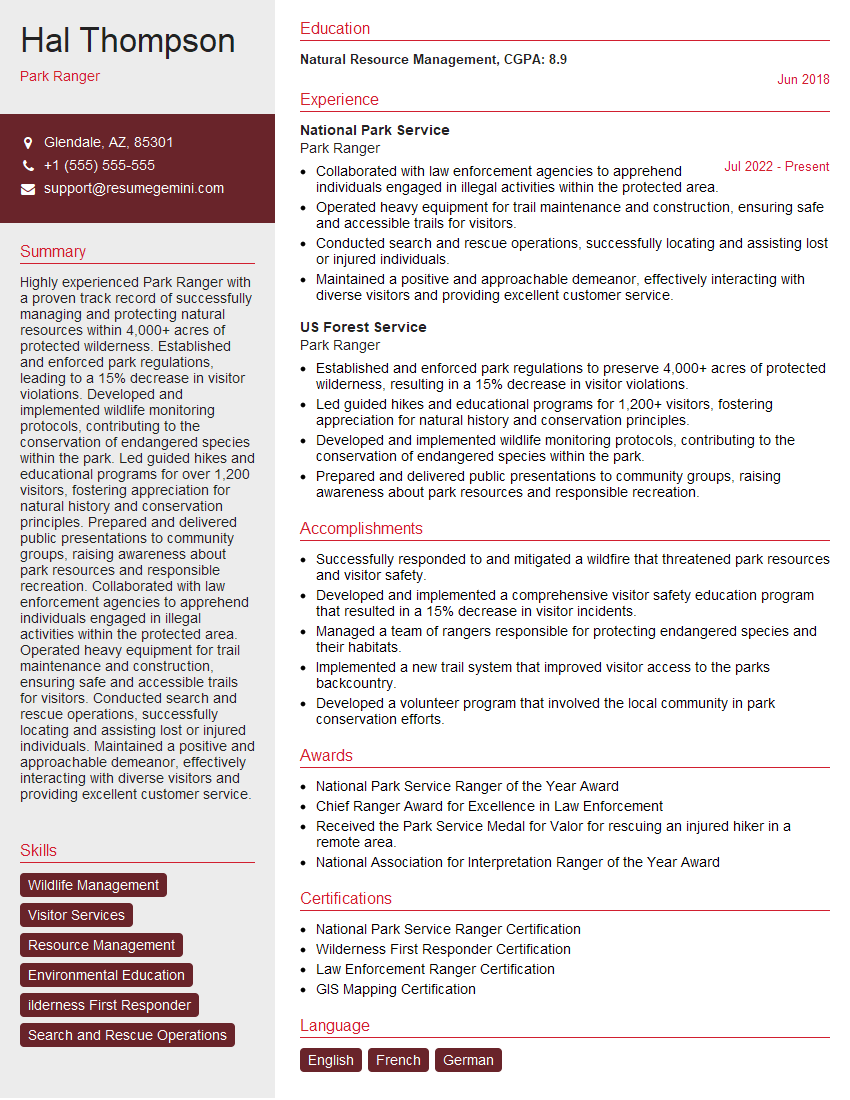
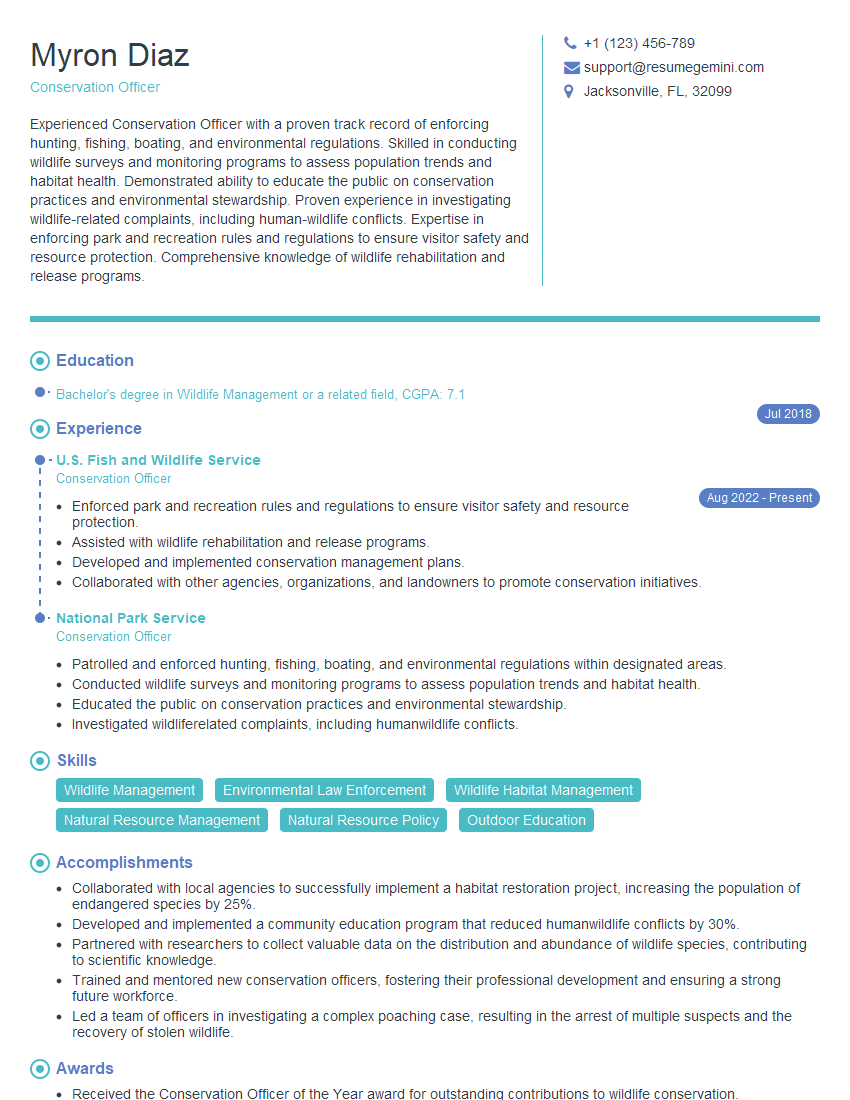
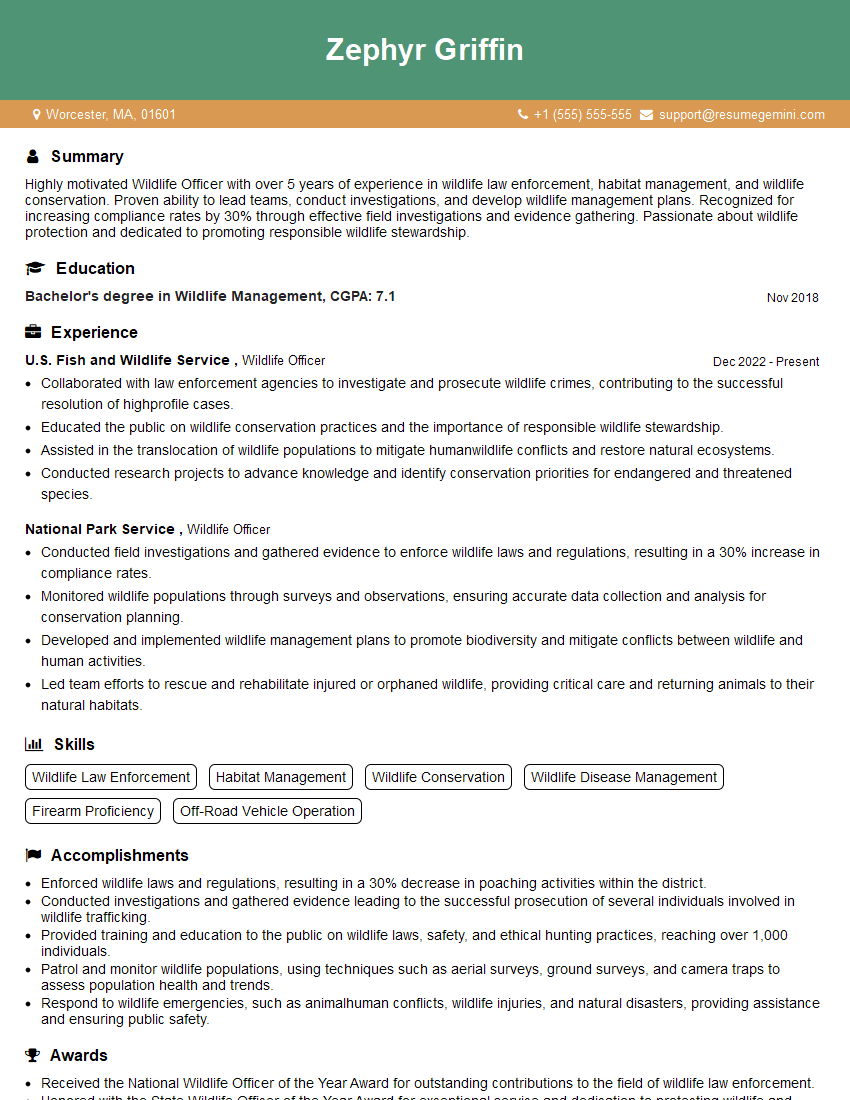
Mastering Natural Resources Law Enforcement opens doors to a fulfilling career dedicated to protecting our environment and natural resources. This career path offers opportunities for growth, specialization, and impactful contributions to conservation efforts. To significantly increase your chances of landing your dream role, focus on building an ATS-friendly resume that highlights your skills and experience effectively. ResumeGemini is a trusted resource that can help you create a professional and impactful resume tailored to the specific demands of this field. Examples of resumes tailored to Natural Resources Law Enforcement are available to further assist you in this process.


Explore more articles
Users Rating of Our Blogs
Share Your Experience
We value your feedback! Please rate our content and share your thoughts (optional).
What Readers Say About Our Blog
Amazing blog
Interesting Article, I liked the depth of knowledge you’ve shared.
Helpful, thanks for sharing.