The thought of an interview can be nerve-wracking, but the right preparation can make all the difference. Explore this comprehensive guide to Radio and Voice Communication Techniques interview questions and gain the confidence you need to showcase your abilities and secure the role.
Questions Asked in Radio and Voice Communication Techniques Interview
Q 1. Explain the difference between AM and FM radio waves.
AM (Amplitude Modulation) and FM (Frequency Modulation) are two fundamental methods for transmitting information, like audio, over radio waves. The key difference lies in how the information is encoded onto the carrier wave.
In AM, the amplitude (strength) of the carrier wave is varied to represent the audio signal. Think of it like a ripple in a pond – the audio signal changes the height of the ripples. Stronger audio creates taller ripples (higher amplitude), and quieter audio creates smaller ripples (lower amplitude). This is why AM radio is susceptible to noise and interference; static affects the amplitude.
FM, on the other hand, keeps the amplitude constant but varies the frequency of the carrier wave to represent the audio signal. Imagine pushing a swing – the rate at which you push (frequency) changes, but the strength of your push (amplitude) remains relatively consistent. This method is less susceptible to noise because noise primarily affects the amplitude, leaving the frequency relatively unaffected. This results in clearer audio quality in FM broadcasting.
In summary: AM modulates the amplitude, leading to simpler circuitry but more susceptibility to noise; FM modulates the frequency, resulting in higher quality audio but slightly more complex equipment.
Q 2. Describe the process of radio wave propagation.
Radio wave propagation is the journey of a radio wave from the transmitter to the receiver. It’s a complex process influenced by several factors.
- Ground Wave Propagation: The radio wave travels along the surface of the earth. This is effective for lower frequencies (LF and MF) and shorter distances. Think of it like skipping a stone across a pond; the stone (wave) travels along the surface.
- Sky Wave Propagation: The radio wave is reflected by the ionosphere (a layer of charged particles in the atmosphere). This allows for long-distance communication, especially useful for shortwave radio. Imagine throwing a ball and having it bounce off a wall to reach a distant target.
- Space Wave Propagation: The radio wave travels directly from the transmitter to the receiver. This is common for higher frequencies (VHF and UHF) and shorter distances, often used in line-of-sight communications. Think of shining a flashlight – the light travels directly to its target.
The choice of frequency and propagation method significantly impacts the range and reliability of the communication.
Q 3. What are the common types of radio modulation techniques?
Numerous modulation techniques exist, each with its advantages and disadvantages. Common types include:
- Amplitude Modulation (AM): As discussed earlier, varies the amplitude of the carrier wave.
- Frequency Modulation (FM): Varies the frequency of the carrier wave.
- Phase Modulation (PM): Varies the phase of the carrier wave.
- Pulse Modulation: The carrier wave is pulsed, and the characteristics of the pulses (amplitude, width, position) are modulated to carry information. Examples include Pulse Amplitude Modulation (PAM), Pulse Width Modulation (PWM), and Pulse Position Modulation (PPM).
- Digital Modulation: The information is encoded digitally, and digital symbols are transmitted using various schemes like Amplitude Shift Keying (ASK), Frequency Shift Keying (FSK), Phase Shift Keying (PSK), and Quadrature Amplitude Modulation (QAM).
The selection of a modulation scheme depends on factors such as bandwidth requirements, noise immunity, and power efficiency.
Q 4. How does a repeater system enhance radio communication range?
A repeater system significantly extends the range of radio communication by acting as an intermediary between two communicating parties. When a signal becomes too weak to be received directly, it’s received by the repeater, amplified, and retransmitted at a higher power. This allows for communication over distances far exceeding the capabilities of individual transceivers.
Think of it as a relay race; each runner (radio transmitter/receiver) only needs to run a short distance, but together they can cover a much longer one. The repeater is like the baton handover, ensuring the signal’s continued journey.
Repeaters are crucial for public safety, emergency services, and in areas with challenging terrain where direct communication might be impossible.
Q 5. Explain the concept of frequency hopping spread spectrum (FHSS).
Frequency Hopping Spread Spectrum (FHSS) is a digital modulation technique that spreads the signal across a wide range of frequencies to improve resistance to interference and jamming. It achieves this by rapidly switching the carrier frequency among a set of pre-defined frequencies according to a pseudo-random sequence known to both the transmitter and receiver.
Imagine a conversation in a crowded room. If you speak at a constant pitch (frequency), you’ll be easily drowned out. But if you constantly switch your pitch, it becomes much harder for others to interrupt you. FHSS employs a similar strategy by making it difficult for interference to affect the signal for any significant duration.
FHSS is used in various applications, including Bluetooth and some Wi-Fi systems, where resilience to interference is critical.
Q 6. What are the limitations of simplex and duplex communication systems?
Simplex and duplex are two communication modes with distinct limitations:
- Simplex: Communication is one-way. Think of a walkie-talkie where only one person can talk at a time. Limitations include the inability for simultaneous communication and potential for delays in response.
- Duplex: Communication is two-way, enabling simultaneous transmission and reception. This is like a regular phone call. However, duplex systems, especially half-duplex (only one can transmit at a time but switch quickly), can have limitations in terms of channel access and coordination. Interference can also occur if both parties transmit simultaneously in a half-duplex system.
The choice between simplex and duplex depends on the application. Simplex is sufficient for broadcast systems, while duplex is essential for real-time interactive communication.
Q 7. Describe your experience with different types of radio equipment.
Throughout my career, I’ve worked extensively with a wide array of radio equipment, ranging from simple hand-held transceivers used in field operations to sophisticated base stations and repeaters for large-scale communication networks. This includes experience with:
- VHF/UHF radios: Used extensively in public safety, maritime, and aeronautical applications.
- HF radios: Used for long-range communication, often employed in international communications and amateur radio.
- Software-Defined Radios (SDRs): Highly flexible and programmable radios capable of operating across a wide range of frequencies and modulation schemes.
- Base station transceivers: High-power systems used for broadcasting or as the central node in repeater systems.
- Mobile radios: Used in vehicles and portable units that allow for flexibility.
My experience encompasses the setup, configuration, testing, and troubleshooting of these systems, along with maintaining and upgrading them to meet changing operational needs.
Q 8. How do you troubleshoot a malfunctioning radio system?
Troubleshooting a malfunctioning radio system involves a systematic approach. It starts with identifying the problem – is it a complete failure, intermittent reception, poor audio quality, or something else? I would begin by checking the most basic things first:
- Power Source: Is the radio switched on and properly powered? Are batteries fresh or is the AC power working correctly?
- Antenna: Is the antenna properly connected and undamaged? A damaged or poorly connected antenna is a very common source of radio problems. I’d check for loose connections and physical damage.
- Channel Selection: Is the radio tuned to the correct frequency? A simple mistake can be easily overlooked.
- Environmental Factors: Are there any obstacles interfering with the signal, such as buildings, hills, or atmospheric conditions?
- Radio Settings: Check the radio’s volume, squelch settings, and any other relevant settings. For example, if the squelch is set too high, weak signals might be blocked.
If these basic checks don’t solve the issue, more advanced troubleshooting might be needed. This could involve checking for internal damage, testing the radio’s components (with appropriate safety precautions), and possibly consulting service manuals or contacting a qualified technician. For example, during a field operation, I once encountered a radio with intermittent transmission. After checking the basics, we discovered a loose connection within the radio’s internal circuitry. A quick solder fix resolved the issue.
Q 9. Explain the importance of clear and concise radio communication.
Clear and concise radio communication is paramount for safety and efficiency. Ambiguity or unnecessary information can lead to misunderstandings, delays, and potentially dangerous situations. Imagine a search and rescue operation; unclear instructions could mean the difference between a successful rescue and a tragic outcome.
Clear communication involves using precise language, avoiding jargon, and sticking to the essential facts. Conciseness means getting straight to the point – every word counts. We employ standardized phrases and abbreviations in emergency situations to ensure everyone understands the message quickly. For example, instead of saying “We have a problem with the patient’s heart rate,” a concise message would be “Patient, Code Blue.” The use of standard phrases removes ambiguity and reduces the time taken to understand urgent situations.
Q 10. How do you handle multiple calls or transmissions simultaneously?
Handling multiple simultaneous calls or transmissions requires adherence to strict protocols and discipline. This often involves a prioritized queuing system, where emergency calls take precedence over routine communications. We use various techniques like:
- Designated Channels: We might use separate channels for different types of communication (e.g., emergency, routine operations, coordination between teams).
- Call Signs and Identification: Clear identification of the sender and recipient ensures messages reach the intended party.
- Pre-emptive Communication: Coordinating with other teams before transmitting helps avoid signal conflicts and confusion. For example, in a large-scale event, teams may have pre-agreed transmission times or use a central communication hub to manage radio traffic.
- Courtesy and Discipline: Maintaining radio etiquette is crucial. This includes avoiding unnecessary chatter, keeping transmissions brief, and using appropriate volume levels.
In situations where multiple urgent calls occur simultaneously, we follow a clear priority system – prioritizing the most critical incidents first, and managing the order of communication through designated dispatchers or team leaders.
Q 11. Describe your experience with emergency radio communications.
My experience with emergency radio communications spans various high-pressure scenarios. I’ve been involved in search and rescue missions, providing support during natural disasters, and assisting in emergency medical situations. In one particularly memorable incident, a severe storm caused widespread power outages. Our team used radio communications to coordinate rescue efforts, relaying critical information about stranded individuals and damaged infrastructure. The reliable and clear communication during this event was critical for a swift and effective rescue mission. Effective communication helped us prioritize resources, assign rescue teams, and track the status of injured and displaced people.
During these emergencies, the ability to communicate clearly, concisely, and under pressure is crucial. We rely heavily on established protocols and well-rehearsed procedures to ensure information flows effectively and efficiently, even amidst the chaos.
Q 12. What are the standard operating procedures for radio communication in your field?
Standard operating procedures (SOPs) for radio communication are field-specific but generally encompass:
- Clear Identification: Always identify yourself and your location at the beginning of each transmission (e.g., “Control Tower, this is Flight 123”).
- Listen Before Transmitting: Avoid interfering with ongoing conversations.
- Brevity and Clarity: Keep your messages concise and clear, using plain language.
- Emergency Procedures: Adhere to established protocols for emergency situations (e.g., using specific emergency codes).
- Proper Radio Etiquette: Be respectful and courteous to other users.
- Security Considerations: Avoid disclosing sensitive information over unsecured channels.
- Post-Transmission Verification: Confirm receipt and understanding of messages.
These SOPs ensure consistent and effective communication, minimizing misunderstandings and improving coordination, particularly crucial in emergency situations.
Q 13. Explain the use of various radio communication protocols.
Various radio communication protocols govern the transmission and reception of signals. These protocols define how data is formatted, transmitted, and received. Some common protocols include:
- AM (Amplitude Modulation): A simpler, older technology where the amplitude of a carrier wave is varied to encode the information.
- FM (Frequency Modulation): A more robust method, less susceptible to noise and interference, where the frequency of the carrier wave is varied.
- Digital Signal Processing (DSP): Modern digital radios use DSP for improved clarity, noise reduction, and more efficient use of bandwidth. This allows for things like encryption and data transmission along with voice.
- Trunked Radio Systems: These share a pool of frequencies among multiple users, improving efficiency and capacity. Examples include TETRA (Terrestrial Trunked Radio) and APCO Project 25.
- Data Protocols: Protocols like AX.25 (amateur radio) or proprietary systems enable data transmission over radio networks, supporting things like text messaging and telemetry.
The choice of protocol depends on the specific application, considering factors like range, bandwidth requirements, noise levels, and security needs. For example, a long-range, low-bandwidth system might use FM, while a high-capacity, secure system might use a trunked digital system.
Q 14. How do you maintain radio equipment and ensure optimal performance?
Maintaining radio equipment is vital for ensuring optimal performance and reliability. This involves a combination of preventive maintenance and proactive checks.
- Regular Inspections: Visually inspect the radio for physical damage, loose connections, and signs of wear and tear. This should include checks on the antenna and cables.
- Cleaning: Keep the radio clean and free of dust and debris. Excessive dust can interfere with functionality.
- Battery Care: Properly charge and store batteries, replacing them as needed. Regularly test battery life and health.
- Software Updates: Keep the radio’s firmware updated to benefit from bug fixes and new features. Some radios allow for software updates over the air.
- Calibration (if necessary): Certain radios, especially those used for precise measurements or critical communications, require periodic calibration to ensure accuracy.
- Functional Testing: Periodically test the radio’s functionality by transmitting and receiving signals, monitoring range, clarity, and signal strength.
By following a structured maintenance plan, we significantly reduce the chance of equipment failure, ensuring reliable communication when it matters most. A well-maintained radio is not only more reliable but also contributes to a longer lifespan.
Q 15. How do you handle radio interference or static?
Radio interference, or static, is the unwanted noise that disrupts clear radio communication. It can stem from various sources like atmospheric disturbances, other radio transmissions (co-channel or adjacent channel interference), electrical equipment, or even geographical factors. Handling interference requires a multi-pronged approach.
- Frequency Selection: Choosing a less congested frequency band is crucial. Frequency coordination with other users is essential to minimize interference.
- Antenna Placement and Type: Proper antenna placement, away from potential sources of interference, and using the appropriate antenna type for the environment (e.g., a directional antenna to minimize interference from specific directions) is paramount.
- Signal Filtering and Amplification: Employing filters to attenuate unwanted frequencies and amplifiers to boost the desired signal can significantly improve clarity. This is especially helpful in noisy environments.
- Equalization: Adjusting the receiver’s equalization settings can help compensate for signal distortion caused by interference.
- Switching to Alternative Communication Methods: If interference persists, consider switching to an alternative communication method, such as a wired connection or a different radio frequency band.
For instance, during a large-scale emergency response, we might encounter significant interference from multiple agencies using the same frequencies. In this case, pre-planned frequency coordination and the use of robust filtering and amplification techniques are essential to maintain communication.
Career Expert Tips:
- Ace those interviews! Prepare effectively by reviewing the Top 50 Most Common Interview Questions on ResumeGemini.
- Navigate your job search with confidence! Explore a wide range of Career Tips on ResumeGemini. Learn about common challenges and recommendations to overcome them.
- Craft the perfect resume! Master the Art of Resume Writing with ResumeGemini’s guide. Showcase your unique qualifications and achievements effectively.
- Don’t miss out on holiday savings! Build your dream resume with ResumeGemini’s ATS optimized templates.
Q 16. What are the safety procedures related to radio communication?
Safety procedures in radio communication are vital for both the user and the effective operation of the system. They encompass several key areas:
- Proper Licensing and Training: Operating radio equipment often requires a license, ensuring users are aware of regulations and safe operating procedures. Comprehensive training is crucial for effective and safe use.
- Emergency Procedures: Clear emergency procedures should be established and understood by all users. This includes protocols for reporting emergencies and requesting assistance.
- Environmental Awareness: Operating radios in hazardous environments (e.g., near explosives, flammable materials) requires specific safety precautions. Knowing potential hazards and adhering to appropriate safety regulations is crucial.
- Ergonomics: Maintaining proper posture and avoiding prolonged exposure to radio frequency radiation is critical for user health. Using appropriate headsets and taking regular breaks can mitigate potential health risks.
- Security Protocols: Implementing security protocols to prevent unauthorized access and ensure data confidentiality is paramount, especially in sensitive applications. This might involve encryption or other access control mechanisms.
For example, in a maritime environment, strict procedures are followed for distress calls, ensuring that the message is clear, accurate, and promptly understood by rescue services. Ignoring these could lead to delays or even loss of life.
Q 17. Describe your experience with different antenna types and their applications.
My experience with antenna types is extensive, covering various applications. Antenna choice depends greatly on frequency, transmission power, environment, and desired coverage area.
- Dipole Antennas: Simple, relatively inexpensive, and widely used across various frequency bands. They provide omnidirectional coverage (signal radiates in all directions), making them suitable for general communication.
- Yagi-Uda Antennas: Highly directional, providing excellent gain in a specific direction. They are frequently used in point-to-point communication scenarios where a strong signal in one direction is required. These are common in amateur radio or long-range communication systems.
- Helical Antennas: Useful for circularly polarized signals, offering less susceptibility to signal fading due to polarization mismatch. This is advantageous in satellite communication or when the orientation of the transmitting and receiving antennas is unpredictable.
- Patch Antennas: Compact, planar antennas commonly used in mobile devices and wireless systems. They offer a convenient design for integration into smaller form factors.
In a practical setting, I once worked on optimizing the communication range of a rural network using a combination of Yagi-Uda antennas for point-to-point links between base stations and dipole antennas at the end-user locations to ensure wider local coverage.
Q 18. How do you ensure confidentiality in radio communication?
Confidentiality in radio communication is achieved through a combination of methods, especially crucial for sensitive information.
- Encryption: Employing encryption techniques scrambles the transmitted data, making it unintelligible to unauthorized listeners. Various encryption algorithms exist, offering different levels of security.
- Frequency Hopping Spread Spectrum (FHSS): This technique rapidly changes the frequency of the transmitted signal, making it difficult for unauthorized interception. The receiver must synchronize with these frequency changes.
- Voice Scramblers: These devices distort the voice signal, rendering it incomprehensible to anyone without the appropriate descrambler. Various levels of scrambling complexity are available.
- Restricted Access to Frequencies and Codes: Limiting access to specific frequencies and using unique codes or call signs helps restrict communication to authorized personnel only.
For example, military or law enforcement agencies often use highly secure encryption methods to prevent interception of sensitive tactical communications.
Q 19. What is your experience with voice communication over IP (VoIP)?
Voice over IP (VoIP) leverages internet protocols to transmit voice data as packets, offering cost-effective and flexible communication. My experience with VoIP includes implementation, troubleshooting, and optimization in various settings.
- Network Configuration: I’m proficient in configuring VoIP networks, including setting up gateways, routers, and switches for optimal voice quality and network performance.
- Codec Selection: I understand the importance of choosing appropriate codecs (audio compression algorithms) for balancing audio quality and bandwidth consumption. Different codecs are better suited for various network conditions.
- Quality of Service (QoS): I’m experienced in implementing QoS policies to prioritize VoIP traffic, ensuring reliable and low-latency voice communication even under heavy network load.
- Troubleshooting VoIP Issues: I have resolved numerous VoIP issues, including poor audio quality, call failures, and network connectivity problems, often using network monitoring tools.
A recent project involved migrating an organization’s traditional phone system to VoIP, resulting in significant cost savings and improved flexibility. We optimized network settings to ensure high call quality despite the existing network traffic.
Q 20. Explain the importance of proper radio etiquette.
Proper radio etiquette is essential for efficient and safe communication, preventing congestion and misunderstandings.
- Clear and Concise Transmissions: Keeping transmissions brief and to the point avoids unnecessary congestion and allows for rapid communication in critical situations.
- Proper Identification: Always identify yourself and your location clearly before transmitting.
- Listening Before Transmitting: Avoid interrupting other transmissions by listening carefully before speaking. This prevents overlapping conversations and confusion.
- Respecting Frequency Assignments: Adhere to frequency assignments and avoid using unauthorized frequencies. This helps to avoid interference with other services.
- Professional Language: Using appropriate and professional language is essential, avoiding slang or offensive terms.
Imagine a busy airport control tower. Without clear communication and disciplined etiquette, chaos would ensue. Clear, concise transmissions, and careful listening are absolutely critical to preventing accidents.
Q 21. How do you handle stressful situations during radio communication?
Handling stressful situations during radio communication requires composure, clear thinking, and adherence to established procedures.
- Deep Breathing and Controlled Responses: Taking deep breaths helps manage stress and enables more controlled and rational responses. Avoid rushing or panicking.
- Prioritization and Clear Communication: Prioritize information based on urgency, ensuring critical details are conveyed effectively. Use a calm and clear voice.
- Following Established Protocols: Adhering to established emergency protocols ensures an organized and efficient response to critical situations. Knowing and following these protocols is paramount.
- Seeking Assistance When Needed: Do not hesitate to seek assistance from supervisors or other personnel when overwhelmed. Teamwork is critical in crisis management.
- Post-Incident Debriefing: Reviewing the situation afterward to learn from challenges and improve future responses is vital for continuous improvement.
During a major incident like a large-scale wildfire, maintaining clear communication under pressure is paramount. A calm, organized approach using established procedures is essential for effective coordination and response.
Q 22. How do you use radio communication to coordinate with other teams?
Coordinating with other teams using radio communication relies heavily on clear, concise, and standardized procedures. Think of it like a well-orchestrated dance where everyone knows their steps. We use established protocols, often employing specific call signs to identify individuals or teams. This prevents confusion in busy environments.
- Pre-determined communication channels: We’ll designate specific frequencies for different tasks, such as one for general updates and another for emergency situations. This prevents channel congestion and ensures critical information gets through.
- Check-ins and status reports: Regular check-ins, using standardized phrases like ‘status report’ or ‘copy that,’ confirm everyone’s understanding and location. Imagine a construction site where teams need to know each other’s progress and positions to prevent accidents.
- Emergency procedures: We establish emergency protocols for immediate action in critical situations. This includes clear, concise language for conveying threats or emergencies, potentially using standard phrases such as ‘Mayday’ or ‘Emergency.’
- Use of radio etiquette: Clear communication is key; we follow established radio etiquette. This involves keeping transmissions brief, avoiding unnecessary chatter, and listening before transmitting. It’s similar to following traffic rules – courtesy and orderliness enhance communication efficiency.
For example, during a search and rescue operation, I might use a designated frequency to update the command center on the search team’s progress, location, and any findings. This constant flow of information enables effective coordination and efficient resource allocation.
Q 23. What is your experience with radio frequency identification (RFID)?
My experience with Radio Frequency Identification (RFID) is primarily in its application within the context of asset tracking and security in radio communication systems. RFID isn’t directly involved in the voice communication itself, but it plays a vital role in managing the equipment.
- Inventory Management: RFID tags can be attached to radios, antennas, and other equipment. This allows for easy tracking of inventory, ensuring that equipment is accounted for and can be readily located.
- Security: RFID can be integrated into access control systems for radio equipment rooms or sensitive areas, enhancing security and preventing unauthorized access. This ensures only authorized personnel can access and handle critical communication equipment.
- Maintenance Tracking: RFID can track the maintenance history of radio equipment, helping us to schedule maintenance and repairs proactively, reducing downtime and ensuring reliable communication.
For instance, in a large broadcasting operation, RFID tags on microphones and transmitters enable quick inventory checks and help locate missing or misplaced equipment. This reduces searching time and ensures efficient operation.
Q 24. Explain the concept of a communication network topology.
A communication network topology describes the physical or logical layout of a communication network. It determines how devices are interconnected and how data flows between them. Think of it as the blueprint of your radio communication system.
- Star Topology: A central hub (like a base station) connects to all other devices (radios). This is common in many radio systems where a central control station manages multiple remote units. If the hub fails, the entire network goes down.
- Mesh Topology: Devices are interconnected with multiple paths between them. This is highly resilient; if one connection fails, others remain active, offering redundancy and fault tolerance. It’s often used in large, geographically dispersed communication networks.
- Bus Topology: All devices are connected to a single cable (the ‘bus’). Simple to set up, but a failure on the bus can affect the entire network. Less common in modern radio systems due to its limited scalability and single point of failure.
- Ring Topology: Devices are connected in a closed loop. Data travels in one direction around the ring. Relatively rare in radio communication, but can be advantageous in certain specialized applications.
Understanding the topology is crucial for troubleshooting and optimizing network performance. For example, in a star topology, a problem with a single radio is isolated, whereas in a mesh, a failure might require more complex troubleshooting.
Q 25. How do you document radio communication activities?
Documenting radio communication activities is essential for accountability, troubleshooting, and operational efficiency. Think of it as maintaining a detailed logbook for all your radio-related operations. We use a combination of methods:
- Logbooks: Physical or digital logs recording all important transmissions, including time, frequency, participants, and the content of the communication (especially if it’s crucial information or contains instructions).
- Audio Recordings: In many situations, particularly for critical communications, transmissions are recorded for later review and analysis. This helps in investigations and performance evaluation.
- Database Systems: Many larger organizations use database systems to record communication data, enabling efficient searching, sorting, and analysis. This may also include information on equipment usage, maintenance, and frequency assignments.
- Reporting Software: Specialized software is used to track key metrics, such as the number of transmissions, duration of calls, and signal strength. This data offers insights into network performance.
For example, in air traffic control, every communication is meticulously logged and recorded for safety and regulatory compliance. This detailed documentation is crucial for investigating incidents and ensuring operational safety.
Q 26. Describe your experience with radio system maintenance and repair.
My experience with radio system maintenance and repair encompasses both preventative maintenance and troubleshooting. It’s a mix of hands-on work and theoretical knowledge. We must stay updated with the latest technologies and regulatory requirements.
- Preventative Maintenance: This includes regular inspections of equipment, cleaning, testing, and replacing parts before they fail. This proactive approach reduces the likelihood of system failure and improves longevity.
- Troubleshooting: This involves identifying and resolving faults when they occur. We use diagnostic tools, test equipment, and technical manuals to pinpoint the source of problems. This could range from simple issues like antenna problems to more complex repairs involving circuit boards.
- Calibration: Regular calibration of radio equipment is vital for maintaining accuracy and ensuring the system meets regulatory standards. This is particularly crucial for equipment used in critical applications such as air traffic control or emergency services.
- Software Updates: We routinely install software updates to enhance performance, fix bugs, and improve security. This ensures that our radio systems utilize the latest features and benefits.
For example, I once diagnosed a problem with a repeater system causing intermittent signal dropouts. By systematically testing different components, I traced the fault to a failing power supply unit, which was quickly replaced, restoring reliable communication.
Q 27. What are the ethical considerations involved in radio communication?
Ethical considerations in radio communication are paramount, especially concerning privacy, security, and responsible use. Think of it as a set of guidelines for professional and respectful radio communication practices.
- Privacy: We must respect the privacy of others and avoid transmitting sensitive or confidential information without authorization. This applies to both voice communication and data transmission.
- Security: We need to protect radio systems from unauthorized access and use, implementing appropriate security measures to prevent interception or interference. Encryption techniques are often employed for securing sensitive data.
- Accuracy and Honesty: Providing accurate and honest information is critical. Misleading or false information could have serious consequences, especially in emergency situations.
- Respect for Regulations: We must comply with all relevant regulations and licensing requirements concerning radio frequencies and usage. These regulations are in place for ensuring safe and efficient radio communication.
- Professionalism: Maintaining professional conduct in all communications is crucial. This includes avoiding offensive language, using appropriate terminology, and respecting other users of the radio spectrum.
For example, unauthorized access to a police radio frequency is a serious offense with significant legal ramifications. Ethical conduct and responsible use of radio communication are crucial for maintaining public trust and ensuring safety.
Key Topics to Learn for Radio and Voice Communication Techniques Interview
- Microphone Techniques: Understanding proper microphone placement, distance, and vocal projection for optimal audio quality. Practical application: Analyzing different microphone types and their suitability for various broadcasting scenarios.
- Vocal Delivery and Presentation: Mastering pacing, intonation, clarity, and articulation for engaging and professional communication. Practical application: Practicing different vocal styles and adapting them to the target audience and medium (e.g., news reporting vs. entertainment).
- Audio Editing and Processing: Familiarity with basic audio editing software and techniques for noise reduction, equalization, and compression. Practical application: Demonstrating an understanding of how to improve audio quality post-recording.
- Communication Protocols and Procedures: Understanding standard operating procedures for radio communication, including emergency protocols and effective communication in stressful situations. Practical application: Describing your experience adhering to communication protocols in previous roles.
- Technical Troubleshooting: Ability to identify and resolve common technical issues related to radio equipment and broadcasting systems. Practical application: Explaining your approach to troubleshooting technical problems efficiently and effectively.
- Broadcast Scriptwriting and Storytelling: Crafting clear, concise, and engaging scripts tailored to specific broadcast formats. Practical application: Demonstrating an understanding of how to write scripts that maintain listener interest and meet broadcast requirements.
- Legal and Ethical Considerations: Understanding broadcasting regulations, copyright laws, and ethical considerations in radio communication. Practical application: Explaining how you ensure responsible and ethical practices in your work.
Next Steps
Mastering Radio and Voice Communication Techniques is crucial for career advancement in broadcasting, media production, and related fields. A strong understanding of these techniques significantly increases your marketability and opens doors to exciting opportunities. To maximize your job prospects, create an ATS-friendly resume that highlights your skills and experience effectively. ResumeGemini is a trusted resource that can help you build a professional and impactful resume, ensuring your qualifications stand out to potential employers. Examples of resumes tailored to Radio and Voice Communication Techniques are available to guide you through this process.
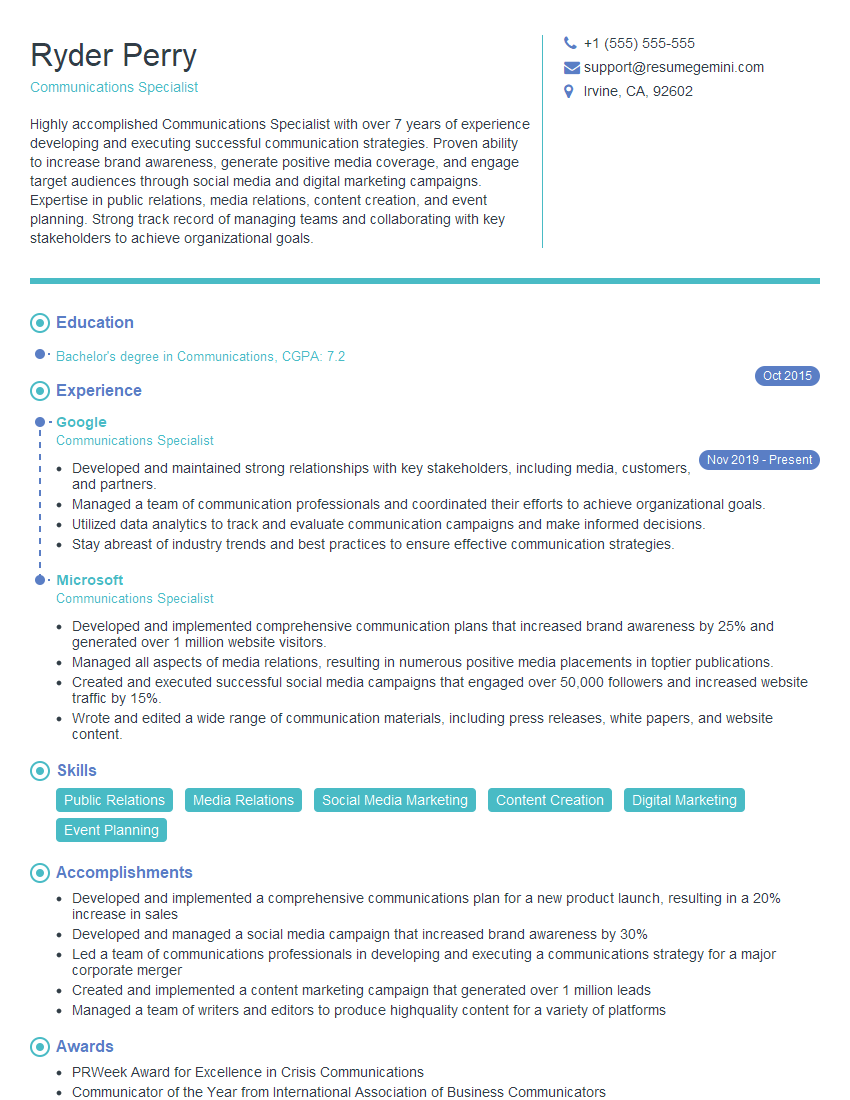
Communications Specialist Resume Sample
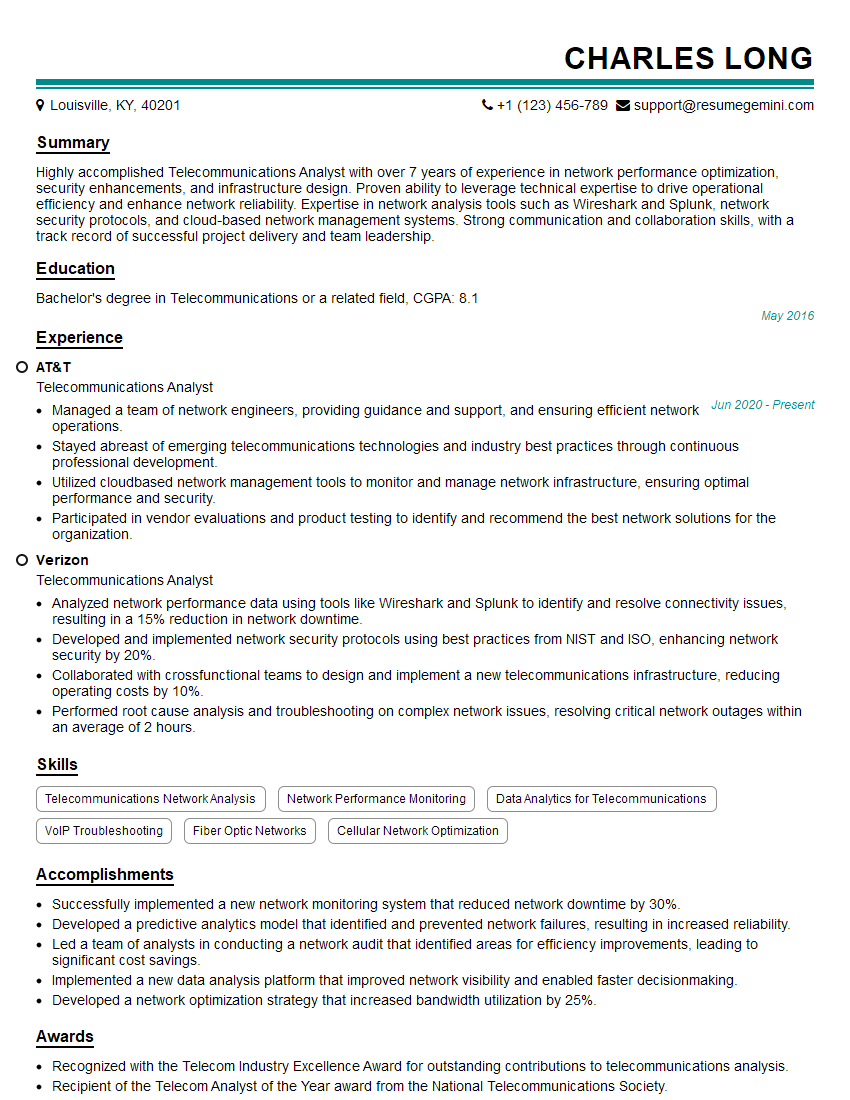
Telecommunications Analyst Resume Sample
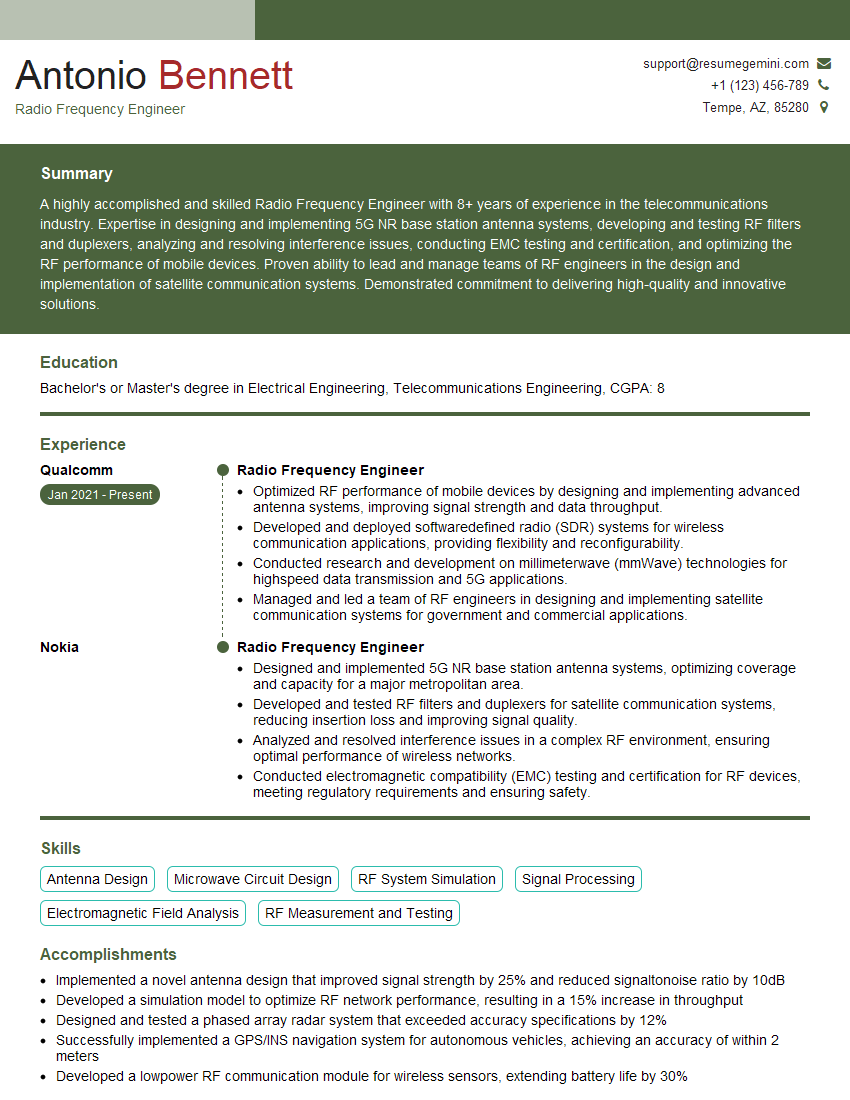
Radio Frequency Engineer Resume Sample
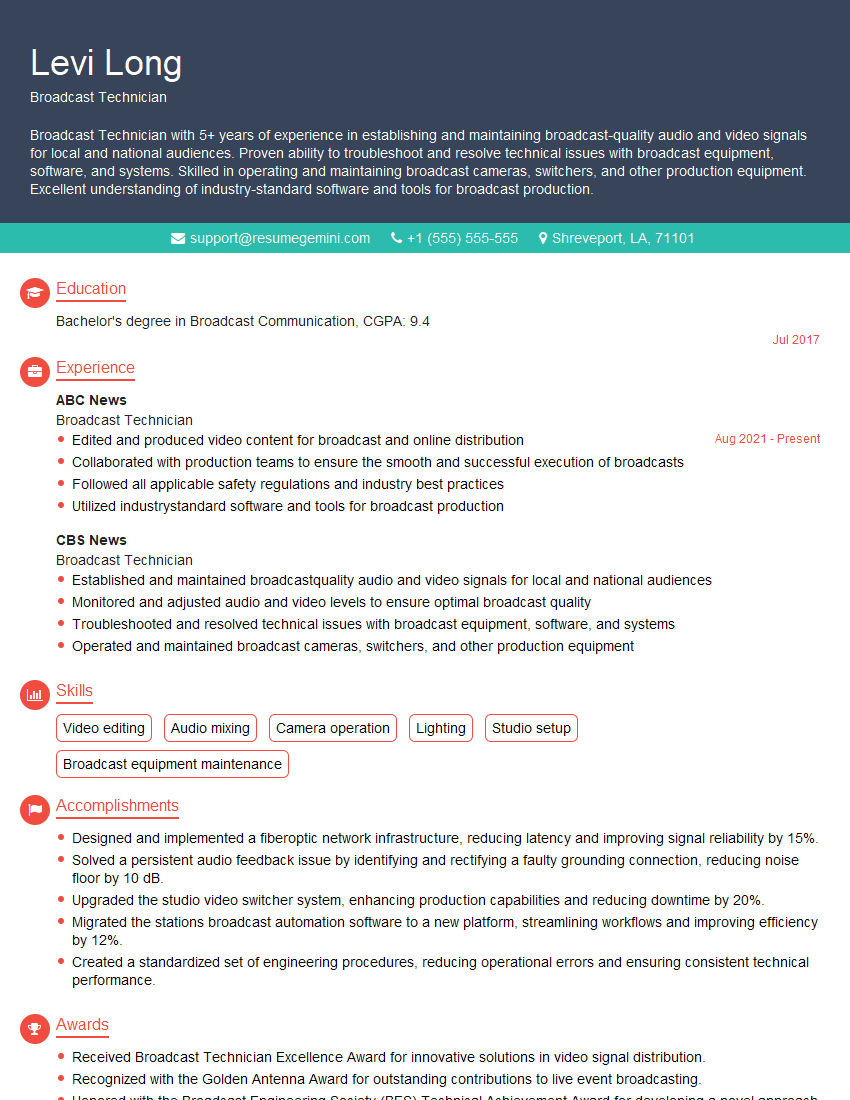
Broadcast Technician Resume Sample
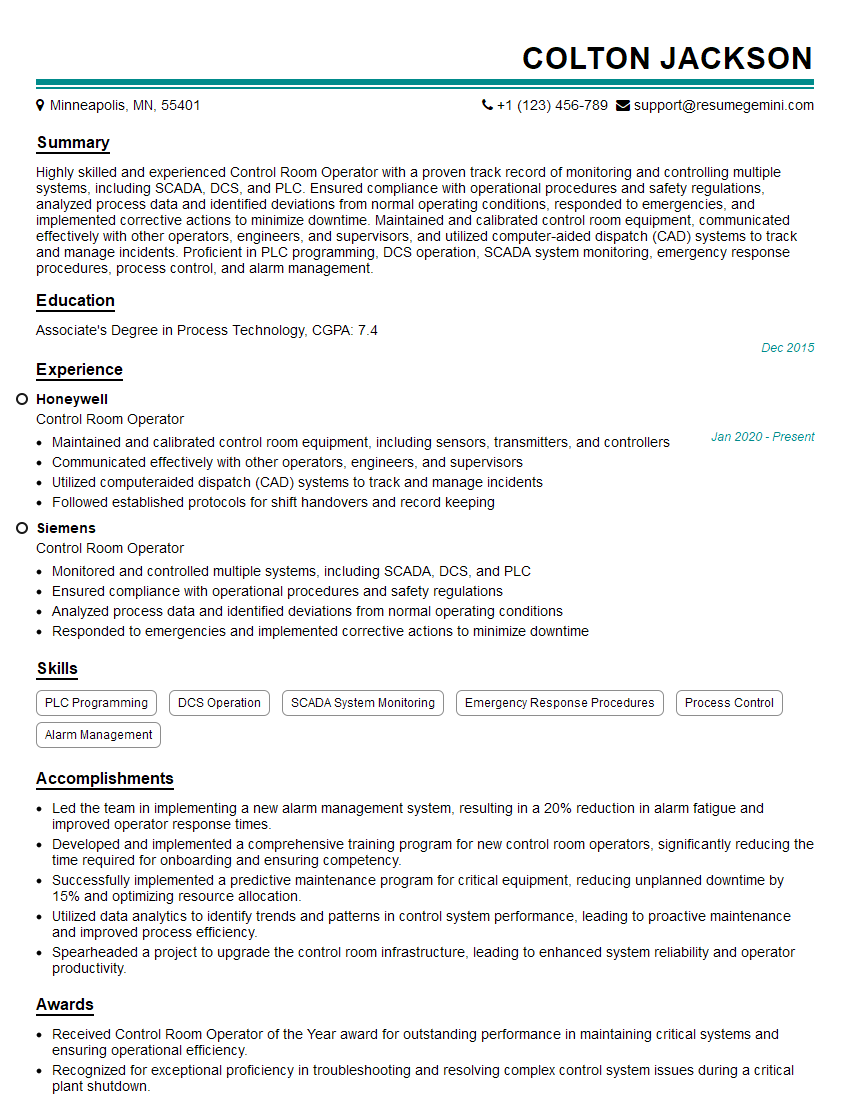
Control Room Operator Resume Sample
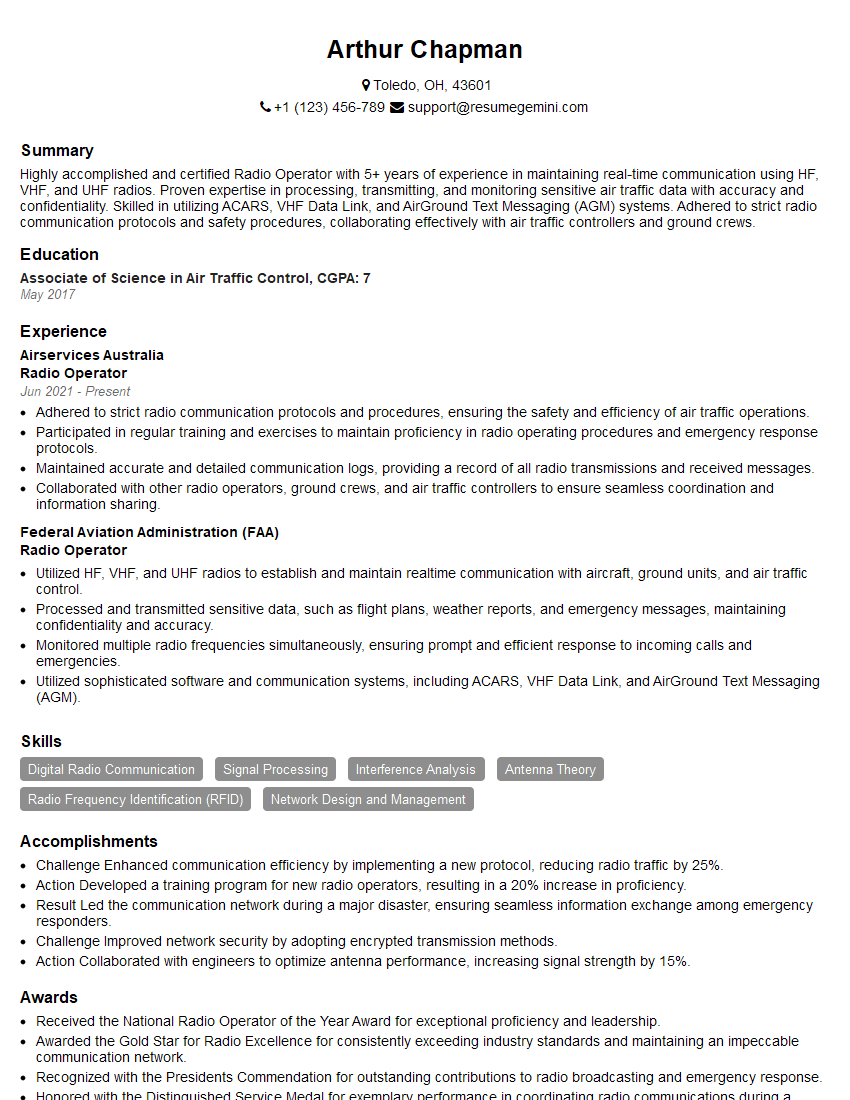
Radio Operator Resume Sample
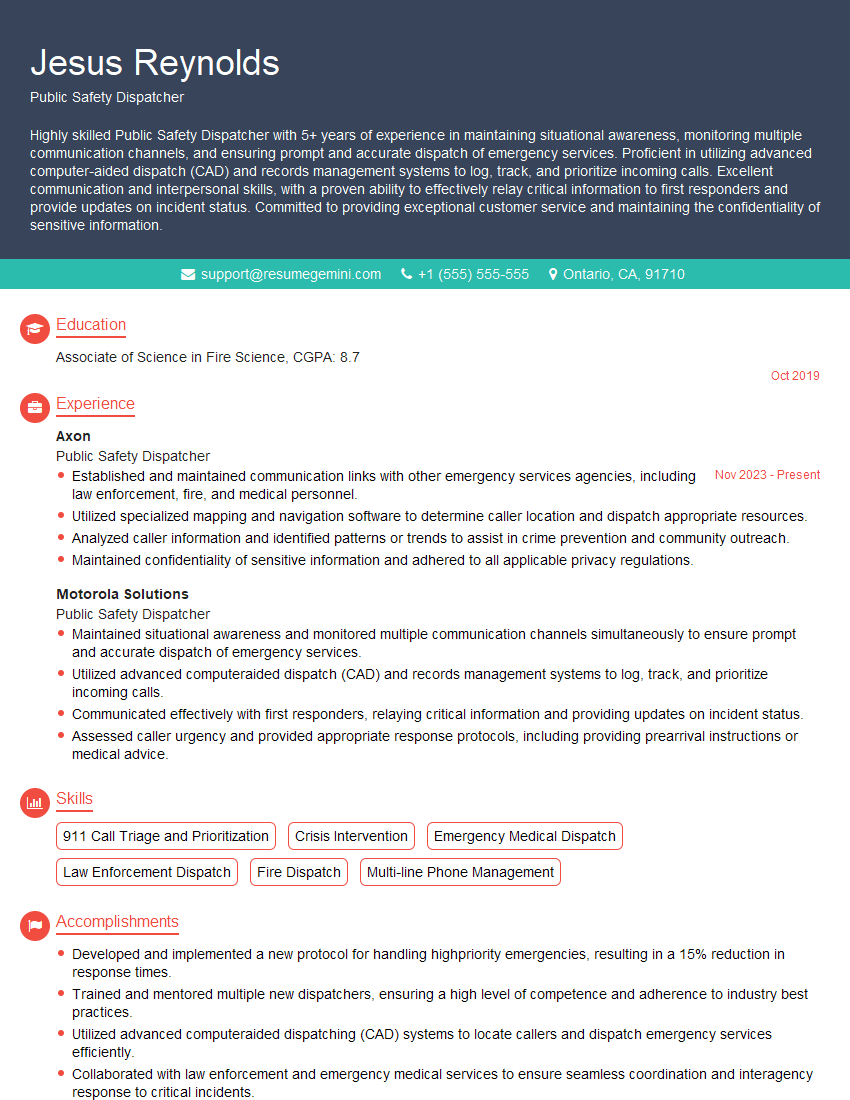
Public Safety Dispatcher Resume Sample
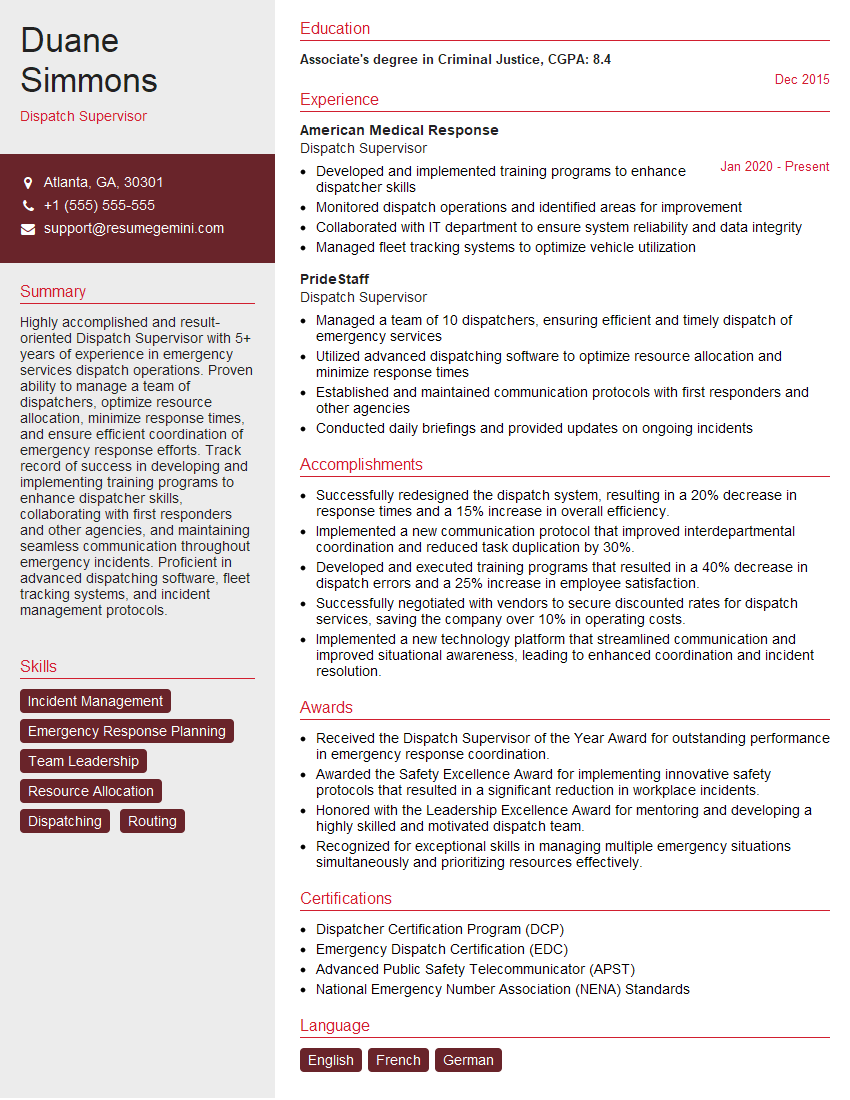
Dispatch Supervisor Resume Sample
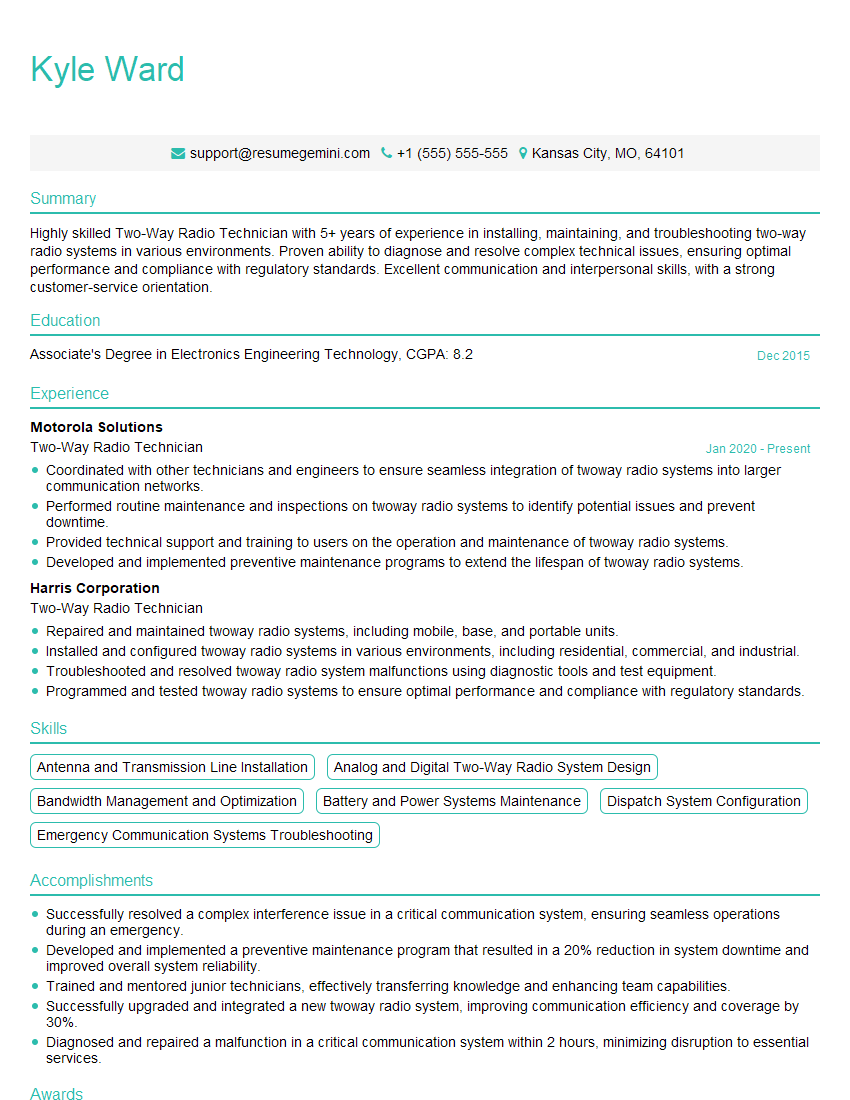
Two-Way Radio Technician Resume Sample
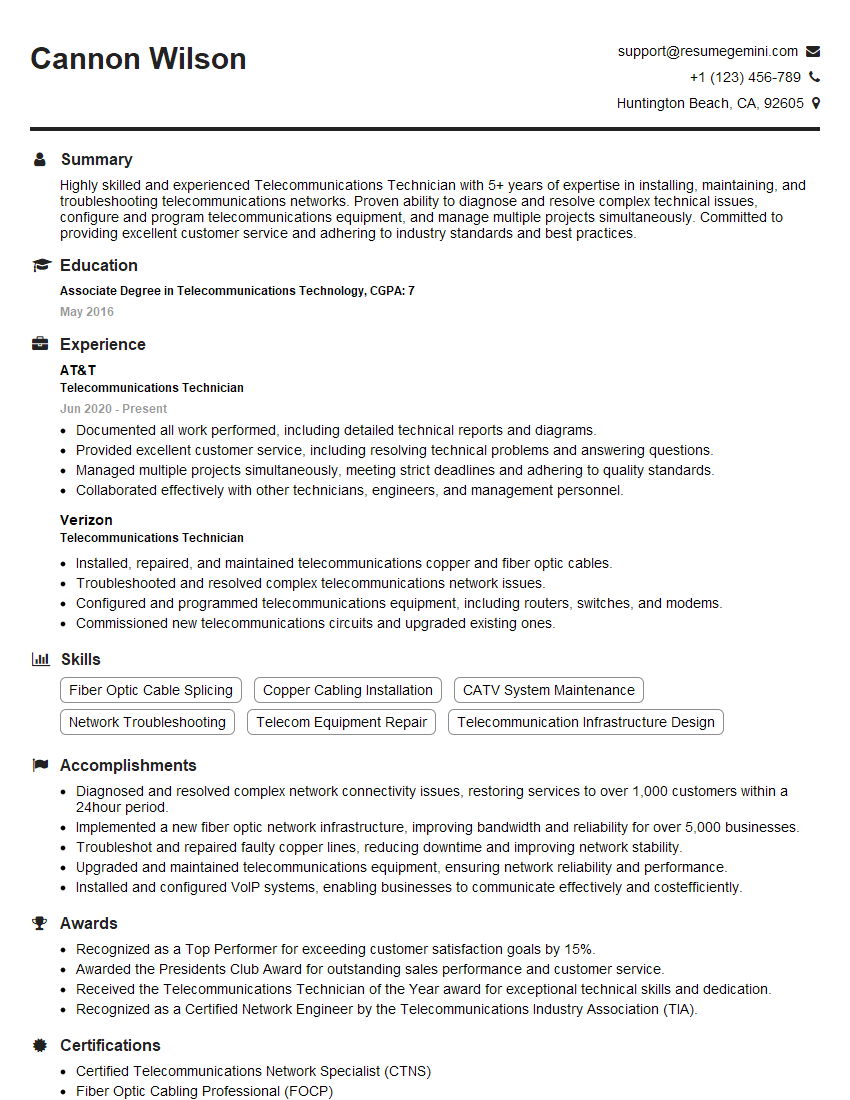
Telecommunications Technician Resume Sample
Explore more articles
Users Rating of Our Blogs
Share Your Experience
We value your feedback! Please rate our content and share your thoughts (optional).
What Readers Say About Our Blog
Amazing blog
Interesting Article, I liked the depth of knowledge you’ve shared.
Helpful, thanks for sharing.