Feeling uncertain about what to expect in your upcoming interview? We’ve got you covered! This blog highlights the most important Reference Range Verification interview questions and provides actionable advice to help you stand out as the ideal candidate. Let’s pave the way for your success.
Questions Asked in Reference Range Verification Interview
Q 1. Explain the process of establishing a reference interval for a new analyte.
Establishing a reference interval for a new analyte is a meticulous process aiming to define the range of values expected in a healthy population. It’s like creating a ‘normal’ blueprint for that specific measurement. This involves several crucial steps:
- Defining the Target Population: First, we need to carefully specify the characteristics of the healthy individuals we’ll sample. Age, gender, ethnicity, lifestyle factors (e.g., smoking, diet), and even geographical location can influence analyte levels. For example, reference intervals for cholesterol might differ between men and women.
- Sample Size Determination: A sufficiently large, representative sample size is vital for statistical accuracy. The larger the sample, the more reliable the reference interval will be. Power calculations help determine the minimum number of participants needed.
- Sample Collection and Analysis: Blood or other specimens are collected from the chosen population, adhering to strict protocols to minimize pre-analytical variability (e.g., timing of blood draw, fasting status). The samples are then analyzed using a validated analytical method.
- Data Analysis and Exclusion of Outliers: The collected data is carefully examined for outliers – values significantly deviating from the majority. Outliers might indicate errors in measurement or health conditions. Various statistical methods are employed to identify and handle these outliers.
- Reference Interval Calculation: After outlier exclusion, appropriate statistical methods like non-parametric methods (e.g., percentiles) are used to calculate the reference interval. This usually encompasses the central 95% of the data, representing the range within which 95% of the healthy population falls. For example, the 2.5th and 97.5th percentiles are frequently used.
- Validation and Verification: The established reference interval needs rigorous validation on an independent sample to ensure its reliability and robustness.
Q 2. What are the key statistical methods used in reference range verification?
Several statistical methods are crucial for reference range verification. The choice depends on the distribution of the data and the goals of the verification process. Key methods include:
- Non-parametric methods: These methods are preferred when the data doesn’t follow a normal (Gaussian) distribution. They rely on the ranking of data points rather than their actual values. Common methods include calculating percentiles (e.g., 2.5th and 97.5th percentiles for the 95% reference interval) and using the bootstrap method for estimating the confidence intervals of the reference limits.
- Parametric methods: These methods assume the data is normally distributed. If this assumption holds, parametric methods can offer greater statistical power. They involve calculating the mean and standard deviation, and then using these to define the reference interval. For example, using the mean ± 1.96 * standard deviation to encompass approximately 95% of the data.
- Robust methods: These are designed to be less sensitive to the influence of outliers. Methods like trimmed means and medians are employed to minimize the impact of extreme values.
- Comparison of methods: If a new method is being compared to an existing one, statistical tests, such as the Deming regression, may be used to assess the agreement between the two methods and their respective reference intervals.
The selection of the most appropriate statistical method requires careful consideration of the data distribution and potential biases.
Q 3. Describe the difference between a reference interval and a normal range.
While often used interchangeably, ‘reference interval’ and ‘normal range’ have subtle but important distinctions. Imagine two painters, one meticulously documenting their work and the other simply making an educated guess.
A reference interval is a precisely defined range of values determined through rigorous statistical analysis of a healthy reference population. It takes into account factors like age, gender and any other influencing factors. The process is well-documented, and is more reliable than a simple normal range.
A normal range is a less rigorously defined range, often based on historical data or clinical experience. It might be a rough approximation of the values considered healthy, but it lacks the statistical underpinning of a reference interval. In many cases it might just be the mean plus or minus two standard deviations.
In essence, the reference interval provides a more robust, scientifically validated range, whereas a normal range might be a simpler, less precise estimate.
Q 4. How do you handle outliers during reference interval establishment?
Outliers can significantly skew reference interval calculations, leading to inaccurate and misleading results. Imagine trying to find the average height of a group including a basketball player—the outlier would inflate the average. Thus handling them is crucial:
- Identification: Outliers are typically identified using visual inspection of data plots (e.g., box plots) and statistical methods like the interquartile range (IQR) rule (data points outside 1.5 * IQR below the first quartile or above the third quartile).
- Investigation: Once identified, outliers should not be automatically discarded. It’s vital to investigate the reasons behind their extreme values. This might involve checking for sample processing errors, instrument malfunctions, or underlying medical conditions in the participant.
- Exclusion Criteria: If the outlier is determined to be a genuine error (e.g., a sample mix-up), it can be excluded from the analysis. However, this exclusion must be clearly documented and justified.
- Robust Methods: If outliers are suspected to be genuine extreme values and not errors, using robust statistical methods (less sensitive to outliers) such as percentiles or robust regression can lessen their influence.
Careful documentation of outlier handling procedures is essential for the transparency and reproducibility of the reference interval establishment process.
Q 5. What are the regulatory requirements for establishing and verifying reference intervals?
Regulatory requirements for establishing and verifying reference intervals vary depending on the jurisdiction and the intended use of the results (e.g., clinical diagnostics, research). However, common principles include:
- CLSI Guidelines: The Clinical and Laboratory Standards Institute (CLSI) provides comprehensive guidelines on reference interval determination and validation. These guidelines serve as a widely accepted standard in many countries.
- Documentation: Detailed documentation of all steps involved in the process, including participant selection, data analysis, outlier handling, and validation studies, is crucial for regulatory compliance. This ensures traceability and reproducibility.
- Quality Control: Stringent quality control measures are necessary throughout the process to ensure the accuracy and reliability of the results. This includes regular calibration of instruments and use of quality control materials.
- Method Validation: Any new analytical method must be fully validated before it’s used to establish a reference interval. Validation ensures the accuracy, precision, linearity, and other analytical characteristics of the method meet required standards.
- Periodic Review: Reference intervals are not static; they may need periodic review and updating to reflect changes in the population or improvements in analytical technology.
Adherence to these regulatory and professional guidelines is essential to maintain the quality and reliability of laboratory testing and patient care. Non-compliance can lead to significant consequences, including inaccurate diagnoses and treatment decisions.
Q 6. Explain the concept of analytical measurement uncertainty and its impact on reference ranges.
Analytical measurement uncertainty (AMU) represents the uncertainty associated with the measurement process itself. It’s the inherent variability in the results obtained from the measurement instrument and methodology, even when measuring the same sample repeatedly. Imagine a weighing scale that gives slightly different readings each time you weigh the same object—that’s AMU in action.
AMU directly impacts reference ranges because it adds to the overall variability observed in the data. A higher AMU means a wider spread of results, making the reference range wider. This can result in an increase in the number of individuals classified as being outside the normal range when they may not actually be. Conversely, a low AMU allows for a narrower reference range leading to better discrimination between health and disease.
Therefore, minimizing AMU through careful method validation and quality control is crucial to establish precise and clinically relevant reference intervals.
Q 7. How do you assess the comparability of reference intervals from different methods?
Assessing the comparability of reference intervals from different methods is crucial when switching methods or comparing results from different labs. This involves several steps:
- Data Transformation: If the different methods have different scales or units, data transformation may be necessary to make them comparable. This could involve converting units or applying mathematical transformations.
- Statistical Comparison: Several statistical methods can be used to compare the reference intervals. These include:
- Bland-Altman analysis: This method assesses the agreement between two methods by plotting the differences in measurements against their averages. It helps to identify systematic bias and variability between the methods.
- Regression analysis: Linear or other regression models can be employed to assess the relationship between the results from two methods and help in establishing conversion equations if needed.
- Percentile comparisons: Compare the percentiles of the reference intervals (e.g., 2.5th and 97.5th percentiles) of the two methods.
- Clinical Significance: Even if statistical comparisons show differences, their clinical significance must be assessed. Small differences that are not clinically meaningful should not be cause for concern. It’s crucial to consider the impact of these differences on patient management.
A thorough assessment of comparability is essential to ensure that the switch to a new method, or interpretation of results from multiple methods, does not negatively affect clinical decision-making.
Q 8. What are the limitations of using existing reference intervals for a new population?
Using existing reference intervals for a new population can be problematic because reference intervals are population-specific. They reflect the distribution of results in a healthy reference population, and this distribution can vary significantly across different demographics (age, sex, ethnicity, geographic location, lifestyle factors etc.). Applying an interval derived from one population to another could lead to misinterpretations of test results, potentially resulting in incorrect diagnoses and treatments. For example, a reference interval for cholesterol established in a Caucasian population might not accurately reflect the normal range in an Asian population due to genetic differences and dietary habits.
Specifically, limitations include:
- Demographic differences: Age, sex, ethnicity, and even geographic location can greatly influence physiological parameters.
- Lifestyle factors: Diet, exercise, smoking, and alcohol consumption can affect lab results.
- Assay variations: Different laboratories may use different methods, instruments, and reagents, leading to variations in results.
- Disease prevalence: The health status of the reference population itself can skew the results.
Simply put, what’s ‘normal’ in one group might not be ‘normal’ in another.
Q 9. Describe the process of validating a new assay’s reference interval.
Validating a new assay’s reference interval is a rigorous process aimed at establishing a reliable range of values considered normal for a specific population and analytical method. It involves several key steps:
- Defining the reference population: Carefully selecting a representative group of healthy individuals free from known confounding conditions (detailed below).
- Sample size determination: Calculating the necessary number of participants to ensure statistical power and precision (discussed further in question 3).
- Data collection: Collecting samples from the reference population, while meticulously documenting pre-analytical variables (e.g., time of day, fasting status). Consistent and standardized laboratory procedures are crucial.
- Data analysis: Assessing the data distribution for normality. If normally distributed, parametric methods (e.g., calculating the mean and standard deviation to define the 2.5th and 97.5th percentiles) are used. If skewed, non-parametric methods (discussed in question 6) are required.
- Reference interval establishment: Determining the upper and lower limits of the reference interval based on the chosen statistical method.
- Validation and verification: Comparing the established reference interval with existing intervals from comparable studies or assays to confirm accuracy and reliability. External quality assessment programs may also be included.
Imagine this like baking a cake – you need a precise recipe (method), quality ingredients (reference population), and careful execution (data collection and analysis) to achieve a perfect result (validated reference interval).
Q 10. How do you determine the appropriate sample size for reference interval studies?
Determining the appropriate sample size is crucial for obtaining reliable and statistically valid reference intervals. A sample that is too small might not accurately reflect the true population distribution, leading to inaccurate intervals. Too large a sample may be inefficient and costly. Factors influencing sample size include:
- Desired precision: The narrower the desired interval, the larger the sample size needed.
- Expected distribution: Non-normal distributions require larger samples compared to normally distributed data.
- Prevalence of outliers: The presence of outliers increases the required sample size.
- Power considerations: The sample size needs to ensure sufficient power to detect significant differences between groups if comparisons are being made.
Statistical software and formulas (often involving the desired confidence level and precision) are used to estimate the required sample size. For instance, simulations or power analysis might be performed to assess the impact of different sample sizes on the precision of the final reference interval. There is no single magic number; the ideal sample size depends on the specific context and clinical requirements.
Q 11. What are the criteria for selecting a reference population?
Selecting an appropriate reference population is paramount to the validity of a reference interval. The goal is to select a group of individuals that truly represents the intended target population for the test. Crucial criteria for selection include:
- Health status: Individuals should be free of any condition known to affect the analyte of interest. A thorough health history and physical examination are usually part of the selection process.
- Demographic representation: The population should reflect the demographics of the intended patient population – age, sex, ethnicity, etc. Stratification may be used to ensure adequate representation of subgroups.
- Exclusion criteria: Specific exclusion criteria need to be carefully defined and consistently applied to eliminate individuals with confounding factors (e.g., recent illness, medication use, pregnancy).
- Sample size adequacy: The number of participants should be sufficient to ensure statistical validity (as discussed in question 3).
For instance, if developing a reference interval for a cardiac marker in elderly patients, the reference population should be comprised primarily of healthy elderly individuals without any cardiovascular disease or relevant medication use. Failing to adhere to strict selection criteria can compromise the clinical utility of the resulting reference interval.
Q 12. Explain the impact of pre-analytical factors on reference interval establishment.
Pre-analytical factors, which encompass all steps taken before the actual laboratory analysis, significantly influence reference interval establishment. Neglecting these factors can lead to biased results and unreliable reference intervals. These factors include:
- Sample collection method: Venipuncture technique, tourniquet application time, and order of draw can affect results.
- Sample handling: Proper storage temperature and handling time are crucial to prevent analyte degradation or alteration.
- Patient preparation: Fasting status, hydration level, medication use, and recent exercise can all impact laboratory results. Standardizing patient preparation is critical.
- Time of day: Some analytes exhibit diurnal variation (fluctuation throughout the day). Collecting samples at a consistent time helps minimize this effect.
For example, improper tourniquet use can lead to hemoconcentration, falsely elevating some analytes, while delayed processing of a blood sample can cause changes in certain analytes over time, compromising the reliability of the reference interval. Therefore, careful standardization of pre-analytical procedures is essential for generating accurate and reliable reference intervals.
Q 13. How do you deal with skewed data distributions during reference interval calculation?
Many laboratory analytes exhibit non-normal, skewed distributions. Using parametric methods (that assume normality) with skewed data can lead to inaccurate reference intervals. Instead, non-parametric methods should be employed. These methods don’t rely on assumptions about the underlying data distribution.
Common non-parametric approaches for calculating reference intervals include:
- Percentile method: Directly calculating the 2.5th and 97.5th percentiles of the sorted data. This is a simple and widely used method.
- Robust methods: These methods are less sensitive to outliers and are particularly useful when dealing with heavily skewed data. Examples include the use of trimmed means or medians instead of standard means.
- Non-parametric bootstrap methods: These use resampling techniques to generate a large number of simulated samples, from which the reference intervals are estimated. This approach helps account for uncertainty and provides more robust results.
Imagine trying to fit a square peg (skewed data) into a round hole (parametric method). Non-parametric methods provide a more flexible approach, allowing us to accurately establish the reference range regardless of the shape of the data distribution. Software packages are commonly used to perform these calculations efficiently and accurately.
Q 14. What are the different methods for calculating reference intervals (e.g., parametric vs. non-parametric)?
Different methods exist for calculating reference intervals, broadly categorized as parametric and non-parametric:
Parametric methods assume that the data follows a normal (Gaussian) distribution. These methods are more efficient when the assumption is met but are sensitive to outliers and skewed distributions. The most common parametric method involves calculating the mean and standard deviation (SD) of the data and defining the reference interval as mean ± 1.96 SD (covering approximately 95% of the data).
Non-parametric methods do not rely on assumptions about the data distribution and are therefore preferred when data is skewed or contains outliers. The percentile method, where the 2.5th and 97.5th percentiles of the sorted data define the reference interval, is a common non-parametric approach. Other non-parametric methods, like those based on robust statistics (less sensitive to outliers) or bootstrapping (discussed above), can also be used.
The choice of method depends on the characteristics of the data. Assessing the data distribution through visual inspection (histograms, quantile-quantile plots) and formal tests of normality (e.g., Shapiro-Wilk test) helps guide this decision. In practice, often a combination of methods may be used, particularly if non-parametric methods are used to validate the results from parametric methods.
Q 15. Explain the concept of biological variation and its importance in reference range verification.
Biological variation refers to the natural fluctuations in a patient’s test results over time, even when they are perfectly healthy. This variation stems from inherent differences in individuals’ genetics, age, sex, diet, and lifestyle. Understanding biological variation is crucial in reference range verification because it determines the appropriate width of the reference interval. A narrow interval might lead to misclassifying healthy individuals as abnormal, while a wide interval might miss genuinely pathological results. For example, if we set a narrow reference range for cholesterol levels based on a small, homogenous population, we risk falsely labeling many healthy individuals with slightly higher cholesterol as having hypercholesterolemia. Conversely, a very wide range might fail to identify individuals with genuinely elevated cholesterol levels that warrant intervention.
In essence, the reference interval should encompass the expected variation within a healthy population, accounting for both within-subject (changes within the same individual over time) and between-subject (differences between individuals) variation. Accurate assessment of biological variation requires rigorous study design using large, representative samples.
Career Expert Tips:
- Ace those interviews! Prepare effectively by reviewing the Top 50 Most Common Interview Questions on ResumeGemini.
- Navigate your job search with confidence! Explore a wide range of Career Tips on ResumeGemini. Learn about common challenges and recommendations to overcome them.
- Craft the perfect resume! Master the Art of Resume Writing with ResumeGemini’s guide. Showcase your unique qualifications and achievements effectively.
- Don’t miss out on holiday savings! Build your dream resume with ResumeGemini’s ATS optimized templates.
Q 16. How do you interpret and report reference intervals?
Reference intervals, also known as reference ranges, are the values that encompass a specified percentage (typically 95%) of results from a healthy reference population. They are usually expressed as a range: e.g., [Lower Limit, Upper Limit]. When reporting these intervals, it’s crucial to clearly state:
- The method used to determine the interval (e.g., parametric, non-parametric).
- The reference population’s characteristics (age, sex, ethnicity, health status, any exclusion criteria).
- The analytical method used (as it affects the results).
- The units of measurement.
- The confidence interval associated with the reported limits.
For instance, a report might state: “Reference interval for serum creatinine in healthy adult males (20-40 years, non-smokers): [0.8-1.2] mg/dL (95% confidence interval). Method: Creatinine Jaffe reaction.”
Q 17. What are the potential consequences of using inaccurate reference intervals?
Using inaccurate reference intervals has significant consequences, leading to:
- Overdiagnosis and unnecessary treatment: Narrow intervals can falsely identify healthy individuals as having a medical condition, causing anxiety and leading to potentially harmful interventions.
- Missed diagnosis and delayed treatment: Wide intervals can mask genuinely abnormal results, delaying necessary treatment and potentially worsening outcomes. This is especially concerning for serious conditions.
- Inappropriate resource allocation: Inaccurate intervals can lead to unnecessary follow-up tests, consultations, and treatments, impacting healthcare costs and efficiency.
- Patient harm: In the worst case, incorrect diagnoses based on flawed reference ranges can result in significant patient harm.
Imagine a scenario where a laboratory uses an outdated or incorrectly established reference range for thyroid hormones. This could lead to an unnecessary number of patients being treated for hypothyroidism, increasing their healthcare costs and potential adverse effects from unnecessary medications.
Q 18. How do you ensure the traceability of reference intervals?
Traceability of reference intervals ensures comparability and reliability across laboratories and over time. It’s achieved by linking the established interval to internationally recognized standards and reference materials. This means the methods used to determine the interval should be well-documented, validated, and ideally compared to established reference laboratories or external quality assessment schemes. Using certified reference materials, where available, is crucial. The process involved in establishing the reference interval, including population selection and analytical methods, should be meticulously documented and auditable. Good documentation provides a clear audit trail, ensuring that the reference interval is scientifically defensible and reproducible.
Q 19. Describe the role of quality control in maintaining accurate reference intervals.
Quality control (QC) is vital for maintaining accurate reference intervals. Robust QC procedures throughout the process – from sample collection and handling to analysis and data processing – are essential. This involves running control samples with known values alongside patient samples to monitor the performance of the analytical method. Regular calibration and maintenance of equipment, as well as staff competency training, are also critical. Deviations from expected QC values should trigger investigations and corrective actions to identify and eliminate sources of error. Without meticulous QC, even a well-established reference range can become inaccurate, undermining its validity. Think of QC as a safety net – it constantly monitors the process, alerting us to any problems that could compromise the accuracy of our reference intervals.
Q 20. What are the ethical considerations related to reference interval establishment?
Ethical considerations in reference interval establishment are paramount. They include:
- Informed consent: Participants in the reference population must provide informed consent, understanding the purpose of the study and their role.
- Protection of patient privacy: Data collected should be anonymized and handled confidentially, complying with relevant data protection regulations.
- Representativeness of the reference population: The selection process should ensure the reference population is truly representative of the population served by the laboratory, avoiding biases that could affect the accuracy of the interval.
- Transparency and disclosure: The methods used to establish the interval and any limitations should be openly disclosed.
Ignoring these considerations can lead to ethically questionable practices, generating biased reference intervals that perpetuate health inequalities or lead to misdiagnosis. For example, using a reference population that underrepresents certain ethnic groups could lead to biased intervals that disproportionately affect these groups.
Q 21. How do you manage discrepancies between your established reference interval and those from other laboratories?
Discrepancies between your established reference interval and those from other laboratories require thorough investigation. This involves first verifying the accuracy of your own interval, checking for errors in the methodology or data analysis. Then, examine the differences in the reference populations (age, sex, ethnicity, health status), analytical methods, and pre-analytical variables across the laboratories. Consider contacting the other laboratories to discuss the discrepancies and share data to understand the potential reasons for the differences. If the discrepancies are significant and cannot be explained, it may necessitate a reevaluation of your own reference interval, possibly through a collaborative study to establish a more robust and internationally comparable reference interval. It’s crucial to prioritize patient care and the reliability of results; significant discrepancies should not be ignored.
Q 22. Describe different software used for reference range calculation and analysis.
Several software packages are specifically designed for reference range calculation and analysis. These range from standalone applications to modules integrated within larger Laboratory Information Systems (LIS). The core functionalities include data import, outlier detection and removal using methods like the Dixon test or robust regression, reference interval estimation using various statistical methods (e.g., parametric methods like the Gaussian distribution or non-parametric methods like the percentile method), and reporting functionalities. Some popular examples include:
- Dedicated statistical software packages: Programs like R or SAS offer extensive statistical capabilities, allowing for flexible analysis and customization of reference range calculations, incorporating more complex models. You can use specific packages within R to perform all the steps involved, from data cleaning to reporting.
- LIS-integrated modules: Many modern LIS systems now have built-in modules specifically designed for reference interval management. These often provide a user-friendly interface for data entry, analysis, and management of reference intervals, streamlining the entire workflow.
- Specialized clinical chemistry software: Some software packages are specifically geared towards clinical chemistry and provide dedicated functionalities for reference range calculations and management. These may include pre-programmed statistical methods appropriate for various analytes.
The choice of software depends largely on the laboratory’s size, existing IT infrastructure, and specific needs. Smaller labs might use a simpler, dedicated software, while larger, high-throughput labs might utilize an integrated LIS module for better data management and workflow integration.
Q 23. Explain the concept of transferability of reference ranges between different analytical methods and platforms.
The transferability of reference ranges between different analytical methods and platforms is a complex issue and often not straightforward. While desirable for cost savings and standardization, simply transferring a reference interval from one method to another is generally inappropriate. This is because analytical methods differ in their precision, accuracy, and even the analyte measured might have slightly different characteristics (e.g., different antibody clones might react differently).
Even minor changes in the measurement process, such as different sample preparation techniques or instrument calibration, can affect the distribution of results and therefore invalidate the original reference interval. Therefore, each new method or platform requires its own independent reference range verification study. However, data from a previous method can be used to inform the sample size required for a new method’s study (reducing the cost and time involved compared to starting from scratch).
For example, if a lab switches from an older immunoassay to a newer, automated platform for measuring thyroid stimulating hormone (TSH), they must establish a new reference interval for the new platform even if they used the same population previously. Direct comparison studies, correlating results obtained from the old and new methods on the same samples, can be helpful, but they don’t replace the need for an independent reference range study.
Q 24. Discuss challenges in verifying reference ranges for uncommon analytes or populations.
Verifying reference ranges for uncommon analytes or populations presents unique challenges. The primary difficulty stems from the smaller sample sizes available. Establishing statistically robust reference intervals requires a sufficient number of participants, which can be challenging to recruit for rare analytes or specific populations (e.g., individuals with certain genetic conditions or ethnic groups). This limitation can lead to wider reference intervals with less precision, increasing the likelihood of misinterpreting results.
Furthermore, defining the appropriate population is crucial. For instance, a reference interval for a specific genetic condition might need to be established separately from the general population. There are ethical considerations to take into account when recruiting participants for a reference range study, ensuring informed consent and protection of their privacy. Data analysis also requires specialized methods to account for the small sample sizes, potentially employing non-parametric statistics or Bayesian approaches.
Another significant challenge is the potential for underlying health conditions that are not identified in such small populations, which can skew the results. Comprehensive screening may be needed.
Q 25. Explain the role of proficiency testing in reference range verification.
Proficiency testing (PT) plays a vital role in reference range verification by providing an external quality control assessment. Participation in PT schemes helps laboratories monitor their performance and ensure that their measurement methods are accurate and precise.
While PT does not directly verify reference intervals, consistent good performance in PT indicates that the laboratory’s method is reliable and producing results consistent with other laboratories using similar methodologies. This indirectly supports the validity of the reference intervals established by the lab. Deviation in PT results might signal problems with the method and suggest a need to re-evaluate the reference range to ensure that there are no underlying method-related issues affecting the results.
Think of it this way: Passing a PT is like ensuring your measuring tape is calibrated correctly. You’ll need to verify your measurements using a reference measurement method (like comparing your tape measurements to a ruler), but passing a proficiency test gives you confidence in your measuring technique.
Q 26. How do you evaluate the clinical utility of a new reference interval?
Evaluating the clinical utility of a new reference interval involves assessing its impact on patient care. This goes beyond simply establishing the statistical properties of the interval; it considers the practical implications of using this interval for diagnosis and treatment decisions.
This involves assessing several factors such as:
- Diagnostic accuracy: How well does the new interval differentiate between healthy and diseased individuals? This can be assessed using metrics like sensitivity and specificity.
- Impact on patient management: Does the new interval lead to changes in diagnosis, treatment, or monitoring strategies that improve patient outcomes? This often requires follow-up studies correlating the new interval with treatment outcomes.
- Cost-effectiveness: Does the use of the new reference interval justify its implementation in terms of financial resources, manpower, and resources needed to establish and implement it?
- Comparison to existing intervals: How does the performance of the new interval compare to the performance of any existing or previously used intervals?
Often, clinical utility is assessed through retrospective or prospective studies involving a substantial cohort of patients. This requires careful data analysis and often collaboration with clinicians to assess the real-world implications of the new interval.
Q 27. How does automation impact reference range verification workflows?
Automation significantly impacts reference range verification workflows by increasing efficiency and reducing manual effort. Automated systems can handle large sample volumes, reducing the time required for data collection and analysis. Automation can also minimize human error in data entry and processing, leading to more accurate results.
Automated analyzers often provide built-in functionalities for data analysis and statistical calculations, such as calculating reference intervals using various statistical methods. This greatly simplifies the process, allowing the lab personnel to focus on data validation and interpretation rather than performing tedious calculations. Modern LIS systems also offer significant automation that streamlines processes even further.
For example, automated systems can directly transfer data from analyzers to the LIS for reference interval analysis, eliminating manual data transcription. This automated approach increases speed and efficiency, leading to faster turnaround times in generating new reference intervals.
Q 28. Describe the role of a Laboratory Information System (LIS) in reference range management.
A Laboratory Information System (LIS) plays a critical role in reference range management. The LIS serves as the central repository for patient data, including test results. It streamlines data management, reducing the potential for errors and improving efficiency in the entire workflow. When it comes to reference range management, the LIS enables:
- Data storage and retrieval: The LIS securely stores large volumes of patient data needed for reference range calculation, making retrieval for analysis straightforward and efficient.
- Data integration with analyzers: Many modern LIS systems integrate directly with automated analyzers, allowing for seamless transfer of data from the analyzer to the LIS, reducing manual data entry and associated errors.
- Automated calculations and reporting: Some LIS systems include modules that automate the calculation of reference intervals using different statistical methods, and report them directly to the clinician.
- Reference interval management: LIS systems allow for the storage and management of approved reference ranges for various analytes, populations and assays, making it easy to access and update this crucial information.
- Quality control tracking: The LIS is often integrated with quality control systems, enabling tracking of the performance of the analyzers and ensuring the quality of data used for reference range calculation.
Effective utilization of the LIS functionalities significantly improves the efficiency, accuracy and overall quality of the reference range management process within a laboratory.
Key Topics to Learn for Reference Range Verification Interview
- Understanding Reference Intervals: Explore the definition, purpose, and limitations of reference intervals in laboratory medicine. Consider the impact of different populations (age, sex, ethnicity) on establishing appropriate ranges.
- Statistical Methods in Reference Range Establishment: Familiarize yourself with methods used to calculate reference intervals, including parametric and non-parametric approaches. Understand the assumptions and limitations of each method.
- Data Analysis and Interpretation: Practice analyzing datasets to identify outliers and assess the normality of distributions. Develop skills in interpreting statistical outputs relevant to reference range verification.
- Quality Control and Assurance: Understand the role of quality control in ensuring the accuracy and reliability of reference interval studies. Explore different quality control methodologies and their application in this context.
- Regulatory Guidelines and Compliance: Become familiar with relevant regulatory guidelines and standards related to reference range verification and reporting. This may include CLSI guidelines or other relevant standards.
- Practical Application: Case Studies: Review case studies illustrating the process of reference range verification and the challenges encountered in real-world scenarios. Consider how different factors can influence the process.
- Troubleshooting and Problem Solving: Develop your ability to identify and troubleshoot potential issues during reference range verification, such as data anomalies, methodological errors, or inconsistencies in results.
Next Steps
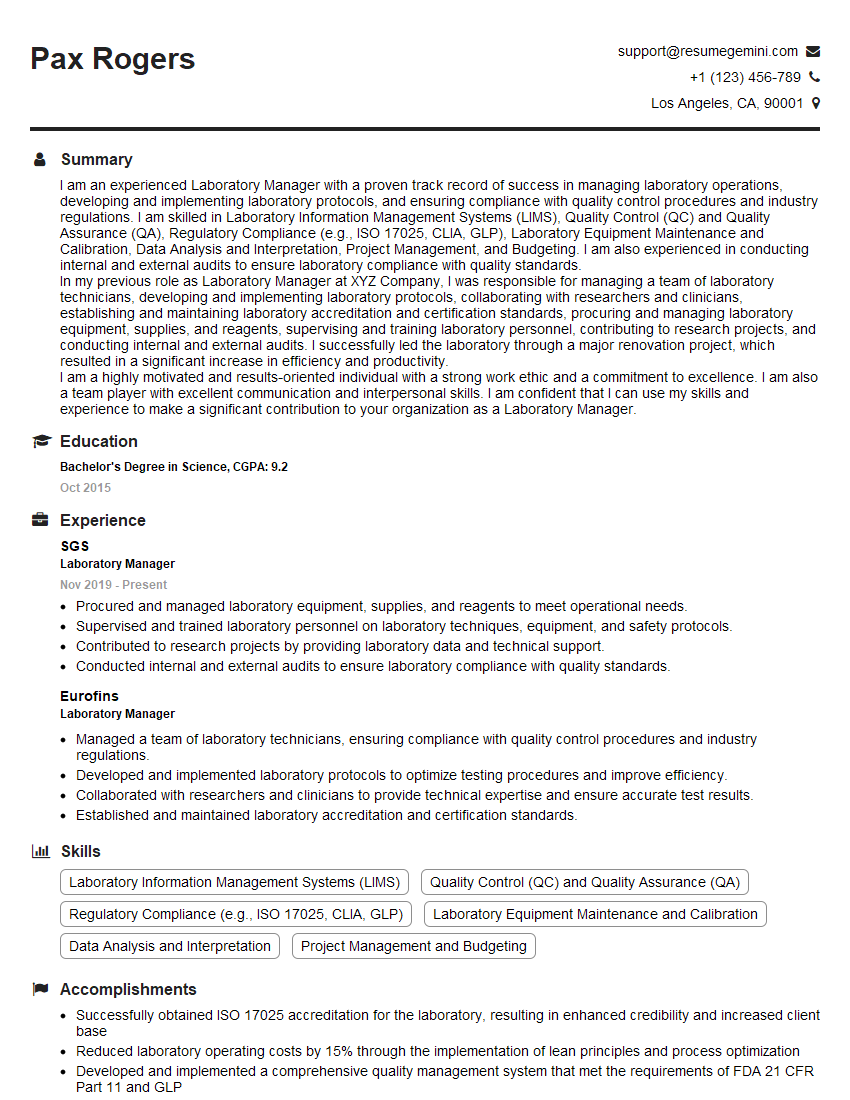
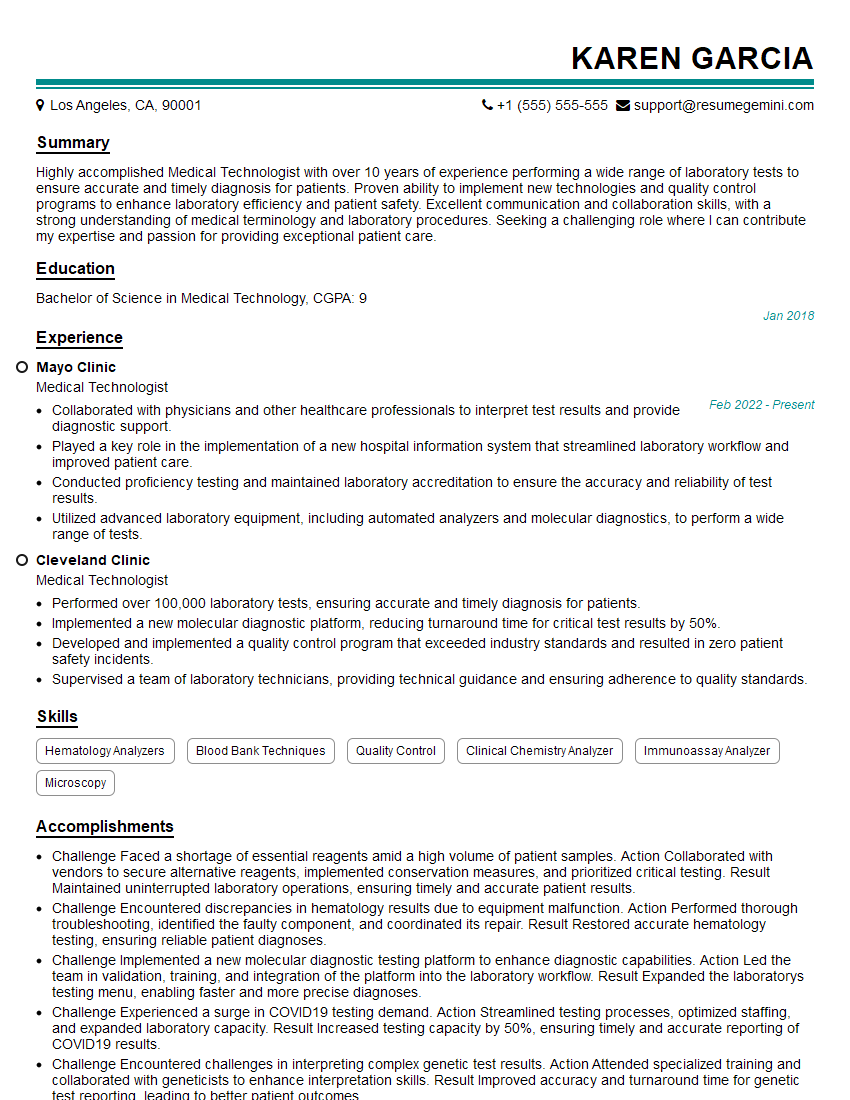
Mastering Reference Range Verification opens doors to exciting career opportunities in clinical laboratories and medical research. A strong understanding of this crucial aspect of laboratory medicine demonstrates a commitment to accuracy and precision, vital qualities for success in this field. To enhance your job prospects, focus on creating a resume that’s optimized for Applicant Tracking Systems (ATS). ResumeGemini can be a valuable resource in building a professional and impactful resume that highlights your expertise. We provide examples of resumes tailored to Reference Range Verification to help you showcase your skills effectively and land your dream job.


Explore more articles
Users Rating of Our Blogs
Share Your Experience
We value your feedback! Please rate our content and share your thoughts (optional).
What Readers Say About Our Blog
Amazing blog
hello,
Our consultant firm based in the USA and our client are interested in your products.
Could you provide your company brochure and respond from your official email id (if different from the current in use), so i can send you the client’s requirement.
Payment before production.
I await your answer.
Regards,
MrSmith
hello,
Our consultant firm based in the USA and our client are interested in your products.
Could you provide your company brochure and respond from your official email id (if different from the current in use), so i can send you the client’s requirement.
Payment before production.
I await your answer.
Regards,
MrSmith
These apartments are so amazing, posting them online would break the algorithm.
https://bit.ly/Lovely2BedsApartmentHudsonYards
Reach out at BENSON@LONDONFOSTER.COM and let’s get started!
Take a look at this stunning 2-bedroom apartment perfectly situated NYC’s coveted Hudson Yards!
https://bit.ly/Lovely2BedsApartmentHudsonYards
Live Rent Free!
https://bit.ly/LiveRentFREE
Interesting Article, I liked the depth of knowledge you’ve shared.
Helpful, thanks for sharing.
Hi, I represent a social media marketing agency and liked your blog
Hi, I represent an SEO company that specialises in getting you AI citations and higher rankings on Google. I’d like to offer you a 100% free SEO audit for your website. Would you be interested?