The right preparation can turn an interview into an opportunity to showcase your expertise. This guide to Rope Coiling and Packaging interview questions is your ultimate resource, providing key insights and tips to help you ace your responses and stand out as a top candidate.
Questions Asked in Rope Coiling and Packaging Interview
Q 1. Describe the different methods of rope coiling.
Rope coiling methods vary depending on the rope’s type, length, and intended use. The goal is always to create a compact, secure package that prevents tangling and damage. Here are some common techniques:
The Overhand Coil: This is the most basic method, ideal for short ropes. You simply coil the rope over your hand, creating a neat, flat coil. Think of it like winding yarn onto a ball.
The Flemish Coil: This is a more complex but secure method, creating a compact, circular coil. It’s excellent for longer ropes and requires practice to master. Imagine a tightly wound spring, with each loop neatly nested.
The Figure Eight Coil: This coil resembles a series of figure eights and is often used for securing ropes to prevent them from unraveling. It’s particularly useful for smaller diameter ropes.
The Butterfly Coil: This creates a flat, butterfly-shaped coil, perfect for display or storage of smaller ropes. It’s aesthetically pleasing and compact.
Machine Coiling: For large-scale operations, automated coiling machines rapidly and consistently coil ropes, often incorporating additional packaging steps.
The choice of method depends heavily on the specific application and the type of rope being handled. For instance, a delicate, braided nylon rope might require a gentler overhand coil, while a heavy-duty, synthetic fiber rope might benefit from the more secure Flemish coil.
Q 2. Explain the importance of proper rope packaging for preventing damage.
Proper rope packaging is crucial to prevent damage during storage, transport, and handling. Damage can range from minor abrasions to severe fraying and breakage, rendering the rope unusable and potentially causing safety hazards. Effective packaging protects the rope from:
Abrasion: Rough surfaces can wear down the rope’s fibers.
Moisture: Exposure to water can weaken the rope and encourage mold growth.
UV Degradation: Sunlight’s UV rays can degrade the rope’s material over time.
Tangling: Improper coiling or packaging can lead to knots and tangles, which are time-consuming to untangle and can damage the rope.
Physical Damage: Crushing or impact from other objects can cause irreparable damage.
Packaging methods should consider the rope’s material, length, and diameter. Protective coverings, such as shrink wrap or waterproof bags, can further enhance protection. In many instances, labels clearly indicating rope type, strength, and length are added for traceability and safety. For example, a marine-grade rope might require more robust packaging compared to a general-purpose utility rope.
Q 3. What are the safety precautions you take when handling ropes of different materials?
Safety is paramount when handling ropes of different materials. Each material presents unique hazards:
Natural Fiber Ropes (e.g., hemp, sisal): These ropes can be susceptible to rotting if exposed to moisture and can present splinters. Always wear gloves when handling to prevent skin irritations.
Synthetic Fiber Ropes (e.g., nylon, polypropylene): While generally more durable than natural fibers, these can still present abrasion hazards. Wear gloves, particularly when working with thicker ropes. Be mindful of sharp edges or objects that could cut the rope.
Wire Ropes (e.g., steel): These pose the greatest risk due to their sharp edges and potential for cuts. Always wear heavy-duty gloves, eye protection, and appropriate clothing. Take extra care when handling broken or frayed sections of wire rope.
Beyond material-specific hazards, general safety practices include inspecting ropes before use for damage, ensuring adequate support when handling heavy ropes, and never relying on damaged or worn ropes. Using appropriate lifting equipment for heavier tasks is also crucial.
Q 4. How do you identify different types of rope and their appropriate packaging methods?
Identifying rope types is crucial for selecting appropriate packaging methods. Identification usually involves checking for:
Material: The rope’s material (e.g., nylon, polypropylene, steel) dictates its strength, durability, and susceptibility to damage. This information is often found on a tag or label.
Diameter: The rope’s diameter affects its strength and how it coils. Thicker ropes may require specialized coiling and packaging equipment.
Construction: The way the fibers are woven or braided (e.g., three-strand, braided, twisted) influences its flexibility and strength.
Breaking Strength: This important information should always be present, guiding the handling and packaging methods to prevent exceeding the load capacity.
Once identified, the appropriate packaging method is chosen based on factors like fragility, moisture sensitivity, and intended use. For example, a delicate braided nylon rope would likely use a gentler coiling technique and soft protective material than a heavy steel wire rope.
Q 5. Describe your experience with automated rope coiling and packaging machinery.
My experience with automated rope coiling and packaging machinery encompasses both operation and maintenance. I’ve worked with various systems, from simple, single-function machines to complex integrated lines that coil, package, and label ropes simultaneously. These machines significantly improve efficiency and consistency compared to manual coiling. For instance, I’ve worked with high-speed coilers that can process hundreds of meters of rope per hour, ensuring consistent coil tightness and size.
My responsibilities included operating the equipment, troubleshooting malfunctions, performing routine maintenance (like lubrication and cleaning), and identifying ways to optimize the process for increased speed and efficiency. Understanding the machine’s programming and settings is vital to adapt it to different rope types and packaging requirements. For example, adjusting the tension settings on a coiler helps to achieve the optimal balance between coil tightness and the avoidance of rope damage.
Q 6. How do you ensure the efficiency and speed of the rope coiling process?
Efficiency and speed in rope coiling hinge on several factors:
Proper Coiling Technique: Selecting the most efficient coiling method for the rope type and length is crucial. A skilled operator can significantly impact speed and consistency.
Automated Machinery: Using automated coiling and packaging machines greatly increases throughput. This is especially beneficial for high-volume operations.
Ergonomic Workstations: Properly designed workstations minimize operator fatigue and maximize efficiency. This might involve adjustable work surfaces or equipment that reduces repetitive strain.
Process Optimization: Regularly reviewing and refining the coiling process identifies bottlenecks and improves workflow. This includes analyzing machine settings, operator techniques, and material handling.
Training and Skill Development: Well-trained operators are essential for efficient and consistent coiling. Regular training sessions keep operators updated on best practices.
A real-world example involves optimizing a manual coiling process by introducing a simple jig to aid in coil formation, improving speed by 20% without compromising quality.
Q 7. How do you maintain the quality and integrity of the packaged ropes?
Maintaining the quality and integrity of packaged ropes involves multiple strategies:
Careful Handling: Preventing damage during coiling and packaging is the first line of defense. This includes using appropriate tools and techniques.
Protective Packaging: Using appropriate materials like shrink wrap, waterproof bags, or specialized containers to shield ropes from moisture, UV degradation, and physical damage.
Proper Storage Conditions: Storing ropes in a cool, dry environment away from direct sunlight and moisture prevents deterioration. This also prevents rope from getting damaged due to temperature fluctuations.
Quality Control Checks: Regular inspections at various stages—from raw material to finished product—ensure that any defects are identified and corrected promptly. This could involve visual inspections or strength testing.
Clear Labeling: Including details like rope type, diameter, strength, and date of packaging helps in tracking and preventing the use of substandard products.
For example, implementing a humidity-controlled storage area reduced rope degradation by 15%, prolonging its shelf life and maintaining its integrity.
Q 8. What are the common issues encountered in rope coiling and how do you address them?
Common issues in rope coiling often stem from improper techniques, leading to kinks, tangles, or uneven coils. These affect the rope’s integrity and its usability. Another issue is inconsistent coiling, resulting in packages that are unstable or difficult to handle. Finally, inadequate packaging can damage the rope during transport or storage.
Addressing these starts with training. Proper coiling techniques, like the overhand or figure-eight methods, must be mastered. This involves understanding how tension and loop size impact the final coil. We use visual aids and hands-on training to ensure everyone understands these techniques. For inconsistent coiling, a quality control check before packaging is crucial. This might involve a visual inspection or, for high-volume production, automated systems to detect inconsistencies. Finally, selecting the right packaging material – considering factors like rope diameter, material, and environmental conditions – is key to protecting the rope from damage. For instance, a heavy-duty nylon rope might require a different type of packaging than a thinner, more delicate synthetic rope.
Q 9. Explain your experience with different types of packaging materials used for ropes.
My experience encompasses a wide range of packaging materials, each chosen based on the type of rope and its intended application. For smaller, less durable ropes, we often use simple plastic bags or shrink wrap for protection and to maintain cleanliness. Heavier ropes or specialized ropes often require more robust packaging. For example, we’ve used cardboard tubes or spools for larger diameter ropes or specialized coils. For maritime ropes, water-resistant materials are critical, so we utilize waterproof tarpaulins or specialized coated containers. We also use corrugated cardboard boxes for bulk shipping, ensuring that they are appropriately sized and reinforced to withstand the weight and potential handling during transport. The selection process involves considering factors like cost-effectiveness, environmental impact (using recycled materials where possible), and the ability to provide adequate protection against moisture, abrasion, and UV degradation.
Q 10. Describe your experience with inventory management related to rope and packaging materials.
Effective inventory management is essential for efficient operation. We use a combination of barcoding, a dedicated inventory management system (IMS), and regular stock checks. Each rope type and size has a unique barcode, enabling easy tracking through the entire process from storage to shipment. The IMS allows us to monitor stock levels in real-time, predict demand, and trigger re-ordering when necessary. This system integrates with our production planning and helps us optimize our purchasing and storage capacity. We also conduct regular physical stock checks to reconcile the IMS data with physical inventory and identify any discrepancies. This helps avoid stock-outs or overstocking of specific rope types and packaging materials. For packaging materials, a similar approach is followed ensuring compatibility with different rope types and sizes. This minimizes waste and optimizes storage space.
Q 11. How do you handle large and heavy ropes during coiling and packaging?
Handling heavy ropes safely and efficiently requires specialized equipment and procedures. We primarily use motorized rope winches or cranes to lift and maneuver heavy ropes, minimizing the risk of injury to our team. This is particularly important for larger diameter ropes, or bundles of ropes. Before lifting, we secure the rope properly using strong slings or straps to prevent it from slipping or causing damage to itself or surrounding areas. We also employ multiple team members for safety and to ensure smooth operation when handling exceptionally heavy items. Once the rope is at the desired position, we use guided rollers or other devices to help control the positioning of the rope as we coil it. Safety training is an integral part of our team’s work, emphasizing proper lifting techniques, the use of PPE (Personal Protective Equipment), and emergency procedures.
Q 12. What is your experience with using specialized tools and equipment for rope coiling?
My experience includes the use of several specialized tools. These range from simple coiling jigs – which provide a structured frame to create even and consistent coils – to power-driven winding machines used for high-volume production. We use rope measuring devices for accuracy in cutting lengths to meet specific order requirements. For securing the coils, we employ strapping tools for heavy-duty packaging, and specialized heat-sealing devices for plastic shrink wrap applications. Regular maintenance of these tools is crucial to ensure operational efficiency and safety, preventing potential breakdowns and ensuring consistent quality. For example, we have a preventative maintenance schedule for all machinery, encompassing regular inspections, cleaning, and part replacements.
Q 13. How do you ensure that the packaged ropes meet the specified quality standards?
Quality control is paramount. We use a multi-stage process to ensure packaged ropes meet our standards. First, raw materials are inspected for defects such as abrasion, inconsistent diameter, or material flaws. During coiling, we visually inspect for kinks, tangles, and uneven coils. We use calibrated measuring tools to verify the correct length and diameter as per the order specifications. Following packaging, we conduct a final inspection to check for damage and ensure that the packaging is secure and properly labeled. We maintain detailed records of each stage of production, allowing us to track potential issues and improve our processes. Random samples are also subjected to strength testing to verify compliance with required specifications. This comprehensive quality control approach minimizes errors, ensures consistency, and provides our customers with high-quality ropes.
Q 14. Describe your experience with labeling and documentation related to rope packaging.
Accurate labeling and documentation are essential for traceability and compliance. Each package includes a label containing crucial information: rope type, length, diameter, strength rating, manufacturing date, batch number, and any relevant safety warnings. We maintain detailed production records, including material usage, production dates, quality control checks and inspection results, and shipping information. This documentation is vital for tracing a product’s origin, handling potential complaints or recalls, and meeting industry regulations. We utilize a database system to manage this information, ensuring that it is readily accessible and searchable. We also comply with all relevant industry standards and safety regulations concerning labeling and documentation, using standardized formats to maintain consistency and clarity.
Q 15. How do you adapt to changing production demands and priorities in rope coiling and packaging?
Adapting to changing production demands in rope coiling and packaging is crucial for maintaining efficiency and meeting customer deadlines. My approach involves a combination of flexible scheduling, efficient resource allocation, and proactive communication.
Firstly, I utilize a flexible scheduling system that allows for quick adjustments based on order priorities and urgency. This involves prioritizing rush orders and reallocating resources – like personnel and machinery – as needed. Imagine it like a conductor of an orchestra; I’m constantly monitoring the ‘instruments’ (machines and people) and adjusting their ‘notes’ (tasks) to create a harmonious and efficient symphony of production.
Secondly, I ensure efficient resource allocation by using sophisticated inventory management systems to track materials and equipment availability. Knowing what materials are on hand and where equipment is located allows for quick response times when order quantities or rope types change unexpectedly. This is like a well-stocked kitchen; you need to know where everything is to efficiently prepare a meal, regardless of the recipe.
Finally, I maintain constant communication with the production team and clients. This prevents misunderstandings and ensures everyone is aware of any adjustments to the production plan. Open communication is vital for minimizing disruption and resolving any potential issues before they escalate.
Career Expert Tips:
- Ace those interviews! Prepare effectively by reviewing the Top 50 Most Common Interview Questions on ResumeGemini.
- Navigate your job search with confidence! Explore a wide range of Career Tips on ResumeGemini. Learn about common challenges and recommendations to overcome them.
- Craft the perfect resume! Master the Art of Resume Writing with ResumeGemini’s guide. Showcase your unique qualifications and achievements effectively.
- Don’t miss out on holiday savings! Build your dream resume with ResumeGemini’s ATS optimized templates.
Q 16. How do you prioritize tasks when faced with multiple concurrent coiling and packaging requests?
Prioritizing tasks with multiple concurrent requests requires a systematic approach. I employ a combination of factors to determine the order of operations:
- Urgency: Rush orders or those with imminent deadlines always take precedence.
- Order size: Larger orders often require more time and resources, so these are scheduled strategically.
- Rope type and complexity: Some ropes require specialized coiling or packaging techniques, influencing the order of tasks. For example, delicate fiber ropes require more careful handling than robust synthetic ropes.
- Client priority: Established clients or those with high-value contracts might receive preferential treatment.
I use project management software to visually manage these tasks, assigning deadlines and resources. This allows for clear visibility of the workflow and ensures efficient task completion.
Q 17. Explain your approach to troubleshooting issues in the rope coiling and packaging process.
My approach to troubleshooting issues in rope coiling and packaging is methodical and data-driven. It’s a structured process that I follow to diagnose the problem systematically.
- Identify the problem: Pinpoint the exact nature of the issue – is it a machine malfunction, a material defect, a packaging error, or something else?
- Gather data: Collect relevant information: production logs, machine performance data, quality control reports, and operator feedback.
- Analyze the data: Identify patterns or trends in the data. Was the issue isolated to a specific machine, batch of rope, or operator? This step is crucial for understanding the root cause.
- Develop and test solutions: Based on my analysis, I propose solutions and test them thoroughly before implementing them widely. This minimizes downtime and avoids further disruption.
- Implement the solution: Once a solution is proven effective, I implement it across the relevant processes.
- Monitor and evaluate: Continuously monitor the process to ensure the problem is resolved and to identify any new issues.
This structured approach ensures that we address the root cause of the problem, rather than just treating the symptoms.
Q 18. Describe a time you had to solve a complex problem related to rope coiling or packaging.
During a large-scale order for specialized marine ropes, we experienced significant delays due to an unexpected change in the rope’s diameter. The existing packaging machines were not designed to handle this variation. This led to frequent jams and inconsistent packaging.
I convened a team meeting, and we brainstormed solutions. We explored several options, including adjusting the machine settings, procuring new packaging equipment, and redesigning the packaging process. Ultimately, we decided on a temporary adjustment to the machine settings combined with manual intervention for particularly challenging sections. This involved carefully recalibrating the machines and training operators on the modified procedure. We also initiated a procurement process for upgraded machinery capable of handling broader diameter variations.
This experience highlighted the importance of adaptability and proactive problem-solving in managing complex production challenges. Though there was initial delay, the combined approach mitigated the impact and ensured timely delivery.
Q 19. What are the key metrics you use to measure the efficiency of your rope coiling and packaging processes?
Measuring the efficiency of rope coiling and packaging involves tracking key metrics to identify areas for improvement. Some essential metrics I use include:
- Production rate: The number of coils or packages produced per hour or per day.
- Defect rate: The percentage of coils or packages with defects, such as improper coiling, damaged packaging, or incorrect labeling.
- Material usage: The amount of rope used per coil or package, helping to identify wastage.
- Downtime: The time the machinery is not operational, which can be due to breakdowns, maintenance, or other issues.
- Throughput time: The total time taken for a rope to go from raw material to finished packaged product.
- Labor costs per unit: The cost of labor associated with each coil or package produced.
By tracking these metrics, I gain valuable insights into process efficiency, identify bottlenecks, and make data-driven improvements to optimize our processes.
Q 20. How familiar are you with different types of rope materials (e.g., nylon, polypropylene, etc.)?
I am very familiar with various rope materials, including their properties and packaging requirements. My experience includes working with nylon, polypropylene, polyester, natural fibers (like sisal and hemp), and specialized blends.
Each material requires a specific approach: nylon rope, for instance, is known for its strength and abrasion resistance but requires careful handling to avoid snagging. Polypropylene rope is lighter but may be more susceptible to UV degradation and requires appropriate packaging to protect from sunlight. Natural fiber ropes, being more susceptible to moisture damage, need specific packaging to ensure longevity.
This understanding extends to the implications of these materials’ properties on coiling and packaging techniques. For example, a tightly coiled nylon rope might need more space to prevent excessive compression, whereas a polypropylene rope might require less stringent packaging to minimize costs.
Q 21. What are the common industry standards and regulations relevant to rope packaging?
Several industry standards and regulations are relevant to rope packaging, depending on the type of rope and its intended application. Some key aspects include:
- Safety standards: Packaging must ensure the rope is handled safely, preventing injuries during transport and use. This might involve specific labeling requirements or the use of protective packaging.
- Environmental regulations: Packaging materials should adhere to environmental regulations, minimizing waste and promoting sustainability. This often involves using recyclable or biodegradable materials.
- Transportation regulations: Packages must comply with transportation regulations regarding size, weight, and labeling. This is especially crucial for international shipments.
- Industry-specific standards: Depending on the rope’s end-use (e.g., marine, industrial, climbing), there might be industry-specific standards that dictate packaging requirements. For example, marine ropes might require specific weather-resistant packaging.
Staying updated on these standards and regulations is vital to ensure compliance and maintain product quality and safety. We regularly review and update our packaging procedures to reflect current best practices and legal requirements.
Q 22. How do you ensure the safety and security of the ropes during storage and transportation?
Ensuring rope safety and security during storage and transportation is paramount. It involves a multi-pronged approach focusing on protection from environmental damage, preventing tangling, and minimizing the risk of theft or accidental injury.
- Proper Storage: Ropes should be stored in a dry, clean, and well-ventilated area, away from direct sunlight and extreme temperatures. Using racks or spools prevents tangling and keeps the ropes organized. For particularly sensitive ropes, such as those used in climbing or marine applications, additional protective measures, like covering them with tarpaulins, might be necessary.
- Secure Packaging: Appropriate packaging is crucial. This could involve shrink wrapping individual coils, placing them in cardboard boxes for added protection, and then securing them onto pallets for easy handling and transportation. Clear labeling indicating the rope type, length, and strength is vital for efficient inventory management and safety.
- Transportation Safety: During transport, ropes should be secured to prevent shifting or movement. Using straps and proper tie-downs in trucks or containers is essential. If shipping overseas, the packaging needs to withstand the rigors of international transport. Furthermore, proper documentation should accompany the shipment outlining the contents and handling instructions.
For instance, in my previous role, we handled high-performance synthetic ropes used in offshore oil rigs. We employed a rigorous system involving custom-designed spools, protective shrink-wrapping, and secure palletizing to ensure the ropes arrived at the destination in perfect condition, ready for immediate use. Any compromise in these procedures could have resulted in costly delays and even safety hazards.
Q 23. Explain your knowledge of different types of packaging machinery (e.g., automatic coilers, bundling machines, etc.)
My experience encompasses a wide range of packaging machinery used in rope coiling and packaging. These machines significantly improve efficiency and consistency compared to manual processes.
- Automatic Coilers: These machines automatically wind ropes onto spools or coils at a precise tension, ensuring uniform and consistent coiling. I’ve worked with coilers capable of handling various rope diameters and materials, optimizing the process based on rope properties.
- Bundling Machines: These machines automatically bundle multiple coils of rope together, often using strapping or shrink wrap, improving stability and ease of handling for storage and shipping. The choice of bundling method depends on the rope type and intended application. For example, heavier ropes might require steel strapping while lighter ropes can be effectively bundled with plastic banding.
- Pallet Wrapping Machines: These are essential for securing palletized loads of ropes, preventing shifting during transport and enhancing stability. Stretch film wrapping creates a protective layer against dust, moisture, and potential damage.
- Labeling Machines: Efficient and accurate labeling is critical. Machines that automatically print and apply labels with relevant information ensure quick identification and proper tracking of inventory.
Selecting the right machinery requires a careful evaluation of factors like rope type, production volume, budget, and space constraints. For example, a small operation might benefit from a semi-automatic coiler, while a large-scale manufacturer would require fully automated systems integrated into the entire production line.
Q 24. Describe your experience with using different types of packaging materials (e.g., shrink wrap, cardboard boxes, pallets, etc.)
My experience with various packaging materials is extensive, and the choice of material always depends on the type of rope, its intended use, and the conditions it will face during storage and transport.
- Shrink Wrap: Provides an excellent barrier against moisture and dust, offering protection during storage and transit. It’s particularly useful for smaller coils and bundles.
- Cardboard Boxes: Offer additional protection for delicate or valuable ropes, especially against physical damage. They also provide a surface for labeling and identification.
- Pallets: Essential for safe and efficient handling and transport of larger quantities of ropes. Pallets offer stability, allowing for easy movement with forklifts or pallet jacks.
- Stretch Film: Used to secure bundles and pallets, providing an extra layer of protection against movement and damage. It’s a cost-effective solution for securing large loads.
- Specialized Containers: For particularly sensitive applications, like marine ropes or those used in extreme environments, specialized containers might be required, offering protection against harsh weather and handling.
In one project, we used custom-designed corrugated cardboard boxes with internal dividers for a specific type of braided rope. This prevented friction and kept the rope coils from damaging each other during shipment. Choosing the right material is crucial; using flimsy packaging for heavy ropes could lead to damage and ultimately dissatisfied clients.
Q 25. How do you maintain a clean and organized workspace during the coiling and packaging process?
Maintaining a clean and organized workspace is crucial for efficiency, safety, and quality. It’s not just about aesthetics; it’s about preventing accidents and ensuring smooth operations.
- 5S Methodology: We apply the 5S methodology (Sort, Set in Order, Shine, Standardize, Sustain) to organize our workspace. This involves regularly clearing out unnecessary materials, designating specific locations for tools and materials, keeping the area clean, establishing standardized procedures, and maintaining the improved state.
- Designated Areas: Each step of the process—coiling, packaging, palletizing—has a designated area, preventing congestion and cross-contamination of materials.
- Regular Cleaning: Regular cleaning, including sweeping, vacuuming, and removing debris, helps prevent accidents and maintains a safe working environment.
- Proper Waste Disposal: Proper disposal of scrap materials and packaging waste is crucial for environmental compliance and workplace safety.
For instance, we developed a color-coded system for identifying different rope types and their corresponding storage locations, making it easy for everyone to find the necessary materials without wasting time or creating clutter.
Q 26. How do you ensure efficient workflow and communication with colleagues in a team environment?
Efficient workflow and communication are vital for a successful team. We accomplish this through:
- Clear Roles and Responsibilities: Each team member has clearly defined roles and responsibilities, eliminating confusion and overlap.
- Regular Team Meetings: We hold regular meetings to discuss progress, address challenges, and ensure everyone is on the same page.
- Open Communication Channels: We maintain open communication channels, using a combination of verbal communication, email, and project management software to keep everyone updated on tasks and deadlines.
- Collaborative Problem-Solving: We encourage a collaborative problem-solving approach, where team members share ideas and work together to find solutions.
A recent example involved a sudden increase in orders. We quickly convened a team meeting, reassessed our workflow, and optimized the packaging process by introducing a new bundling technique that improved efficiency by 15%, allowing us to meet the increased demand without compromising quality.
Q 27. Describe your experience with using warehouse management systems (WMS) for tracking ropes and packaging materials.
Experience with Warehouse Management Systems (WMS) is essential for tracking ropes and packaging materials. A WMS allows for precise inventory control, efficient order fulfillment, and better overall management of the warehouse.
- Inventory Tracking: WMS allows us to track rope inventory in real-time, including location, quantity, and quality, minimizing stockouts and preventing overstocking.
- Order Fulfillment: WMS streamlines order fulfillment by optimizing picking routes and reducing the time needed to locate and prepare orders for shipment.
- Reporting and Analysis: WMS generates various reports that provide valuable insights into inventory levels, order history, and warehouse performance, enabling data-driven decision-making.
- Integration with other Systems: A well-integrated WMS can connect with other systems such as ERP (Enterprise Resource Planning) and CRM (Customer Relationship Management) to provide a holistic view of the business operations.
In my previous role, we implemented a new WMS that reduced our inventory discrepancies by 80% and significantly improved order fulfillment times, leading to higher customer satisfaction.
Q 28. Explain your understanding of Lean Manufacturing principles in the context of rope coiling and packaging.
Lean Manufacturing principles are highly applicable to rope coiling and packaging to eliminate waste and maximize efficiency. The core principles focus on:
- Value Stream Mapping: Identifying all steps involved in the process from raw material to finished product, helps to pinpoint areas of waste and inefficiency.
- Waste Reduction (Muda): Focusing on eliminating seven types of waste (Transportation, Inventory, Motion, Waiting, Overproduction, Over-processing, Defects) streamlines the process. In rope coiling, this could involve optimizing storage layout to reduce travel time for workers or implementing quality controls to reduce defects.
- Kaizen (Continuous Improvement): Continuously looking for small improvements in the process, whether it’s a new coiling technique, a better packaging material, or a more efficient workflow.
- Just-in-Time (JIT) Inventory: Minimizing inventory levels by receiving materials only when needed, reduces storage costs and prevents obsolescence. This requires close coordination with suppliers.
By applying Lean principles, we can significantly reduce costs, improve efficiency, and deliver high-quality products. For example, implementing a new packaging design reduced the amount of material used by 10%, directly impacting cost and waste reduction.
Key Topics to Learn for Rope Coiling and Packaging Interview
- Understanding Rope Types and Properties: Learn the characteristics of different rope materials (e.g., nylon, polypropylene, hemp) and their suitability for various applications. Consider tensile strength, elasticity, and resistance to abrasion and UV degradation.
- Coiling Techniques: Master various coiling methods, including figure-eight, overhand, and concentric coils. Understand the advantages and disadvantages of each technique and when to apply them based on rope type and intended use. Practice your speed and efficiency.
- Packaging and Storage: Learn best practices for packaging coiled rope to prevent damage and ensure safe handling and transport. This includes understanding appropriate packaging materials and securing methods for different rope diameters and lengths.
- Safety Procedures: Familiarize yourself with workplace safety regulations and procedures related to handling ropes, including proper lifting techniques, hazard identification, and personal protective equipment (PPE) usage.
- Quality Control and Inspection: Understand the importance of quality control in rope coiling and packaging. Learn how to identify defects, imperfections, and potential hazards in coiled rope.
- Efficiency and Productivity: Explore methods to optimize your coiling and packaging process for maximum efficiency and minimize waste. Consider ergonomic factors to improve workflow and reduce risk of injury.
- Problem-Solving Scenarios: Prepare to discuss how you would handle common challenges such as tangled rope, damaged packaging, or inconsistencies in rope quality. Think through your approach to problem-solving and troubleshooting.
Next Steps
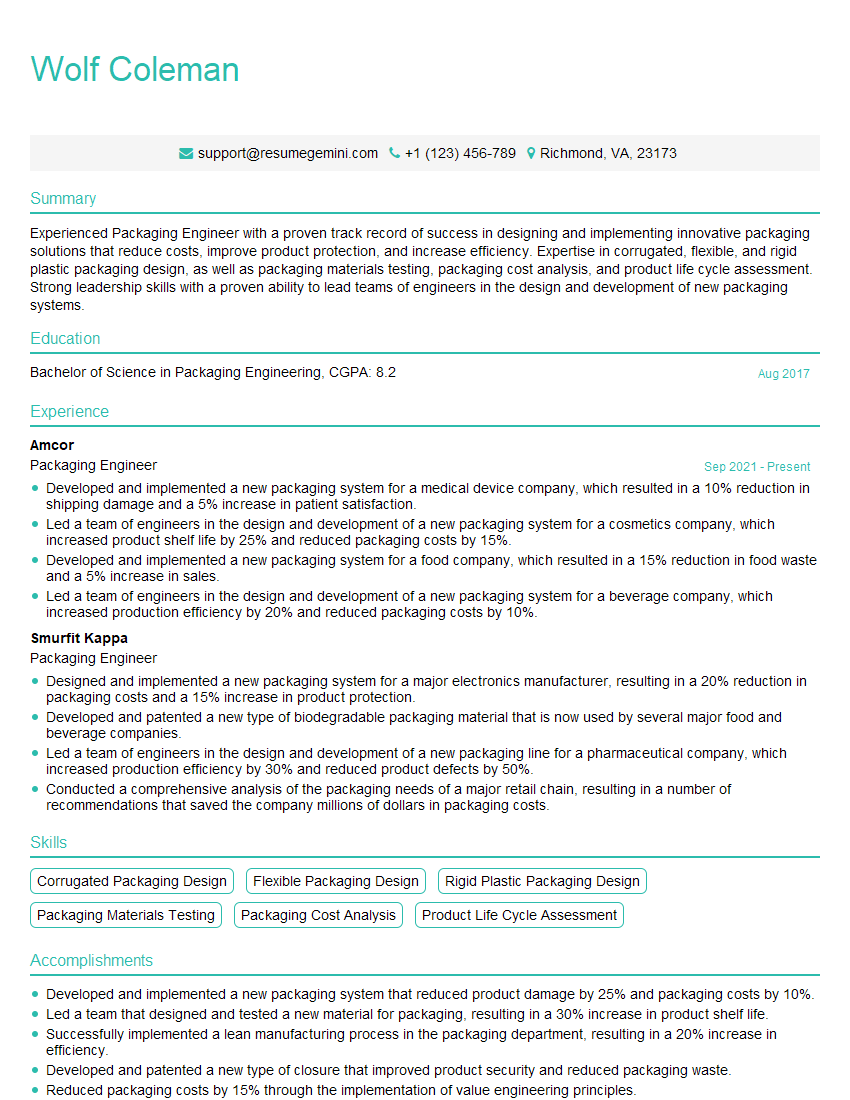
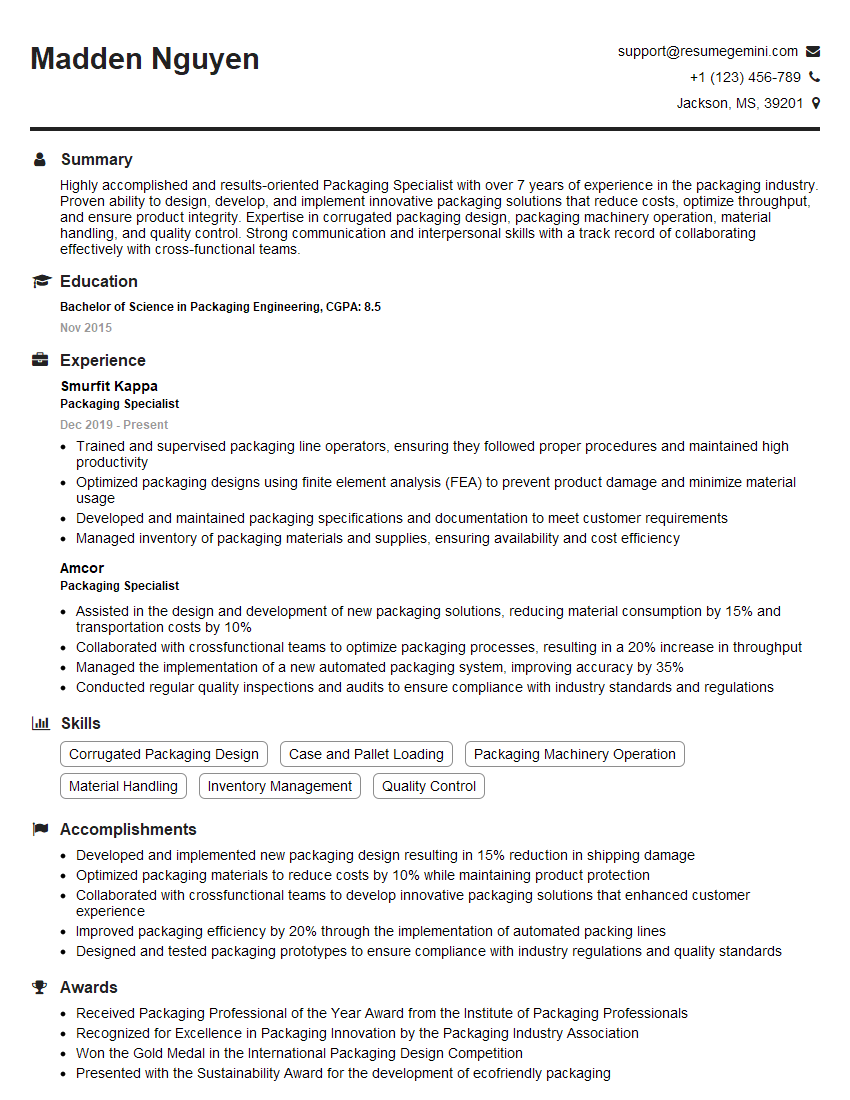
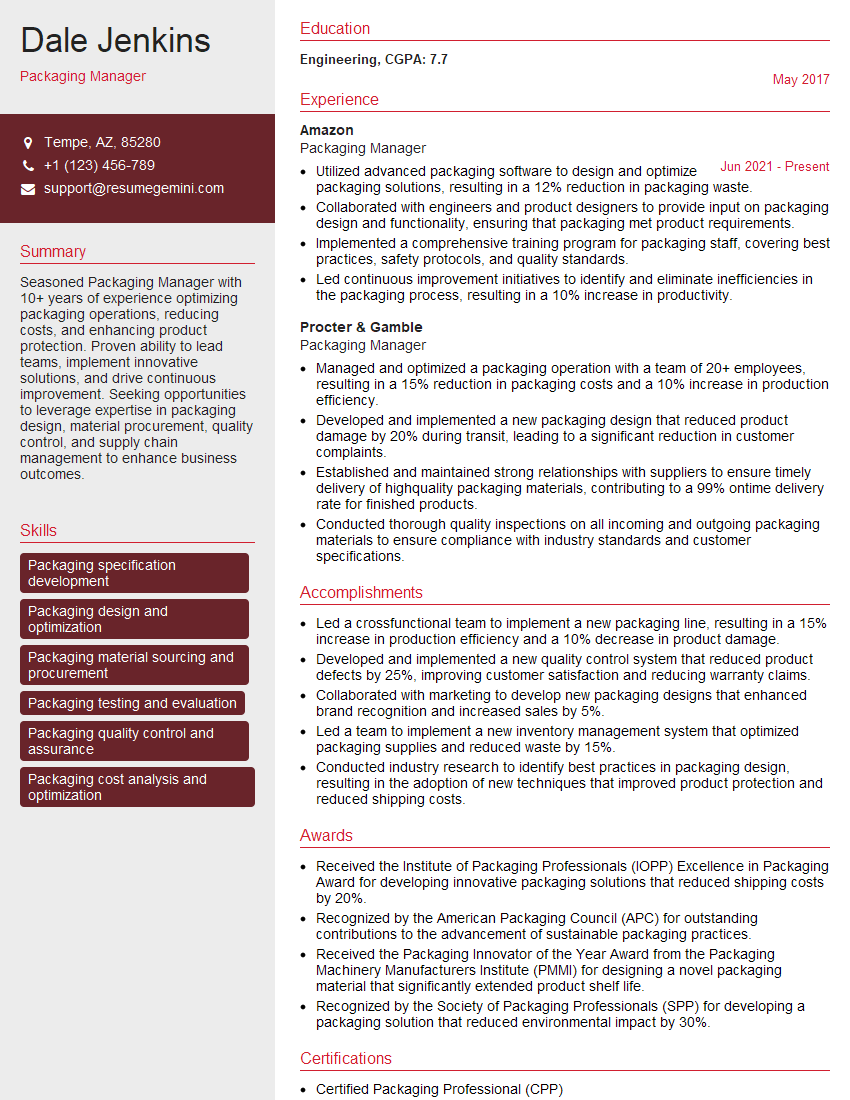
Mastering rope coiling and packaging techniques is crucial for career advancement in various industries, opening doors to specialized roles and higher earning potential. To enhance your job prospects, it’s vital to create an ATS-friendly resume that showcases your skills and experience effectively. ResumeGemini is a trusted resource that can help you build a professional and impactful resume tailored to the specific demands of the Rope Coiling and Packaging industry. Examples of resumes tailored to this field are provided to guide you in creating your own compelling application. Take the next step towards your dream career – build your best resume today!

Explore more articles
Users Rating of Our Blogs
Share Your Experience
We value your feedback! Please rate our content and share your thoughts (optional).
What Readers Say About Our Blog
Amazing blog
Interesting Article, I liked the depth of knowledge you’ve shared.
Helpful, thanks for sharing.