Feeling uncertain about what to expect in your upcoming interview? We’ve got you covered! This blog highlights the most important Ship Handling and Seamanship interview questions and provides actionable advice to help you stand out as the ideal candidate. Let’s pave the way for your success.
Questions Asked in Ship Handling and Seamanship Interview
Q 1. Explain the process of anchoring in various conditions.
Anchoring is a critical skill for any mariner, ensuring vessel safety and stability in various conditions. The process involves carefully selecting an appropriate location, considering factors like depth, seabed composition, weather, and proximity to other vessels. It’s a multi-step procedure and varies based on the specific circumstances.
- Site Selection: Before anchoring, carefully study nautical charts to identify a suitable location with sufficient depth and a holding ground free of obstructions. Consider wind, current, and swell to ensure the vessel will swing clear of hazards.
- Approaching the Anchor Position: Approach the selected spot slowly, taking into account the wind and current. Use engine power to maintain steerage, continuously monitoring your position using GPS and radar.
- Anchoring Procedure: Once positioned, lower the anchor slowly, paying out chain according to the depth and scope (typically 5:1 to 7:1 ratio of chain to depth). This creates a better angle of holding for the anchor.
- Testing the Set: After the anchor is dropped, allow some chain to run out freely, then carefully test the set by moving the vessel slowly ahead or astern. A well-set anchor will hold.
- Various Conditions: In strong winds or currents, a larger scope of chain is required and the vessel may need additional assistance, such as a second anchor or stern lines to secure it.
- Different Anchor Types: The choice of anchor (e.g., Bruce, Danforth, Plow) is dependent on the seabed type and holding conditions. For example, a Bruce anchor performs exceptionally well on rocky bottoms, while a Danforth is better for sand or mud.
For instance, during my time on the ‘Ocean Voyager’, we anchored in a bay known for its strong tidal currents. We carefully selected a sheltered location, increased our scope to 7:1, and used the vessel’s engine to maintain position while paying out chain to ensure a secure hold. Post-anchoring, we continually monitored the vessel’s position and adjusted the chain as needed.
Q 2. Describe your experience with maneuvering a vessel in confined waters.
Maneuvering in confined waters demands precise control and awareness. Factors like limited space, strong currents, and unpredictable wind conditions add complexity. Successful navigation involves a combination of skill, experience, and effective teamwork.
- Thorough Planning: Before entering confined waters, a detailed plan is essential. This includes studying charts and pilotage information, understanding tidal streams and current predictions, and coordinating with other vessels.
- Engine Handling: Precise control of engine speed and direction is critical. Small adjustments can significantly alter the vessel’s course and speed, especially in restricted areas.
- Communication: Clear and constant communication between the bridge team is paramount. This ensures everyone is aware of the vessel’s position, speed, and intended maneuvers.
- Use of Aids: Using tugs or other assistance can be vital in tricky situations. Similarly, utilizing advanced navigational tools such as dynamic positioning systems (DPS) enhances control and precision.
- Safety Measures: Strict adherence to safety protocols is crucial. This includes maintaining a proper lookout, using fenders to prevent collisions, and ensuring that all crew members are aware of potential hazards.
During my time on the ‘Seafarer’, I successfully navigated the Panama Canal, a notoriously challenging waterway. This involved meticulous planning, constant communication with the canal authorities, and precise engine control to maneuver through the narrow locks and channels safely and efficiently. We used fenders effectively and followed all the safety regulations diligently.
Q 3. How do you handle emergencies like engine failure or fire at sea?
Emergency situations at sea demand quick, decisive action. Effective responses hinge on preparation, training, and a calm, organized approach.
- Engine Failure: Immediate actions include assessing the extent of the failure, attempting to restart the engine, and deploying appropriate safety measures. This could include contacting nearby vessels or coast guard for assistance, deploying a life raft if the situation warrants it, and using alternative means of propulsion if available.
- Fire at Sea: A well-rehearsed fire plan and team training is essential. First responders should activate the fire alarm, initiate the fire-fighting systems (including fire pumps, CO2, and foam), and use appropriate methods to contain the fire, and to evacuate crew and passengers.
During a training exercise on the ‘Maritime Explorer’, we simulated an engine failure. My prompt actions involved assessing the situation, activating the emergency procedures, and contacting the relevant authorities while also implementing alternative propulsion to ensure safe return to port. We learned how crucial effective communication and well-defined emergency procedures are during such incidents.
Q 4. Explain your understanding of collision regulations and their application.
Collision regulations, codified in the International Regulations for Preventing Collisions at Sea (COLREGs), are essential to safe navigation. They outline rules for vessel behavior to prevent collisions.
- Rules of the Road: COLREGs dictate the actions of vessels in various situations, including crossing, overtaking, and meeting situations. Understanding these rules is vital to avoid collisions.
- Lights and Shapes: Vessels use lights and shapes to signal their presence, type, and maneuverability. Correct interpretation of these signals is essential.
- Sound Signals: Sound signals are used to warn other vessels of a vessel’s intentions or to indicate danger. Proper understanding of these signals and the circumstances under which they should be used is crucial.
- Risk Assessment: Beyond the rules, seafarers must continually assess risks and anticipate the actions of other vessels. Sound judgment and proactive navigation are essential.
For example, I once encountered a vessel approaching head-on in poor visibility conditions. By accurately interpreting the other vessel’s navigation lights and adopting the required actions as per COLREGs (porting my helm and giving appropriate sound signals), we successfully avoided a collision.
Q 5. Detail your experience with passage planning and route selection.
Passage planning is a critical aspect of safe and efficient voyages. It involves meticulous preparation and consideration of various factors.
- Route Selection: Choosing a safe and efficient route involves considering factors such as weather conditions, sea state, traffic density, navigational hazards, and the vessel’s capabilities.
- Chart Work: Careful chart analysis is fundamental. It helps in identifying potential hazards, selecting appropriate waypoints, and determining safe depths.
- Weather Forecasting: Accurate weather forecasts are essential to anticipate potential problems and adjust the plan accordingly.
- Contingency Planning: Planning for contingencies like engine failure or bad weather is essential to ensure a safe passage.
While planning a transatlantic voyage for the ‘Global Trader’, I meticulously analyzed weather forecasts, chart data, and traffic information to identify the most favorable route. This involved considering potential risks such as storms and icebergs and devising alternative routes to mitigate those risks.
Q 6. How do you use navigational tools such as charts, GPS, and radar?
Modern navigational tools are crucial for safe and efficient navigation. They offer complementary capabilities and must be used together for optimal effect.
- Charts: Nautical charts remain the primary source of navigational information, providing details on depths, hazards, and other vital data. They form the basis of passage planning.
- GPS: GPS provides accurate positioning information, crucial for tracking the vessel’s location and monitoring progress against the planned route. However, GPS signals can be affected by atmospheric conditions.
- Radar: Radar detects other vessels and navigational hazards, particularly in reduced visibility conditions. It provides critical information on range, bearing, and speed of other objects.
During a voyage to the Arctic, I integrated GPS data, radar imagery, and chart information to successfully navigate through dense ice floes. The redundancy provided by multiple navigation systems was essential in this challenging environment.
Q 7. Describe your experience with maintaining a vessel’s stability.
Maintaining vessel stability is crucial for safety and seaworthiness. It involves understanding the factors that affect stability and taking appropriate actions to prevent capsizing or loss of control.
- Understanding Stability: Vessel stability is affected by factors such as weight distribution, cargo loading, free surface effects, and the shape of the hull.
- Cargo Loading: Proper cargo loading and securing are vital. Incorrect loading can significantly impact stability and lead to dangerous situations.
- Ballasting: Ballasting systems are used to adjust the vessel’s trim and stability, particularly important in empty vessels.
- Weather Conditions: Severe weather can significantly impact a vessel’s stability. Appropriate actions must be taken to mitigate risks, including adjusting speed and course.
On several occasions on the ‘Cargo Champion’, I ensured the vessel’s stability by properly supervising cargo loading, monitoring the free surface effect, and adjusting ballast as needed to maintain the optimal trim and heel. Understanding stability principles is essential for preventing incidents of a dangerous list or capsize.
Q 8. Explain your understanding of tidal currents and their impact on navigation.
Tidal currents are the horizontal movement of water caused by the rise and fall of tides. Understanding them is crucial for safe and efficient navigation because they can significantly affect a vessel’s speed and course. These currents are predictable, varying in strength and direction depending on location, time, and the phase of the moon.
For example, navigating a narrow channel during a strong ebb tide (water flowing out) can be challenging, requiring careful speed adjustments to avoid grounding or colliding with obstructions. Conversely, a strong flood tide (water flowing in) can push a vessel off course, necessitating adjustments to heading and potentially requiring more time to reach the destination.
We use tidal atlases, nautical charts, and specialized prediction software to predict tidal currents. This information is vital for planning a voyage, determining the best time to transit a particular area, and calculating the necessary adjustments to our course and speed.
Q 9. How do you handle communication with other vessels and shore-based authorities?
Communication at sea is paramount for safety and efficient operations. I utilize various methods to communicate with other vessels and shore-based authorities, including VHF radio, GMDSS (Global Maritime Distress and Safety System) equipment, and Inmarsat satellite communication.
VHF radio is the primary method for short-range communication, used for exchanging safety information, reporting positions, and coordinating maneuvers with other vessels in close proximity. For example, I use standard VHF phrases such as “Mayday” for distress calls, “Pan Pan” for urgency, and “Securité” for safety-related announcements. GMDSS provides a more robust and reliable communication system for distress and safety calls, even in remote areas. Inmarsat allows us to communicate with shore-based authorities, including port agents and shipping companies, for updates on weather conditions, cargo information, and operational instructions. All communications follow established protocols and best practices to ensure clarity and efficiency.
Q 10. Describe your experience with cargo handling and securing procedures.
My experience in cargo handling encompasses a wide range of procedures, prioritizing safety and efficiency. This includes the planning phase – assessing the cargo’s characteristics, preparing stowage plans, and ensuring the proper equipment is available. During loading and unloading, I oversee the process, ensuring that cargo is secured properly using appropriate lashings, dunnage, and securing devices. We follow strict procedures to prevent shifting, damage, or accidents.
For example, securing heavy containers requires careful planning and the use of specialized lashing systems that account for the weight, size, and the vessel’s movement in different sea states. Regular inspections are crucial throughout the voyage to ensure the continued security of the cargo. I also have extensive experience with documentation and reporting, ensuring all cargo-related procedures are correctly recorded and compliant with regulations.
Q 11. Explain your knowledge of different types of mooring techniques.
Mooring techniques vary depending on the vessel’s size, the port’s facilities, and environmental conditions. Common methods include using mooring lines, anchors, and fenders.
For smaller vessels, a simple mooring might involve using two or three mooring lines secured to bollards on the quay. Larger vessels often require a more complex setup involving multiple lines, anchors, and potentially the use of tugboats to assist in maneuvering. We select the appropriate mooring technique considering factors like wind, current, and the vessel’s draft. I am experienced with various types of mooring lines, including nylon, wire, and synthetic fiber ropes, and I understand the importance of proper line handling to avoid damage and ensure the vessel’s safety. For example, in a strong crosswind, we might use more lines on the windward side and adjust line tensions accordingly.
Q 12. How do you ensure the safety of the crew and passengers aboard the vessel?
Ensuring crew and passenger safety is my utmost priority. This involves strict adherence to safety regulations, conducting regular safety drills, and maintaining a safe working environment.
We conduct regular safety training sessions covering emergency procedures, fire prevention, and personal survival techniques. I also ensure that all safety equipment is properly maintained and readily available. This includes life rafts, life jackets, fire extinguishers, and emergency communication systems. We maintain a clean and organized vessel, reducing the risk of accidents. We also emphasize vigilance and communication, encouraging crew members to report any safety concerns promptly.
For example, before departing from port, I conduct a comprehensive safety check of all equipment and systems. During the voyage, I regularly monitor the vessel’s condition and the crew’s well-being.
Q 13. Describe your approach to risk assessment and management at sea.
Risk assessment and management are integral to safe operations at sea. I employ a systematic approach, identifying potential hazards, assessing their likelihood and severity, and implementing mitigating measures.
This involves considering various factors such as weather conditions, traffic density, equipment failure, and human error. We use risk matrices to prioritize hazards and determine appropriate control measures. For example, if we anticipate heavy weather, we adjust the course, reduce speed, and secure the vessel accordingly. A thorough risk assessment before each voyage ensures we are adequately prepared for any unforeseen circumstances. We also conduct regular reviews of our risk management procedures to ensure their effectiveness and adapt them as needed.
Q 14. Explain your experience with weather forecasting and its implications for navigation.
Weather forecasting is crucial for safe and efficient navigation. I utilize various sources, including meteorological reports, satellite imagery, and specialized weather forecasting software, to obtain up-to-date weather information.
This information helps us plan voyages, selecting optimal routes and schedules to avoid severe weather conditions. For example, if a strong storm is predicted along our planned route, we might adjust the course or delay the departure to avoid hazardous conditions. We also monitor weather conditions throughout the voyage, adapting our course and speed as necessary to maintain safety and avoid dangerous situations. Understanding weather patterns, such as fronts, high and low-pressure systems, and tropical cyclones, is essential for safe and effective decision-making at sea.
Q 15. How do you maintain a vessel’s logbook and other essential documentation?
Maintaining a vessel’s logbook and other essential documentation is crucial for safety, compliance, and efficient operation. It’s like keeping a meticulous diary for the ship, recording every significant event and action.
- Logbook Entries: These must be accurate, legible, and timely. They include details of the vessel’s position, speed, course, weather conditions, significant events (e.g., engine maintenance, cargo operations, port calls), and any unusual occurrences. Think of it as the ship’s daily report.
- Certificates and Documents: Essential documents like the International Ship Security Certificate (ISSC), Certificate of Registry, and various operational certificates must be kept up-to-date and readily accessible for inspection by port authorities. These are the ship’s ‘identification papers’ and proof of compliance.
- Maintenance Records: Detailed records of all maintenance and repairs performed on the vessel’s equipment and machinery are essential. This ensures the continued seaworthiness of the vessel and is crucial for preventing future breakdowns. It’s like a medical history for the ship.
- Cargo Records: For cargo vessels, accurate cargo manifests, stowage plans, and delivery receipts are paramount. This ensures proper accountability and efficient cargo handling, preventing loss or damage.
- Electronic Documentation: Many ships now use electronic logbooks and document management systems. These systems offer enhanced security, searchability, and data analysis capabilities. However, they still require meticulous maintenance and backups.
Failure to maintain proper documentation can lead to serious consequences, including fines, delays, and even legal action. Regular checks and audits are vital to ensure compliance and operational efficiency.
Career Expert Tips:
- Ace those interviews! Prepare effectively by reviewing the Top 50 Most Common Interview Questions on ResumeGemini.
- Navigate your job search with confidence! Explore a wide range of Career Tips on ResumeGemini. Learn about common challenges and recommendations to overcome them.
- Craft the perfect resume! Master the Art of Resume Writing with ResumeGemini’s guide. Showcase your unique qualifications and achievements effectively.
- Don’t miss out on holiday savings! Build your dream resume with ResumeGemini’s ATS optimized templates.
Q 16. Describe your understanding of the International Maritime Organization (IMO) regulations.
The International Maritime Organization (IMO) is the United Nations specialized agency responsible for regulating international shipping. Its regulations aim to ensure the safety of life at sea, protect the marine environment, and improve maritime security. Understanding these regulations is non-negotiable for any seafarer.
- SOLAS (Safety of Life at Sea): This is arguably the most important convention, covering aspects like ship construction, fire protection, life-saving appliances, and radio communications. It’s the cornerstone of maritime safety.
- MARPOL (Marine Pollution): This convention sets out rules to minimize pollution from ships, addressing oil, sewage, garbage, and air emissions. Environmental responsibility is a key aspect of modern shipping.
- STCW (Standards of Training, Certification and Watchkeeping): This establishes minimum standards for the training and certification of seafarers. This ensures a competent and well-trained workforce.
- ISM (International Safety Management): This code requires companies to establish and maintain a safety management system to prevent accidents and pollution. This promotes a culture of safety and risk management aboard ships.
- ISPS (International Ship and Port Facility Security): This code establishes measures for enhancing maritime security, protecting ships and port facilities from terrorist attacks and other security threats.
Staying abreast of IMO regulations and amendments is an ongoing process requiring continuous professional development and access to updated publications and training materials. Non-compliance can lead to serious penalties.
Q 17. Explain your experience with using electronic chart display and information systems (ECDIS).
Electronic Chart Display and Information Systems (ECDIS) have revolutionized navigation, replacing traditional paper charts. It’s like having a sophisticated, interactive map on your computer, constantly updated and providing various navigational information.
- Chart Management: ECDIS allows for easy updates and management of electronic charts, ensuring navigators always have the latest information. This eliminates the risk of using outdated paper charts.
- Route Planning: ECDIS facilitates route planning, taking into account factors such as water depth, currents, and other navigational hazards. It allows for quick recalculation of routes based on real-time changes.
- Navigation Warnings: It displays navigational warnings and alerts, helping to avoid dangerous situations. This is like having a real-time warning system against hazards.
- Integration with other systems: Modern ECDIS integrates with other ship systems, like GPS, radar, and AIS, providing a comprehensive navigational picture. It creates a unified and streamlined navigation system.
- Safety Features: ECDIS includes safety features like route monitoring, alarm functions, and back-up systems. This acts as an additional layer of safety at sea.
My experience includes extensive use of ECDIS for route planning, voyage monitoring, and collision avoidance. I am proficient in using various ECDIS software packages and understand the importance of regular software updates and proper training to maximize its safety and efficiency.
Q 18. How do you handle a situation where you encounter another vessel in a restricted area?
Encountering another vessel in a restricted area demands immediate action and adherence to the International Regulations for Preventing Collisions at Sea (COLREGs). It’s like navigating a busy intersection, requiring caution and adherence to traffic rules.
- Assess the Situation: Immediately assess the situation, determining the other vessel’s course, speed, and intentions. Pay attention to any visual or audible signals.
- COLREGs Compliance: Follow the COLREGs rules for restricted areas, which usually prioritize vessels restricted by their draft or maneuverability. Give way to those vessels accordingly.
- Communication: Use the ship’s sound signals and VHF radio to communicate with the other vessel, clarifying intentions and avoiding any misunderstanding. Think of it as a verbal conversation to prevent accidents.
- Maneuvering: Take appropriate maneuvering action to maintain a safe separation. This might involve altering course, speed, or both. Prioritize a safe passage above all.
- Document the Incident: Record the details of the encounter in the logbook, including time, location, vessel details, and actions taken. This is crucial for documentation.
In restricted areas, maintaining a constant lookout and exercising extra caution are paramount. The consequences of a collision in a confined space can be severe.
Q 19. Describe your experience with conducting a safety drill.
Conducting safety drills is crucial for maintaining a high level of preparedness and crew competence. It’s like a fire drill in a building—essential for ensuring everyone knows what to do in an emergency.
- Planning and Preparation: Thorough planning is key. The drill should be realistic and cover all essential aspects, including the scenario, roles, and responsibilities of each crew member. It’s like devising a detailed game plan.
- Emergency Procedures: Drills must focus on practicing emergency procedures such as fire-fighting, abandon ship, man overboard, and medical emergencies. These procedures must be thoroughly understood and executed correctly.
- Crew Participation: All crew members must actively participate and their performance must be assessed. This identifies areas of strength and weakness, allowing for improvement.
- Debriefing: Following each drill, a thorough debriefing is crucial. This analysis highlights areas for improvement and allows for adjustments to procedures. It’s a critical post-game review.
- Documentation: A record of each drill, including date, time, participants, scenario, and observations, must be kept. This is the official documentation of the exercise.
My experience includes conducting various safety drills, ranging from small-scale fire drills to full-scale abandon ship exercises. I focus on making drills realistic and engaging, ensuring that crew members understand the importance of preparedness and teamwork.
Q 20. Explain your knowledge of various types of navigational aids.
Navigational aids are vital for safe navigation, providing information about position, course, and potential hazards. They’re like signposts on the ocean, guiding ships safely.
- Lighthouses: These provide visual signals indicating position and warn of hazards. They are like giant night lights.
- Buoys: These floating markers indicate channels, dangers, and other navigational information. They come in various shapes, colors, and lights.
- Beacons: These fixed navigational aids emit light or radio signals. They are similar to lighthouses, but often smaller and simpler.
- GPS (Global Positioning System): This satellite-based system provides highly accurate position information. It’s like having a precise location on demand.
- Radar: This system uses radio waves to detect other vessels and obstacles. It’s the ship’s ‘eyes’ in low visibility.
- AIS (Automatic Identification System): This system automatically transmits and receives information about vessels, allowing for better situational awareness. It facilitates communication between ships.
- Electronic Charts: These digital charts provide detailed information about waterways, hazards, and navigational aids.
Understanding the characteristics and limitations of various navigational aids is crucial for safe and efficient navigation. Knowing how to interpret these aids and integrate them with other navigational equipment is paramount.
Q 21. How do you respond to a medical emergency onboard the vessel?
Responding to a medical emergency onboard requires quick thinking, efficient action, and a calm demeanor. It’s like a medical emergency anywhere else, but with limited resources.
- Assess the Situation: Immediately assess the nature and severity of the medical emergency. This involves determining the patient’s condition and any immediate threats to life.
- First Aid: Administer appropriate first aid as trained, focusing on stabilizing the patient and preventing further harm. This requires proper training and certification.
- Medical Communication: Contact medical professionals ashore via radio or satellite communication, providing detailed information about the patient’s condition and seeking medical advice. It’s crucial to get remote assistance.
- Documentation: Maintain detailed records of the incident, including treatment provided, patient’s response, and any communication with medical professionals. This is critical documentation for post-incident analysis.
- Evacuation (if necessary): In severe cases, prepare for medical evacuation, coordinating with medical services and authorities ashore. It’s like planning a rescue mission.
Having a well-stocked medical kit, trained personnel, and established communication protocols are vital for effective response. Regular medical training and drills are essential to maintain competence.
Q 22. Explain your understanding of ship stability and trim.
Ship stability refers to a vessel’s ability to remain upright and return to its equilibrium position after being disturbed. Trim refers to the difference in draft (the depth of the hull below the waterline) between the fore and aft ends of the ship. A ship is said to be ‘down by the head’ if the draft is greater at the bow (front) and ‘down by the stern’ if it’s greater at the stern (rear).
Stability is influenced by factors like the ship’s shape (form stability), the distribution of weight (weight distribution), and the presence of free surfaces (liquids in tanks). A ship with poor stability is prone to capsizing, especially in rough seas. Trim affects the ship’s handling characteristics; a significantly trimmed vessel will experience more resistance to movement and could be harder to maneuver.
For example, consider a cargo ship loading heavy containers at the stern. This increases the weight at the stern, causing the vessel to trim by the stern. This can affect the propeller’s efficiency and necessitate adjustments in the ballast tanks to re-establish an optimal trim and maintain stability. Understanding stability and trim is crucial for safe cargo loading practices and maintaining optimal vessel performance.
Q 23. Describe your experience with bridge resource management (BRM).
Bridge Resource Management (BRM) is a teamwork-centered approach to ship operation that emphasizes effective communication, clear leadership, and risk management. My experience with BRM involves actively participating in bridge team briefings, proactively identifying potential hazards, and ensuring clear communication between all bridge team members during all phases of a voyage.
I’ve consistently applied the principles of BRM in various situations including navigating congested waterways, responding to changing weather conditions, and executing complex maneuvers. This includes effectively delegating tasks, utilizing checklists and standard operating procedures, and fostering an environment of open communication where all crew members feel comfortable voicing concerns.
A specific example: During a night passage through a busy strait, the visibility reduced significantly. Through BRM principles, I facilitated a concise briefing among the team, delegated lookout duties, and emphasized the importance of regular position updates and close monitoring of radar and AIS. This collaborative and organized approach ensured safe navigation despite the challenging conditions.
Q 24. How do you assess and mitigate the risks associated with different sea states?
Assessing and mitigating risks associated with different sea states requires understanding the relationship between wave height, period, and wind speed. I use established tools like the Beaufort scale to assess wind speed and the significant wave height data provided by meteorological forecasts.
Mitigation strategies vary with the severity of the sea state. In moderate seas, I would adjust the vessel’s speed to maintain comfort and safety, employing tactical maneuvering to minimize pitching and rolling. In severe conditions, I would consider alternative routes, seek shelter in port, or adopt sea-state specific procedures such as reducing speed significantly, securing cargo, and preparing the vessel for heavy weather.
For instance, when facing high waves, a prudent strategy might involve maintaining a heading that allows the vessel to meet the waves head-on or at a slight angle, rather than broadside, to reduce the risk of broaching (turning sideways to the waves) and minimize the stress on the hull. Always considering the limitations of the vessel is paramount.
Q 25. Explain your experience with responding to a man overboard situation.
Responding to a man overboard (MOB) situation demands immediate and decisive action. My experience involves initiating the MOB drill, which begins with immediate confirmation of the event, noting the exact time and position of the person, and alerting the entire crew.
The subsequent steps involve deploying the lifebuoy with its attached light and deploying the life raft if necessary, initiating the search pattern (typically a modified Williamson turn), employing all available navigational aids (including radar and AIS), and contacting the Coast Guard or other relevant authorities. Documentation is critical throughout, including recording time, location, actions taken, and weather conditions.
In one instance, quick actions triggered by our MOB drill and the skilled use of the vessel’s maneuverability, allowed us to recover the crew member safely within minutes, despite challenging conditions. This highlights the importance of regular, well-practiced drills and a clear understanding of all MOB procedures.
Q 26. Describe your knowledge of different types of ship construction and their implications for handling.
Different ship constructions significantly affect handling characteristics. Steel ships, while robust, can suffer from structural fatigue over time, requiring regular inspection and maintenance. Aluminum ships are lighter and faster, but they are more susceptible to corrosion and damage. Fiber-reinforced plastic (FRP) vessels are generally lighter and require less maintenance, but may be more susceptible to impact damage.
The type of hull form influences maneuverability. A full displacement hull is stable but less maneuverable, whereas a planing hull is more agile but less stable at low speeds. Understanding these differences is critical for selecting appropriate speeds and maneuvers, avoiding potential risks such as grounding or collision. For instance, navigating a shallow waterway would necessitate a slower speed and more careful maneuvering of a full-displacement vessel compared to a planing hull vessel.
Furthermore, the arrangement of cargo holds and ballast tanks impacts weight distribution and influences stability and trim. Knowledge of the vessel’s structural characteristics and tank arrangements are vital for safe and efficient operation.
Q 27. Explain your understanding of the effects of wind and currents on vessel movement.
Wind and currents significantly affect vessel movement. Wind exerts a force on the vessel’s superstructure and hull, causing leeway (drifting sideways) and affecting the vessel’s course. The magnitude of this force depends on the wind speed, the vessel’s size and shape (windage), and the angle of the wind relative to the vessel’s heading.
Currents exert a force on the underwater hull, affecting the vessel’s speed and course. The strength of the current depends on its speed and direction. Understanding the effects of wind and currents requires analyzing meteorological and oceanographic data, and adjusting the vessel’s course and speed accordingly.
For example, when sailing upwind against a strong current, a captain should anticipate a reduced speed made good and adjust the course to compensate for leeway caused by wind and current. Conversely, a strong following wind might help the vessel, though it requires careful navigation to avoid excessive speed.
Q 28. How do you use a nautical sextant and other traditional navigational instruments?
While modern navigation relies heavily on GPS and electronic systems, proficiency with traditional instruments remains crucial for backup and enhanced understanding. The nautical sextant, for example, allows for celestial navigation by measuring the angle between a celestial body and the horizon. This measurement, along with precise time, allows for the calculation of latitude and, with additional sightings, longitude.
Other traditional instruments like the magnetic compass, the pelorus, and parallel rules are used to plot courses, take bearings, and calculate distances. The magnetic compass provides magnetic heading, while the pelorus allows for relative bearings to be taken. Parallel rules assist in plotting positions on charts.
Practical application involves using these instruments during emergencies where electronic systems fail. Knowing how to use a sextant and other traditional tools ensures a ship can still be safely navigated in such circumstances. While these methods require more time and skill, the understanding of their underlying principles enhances navigation competency.
Key Topics to Learn for Ship Handling and Seamanship Interview
- Navigation and Chartwork: Understanding chart symbols, electronic charting systems (ECDIS), GPS, and various navigational techniques. Practical application includes planning voyages, calculating courses, and avoiding hazards.
- Collision Regulations (COLREGs): Thorough knowledge of the International Regulations for Preventing Collisions at Sea. Practical application involves understanding right-of-way rules, safe navigation practices, and effective communication with other vessels.
- Ship Stability and Trim: Understanding the factors affecting ship stability, including loading, ballasting, and weather conditions. Practical application includes ensuring the safe and stable operation of the vessel under various conditions.
- Cargo Handling and Securing: Safe and efficient loading, securing, and unloading of various types of cargo. Practical application involves understanding different cargo types, securing methods, and relevant safety regulations.
- Ship Manoeuvrability: Understanding the factors affecting a ship’s manoeuvrability, including speed, rudder angle, and environmental conditions. Practical application includes executing safe and efficient manoeuvres in confined waters and during various weather conditions.
- Emergency Procedures: Familiarity with emergency response procedures, including fire-fighting, man overboard drills, and damage control. Practical application involves understanding the ship’s emergency systems and procedures, and taking appropriate actions during emergencies.
- Meteorology and Oceanography: Understanding weather patterns, currents, and tides and their impact on ship handling. Practical application involves route planning, taking weather conditions into account for safe navigation.
- Communication Systems: Proficiency in using various communication systems, including VHF radio, GMDSS, and satellite communication. Practical application involves effective communication with other vessels, coast guard, and port authorities.
Next Steps
Mastering Ship Handling and Seamanship is crucial for career advancement in the maritime industry, opening doors to higher-paying positions and greater responsibility. To significantly improve your job prospects, invest time in crafting an ATS-friendly resume that highlights your skills and experience effectively. ResumeGemini is a trusted resource that can help you build a professional and impactful resume. They offer examples of resumes tailored specifically to Ship Handling and Seamanship roles, providing a valuable template to guide you in showcasing your qualifications convincingly. Take the next step towards your dream maritime career today!
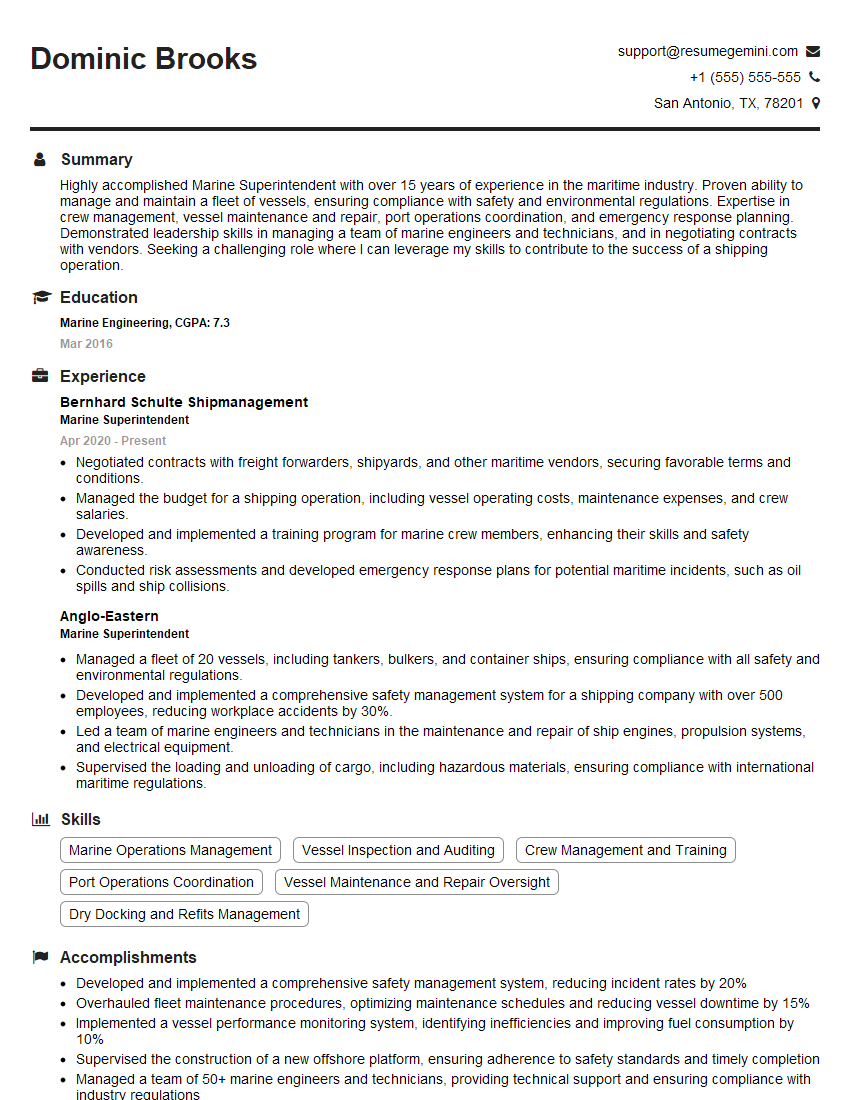
Marine Superintendent Resume Sample
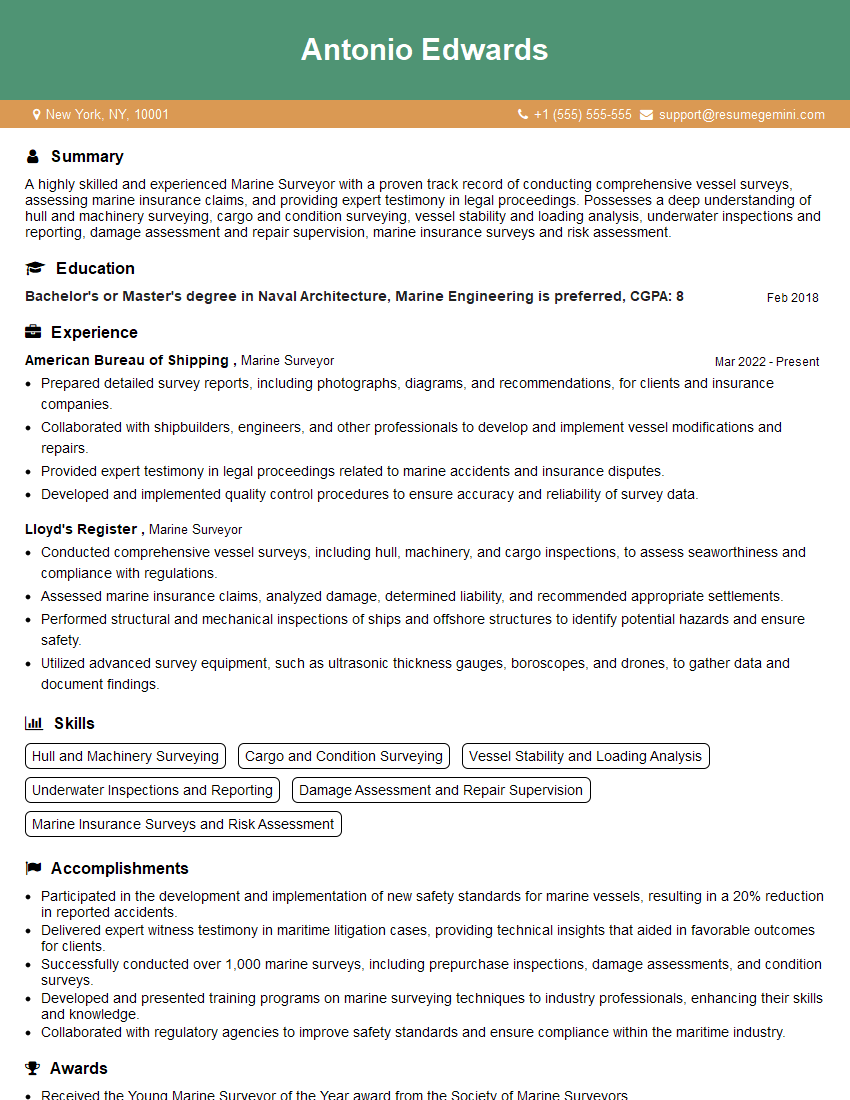
Marine Surveyor Resume Sample
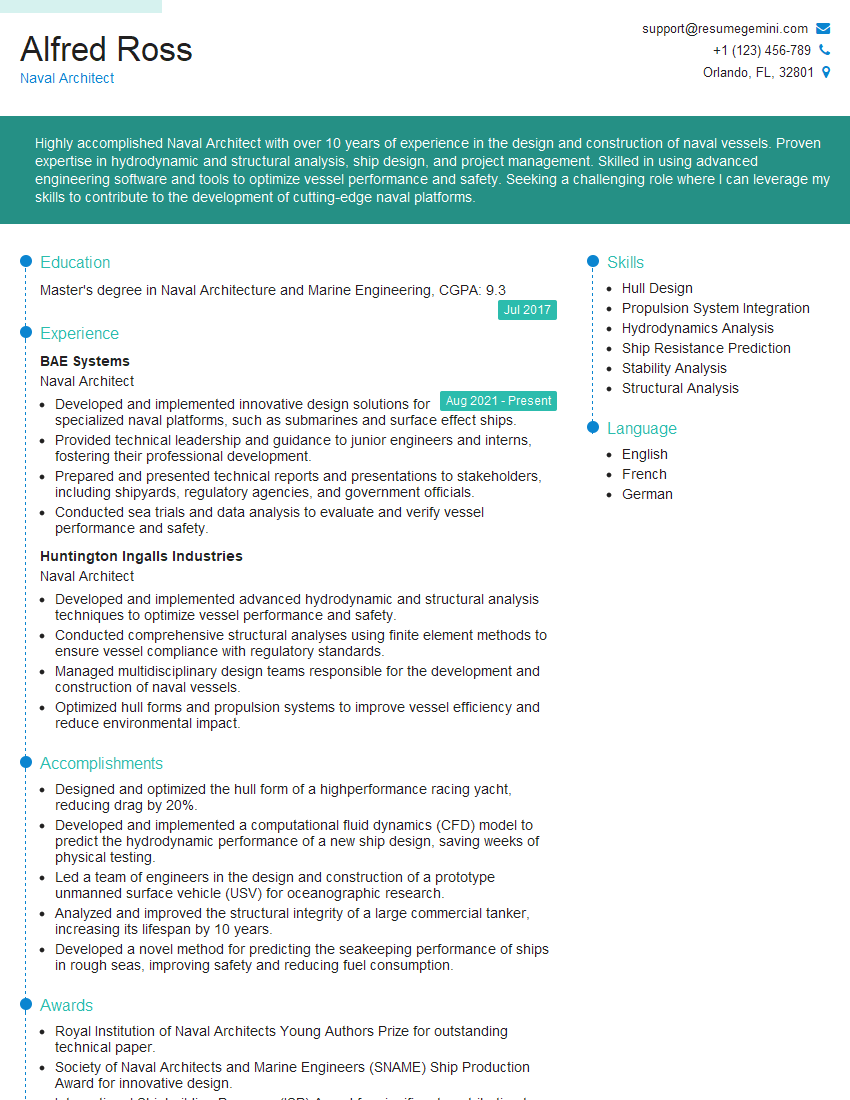
Naval Architect Resume Sample
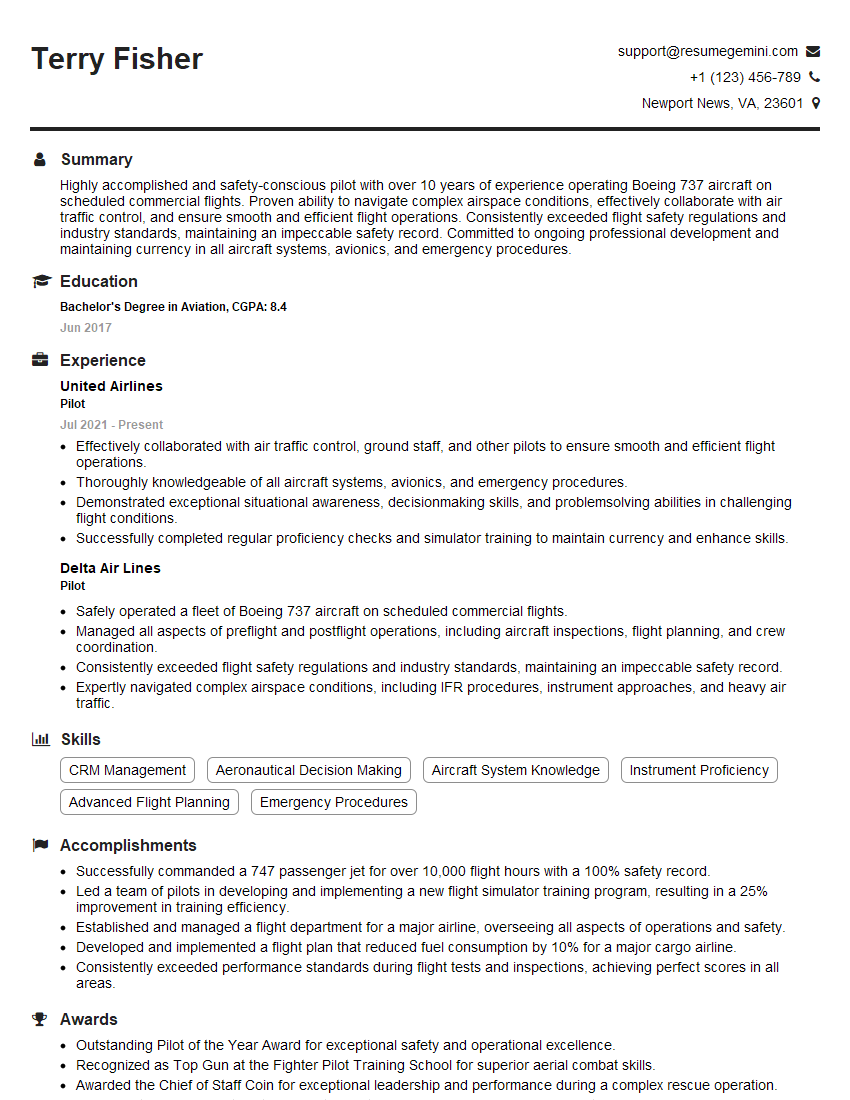
Pilot Resume Sample
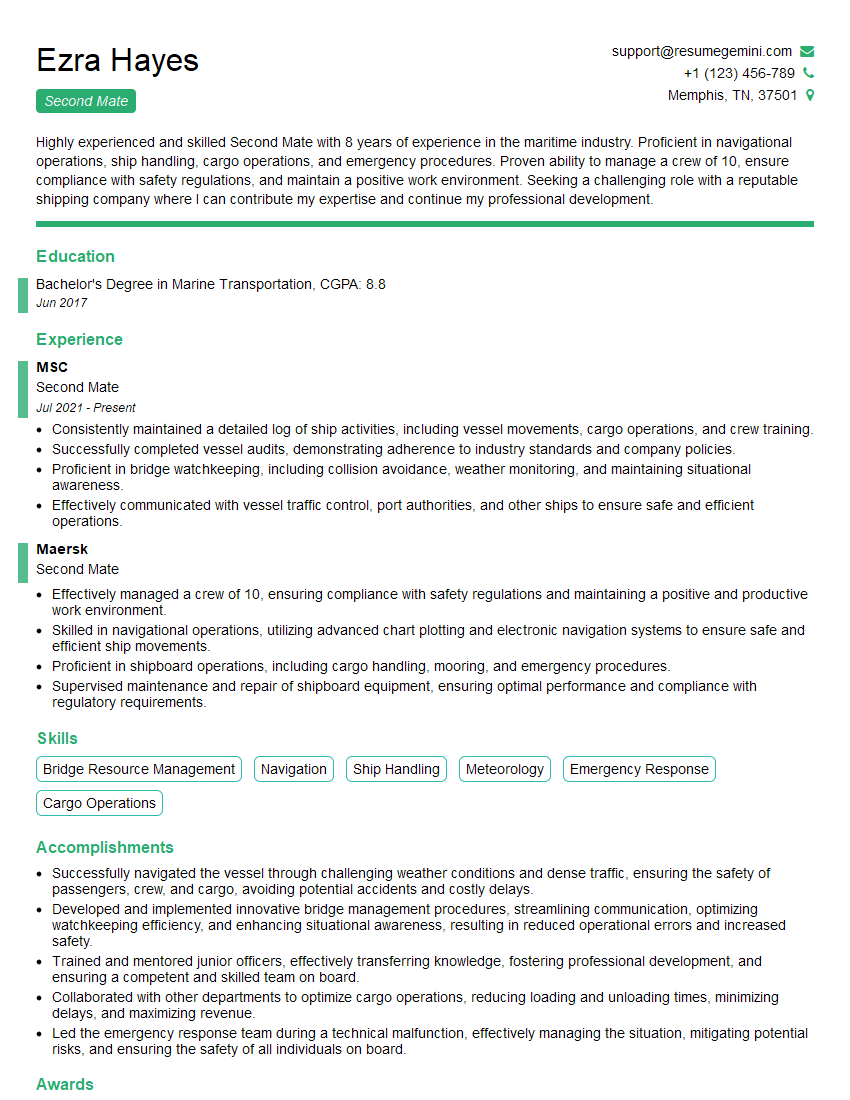
Second Mate Resume Sample
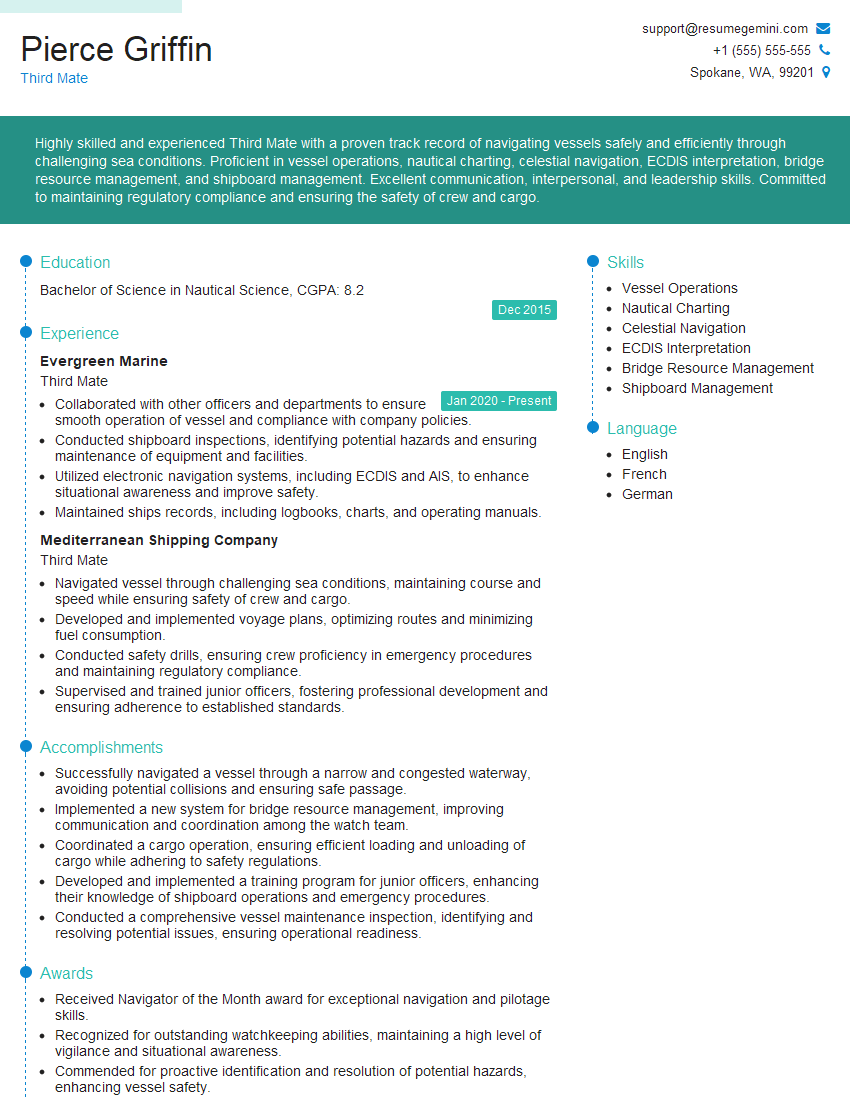
Third Mate Resume Sample
Navigator Resume Sample
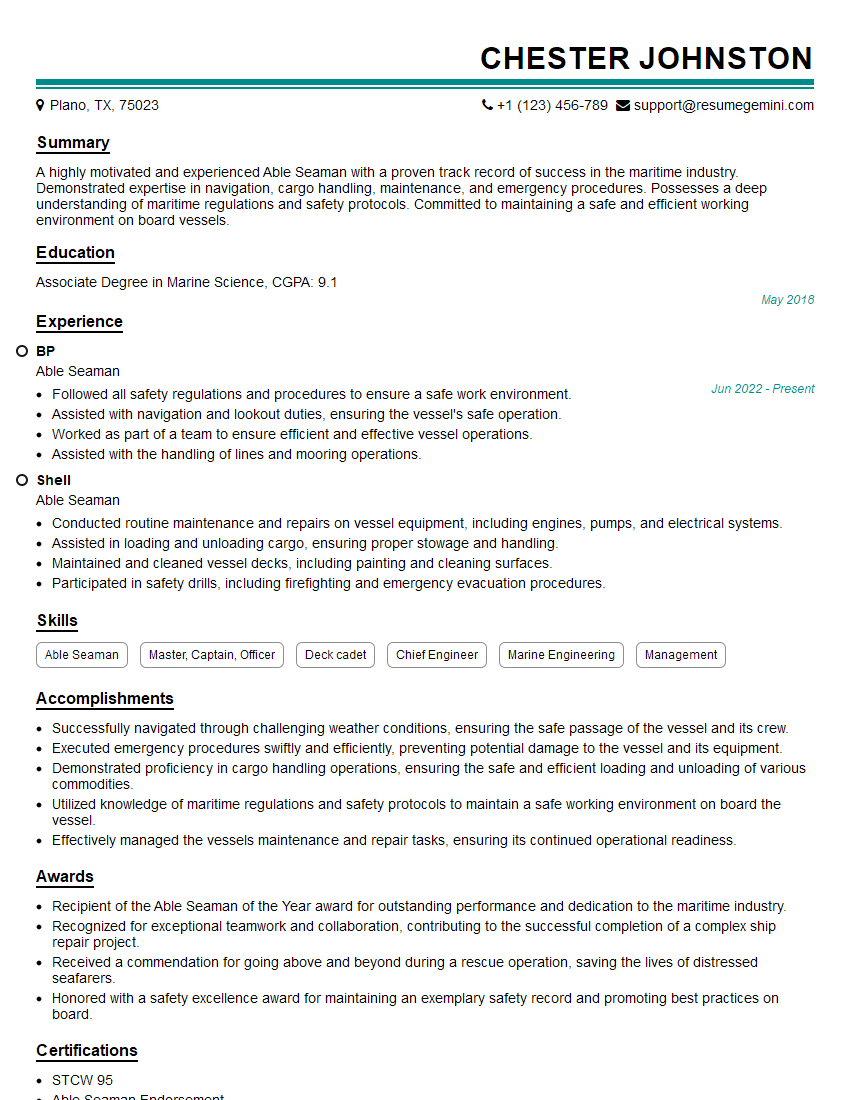
Able Seaman Resume Sample
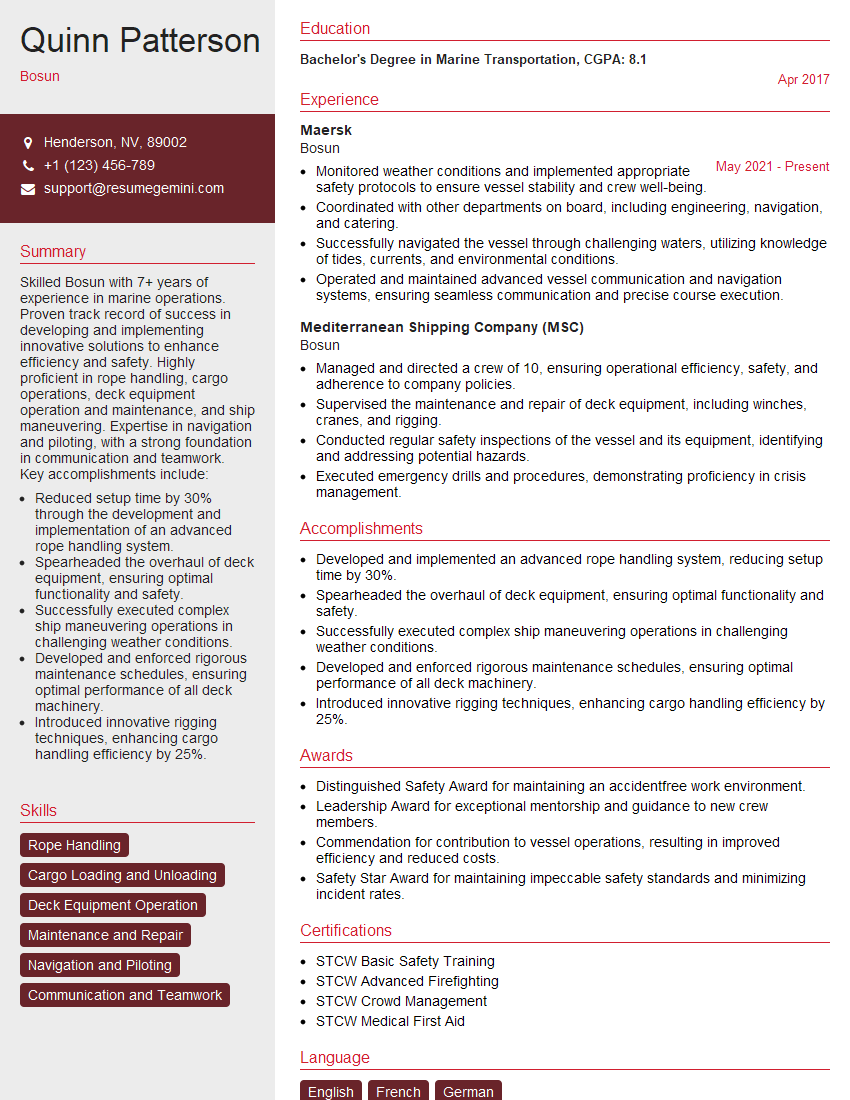
Bosun Resume Sample
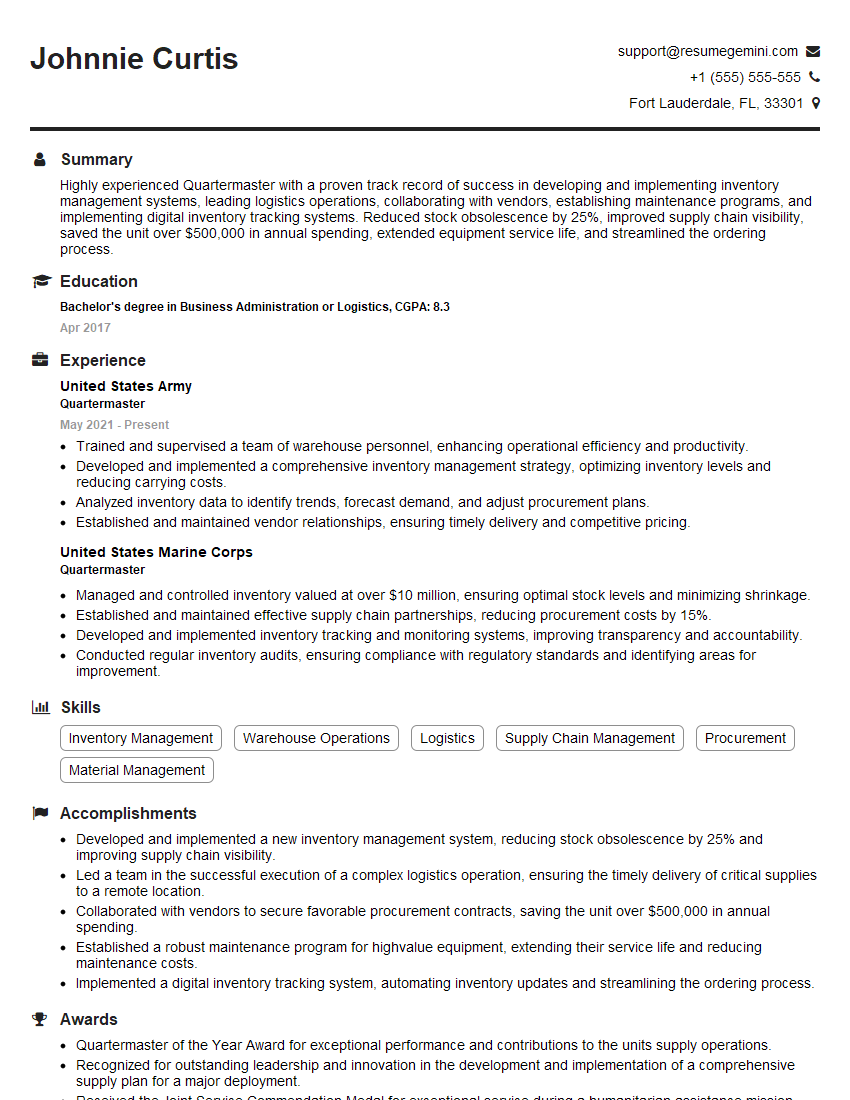
Quartermaster Resume Sample
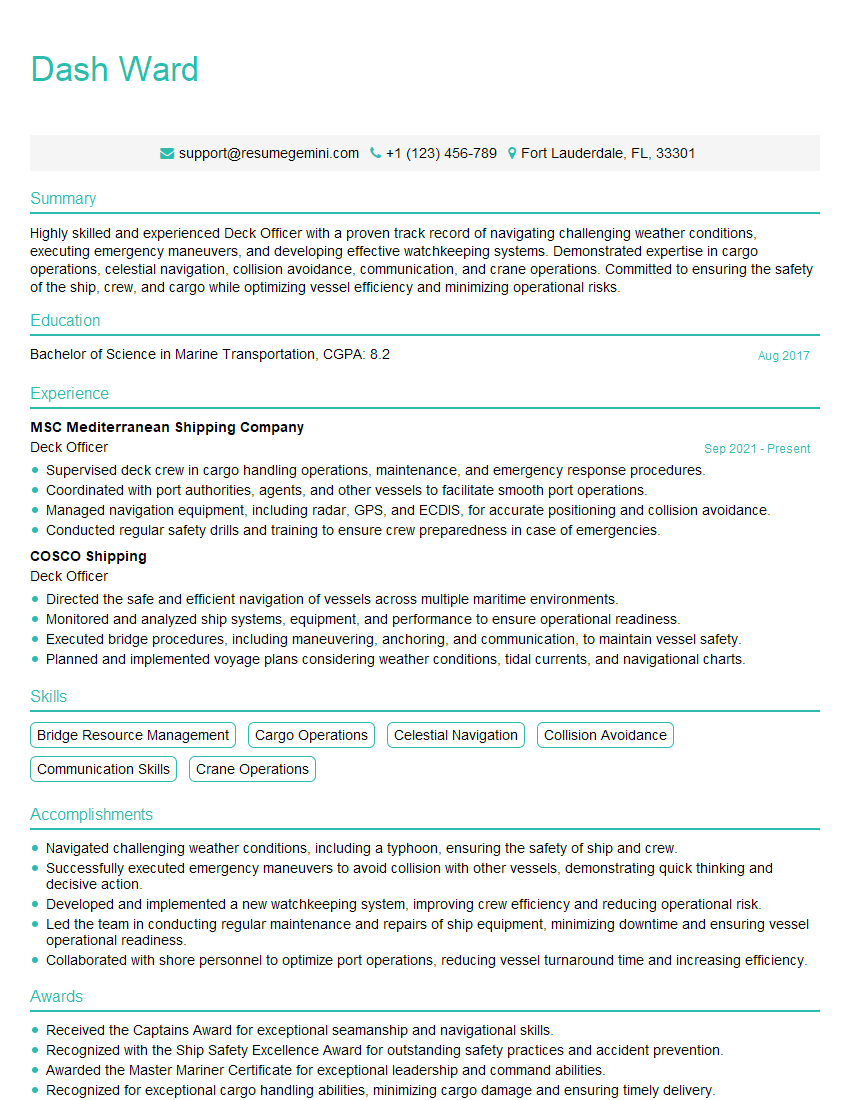
Deck Officer Resume Sample
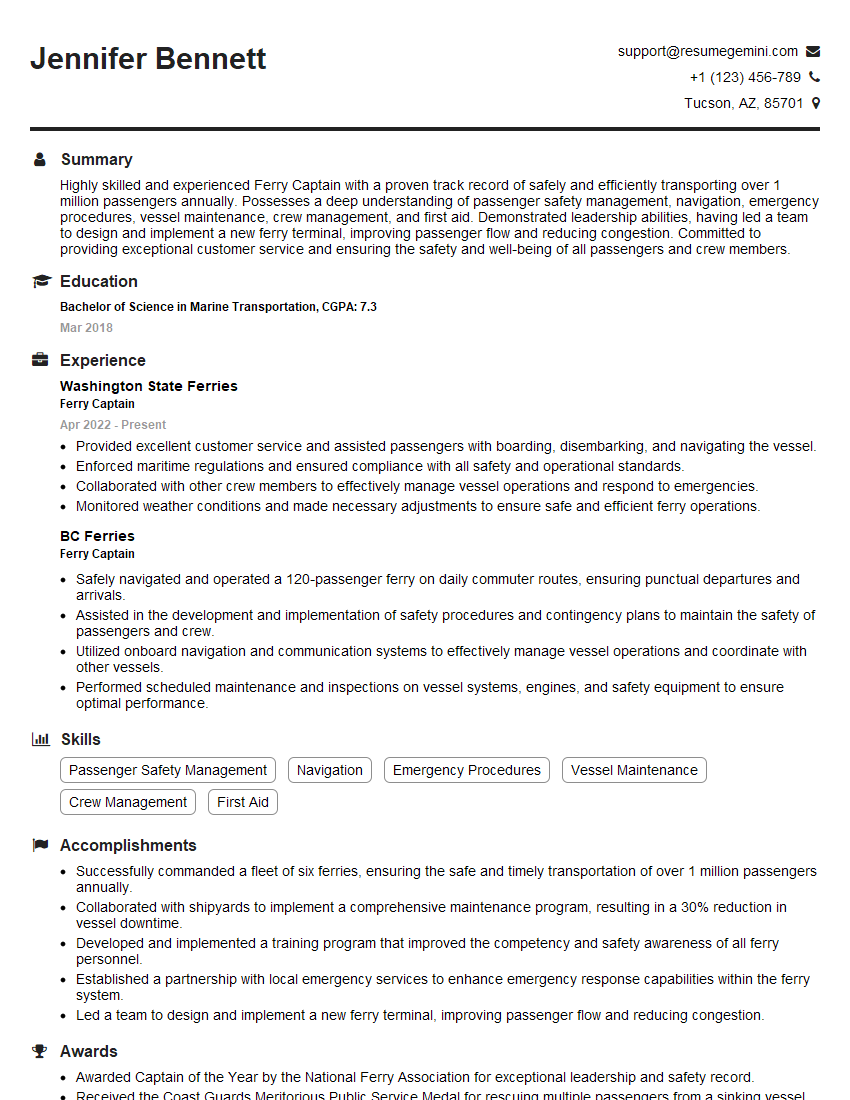
Ferry Captain Resume Sample
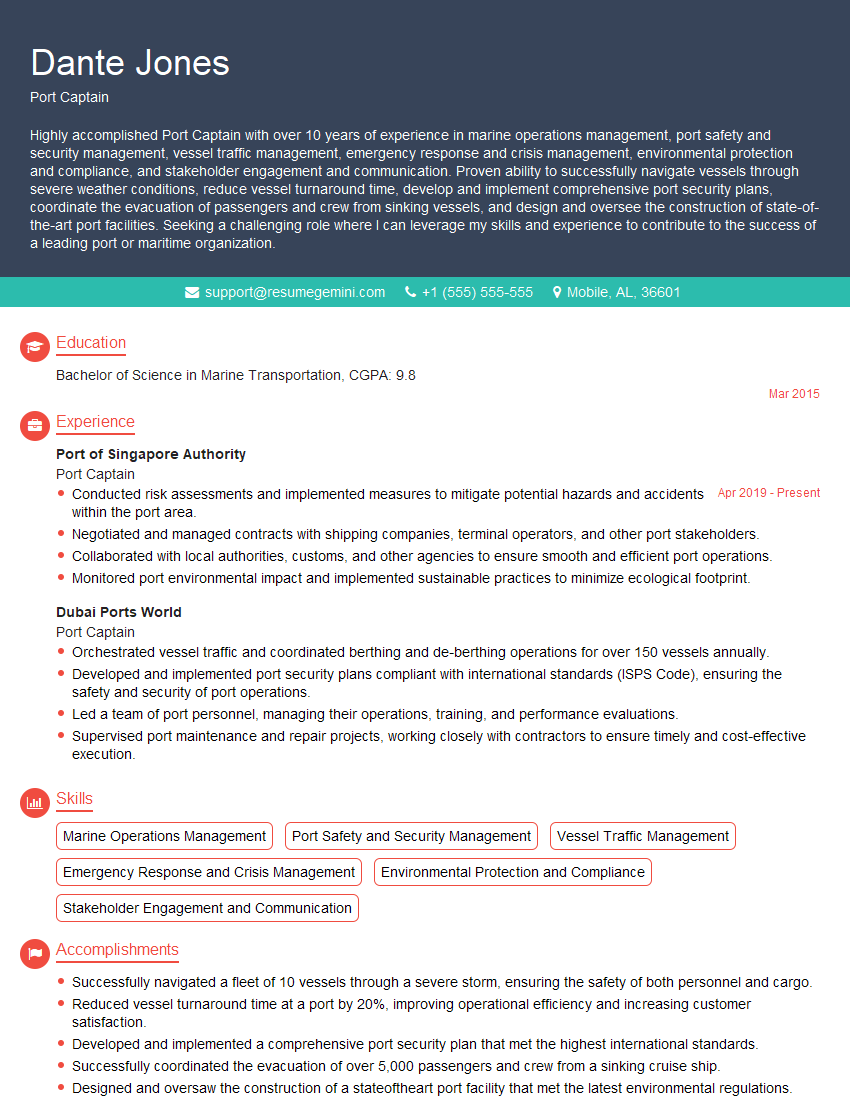
Port Captain Resume Sample
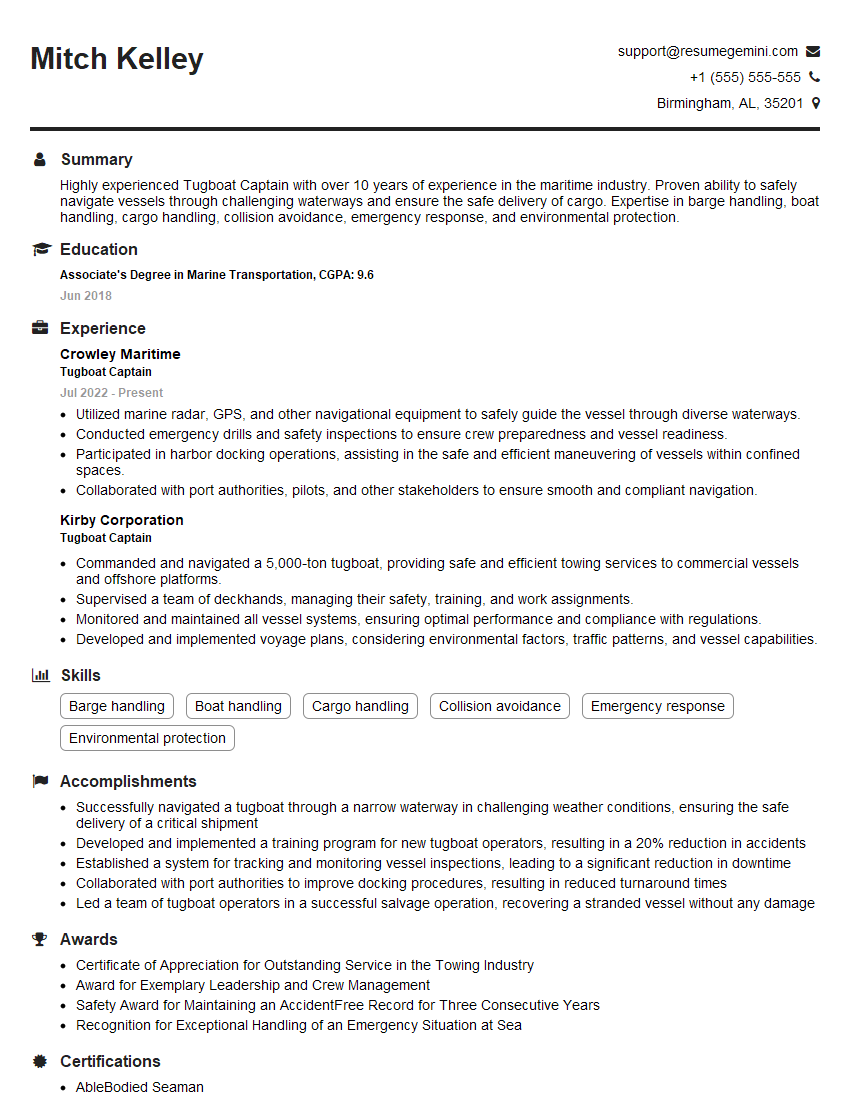
Tugboat Captain Resume Sample
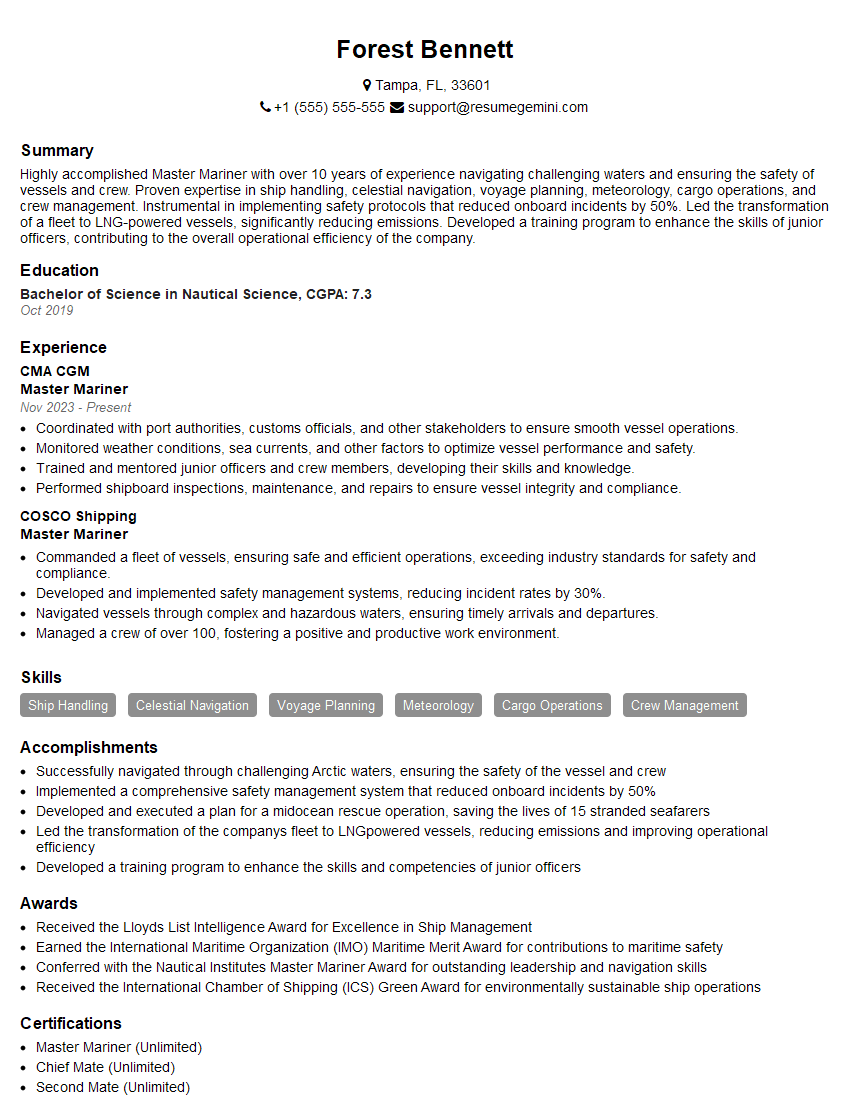
Master Mariner Resume Sample
Explore more articles
Users Rating of Our Blogs
Share Your Experience
We value your feedback! Please rate our content and share your thoughts (optional).
What Readers Say About Our Blog
Amazing blog
hello,
Our consultant firm based in the USA and our client are interested in your products.
Could you provide your company brochure and respond from your official email id (if different from the current in use), so i can send you the client’s requirement.
Payment before production.
I await your answer.
Regards,
MrSmith
hello,
Our consultant firm based in the USA and our client are interested in your products.
Could you provide your company brochure and respond from your official email id (if different from the current in use), so i can send you the client’s requirement.
Payment before production.
I await your answer.
Regards,
MrSmith
These apartments are so amazing, posting them online would break the algorithm.
https://bit.ly/Lovely2BedsApartmentHudsonYards
Reach out at BENSON@LONDONFOSTER.COM and let’s get started!
Take a look at this stunning 2-bedroom apartment perfectly situated NYC’s coveted Hudson Yards!
https://bit.ly/Lovely2BedsApartmentHudsonYards
Live Rent Free!
https://bit.ly/LiveRentFREE
Interesting Article, I liked the depth of knowledge you’ve shared.
Helpful, thanks for sharing.
Hi, I represent a social media marketing agency and liked your blog
Hi, I represent an SEO company that specialises in getting you AI citations and higher rankings on Google. I’d like to offer you a 100% free SEO audit for your website. Would you be interested?