Interviews are more than just a Q&A session—they’re a chance to prove your worth. This blog dives into essential Transformer interview questions and expert tips to help you align your answers with what hiring managers are looking for. Start preparing to shine!
Questions Asked in Transformer Interview
Q 1. Explain the architecture of a Transformer model.
The Transformer architecture is fundamentally different from traditional recurrent neural networks (RNNs). Instead of processing sequential data step-by-step, it leverages a mechanism called self-attention to capture relationships between all words in a sequence simultaneously. This allows for parallel processing, greatly improving training speed and efficiency. A typical Transformer encoder consists of:
- Embedding Layer: Converts input words (or sub-word units) into dense vector representations.
- Positional Encoding: Adds information about the position of each word in the sequence since the model doesn’t inherently process sequences sequentially.
- Encoder Layers (stacked): Each encoder layer contains a multi-head self-attention mechanism followed by a feed-forward network. These layers are stacked to allow for deeper processing and learning of complex relationships.
- Output Layer: Generates the final output, often a probability distribution over vocabulary for tasks like text generation or classification.
The decoder is structurally similar but includes an additional encoder-decoder attention mechanism that attends to the output of the encoder, allowing the decoder to leverage the context from the entire input sequence when generating the output.
Q 2. Describe the role of self-attention in Transformers.
Self-attention is the core innovation of the Transformer. It allows the model to weigh the importance of different words in the input sequence when processing each word. Imagine reading a sentence: you don’t just process each word in isolation; you understand how words relate to each other. Self-attention mimics this by calculating attention weights that reflect the relevance of other words to the current word being processed.
For each word, self-attention computes a weighted sum of all the words in the input sequence. The weights are determined by a scoring function that measures the similarity between the current word and all other words. Words that are semantically related or contextually important will receive higher weights.
This process is done in parallel for all words, allowing the model to capture long-range dependencies efficiently, unlike RNNs which suffer from vanishing gradients when dealing with long sequences.
Q 3. How does multi-head attention improve performance compared to single-head attention?
Multi-head attention enhances the performance of single-head attention by allowing the model to learn different representations of the input sequence simultaneously. Instead of just one set of attention weights, multi-head attention uses multiple sets, each focusing on different aspects or relationships within the sequence.
Think of it like having multiple experts analyzing the same document; each expert focuses on a different aspect (e.g., grammar, semantics, sentiment), and their combined insights provide a richer and more complete understanding. These different ‘heads’ are then concatenated and linearly transformed to produce a final representation.
This approach allows the model to capture a wider range of relationships and leads to improved performance, especially on complex tasks.
Q 4. Explain the positional encoding in Transformers and why it’s necessary.
Positional encoding is crucial because the self-attention mechanism is permutation-invariant; it doesn’t inherently know the order of words in a sequence. The model processes all words simultaneously, so it needs additional information to understand the sequential nature of the language. Positional encoding provides this information by adding a vector to each word’s embedding that represents its position in the sequence.
There are different ways to implement positional encoding. One common approach uses sinusoidal functions with different frequencies, which allows the model to extrapolate to positions beyond those seen during training. This is important because the model might encounter sequences of different lengths during inference. Without positional encoding, the model wouldn’t be able to correctly interpret the order of words and the meaning would be lost.
Q 5. What are the advantages and disadvantages of Transformers compared to RNNs?
Advantages of Transformers over RNNs:
- Parallel Processing: Transformers process the entire sequence simultaneously, while RNNs process it sequentially, making Transformers significantly faster to train.
- Long-Range Dependencies: Transformers can effectively capture long-range dependencies between words, while RNNs suffer from vanishing gradients, limiting their ability to capture relationships between distant words.
- Scalability: Transformers scale better to larger datasets and longer sequences.
Disadvantages of Transformers over RNNs:
- Computational Cost: The self-attention mechanism has a quadratic time complexity with respect to sequence length. This can be computationally expensive for very long sequences.
- Memory Consumption: The self-attention mechanism requires storing all the intermediate representations, which can lead to high memory consumption.
- Interpretability: While both models are ‘black boxes’ to some extent, understanding the internal workings of a Transformer can be more challenging than with an RNN.
Q 6. Describe the process of training a Transformer model.
Training a Transformer involves optimizing its parameters to minimize a loss function, typically using backpropagation and stochastic gradient descent (SGD) or its variants like Adam. The process generally involves:
- Data Preparation: Cleaning and preprocessing the data, creating vocabulary, tokenizing the input, and creating training batches.
- Forward Pass: Feeding the input data through the model to generate predictions.
- Loss Calculation: Computing the difference between the model’s predictions and the actual targets, using a suitable loss function (e.g., cross-entropy for classification, mean squared error for regression).
- Backpropagation: Propagating the error signal back through the network to compute gradients of the loss function with respect to the model’s parameters.
- Parameter Update: Updating the model’s parameters using an optimization algorithm to reduce the loss.
- Iteration: Repeating steps 2-5 for multiple epochs (iterations over the entire training dataset).
- Evaluation: Evaluating the model’s performance on a separate validation set to monitor progress and prevent overfitting.
Hyperparameter tuning is also critical – choosing the right learning rate, batch size, number of layers, and other hyperparameters greatly affects performance.
Q 7. Explain the concept of attention weights in Transformers.
Attention weights represent the importance assigned by the model to each word in the input sequence when processing a specific word. These weights are learned during training and reflect the relationships between words. A higher attention weight indicates a stronger relationship or greater relevance.
For example, in the sentence “The cat sat on the mat,” when processing the word “sat,” the attention weights might be high for “cat” and “mat” because they are directly related to the action of sitting. The weights for “the” might be lower because it’s less semantically relevant to the core meaning of the sentence in this context.
Visualizing attention weights can provide insights into how the model processes information and helps in understanding its decision-making process. These weights are crucial for the Transformer’s ability to capture long-range dependencies and contextual information effectively.
Q 8. How do you handle long sequences in Transformers?
Handling long sequences in Transformers is a crucial aspect, as the standard self-attention mechanism has a computational complexity that scales quadratically with sequence length. This means processing very long texts becomes prohibitively expensive. Several techniques address this:
Chunking/Sliding Window: Divide the long sequence into smaller, overlapping chunks. Process each chunk independently and then combine the results. This limits the attention scope to a manageable window.
Attention Mechanisms with Linear Complexity: These are designed to avoid the quadratic complexity of standard self-attention. Examples include Performer, Linear Transformer, and Reformer, which use techniques like locality-sensitive hashing or low-rank approximations to speed up computations.
Recurrence and Recurrence-like Mechanisms: Incorporate recurrent connections or techniques inspired by recurrent neural networks (RNNs) to process sequences more efficiently. This allows for a more sequential processing of information, reducing the computational burden compared to full self-attention on long sequences.
Sparse Attention: Instead of calculating attention weights for all pairs of tokens, sparse attention focuses only on a subset of the most relevant ones. This significantly reduces the computational load, particularly effective for very long sequences.
The choice of method depends on the specific application and the desired trade-off between accuracy and computational efficiency. For instance, chunking is simpler to implement but might lose some context, while linear attention mechanisms offer better scalability at the cost of increased model complexity.
Q 9. What are some common challenges in training Transformers?
Training Transformers presents unique challenges:
Computational Cost: Transformers, particularly large ones, require significant computational resources for training, necessitating powerful hardware like GPUs or TPUs and potentially distributed training across multiple machines.
Data Requirements: Achieving state-of-the-art performance often demands massive datasets, which can be expensive and time-consuming to acquire and preprocess. Insufficient data can lead to overfitting or poor generalization.
Overfitting: With their high capacity, Transformers are prone to overfitting, especially when the training data is limited. Regularization techniques, such as dropout and weight decay, are essential to mitigate this issue.
Vanishing/Exploding Gradients: While less prevalent than in RNNs, the deep architecture of Transformers can still suffer from gradient instability during training, making optimization challenging. Careful initialization and gradient clipping strategies help manage this.
Hyperparameter Tuning: Finding the optimal set of hyperparameters (learning rate, batch size, dropout rate, etc.) is crucial for successful training. This process can be computationally expensive and time-consuming.
Addressing these challenges often involves a combination of careful model design, effective optimization techniques, and strategic resource management.
Q 10. Discuss different types of Transformer architectures (e.g., BERT, GPT, T5).
Several Transformer architectures have emerged, each tailored for specific tasks:
BERT (Bidirectional Encoder Representations from Transformers): Designed for masked language modeling and next sentence prediction. BERT processes the entire input sequence bidirectionally, capturing contextual information from both preceding and succeeding tokens. It excels in tasks like question answering and natural language inference.
GPT (Generative Pre-trained Transformer): Focuses on autoregressive language modeling, predicting the next token in a sequence based on preceding tokens. GPT models are known for their impressive text generation capabilities, used in applications like chatbots and creative writing tools. Different versions like GPT-2, GPT-3, and GPT-4 showcase progressive improvements in scale and performance.
T5 (Text-to-Text Transfer Transformer): Frames all NLP tasks as text-to-text problems, unifying various tasks under a single framework. This allows for efficient transfer learning and improved performance across diverse NLP applications. Input and output are always text strings, simplifying the model architecture and training process.
Other notable architectures include Encoder-Decoder Transformers (like those used in machine translation), and specialized variants optimized for specific tasks, reflecting the adaptability and versatility of the Transformer architecture.
Q 11. How do you evaluate the performance of a Transformer model?
Evaluating Transformer model performance depends on the specific task. Common metrics include:
Accuracy: The percentage of correctly classified instances (for classification tasks).
Precision and Recall: Metrics that assess the quality of predictions, particularly relevant in imbalanced datasets.
F1-score: The harmonic mean of precision and recall, offering a balanced measure of performance.
BLEU (Bilingual Evaluation Understudy) and ROUGE (Recall-Oriented Understudy for Gisting Evaluation): Used to evaluate the quality of machine translation and text summarization outputs by comparing them to human-generated references.
Perplexity: Measures how well a language model predicts a sample. Lower perplexity indicates better performance.
GLUE (General Language Understanding Evaluation) and SuperGLUE: Benchmark datasets containing diverse NLP tasks, providing a holistic assessment of a model’s capabilities.
Beyond these metrics, qualitative analysis (e.g., inspecting model predictions for errors or biases) is also crucial for a comprehensive evaluation. The choice of metric(s) should always align with the specific goals and characteristics of the NLP task at hand.
Q 12. Explain the concept of transfer learning in the context of Transformers.
Transfer learning leverages the knowledge gained from training a Transformer model on a large-scale general-purpose dataset (e.g., a massive text corpus) and applying it to a different, often smaller, task-specific dataset. Instead of training a model from scratch, which is computationally expensive and data-intensive, we start with a pre-trained model and fine-tune it for the new task.
This is analogous to learning to ride a bicycle and then adapting those skills to ride a motorcycle. The underlying principles (balance, steering) remain similar, but adjustments are needed to master the new vehicle.
The pre-trained model learns general linguistic patterns and representations, which can significantly improve performance and reduce training time on the target task, especially when the task-specific data is limited. This is particularly valuable in low-resource settings where obtaining large, labeled datasets for each individual task is infeasible.
Q 13. How do you fine-tune a pre-trained Transformer model for a specific task?
Fine-tuning a pre-trained Transformer model involves adapting the pre-trained weights to a new task. Here’s a general process:
Choose a Pre-trained Model: Select a model appropriate for the task (e.g., BERT for classification, GPT for text generation). Consider the model’s size and computational requirements.
Prepare the Task-Specific Data: Clean, format, and preprocess the data to match the model’s input requirements. This includes tasks like tokenization, data augmentation (if needed), and splitting the data into training, validation, and test sets.
Add Task-Specific Layers: Add a new layer or a few layers on top of the pre-trained model. These layers adapt the pre-trained representations to the specific task. For classification, a simple linear layer with a softmax activation function might suffice.
Fine-tune the Model: Train the model using the task-specific data, typically freezing the weights of the pre-trained layers initially and only training the new layers. Gradually unfreeze some pre-trained layers if necessary to fine-tune deeper representations. Use a smaller learning rate compared to training from scratch.
Evaluate Performance: Monitor the model’s performance on a validation set and adjust hyperparameters as needed. Early stopping prevents overfitting.
Test Performance: Finally, evaluate the model’s performance on a held-out test set to estimate its generalization ability.
The specific implementation details might vary depending on the chosen framework (e.g., TensorFlow, PyTorch) and the pre-trained model. Many libraries provide convenient functions for fine-tuning.
Q 14. Describe different optimization techniques used for training Transformers.
Several optimization techniques are crucial for effectively training Transformers:
Adam (Adaptive Moment Estimation): A popular adaptive learning rate optimizer that adjusts the learning rate for each parameter individually, often leading to faster convergence compared to standard gradient descent.
AdamW (Adam with Weight Decay): An improved version of Adam that incorporates weight decay, a regularization technique that helps prevent overfitting.
SGD (Stochastic Gradient Descent) with Momentum: A classic optimization algorithm that utilizes momentum to accelerate convergence and overcome local optima. While often slower than Adam, SGD can be effective when carefully tuned.
Learning Rate Scheduling: Strategies like linear decay, cosine annealing, or cyclical learning rates can significantly impact training performance. These methods dynamically adjust the learning rate during training, often leading to better convergence and generalization.
Gradient Clipping: Limits the magnitude of gradients to prevent exploding gradients and improve training stability, especially important in deep networks.
Mixed Precision Training: Uses both 16-bit (FP16) and 32-bit (FP32) precision during training to improve computational efficiency without sacrificing much accuracy. This reduces memory usage and speeds up training significantly.
The choice of optimization technique depends on factors like the model’s size, the dataset’s characteristics, and available computational resources. Experimentation is often necessary to find the most suitable approach.
Q 15. How do you handle imbalanced datasets when training a Transformer?
Imbalanced datasets, where one class significantly outnumbers others, are a common challenge in training machine learning models, including Transformers. This leads to biased models that perform poorly on the minority classes. Several techniques can mitigate this:
- Resampling: This involves either oversampling the minority class (creating synthetic samples) or undersampling the majority class (removing samples). Oversampling techniques like SMOTE (Synthetic Minority Over-sampling Technique) are popular choices. Undersampling can lead to information loss, however.
- Cost-sensitive learning: Assign higher weights to the loss function for the minority class samples during training. This penalizes misclassifications of minority class examples more heavily, forcing the model to pay more attention to them. You can achieve this by modifying the loss function or using class weights in your training framework.
- Data augmentation: Generating synthetic data points similar to those in the minority class can help balance the dataset. This is particularly useful for image or text data.
- Ensemble methods: Train multiple models on different balanced subsets of the data and combine their predictions. This leverages the strengths of different models trained on various balanced perspectives of the data.
Example: Imagine training a Transformer for sentiment analysis on movie reviews. If positive reviews vastly outnumber negative reviews, the model might become overly confident in predicting positive sentiment. Employing SMOTE to oversample the negative reviews or using class weights in the loss function would help balance the model’s learning and improve its accuracy on negative reviews.
Career Expert Tips:
- Ace those interviews! Prepare effectively by reviewing the Top 50 Most Common Interview Questions on ResumeGemini.
- Navigate your job search with confidence! Explore a wide range of Career Tips on ResumeGemini. Learn about common challenges and recommendations to overcome them.
- Craft the perfect resume! Master the Art of Resume Writing with ResumeGemini’s guide. Showcase your unique qualifications and achievements effectively.
- Don’t miss out on holiday savings! Build your dream resume with ResumeGemini’s ATS optimized templates.
Q 16. Explain the concept of regularization in the context of Transformers.
Regularization in Transformers, like in other neural networks, aims to prevent overfitting. Overfitting occurs when the model learns the training data too well, including noise, and performs poorly on unseen data. Several regularization techniques are used:
- Dropout: Randomly ignores (sets to zero) a fraction of neurons during training. This prevents individual neurons from becoming overly reliant on specific features and encourages a more robust representation.
- Weight decay (L1/L2 regularization): Adds a penalty to the loss function based on the magnitude of the model’s weights. L1 encourages sparsity (many weights become zero), while L2 discourages large weights, leading to smoother weight distributions. This prevents weights from becoming excessively large, which can lead to overfitting.
- Early stopping: Monitors the model’s performance on a validation set during training and stops training when the validation performance starts to decrease. This prevents the model from continuing to overfit the training data.
Example: Applying dropout with a rate of 0.1 to the attention layers of a BERT model during training would randomly deactivate 10% of the neurons in those layers, improving generalization.
Q 17. What are some common hyperparameters for training Transformers?
Hyperparameters significantly influence the performance and training efficiency of Transformers. Crucial ones include:
- Learning rate: Controls the step size during gradient descent. Finding the optimal learning rate is critical for efficient training. Techniques like learning rate scheduling (e.g., linear decay, cosine annealing) are often used.
- Batch size: The number of samples processed in each iteration. Larger batch sizes can lead to faster training but require more memory. Smaller batch sizes can improve generalization but increase training time.
- Number of layers (depth): Deeper models can capture more complex patterns but increase computational cost and risk of overfitting.
- Hidden dimension (width): The dimensionality of the hidden states in the Transformer layers. Larger dimensions can increase model capacity but also computational cost.
- Number of attention heads: The number of parallel attention mechanisms used. More heads can capture different aspects of the input but increase computational cost.
- Dropout rate: The probability of dropping out neurons during training (as discussed above).
- Weight decay: The strength of the L1/L2 regularization penalty.
Practical Application: Experimentation with different hyperparameter combinations using techniques like grid search or random search is crucial to find the best configuration for a specific task and dataset.
Q 18. How do you choose the appropriate Transformer architecture for a given task?
Selecting the right Transformer architecture depends heavily on the task and dataset. There’s no one-size-fits-all solution. Consider these factors:
- Task type: Different architectures are better suited for different tasks. For example, BERT is well-suited for NLP tasks like question answering and sentiment analysis, while Vision Transformers (ViTs) excel in image classification and object detection.
- Data size: Larger datasets generally allow for training deeper and wider models. Smaller datasets might necessitate smaller and simpler architectures to avoid overfitting.
- Sequence length: The length of input sequences (e.g., sentences in NLP, time series data) influences the choice of architecture and the need for techniques like long-range attention mechanisms.
- Computational resources: Training large Transformers requires substantial computational power and memory. The availability of resources will constrain the architecture’s size and complexity.
Example: For a large-scale machine translation task with long sentences, a Transformer model with many layers, large hidden dimensions, and possibly specialized attention mechanisms (like Longformer) would be suitable. For a smaller-scale sentiment analysis task with short sentences, a pre-trained model like BERT, fine-tuned for sentiment, could be a more efficient and effective choice.
Q 19. Discuss the computational cost of training Transformers.
Training Transformers is computationally expensive. The cost stems from several factors:
- Self-attention mechanism: The quadratic complexity of self-attention (O(n^2), where n is sequence length) dominates the computational cost, especially for long sequences. Approximations like linear attention are used to mitigate this.
- Number of parameters: Large Transformers have millions or billions of parameters, requiring significant memory and computational power for both training and inference.
- Number of layers: Deeper models naturally require more computation.
- Batch size: Larger batch sizes speed up training but demand more memory.
Mitigation strategies: Techniques like model parallelism (distributing the model across multiple GPUs), data parallelism (distributing data across multiple GPUs), and efficient attention mechanisms are crucial for training large Transformers on available hardware. Furthermore, careful hyperparameter tuning can optimize the training process.
Q 20. Explain the concept of attention masking in Transformers.
Attention masking in Transformers controls which parts of the input sequence can attend to each other. This is especially crucial in tasks involving sequential data:
- Causal (autoregressive) masking: Prevents the model from attending to future tokens in a sequence. This is crucial for tasks like text generation, where predictions must only depend on previously generated tokens. This creates a triangular mask, where tokens can only attend to tokens before them in the sequence.
- Padding masking: Ignores padding tokens in the input sequence. Sequences often need padding to achieve a uniform length for batch processing. Padding tokens shouldn’t influence the model’s attention.
- Custom masking: Allows for more flexible control over which tokens attend to each other. This is useful for specific tasks or to incorporate domain knowledge.
Example: In machine translation, causal masking ensures that when predicting the next word, the model only considers the preceding words in the source and target sequences. Padding masking ensures that padding added to shorter sentences does not affect the attention mechanism.
Q 21. How do you address the problem of vanishing gradients in Transformers?
Vanishing gradients, where gradients become extremely small during backpropagation, can hinder training deep neural networks, including Transformers. Several techniques alleviate this:
- Layer normalization: Normalizes the activations of each layer independently, stabilizing the training process and preventing gradients from vanishing or exploding.
- Residual connections: Add the input to the output of each layer, creating shortcuts for gradients to flow through. This allows gradients to propagate more effectively through many layers.
- Gradient clipping: Limits the magnitude of gradients to a predefined threshold, preventing them from becoming excessively large and causing instability. This is especially helpful during early stages of training.
- Careful initialization: Using appropriate weight initialization techniques can help prevent gradients from vanishing or exploding during early training.
The combination of layer normalization and residual connections is particularly effective in mitigating vanishing gradients in Transformers and has been a key component of their success.
Q 22. Describe different methods for visualizing attention weights.
Visualizing attention weights in Transformers is crucial for understanding how the model processes information. Different methods offer varying levels of detail and interpretability.
Attention Matrices: The most straightforward approach is visualizing the attention weight matrix itself. Each cell (i,j) represents the attention weight between the i-th and j-th elements (words, tokens) in the input sequences. A heatmap is typically used, where darker colors represent higher attention weights. This provides a holistic view of the relationships the model perceives. For example, in machine translation, you might see strong attention weights between words in the source and target sentences that are direct translations of each other.
Attention Flow Diagrams: These diagrams offer a more intuitive representation, particularly for longer sequences. They depict the flow of attention, highlighting the most significant attention weights and their connections between input and output elements. Imagine it like a network graph, where nodes are words and edges are weighted attention connections – thicker edges indicate stronger attention.
Word-by-word Attention: This approach focuses on individual words and visualizes the attention weights they receive from other words. For instance, you might highlight the words a word is most ‘attending to’ when generating a translation. This is especially helpful in understanding context and word sense disambiguation.
Multi-head Attention Visualization: Since Transformers often utilize multiple attention heads, visualizing each head independently provides insights into the different aspects the model is focusing on. Each head might learn to attend to different grammatical structures or semantic relationships, making their individual visualizations very informative.
Choosing the right visualization method depends on the specific task and the desired level of detail. For quick checks, a heatmap of the attention matrix is often sufficient. For in-depth analysis of complex interactions, attention flow diagrams or head-wise visualizations might be necessary.
Q 23. Explain the difference between encoder and decoder in Transformer architectures.
The encoder and decoder are the two key components of the Transformer architecture, each with distinct roles in processing information. Think of it as a conversation: the encoder understands what’s being said, and the decoder generates a response.
Encoder: The encoder processes the input sequence (e.g., a sentence in machine translation). It uses multiple layers of self-attention and feed-forward networks to create a contextualized representation of the input. Each layer attends to all parts of the input sequence, learning relationships between words. This allows the encoder to capture rich contextual information, understanding the meaning and relationships within the input. The output of the encoder is a set of contextualized embeddings representing the entire input sequence.
Decoder: The decoder generates the output sequence (e.g., the translated sentence). It uses both self-attention (attending to previously generated words) and encoder-decoder attention (attending to the encoder’s output). This allows it to generate words based on both the context of the previously generated words and the understanding of the input sequence provided by the encoder. The decoder is autoregressive; meaning it generates one word at a time, conditioning on the previous words.
In essence, the encoder understands the input, and the decoder uses that understanding to create a response. The encoder-decoder architecture enables tasks such as machine translation, text summarization, and question answering, where input and output sequences are not necessarily aligned.
Q 24. How do you deploy a Transformer model for production use?
Deploying a Transformer model for production requires careful planning and execution. Here’s a breakdown of the process:
Model Selection and Optimization: Choose the most suitable pre-trained model or train a custom model based on your requirements. Optimize the model for inference speed and resource utilization. Techniques like quantization, pruning, and knowledge distillation can significantly reduce the model’s size and computational cost.
Infrastructure: Select a suitable infrastructure for deployment, considering factors like latency requirements, throughput, and scalability. Options include cloud platforms (AWS, Google Cloud, Azure), on-premise servers, or edge devices depending on the application. Containerization (Docker) and orchestration (Kubernetes) are highly beneficial for managing and scaling the deployment.
API Development: Create an API (Application Programming Interface) to expose the model’s functionality. This allows other systems or applications to interact with the model. REST APIs are a common choice, providing a standard interface for communication.
Monitoring and Maintenance: Continuously monitor the model’s performance, including latency, throughput, and accuracy. Implement strategies for model retraining or updating to ensure continued accuracy and relevance. Regular logging and error handling are crucial for troubleshooting and maintaining system stability.
Security: Implement security measures to protect the model and its associated data. This may involve access controls, data encryption, and secure communication protocols.
Remember, successful deployment isn’t a one-time event; it’s an iterative process requiring ongoing monitoring, maintenance, and adaptation to evolving requirements and data.
Q 25. Discuss the ethical considerations related to using Transformer models.
Transformer models, while powerful, raise several ethical considerations. Their widespread application necessitates careful consideration of potential biases, misuse, and societal impacts.
Bias Amplification: Transformers are trained on massive datasets, which often contain societal biases. If these biases are not addressed during training or deployment, the model can perpetuate and even amplify them, leading to unfair or discriminatory outcomes. For example, a model trained on biased text data might exhibit gender or racial biases in its generated text.
Misinformation and Manipulation: The ability of Transformers to generate realistic and coherent text can be exploited to create convincing fake news or propaganda. This poses a significant threat to public trust and democratic processes. Careful consideration of safeguards against malicious use is crucial.
Privacy Concerns: Transformers may be trained on sensitive personal data, raising privacy concerns. Proper data anonymization techniques and adherence to data privacy regulations are essential.
Transparency and Explainability: The complexity of Transformer models can make them difficult to understand and interpret. Lack of transparency can hinder trust and make it challenging to identify and address biases or errors. Developing methods to improve explainability is an active area of research.
Job Displacement: The automation potential of Transformers raises concerns about job displacement in various sectors. Careful consideration of the societal and economic impacts is necessary, and strategies for reskilling and workforce adaptation should be developed.
Addressing these ethical concerns requires a multi-faceted approach involving researchers, developers, policymakers, and the public. Promoting responsible development, deployment, and use of Transformer models is essential to ensure their benefits are realized while minimizing potential harms.
Q 26. How do you handle noisy or incomplete data when training a Transformer?
Noisy or incomplete data is a common challenge in training Transformer models. Various techniques can mitigate its negative impact.
Data Cleaning: The first step is to clean the data as much as possible. This involves removing or correcting obvious errors, handling missing values, and standardizing data formats. Techniques like outlier detection and data imputation can be employed.
Data Augmentation: Increasing the amount of training data can improve model robustness. Techniques such as back translation, synonym replacement, or random insertion/deletion of words can artificially augment the dataset, helping the model generalize better.
Robust Training Methods: Certain training methods are more robust to noisy data. For instance, using techniques like dropout or weight decay can prevent overfitting and improve generalization on noisy data.
Pre-training on Clean Data: Pre-training the model on a large, clean dataset before fine-tuning it on the noisy dataset can significantly improve its performance. The pre-training phase helps the model learn robust representations that are less sensitive to noise.
Adversarial Training: Training the model to be robust against adversarial examples (small perturbations added to the data that cause misclassification) can also improve its robustness to noise.
The choice of technique depends on the nature and extent of the noise in the data. A combination of approaches is often most effective.
Q 27. Explain the concept of causal masking in Transformers.
Causal masking, also known as autoregressive masking, is a crucial technique used in Transformer decoders, particularly for sequence generation tasks like machine translation or text generation. It prevents the model from ‘peeking’ ahead at future tokens in the target sequence during training.
Imagine you’re translating a sentence word-by-word. You wouldn’t look at the entire translated sentence beforehand; you would generate one word at a time, based only on the previously generated words and the source sentence. Causal masking enforces this same constraint during training.
Specifically, it involves creating a lower triangular mask for the attention mechanism. This mask sets the attention weights to negative infinity for positions that are ahead of the current position. Thus, when attending to the input, the model can only ‘see’ the previously generated words. This ensures that the model’s prediction for the current word is only based on the context of the preceding words.
Example:
Let’s say the target sequence is ‘Hello world’. During training, when predicting ‘world’, the model only has access to the attention weights from ‘Hello’. The attention weights for ‘world’ itself and any future tokens are masked out.
Without causal masking, the model could cheat by directly copying from the target sequence, leading to superficial learning and poor generalization. Causal masking ensures that the model learns to generate sequences autoregressively, mimicking the way humans generate text.
Q 28. Describe different techniques for improving the efficiency of Transformers.
Transformers, while powerful, can be computationally expensive. Several techniques aim to improve their efficiency:
Linearized Attention Mechanisms: Standard attention mechanisms have quadratic complexity with respect to sequence length (O(n^2)). Linearized attention mechanisms, such as Performer or Linear Transformer, reduce this complexity to linear (O(n)), making them more suitable for longer sequences. They achieve this by approximating the attention calculation.
Sparse Attention: Instead of attending to all tokens in the sequence, sparse attention mechanisms only attend to a subset of tokens, reducing computational cost. Examples include local attention and global attention with a carefully selected subset of tokens.
Knowledge Distillation: Train a smaller, faster student model to mimic the behavior of a larger, more accurate teacher model. This allows deploying a smaller, more efficient model without significant performance degradation.
Model Quantization: Reduce the precision of the model’s weights and activations (e.g., from 32-bit floating-point to 8-bit integers). This reduces the model’s size and memory footprint, speeding up inference.
Pruning: Remove less important weights or connections in the model. This can reduce the model’s size and complexity without significantly affecting accuracy.
Hardware Acceleration: Utilize specialized hardware like GPUs or TPUs to accelerate the computation of Transformer models. This can dramatically improve inference speed.
The choice of technique often depends on the specific application and the desired trade-off between efficiency and accuracy. A combination of these methods is often employed for optimal results.
Key Topics to Learn for Transformer Interview
- Self-Attention Mechanism: Understand the core concept, its computational complexity, and different variations like multi-head attention.
- Encoder-Decoder Architecture: Grasp the flow of information between the encoder and decoder, and their roles in tasks like machine translation.
- Positional Encoding: Learn how Transformers handle sequential data without inherent positional information, and the different methods employed.
- Transformer Variants: Explore different architectures built upon the Transformer foundation, such as BERT, GPT, and their respective strengths and weaknesses.
- Practical Applications: Discuss real-world applications in Natural Language Processing (NLP), including machine translation, text summarization, question answering, and sentiment analysis.
- Optimization Techniques: Familiarize yourself with common optimization strategies used in training Transformers, such as AdamW and learning rate scheduling.
- Handling Long Sequences: Understand challenges in processing long sequences and methods like attention mechanisms and recurrent layers to address them.
- Model Evaluation Metrics: Be prepared to discuss relevant evaluation metrics for different NLP tasks, such as BLEU score, ROUGE score, and perplexity.
- Problem-Solving Approaches: Practice debugging and troubleshooting common issues encountered during Transformer model training and deployment.
Next Steps
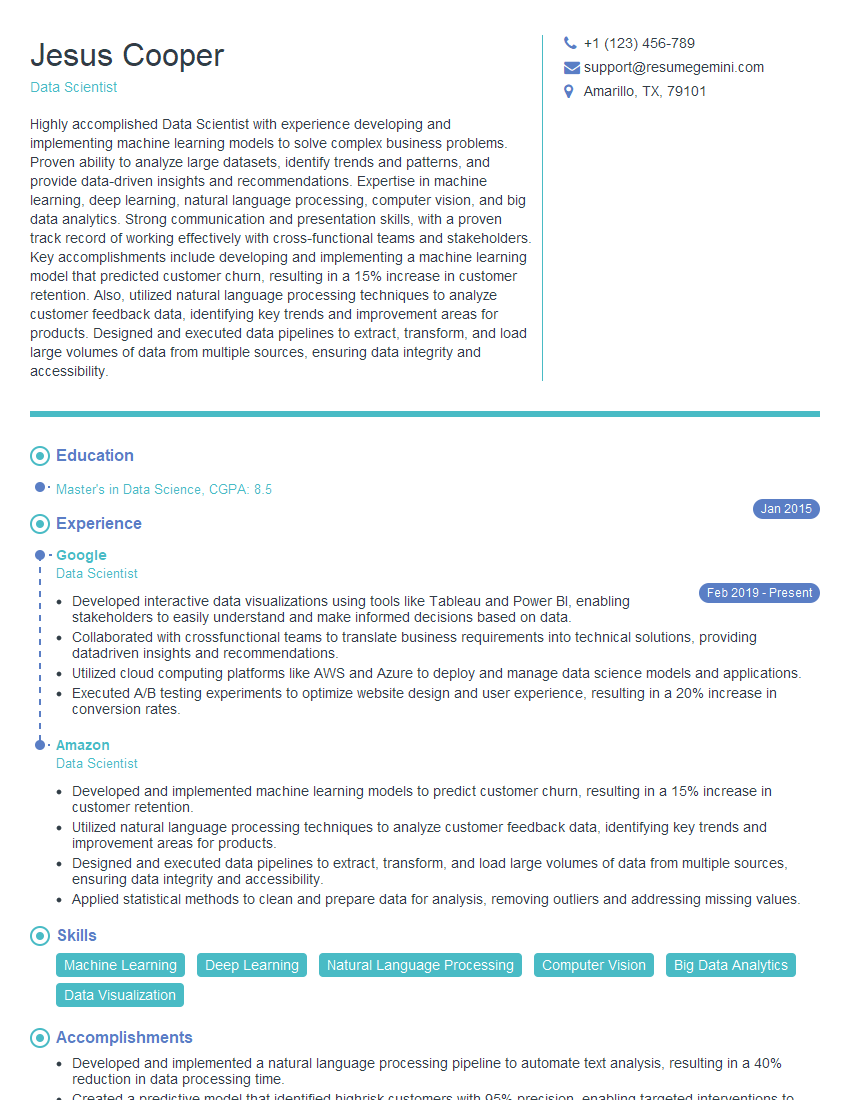
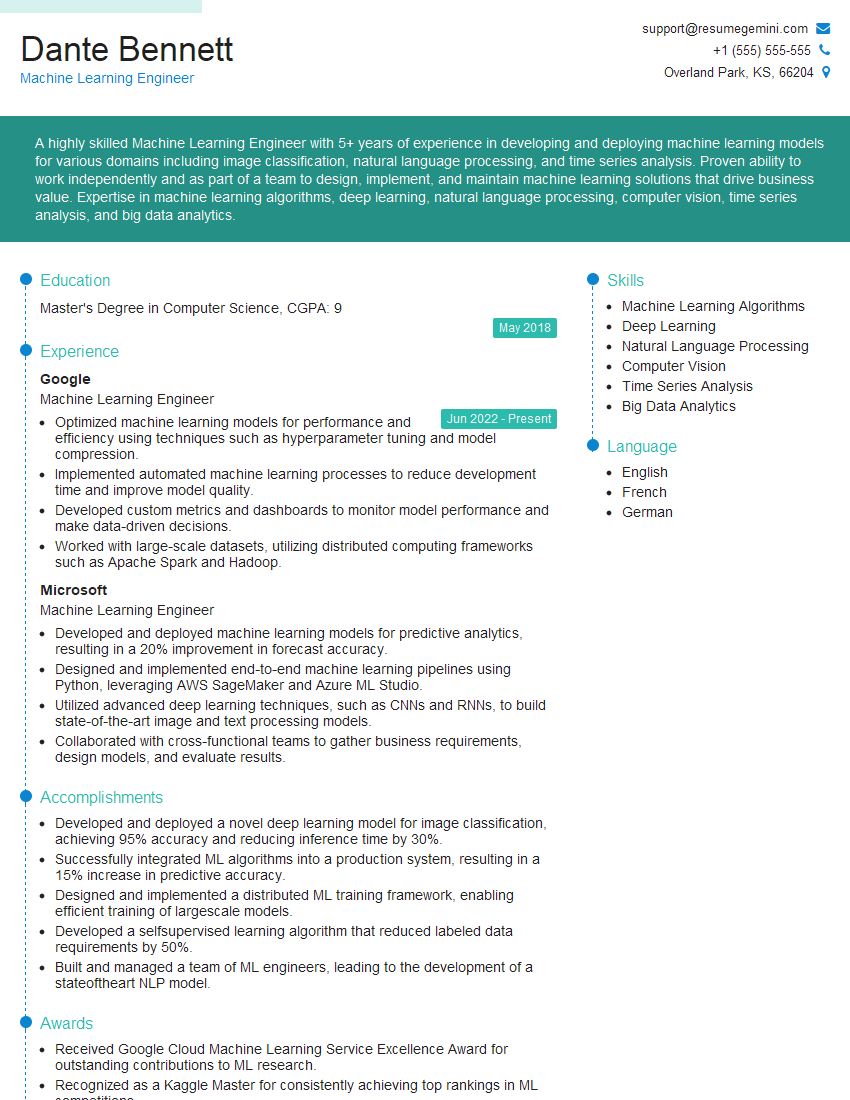
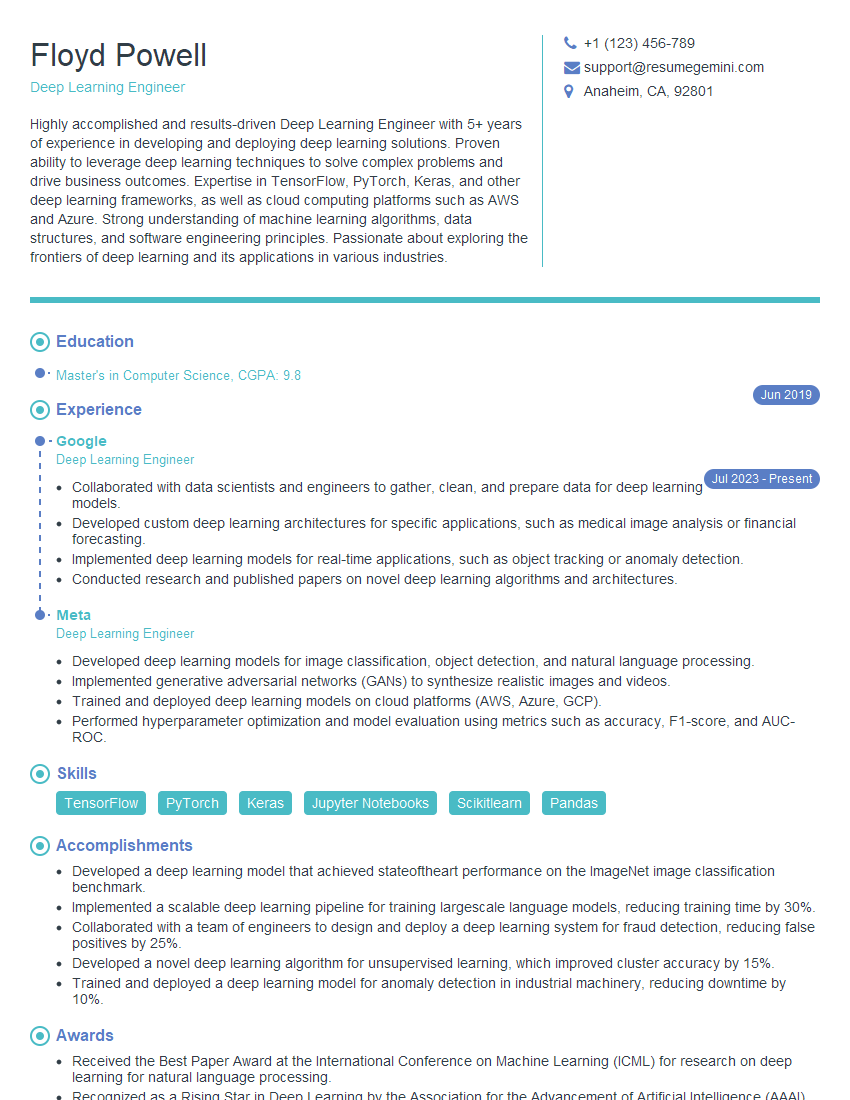
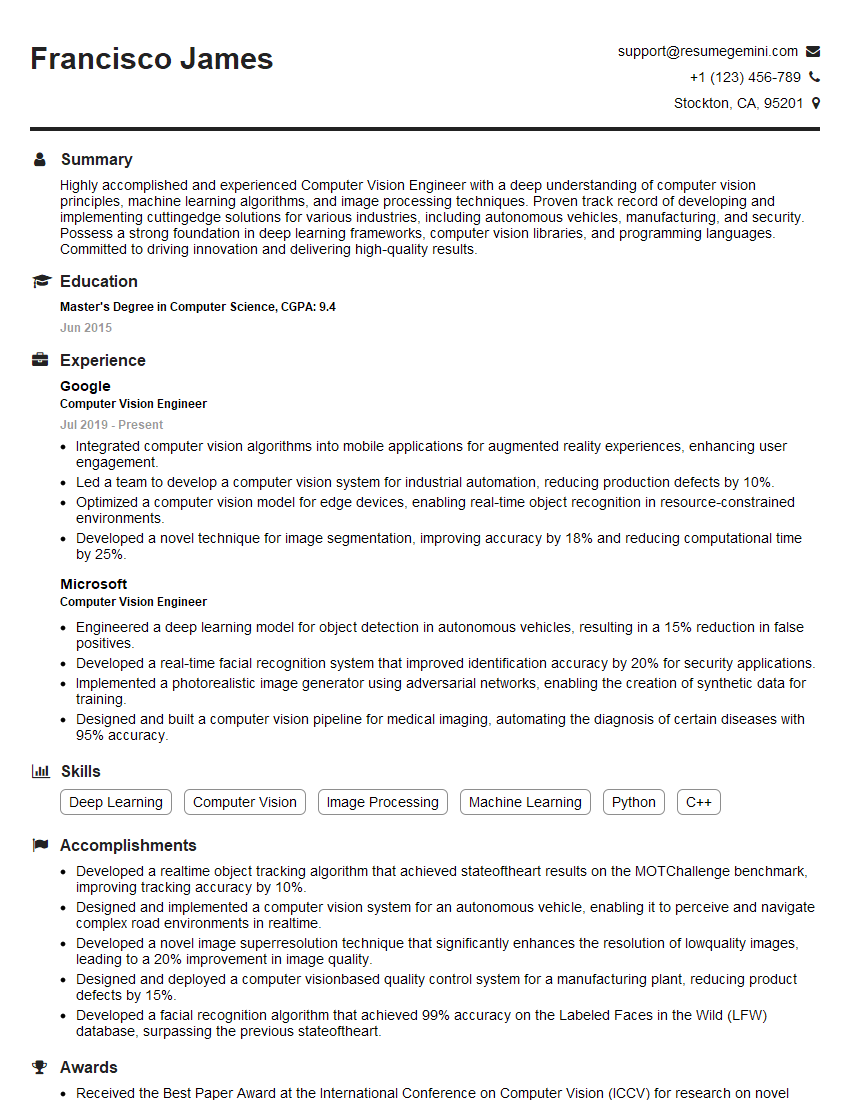
Mastering Transformer architectures is crucial for securing high-demand roles in the rapidly evolving field of AI. A strong understanding of Transformers significantly enhances your career prospects, opening doors to exciting opportunities in research and development, and various industry applications. To maximize your chances, focus on crafting an ATS-friendly resume that highlights your skills and experience effectively. ResumeGemini is a trusted resource that can help you build a professional and impactful resume, tailored to showcase your Transformer expertise. Examples of resumes tailored to Transformer roles are available below to guide you.

Explore more articles
Users Rating of Our Blogs
Share Your Experience
We value your feedback! Please rate our content and share your thoughts (optional).
What Readers Say About Our Blog
Amazing blog
hello,
Our consultant firm based in the USA and our client are interested in your products.
Could you provide your company brochure and respond from your official email id (if different from the current in use), so i can send you the client’s requirement.
Payment before production.
I await your answer.
Regards,
MrSmith
hello,
Our consultant firm based in the USA and our client are interested in your products.
Could you provide your company brochure and respond from your official email id (if different from the current in use), so i can send you the client’s requirement.
Payment before production.
I await your answer.
Regards,
MrSmith
These apartments are so amazing, posting them online would break the algorithm.
https://bit.ly/Lovely2BedsApartmentHudsonYards
Reach out at BENSON@LONDONFOSTER.COM and let’s get started!
Take a look at this stunning 2-bedroom apartment perfectly situated NYC’s coveted Hudson Yards!
https://bit.ly/Lovely2BedsApartmentHudsonYards
Live Rent Free!
https://bit.ly/LiveRentFREE
Interesting Article, I liked the depth of knowledge you’ve shared.
Helpful, thanks for sharing.
Hi, I represent a social media marketing agency and liked your blog
Hi, I represent an SEO company that specialises in getting you AI citations and higher rankings on Google. I’d like to offer you a 100% free SEO audit for your website. Would you be interested?