Feeling uncertain about what to expect in your upcoming interview? We’ve got you covered! This blog highlights the most important Weed whacking and trimming interview questions and provides actionable advice to help you stand out as the ideal candidate. Let’s pave the way for your success.
Questions Asked in Weed whacking and trimming Interview
Q 1. What types of string trimmers are you familiar with?
String trimmers, or weed whackers, come in a variety of types, primarily differentiated by their power source and features. I’m familiar with gas-powered, electric corded, electric cordless (battery-powered), and even some specialized models like those with curved shafts for better maneuverability in tight spaces.
- Gas-powered trimmers offer the most power and are ideal for larger areas with heavy vegetation, though they require more maintenance and are heavier.
- Electric corded trimmers are lighter and easier to use, but their range is limited by the cord’s length. They are perfect for smaller gardens and precise trimming.
- Battery-powered trimmers provide a good balance of power, portability, and convenience. Battery technology has advanced significantly, and many models now offer runtimes comparable to corded electric trimmers.
- Specialized trimmers include those with different head angles (like the curved shaft mentioned above) or those designed for specific tasks, such as trimming around delicate plants.
Q 2. Describe your experience with different types of weed eaters (gas, electric, battery-powered).
My experience spans all three types: gas, electric corded, and battery-powered. Gas-powered trimmers are workhorses, ideal for tackling dense overgrown areas, but the noise and fumes are a significant consideration. I’ve used them extensively on larger commercial landscaping projects. Electric corded trimmers are my go-to for smaller residential properties or detailed trimming work where precision is paramount – the lighter weight and quieter operation make them perfect. Recently, I’ve been increasingly using battery-powered trimmers. The advancements in battery technology mean they now offer longer runtimes and comparable power to corded electric models, and the absence of a cord makes them incredibly versatile.
For instance, I recently used a battery-powered trimmer to edge a client’s meticulously manicured flower beds. The quiet operation prevented disturbing the neighborhood, and the maneuverability was excellent, allowing me to work closely to the flowers without damage. A gas trimmer would have been too loud and potentially clumsy for that task.
Q 3. How do you maintain and troubleshoot common issues with string trimmers?
Maintaining a string trimmer is crucial for both its longevity and safe operation. Regular maintenance includes:
- String replacement: This is the most frequent maintenance task. Knowing how to quickly and efficiently replace the trimmer line is fundamental.
- Air filter cleaning (gas-powered): A clogged air filter reduces engine performance and can lead to damage. Regular cleaning is essential.
- Spark plug maintenance (gas-powered): Inspecting and cleaning, or replacing, the spark plug ensures optimal engine ignition.
- Blade sharpening (for models with metal blades): Dull blades are ineffective and dangerous. Sharpening ensures a clean cut.
- Lubrication: Applying appropriate lubricant to moving parts (as per the manufacturer’s instructions) prevents wear and tear.
Troubleshooting common issues often involves checking for simple problems first. For example, if the trimmer isn’t starting, check the fuel (if gas-powered), the spark plug, and the air filter. A trimmer that’s losing power might have a clogged air filter or worn-out trimmer line. Always consult the owner’s manual for detailed troubleshooting guides and safety precautions before attempting any repairs.
Q 4. Explain the proper safety procedures for operating string trimmers and other landscaping equipment.
Safety is paramount when operating string trimmers and other landscaping equipment. My safety procedures always include:
- Proper personal protective equipment (PPE): This includes eye protection (safety glasses or goggles), hearing protection (earplugs or earmuffs), sturdy work gloves, and long pants and closed-toe shoes to protect against flying debris.
- Clear the area: Remove any obstacles or debris from the work area before starting the equipment.
- Inspect the equipment: Check for any damage or loose parts before operation.
- Start slowly: Begin cutting at a slow speed, allowing yourself time to get accustomed to the equipment’s operation and power.
- Maintain a safe distance: Keep a safe distance from bystanders and pets while operating.
- Use a proper posture: Maintain a balanced and upright posture to prevent strain and injury. Avoid overreaching.
- Never operate while fatigued or under the influence of drugs or alcohol.
It’s crucial to understand the equipment’s operating instructions thoroughly before using it. Regular maintenance and careful operation are key to preventing accidents.
Q 5. What are the safety precautions you take when working near power lines or other hazards?
Working near power lines or other hazards requires extreme caution and, in many cases, professional assistance. My protocol includes:
- Never operate near overhead power lines: If working near power lines is unavoidable, contact the utility company to have them de-energized.
- Maintain a safe distance: Keep a considerable distance (at least 10 feet) from power lines at all times.
- Be aware of underground utilities: Before starting any work, call 811 (or your local equivalent) to have underground utilities marked. This prevents accidental damage to gas lines, water pipes, or other infrastructure.
- Avoid working in hazardous weather conditions: Don’t operate equipment during thunderstorms or heavy rain.
- Use caution around water: Avoid using electric trimmers near standing water to prevent electrocution.
If I’m unsure about the safety of any situation, I will always err on the side of caution and either postpone the work or seek professional assistance.
Q 6. How do you handle different types of terrain while trimming?
Handling different terrains while trimming requires adaptability and technique. I adjust my approach based on the specific conditions:
- Level ground: This is the easiest terrain, allowing for consistent and efficient trimming.
- Sloped ground: Trimming on slopes demands careful foot placement to maintain balance and avoid falls. I often use a more cautious approach, making smaller cuts and taking frequent breaks.
- Uneven ground: Rocks, roots, and other obstacles require extra attention. I take my time and carefully navigate around these hazards, making sure to use a firm grip on the trimmer to avoid losing control.
- Rough terrain: In very rough terrain, a trimmer with a curved shaft or a brush cutter might be necessary for increased maneuverability.
For all terrains, I always prioritize safety. If the terrain is too difficult or unsafe, I will adjust the plan to ensure the job is completed without risk.
Q 7. Describe your experience with hedge trimming and shaping.
My hedge trimming experience extends to various techniques and styles, from simple maintenance trims to more complex shaping. I’m proficient in using both hand shears and electric hedge trimmers. Hand shears are great for detail work and smaller hedges, while electric trimmers are ideal for larger hedges and faster trimming. The key is to understand the type of hedge and what shape is desired. I use a systematic approach, making sure to maintain a consistent height and width. I also pay attention to the health of the plants and avoid over-trimming, which can damage the hedge.
I’ve successfully shaped hedges into various forms, including formal geometric shapes like cubes and cones, and more naturalistic, flowing shapes. Maintaining the health of the hedge while achieving the desired aesthetic is crucial, and it requires attention to detail and an understanding of plant growth patterns.
Q 8. How do you ensure a clean and even cut while trimming?
Achieving a clean and even cut while trimming hinges on a combination of factors: proper equipment, technique, and attention to detail. Think of it like sculpting with a string trimmer – you need a steady hand and the right tools for the job.
- Sharp Blades: Dull blades tear at the grass, leaving ragged edges and potentially damaging the plants. Regular sharpening or replacement is crucial. It’s like using a dull knife in the kitchen; it’s inefficient and produces poor results.
- Consistent Speed and Height: Maintaining a consistent speed and height prevents uneven trimming. Imagine mowing a lawn – you wouldn’t want to push the mower faster in some areas and slower in others. The same principle applies to trimming.
- Overlapping Passes: To avoid leaving any untrimmed patches, slightly overlap your passes. This ensures a uniform finish across the entire area, just like painting a wall with overlapping strokes.
- Using the Right Equipment: Different trimmers are suited for different tasks. String trimmers are ideal for edges and smaller areas, while brush cutters handle denser vegetation. Choosing the right tool for the job drastically improves your results.
Q 9. What techniques do you use to efficiently trim around obstacles like trees, fences, or flowerbeds?
Trimming around obstacles requires precision and careful maneuvering. It’s like navigating a miniature obstacle course, demanding patience and skill.
- Strategic Positioning: Position yourself so you can work comfortably and safely around obstacles. This often involves adjusting your body angle and the trimmer’s position. For instance, when trimming around a tree, I’ll position myself so I can easily see the trunk and avoid hitting it.
- Short, Controlled Movements: Use short, controlled movements to trim around the obstacle, making frequent adjustments to avoid accidental contact. Think of it like sculpting with your trimmer, using short precise strokes rather than large sweeping motions.
- Using Different Attachments: Sometimes using a smaller, more maneuverable trimmer head, or even hand shears, is essential for precise trimming close to obstacles. This is like choosing the right tool for a specific job in a workshop.
- Protective Gear: Always wear appropriate protective gear, including eye protection and gloves, to prevent injuries from flying debris and sharp blades.
Q 10. How do you determine the appropriate cutting height for different areas?
Determining the appropriate cutting height depends on several factors: the type of plant, the desired aesthetic, and the overall landscape design. There’s no one-size-fits-all answer, but considering these points will help.
- Plant Type: Different plants have different growth habits and tolerances to cutting. Some grasses thrive at a higher cut, while others look best shorter. Researching the specific needs of your plants is crucial.
- Desired Aesthetic: A formal landscape may require very precise trimming heights, while a more natural look might involve leaving plants at varied heights.
- Landscape Design: The overall design and flow of the landscape should influence the trimming heights. Maintaining consistency and visual balance across different areas is key.
- Seasonal Considerations: Consider the time of year. Growth rates vary seasonally; trimming heights might need adjustments throughout the year.
Q 11. What are the best practices for disposing of trimmings and other yard waste?
Proper disposal of trimmings and yard waste is crucial for environmental responsibility and maintaining a clean worksite. This often involves more than just tossing it into the bin.
- Composting: Many trimmings, especially grass clippings and leaves, can be composted, enriching your soil and reducing landfill waste. Think of it as recycling for your garden.
- Mulching: Smaller trimmings can be left on the ground as mulch, providing nutrients and moisture retention for the plants.
- Local Regulations: Check local regulations regarding yard waste disposal. Some areas have specific programs for collecting yard waste, while others require proper disposal at designated sites.
- Bagging and Removal: Larger trimmings may need to be bagged and disposed of according to local regulations, possibly requiring special handling for branches or other debris.
Q 12. How do you handle overgrown or dense vegetation?
Handling overgrown or dense vegetation requires a phased approach and appropriate equipment. It’s like tackling a large project – you need a plan to break it down into manageable steps.
- Initial Clearing: Begin by removing larger branches and debris using loppers, saws, or brush cutters. This opens up the area and makes it safer and more accessible for trimming.
- Gradual Trimming: Gradually work your way through the remaining vegetation, using the appropriate equipment and trimming techniques. Don’t try to do too much at once; take breaks to avoid fatigue and ensure safety.
- Multiple Passes: You will likely need multiple passes to completely trim the overgrown area. It’s like peeling back layers of an onion, progressively revealing a neater area.
- Equipment Selection: Selecting the right equipment is crucial. For incredibly dense areas, you might need a powerful brush cutter or even a chainsaw for larger branches.
Q 13. Describe your experience working with various types of landscaping equipment (e.g., blowers, edgers).
My experience encompasses a wide range of landscaping equipment, and understanding their capabilities is key for efficient and safe work. Each tool has its own role, much like different instruments in an orchestra.
- Blowers: I’m proficient in using both backpack and handheld blowers for clearing debris, preparing areas for trimming, and cleaning up after the job is complete. A blower is a crucial tool for a clean finish.
- Edgers: I regularly use edgers to create crisp, clean lines between lawns and walkways, flowerbeds, or driveways. It adds the finishing touch, like framing a picture.
- String Trimmers: I have extensive experience with various types of string trimmers, from lighter models for detail work to heavier-duty models for tackling tougher vegetation.
- Brush Cutters: I’m comfortable operating brush cutters for more challenging tasks, like clearing overgrown areas or trimming around larger obstacles. They’re the ‘heavy lifters’ of the trimming world.
Q 14. What is your experience with different types of cutting blades?
Different cutting blades are designed for specific tasks and vegetation types, just like choosing the right tool for a specific job.
- String Trimmer Heads: I’ve used various types of string, including standard round lines and heavier-duty square lines, each appropriate for different grass types and cutting conditions. The choice depends on the toughness of the vegetation.
- Metal Blades: Metal blades are ideal for thicker vegetation, brush, and even small saplings. They require more caution due to their potential for damage and injury.
- High-Lift Blades: These blades are designed for cutting tall grasses and weeds effectively. They provide a higher discharge rate of cut material, ensuring a clean cut even in tough conditions.
- Maintenance and Replacement: Regular maintenance and timely blade replacement are critical for optimal performance and safety.
Q 15. How do you identify and address different types of weeds?
Identifying and addressing different types of weeds requires a keen eye and understanding of their growth habits. It’s not just about pulling them; it’s about understanding their lifecycle to prevent regrowth.
- Identification: I begin by visually inspecting the weeds. Their leaf shape, stem type, flower (if present), and growth pattern are key indicators. For example, dandelions have distinctive jagged leaves and a bright yellow flower, while bindweed has heart-shaped leaves and a creeping vine-like growth habit. A field guide or online resources are invaluable.
- Addressing: My approach varies depending on the weed and its prevalence. For a few dandelions in a lawn, hand-pulling is effective, ensuring the entire root is removed. For aggressive spreaders like bindweed, I might use a targeted herbicide, always following label instructions carefully. For large infestations, pre-emergent herbicides applied before weed germination can be very effective. I consider the surrounding plants and the overall ecosystem when making my choices, opting for the least harmful method first.
For example, in one job, I dealt with a significant patch of crabgrass in a client’s flower bed. I identified it by its distinct seed heads and grassy appearance. Instead of broad-spectrum herbicides that might damage the flowers, I opted for a selective herbicide targeting crabgrass specifically, protecting the desired plants.
Career Expert Tips:
- Ace those interviews! Prepare effectively by reviewing the Top 50 Most Common Interview Questions on ResumeGemini.
- Navigate your job search with confidence! Explore a wide range of Career Tips on ResumeGemini. Learn about common challenges and recommendations to overcome them.
- Craft the perfect resume! Master the Art of Resume Writing with ResumeGemini’s guide. Showcase your unique qualifications and achievements effectively.
- Don’t miss out on holiday savings! Build your dream resume with ResumeGemini’s ATS optimized templates.
Q 16. How do you prevent damage to landscaping features while trimming?
Preventing damage to landscaping features during trimming requires careful technique and attention to detail. Think of it like surgery – precision is key.
- Protective Barriers: Before I start, I use protective barriers like cardboard or landscape fabric to shield delicate plants, garden features, and paved areas from accidental damage. This is especially important when using string trimmers.
- Strategic Trimming: I adjust the trimmer’s cutting height and angle to avoid contact with landscaping features. For example, when trimming near a stone wall, I hold the trimmer at a slight angle to prevent the line from hitting the stone.
- Hand Trimming: For intricate areas or delicate plants near features, I switch to hand shears or hedge trimmers for more precise control. This allows for careful maneuvering around sensitive structures.
Recently, I was trimming around a newly planted rose bush near a brick pathway. Using a protective barrier around the base of the bush and employing hand shears prevented damage to both the rose bush and the pathway.
Q 17. Explain the process of preparing for a trimming job.
Preparation for a trimming job involves several crucial steps that ensure efficiency and safety.
- Job Site Assessment: I thoroughly examine the area, noting the types of plants, landscaping features, and any potential hazards (e.g., underground utilities, slopes).
- Equipment Check: I inspect all my equipment – string trimmers, hedge trimmers, shears, safety gear – ensuring everything is in good working order, clean, and properly fueled.
- Safety Precautions: I plan my approach to minimize risks, considering weather conditions and traffic flow if applicable. I always clear the area of obstacles that could cause accidents.
- Gather Supplies: I gather necessary supplies such as protective barriers, herbicides (if required and permitted), and trash bags for disposal of trimmings.
A well-prepared trimming job minimizes downtime and reduces the risk of costly mistakes or accidents.
Q 18. How do you assess job site conditions before starting work?
Assessing job site conditions is paramount for safety and efficiency. I use a systematic approach:
- Terrain: I check for slopes, uneven surfaces, and potential tripping hazards. Steep slopes might require additional safety measures, like using a harness.
- Obstacles: I identify any obstacles like fences, structures, or underground utilities. I mark these areas clearly and take appropriate precautions.
- Vegetation: I identify the types of plants present, their density, and their proximity to structures. This influences my choice of equipment and trimming techniques.
- Weather: I check the weather forecast. High winds or rain can significantly impact safety and the quality of the work.
For example, on a recent job, I discovered a buried gas line close to the area I needed to trim. By identifying this hazard beforehand, I adjusted my approach to ensure safe completion of the project and avoided a potential catastrophe.
Q 19. How do you determine the appropriate trimming techniques for different plant types?
Different plant types require different trimming techniques to promote healthy growth and maintain aesthetics. I adapt my approach accordingly.
- Shrubs: I use hand shears or hedge trimmers to maintain the shape and size of shrubs, often employing techniques like thinning and shaping cuts.
- Trees: I use loppers or chain saws (where appropriate and certified) for tree pruning, focusing on removing dead or diseased branches. I follow proper tree pruning techniques to avoid damaging the tree.
- Flowering Plants: I trim flowering plants selectively to encourage more blooms, considering the specific plant’s blooming cycle and requirements. Deadheading (removing spent blooms) is often part of the process.
- Grass and Weeds: I use string trimmers for trimming grass edges and removing weeds, adjusting the line length and trimmer angle to suit the terrain and vegetation.
The key is to know the plant. For example, over-pruning certain shrubs can lead to poor growth and even damage. For roses, I only trim after they finish flowering and concentrate on removing dead or diseased canes.
Q 20. How do you maintain the sharpness of your trimming blades?
Maintaining sharp trimming blades is essential for clean cuts, efficient work, and the health of plants. Dull blades can cause ragged cuts that are more susceptible to disease and damage.
- Regular Sharpening: I regularly sharpen my blades using a sharpening steel or a file, following the manufacturer’s instructions. This ensures smooth cuts and prevents tearing or damaging plants.
- Proper Storage: I store my blades in a clean, dry place, protecting them from rust and damage. This extends the life of the blades and maintains their sharpness for longer.
- Replacement: When blades become excessively worn or damaged beyond sharpening, I replace them with new ones. Safety and efficiency are paramount.
I liken blade sharpness to a chef’s knife – a sharp knife makes the job easier, safer, and results in cleaner cuts. A dull blade is inefficient and can cause tearing of plant tissue.
Q 21. What is your experience with using personal protective equipment (PPE)?
Safety is my top priority. I always use appropriate personal protective equipment (PPE) while trimming.
- Eye Protection: I wear safety glasses or goggles to protect my eyes from flying debris, such as small stones or pieces of plant material.
- Hearing Protection: I use earplugs or earmuffs, especially when using noisy equipment like string trimmers or chain saws.
- Gloves: I wear sturdy work gloves to protect my hands from cuts and scratches.
- Footwear: I wear closed-toe shoes or boots with good traction, providing ankle support and preventing slips or falls.
- Protective Clothing: Depending on the job, I might also wear long sleeves and pants to protect my skin from sun exposure, scratches, or pesticide contact.
In one instance, a small stone flicked up while I was using a string trimmer and hit my safety glasses. This highlighted the critical importance of always wearing appropriate PPE, even for seemingly minor tasks. PPE isn’t just a precaution, it’s a life-saver.
Q 22. Describe a time you had to troubleshoot a problem with your equipment on a job site.
One time, I was using a commercial-grade string trimmer on a particularly dense patch of weeds near a stone wall. The trimmer suddenly lost power. Instead of panicking, I systematically checked for the most likely causes. First, I inspected the fuel line for any kinks or blockages – finding none. Then, I checked the air filter; it was clogged with debris. A quick cleaning solved the problem. I always carry a small cleaning kit, which saved valuable time and prevented a costly delay. This incident reinforced the importance of regular maintenance checks and having emergency tools readily available.
If the air filter cleaning hadn’t worked, my next steps would have been to check the spark plug and the fuel mixture. Knowing the common points of failure allows for a much quicker diagnosis.
Q 23. How do you manage your time and workload effectively?
Effective time management is crucial in this line of work. I use a combination of methods. I always start my day with a prioritized list of tasks, considering factors such as client deadlines, weather conditions, and the size of the areas needing attention. I break down large tasks into smaller, manageable chunks. For instance, instead of tackling an entire overgrown yard in one go, I might break it into sections – tackling the perimeter first, then moving towards the interior. This allows for better pacing and prevents feeling overwhelmed.
I also utilize technology to track my progress and schedule appointments. I find that taking short, scheduled breaks throughout the day, prevents fatigue and maintains focus and productivity.
Q 24. How do you prioritize tasks when dealing with multiple areas needing trimming?
Prioritization depends heavily on the context. Safety is always the highest priority. If there’s a dangerous situation, like overgrown brush obscuring visibility near a road, that takes precedence over everything else. After safety, I’ll consider client urgency. Clients with tighter deadlines or specific requests get immediate attention. I then factor in the size and complexity of each area – larger, more intricate areas will require more time. I often visualize the workflow by mentally mapping out each area, assessing the tools and time needed for each section. This allows me to create a realistic schedule.
Q 25. What is your knowledge of different herbicides and pesticides (if applicable)?
While my primary focus is on mechanical weed removal, I have a working knowledge of herbicides and pesticides. I know the importance of responsible application and always adhere to manufacturer instructions and local regulations. I understand the various types and their target weeds; for example, selective herbicides target specific weed species while leaving desirable plants untouched. Broad-leaf herbicides target plants with broad leaves. I would always recommend a professional evaluation before applying any chemical solutions.
It’s essential to understand the potential environmental impact and safety precautions. I always wear appropriate personal protective equipment (PPE) when handling any chemical treatments. I also ensure proper disposal of any unused materials.
Q 26. Describe your experience working in diverse weather conditions.
Experience working in diverse weather conditions is essential for this profession. I’ve worked in scorching heat, pouring rain, and even light snow. Working in the heat requires extra hydration and taking frequent breaks in shaded areas. Rainy conditions can make the ground muddy and slippery, so I adjust my technique to avoid slips and falls. In colder weather, I wear layers of clothing to stay warm and dry, ensuring I am always working safely.
The adaptability learned through varying conditions is invaluable. It teaches resourcefulness and enhances problem-solving skills crucial for maintaining consistent job performance regardless of weather challenges.
Q 27. How do you ensure the safety and well-being of yourself and others on the job site?
Safety is paramount. I always start by conducting a thorough site assessment before beginning any work, identifying potential hazards like uneven terrain, hidden obstacles (e.g., rocks, wires), and proximity to structures. I wear appropriate personal protective equipment (PPE) including safety glasses, gloves, sturdy footwear, and hearing protection – especially when using power equipment.
I am also careful to keep a safe distance from others while operating equipment, and I clearly communicate my actions to those around me. Regular maintenance on all my tools is vital to preventing malfunctions, and I am always up to date on relevant safety training.
Q 28. How do you communicate effectively with clients and supervisors?
Effective communication is key to success. With clients, I listen carefully to understand their needs and expectations. I explain the process and provide realistic timelines. I’m proactive about addressing any concerns, and I always follow up to ensure they’re happy with the results.
With supervisors, I maintain open communication about project progress, any challenges encountered, and resource needs. I actively seek feedback and am receptive to suggestions for improvement.
Key Topics to Learn for Weed Whacking and Trimming Interviews
- Safety Procedures and Equipment Handling: Understanding and applying safe operating procedures for various weed-whacking and trimming equipment, including proper PPE (Personal Protective Equipment) usage and maintenance.
- Different Trimming Techniques: Mastering various techniques for different terrains and plant types, including edging, outlining, and shaping. Understanding the appropriate tools for each technique.
- Weed Identification and Control: Knowing common weeds and understanding their growth habits to apply effective trimming and control methods. This includes recognizing invasive species and their impact.
- Maintaining Equipment: Proper cleaning, sharpening, and storage of equipment to ensure longevity and safety. Troubleshooting common mechanical issues.
- Environmental Awareness: Understanding the environmental impact of weed control and applying eco-friendly practices. This may involve understanding the use of herbicides (if applicable) and their safe handling.
- Physical Fitness and Endurance: Recognizing the physical demands of the job and preparing for strenuous activity. Understanding strategies for maintaining stamina and preventing injury.
- Customer Service and Communication: Effectively communicating with clients to understand their needs and expectations, ensuring customer satisfaction.
Next Steps
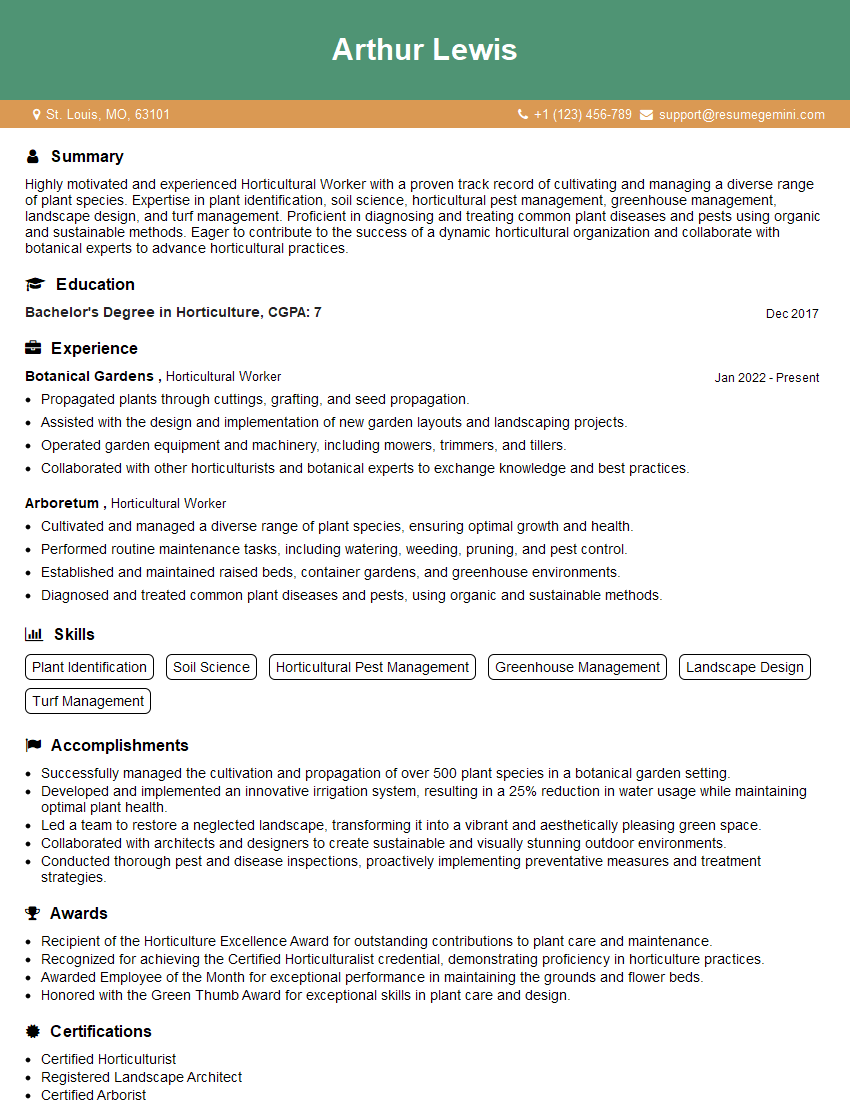
Mastering weed whacking and trimming opens doors to a rewarding career with opportunities for advancement, offering both physical activity and the satisfaction of creating beautiful outdoor spaces. To maximize your job prospects, crafting a strong, ATS-friendly resume is crucial. ResumeGemini can help you build a professional resume that highlights your skills and experience effectively. We offer examples of resumes tailored to the weed whacking and trimming industry to help you get started. Invest in your future – build a resume that gets noticed.



Explore more articles
Users Rating of Our Blogs
Share Your Experience
We value your feedback! Please rate our content and share your thoughts (optional).
What Readers Say About Our Blog
Amazing blog
Interesting Article, I liked the depth of knowledge you’ve shared.
Helpful, thanks for sharing.