Preparation is the key to success in any interview. In this post, we’ll explore crucial Winch and crane operation interview questions and equip you with strategies to craft impactful answers. Whether you’re a beginner or a pro, these tips will elevate your preparation.
Questions Asked in Winch and crane operation Interview
Q 1. Describe your experience with different types of cranes (tower, mobile, overhead).
My experience encompasses a wide range of crane types, including tower cranes, mobile cranes, and overhead cranes. Each type presents unique operational characteristics and safety considerations.
- Tower Cranes: I’ve worked extensively with tower cranes on large construction projects, understanding their intricate assembly, dismantling, and operation procedures. This includes familiarity with various jib configurations and load moment indicator (LMI) systems to ensure safe load handling within the crane’s capacity. For example, I’ve managed the lifting of pre-fabricated concrete sections for high-rise buildings, requiring precise coordination and risk assessment to prevent swaying or collisions.
- Mobile Cranes: My experience with mobile cranes includes both rough-terrain and all-terrain types, used in diverse environments from construction sites to industrial plants. I’m proficient in their setup, operation, and understanding of outrigger deployment for stability. A recent project involved using a mobile crane to lift and position heavy machinery within a factory setting, requiring careful consideration of ground conditions and swing radius.
- Overhead Cranes: I’m experienced in operating various overhead cranes, including gantry and bridge cranes, in industrial settings. This involves understanding the different hoisting mechanisms, trolley movement, and safe operation within the designated runway. I’ve successfully managed the movement of large components in a manufacturing plant, focusing on minimizing cycle times while adhering to strict safety protocols.
Across all crane types, I emphasize meticulous pre-operational checks and a strong understanding of load capacity and stability. Safety is always my paramount concern.
Q 2. Explain the different types of winch mechanisms and their applications.
Winch mechanisms come in various types, each suited to specific applications. The choice depends heavily on the load, speed requirements, and the environment.
- Drum Winches: These are the most common type, using a rotating drum to wind the rope. They are simple, reliable, and suitable for a wide range of applications, from construction to marine operations. Variations include those with manual or powered operation.
- Capstan Winches: These use a rotating cylinder or barrel to wind the rope, offering better control for precise load handling. They are often preferred for applications requiring controlled speed and tension.
- Worm Gear Winches: These utilize a worm gear mechanism for high holding power and self-locking capabilities, essential in situations where preventing load slippage is crucial, like steep inclines.
- Hydraulic Winches: These employ hydraulic power for operation, allowing for smooth and controlled movements and high lifting capacities. They’re commonly found in heavy-duty applications, such as those in the offshore oil and gas industry.
For example, a drum winch would be suitable for a relatively simple lifting task on a construction site, whereas a hydraulic winch would be better suited to lifting heavy loads in offshore oil platforms where precise control is necessary.
Q 3. What are the critical safety procedures before operating a crane or winch?
Critical safety procedures before operating any crane or winch are paramount and non-negotiable. These procedures are designed to mitigate risks and prevent accidents.
- Pre-operational Inspection: A thorough inspection of the equipment, including all components, is crucial. This involves checking brakes, cables, hooks, and other critical parts for any signs of wear or damage.
- Site Assessment: The work area must be assessed for potential hazards, ensuring sufficient space, stable ground conditions, and the absence of overhead obstructions.
- Weather Conditions: High winds, heavy rain, or other adverse weather conditions can significantly impact safety and should be carefully considered before commencing operations.
- Load Calculation: Accurate calculation of the safe working load (SWL) is essential, ensuring that the load does not exceed the crane’s or winch’s capacity.
- Proper Signaling & Communication: Clear communication between the crane operator and the ground crew is critical, using established hand signals or radio communication.
- Personal Protective Equipment (PPE): All personnel must wear appropriate PPE, including hard hats, safety shoes, and high-visibility clothing.
Ignoring these procedures can result in severe accidents. A comprehensive understanding and strict adherence are vital for a safe working environment.
Q 4. How do you perform a pre-operational inspection of a crane?
A pre-operational inspection of a crane is a systematic process to ensure its safe operation. It’s not just a checklist; it’s a detailed assessment of the mechanical condition and operational readiness of the machine.
My typical inspection includes:
- Visual Inspection: Checking for any visible damage to the structure, boom, cables, hooks, and other components. This includes looking for cracks, corrosion, wear and tear, or any signs of previous damage.
- Mechanical Inspection: Examining the functioning of brakes, hydraulic systems, electrical components, and other moving parts. This may involve testing brakes, checking hydraulic fluid levels, and verifying the correct operation of limit switches.
- Load Testing (if required): Depending on the circumstances, a test lift with a known weight might be conducted to verify the crane’s ability to lift the intended load safely.
- Documentation: Recording all findings in a pre-operational inspection report. This report acts as a critical record indicating the crane’s fitness to operate.
- Certification Checks: Confirming that all required certifications and permits are up-to-date, ensuring compliance with all relevant safety regulations.
For instance, a slight bend in a hook or fraying on a cable is not acceptable, necessitating immediate repair or replacement before operation commences. This methodical process safeguards against catastrophic equipment failure and prevents accidents.
Q 5. How do you calculate the safe working load (SWL) for a lift?
Calculating the Safe Working Load (SWL) is crucial for preventing overloading and subsequent accidents. The SWL represents the maximum weight a crane or winch can safely lift under specific conditions.
The calculation isn’t a simple formula, and varies greatly based on the specific equipment and the conditions. However, key factors include:
- Manufacturer’s Specifications: The manufacturer’s data plate provides a baseline SWL for the crane or winch. However, this is often under ideal conditions.
- Boom Angle (for cranes): The SWL decreases as the boom angle increases. This is due to the increased leverage effect on the crane’s structure.
- Radius (for cranes): A larger radius (distance from the crane’s center to the load) reduces the SWL.
- Wind Speed: High winds significantly reduce the SWL, as they exert additional forces on the load and the crane structure. This necessitates derating the SWL based on wind speed charts.
- Type of Load: The SWL also needs to account for the nature of the load—a bulky and unwieldy load, for example, may require a lower SWL due to the increased risk of instability.
For instance, a crane with a rated SWL of 10 tons might only have a SWL of 6 tons at a specific boom angle and radius due to these derating factors. It’s crucial to always consult load charts and apply all relevant derating factors before any lift to assure safety.
Q 6. What are the common causes of crane or winch accidents, and how can they be prevented?
Crane and winch accidents stem from various sources, many preventable with proper precautions.
- Overloading: Exceeding the SWL is the most common cause, leading to structural failure. This is avoidable with correct SWL calculation and adherence to load limits.
- Improper Rigging: Incorrect use of slings, shackles, or other rigging equipment can cause loads to slip or fail. Proper training and inspection of rigging are vital.
- Mechanical Failure: Faulty brakes, worn cables, or other mechanical defects can lead to accidents. Regular maintenance and inspections are essential for preventing such failures.
- Operator Error: Poor judgment, inadequate training, or fatigue on the part of the operator can lead to errors in operation, such as exceeding SWL or unsafe crane movements. Proper training and adherence to safety protocols are critical.
- Environmental Factors: High winds, poor visibility, or unstable ground conditions can affect operation. Work should be suspended in hazardous conditions.
Preventing these accidents requires a multi-pronged approach including proper training, regular inspections and maintenance, meticulous planning, and strict adherence to safety regulations. A culture of safety, where reporting potential hazards is encouraged, is critical.
Q 7. Explain the concept of load charts and their importance.
Load charts are essential graphical representations of a crane’s or winch’s safe working load (SWL) under various operating conditions. They visually depict how factors such as boom length, radius, and load affect the SWL.
Their importance is multifaceted:
- Safety: Load charts are a primary safety tool, providing a quick reference for operators to determine the maximum load they can lift under specific circumstances.
- Compliance: They ensure compliance with safety regulations and best practices, minimizing risk of accidents.
- Efficiency: By clearly showing the limitations of the equipment, load charts allow operators to work efficiently without compromising safety.
- Planning: They facilitate the planning and coordination of lifting operations, ensuring that the appropriate equipment is used for the task.
Think of a load chart as a crucial navigation tool. Just as a pilot uses charts to determine safe flight parameters, a crane operator uses a load chart to determine safe lifting parameters. Failing to consult it is akin to flying blind.
Q 8. Describe your experience with different rigging techniques.
My experience encompasses a wide range of rigging techniques, crucial for ensuring safe and efficient lifting operations. This includes selecting the appropriate slings, shackles, and other rigging hardware based on the load’s weight, shape, and center of gravity. I’m proficient in various hitching methods, such as choker hitches, basket hitches, and vertical hitches, each suited to specific load configurations. For example, a basket hitch is ideal for distributing the load evenly across multiple points on a large, bulky item, minimizing stress on any single point. Conversely, a choker hitch is more suitable for smaller, easier-to-handle items but requires careful consideration of the load’s distribution. I’m also experienced in using specialized rigging equipment such as spreader beams for handling exceptionally long or awkwardly shaped loads, and ensuring the load is balanced and stable throughout the lift. Safety is paramount, so I always conduct thorough inspections before any lift, paying close attention to wear and tear on all rigging components and ensuring proper load ratings are not exceeded.
- Vertical Hitch: Used for lifting loads directly from their top.
- Basket Hitch: Distributes the load evenly across multiple points.
- Choker Hitch: Suitable for smaller loads, but requires careful execution.
- Spreader Beams: Used for long or awkwardly shaped loads.
Q 9. How do you handle unexpected situations during a lift?
Handling unexpected situations during a lift requires quick thinking, decisive action, and adherence to safety protocols. My approach involves a systematic assessment of the problem: first, I immediately stop the lift and initiate a full safety stop. Then, I analyze the situation to determine the root cause. Is it a rigging failure? A mechanical malfunction? A change in wind conditions? Once the cause is identified, I develop a safe and effective solution, consulting with my team and possibly contacting supervisors or engineers for guidance as needed. For instance, if a sling fails, I’d immediately secure the load, inspect the remaining rigging, and replace the faulty sling before resuming. Effective communication during these events is crucial, ensuring all personnel are aware of the problem and the plan of action. A past experience involved a sudden gust of wind causing the load to swing dangerously. I immediately halted the lift, adjusted the crane’s position to stabilize the load, and waited for the wind to subside before resuming. Prioritizing safety and clear communication is key to successfully resolving these situations.
Q 10. What are the legal requirements and regulations concerning crane operation in your region?
Legal requirements and regulations concerning crane operation in my region are stringent and vary depending on the type of crane and the specific job site. They typically include adherence to OSHA (or equivalent) regulations regarding operator certification, regular equipment inspections, load capacity limits, and safe operating procedures. This involves maintaining accurate and up-to-date records of inspections, training certifications, and any incidents or near misses. We must also comply with local permits and site-specific safety plans, ensuring the work area is properly barricaded and that designated signal persons are present during all lifts. Failure to comply can result in severe penalties, including fines and suspension of operations. My familiarity with these regulations is crucial, ensuring I operate the equipment safely and legally, protecting both myself and the public.
Q 11. Describe your experience with different types of crane controls.
I have extensive experience with various crane control systems, ranging from traditional lever-operated controls to modern computerized systems. Traditional lever systems require precise hand-eye coordination and a strong understanding of mechanical functions. Modern computerized systems often incorporate load moment indicators (LMIs) and other safety features. I find both have their advantages and challenges. For example, while lever systems offer a more tactile and direct feel, computerized systems provide greater precision and data logging for post-operational analysis. I’m comfortable and proficient in using either type, always prioritizing safety and adhering to the manufacturer’s instructions. In either case, I prioritize thorough pre-operational checks to ensure the controls are responsive and functioning correctly.
Q 12. How do you communicate effectively with your team during lifting operations?
Effective communication is paramount in lifting operations. I use a combination of verbal and non-verbal cues, ensuring all team members understand the plan. This includes clear pre-lift briefings, establishing hand signals for communication during the lift, especially in noisy environments, and using two-way radios for long-range communication. Clear, concise instructions are critical, avoiding jargon and using layman’s terms where possible. It is crucial to establish a culture of open communication where everyone feels comfortable raising concerns or questions. Before initiating a lift, I’ll confirm that everyone understands the plan, the load’s weight and dimensions, and the designated lift path. A system of checks and confirmations reduces the possibility of misunderstandings, resulting in a much safer work environment.
Q 13. What is your experience with load monitoring devices?
My experience with load monitoring devices is extensive. I’m familiar with various types, including load cells, strain gauges, and load moment indicators (LMIs). LMIs are particularly valuable, providing real-time data on the load weight and the crane’s stability, helping to prevent overload and tip-over accidents. I understand how to interpret the data provided by these devices and know when to adjust the lift plan accordingly. For instance, if the LMI indicates the load is nearing the crane’s capacity, I’ll immediately stop the lift and re-evaluate the situation, perhaps requiring a different lifting technique or additional support. Regular calibration and maintenance of these devices are essential to ensure accuracy and reliability.
Q 14. How do you troubleshoot common crane or winch malfunctions?
Troubleshooting crane or winch malfunctions requires a methodical approach, combining practical experience with a sound understanding of mechanical systems. I begin with a visual inspection, checking for obvious issues like loose connections, damaged components, or hydraulic leaks. If the problem persists, I’ll consult the equipment’s maintenance manual and diagrams, systematically checking each component and electrical connection. For example, if the winch fails to operate, I’d check the power supply, the motor’s condition, the brake system, and the cable drum for any obstructions. If the issue is beyond my expertise, I’ll immediately call in a qualified technician to avoid further damage or risk. Detailed record-keeping of any malfunctions and their resolutions is crucial for preventive maintenance and safety.
Q 15. Explain your understanding of load stability and its importance.
Load stability is crucial in crane and winch operations; it refers to the controlled and balanced state of a suspended load, preventing it from swinging, tilting, or dropping unexpectedly. This is paramount for preventing accidents and damage. Think of it like balancing a plate on a stick – any sudden movement or imbalance can lead to disaster.
Several factors affect load stability, including the load’s weight and center of gravity, the slinging method, wind conditions, and the crane’s operation. For example, if a load is unevenly distributed, it might swing during lifting, potentially colliding with structures or people. Similarly, high winds can significantly impact stability, requiring slower, more careful operation, or even halting the lift until conditions improve. We constantly assess these factors and adjust our technique to maintain a stable load.
Maintaining stability is achieved through proper rigging techniques (using appropriate slings and attachment points), smooth crane operation (avoiding sudden jerks or acceleration), and careful consideration of environmental factors like wind speed. Regular inspections of equipment and load also play a vital role.
Career Expert Tips:
- Ace those interviews! Prepare effectively by reviewing the Top 50 Most Common Interview Questions on ResumeGemini.
- Navigate your job search with confidence! Explore a wide range of Career Tips on ResumeGemini. Learn about common challenges and recommendations to overcome them.
- Craft the perfect resume! Master the Art of Resume Writing with ResumeGemini’s guide. Showcase your unique qualifications and achievements effectively.
- Don’t miss out on holiday savings! Build your dream resume with ResumeGemini’s ATS optimized templates.
Q 16. What are your experience with different types of slings and their appropriate uses?
My experience encompasses a wide range of slings, including wire rope slings, synthetic fiber slings (nylon, polyester), chain slings, and round slings. Each has its strengths and weaknesses, making them suitable for different applications.
- Wire rope slings are strong and durable, ideal for heavy loads and harsh environments. However, they can be susceptible to kinking and damage if not handled properly.
- Synthetic fiber slings are lightweight, easy to handle, and less likely to damage the load. However, they are weaker than wire rope and more susceptible to UV damage and chemical exposure.
- Chain slings offer excellent strength and durability, particularly for abrasive or sharp-edged loads. But, they are heavier and can potentially damage the load’s surface.
- Round slings are versatile and easy to use, conforming well to odd-shaped objects. Their flexibility minimizes load damage but requires careful attention to proper wrapping and positioning to prevent slippage.
Choosing the right sling involves considering the load’s weight, shape, and material, as well as environmental conditions. For example, I wouldn’t use a synthetic sling for a very heavy load or in a corrosive environment, opting instead for wire rope or chain. I always double-check the sling’s capacity rating against the load weight, ensuring it’s well within safe operating limits.
Q 17. Describe your experience with emergency shutdown procedures for cranes and winches.
Emergency shutdown procedures for cranes and winches are critical for preventing accidents. My training emphasizes immediate response and prioritizing safety. Procedures vary slightly depending on the equipment, but generally involve:
- Identifying the emergency: Quickly assessing the situation – is it a mechanical failure, a load instability, or an external hazard?
- Activating the emergency stop: This is usually a large, easily accessible button or lever. I am always aware of its location and how to operate it effectively. This is my primary action in any unsafe situation.
- Lowering the load (if possible): If safe to do so, gently lower the load in a controlled manner, using backup systems if available.
- Evacuating the area: Ensuring everyone is clear of the immediate danger zone is paramount.
- Reporting and documentation: After the emergency is over, I would report the incident, detailing the events leading to it, the actions taken, and any damage incurred. Documentation is crucial for accident prevention and investigation.
During my career, I have dealt with several emergencies ranging from equipment malfunctions (hydraulic leaks, brake failures) to unforeseen environmental factors (sudden wind gusts). In each case, my training and adherence to the protocols ensured a safe outcome, emphasizing prioritizing life over equipment.
Q 18. How do you ensure the safety of personnel and equipment during lifting operations?
Ensuring the safety of personnel and equipment during lifting operations is my top priority. My approach is multifaceted and incorporates several key steps:
- Pre-lift planning: This involves careful assessment of the job, including the load’s weight, dimensions, and center of gravity, the terrain, and environmental factors. We would also select the appropriate equipment and rigging gear.
- Pre-operational checks: Thorough inspection of the crane, winch, and all lifting gear is paramount. This includes verifying that all safety devices are functioning correctly.
- Clear communication: Maintaining clear communication between the crane operator, the rigger, and any ground personnel is essential. Hand signals and radio communication are used to coordinate movements and ensure everyone understands the plan.
- Designated safe zones: Establishing and maintaining safe zones around the lifting operation ensures personnel remain outside of the potential hazard area.
- Load stability management: Employing correct slinging techniques, controlling the speed of lifting and lowering, and anticipating wind effects ensure load stability and prevent accidents.
- Post-lift inspection: After the lift, I would inspect the equipment and load to ensure no damage has occurred.
Safety is not just about following procedures; it’s about developing a safety-first mindset. I always prioritize safety above all else and never hesitate to halt an operation if I deem it unsafe, even if it means delaying the project.
Q 19. What are the limitations of different types of cranes?
Different crane types have distinct limitations. Understanding these is crucial for selecting the right equipment for a given task.
- Tower cranes: Limited reach and mobility; suited for high-rise construction but unsuitable for confined spaces. Their height and reach are defined specifications.
- Mobile cranes: Versatile but have weight restrictions and limitations on terrain. They can’t operate on soft ground or slopes exceeding the manufacturer’s specifications.
- Overhead cranes: Restricted movement within the defined area; excellent for repetitive lifting tasks but not suitable for outdoor or large-scale operations.
- Truck-mounted cranes: Limited lifting capacity compared to larger cranes; they are highly portable but less powerful.
- Rough terrain cranes: Maneuverable in difficult terrain but have restricted lifting capacity in comparison to other similar sized cranes.
Ignoring these limitations can lead to accidents or equipment failure. For example, attempting to lift a load exceeding a crane’s capacity can result in a catastrophic failure. Always check the crane’s specifications before any lift and ensure the chosen crane is suitable for the task.
Q 20. Describe your experience working at heights.
I have extensive experience working at heights, both with cranes and on elevated platforms. My training emphasizes the importance of fall protection, including harnesses, lanyards, and safety nets. I am proficient in the use of various fall protection equipment and always adhere to strict safety procedures.
I also understand the risks associated with working at heights, including fatigue, vertigo, and the effects of weather. I am trained to recognize and mitigate these risks. For example, I’d never work at heights without appropriate fall protection, and I would be aware of the limitations of that equipment. I always report any unsafe conditions immediately and refuse to work unless conditions are safe. This includes performing regular inspections of my personal safety equipment as well as the work area for potential hazards before beginning work. My approach to working at heights is cautious, methodical and safety-conscious.
Q 21. How familiar are you with different types of crane maintenance schedules?
Crane maintenance schedules vary depending on the type of crane and its usage frequency. However, all cranes require regular inspections and maintenance to ensure safety and operational efficiency. I am familiar with both manufacturer’s recommended schedules and industry best practices.
Typical maintenance schedules include daily inspections (pre-operational checks focusing on safety components), weekly checks (more detailed inspections of mechanical systems), and monthly/quarterly inspections (that involve more in-depth examinations and potentially lubrication of components).
Major overhauls and inspections would be performed annually or as required based on usage and wear-and-tear. These include more extensive dismantling and rebuilding of certain components, as well as thorough inspections of critical safety features. I have experience with creating and adhering to such schedules, documenting all maintenance activities and promptly reporting any defects or required repairs.
Q 22. What is your experience with different types of winch brakes?
My experience encompasses a wide range of winch brakes, including mechanical, hydraulic, and electric types. Mechanical brakes, often employing drum brakes similar to those in vehicles, provide a reliable fail-safe mechanism. I’m proficient in adjusting their shoe clearances for optimal performance and identifying wear indicators. Hydraulic brakes offer smoother control and higher braking forces, particularly useful for heavier loads. Understanding the hydraulic system’s pressure and flow is critical for safe operation; I regularly inspect for leaks and ensure proper fluid levels. Electric brakes, often dynamic braking systems integrated with the motor, offer precise control and are commonly found in modern winches. I understand the importance of regular inspections of the electrical components and the proper functioning of the control systems to prevent failures.
For example, during a recent project involving a large-scale construction lift, I was responsible for monitoring the hydraulic brake system of the main winch. Regular checks revealed a minor leak, which, if left unchecked, could have led to catastrophic brake failure. By promptly addressing this, I prevented a potential accident and ensured the safe completion of the project. Similarly, my experience with mechanical brakes includes working with older winches requiring more hands-on adjustments and maintenance. This experience taught me the importance of meticulous inspection and preventative maintenance in preventing unexpected issues.
Q 23. How do you interpret and follow signal instructions?
Interpreting and following signal instructions is paramount to safe crane and winch operations. I’m trained to understand and respond to both hand signals and radio communications. Hand signals are typically standardized, with clear movements indicating hoisting, lowering, swinging, and emergency stops. For example, a slow, deliberate upward hand movement indicates a slow lift, while a closed fist signifies a stop. I always confirm understanding before initiating any movement. With radio communications, I establish clear communication protocols, using standardized terminology to avoid ambiguity. I always request confirmation and repeat instructions to ensure clarity. In situations with limited visibility or noisy environments, I rely on visual confirmation and clear communication to verify instructions before execution.
Imagine a scenario where a signalperson is directing the lift of a large beam. The signalperson might indicate a slight swing correction by using a combination of hand signals. My training allows me to immediately understand the intended correction and make the necessary adjustments. This requires attentiveness, quick response time and a firm grasp of both visual and auditory communication protocols.
Q 24. Explain your experience working with various types of lifting accessories.
My experience extends to a wide variety of lifting accessories, including slings (chain, wire rope, synthetic), shackles, hooks, spreader beams, and other specialized equipment. I am familiar with the safe working loads (SWL) for each type of accessory and understand the importance of proper inspection before each lift. I check for damage, wear, and proper connection points before putting them to use, and understand the implications of using incorrectly matched accessories or those exceeding their SWL. I also know how to select the correct accessory for the specific load and environmental conditions. For instance, I wouldn’t use a nylon sling in a harsh chemical environment.
One project involved lifting oversized, delicate machinery components. Careful selection of soft slings, along with proper rigging techniques utilizing a spreader beam to distribute the weight evenly, prevented any damage during the lift. The proper use of lifting accessories and attention to detail prevented a costly incident and ensured the integrity of the expensive equipment.
Q 25. Describe your experience with load testing procedures.
Load testing procedures are critical for ensuring the safety and reliability of crane and winch systems. I’ve participated in numerous load tests, following established procedures that include using calibrated load cells and accurate weight measurements. The test involves gradually increasing the load to the rated capacity of the equipment, carefully observing the equipment’s behavior for any signs of stress or deformation. Detailed records are maintained throughout the testing process, including the date, time, load applied, and any observations. These records are essential for ensuring compliance with safety regulations and maintaining the equipment’s operational certificates.
For example, I recently performed a load test on a new winch before putting it into service. The test confirmed its capacity and ensured that it met all the specified safety standards. The detailed documentation produced during this test will be kept on file and will be essential for future maintenance and regulatory audits. Proper documentation plays a pivotal role in mitigating future risks and ensuring accountability.
Q 26. How familiar are you with different types of crane certifications and permits?
I’m familiar with various crane certifications and permits, including those issued by regulatory bodies like OSHA (in the US) and similar organizations internationally. This includes understanding the requirements for operator certification, equipment inspection certificates, and work permits for specific lifting operations in regulated environments. I understand the importance of maintaining up-to-date certifications and ensuring that all documentation is readily available for inspections.
For example, before any operation commences, I verify that the crane’s operational certificate is current and that all relevant permits are in place. My understanding of these regulations is crucial for ensuring we’re compliant and operating within legal and safe limits.
Q 27. What is your approach to working in challenging weather conditions?
Working in challenging weather conditions requires careful planning and adherence to stringent safety protocols. High winds, heavy rain, snow, or extreme temperatures can significantly impact crane and winch operations. I understand the limitations of equipment under these conditions and know when to suspend operations for safety reasons. This includes assessing wind speeds, visibility, and ground conditions before commencing any work. I also ensure appropriate protective gear for myself and the team are available and used, and that the equipment is adequately secured.
I recall a situation where high winds threatened to make a lift unsafe. My assessment of the wind speed exceeded the safe operating limits for the crane. I immediately stopped the operation and alerted the relevant personnel. This prioritization of safety prevented a potential disaster. Risk assessment is paramount in such situations.
Q 28. How do you maintain accurate records and logs for crane and winch operations?
Maintaining accurate records and logs is crucial for accountability, tracking maintenance schedules, and ensuring compliance. I meticulously document all crane and winch operations, including the date, time, location, load lifted, personnel involved, any incidents or near misses, and maintenance performed. These logs are often entered into electronic databases and regularly reviewed for any trends or potential issues. Pre-operational and post-operational checklists are strictly adhered to, and any discrepancies are promptly investigated and documented. This detailed documentation is crucial for ensuring efficiency, accountability, and proactive maintenance, preventing future accidents and improving operational effectiveness.
Using a digital logging system ensures better organization and allows for easy retrieval of data for audits or analysis. This approach also facilitates the identification of recurring issues that may indicate the need for improved maintenance or operational procedures. A well-maintained logbook is not just a record, but a valuable tool for continuous improvement.
Key Topics to Learn for Winch and Crane Operation Interview
- Understanding Load Capacity and Stability: Learn to calculate safe working loads, understand center of gravity principles, and identify factors affecting stability (e.g., wind, terrain).
- Rigging Techniques and Safety Procedures: Master proper slinging techniques, understand different types of rigging hardware, and demonstrate knowledge of pre-lift inspections and safety protocols.
- Crane Controls and Operation: Familiarize yourself with various crane types (tower, mobile, etc.), their controls, and safe operational procedures. Practice explaining your experience with different control systems.
- Emergency Procedures and Troubleshooting: Be prepared to discuss how you would handle common malfunctions, emergencies (e.g., power failure, load sway), and describe your knowledge of safety shut-off procedures.
- Communication and Teamwork: Explain your approach to clear and effective communication with ground crews, riggers, and supervisors. Highlight your experience working collaboratively in demanding environments.
- Regulations and Compliance: Demonstrate understanding of relevant safety regulations, permits, and industry best practices. Be prepared to discuss your experience with compliance procedures.
- Maintenance and Inspection: Describe your knowledge of routine maintenance checks, pre-operational inspections, and the identification of potential mechanical issues.
Next Steps
Mastering winch and crane operation opens doors to exciting and rewarding career opportunities in construction, logistics, and various industrial sectors. These roles often offer competitive salaries and the chance to work on challenging and impactful projects. To significantly boost your job prospects, creating a strong, ATS-friendly resume is crucial. ResumeGemini can help you build a professional and effective resume that highlights your skills and experience. We provide examples of resumes tailored to the Winch and Crane Operation field to help you craft a compelling application that stands out. Take the next step in your career journey – build your winning resume today!

Crane Operator Resume Sample

Heavy Equipment Operator Resume Sample

Rigger Resume Sample

Derrick Operator Resume Sample
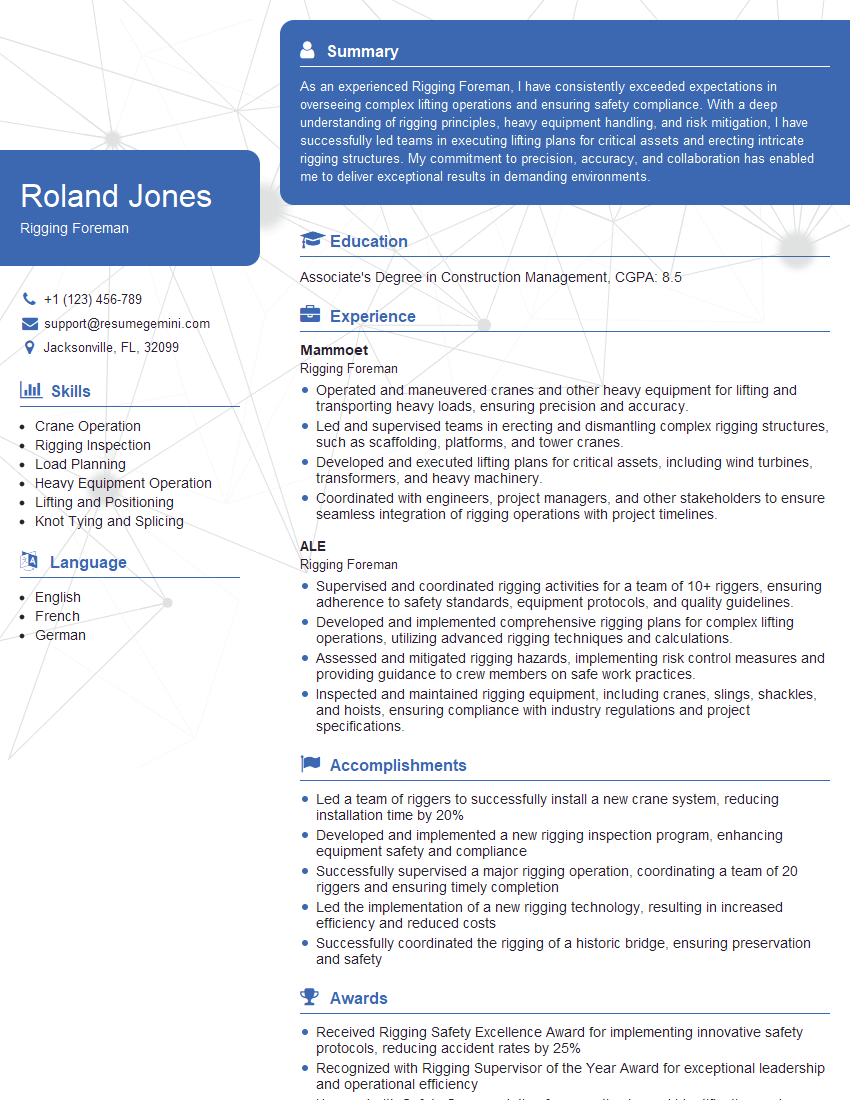
Rigging Foreman Resume Sample

Mobile Crane Operator Resume Sample

Overhead Crane Operator Resume Sample

Tower Crane Operator Resume Sample

Winch Operator Resume Sample
Explore more articles
Users Rating of Our Blogs
Share Your Experience
We value your feedback! Please rate our content and share your thoughts (optional).
What Readers Say About Our Blog
Amazing blog
hello,
Our consultant firm based in the USA and our client are interested in your products.
Could you provide your company brochure and respond from your official email id (if different from the current in use), so i can send you the client’s requirement.
Payment before production.
I await your answer.
Regards,
MrSmith
hello,
Our consultant firm based in the USA and our client are interested in your products.
Could you provide your company brochure and respond from your official email id (if different from the current in use), so i can send you the client’s requirement.
Payment before production.
I await your answer.
Regards,
MrSmith
These apartments are so amazing, posting them online would break the algorithm.
https://bit.ly/Lovely2BedsApartmentHudsonYards
Reach out at BENSON@LONDONFOSTER.COM and let’s get started!
Take a look at this stunning 2-bedroom apartment perfectly situated NYC’s coveted Hudson Yards!
https://bit.ly/Lovely2BedsApartmentHudsonYards
Live Rent Free!
https://bit.ly/LiveRentFREE
Interesting Article, I liked the depth of knowledge you’ve shared.
Helpful, thanks for sharing.
Hi, I represent a social media marketing agency and liked your blog
Hi, I represent an SEO company that specialises in getting you AI citations and higher rankings on Google. I’d like to offer you a 100% free SEO audit for your website. Would you be interested?