The thought of an interview can be nerve-wracking, but the right preparation can make all the difference. Explore this comprehensive guide to Maintenance Documentation and Reporting interview questions and gain the confidence you need to showcase your abilities and secure the role.
Questions Asked in Maintenance Documentation and Reporting Interview
Q 1. Explain your experience with CMMS software (e.g., SAP PM, Maximo, Infor EAM).
My experience with CMMS software spans several years and includes extensive work with SAP PM and Maximo. I’ve used these systems to manage the entire lifecycle of maintenance activities, from work order generation and scheduling to inventory management and reporting. In SAP PM, for example, I’ve configured and customized workflows to streamline processes, ensuring that maintenance requests are routed efficiently and tracked effectively. With Maximo, I’ve leveraged its advanced analytics capabilities to identify trends and predict potential equipment failures, enabling proactive maintenance strategies. I’m proficient in data entry, report generation, and system administration tasks within these platforms. A specific example includes implementing a Maximo integration with our ERP system, resulting in a significant reduction in data entry errors and improved visibility across departments. This involved mapping fields and developing custom scripts to ensure seamless data transfer.
Q 2. Describe your process for creating and maintaining accurate maintenance records.
Creating and maintaining accurate maintenance records involves a meticulous, multi-step process. It starts with the initial work order creation, ensuring all relevant details like equipment ID, problem description, and priority are recorded accurately. This is followed by detailed documentation of the performed work, including parts used, labor hours, and any specific findings. I utilize a standardized template for each work order to promote consistency. After the work is completed, a final verification step ensures the accuracy and completeness of all recorded information. Digital photography and video are frequently used to supplement textual descriptions, particularly when dealing with complex repairs. Regular audits of the maintenance records help identify and address any inconsistencies. Think of it like meticulously documenting a medical procedure – every detail matters for future reference and analysis.
Q 3. How do you ensure the completeness and accuracy of maintenance documentation?
Ensuring completeness and accuracy of maintenance documentation relies on a combination of robust processes and technology. We use a combination of checklists, digital forms, and automated data entry systems. Checklists ensure technicians cover all necessary steps during maintenance. Digital forms reduce the potential for human error and maintain a standardized record. Automated systems reduce manual entry, minimizing the possibility of inconsistencies. Regular data validation and reconciliation checks are essential. Furthermore, regular training for technicians on the correct procedures and usage of the CMMS is crucial. We also conduct periodic audits – a process analogous to a financial audit – to identify gaps in documentation and rectify them promptly. This proactive approach ensures data quality and facilitates informed decision-making.
Q 4. What methods do you use to track and report key maintenance metrics (e.g., MTTR, MTBF)?
We track and report key maintenance metrics using our CMMS and customized dashboards. MTTR (Mean Time To Repair) and MTBF (Mean Time Between Failures) are calculated automatically by the system based on data from completed work orders. Other metrics, such as maintenance backlog and preventative maintenance compliance, are generated through custom reports. These reports are typically visualized using charts and graphs for better understanding. For example, a trend analysis of MTTR can highlight areas needing improvement in our maintenance processes, while tracking MTBF can help predict potential failures and optimize preventive maintenance schedules. Regular review of these metrics ensures we’re constantly striving for operational efficiency and cost optimization. It is like monitoring the vital signs of our equipment and processes, ensuring everything is running smoothly.
Q 5. How do you handle discrepancies or inconsistencies in maintenance data?
Handling discrepancies or inconsistencies in maintenance data requires a systematic approach. First, we identify the source of the discrepancy. This often involves comparing information from multiple sources—work orders, inventory records, and equipment history. Next, we verify the accuracy of the data. We may need to review original records, interview technicians, or inspect equipment. Once the error is identified, we correct the data and implement measures to prevent similar errors from occurring in the future. This might involve improving training, updating procedures, or refining our data entry processes. Imagine it as forensic accounting for maintenance data – tracking down the root cause and preventing future irregularities.
Q 6. Explain your experience with preventive maintenance scheduling and planning.
Preventive maintenance scheduling and planning is a critical component of our maintenance strategy. We leverage our CMMS to create and manage preventive maintenance schedules based on equipment specifications, manufacturer recommendations, and historical data. This involves defining tasks, assigning resources, and scheduling work orders at optimal intervals. We use various scheduling techniques, including time-based, meter-based, and condition-based maintenance. For example, a time-based schedule might involve lubricating a machine every 100 hours of operation, while a meter-based schedule might involve replacing a filter after a certain number of machine cycles. Condition-based maintenance relies on real-time sensor data to predict potential failures, allowing for proactive intervention. Optimization involves using algorithms and advanced analytics to minimize downtime and maximize equipment lifespan.
Q 7. Describe your process for generating maintenance reports for management.
Generating maintenance reports for management involves selecting relevant key performance indicators (KPIs) and tailoring the report format to the audience’s needs. We use the reporting capabilities of our CMMS to create customized reports that show metrics like MTTR, MTBF, maintenance costs, and preventative maintenance compliance. These reports are regularly scheduled and distributed to relevant stakeholders. Data visualization techniques like charts and graphs are utilized to highlight key trends and facilitate understanding. For example, a monthly report might show overall maintenance costs, a breakdown of costs by equipment type, and a comparison to previous months. The ultimate goal is to provide clear, concise, and actionable insights that support decision-making and improvement strategies.
Q 8. How do you ensure that maintenance documentation is readily accessible to all relevant personnel?
Ensuring readily accessible maintenance documentation is crucial for efficient operations and safety. Think of it like a well-organized toolbox – you need to know exactly where every tool is when you need it. I achieve this through a multi-pronged approach:
- Centralized Document Repository: Implementing a centralized system, like a dedicated server or cloud-based platform, is paramount. This allows all authorized personnel to access the latest versions of manuals, schematics, and maintenance logs from anywhere with a secure connection. We often use systems with version control features to prevent confusion.
- Clear Access Control: Access permissions must be carefully managed based on roles and responsibilities. Maintenance technicians might have full access to relevant documents, while management may only see summaries or reports. This ensures data security and prevents unauthorized modifications.
- Intuitive Organization: The repository must be logically organized using a clear and consistent naming convention. For example, documents can be categorized by equipment type, system, or maintenance task. A robust search functionality is also essential.
- Regular Audits & Updates: Periodic audits help confirm that all documentation is up-to-date, accurate, and easily retrievable. This prevents outdated information from leading to mistakes and ensures that the system continues to serve its purpose. It’s like cleaning your toolbox – keeping it organised and removing any broken tools.
- Training & Communication: Adequate training is provided to all personnel on how to use the system effectively. Regular communication about updates and new procedures ensures everyone stays informed. Think of it as providing a user manual for the system itself.
Q 9. How familiar are you with ISO standards related to maintenance management?
I am very familiar with ISO standards related to maintenance management, particularly ISO 55000. This standard provides a framework for establishing and managing an asset management system (AMS) and covers aspects crucial to maintenance documentation. Key elements I use from the ISO 55000 family include:
- ISO 55001: This standard provides guidelines for establishing, implementing, maintaining, and improving an asset management system. It emphasizes the importance of reliable and accessible data, including maintenance records.
- Data Integrity and Traceability: I’m adept at implementing systems that ensure data integrity, including mechanisms for version control and audit trails to track changes, addressing requirements outlined in ISO 55000. This ensures that if there’s ever a discrepancy, we can trace back changes and understand why they were made.
- Risk-Based Approach: ISO 55000 promotes a risk-based approach to asset management, influencing how I prioritize maintenance tasks and document associated risks, ensuring compliance.
My experience encompasses both implementing and auditing systems against ISO 55000 standards, ensuring best practices for both maintenance documentation and asset management overall. For example, I’ve helped companies implement document control procedures that meet ISO 55001 requirements.
Q 10. How do you prioritize maintenance tasks based on criticality and urgency?
Prioritizing maintenance tasks is critical for maximizing uptime and minimizing risks. I utilize a combination of methods, often incorporating a risk matrix:
- Criticality Assessment: This involves evaluating the impact of equipment failure on operations. A critical piece of equipment that impacts a production line will have a higher priority than a non-critical one.
- Urgency Assessment: This assesses the immediacy of the required maintenance. A component showing signs of imminent failure needs immediate attention. It’s like triage in a hospital; the most critical cases receive immediate treatment.
- Risk Matrix: Combining criticality and urgency provides a clear visualization of task prioritization, often using a matrix to categorize tasks. High-criticality and high-urgency tasks are prioritized first; low-criticality and low-urgency tasks can often be scheduled later.
- CMMS Software: Computerized Maintenance Management Systems (CMMS) greatly assist in prioritizing tasks. They often incorporate algorithms that consider factors like criticality, urgency, and historical data to automatically prioritize work orders.
For example, in a manufacturing plant, a malfunctioning main power supply would score very high on both criticality and urgency, requiring immediate attention, while replacing a lightbulb in a rarely used room might have a very low priority.
Q 11. Describe your experience with root cause analysis and its application to maintenance documentation.
Root cause analysis (RCA) is essential for preventing recurring maintenance issues. It involves systematically investigating the underlying cause of a problem, not just treating the symptoms. This is vital for improving maintenance documentation because it helps ensure that future procedures address the root cause, preventing the issue from happening again.
My experience includes using various RCA methodologies, such as the ‘5 Whys’ technique, fishbone diagrams (Ishikawa diagrams), and fault tree analysis. After performing RCA, the findings are meticulously documented and incorporated into updated maintenance procedures, training materials, and preventive maintenance schedules. This creates a feedback loop to improve the efficiency and effectiveness of the whole maintenance process.
For example, if a pump repeatedly fails, simply replacing the pump addresses the symptom, not the cause. RCA might reveal that the pump was overworked due to a clogged filter, or there was a vibration issue leading to premature failure. The documentation would then be updated to reflect this and include preventative measures, such as a regular filter cleaning schedule or vibration monitoring to identify and address the root issue.
Q 12. How do you manage changes to maintenance procedures and documentation?
Managing changes to maintenance procedures and documentation requires a structured and controlled process to ensure accuracy and consistency. This process typically involves:
- Change Request System: A formal system for submitting, reviewing, and approving change requests. This system ensures that all changes are documented and authorized.
- Version Control: Utilizing version control software to track changes and ensure only the most up-to-date documentation is used. This prevents conflicts and allows for easy rollback if necessary.
- Review and Approval Process: Changes should be reviewed and approved by relevant personnel before implementation to ensure accuracy and compliance with standards and safety regulations.
- Communication: All affected personnel must be informed of any changes to procedures or documentation. This ensures everyone is working with the most current information.
- Training: If significant changes are made, retraining may be necessary to ensure personnel are familiar with the updated procedures.
Imagine a situation where a new safety regulation is introduced for a specific machine. The change request system allows for documented modification of the operating and maintenance procedures, reflecting the new regulation. Version control ensures all team members have the updated version, and training sessions update the technicians’ knowledge.
Q 13. How do you use data analytics to improve maintenance effectiveness?
Data analytics plays a crucial role in enhancing maintenance effectiveness. By analyzing maintenance data, we can identify trends, predict potential failures, and optimize maintenance strategies. This involves:
- Data Collection: Gathering data from various sources, including CMMS systems, sensor data, and maintenance logs. This data might include downtime, repair times, maintenance costs, and equipment performance metrics.
- Data Analysis: Using statistical methods and data visualization techniques to identify patterns and trends in the data. This might involve calculating mean time between failures (MTBF), mean time to repair (MTTR), and other key performance indicators (KPIs).
- Predictive Maintenance: Using data analysis to predict potential equipment failures and schedule preventative maintenance proactively. This minimizes downtime and reduces repair costs.
- Optimization of Maintenance Schedules: Data analysis helps determine optimal maintenance schedules, balancing the cost of preventative maintenance with the risk of equipment failure.
For example, analyzing historical data on pump failures might reveal a pattern of failures occurring after a certain number of operating hours. This allows us to schedule preventative maintenance before the pump fails, significantly reducing downtime and repair costs.
Q 14. What are some common challenges you’ve faced in maintaining accurate maintenance documentation?
Maintaining accurate maintenance documentation presents several challenges:
- Inconsistent Data Entry: Manual data entry is prone to errors and inconsistencies, which is why I favor automated data collection methods wherever possible.
- Lack of Standardization: Without standardized formats and procedures for documenting maintenance activities, it becomes difficult to analyze data effectively.
- Difficulties with legacy systems: Integrating data from legacy systems can be challenging, requiring significant data migration and reconciliation efforts.
- Data Silos: Data may be scattered across different systems, making it difficult to get a comprehensive view of maintenance activities.
- Keeping up with changes: Rapid technological advancements and equipment modifications necessitate frequent updates to the documentation, requiring considerable effort and resources.
- Human Error: Despite best efforts, human error in data input and documentation remains a major challenge.
To overcome these challenges, I focus on implementing standardized procedures, utilizing CMMS software with automated data entry features, and investing in employee training to improve data quality. The goal is to establish a system that’s robust, reliable and helps us avoid the pitfalls of human error, leading to accurate and dependable maintenance records.
Q 15. How do you ensure that maintenance documentation is updated promptly after completing tasks?
Promptly updating maintenance documentation is crucial for maintaining accurate asset history and ensuring efficient operations. My approach involves a multi-pronged strategy. Firstly, I advocate for the use of mobile-friendly work order management systems that allow technicians to record details directly on the job site, minimizing delays and improving accuracy. Secondly, I emphasize the importance of a clear, concise, and standardized reporting format that is easy for technicians to complete. This might include checklists, pre-filled forms, or digital forms with mandatory fields. Thirdly, I implement regular follow-up procedures. This could include automated reminders to technicians to complete documentation within a specified timeframe, or scheduled review of incomplete records by a supervisor.
For example, in a previous role, we implemented a system where technicians used tablets with a custom app to record maintenance activities. The app automatically populated certain fields (like asset ID and date) and provided step-by-step guidance to ensure completeness. This improved documentation accuracy by over 20% within the first quarter.
Career Expert Tips:
- Ace those interviews! Prepare effectively by reviewing the Top 50 Most Common Interview Questions on ResumeGemini.
- Navigate your job search with confidence! Explore a wide range of Career Tips on ResumeGemini. Learn about common challenges and recommendations to overcome them.
- Craft the perfect resume! Master the Art of Resume Writing with ResumeGemini’s guide. Showcase your unique qualifications and achievements effectively.
- Don’t miss out on holiday savings! Build your dream resume with ResumeGemini’s ATS optimized templates.
Q 16. How do you deal with incomplete or missing maintenance records?
Incomplete or missing maintenance records are a significant issue that can lead to inaccurate asset history, increased downtime, and safety risks. My approach involves a structured investigation and remediation process. First, I identify the extent of the issue – how many records are incomplete and the nature of the incompleteness (missing data points, missing entire records, etc.). Then, I try to determine the root cause – is it a lack of training for technicians, inadequate tools, or systemic process issues? Once the root cause is identified, I implement corrective actions, which could involve additional training, process improvements (like adding mandatory fields to work order forms), and improved system tools.
If the missing data is crucial, I will attempt to reconstruct the information using secondary sources like supervisor logs, technician interviews, and even physical inspection of the asset if possible. However, I always clearly document any assumptions or approximations made during this reconstruction process to maintain transparency and prevent future misinterpretations. Finally, I put measures in place to prevent such occurrences in the future.
Q 17. Describe your experience with using work order management systems.
I have extensive experience using various work order management systems (WOMS), including both cloud-based and on-premise solutions. I’m proficient in using these systems to generate, track, and manage work orders, schedule preventative maintenance, manage inventory, generate reports, and analyze maintenance data. My experience spans systems like IBM Maximo, SAP PM, and several smaller, custom-built solutions. I understand the importance of selecting a WOMS that aligns with the specific needs of the organization and integrates with other relevant systems such as ERP or CMMS software.
For example, in one project I successfully implemented a cloud-based WOMS that reduced work order processing time by 30% and improved technician efficiency by 15%. This was achieved through features like automated notifications, mobile accessibility, and improved reporting functionalities. I also possess the skill to configure and customize WOMS to meet specific requirements, including workflows, reporting structures, and user permissions.
Q 18. How do you contribute to the development and improvement of maintenance processes?
Contributing to the development and improvement of maintenance processes is a continuous effort that involves both proactive improvements and reactive problem-solving. I actively participate in process improvement initiatives using methodologies such as Lean and Six Sigma. I focus on identifying bottlenecks, reducing waste, and improving overall efficiency. This includes analyzing maintenance data to identify trends, root causes of failures, and areas for optimization. I also frequently present suggestions for improvement to management and actively participate in decision-making processes.
One example of my contribution was implementing a predictive maintenance program using vibration analysis. This initiative reduced equipment downtime by 25% and significantly lowered maintenance costs by proactively identifying potential failures before they occurred. I also encourage feedback from maintenance technicians to gather ground-level insights and address practical challenges in the current processes.
Q 19. How do you ensure compliance with regulatory requirements related to maintenance documentation?
Compliance with regulatory requirements is paramount in maintenance documentation. My approach involves a deep understanding of all applicable regulations, including OSHA, EPA, and industry-specific standards. I ensure that our documentation procedures adhere to these regulations by implementing standardized checklists, templates, and reporting formats that cover all required information. Regular audits and training sessions are essential to keep the team informed about the latest regulations and our documentation practices.
For instance, in a previous role, we were subject to stringent environmental regulations regarding waste disposal. I developed a detailed documentation procedure for tracking waste generation, disposal methods, and associated permits, ensuring complete compliance and reducing the risk of non-compliance penalties.
Q 20. Explain your experience with different types of maintenance documentation (e.g., work orders, PM schedules, inspection reports).
My experience encompasses a wide range of maintenance documentation types. I’m comfortable working with work orders (including generating, tracking, and closing them), preventative maintenance (PM) schedules (developing, implementing, and reviewing), and inspection reports (conducting, recording, and analyzing). I understand the importance of each document type and its role in the overall maintenance management system. I also understand the importance of maintaining a centralized repository for all documentation, allowing for easy access and retrieval.
For example, I have experience creating PM schedules using risk-based approaches, prioritizing maintenance tasks based on the criticality of equipment and the potential consequences of failure. I can generate reports using data from WOMS to provide insights into maintenance costs, downtime, and overall equipment effectiveness (OEE). I am also adept at utilizing various software and databases to store and retrieve maintenance records.
Q 21. How do you identify and address potential risks related to inadequate maintenance documentation?
Inadequate maintenance documentation can create significant risks, including equipment failures, safety hazards, regulatory non-compliance, and increased maintenance costs. I identify potential risks by regularly reviewing maintenance data, conducting audits, and engaging in discussions with maintenance personnel. This helps me pinpoint areas where documentation processes are weak or inconsistent. Once risks are identified, I prioritize them based on their severity and likelihood and develop mitigation strategies.
For example, if an audit reveals a lack of documentation for certain critical safety inspections, I would immediately implement corrective actions, such as mandatory checklists, enhanced training for inspectors, and stricter enforcement of documentation procedures. The goal is to establish a robust system where documentation serves as a valuable tool for risk management and proactive maintenance.
Q 22. Describe your experience with using reporting tools to visualize maintenance data.
Visualizing maintenance data is crucial for identifying trends, predicting failures, and optimizing maintenance strategies. My experience encompasses using various reporting tools, from simple spreadsheet software like Excel to sophisticated Business Intelligence (BI) platforms like Tableau and Power BI.
In past roles, I’ve used Excel to create pivot tables and charts to analyze equipment downtime, maintenance costs, and the effectiveness of different maintenance tasks. For example, I tracked mean time between failures (MTBF) for critical equipment, visualizing the data using line graphs to identify patterns and potential improvements. More complex analyses, involving large datasets and multiple variables, were handled using BI tools. These tools allowed me to create interactive dashboards that presented key performance indicators (KPIs) such as overall equipment effectiveness (OEE), maintenance backlog, and technician utilization rates. This allowed for a more dynamic and insightful view of maintenance performance, enabling data-driven decision-making.
For instance, using Power BI, I created a dashboard that linked maintenance records to production data. This allowed us to pinpoint the exact impact of equipment downtime on overall production output, demonstrating the value of proactive maintenance and helping to secure budget for necessary improvements.
Q 23. How do you handle multiple competing priorities in your maintenance reporting tasks?
Prioritization is key in maintenance reporting, especially when dealing with competing demands. I use a combination of techniques to manage multiple priorities effectively. First, I employ a prioritization matrix, often a MoSCoW method (Must have, Should have, Could have, Won’t have), to categorize tasks based on urgency and importance. This allows me to focus on the ‘Must have’ items first, ensuring critical reports are delivered on time.
Second, I proactively communicate with stakeholders to set clear expectations and manage their demands. This involves setting realistic deadlines and regularly updating them on progress. Transparency is crucial here; I avoid promising unrealistic deliverables and clearly communicate any constraints or challenges. Finally, I utilize project management tools (like Trello or Asana) to track tasks, deadlines, and dependencies. This helps me stay organized and manage my workload effectively, preventing tasks from slipping through the cracks.
For example, during a major plant upgrade, I prioritized creating reports on critical equipment performance and risk assessments, while less critical reports were scheduled for later phases of the project. This ensured the project proceeded efficiently while still maintaining adequate oversight.
Q 24. What are your preferred methods for communicating maintenance-related information to others?
Effective communication is paramount in maintenance. My preferred methods depend on the audience and the urgency of the information. For routine updates and information sharing, I utilize email and internal communication platforms (e.g., Microsoft Teams or Slack). These are efficient for disseminating information to a large group.
For more complex or urgent matters, I prefer face-to-face meetings or video conferencing. These allow for immediate feedback and clarification. Visual aids such as presentations and dashboards, created using tools mentioned previously, are essential for presenting data clearly and concisely. For detailed technical information or lengthy reports, I provide well-structured documents with clear headings, concise summaries, and visual representations of data.
In one instance, I had to communicate a critical equipment failure to senior management. I used a combination of a short, urgent email and a follow-up presentation during a conference call, which included a clear explanation of the issue, the immediate impact, and the proposed solution. This approach enabled prompt and effective action.
Q 25. How do you track and measure the effectiveness of your maintenance documentation and reporting processes?
Tracking and measuring the effectiveness of maintenance documentation and reporting is crucial for continuous improvement. I use several key metrics to assess performance. These include:
- Mean Time To Repair (MTTR): This metric indicates how quickly repairs are completed. A decrease in MTTR signifies improved efficiency.
- Mean Time Between Failures (MTBF): An increase in MTBF suggests improved equipment reliability and proactive maintenance.
- Overall Equipment Effectiveness (OEE): This comprehensive metric considers availability, performance, and quality rate to represent the overall productivity of equipment. Improved OEE indicates that maintenance efforts are positively impacting production.
- Maintenance Costs: Tracking maintenance costs helps identify areas for potential savings.
- Compliance Rate: This measures adherence to safety and regulatory requirements, which are crucial in maintenance.
Regularly reviewing these metrics against targets allows me to identify areas for improvement and refine our processes. For example, if MTTR is consistently high for a particular piece of equipment, it might indicate a need for better training, improved spare parts management, or a redesign of maintenance procedures.
Q 26. What software or tools do you prefer for creating and managing maintenance documentation?
My choice of software and tools depends on the specific requirements of the project and the organization’s existing infrastructure. However, I have extensive experience with several tools:
- Computerized Maintenance Management Systems (CMMS): Such as SAP PM, IBM Maximo, or UpKeep. These systems are excellent for managing maintenance tasks, scheduling, inventory, and generating reports. They centralize all maintenance-related information in one place.
- Document Management Systems (DMS): Like SharePoint or Google Workspace, for organizing and version-controlling maintenance manuals, procedures, and other documentation. This is essential for maintaining accuracy and accessibility.
- Spreadsheet Software (Microsoft Excel, Google Sheets): While less sophisticated than CMMS, spreadsheets are still valuable for quick data analysis and creating simple reports.
- Business Intelligence (BI) Tools (Tableau, Power BI): These are indispensable for visualizing large datasets and generating interactive dashboards for monitoring KPIs and identifying trends.
I prioritize choosing tools that integrate seamlessly with other systems within the organization to streamline workflows and minimize data silos.
Q 27. Describe a time you had to deal with a significant data error in maintenance records. How did you resolve it?
In a previous role, we discovered a significant data error in our maintenance records. A data entry error had resulted in inaccurate recording of several equipment repairs, leading to flawed MTBF calculations and an inaccurate assessment of equipment reliability.
To resolve this, I first implemented a thorough data validation process. This involved cross-checking the data with original work orders, maintenance logs, and inspection reports. I used data comparison tools within the CMMS to identify discrepancies. After identifying the incorrect entries, I meticulously corrected the data, documenting all changes and the rationale behind them.
Finally, I implemented measures to prevent future errors. This included enhanced data entry training for technicians and the introduction of automated data validation checks within the CMMS. Regular data audits were also incorporated to detect and rectify any errors promptly. The improved data accuracy resulted in more reliable performance predictions and ultimately led to more efficient maintenance planning.
Q 28. Explain your understanding of the relationship between maintenance documentation and overall equipment effectiveness (OEE).
Maintenance documentation and Overall Equipment Effectiveness (OEE) are intrinsically linked. OEE measures the effectiveness of equipment in producing high-quality output. Accurate and complete maintenance documentation is fundamental to maximizing OEE.
Well-maintained documentation ensures that planned maintenance is carried out efficiently, minimizing unplanned downtime. It facilitates quick troubleshooting and repairs when issues arise, reducing MTTR and improving equipment availability (a key component of OEE). Accurate records of spare parts usage and equipment performance aid in predicting future failures, allowing for proactive maintenance and preventing costly breakdowns. In turn, this prevents production losses, improves the performance rate (another OEE component) and enhances the quality rate by ensuring equipment operates consistently within specifications.
In short, comprehensive maintenance documentation directly supports higher OEE by optimizing equipment availability, performance, and quality. Without accurate documentation, it’s difficult to understand equipment performance, identify failure patterns, or implement effective maintenance strategies, leading to lower OEE.
Key Topics to Learn for Maintenance Documentation and Reporting Interview
- CMMS Systems: Understanding and utilizing Computerized Maintenance Management Systems (CMMS) for efficient data entry, tracking, and reporting. Practical application: Demonstrate knowledge of different CMMS software and their functionalities (e.g., work order management, preventive maintenance scheduling).
- Preventive Maintenance (PM) Scheduling & Reporting: Developing and implementing effective PM schedules, tracking compliance, and generating reports to analyze efficiency and identify areas for improvement. Practical application: Explain how you would create a PM schedule for a specific piece of equipment and the key metrics you would track.
- Corrective Maintenance Reporting: Accurately documenting corrective maintenance activities, including root cause analysis, repair details, and associated costs. Practical application: Describe your approach to troubleshooting a malfunctioning system and documenting the entire process for future reference.
- Data Analysis and Reporting: Analyzing maintenance data to identify trends, predict potential failures, and optimize maintenance strategies. Practical application: Explain how you would use maintenance data to justify a budget request for new equipment or preventative maintenance programs.
- Regulatory Compliance and Documentation: Understanding and adhering to relevant industry regulations and maintaining accurate documentation for audits. Practical application: Discuss your experience with maintaining compliance documentation for specific safety regulations.
- Inventory Management and Reporting: Tracking spare parts and supplies, ensuring adequate inventory levels, and generating reports on inventory usage and costs. Practical application: Describe a system you’ve used to manage inventory and how you’ve optimized it for efficiency.
- Communication and Collaboration: Effectively communicating maintenance information to different stakeholders (engineers, technicians, management). Practical application: Describe a situation where you had to communicate complex technical information to a non-technical audience.
Next Steps
Mastering Maintenance Documentation and Reporting is crucial for career advancement in many industries. It showcases your ability to manage resources efficiently, solve problems proactively, and contribute to a safer and more productive work environment. To maximize your job prospects, creating an ATS-friendly resume is essential. ResumeGemini is a trusted resource that can help you build a professional and impactful resume. We provide examples of resumes tailored to Maintenance Documentation and Reporting to guide you through the process. Invest the time to craft a resume that highlights your skills and experience – it’s your first impression to potential employers.
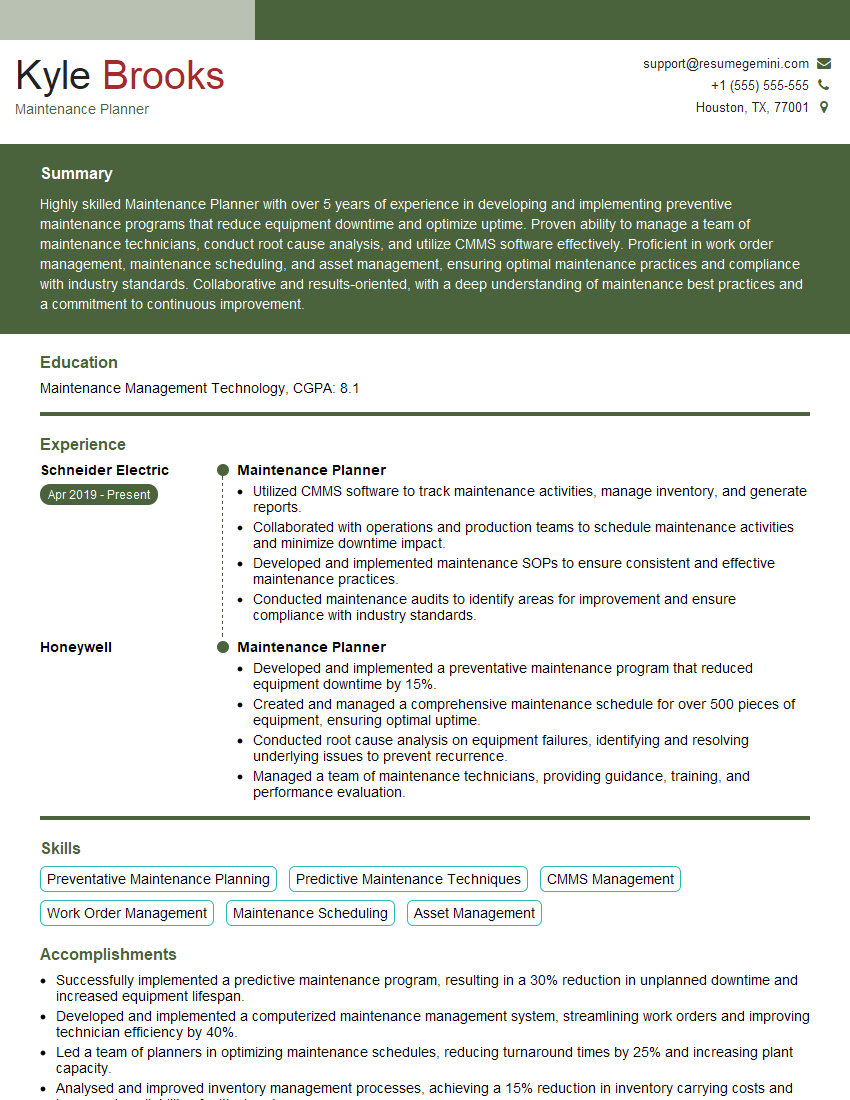
Maintenance Planner Resume Sample
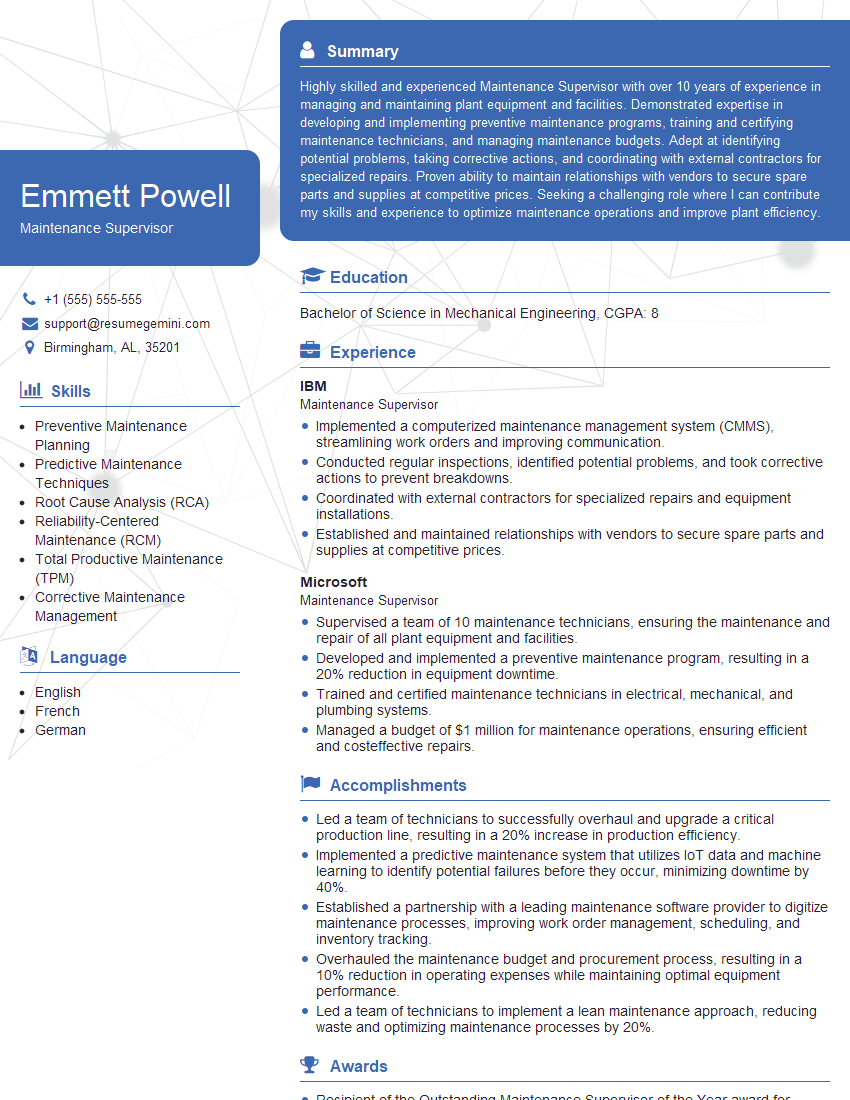
Maintenance Supervisor Resume Sample
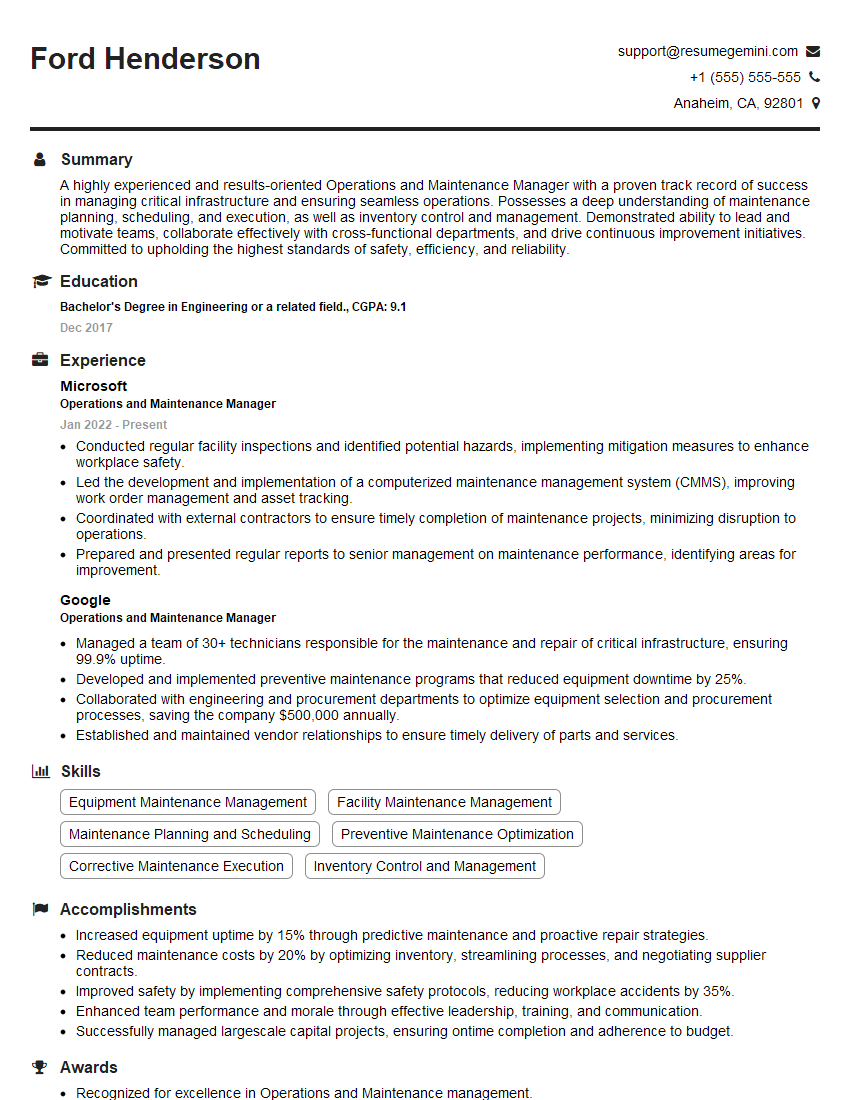
Operations and Maintenance Manager Resume Sample
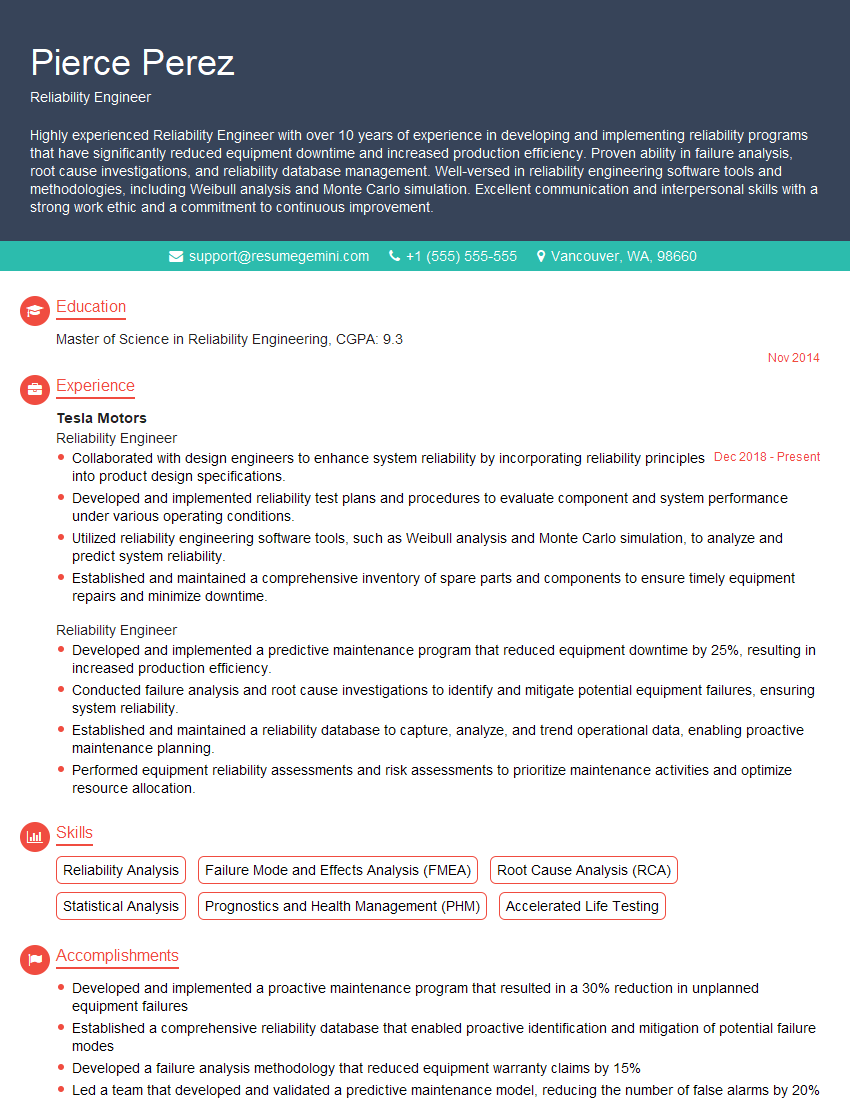
Reliability Engineer Resume Sample
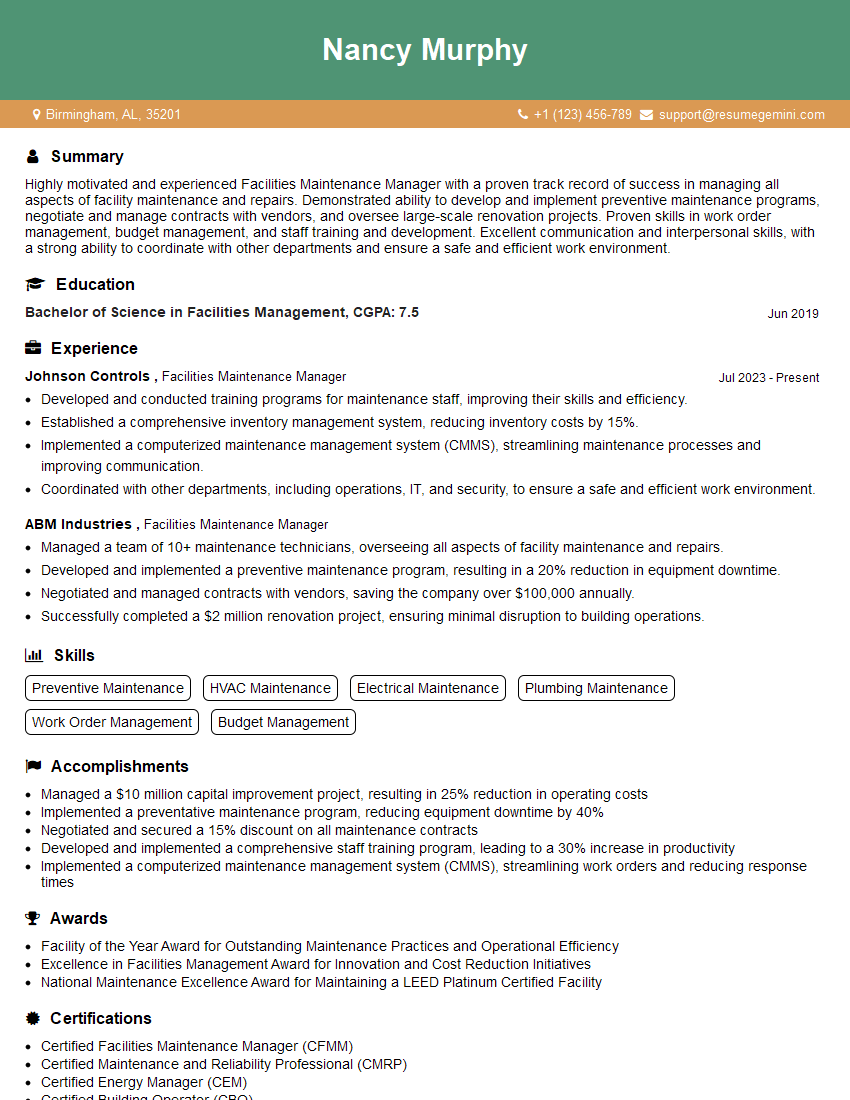
Facilities Maintenance Manager Resume Sample
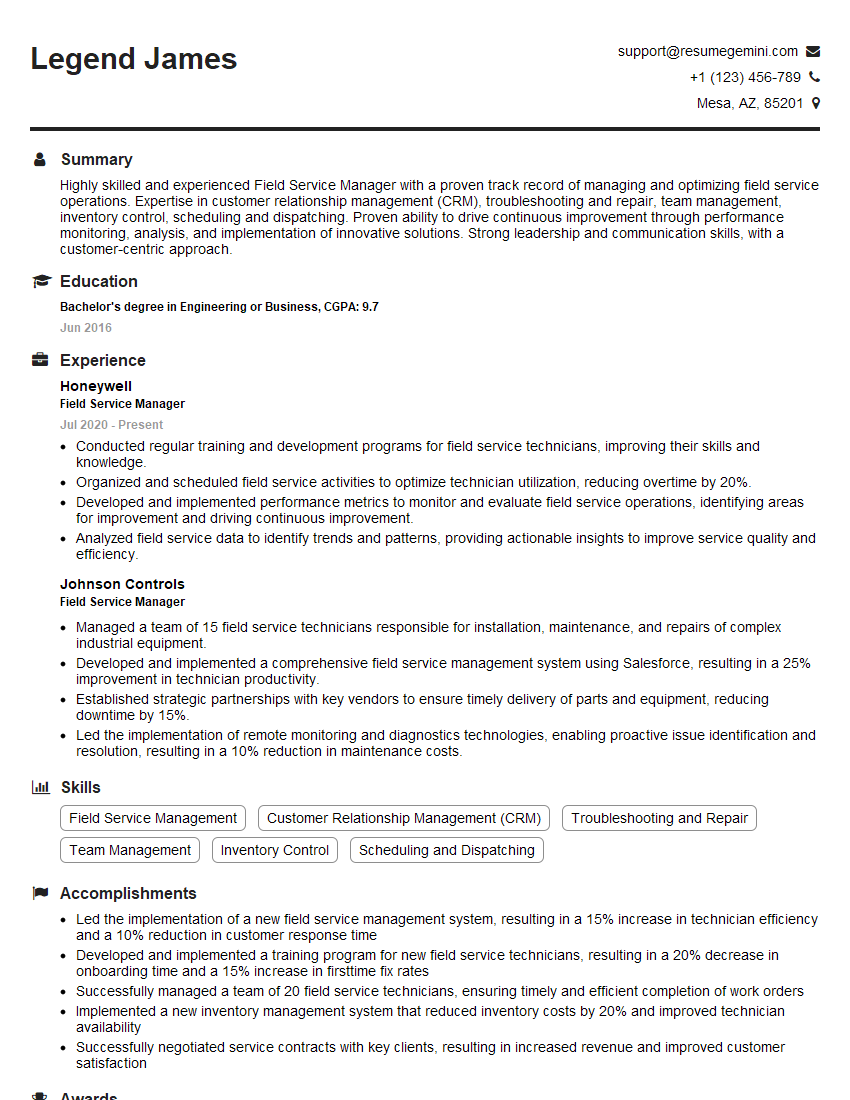
Field Service Manager Resume Sample
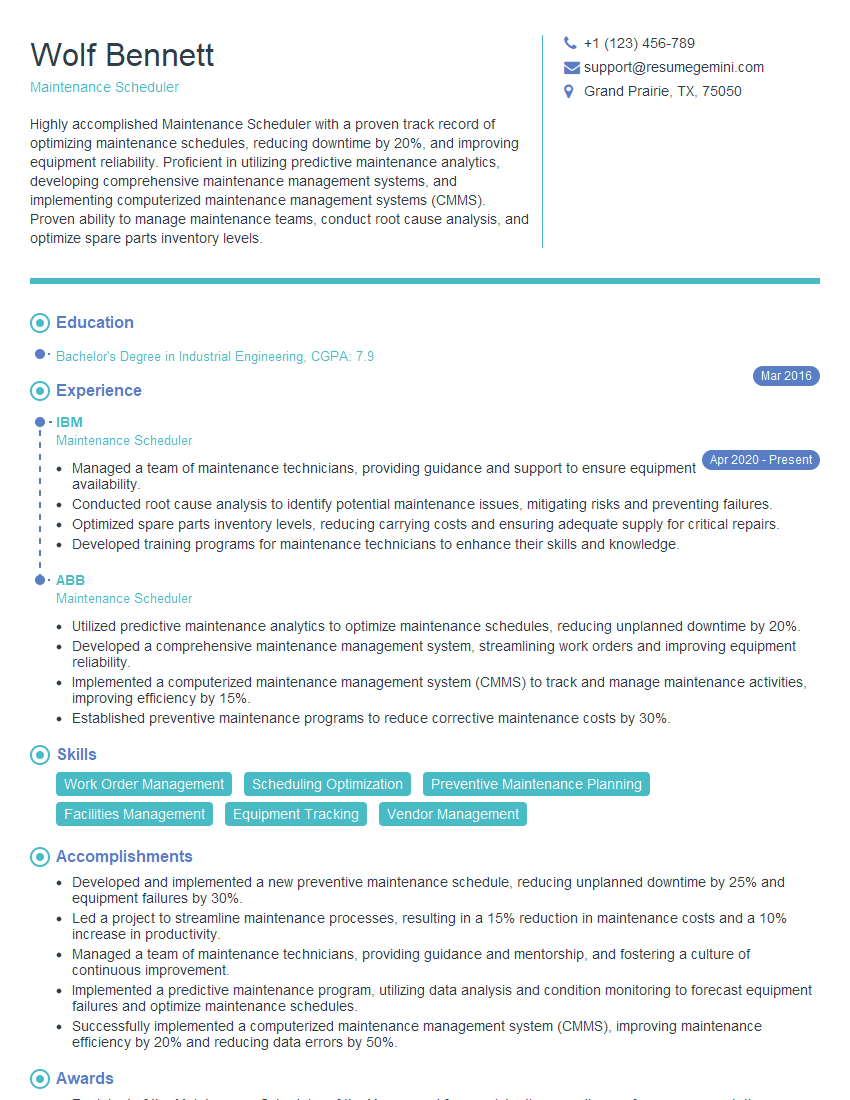
Maintenance Scheduler Resume Sample
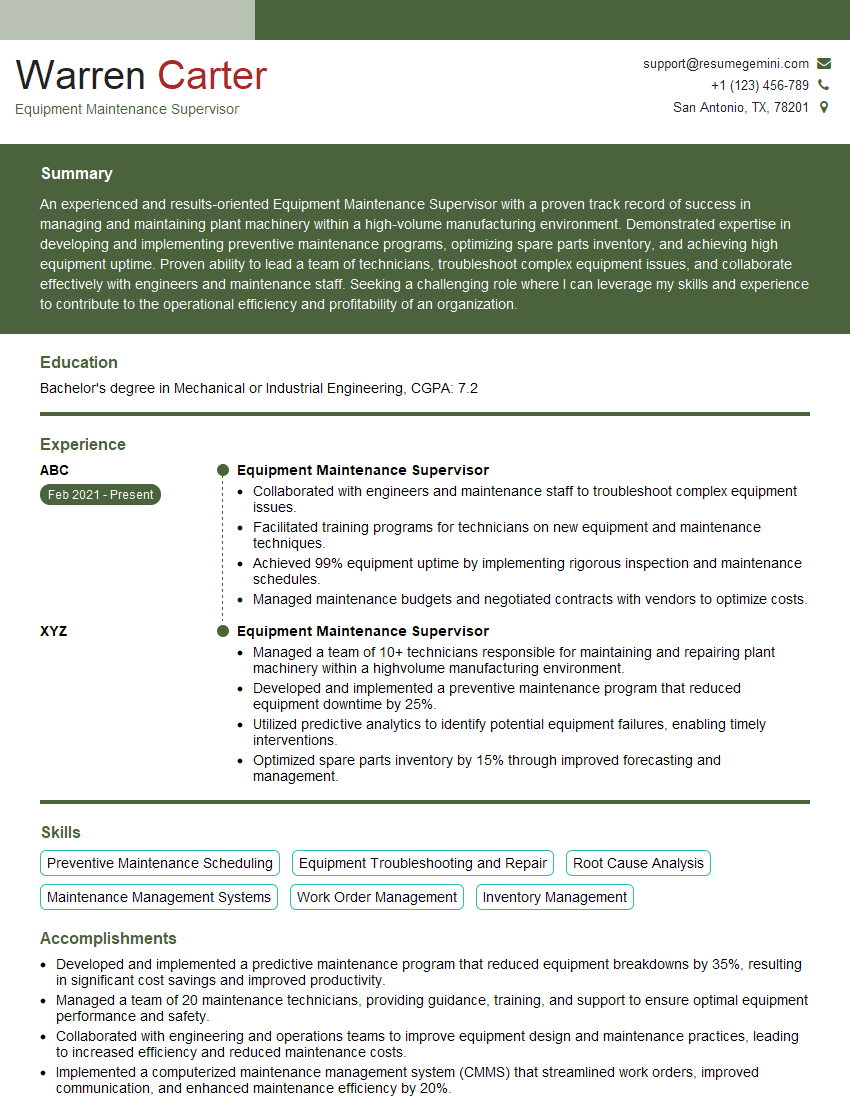
Equipment Maintenance Supervisor Resume Sample
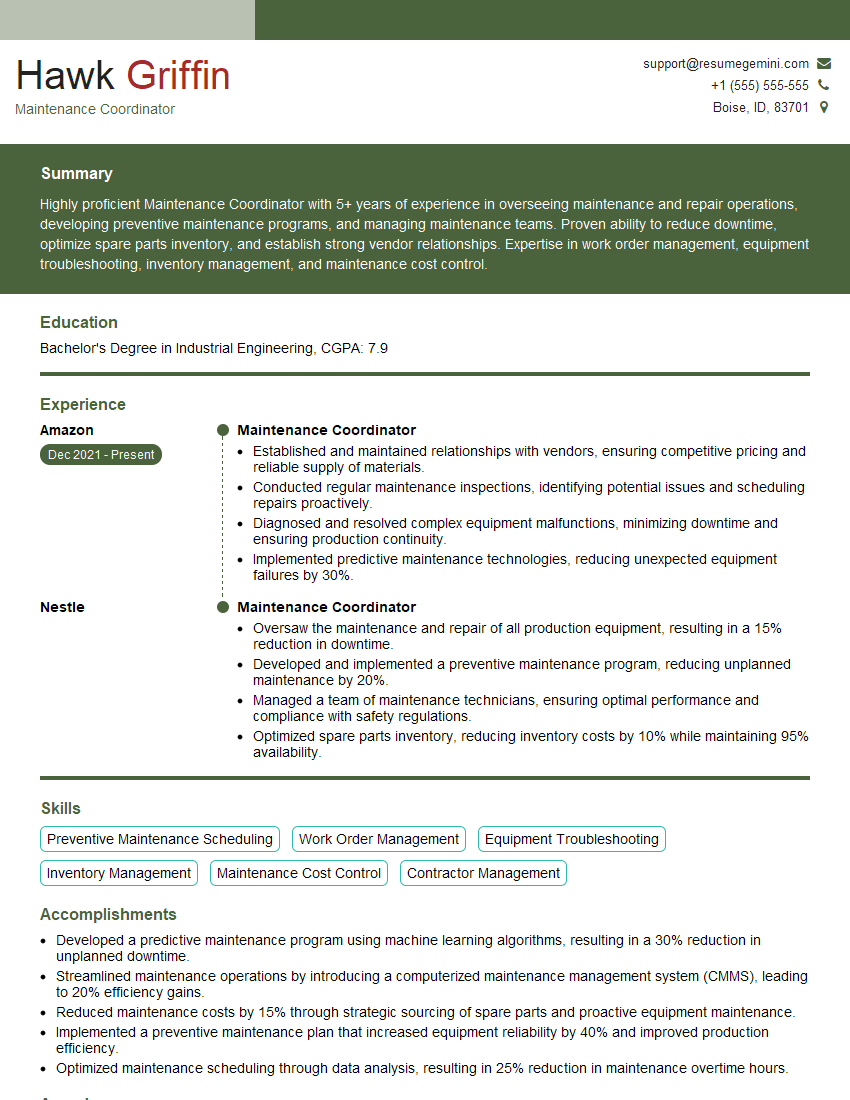
Maintenance Coordinator Resume Sample
Explore more articles
Users Rating of Our Blogs
Share Your Experience
We value your feedback! Please rate our content and share your thoughts (optional).
What Readers Say About Our Blog
Amazing blog
Interesting Article, I liked the depth of knowledge you’ve shared.
Helpful, thanks for sharing.