Every successful interview starts with knowing what to expect. In this blog, we’ll take you through the top Carpentry Certification interview questions, breaking them down with expert tips to help you deliver impactful answers. Step into your next interview fully prepared and ready to succeed.
Questions Asked in Carpentry Certification Interview
Q 1. Explain the different types of wood commonly used in carpentry and their properties.
Choosing the right wood is crucial in carpentry. Different woods offer varying strengths, workability, and aesthetic qualities. Here are a few common types:
- Hardwoods: These are denser and more durable than softwoods, making them ideal for furniture, flooring, and high-stress applications. Examples include Oak (strong, durable, beautiful grain), Maple (hard, smooth, excellent for fine woodworking), and Cherry (rich color, works well with stains).
- Softwoods: Generally less expensive and easier to work with than hardwoods. They’re often used for framing, sheathing, and less demanding projects. Examples include Pine (affordable, easy to work, readily available), Fir (strong, stable, good for framing), and Spruce (lightweight, resonant, used for musical instruments and some construction).
- Engineered Wood Products: These are manufactured from wood fibers or veneers bonded together. Plywood (layers of veneer glued together) offers strength and stability, while MDF (Medium-Density Fiberboard) is smooth and easy to finish, ideal for cabinetry and trim. Oriented Strand Board (OSB) is commonly used for sheathing.
The choice of wood depends on the project’s requirements – strength, budget, aesthetic appeal, and workability are key considerations. For instance, you wouldn’t use softwood for a fine dining table, nor would you use hardwood for basic framing due to cost.
Q 2. Describe the process of framing a standard wall.
Framing a standard wall is a fundamental carpentry skill. Here’s a breakdown of the process:
- Layout: Begin by establishing the wall’s dimensions and location using accurate measurements and layout tools like chalk lines and measuring tapes.
- Sole Plate: Place a pressure-treated sole plate (bottom plate) on the floor, ensuring it’s level and plumb. This forms the base of the wall.
- Studs: Erect vertical studs (typically 16 inches on center) on top of the sole plate. Ensure they’re plumb using a level and secured with appropriate fasteners (nails or screws).
- Top Plate: Once the studs are in place, install the top plate (horizontal member at the top of the wall) to create a rigid frame.
- Bracing: Add bracing – typically diagonal pieces – to strengthen the wall assembly and prevent racking (movement or distortion).
- Sheathing: Finally, attach sheathing (plywood or OSB) to the exterior of the framed wall for added strength, stability, and to provide a surface for siding or drywall.
This process requires precision and adherence to building codes to ensure a strong and safe structure. Proper use of levels, squares, and measuring tools is crucial for accuracy.
Q 3. How do you ensure accurate measurements and cuts in carpentry?
Accuracy is paramount in carpentry. Inaccurate cuts lead to wasted materials, structural weaknesses, and ultimately, project failure. Here’s how I ensure accuracy:
- Precise Measurement: Always measure twice, or even thrice, before cutting. Use a high-quality measuring tape and double-check your measurements. I often use a combination of tape measure and a speed square to verify angles and dimensions.
- Marking Techniques: Clearly mark your cutting lines using a sharp pencil or marking knife. A clear, precise mark prevents mistakes and ensures consistency.
- Appropriate Tools: Using the right tools for the job is essential. A sharp saw blade makes clean, accurate cuts, while a miter saw ensures precise angle cuts. Proper tool maintenance is also key.
- Layout Techniques: For complex cuts, carefully lay out the pieces on the material beforehand. This helps visualize the final product and prevents errors. Transferring accurate measurements from the blueprint is also crucial.
- Double-Checking: Before assembly, always double-check your cuts and measurements. A small error can lead to significant problems later on.
For instance, when cutting crown molding, I meticulously mark and measure each piece to ensure a perfect fit, always using a miter saw to achieve the correct angles.
Q 4. What safety precautions do you take when working with power tools?
Safety is my top priority when using power tools. I follow a strict protocol, including:
- Personal Protective Equipment (PPE): I always wear safety glasses, hearing protection, and a dust mask, depending on the task. For certain operations, I also use gloves and other protective gear.
- Tool Maintenance: I regularly inspect and maintain my power tools to ensure they’re in good working order. A well-maintained tool is less likely to malfunction, reducing the risk of injury.
- Proper Technique: I use each power tool according to the manufacturer’s instructions. This involves correct posture, grip, and feed rate to minimize the risk of kickback or other accidents.
- Work Area Safety: I maintain a clean and organized work area free of clutter and tripping hazards. This ensures there’s ample space to work safely and effectively.
- Safe Work Practices: I never rush and always focus on the task at hand. I avoid distractions and never operate power tools when tired or under the influence of drugs or alcohol.
Once, while using a table saw, I noticed a slight binding of the blade. I immediately stopped, checked the blade’s alignment and cleared the surrounding area before resuming work. A moment of caution prevents a potential injury.
Q 5. Explain the different types of joints used in carpentry.
Carpentry utilizes a wide variety of joints, each designed for specific purposes. Here are a few common types:
- Butt Joint: The simplest joint, where two pieces of wood meet end-to-end. It’s often reinforced with glue, screws, or dowels for strength.
- Lap Joint: One piece of wood overlaps another, creating a stronger connection than a butt joint. Variations include half-lap and dado joints.
- Miter Joint: Two pieces of wood are cut at angles and joined to form a corner. It’s often used in picture frames and decorative work.
- Dovetail Joint: Interlocking ‘tails’ and ‘pins’ create a very strong and visually appealing joint, typically used in drawers and fine furniture.
- Mortise and Tenon Joint: A tenon (projection) is fitted into a mortise (hole) for a strong, stable joint commonly used in furniture and structural applications.
The choice of joint depends on the project’s requirements. A butt joint might suffice for a simple shelf, but a dovetail joint is necessary for a high-quality drawer.
Q 6. Describe your experience with blueprint reading and interpretation.
Blueprint reading and interpretation are essential skills for any carpenter. My experience includes:
- Understanding Symbols and Conventions: I am proficient in interpreting architectural drawings, including understanding symbols for different materials, dimensions, and construction details. I have worked with various drawing formats such as AutoCAD and PDF blueprints.
- Measurements and Scale: I accurately interpret scales used in blueprints and translate them into real-world measurements. I’m adept at working with both metric and imperial units.
- Detailing: I can accurately read and interpret detailed sections, elevations, and plans. This allows me to understand the intricacies of a design and how different components fit together.
- Interpreting Specifications: I am experienced in working with written specifications and notes to supplement the information provided in the drawings.
In a recent project, a detail on the blueprint indicated a specific type of fastener to be used for a particular joint. Understanding this detail ensured the structure met building codes and was structurally sound.
Q 7. How do you handle unexpected problems or challenges on a job site?
Unexpected problems are inevitable on any job site. My approach involves:
- Assessment: First, I carefully assess the nature and extent of the problem. This involves identifying the root cause and its potential impact on the project.
- Problem-Solving: I brainstorm potential solutions, considering factors like safety, cost, time constraints, and the overall project goals. I often consult with other tradespeople or supervisors for additional input.
- Implementation: Once a solution is identified, I implement it carefully and efficiently, ensuring it addresses the issue without compromising safety or quality.
- Documentation: I meticulously document the problem, the solution implemented, and any lessons learned. This information is valuable for future projects and helps improve problem-solving skills.
On one project, we discovered a discrepancy between the blueprint and the actual foundation dimensions. By carefully assessing the situation, we worked with the architect and engineer to develop a solution that maintained structural integrity without significant delays or cost overruns. This involved modifying some framing elements to compensate for the foundation error.
Q 8. What experience do you have with different types of wood finishes?
My experience with wood finishes is extensive, encompassing both oil-based and water-based systems. I’m proficient in applying various types, from simple stains to complex lacquers and polyurethane finishes. The choice of finish depends heavily on the type of wood, its intended use, and the desired aesthetic. For example, a durable, hard-wearing polyurethane is ideal for kitchen cabinets, while a more subtle oil-based stain might be preferred for fine furniture to enhance the wood grain. I understand the importance of proper surface preparation – sanding to the correct grit, cleaning, and applying multiple thin coats for optimal results and a professional finish. I also have experience with shellac and varnish, each offering unique properties and applications. I’ve worked with both modern and traditional finishing techniques, understanding the strengths and weaknesses of each.
For instance, on a recent project restoring antique furniture, I used shellac to achieve a historically accurate finish, carefully matching the existing tone and sheen. On a modern kitchen remodel, however, a durable polyurethane was the better choice to withstand daily wear and tear.
Q 9. Describe your experience with installing various types of doors and windows.
Installing doors and windows requires precision and attention to detail. My experience includes working with a wide range of materials, including wood, fiberglass, and vinyl, and various styles like sliding, hinged, French, and casement windows, as well as solid core, hollow core, and French doors. I’m familiar with all aspects of installation, from rough framing and shimming to ensuring proper weatherstripping and sealing to prevent drafts and leaks. I’ve worked with both new construction and replacement installations, understanding the unique challenges each presents.
A memorable project involved installing custom-made mahogany French doors in a historic home. The precise fitting required meticulous measurements and careful alignment to preserve the integrity of the existing structure and maintain the historical charm. This project highlights my ability to adapt my skills to diverse situations and materials. I always check for proper alignment, squareness, and operational functionality before considering the installation complete.
Q 10. How do you ensure the structural integrity of your work?
Ensuring structural integrity is paramount in carpentry. I meticulously follow building codes and best practices, using engineered wood products where appropriate to enhance strength and stability. I always start with a thorough understanding of the project plans and specifications, ensuring all load-bearing elements are properly sized and supported. Proper fastening techniques are crucial – using the right screws or nails for the specific application and ensuring they’re driven correctly, avoiding overdriving and splitting the wood.
For example, when building a deck, I’d use pressure-treated lumber for the foundation and ensure adequate support with concrete footings. I pay close attention to the connections between framing members, using proper bracing and connectors to resist shear and bending forces. Regular inspections throughout the construction process help to identify and rectify any potential issues early on. I always prioritize safety and adhere to established safety protocols.
Q 11. What is your experience with using various hand tools?
My proficiency with hand tools is extensive, encompassing a full range of traditional and specialized instruments. I’m adept at using various saws (hand saws, circular saws, jigsaws), chisels, planes, hammers, screwdrivers, levels, and measuring tools with precision and efficiency. I understand the nuances of each tool and how to select the appropriate tool for the task at hand. I regularly sharpen and maintain my tools to ensure optimal performance and safety.
For instance, when creating intricate joinery, such as mortise and tenon joints, chisels and hand saws are essential for creating precise cuts. The proper use of these tools ensures a strong and aesthetically pleasing result. Proper tool maintenance saves time, reduces effort, and produces a higher quality of work.
Q 12. What software programs are you proficient in for carpentry design or planning?
While I primarily rely on my hands-on expertise, I’m also proficient in using SketchUp for 3D modeling and design. This allows me to visualize complex projects and ensure accuracy before beginning construction. I can create detailed models incorporating dimensions, materials, and joinery, facilitating better communication with clients and enabling more precise planning and execution. I also use basic CAD software, though my primary strength remains in practical construction.
Q 13. Explain your understanding of building codes and regulations.
Understanding building codes and regulations is crucial for safe and compliant construction. I’m familiar with local, state, and national building codes, including those related to structural integrity, fire safety, accessibility, and energy efficiency. I regularly consult code books and stay updated on any changes or amendments. I ensure all my work meets or exceeds these standards, employing appropriate materials and construction techniques. I also understand the importance of obtaining necessary permits before starting any construction project.
For example, I’m well-versed in the requirements for proper electrical wiring, plumbing installations, and the use of fire-resistant materials in specific locations. Compliance ensures the safety and longevity of the project, protects the client’s investment and minimizes liability.
Q 14. Describe your experience with working on both residential and commercial projects.
I have extensive experience working on both residential and commercial projects, ranging from small renovations to large-scale constructions. Residential projects often involve more personalized design elements and close collaboration with clients. Commercial projects usually entail adhering to strict timelines and budgets, requiring efficient planning and execution. My experience spans various construction phases, from initial planning and design to final inspections and project completion. I adapt my approach to meet the unique challenges and requirements of each project type.
For instance, a recent residential project involved a complete kitchen remodel, requiring attention to detail and close collaboration with the client to ensure their vision was realized. Conversely, a commercial project involved the construction of multiple office spaces, necessitating efficient scheduling, effective team management and strict adherence to the project’s specifications.
Q 15. How do you manage your time and prioritize tasks effectively on a job site?
Effective time management on a job site is crucial for staying on schedule and within budget. My approach is threefold: planning, prioritization, and communication. First, I meticulously review blueprints and specifications to create a detailed work plan, breaking down the project into manageable tasks with estimated timelines. This involves identifying dependencies – tasks that must be completed before others can begin. Second, I prioritize tasks based on urgency and impact. Critical path activities, those essential for project completion, get top priority. Third, I maintain open communication with the team and clients. Regular updates prevent misunderstandings and allow for quick adjustments to the schedule if unexpected issues arise. For example, on a recent kitchen renovation, I prioritized installing the plumbing rough-in before the cabinets, avoiding costly rework later. This proactive planning and clear communication ensured the project remained on track despite a supplier delay on the countertops.
Career Expert Tips:
- Ace those interviews! Prepare effectively by reviewing the Top 50 Most Common Interview Questions on ResumeGemini.
- Navigate your job search with confidence! Explore a wide range of Career Tips on ResumeGemini. Learn about common challenges and recommendations to overcome them.
- Craft the perfect resume! Master the Art of Resume Writing with ResumeGemini’s guide. Showcase your unique qualifications and achievements effectively.
- Don’t miss out on holiday savings! Build your dream resume with ResumeGemini’s ATS optimized templates.
Q 16. Describe your experience working with different types of building materials.
My experience encompasses a wide range of building materials, from traditional lumber and plywood to engineered wood products, composite materials, and various metals. I’m proficient in working with hardwoods like oak and maple, understanding their properties and how best to cut, join, and finish them. I also have extensive experience with softwoods like pine and fir, appreciating their cost-effectiveness for framing and structural components. Engineered wood products, such as I-joists and laminated veneer lumber (LVL), are frequently used in modern construction due to their strength and dimensional stability. I’m adept at working with these materials, understanding their limitations and best practices for installation. Working with metals, such as steel for framing or aluminum for trim, requires different techniques and tools, knowledge I’ve gained through practical experience and continuous learning.
Q 17. Explain your problem-solving skills in relation to a specific carpentry challenge.
During a recent project involving the installation of a complex curved staircase, I encountered a challenge in achieving precise alignment of the treads and risers. The initial design had slight inaccuracies leading to gaps and inconsistencies. My problem-solving approach involved: 1) Careful measurement and analysis: I re-measured all components and identified the specific points of deviation. 2) Creative adjustment: Instead of scrapping the work, I developed a solution using shims and carefully adjusted cuts to compensate for the inaccuracies, ensuring a perfect fit. 3) Testing and refinement: Before final installation, I dry-fitted the components to verify the solution. This iterative process ensured the final product met the design specifications and looked impeccable.
Q 18. How do you maintain a clean and organized work area?
Maintaining a clean and organized work area is paramount for safety and efficiency. My strategy involves a combination of proactive and reactive measures. Proactively, I plan the layout of the work area before starting, designating specific zones for tools, materials, and waste. I use tool organizers, clearly labeled containers, and strategically placed drop cloths to prevent debris accumulation. Reactively, I consistently clean up spills and debris throughout the workday and perform a thorough cleanup at the end of each day. This ensures a hazard-free work environment and prevents accidents. I regularly maintain my tools, sharpening blades and cleaning surfaces, which also contributes to a tidier workspace. Think of it like a well-organized kitchen – everything has its place, making it easy to find and use.
Q 19. Describe your experience with using various types of fasteners.
My experience with fasteners is extensive, covering various types for different applications. I regularly use nails, screws, bolts, and specialized fasteners like lag bolts and wood screws. I understand the strengths and weaknesses of each type, selecting the appropriate fastener based on the material, load requirements, and aesthetic considerations. For instance, I use galvanized nails for outdoor projects to resist corrosion, while I might opt for countersunk screws for a cleaner finish on interior trim. My skill extends to using specialized tools for driving fasteners, ensuring they are installed securely and correctly. I am also familiar with various techniques for pre-drilling pilot holes to prevent wood splitting, especially when working with hardwoods.
Q 20. What is your experience with troubleshooting common carpentry problems?
Troubleshooting is a daily occurrence in carpentry. Common problems include warped wood, uneven surfaces, and squeaky floors. When encountering warped wood, I assess the cause (moisture, improper storage) and may use techniques like planing or steaming to correct the issue. Uneven surfaces often require careful sanding or shimming. Squeaky floors, a frequent problem, may be due to loose nails or insufficient support, which can often be rectified by reinforcing the subfloor or using specialized floor squeak eliminators. My approach involves careful observation, methodical testing, and a systematic elimination of possible causes. I always prioritize safety and avoid any shortcuts that could compromise the structural integrity of the building.
Q 21. How do you ensure accuracy when installing cabinets or countertops?
Accuracy in installing cabinets and countertops is paramount. My process begins with precise measurements, double-checking dimensions multiple times to avoid costly mistakes. I use laser levels and measuring tapes to ensure perfectly level and plumb installations. Careful planning and preparation are essential. Before installation, I create templates to ensure a precise fit and account for any necessary adjustments. Dry-fitting is crucial to verify the fit and make any necessary corrections before applying adhesives or fasteners. I also use shims to ensure that countertops are perfectly level, even on uneven surfaces. Paying attention to details and taking a meticulous approach ensures a seamless and professional finish.
Q 22. Explain your understanding of different types of roof structures.
Roof structures are the backbone of any building, providing protection from the elements. Understanding their various types is crucial for a carpenter. They can be broadly classified into several categories based on their shape and construction:
- Gable Roof: This is the most common type, featuring two sloping sides that meet at a ridge. Think of the classic A-frame house. They’re simple to construct and offer good ventilation.
- Hip Roof: All four sides slope downwards to a ridge. This design is more aerodynamic and resistant to high winds, making it a popular choice in storm-prone areas. They also offer excellent water runoff.
- Gambrel Roof: This style features two slopes on each side, with the lower slope being steeper than the upper. This design allows for more attic space than a gable roof.
- Mansard Roof: Similar to a gambrel roof, but with even steeper lower slopes, often featuring dormer windows. This creates significant vertical space suitable for additional rooms.
- Shed Roof: This simple design has one sloping side and is often used for smaller structures like sheds or extensions. Its simplicity makes it quick and cost-effective to build.
- Flat Roof: While appearing flat, they actually have a slight slope for water drainage. They require careful waterproofing and are more susceptible to leaks if not properly maintained. They are becoming increasingly popular in modern architecture, though often require more specialized knowledge and materials.
My experience encompasses building with all these roof types, adapting techniques to suit materials, weather conditions, and specific design requirements.
Q 23. Describe your experience working as part of a team.
Teamwork is fundamental in carpentry. On numerous projects, I’ve collaborated effectively with framers, roofers, finish carpenters, and electricians. For example, during a recent large-scale renovation, we had a tight deadline. Effective communication was key. We used daily huddles to discuss progress, identify potential roadblocks, and coordinate tasks. I ensured all team members understood their roles and responsibilities, preventing overlaps or delays. My role often involved clarifying instructions and coordinating material deliveries. We successfully completed the project ahead of schedule, highlighting the power of collaboration and efficient planning. I am adept at both leading and supporting within a team environment, always prioritizing the collective goal.
Q 24. How do you handle customer complaints or requests for changes?
Customer satisfaction is paramount. When addressing complaints or change requests, I follow a structured approach. First, I actively listen to understand the issue fully. I ask clarifying questions to ensure I grasp the customer’s concerns completely. Next, I present potential solutions, clearly outlining the implications of each. This includes discussing timeframes and cost adjustments (if applicable). Transparency is crucial. I explain the steps involved and keep the customer informed throughout the process. For instance, on a recent project, the homeowner wanted to change the type of flooring halfway through. I calmly explained the extra time and materials required, providing a revised quote. The communication prevented misunderstandings and resulted in a positive outcome.
Q 25. What are your salary expectations for this position?
My salary expectations are commensurate with my experience and skills, and align with the industry standard for a carpenter with my qualifications. I’m open to discussing specific compensation packages in relation to the responsibilities and benefits offered by this position.
Q 26. What are your long-term career goals in carpentry?
My long-term career goal is to become a project manager in carpentry. I aspire to manage larger-scale projects, utilizing my expertise to oversee teams and ensure projects are delivered efficiently and to the highest quality standards. I’m particularly interested in sustainable building practices and incorporating innovative techniques. I’m currently investing in further education to strengthen my project management capabilities and deepen my knowledge of sustainable construction methods.
Q 27. Describe your experience with using a laser level.
I have extensive experience using laser levels for various tasks, from establishing precise levels for foundations to ensuring accurate placement of roof trusses. It’s an invaluable tool for ensuring accuracy and efficiency. I’m proficient in using both rotary and line lasers, understanding their limitations and applications. For instance, when installing kitchen cabinets, the laser level ensures perfectly aligned units, resulting in a professional and aesthetically pleasing finish. I can also adjust my approach based on site conditions, using alternative leveling methods when necessary (such as using a water level in confined spaces).
Q 28. What is your understanding of sustainable building practices?
Sustainable building practices are crucial for minimizing environmental impact. My understanding includes selecting eco-friendly materials, such as reclaimed lumber or sustainably harvested wood. It also involves employing energy-efficient construction techniques, like proper insulation to reduce energy consumption. Furthermore, I’m familiar with strategies to reduce waste during construction, promoting responsible disposal of materials. For example, on a recent project, we used recycled materials for framing where possible and implemented a strict waste management plan, minimizing landfill contribution. I’m committed to continuous learning in this area, actively researching and implementing new sustainable practices.
Key Topics to Learn for Your Carpentry Certification Interview
- Blueprint Reading and Interpretation: Understanding architectural drawings, specifications, and construction documents. Practical application: Accurately measuring and cutting materials based on blueprint dimensions.
- Building Codes and Regulations: Familiarity with local, regional, and national building codes related to carpentry. Practical application: Ensuring projects meet safety standards and legal requirements.
- Framing Techniques: Proficiency in various framing methods for walls, floors, and roofs. Practical application: Building structurally sound and efficient frameworks for different building types.
- Material Selection and Estimation: Knowledge of different wood types, fasteners, and other materials. Practical application: Accurately estimating material needs and selecting appropriate materials for specific applications.
- Hand and Power Tool Operation: Safe and proficient use of various hand and power tools. Practical application: Demonstrating precision and efficiency in various carpentry tasks.
- Safety Procedures and Practices: Understanding and adhering to all relevant safety regulations and procedures. Practical application: Maintaining a safe work environment and preventing accidents.
- Finishing Techniques: Knowledge of various finishing methods, including sanding, staining, and painting. Practical application: Creating high-quality, aesthetically pleasing finished products.
- Problem-Solving and Troubleshooting: Ability to identify and resolve construction challenges on the job site. Practical application: Adapting to unexpected situations and finding creative solutions.
- Project Management and Time Management: Planning, scheduling, and managing carpentry projects efficiently. Practical application: Completing projects on time and within budget.
Next Steps
Mastering your Carpentry Certification opens doors to exciting career opportunities and higher earning potential. A strong, ATS-friendly resume is crucial for showcasing your skills and experience to potential employers. To make your resume stand out, consider using ResumeGemini. ResumeGemini is a trusted resource that can help you craft a professional and impactful resume, optimized for Applicant Tracking Systems (ATS). Examples of resumes tailored specifically for Carpentry Certification candidates are available to help guide you.
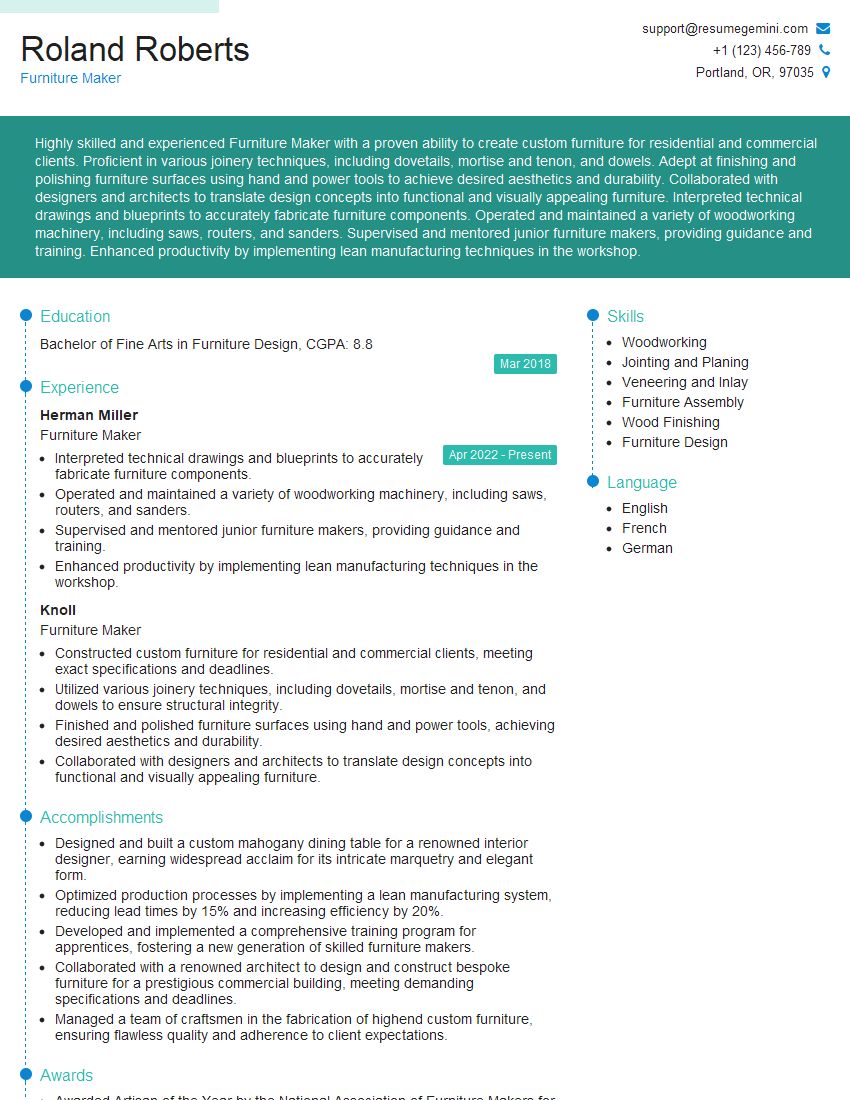
Furniture Maker Resume Sample
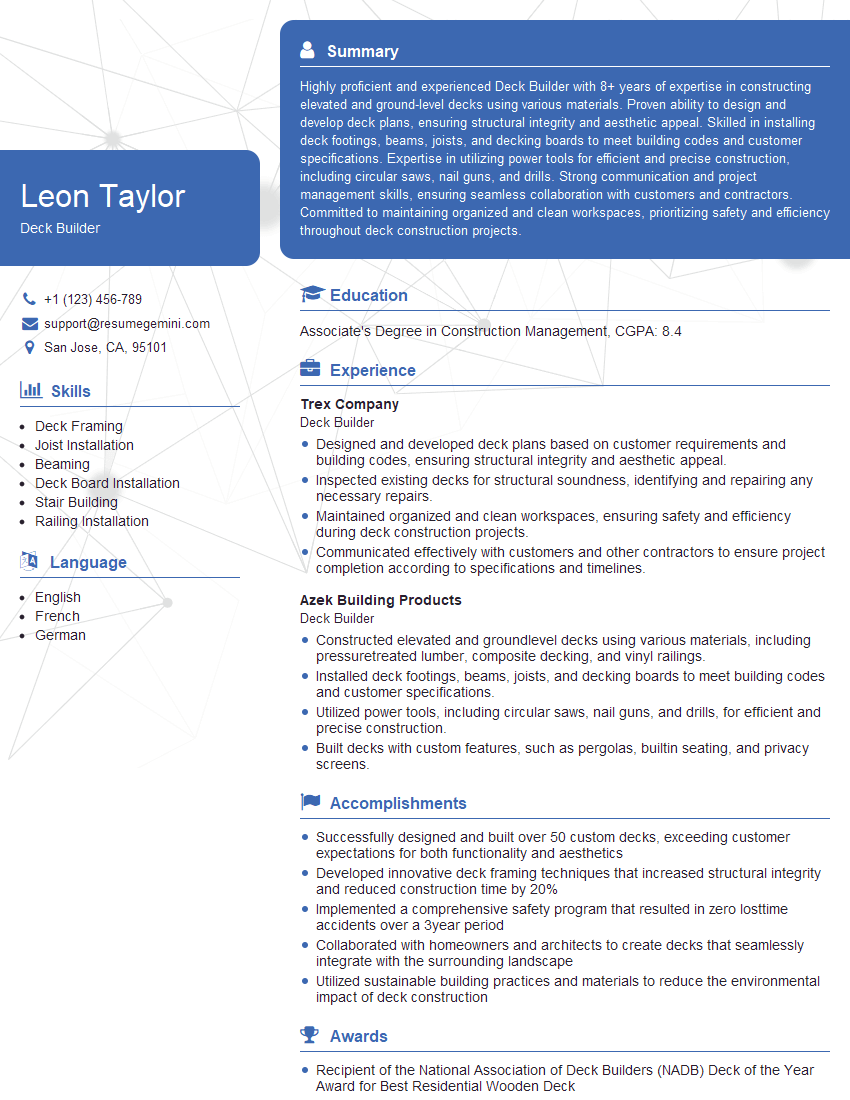
Deck Builder Resume Sample
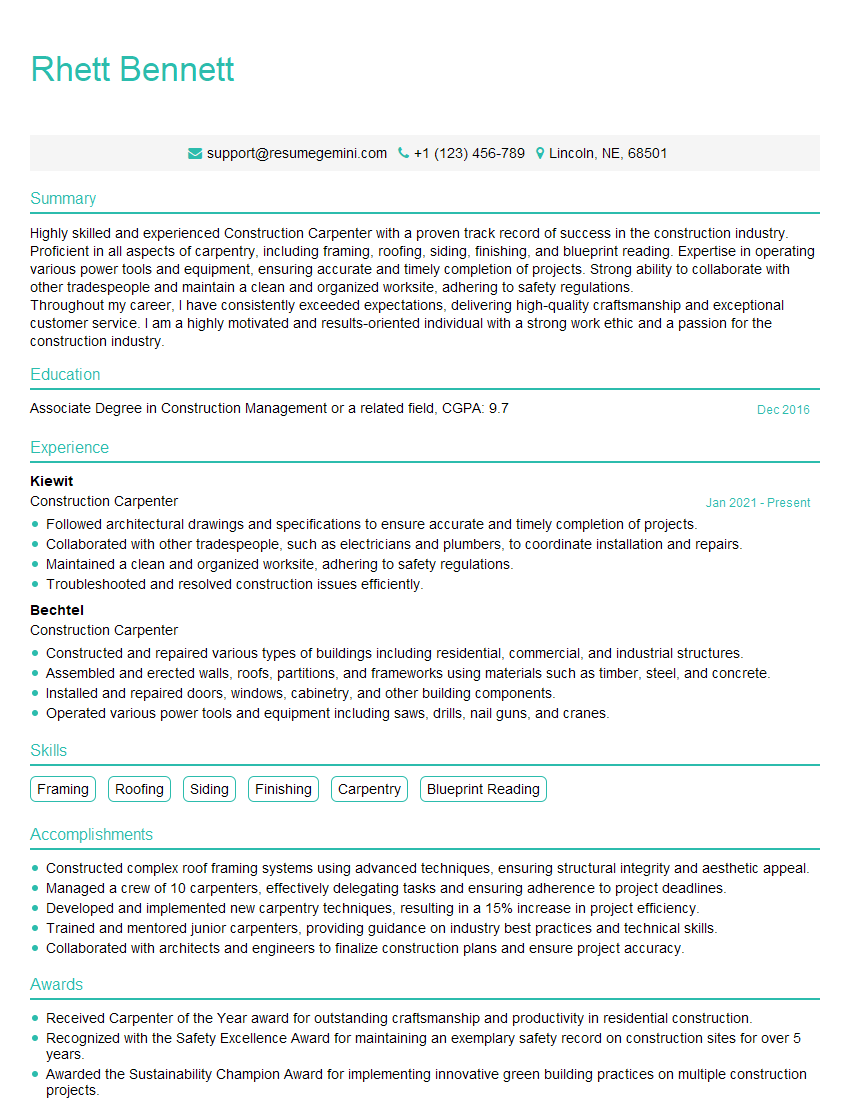
Construction Carpenter Resume Sample
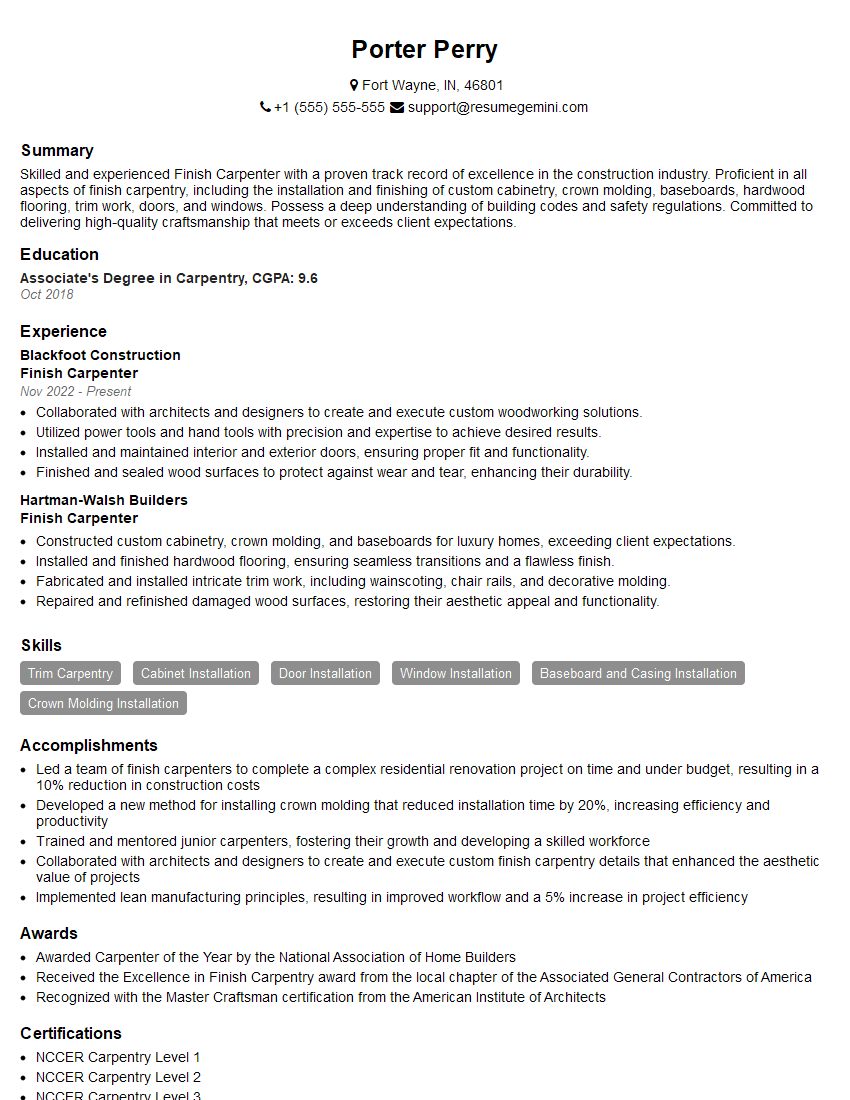
Finish Carpenter Resume Sample
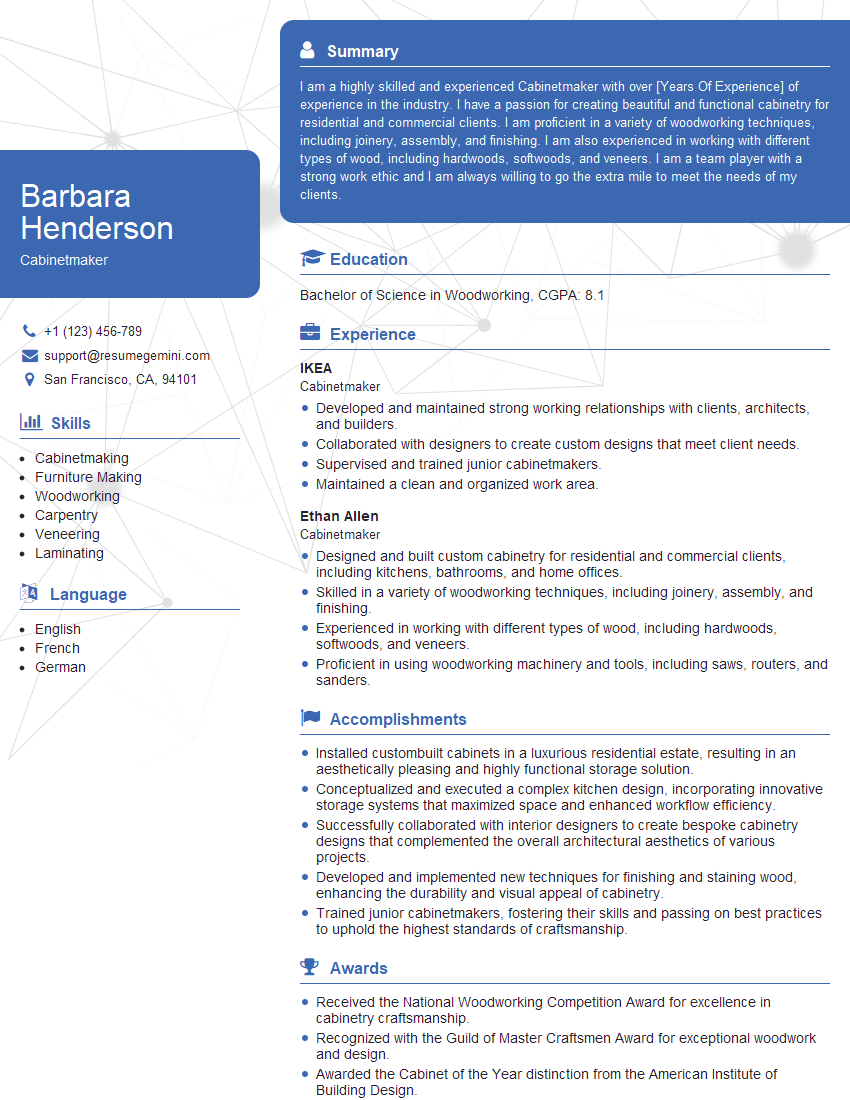
Cabinetmaker Resume Sample
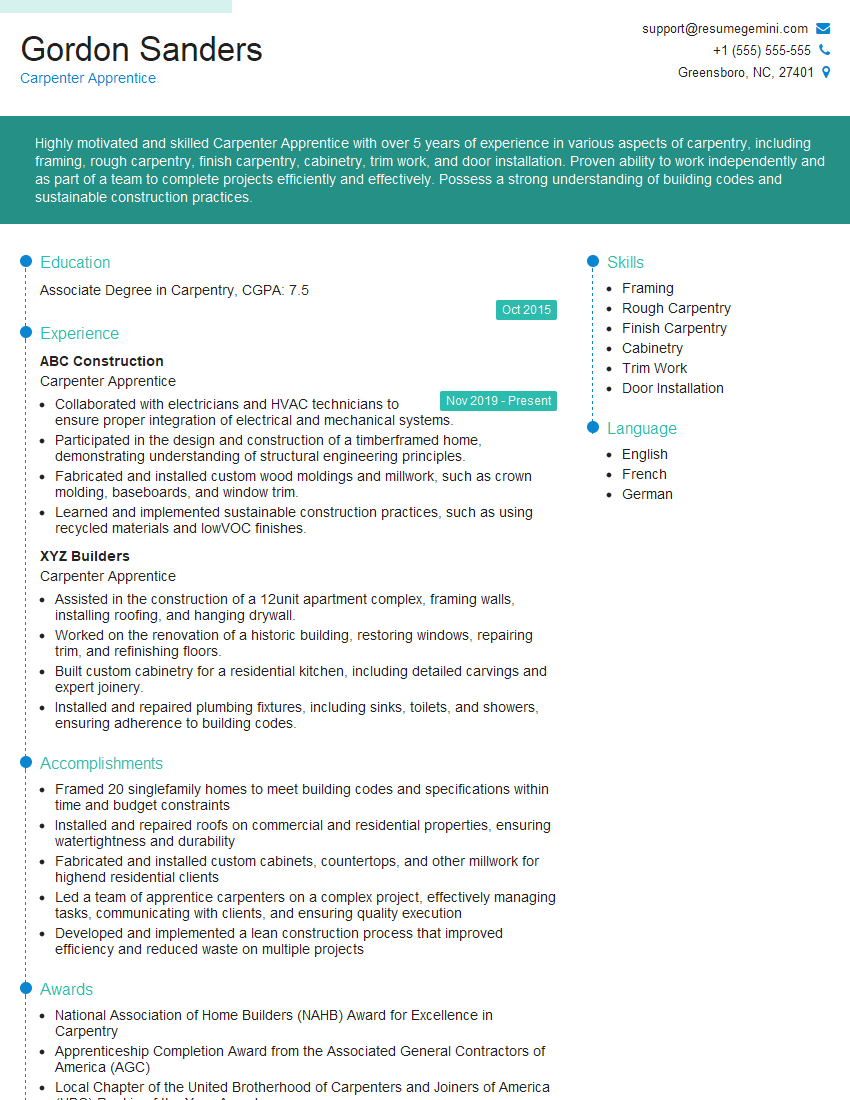
Carpenter Apprentice Resume Sample
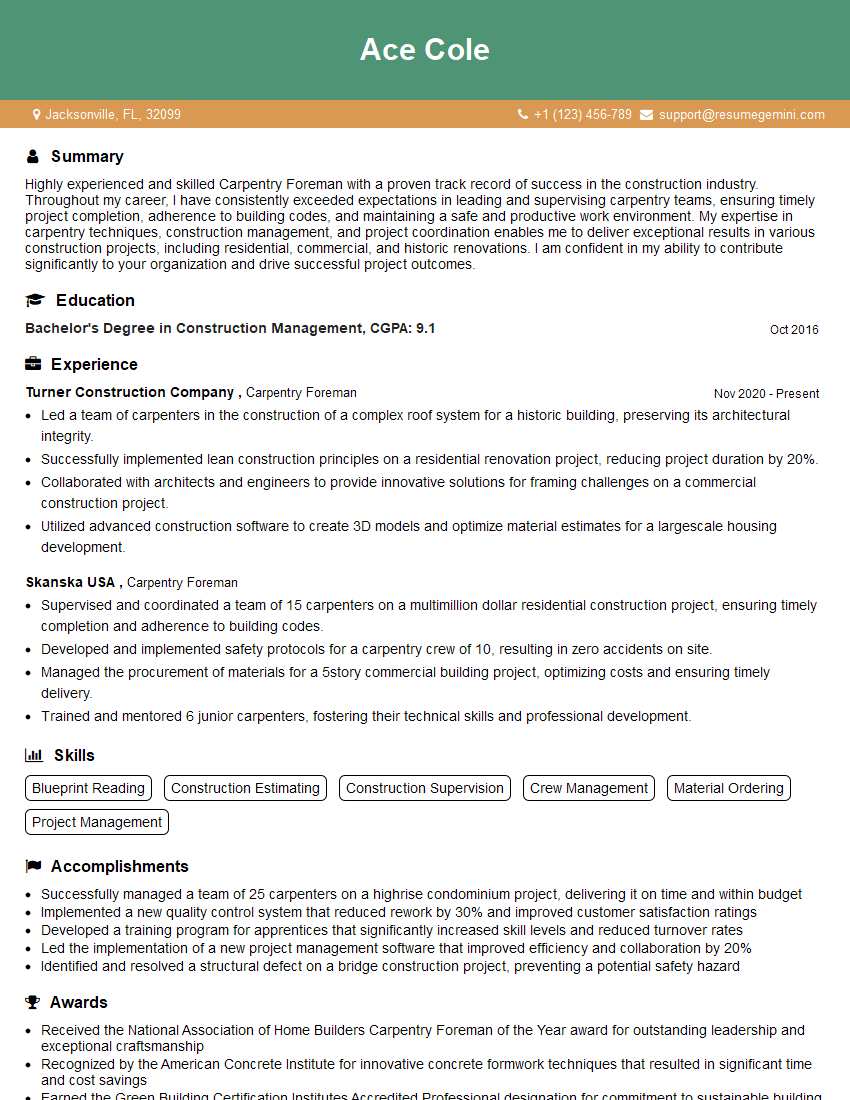
Carpentry Foreman Resume Sample
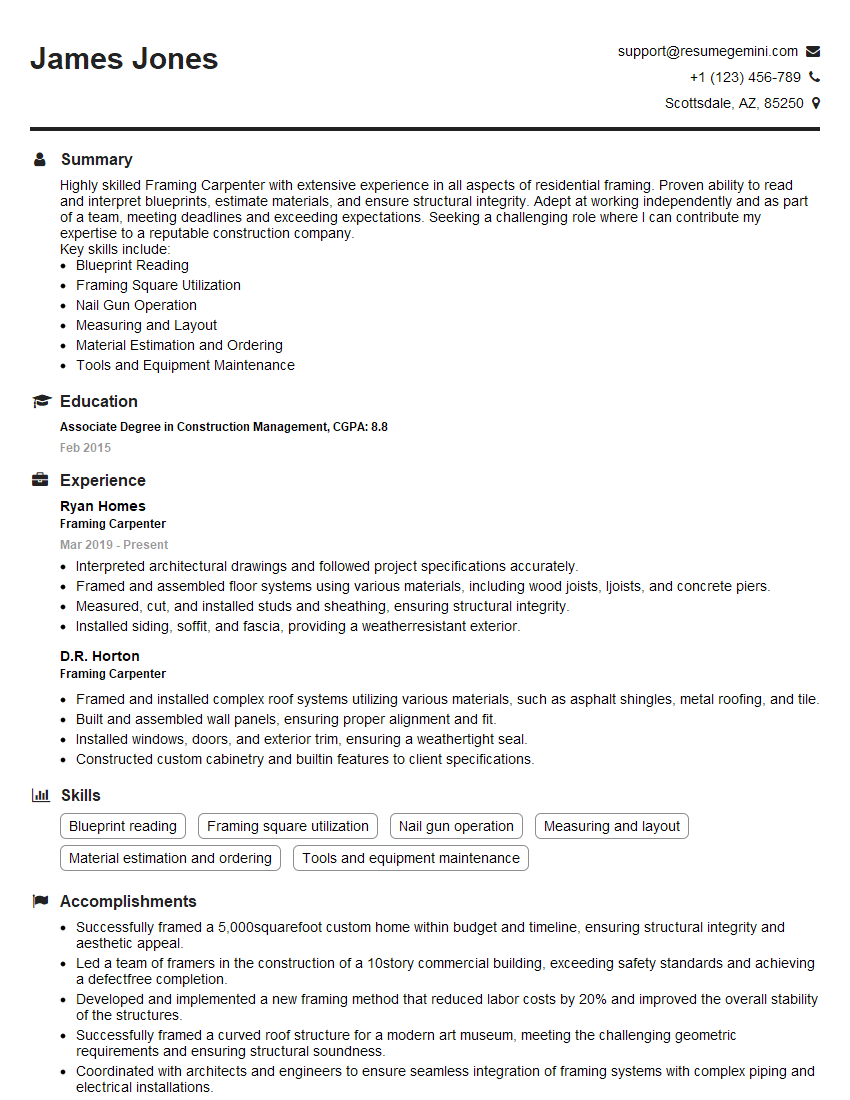
Framing Carpenter Resume Sample
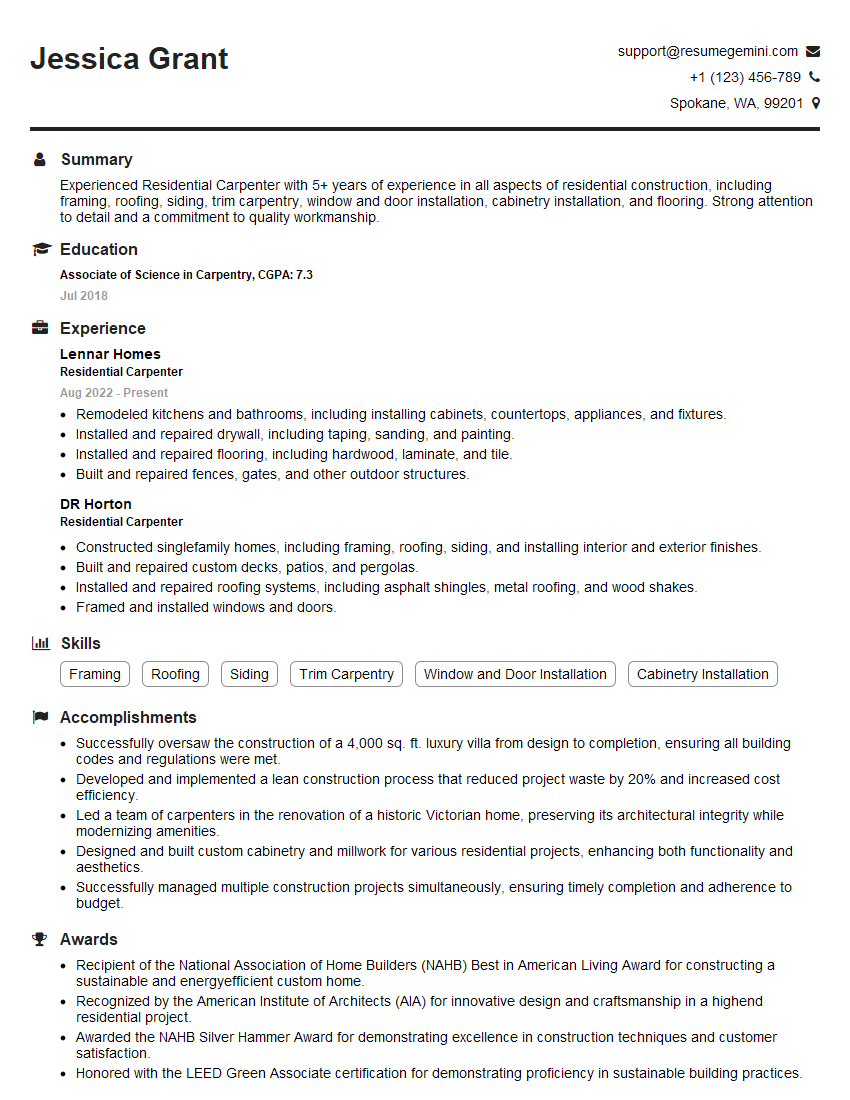
Residential Carpenter Resume Sample
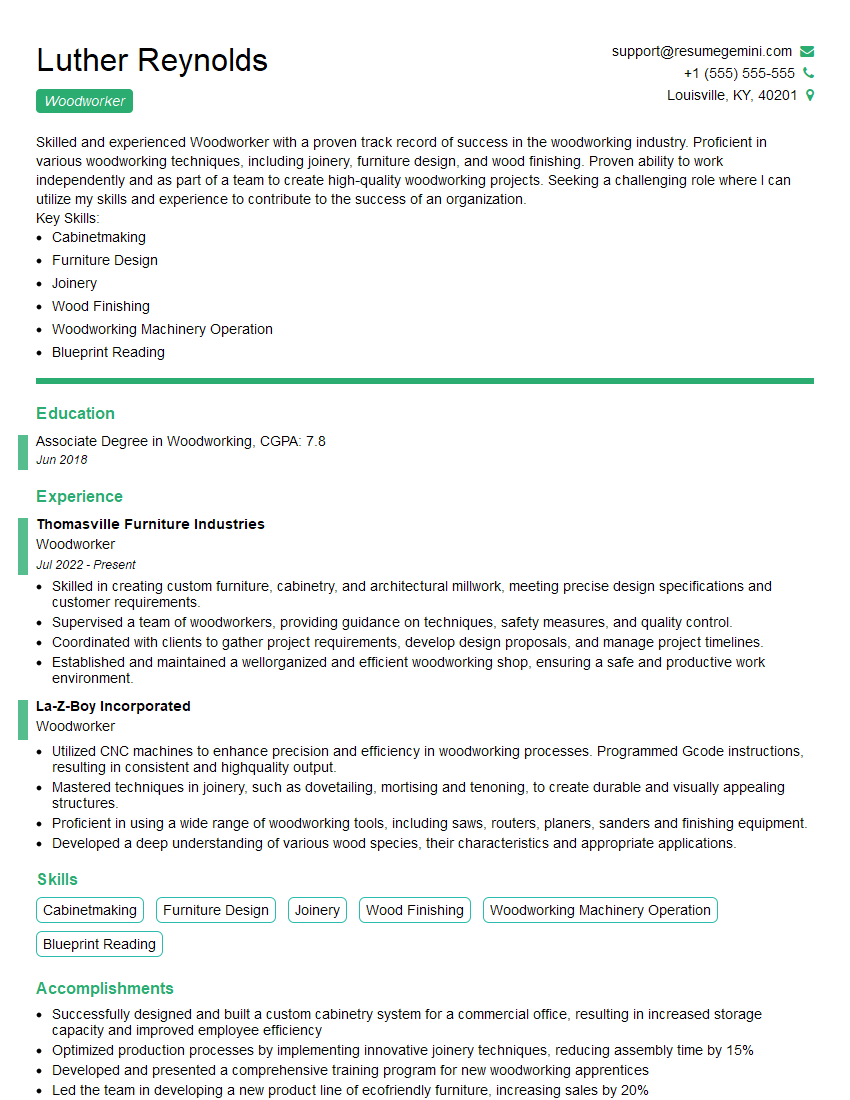
Woodworker Resume Sample
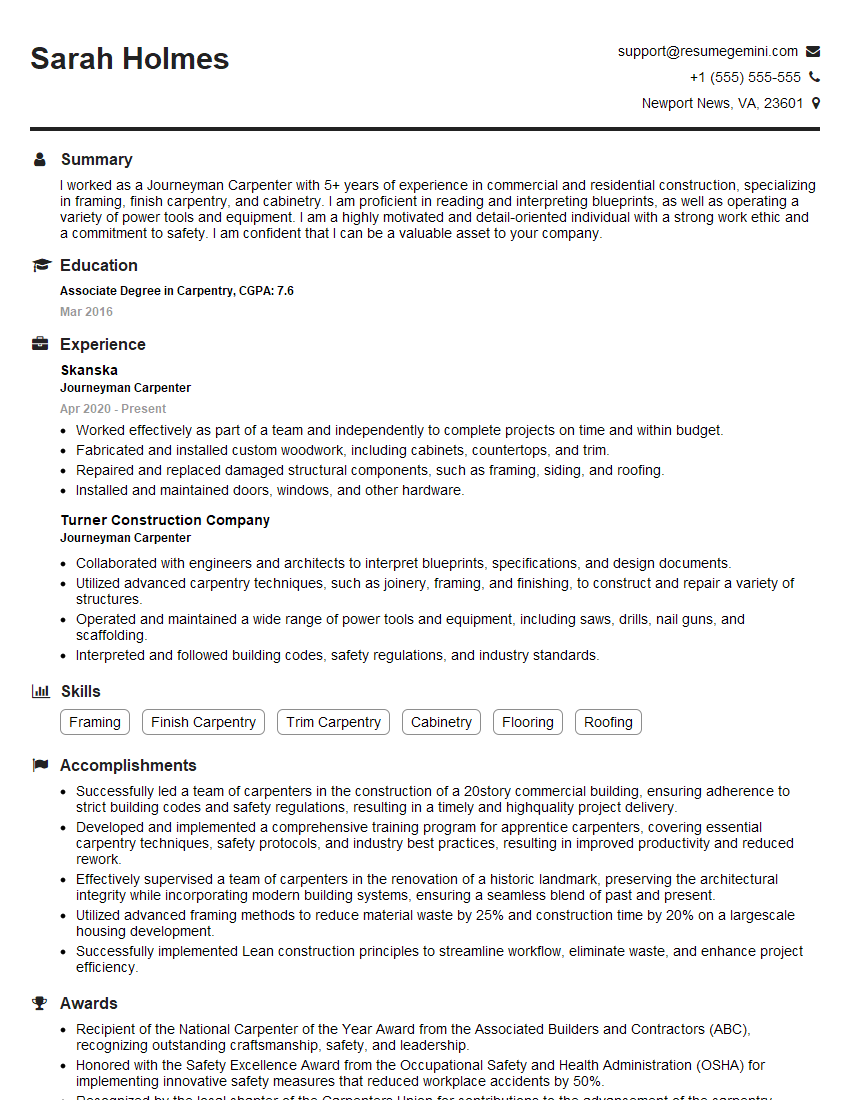
Journeyman Carpenter Resume Sample
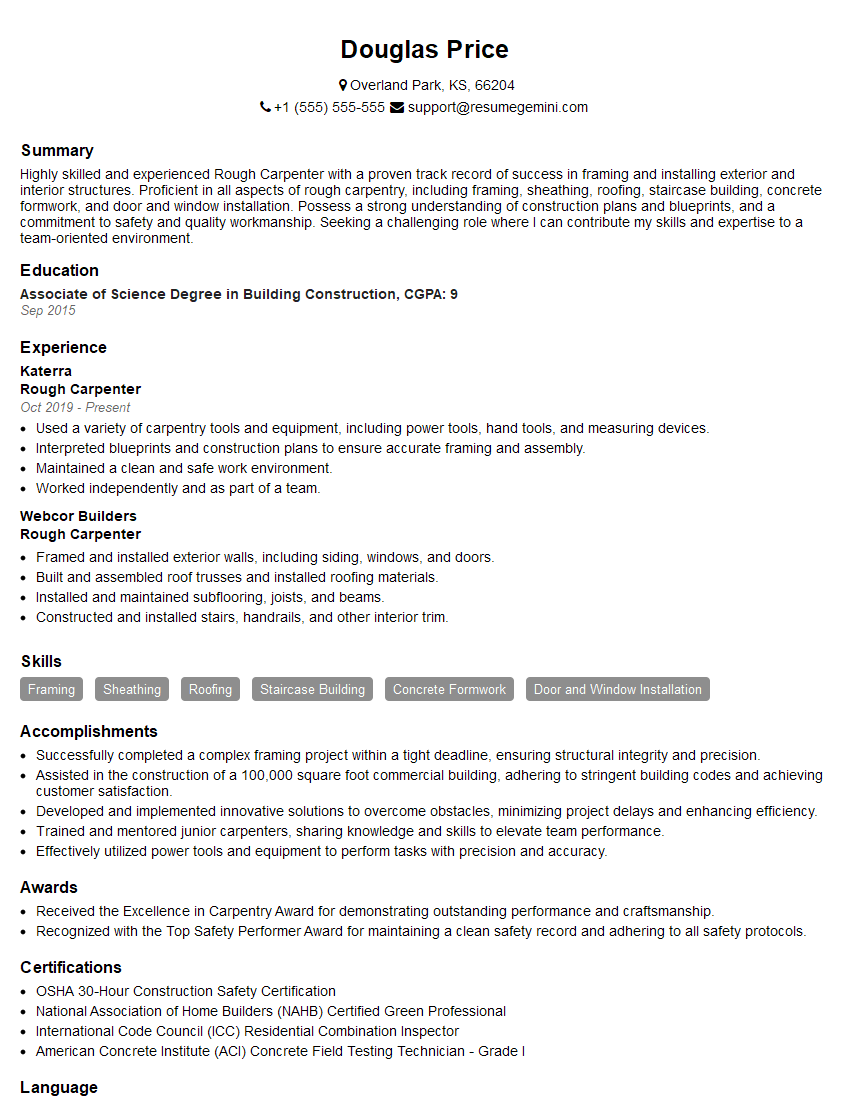
Rough Carpenter Resume Sample
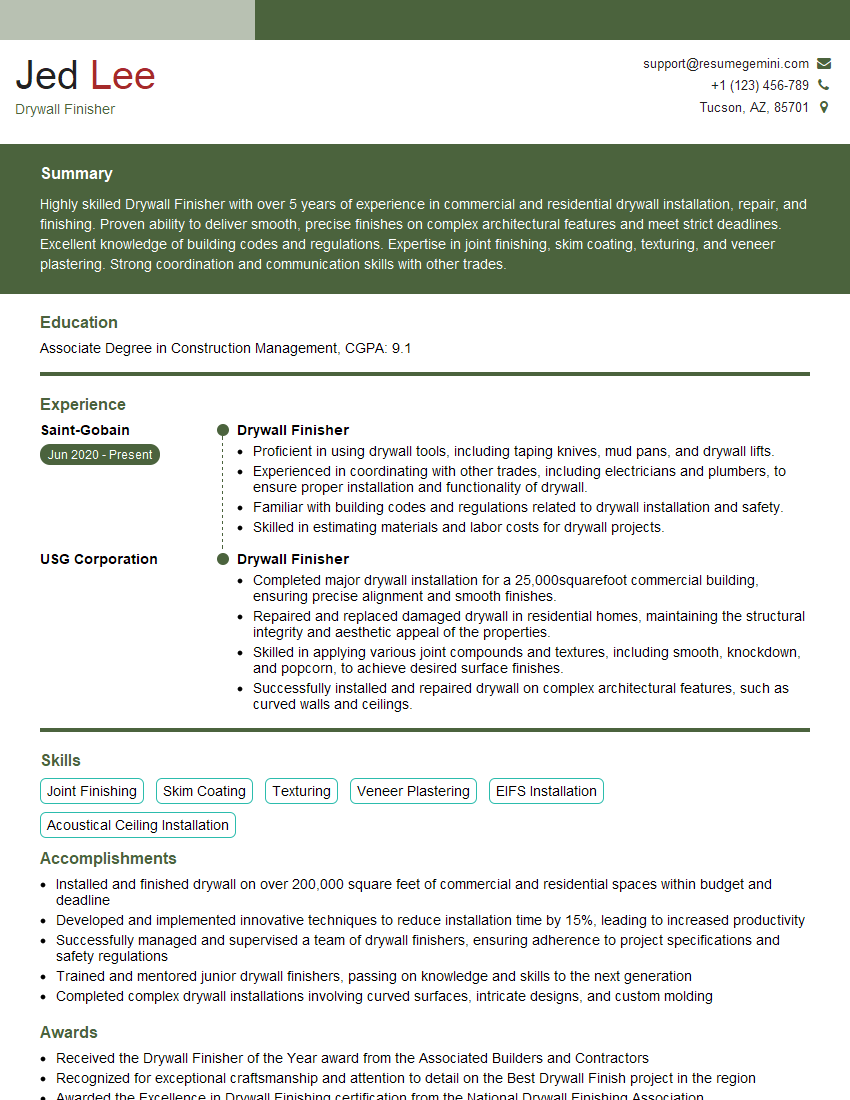
Drywall Finisher Resume Sample
Explore more articles
Users Rating of Our Blogs
Share Your Experience
We value your feedback! Please rate our content and share your thoughts (optional).
What Readers Say About Our Blog
Amazing blog
Interesting Article, I liked the depth of knowledge you’ve shared.
Helpful, thanks for sharing.