Interviews are more than just a Q&A session—they’re a chance to prove your worth. This blog dives into essential Cryosectioning interview questions and expert tips to help you align your answers with what hiring managers are looking for. Start preparing to shine!
Questions Asked in Cryosectioning Interview
Q 1. Describe the process of cryosectioning tissue samples.
Cryosectioning is a technique used to prepare thin sections of frozen tissue for microscopic examination. It’s a rapid method ideal for preserving the localization of soluble molecules and antigens, unlike paraffin embedding which requires extensive processing steps. The process involves several key steps:
- Tissue Freezing: Rapid freezing is crucial to minimize ice crystal formation which can damage tissue structure. This is often achieved using isopentane cooled by liquid nitrogen. Optimal freezing rates are essential for preserving tissue morphology.
- Mounting: The frozen tissue block is mounted onto a chuck using optimal mounting medium that prevents detachment during sectioning. This ensures smooth and consistent sectioning.
- Sectioning: A cryostat, a specialized microtome housed within a refrigerated chamber, is used to cut thin sections (typically 5-50 µm thick) from the frozen tissue block. The temperature within the cryostat is maintained at optimal levels depending on the tissue type to ensure the tissue remains firm enough for sectioning yet prevents shattering.
- Section Collection: Sections are collected on glass slides, often pre-coated with a substance like poly-L-lysine or albumin to enhance adhesion. This step requires a steady hand and careful maneuvering to prevent tearing.
- Staining (Optional): After sectioning, the sections can be stained using various histological methods depending on the application. This allows for visualization of specific cellular components or molecules.
Q 2. What are the optimal temperatures for cryosectioning different tissue types?
Optimal cryosectioning temperatures vary significantly depending on the tissue type and the desired section thickness. There’s no single magic number. It’s an iterative process of finding the sweet spot. Generally:
- Brain Tissue: Often sectioned around -20°C to -15°C. Too cold and it shatters; too warm and it compresses.
- Liver Tissue: Might require slightly warmer temperatures, around -18°C to -12°C, due to its different consistency.
- Muscle Tissue: Can be challenging and often needs temperatures between -20°C and -15°C but may benefit from slightly warmer temperatures for thicker sections.
- Fatty Tissue: Presents unique challenges, often necessitating slightly colder temperatures and potentially using specialized cryoprotectants to reduce ice crystal formation.
Experimentation is key. Start with a temperature range known to work for the tissue type, and adjust it based on your observations during sectioning. You’ll look for sections that are smooth, intact and free of large ice crystal artifacts.
Q 3. Explain the importance of cryoprotectants in cryosectioning.
Cryoprotectants are crucial in cryosectioning because they minimize the formation of ice crystals during freezing. Large ice crystals disrupt the tissue structure, leading to artifacts and poor-quality sections. These agents penetrate the cells and replace the water, reducing the amount of ice that forms upon freezing. Common cryoprotectants include:
- Sucrose: A readily available and relatively inexpensive option.
- Glycerol: A commonly used cryoprotectant, offering good protection.
- DMSO (Dimethylsulfoxide): A potent cryoprotectant but must be used with caution due to its potential toxicity.
The choice of cryoprotectant and its concentration depends on the tissue type and the specific application. For instance, delicate tissues like brain may benefit from a more gentle cryoprotectant and lower concentration compared to tougher tissues.
Think of it like this: cryoprotectants act as antifreeze for your tissue, preventing the formation of large, damaging ice crystals.
Q 4. What are the common artifacts encountered during cryosectioning and how can they be avoided?
Several artifacts can plague cryosectioning, including:
- Ice Crystal Formation: The most common artifact, caused by slow freezing. Minimize this by rapid freezing in isopentane cooled by liquid nitrogen.
- Compression: Sections are compressed during cutting, distorting tissue morphology. This can be minimized by adjusting the cryostat settings (e.g., knife angle, feed rate).
- Chatter: A vibration that produces a wavy appearance in the section. Check the stability of the cryostat, the sharpness of the blade, and the firmness of the tissue block.
- Folding/Creasing: Occurs when sections are improperly handled. Careful section collection is key to prevent this.
- Knife Marks: Scratches or imperfections on the blade can produce marks on the section. Regularly clean and sharpen the blade.
Avoiding these artifacts requires meticulous attention to detail at each stage of the process, from tissue preparation to section collection.
Q 5. How do you select the appropriate cryostat settings for different tissue types and thicknesses?
Selecting appropriate cryostat settings is crucial for optimal sectioning. Factors to consider include:
- Tissue Type: Harder tissues require colder temperatures and may tolerate thicker sections, while softer tissues might require warmer temperatures and thinner sections.
- Desired Section Thickness: This is set directly on the cryostat. Thinner sections (e.g., 5-10 µm) are often required for high-resolution microscopy.
- Knife Angle: A slightly angled knife can help avoid compression artifacts.
- Feed Rate: The speed at which the tissue advances into the knife. A slower feed rate is usually preferred for delicate tissues.
- Cryostat Temperature: As mentioned earlier, this depends on the tissue type. Start with a standard temperature for the tissue and adjust as needed based on the quality of the sections produced.
It is an iterative process. Start with appropriate settings for the tissue and fine-tune them based on section quality. Experience and observation play a critical role in mastering this skill.
Q 6. Describe the proper handling and storage of cryosectioned samples.
Proper handling and storage of cryosectioned samples is crucial to maintain their quality. Sections should be handled with extreme care to prevent tearing or creasing. After sectioning, the slides should be air-dried for a short time and then stored at -20°C to prevent degradation. This will maintain tissue integrity and antigenicity for later immunohistochemical staining or other analyses. In short:
- Immediate Handling: Handle gently, avoid touching the section directly.
- Air-Drying (Controlled): Allow for partial air drying to prevent the section from being easily dislodged.
- Storage: Store in a well-organized fashion, ideally at -20°C, to minimize ice crystal formation over longer storage times. Labeling is extremely important.
Avoid freeze-thaw cycles which can cause significant damage to the tissue.
Q 7. What are the advantages and disadvantages of cryosectioning compared to paraffin sectioning?
Cryosectioning and paraffin sectioning are both methods for preparing tissue for microscopy, but they have distinct advantages and disadvantages:
| Feature | Cryosectioning | Paraffin Sectioning |
|---|---|---|
| Speed | Fast, rapid processing | Slow, lengthy processing |
| Antigen Preservation | Excellent for many antigens | Can mask or destroy some antigens |
| Morphology | Can have ice crystal artifacts | Better morphological preservation, especially after proper fixation |
| Cost | Relatively low | Higher (due to reagents and processing time) |
| Applications | Immunohistochemistry, enzyme histochemistry, in situ hybridization | Routine histology, archiving |
The ‘best’ method depends entirely on the research question and the type of analysis needed. Cryosectioning shines in situations where speed and antigen preservation are paramount, while paraffin sectioning offers superior morphological preservation but at the cost of speed and potential antigen loss.
Q 8. How do you ensure the quality and reproducibility of cryosectioning results?
Ensuring high-quality and reproducible cryosectioning results hinges on meticulous attention to detail throughout the entire process, from sample preparation to sectioning technique. Think of it like baking a cake – if you skip a step or use inconsistent ingredients, the result won’t be reliable.
- Optimal Tissue Freezing: Rapid freezing is crucial to minimize ice crystal formation, which can damage tissue morphology. Using optimal cryoprotectants like OCT compound before freezing helps prevent this. Imagine freezing water quickly versus slowly – the slow freeze leads to larger ice crystals.
- Cryostat Maintenance: Regular maintenance, including cleaning the cryochamber and sharpening or replacing the blade, is non-negotiable. A dull blade will tear the tissue, leading to poor section quality.
- Consistent Sectioning Technique: Maintaining a constant speed and pressure during sectioning is essential for producing even, uniform sections. This requires practice and a steady hand.
- Temperature Control: Precise temperature control within the cryostat is vital. Too warm, and the tissue will soften and compress; too cold, and it will become brittle and crack. Slight adjustments are sometimes needed based on tissue type.
- Documentation: Meticulous documentation of all parameters – cryoprotectant used, freezing method, cryostat temperature, blade type, and section thickness – allows for reproducibility and troubleshooting. This allows others to replicate your work, or you to easily repeat a successful experiment.
Q 9. Explain the role of microtome blade angle and clearance in cryosectioning.
The microtome blade angle and clearance significantly impact section quality. Think of the blade as a very sharp knife slicing through a frozen block of tissue. The angle determines the cutting action, while the clearance prevents compression or tearing.
- Blade Angle: A slightly oblique angle (typically around 10-15 degrees) is generally preferred to facilitate smoother cutting. Too steep an angle can lead to tearing, while too shallow an angle can cause compression of the tissue.
- Clearance Angle: This refers to the gap between the blade and the block face. A small clearance is crucial. If too large, there will be chatter or vibrations, leading to ragged sections. If too small, the blade will bind against the block, again resulting in poor quality sections.
Optimal values for both blade angle and clearance depend on the specific tissue type and the hardness of the block. It often requires fine-tuning through experimentation.
Q 10. How do you troubleshoot ribboning issues during cryosectioning?
Ribboning, the ability of sections to adhere to each other and form a continuous ribbon, is crucial for efficient cryosectioning. Several factors can disrupt this process.
- Blade Condition: A dull or damaged blade is a frequent culprit. Replace or sharpen the blade immediately.
- Temperature: Too warm a cryostat temperature will cause the tissue to soften, preventing ribboning. Lower the temperature gradually until ribboning improves.
- Tissue Hardness: Too hard or brittle tissue may not ribbon well. You might need to use a different cryoprotectant during tissue preparation or optimize the freezing process.
- Static Electricity: Static buildup can interfere with ribboning. Consider using an anti-static brush or applying a drop of water near the block face to reduce static charge.
- Block Face: An uneven block face can prevent ribboning. Use a clean, sharp blade to trim the block face to create a smooth, even surface before sectioning.
Troubleshooting often involves a systematic approach, addressing each of these factors one by one until the issue is resolved. It’s often a process of elimination.
Q 11. What are the safety precautions associated with using a cryostat?
Safety is paramount when using a cryostat, which involves sharp blades, freezing temperatures, and potentially hazardous biological samples.
- Blade Handling: Always use caution when handling the microtome blade, which is extremely sharp. Never reach over the blade, and always use a blade guard when the cryostat is not in use.
- Cryogenic Temperatures: Avoid direct contact with cold surfaces within the cryostat to prevent frostbite. Always wear appropriate protective gear, such as gloves and a lab coat.
- Biological Hazards: Treat all tissue samples as potentially infectious. Wear appropriate personal protective equipment (PPE), including gloves, eye protection, and potentially a mask or face shield, depending on the sample.
- Emergency Procedures: Familiarize yourself with the location and proper use of emergency equipment, including fire extinguishers and first-aid kits.
- Proper Training: Before operating the cryostat, receive proper training on its safe operation and maintenance.
Q 12. Describe the maintenance procedures for a cryostat.
Regular maintenance is key to ensuring the longevity and optimal performance of your cryostat. This prevents downtime and ensures the consistent production of high-quality sections. It’s akin to regularly servicing your car.
- Daily Cleaning: Clean the cryochamber and surrounding areas after each use to remove any tissue debris or ice crystals. Using appropriate cleaning solutions prevents contamination and keeps things hygienic.
- Blade Maintenance: Sharpen or replace the blade regularly. A sharp blade is crucial for obtaining good sections. The frequency depends on the usage rate and blade type.
- Temperature Calibration: Periodically check and calibrate the cryostat’s temperature sensors to ensure accuracy. Inaccurate temperature readings can significantly impact section quality.
- Lubrication: Follow the manufacturer’s instructions for lubricating moving parts of the cryostat. Lubrication prevents wear and tear and ensures smooth operation.
- Regular Servicing: Schedule regular professional servicing by qualified technicians, as outlined by the manufacturer’s instructions.
Q 13. What is the difference between a rotary microtome and a cryostat?
While both rotary microtomes and cryostats are used for producing thin sections of material, they serve distinct purposes and have key differences. A rotary microtome is primarily used for sectioning paraffin-embedded tissue, which has been processed and hardened. A cryostat is specifically designed for sectioning frozen tissue samples, maintaining them at a low temperature throughout the entire process.
- Sample Preparation: Rotary microtomes use paraffin-embedded tissue, whereas cryostats use frozen tissue. This affects the overall processing time and methodology.
- Temperature Control: Cryostats incorporate refrigeration systems to maintain a low temperature for frozen tissues. This is not a feature of rotary microtomes.
- Sectioning Speed: Cryostats usually provide faster sectioning compared to rotary microtomes, especially for larger samples.
- Application: Cryostats are often used for immunohistochemistry and other applications requiring rapid processing of frozen tissue, while rotary microtomes are more frequently used for routine histology. They serve very different purposes.
Q 14. How do you prepare tissue samples for cryosectioning?
Proper tissue preparation is critical for successful cryosectioning. The goal is to freeze the tissue rapidly and uniformly, minimizing ice crystal formation that would damage cell structures. Think of it as carefully preparing ingredients for a delicate recipe.
- Tissue Selection: Choose fresh, high-quality tissue samples. Rapid processing is key for optimal results.
- Cryoprotection: Immerse the tissue in an appropriate cryoprotectant solution (such as OCT compound) before freezing. This helps to displace water and prevent ice crystal formation.
- Freezing: Rapidly freeze the tissue using a suitable method, such as isopentane cooled by liquid nitrogen, or specialized freezing systems. This minimizes damage to the cell structures.
- Storage: Store the frozen tissue block at an ultra-low temperature (-80°C or lower) until ready for sectioning to prevent degradation and ice crystal formation over time. This maintains the integrity of your sample.
- Trimming: Before sectioning, carefully trim the frozen tissue block to create a flat, even surface. This ensures even sections and prevents problems such as chatter.
Q 15. What are the applications of cryosectioning in different fields (e.g., pathology, neuroscience)?
Cryosectioning, the process of sectioning frozen tissue, finds widespread application across various fields. In pathology, it’s crucial for rapid diagnosis, particularly in situations requiring immediate assessment of tissue biopsies, like frozen section analysis during surgery. This allows the pathologist to guide the surgeon on the extent of resection needed. Neuroscience heavily relies on cryosectioning to preserve the delicate structure of brain tissue for immunohistochemistry and in situ hybridization studies, allowing researchers to visualize the location and expression of specific proteins or genes within the nervous system. For example, investigating the distribution of neurotransmitters or studying the progression of neurodegenerative diseases often requires the precise sectioning afforded by cryosectioning. Other applications include analyzing enzyme activity in tissues, studying the localization of receptors, and evaluating the distribution of various molecules within cells and tissues.
Beyond these, cryosectioning finds use in fields like toxicology (detecting toxins in tissues), virology (analyzing virus distribution), and pharmacology (assessing drug distribution).
Career Expert Tips:
- Ace those interviews! Prepare effectively by reviewing the Top 50 Most Common Interview Questions on ResumeGemini.
- Navigate your job search with confidence! Explore a wide range of Career Tips on ResumeGemini. Learn about common challenges and recommendations to overcome them.
- Craft the perfect resume! Master the Art of Resume Writing with ResumeGemini’s guide. Showcase your unique qualifications and achievements effectively.
- Don’t miss out on holiday savings! Build your dream resume with ResumeGemini’s ATS optimized templates.
Q 16. Explain the principles of cryoprotection.
Cryoprotection aims to minimize ice crystal formation during freezing, which can cause significant damage to cellular structures. Ice crystals disrupt cell membranes and organelles, leading to artifacts and inaccurate results. Cryoprotective agents (CPAs) work by lowering the freezing point of the tissue, reducing the rate of ice crystal formation, and/or altering the crystal structure to be less damaging. Common CPAs include sucrose, glycerol, and DMSO (dimethyl sulfoxide). The choice of CPA and its concentration depends on the type of tissue and the application. For example, brain tissue, being very sensitive to ice crystal formation, often requires a more elaborate cryoprotection protocol involving multiple steps and a cocktail of CPAs.
The principle is based on reducing the rate of ice crystallization through various mechanisms, including increasing solution viscosity, decreasing the free water available to form ice, and changing the shape and size of the resulting ice crystals. The ideal CPA will minimize damage while ensuring adequate tissue preservation for the downstream application.
Q 17. How do you assess the quality of a cryosectioned sample?
Assessing the quality of a cryosection involves several criteria. Primarily, we look for morphological integrity: are the cells and tissues well-preserved, with minimal artifacts like ice crystal formation or tissue tearing? A high-quality section will exhibit clear cellular architecture, well-defined cell boundaries, and minimal distortion.
Secondly, we consider section thickness. Consistent thickness is crucial for accurate analysis and downstream applications. Thickness is usually checked using a micrometer. Uneven thickness can lead to inaccurate measurements and staining intensities.
Finally, we evaluate the absence of chatter (vibrations during sectioning that create lines across the tissue) and folding or compression. These defects indicate issues with the cryostat settings or tissue preparation.
Ultimately, the quality assessment depends on the purpose of the section. A section suitable for immunofluorescence microscopy might require higher standards than one intended for basic histological staining. Microscopic examination is fundamental to evaluating section quality.
Q 18. What are the limitations of cryosectioning?
Cryosectioning, despite its advantages, has limitations. One major limitation is the potential for ice crystal artifact formation, which can damage cellular structures and lead to misinterpretations. This is especially problematic in tissues with high water content. Additionally, cryosectioning can cause tissue shrinkage and distortion, altering the true morphology.
Another limitation is that the process isn’t suitable for all types of tissues or for all downstream applications. Some tissues are inherently difficult to section due to their density or fragility. Also, certain techniques, such as electron microscopy, require superior tissue preservation than cryosectioning can reliably provide.
Finally, the quality of cryosections is highly dependent on the operator’s skill and the maintenance of the equipment. Inconsistent sectioning, chatter, and tissue damage can arise from poor technique or malfunctioning equipment.
Q 19. How would you handle a situation where you encounter excessive chatter during sectioning?
Excessive chatter during sectioning is a common problem. It indicates vibrations during the cutting process, leading to poor quality sections with visible lines and tearing. Addressing this requires a systematic approach:
- Check the cryostat’s stability: Ensure the cryostat is properly leveled and firmly fixed to the bench. Vibrations from the surrounding environment can also contribute to chatter.
- Inspect the chuck and blade: A loose chuck or a dull/damaged blade is a common cause. Tighten the chuck securely and replace the blade if necessary. A slightly warmer than ideal chuck temperature can also exacerbate chatter.
- Adjust the cryostat settings: If the problem persists, fine-tune the settings such as the feed rate, section thickness, and freezing temperature. A slower feed rate can often reduce chatter. The quality of the tissue embedding also impacts sectioning quality.
- Examine the tissue block: Check for cracks or air bubbles within the tissue block itself. These can disrupt the sectioning process and cause chatter. Improper embedding can exacerbate these problems.
- Optimise cryoprotection: Insufficient cryoprotection can create areas of tissue hardness leading to chatter. An improved cryoprotection protocol may be necessary.
A methodical approach, checking each aspect progressively, usually resolves the issue. If problems persist, contacting a service technician is crucial.
Q 20. Describe your experience with different types of cryostats.
My experience encompasses working with various cryostat models from different manufacturers. I’ve used both upright and horizontal cryostats, each offering unique advantages. Upright models are generally considered simpler to use and maintain, while horizontal models provide a better view of the sectioning process, particularly beneficial for intricate tissue blocks. I am familiar with Leica, Thermo Scientific, and Sakura cryostats, each having its own unique features in terms of user interface, temperature control, and blade handling. I understand the importance of regular maintenance and calibration to maintain the accuracy and precision of each model, focusing on regular cleaning, blade changes, and software updates. My experience allows me to adapt to different models and optimize settings for various tissue types. For example, the specific cryoprotection method and embedding media may necessitate different cryostat settings to achieve optimal sectioning quality.
Q 21. How do you ensure the accuracy of tissue orientation during cryosectioning?
Ensuring accurate tissue orientation is paramount in cryosectioning. Before freezing, meticulous attention to tissue orientation is required. This involves careful embedding within OCT compound to align the tissue in the desired plane. Clear markings on the embedding mold are helpful for this purpose. For example, if analyzing a specific brain region, it’s essential to embed it such that the required sectioning plane aligns with the desired anatomical orientation. Once frozen, the block is carefully mounted onto the cryostat chuck, paying close attention to maintaining the orientation throughout. It’s often helpful to make markings directly on the frozen block to aid in orientation during sectioning. During sectioning itself, visual confirmation through the microscope aids in confirming correct orientation. The use of consistent, standardized protocols ensures reproducibility and accuracy in orientation throughout an experiment.
Q 22. How do you troubleshoot ice crystal formation in cryosections?
Ice crystal formation during cryosectioning is a common problem that significantly impacts tissue morphology and the quality of downstream analyses. It arises from the slow freezing of water within the tissue, forming large ice crystals that disrupt cellular structures. Troubleshooting involves addressing the entire freezing and sectioning process.
Faster Freezing: The most crucial step is to ensure rapid freezing. This minimizes ice crystal formation. Methods include using isopentane cooled by liquid nitrogen (for optimal results) or embedding media with lower freezing points. Think of it like quickly freezing ice cubes – they’ll be much smaller and clearer than if you let them freeze slowly in a fridge.
Optimal Cryoprotectant: Using an appropriate cryoprotectant, such as sucrose or glycerol, helps to lower the freezing point of water and limit ice crystal formation. These act like antifreeze for your tissue, preventing large ice crystals from forming.
Cryostat Temperature: The cryostat’s microtome temperature should be appropriately calibrated and maintained. Too warm, and the tissue will soften, causing compression and artifacts. Too cold, and the tissue will become brittle and prone to shattering.
Sectioning Technique: Sharp blades and a smooth cutting technique are essential. Dull blades can cause tearing and damage to the tissue, exacerbating ice crystal issues. Imagine cutting a cake – a dull knife will lead to a crumbly mess, just like a dull blade on frozen tissue.
Tissue Handling: Avoid prolonged exposure of tissue to room temperature, which can cause ice crystal formation. Speed is key at every stage.
By systematically investigating these steps, you can usually identify the root cause of ice crystal formation and improve the quality of your cryosections.
Q 23. What is the importance of proper tissue embedding in cryosectioning?
Proper tissue embedding in cryosectioning is critical for ensuring the production of high-quality, artifact-free sections. The embedding medium provides structural support to the tissue, preventing compression, tearing, and distortion during sectioning. Imagine trying to slice a soft fruit without any support – it would be a mess! Embedding media provides that support.
Optimal Embedding Media: The choice of embedding medium is important; it should be compatible with both the tissue and the downstream applications. O.C.T. compound (Optimal Cutting Temperature compound) is a commonly used embedding medium that offers good support and prevents tissue damage.
Rapid Embedding: Efficient and rapid embedding is essential to minimize ice crystal formation. This involves embedding the tissue immediately after optimal cryoprotection and freezing.
Tissue Orientation: Careful attention should be paid to the orientation of the tissue within the embedding medium. It’s crucial to embed the tissue in the correct plane for optimal sectioning and analysis.
Embedding Cassettes: Use appropriately sized cassettes to help provide uniform embedding and prevent tissue displacement during freezing.
Proper embedding techniques directly influence the quality of the final sections, ensuring that the tissue’s morphology is accurately represented for accurate analysis. Poor embedding can introduce many artifacts such as folding, compression, and tears, making data interpretation difficult or impossible.
Q 24. What are the different types of cryoprotectants used and their applications?
Cryoprotectants are crucial for preserving the integrity of tissues during cryosectioning. They work by reducing ice crystal formation during the freezing process. Different cryoprotectants offer varying properties and applications.
Sucrose: A commonly used cryoprotectant that penetrates cells relatively well. It is often used in combination with other cryoprotectants to improve its effectiveness.
Glycerol: Another widely used cryoprotectant. It’s highly effective at reducing ice crystal formation and is often preferred for its cell membrane permeating properties.
DMSO (Dimethyl sulfoxide): A highly effective cryoprotectant, particularly for preserving cell viability. However, its toxicity needs to be carefully considered, and it’s not always suitable for all tissue types.
OCT compound: This is not a single cryoprotectant but rather a mixture including a polymer, and often a cryoprotective agent like sucrose. OCT offers a good balance of tissue support and ice crystal reduction, making it a widely used embedding medium.
The choice of cryoprotectant depends on the specific tissue type, the desired preservation of cell morphology and antigenicity, and the downstream application. For example, in immunofluorescence, you would carefully select a cryoprotectant to maintain antigenicity, meaning the ability of antibodies to bind to their target proteins within the tissue.
Q 25. Explain how you would handle a situation with a malfunctioning cryostat.
Malfunctioning cryostats can disrupt workflow and compromise sample integrity. A systematic troubleshooting approach is vital.
Identify the Problem: First, determine the specific malfunction. Is it a temperature issue? A mechanical problem? Is the cryostat not powering on at all, or is it behaving erratically?
Check Obvious Issues: Ensure the cryostat is properly plugged in, the power switch is on, and there are no circuit breaker issues. Inspect for obvious signs of damage or debris.
Consult the Manual: Cryostats come with comprehensive manuals detailing troubleshooting procedures. This is the primary resource for addressing most malfunctions.
Temperature Calibration: If the temperature isn’t correct, verify the thermostat’s accuracy. Recalibration may be necessary, or a sensor could be faulty. A slight temperature deviation can heavily impact sectioning quality.
Mechanical Issues: If the cutting mechanism isn’t functioning correctly, this could involve anything from blade issues, to frozen chuck (where the tissue is frozen), to malfunctions within the motor drive. This will require a more in-depth investigation or potential service call.
Professional Service: If you can’t identify the problem using the manual or basic troubleshooting, it’s crucial to contact a qualified service technician. Attempting repairs without expertise can cause further damage and potentially compromise safety.
Documenting the troubleshooting steps is helpful for future reference and assists service technicians in diagnosing the problem quickly and efficiently.
Q 26. How do you maintain the cleanliness and sterility of the cryostat and workspace?
Maintaining a clean and sterile cryostat and workspace is crucial to prevent cross-contamination and ensure high-quality results. This is essential to avoid artifacts from interfering with the experimental results.
Regular Cleaning: The cryostat should be cleaned regularly, both inside and outside, with a suitable disinfectant. This includes cleaning the chamber, the cutting area, and the exterior surface. A gentle detergent, followed by disinfection, is usually sufficient.
Blade Handling: Use appropriate techniques for handling and storing blades to maintain sterility and prevent damage. Always handle blades with extreme care and avoid touching the blade edges.
Waste Disposal: Dispose of waste materials properly according to established laboratory protocols. This includes tissue waste, embedding media, and other potentially hazardous materials.
Personal Protective Equipment (PPE): Wear appropriate PPE such as gloves, lab coats, and eye protection to prevent contamination and protect against injury.
UV Sterilization: Some labs utilize UV sterilization for reducing microbial contamination within the cryostat chamber, especially between uses or longer periods of inactivity.
By maintaining meticulous cleanliness, you can ensure that your sections remain free from contamination, and improve the reliability and reproducibility of your results.
Q 27. Describe your experience with specialized cryosectioning techniques (e.g., immunofluorescence, in situ hybridization).
My experience extends to specialized cryosectioning techniques, including immunofluorescence and in situ hybridization (ISH). These techniques require meticulous attention to detail to ensure the preservation of antigenicity and target molecules.
Immunofluorescence: This technique involves using fluorescently labeled antibodies to detect specific proteins within the tissue. Optimal cryosectioning is crucial for preserving the antigenicity of the target protein, as poor freezing and sectioning can lead to epitope masking (meaning antibodies can no longer bind to target). The cryoprotectant selection is particularly important; the embedding process needs to avoid harsh treatments, and the sectioning must be done with extreme care to avoid tissue damage.
In Situ Hybridization (ISH): ISH allows for the detection of specific nucleic acid sequences (DNA or RNA) within the tissue. This technique is very sensitive to RNA degradation, therefore quick processing and efficient freezing are vital for preserving the integrity of RNA. It’s very similar to immunofluorescence, but the focus is on RNA/DNA preservation rather than protein antigenicity.
My experience encompasses optimizing cryosectioning protocols for these specialized applications, including cryoprotectant selection, cryostat settings, and sectioning techniques for each. Careful attention is paid to minimizing artifacts introduced by processing that can negatively impact the specificity and sensitivity of the downstream assays.
Key Topics to Learn for Cryosectioning Interview
- Tissue Preparation: Understanding optimal freezing techniques, cryoprotectant selection, and the impact on tissue morphology. Consider the differences between various freezing methods and their applications.
- Microtome Operation & Maintenance: Mastering the principles of cryostat operation, including sectioning techniques, troubleshooting common issues (e.g., chatter, ribboning problems), and routine maintenance procedures.
- Sectioning Techniques: Explore different sectioning approaches for various tissue types and the importance of section thickness and quality control for downstream applications (e.g., immunohistochemistry, in situ hybridization).
- Cryosectioning Artifacts: Learn to identify and mitigate common artifacts introduced during cryosectioning, and understand their impact on experimental results. Discuss strategies for preventing these issues.
- Safety Protocols: Demonstrate understanding of the safety precautions and practices associated with handling cryogenic materials and operating the cryostat, including personal protective equipment (PPE) and waste disposal.
- Applications of Cryosectioning: Be prepared to discuss the applications of cryosectioning across diverse fields, such as pathology, neuroscience, and toxicology. Highlight specific examples of how cryosectioning contributes to research and diagnosis.
- Troubleshooting and Problem-Solving: Develop your ability to analyze problems encountered during cryosectioning and propose effective solutions. Consider examples of common issues and how you would approach their resolution.
Next Steps
Mastering cryosectioning opens doors to exciting career opportunities in research, diagnostics, and industry. A strong understanding of this technique is highly valued by employers. To maximize your job prospects, it’s crucial to create an ATS-friendly resume that effectively highlights your skills and experience. ResumeGemini is a trusted resource for building professional and impactful resumes. Take advantage of their tools and resources to craft a resume that showcases your expertise. Examples of resumes tailored to Cryosectioning are available to guide you.

Laboratory Manager Resume Sample

Research Manager Resume Sample

Laboratory Scientist Resume Sample

Quality Assurance Specialist Resume Sample

Regulatory Affairs Specialist Resume Sample

Research Scientist Resume Sample
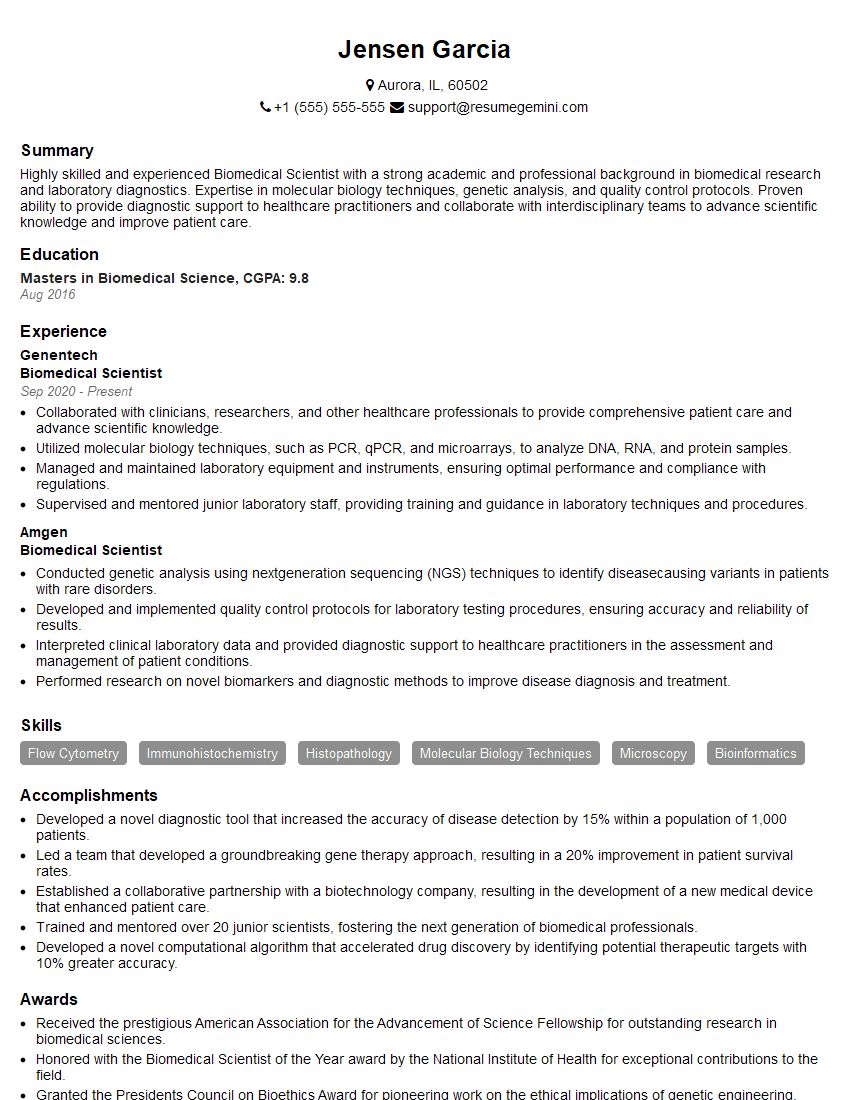
Biomedical Scientist Resume Sample

Quality Control Specialist Resume Sample

Research Technician Resume Sample

Laboratory Technician Resume Sample

Clinical Laboratory Scientist Resume Sample
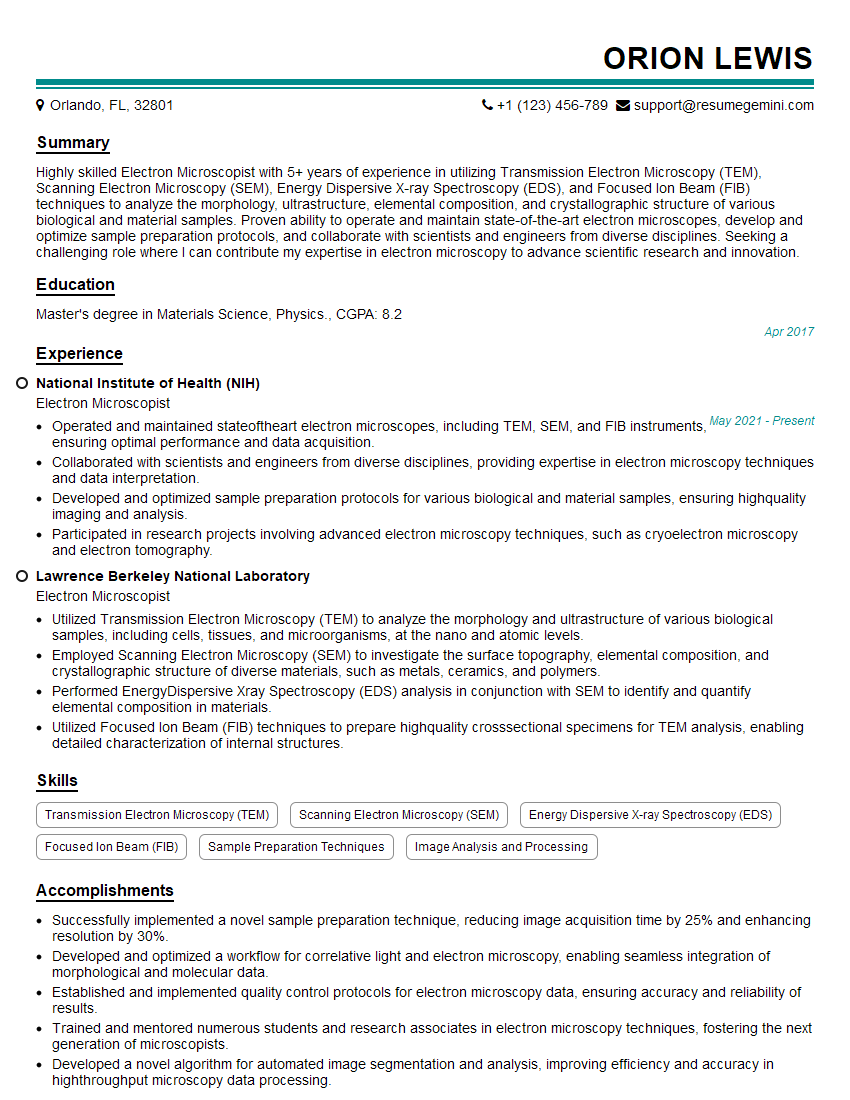
Electron Microscopist Resume Sample

Medical Laboratory Technician Resume Sample

Pathology Technician Resume Sample

Histotechnologist Resume Sample

Histology Specialist Resume Sample

Histotechnician Resume Sample
- Laboratory Manager
- Research Manager
- Laboratory Scientist
- Quality Assurance Specialist
- Regulatory Affairs Specialist
- Research Scientist
- Biomedical Scientist
- Quality Control Specialist
- Research Technician
- Laboratory Technician
- Clinical Laboratory Scientist
- Electron Microscopist
- Medical Laboratory Technician
- Pathology Technician
- Histotechnologist
- Histology Specialist
- Histotechnician
Explore more articles
Users Rating of Our Blogs
Share Your Experience
We value your feedback! Please rate our content and share your thoughts (optional).
What Readers Say About Our Blog
Amazing blog
Interesting Article, I liked the depth of knowledge you’ve shared.
Helpful, thanks for sharing.