Every successful interview starts with knowing what to expect. In this blog, we’ll take you through the top Customer Satisfaction and Relationship-Building interview questions, breaking them down with expert tips to help you deliver impactful answers. Step into your next interview fully prepared and ready to succeed.
Questions Asked in Customer Satisfaction and Relationship-Building Interview
Q 1. Describe your experience in managing customer expectations.
Managing customer expectations is crucial for building trust and loyalty. It involves clearly communicating what a customer can realistically expect from a product or service, setting appropriate timelines, and proactively addressing potential concerns. This prevents disappointments and fosters a positive customer experience.
My approach involves a three-pronged strategy: Proactive communication – I clearly outline the process, deliverables, and timelines at the outset. Realistic promises – I avoid overpromising and ensure that expectations are grounded in the actual capabilities and limitations. Transparency – I keep customers updated on progress, even if there are delays, and explain any challenges encountered along the way. For example, if a delivery is delayed, I proactively contact the customer, explain the reason for the delay, and offer alternative solutions or a revised timeline.
Q 2. How do you handle difficult customer interactions?
Handling difficult customer interactions requires patience, empathy, and a structured approach. My strategy focuses on active listening, understanding the customer’s perspective, and finding mutually agreeable solutions. It’s essential to remain calm and professional, even when faced with aggressive or frustrated customers.
- Active Listening: I let the customer fully express their concerns without interruption, actively listening for the underlying issue.
- Empathy and Validation: I acknowledge their frustration and validate their feelings, showing understanding even if I don’t agree with their perspective. For example, I might say, “I understand your frustration with this situation. Let’s see what we can do to resolve it.”
- Solution-Oriented Approach: Once I understand the issue, I focus on finding a solution that satisfies the customer. This might involve offering a refund, replacement, or other form of compensation.
- Professional Detachment: While empathy is crucial, it’s vital to maintain professional boundaries and not take the interaction personally.
If the situation escalates, I don’t hesitate to involve a supervisor or other appropriate personnel for support.
Q 3. Explain your approach to resolving customer complaints.
My approach to resolving customer complaints is based on the principle of making things right. This involves promptly acknowledging the complaint, investigating the issue thoroughly, and taking appropriate action to rectify the situation. I always aim to exceed customer expectations in the resolution process.
- Acknowledge and Apologize: I begin by acknowledging the customer’s complaint and sincerely apologizing for any inconvenience or frustration caused, regardless of who is at fault.
- Gather Information: I ask clarifying questions to fully understand the nature and scope of the complaint. I gather all relevant details, including dates, times, and any supporting documentation.
- Investigate the Issue: I thoroughly investigate the complaint to determine the root cause. This might involve reviewing records, speaking to colleagues, or conducting further inquiries.
- Offer a Solution: Once I understand the issue, I propose a fair and reasonable solution that addresses the customer’s concerns. This might involve a refund, replacement, repair, or other form of compensation.
- Follow Up: After resolving the issue, I follow up with the customer to ensure they are satisfied with the outcome. This demonstrates commitment to customer satisfaction and builds loyalty.
Q 4. How do you build rapport with customers quickly and effectively?
Building rapport quickly and effectively involves creating a connection with the customer based on trust and understanding. I use active listening, empathy, and personalized communication to achieve this. It’s like building a bridge, one interaction at a time.
- Active Listening: Paying close attention to what the customer says, both verbally and nonverbally, shows genuine interest and respect.
- Empathy: Putting myself in the customer’s shoes and understanding their perspective allows me to connect with them on a human level. A simple, “I understand how frustrating this must be” can go a long way.
- Personalized Communication: Addressing the customer by name, using a friendly and approachable tone, and tailoring my communication to their specific needs and preferences builds a personal connection.
- Positive Body Language: Maintaining eye contact, smiling, and using open and welcoming body language conveys approachability and confidence.
For example, starting a conversation with, “Hi [customer name], thanks for calling. How can I help you today?” sets a positive and personalized tone from the start.
Q 5. Describe a time you went above and beyond for a customer.
During a particularly busy holiday season, a customer’s order was significantly delayed due to an unforeseen logistical issue. While I couldn’t magically make the delivery faster, I went above and beyond to mitigate their frustration. I personally contacted the shipping carrier, secured a priority delivery, and provided the customer with regular updates on the shipment’s progress. Once it arrived, I even called to ensure they received it without any damage and to apologize again for the delay. They were incredibly grateful for the extra effort, and it strengthened our relationship. It demonstrated our commitment to exceeding expectations, even in challenging circumstances.
Q 6. What metrics do you use to measure customer satisfaction?
Measuring customer satisfaction involves using a combination of quantitative and qualitative metrics. Quantitative metrics provide numerical data, while qualitative metrics offer deeper insights into customer experiences and perceptions.
- Customer Satisfaction Score (CSAT): A simple survey asking customers to rate their satisfaction on a scale (e.g., 1-5 or 1-10).
- Net Promoter Score (NPS): Measures customer loyalty by asking how likely they are to recommend the product or service to others.
- Customer Effort Score (CES): Measures how easy it was for the customer to interact with the company and resolve their issue.
- Qualitative Feedback: Collecting feedback through surveys, reviews, and social media monitoring provides valuable insights into customer sentiment and pain points.
By analyzing these metrics, we can identify trends, pinpoint areas for improvement, and track the effectiveness of customer service initiatives.
Q 7. How do you identify and address areas for improvement in customer service?
Identifying and addressing areas for improvement in customer service is an ongoing process. I employ a multi-faceted approach that includes data analysis, customer feedback analysis, and proactive monitoring.
- Data Analysis: Regularly reviewing key metrics (CSAT, NPS, CES) helps to identify trends and patterns indicative of areas needing improvement. For instance, consistently low CSAT scores in a specific department suggest a need for targeted training or process adjustments.
- Customer Feedback Analysis: Analyzing customer reviews, surveys, and social media comments provides valuable qualitative insights into customer pain points and unmet expectations. This feedback is often richer than quantitative data and gives more context.
- Proactive Monitoring: Staying up-to-date on industry best practices and competitor strategies helps us to identify opportunities for improvement and ensure we’re delivering a best-in-class customer experience. For example, noticing competitors implementing a live chat option might suggest a similar initiative is needed to improve our responsiveness.
- Regular Team Meetings: Facilitating regular team meetings where frontline staff can share their experiences and identify areas for improvement fosters a culture of continuous improvement.
Addressing identified areas for improvement may involve training staff, improving processes, updating technology, or implementing new strategies.
Q 8. How do you prioritize customer requests and issues?
Prioritizing customer requests and issues involves a multi-faceted approach that balances urgency, impact, and customer value. I typically employ a system that combines urgency and importance matrices with customer segmentation.
- Urgency: This considers how quickly a request needs to be addressed. For instance, a system outage impacting many customers is far more urgent than a simple billing inquiry.
- Importance: This assesses the impact of the request on the customer and the business. A major bug affecting a key feature is more important than a minor cosmetic issue.
- Customer Segmentation: High-value customers, those generating significant revenue or having a strong influence, often receive prioritized attention. This isn’t about favoring one over another, but acknowledging the value of different customer segments to the business.
I visualize this using a matrix. High urgency, high importance requests are addressed immediately. Low urgency, low importance requests can be scheduled for later. This ensures that the most pressing and impactful issues are tackled first, promoting customer satisfaction and minimizing disruption.
For example, imagine a scenario with three requests: 1. A major website crash affecting all users, 2. A billing error for a single customer, and 3. A feature request from a loyal, high-value customer. Clearly, the website crash takes precedence due to its high urgency and impact. The feature request might be next, depending on its business implications, and the billing error last.
Q 9. Explain your experience with CRM software.
I have extensive experience with various CRM (Customer Relationship Management) software, including Salesforce, HubSpot, and Zoho CRM. My proficiency extends beyond basic data entry; I’m skilled in leveraging CRM functionalities to improve customer interactions and drive business growth.
- Data Management: I effectively use CRMs to maintain accurate customer data, ensuring consistency and accessibility across different teams.
- Sales Pipeline Management: I utilize CRM tools to track leads, manage opportunities, and forecast sales, contributing to a streamlined sales process.
- Customer Segmentation & Targeting: I leverage CRM’s analytical capabilities to segment customers based on various criteria (demographics, purchasing behavior, etc.) allowing for targeted marketing and personalized communication.
- Reporting & Analytics: I use CRM’s reporting features to track key metrics (customer satisfaction, conversion rates, etc.), providing valuable insights to inform business decisions and improve strategies.
- Automation: I utilize automation features to streamline repetitive tasks (e.g., email marketing, lead nurturing), freeing up time for more strategic activities.
In a previous role, I implemented a new CRM system which resulted in a 15% increase in lead conversion rates and a 10% improvement in customer retention within six months. This demonstrates my ability to not only use CRM software effectively but also optimize its use for maximum impact.
Q 10. How do you handle conflicting customer requests?
Handling conflicting customer requests requires diplomacy, clear communication, and a focus on finding mutually acceptable solutions. My approach is centered on understanding the underlying needs and priorities of each customer involved.
- Active Listening: I begin by carefully listening to each customer to fully grasp their concerns and perspectives. This ensures that I understand the context and rationale behind each request.
- Empathy and Validation: I acknowledge the validity of each customer’s needs, demonstrating empathy and understanding. This builds rapport and fosters trust.
- Collaborative Problem Solving: I work collaboratively with all parties to find a solution that addresses the core needs of each customer, even if it means compromise. I present various options and explain the rationale behind each.
- Fair and Transparent Communication: I clearly communicate the decisions made, explaining the rationale and ensuring all parties understand the reasoning. Transparency builds trust and reduces misunderstandings.
- Documentation: I meticulously document the conflict, the solution reached, and any follow-up actions required to ensure that the issue is resolved completely and to avoid future recurrence.
For example, if two customers request the same limited-edition product, I would explore options such as offering a raincheck, suggesting similar alternatives, or working with the product team to understand possibilities for increased supply.
Q 11. Describe your experience with customer feedback collection and analysis.
My experience with customer feedback collection and analysis is extensive. I’ve utilized various methods, from surveys and feedback forms to social media monitoring and focus groups, to gather comprehensive data. My approach focuses on both qualitative and quantitative analysis to gain a complete picture of customer sentiment.
- Feedback Collection: I utilize various methods including online surveys (SurveyMonkey, Qualtrics), feedback forms on websites and apps, in-app feedback prompts, social media monitoring tools (Brandwatch, Talkwalker), and customer interviews.
- Data Analysis: I use both quantitative (statistical analysis of numerical data) and qualitative (analysis of textual data, such as open-ended survey responses) methods to interpret the feedback. Tools like SPSS or NVivo may be utilized.
- Reporting and Action Planning: I synthesize findings into comprehensive reports, identifying key trends, strengths, and areas for improvement. Crucially, these reports lead to actionable plans to address customer concerns and improve satisfaction.
- Feedback Loops: I establish clear feedback loops to ensure that customer input is regularly reviewed and acted upon. This shows customers their voice is valued and fosters a culture of continuous improvement.
In a previous role, I implemented a system of regular customer surveys which led to the identification of a critical usability issue in our flagship product. Addressing this issue resulted in a 20% increase in customer satisfaction scores and a noticeable decrease in customer support tickets related to that product feature.
Q 12. How do you tailor your communication style to different customer personalities?
Adapting communication style to different customer personalities is crucial for building rapport and effective relationships. I assess each customer’s communication style and adjust my approach accordingly. This is not about manipulation, but about effective communication.
- Observational Skills: I pay close attention to the customer’s verbal and non-verbal cues—tone of voice, word choice, body language, and pace of conversation—to gauge their communication style.
- Active Listening: I listen actively to understand their perspective and tailor my responses accordingly. Mirroring their communication style (while remaining authentic) can help build connection.
- Communication Styles: I am familiar with common communication styles (direct, indirect, formal, informal) and adapt my approach to suit the customer’s preference. For example, a direct and concise approach may work best with a decisive customer, while a more collaborative approach might be better for a cautious one.
- Empathy and Patience: I demonstrate empathy and patience, acknowledging and respecting diverse communication styles and preferences.
For example, with a highly analytical customer, I might focus on facts and figures, providing detailed explanations and data to support my recommendations. With a more emotional customer, I might prioritize empathy and reassurance, focusing on the impact of my actions on their experience.
Q 13. How do you proactively identify and address potential customer issues?
Proactive identification and addressing of potential customer issues involves a combination of data analysis, predictive modeling, and customer understanding. It’s about anticipating problems before they arise and implementing preventative measures.
- Data Analysis: I analyze historical customer data (e.g., support tickets, website analytics, sales data) to identify patterns and potential problem areas. This might reveal recurring issues or vulnerabilities.
- Predictive Modeling: I might employ predictive modeling techniques (if appropriate) to anticipate future issues based on historical trends. This could involve using machine learning to predict customer churn or identify at-risk accounts.
- Customer Feedback: I actively solicit customer feedback through surveys, reviews, and social media monitoring to identify emerging issues or concerns before they escalate.
- Product/Service Knowledge: A thorough understanding of the product or service being offered is essential. This knowledge allows for anticipating potential usability issues or technical difficulties.
- Proactive Communication: Once potential issues are identified, I proactively communicate with customers to address concerns, offer solutions, or implement preventative measures. This demonstrates care and prevents negative experiences.
For instance, if website analytics show a spike in error messages on a particular page, I can proactively investigate the issue, fix it, and potentially send a brief notification to users explaining a temporary service disruption and its resolution. This prevents customer frustration and maintains trust.
Q 14. What is your approach to building long-term customer relationships?
Building long-term customer relationships requires a commitment to providing exceptional service, fostering trust, and exceeding expectations. My approach is built on the principles of personalization, consistent communication, and value creation.
- Personalized Interactions: I strive to personalize each interaction with customers, remembering details about their preferences and previous interactions. This makes them feel valued and understood.
- Consistent Communication: I maintain consistent communication, keeping customers informed about relevant updates, promotions, and new developments. This keeps the relationship active and strengthens the bond.
- Proactive Support: I anticipate customer needs and offer support before they even ask. This shows initiative and demonstrates a genuine commitment to their success.
- Value Creation: I actively seek ways to create value for customers, whether through exclusive offers, personalized recommendations, or valuable insights. This reinforces the value proposition and encourages loyalty.
- Feedback Incorporation: I actively seek and incorporate customer feedback to continuously improve products, services, and interactions. This shows that their opinions matter and contributes to an ongoing improvement cycle.
- Loyalty Programs: I support and implement loyalty programs to incentivize continued engagement and reward long-term customers.
For example, I might proactively reach out to a customer after their purchase to offer assistance or to share relevant resources. Or, I might celebrate milestones in the customer journey with a small gift or personalized message.
Q 15. How do you measure the success of your customer relationship management strategies?
Measuring the success of customer relationship management (CRM) strategies isn’t a one-size-fits-all approach. It requires a multifaceted view, incorporating both quantitative and qualitative data. We need to look beyond simple sales figures and delve into the specifics of customer engagement and satisfaction.
Key Performance Indicators (KPIs): We track metrics such as customer retention rate, customer lifetime value (CLTV), average revenue per user (ARPU), and customer churn rate. A high retention rate and increasing CLTV signal a successful strategy. For example, if our retention rate improved from 70% to 80% year-over-year, that’s a strong indicator of success.
Customer Satisfaction (CSAT) scores: Regularly surveying customers to gauge their satisfaction levels is crucial. We can use CSAT scores to identify areas for improvement and measure the impact of CRM initiatives. For instance, if a new onboarding process leads to a 15% increase in CSAT scores, it demonstrates the effectiveness of that process.
Net Promoter Score (NPS): This metric measures customer loyalty and willingness to recommend our services. A higher NPS score reflects a stronger customer base and brand advocacy. A significant increase in NPS suggests a positive shift in customer perception.
Qualitative Feedback: Analyzing customer reviews, social media mentions, and feedback from support interactions offers invaluable qualitative insights. This helps understand the ‘why’ behind the numbers and address underlying issues.
By combining these quantitative and qualitative measures, we build a comprehensive understanding of CRM effectiveness, allowing for data-driven improvements.
Career Expert Tips:
- Ace those interviews! Prepare effectively by reviewing the Top 50 Most Common Interview Questions on ResumeGemini.
- Navigate your job search with confidence! Explore a wide range of Career Tips on ResumeGemini. Learn about common challenges and recommendations to overcome them.
- Craft the perfect resume! Master the Art of Resume Writing with ResumeGemini’s guide. Showcase your unique qualifications and achievements effectively.
- Don’t miss out on holiday savings! Build your dream resume with ResumeGemini’s ATS optimized templates.
Q 16. Describe a time you failed to meet a customer’s expectations. What did you learn?
During a large-scale product launch, we promised a seamless integration with a third-party platform. However, due to unforeseen compatibility issues, the integration failed for a significant number of customers. This resulted in frustration and negative reviews.
The learning experience was invaluable. We realized the importance of thorough testing and contingency planning. We implemented more rigorous testing protocols, including beta testing programs with a diverse user base. We also developed a robust communication plan to manage customer expectations proactively and transparently. We established a dedicated support team to assist affected customers, demonstrating our commitment to resolving the issue. Crucially, we learned to prioritize realistic timelines and avoid over-promising features that weren’t fully ready. This experience significantly improved our project management and communication strategies.
Q 17. How do you handle customer escalations?
Handling customer escalations requires a calm, empathetic, and proactive approach. It’s about turning a negative experience into a positive one, rebuilding trust, and showcasing the company’s commitment to resolving problems.
Active Listening: First, I ensure I actively listen to the customer’s concerns without interruption. This demonstrates empathy and understanding.
Empathetic Response: I acknowledge the customer’s frustration and apologize for the inconvenience, regardless of who’s at fault. This shows respect for their feelings.
Problem Solving: I work collaboratively with the customer to identify the root cause of the problem and explore solutions. I provide regular updates to keep them informed.
Documentation and Follow-up: I meticulously document the entire interaction, including the steps taken and solutions implemented. This ensures accountability and helps prevent similar issues in the future. I also follow up to ensure the customer is satisfied with the resolution.
Escalation Protocol: If the issue is beyond my scope, I escalate it to the appropriate team promptly, ensuring the customer is kept in the loop throughout the process. This demonstrates a commitment to customer satisfaction and effective problem resolution.
Ultimately, turning an escalation into a positive experience can strengthen the customer relationship and build brand loyalty.
Q 18. What is your understanding of Net Promoter Score (NPS)?
The Net Promoter Score (NPS) is a widely used metric that measures customer loyalty and advocacy. It gauges how likely customers are to recommend a company’s product or service to others. It’s calculated by asking customers a single question: “On a scale of 0 to 10, how likely are you to recommend [Company/Product] to a friend or colleague?”
Customers who rate 9 or 10 are considered ‘Promoters,’ those who rate 7 or 8 are ‘Passives,’ and those who rate 0 to 6 are ‘Detractors.’ The NPS is calculated by subtracting the percentage of Detractors from the percentage of Promoters. A higher NPS indicates stronger customer loyalty and a better brand reputation.
For example, an NPS of +70 is considered excellent, while an NPS of 0 suggests neutrality and a negative NPS indicates a need for significant improvement.
The NPS is valuable because it provides actionable insights into customer sentiment and helps identify areas requiring attention. It allows for effective comparisons with competitors and tracks the impact of CRM strategies on customer loyalty.
Q 19. Describe your experience with customer segmentation.
Customer segmentation is the practice of dividing a customer base into smaller, more manageable groups based on shared characteristics. This allows for targeted marketing and improved customer service. Effective segmentation leads to personalized experiences and increased customer satisfaction.
My experience includes segmenting customers based on demographics (age, location, gender), behavioral patterns (purchase history, website activity), and psychographics (lifestyle, values, interests). For example, we might segment customers into groups such as “high-value loyal customers,” “new customers,” or “customers who have recently experienced a problem.” Each segment receives tailored communication and service offerings.
I use various tools and techniques for segmentation, including data analytics platforms and CRM software. The key is to identify meaningful segments that allow for efficient resource allocation and effective personalized communication. Successful segmentation leads to more effective marketing campaigns, improved customer engagement, and higher conversion rates.
Q 20. How do you utilize customer data to improve service delivery?
Customer data is the backbone of effective service delivery. By analyzing customer interactions, purchase history, and feedback, we gain valuable insights that allow us to personalize service and improve overall efficiency.
Personalization: Customer data enables personalized interactions. For instance, knowing a customer’s past purchases allows us to recommend relevant products or services. This leads to a more engaging and satisfying experience.
Proactive Support: By analyzing usage patterns, we can identify potential issues and proactively reach out to customers before they encounter problems. This demonstrates a commitment to their success.
Improved Service Efficiency: Understanding customer needs and common pain points allows us to streamline support processes and reduce response times. This increases customer satisfaction and operational efficiency.
Targeted Marketing: Data-driven insights inform targeted marketing campaigns, leading to higher conversion rates and a more efficient use of marketing resources.
For example, identifying a pattern of high churn among a particular customer segment would allow us to investigate the root cause and implement strategies to address it, leading to improvements in customer retention.
Q 21. What are some common challenges in managing customer relationships?
Managing customer relationships presents several challenges, often intertwined and demanding multifaceted solutions. Some of the most common include:
Managing Customer Expectations: Setting realistic expectations and communicating effectively is crucial. Over-promising can lead to disappointment and negative feedback.
Maintaining Consistency: Ensuring consistent service quality across all channels and touchpoints is essential. Inconsistencies can damage trust and brand reputation.
Handling Negative Feedback: Effectively addressing negative feedback and turning negative experiences into opportunities for improvement is critical. Ignoring negative feedback can have severe repercussions.
Scaling Customer Service: Balancing cost-effectiveness with personalized service as the customer base grows is a significant challenge. This requires the implementation of efficient and scalable customer service solutions.
Data Privacy and Security: Protecting customer data and complying with relevant regulations is paramount. Data breaches can severely damage customer trust and have legal consequences.
Integrating Technology: Effectively integrating different technologies and systems to provide seamless customer experiences requires careful planning and execution.
Addressing these challenges requires a combination of strategic planning, technological solutions, and a strong customer-centric culture.
Q 22. How do you stay up-to-date with industry best practices in customer service?
Staying current in customer service requires a multi-pronged approach. It’s not just about reading articles; it’s about actively engaging with the evolving landscape.
- Industry Publications and Blogs: I regularly read publications like Customer Relationship Management (CRM) Magazine, Harvard Business Review articles on customer experience, and leading blogs focusing on customer service best practices and emerging technologies. This keeps me informed about new trends and methodologies.
- Conferences and Webinars: Attending industry conferences and webinars, both online and in-person, offers invaluable networking opportunities and exposure to the latest innovations and case studies. I actively participate in Q&A sessions to deepen my understanding.
- Professional Development Courses: Continuous learning is crucial. I pursue online courses and certifications in areas like customer experience management, CRM software, and service design thinking to enhance my skillset and stay ahead of the curve.
- Networking and Communities: Engaging with professional networks, online forums, and communities dedicated to customer service allows me to learn from others’ experiences and gain diverse perspectives.
For example, recently I attended a webinar on the application of AI in customer service, learning about how chatbots and predictive analytics can enhance customer journeys and personalize interactions.
Q 23. What is your experience with implementing customer loyalty programs?
I have extensive experience designing, implementing, and managing customer loyalty programs. My approach is data-driven and focuses on creating a program that’s both engaging and beneficial to both the customer and the business.
- Program Design: I start by defining clear objectives, such as increased customer retention, higher purchase frequency, or improved customer lifetime value (CLTV). Then, I research and select relevant reward structures—points-based systems, tiered programs, or personalized offers—that align with the target audience and business goals.
- Technology Integration: Successful programs leverage technology. I’m proficient in integrating loyalty programs with CRM systems, POS systems, and marketing automation tools to streamline operations and personalize communication. This enables efficient tracking of customer engagement and timely delivery of rewards.
- Communication and Engagement: Effective communication is key. I develop multi-channel communication strategies using email, SMS, in-app notifications, and social media to keep customers engaged and informed about their progress and available rewards. Personalized messaging is crucial.
- Program Optimization: A loyalty program is not a ‘set it and forget it’ initiative. I use data analytics to continuously monitor program performance, identify areas for improvement, and make data-backed adjustments to maximize ROI. This includes analyzing redemption rates, customer churn, and overall program impact on key metrics.
In a previous role, I implemented a tiered loyalty program that resulted in a 15% increase in customer retention within six months. This involved a carefully crafted rewards structure, a user-friendly mobile app, and a focused email marketing campaign that targeted different customer segments with personalized offers.
Q 24. How do you balance the needs of individual customers with the overall business goals?
Balancing individual customer needs with overall business goals requires a strategic approach that prioritizes empathy and data-driven decision-making.
- Empathetic Understanding: I always begin by actively listening to and understanding the individual customer’s needs and concerns. This builds rapport and trust. It’s about placing myself in their shoes and empathizing with their situation.
- Data-Driven Prioritization: While individual needs are important, it’s crucial to understand their impact within the larger context of the business. Data analytics help identify trends and patterns that inform decision-making. For instance, analyzing customer segmentation data allows us to prioritize customer segments based on their value and potential for growth.
- Strategic Compromise and Communication: Sometimes, satisfying an individual customer’s request might conflict with broader business goals. In these situations, transparent and empathetic communication is paramount. I work towards finding mutually agreeable solutions that meet the customer’s needs while minimizing the negative impact on business operations. This might involve offering alternative solutions or explaining the constraints involved in fulfilling the initial request.
- Long-Term Relationships: Focusing on building long-term relationships is essential. A satisfied customer is more likely to be forgiving of minor setbacks or compromises, understanding that the business is striving to create a positive experience overall.
For instance, if a customer requests a full refund for a product that falls outside of our standard return policy, I would explain the policy while trying to understand their specific situation. If their situation merits an exception, I would advocate for it while keeping in mind the potential impact on future policy enforcement.
Q 25. Describe a time you had to make a difficult decision regarding a customer issue.
I once had to make a difficult decision concerning a customer who experienced a significant technical issue with our software, leading to substantial data loss. While our standard policy didn’t cover such extensive data recovery, the customer was a long-standing and highly valued client, and the data loss was impacting their business critically.
I carefully weighed the options: strictly adhering to policy, compromising on company guidelines, or finding a creative alternative solution. I chose to escalate the matter to senior management, presenting a case that emphasized the value of the client, the potential impact on our long-term relationship, and the cost of losing such a valuable customer. The team collaboratively proposed a customized solution that involved expediting data recovery at our cost, although outside our standard policy.
This decision ultimately prioritized client retention and reinforced the importance of client relationships over strict policy adherence. While it was outside the normal process, it maintained a positive relationship and demonstrated our commitment to client success.
Q 26. How do you contribute to a positive team environment within a customer-facing role?
Contributing to a positive team environment in a customer-facing role involves active participation and a focus on collaboration and mutual support.
- Positive Attitude and Communication: Maintaining a positive and supportive attitude is contagious. I actively participate in team discussions, offer constructive feedback, and celebrate team successes.
- Knowledge Sharing and Mentorship: I readily share my knowledge and expertise with colleagues. Mentoring junior team members not only helps them develop but also enhances team skills and efficiency.
- Collaboration and Teamwork: I actively collaborate with colleagues to find solutions to challenging customer issues. This might involve brainstorming sessions, knowledge sharing, or cross-training to cover for each other during peak times.
- Conflict Resolution: Disagreements are inevitable. I actively participate in constructive conflict resolution, focusing on finding mutually acceptable solutions and preserving team cohesion.
- Open Communication and Feedback: Maintaining open lines of communication is crucial. I actively seek and provide feedback to improve team performance and address concerns promptly.
For example, during peak season, I volunteered to train new team members on our CRM system, which helped them become productive quickly and eased the workload on the entire team.
Q 27. What strategies have you used to increase customer retention?
Increasing customer retention involves a multifaceted strategy focused on building strong, lasting relationships.
- Proactive Customer Service: Reaching out to customers proactively to address potential issues or offer assistance builds trust and loyalty. This could involve follow-up calls after a purchase or personalized recommendations based on past behavior.
- Personalized Communication: Using customer data to personalize communication is critical. Tailored email campaigns, targeted offers, and personalized messages demonstrate that the business values individual customers.
- Loyalty Programs (as discussed earlier): Rewarding loyal customers with exclusive benefits and discounts reinforces their commitment to the brand.
- Feedback Mechanisms: Regularly soliciting and acting on customer feedback shows that the business values customer opinions and is actively working to improve.
- Customer Appreciation Initiatives: Showing appreciation through special events, discounts, or personalized thank you notes fosters customer loyalty.
In a past role, a series of customer appreciation emails with exclusive discounts resulted in a 10% increase in repeat purchases within three months, showcasing the impact of thoughtful engagement.
Q 28. How do you handle negative online reviews or feedback?
Handling negative online reviews requires a thoughtful and proactive approach aimed at resolving issues and protecting brand reputation.
- Prompt Response: Addressing negative reviews promptly and professionally is essential. A swift response demonstrates that the business cares about customer feedback.
- Empathetic Acknowledgement: Start by acknowledging the customer’s concerns and expressing empathy for their negative experience. Avoid getting defensive.
- Private Communication: If possible, move the conversation offline by directly contacting the customer to privately discuss the issue and find a resolution. This can help de-escalate the situation.
- Problem Solving: Offer a sincere apology and propose concrete steps to resolve the issue. This might involve a refund, replacement, or other appropriate compensation.
- Public Response (if appropriate): If appropriate and the customer agrees, publicly address the concerns in the review section. This demonstrates transparency and commitment to improving customer service.
- Internal Review: Use negative feedback as an opportunity to identify areas for improvement in products, services, or processes. This contributes to long-term customer satisfaction.
For example, I once responded to a negative review on Yelp by personally contacting the customer, offering a sincere apology, and offering a complimentary service. I then publicly responded to the review, summarizing the resolution and highlighting our commitment to customer satisfaction. This approach not only resolved the issue with that specific customer but also showcased our commitment to others.
Key Topics to Learn for Customer Satisfaction and Relationship-Building Interviews
- Understanding Customer Needs: Learn to effectively identify and analyze customer needs through active listening, empathy, and insightful questioning. This includes recognizing both explicit and implicit needs.
- Proactive Communication Strategies: Explore techniques for proactive communication, such as regular check-ins, personalized messaging, and anticipating potential issues before they arise. Practice applying these strategies in diverse customer interactions.
- Conflict Resolution and De-escalation: Master effective techniques for handling difficult customer interactions and resolving conflicts calmly and professionally. Develop strategies for de-escalating tense situations and finding mutually acceptable solutions.
- Building Rapport and Trust: Understand the importance of building strong relationships with customers through genuine connection, empathy, and consistent positive interactions. Explore strategies for fostering trust and loyalty.
- Measuring and Improving Customer Satisfaction: Learn about various methods for measuring customer satisfaction, such as surveys, feedback forms, and Net Promoter Score (NPS). Discuss strategies for analyzing data and implementing improvements based on customer feedback.
- Applying Technology for Enhanced Customer Experience: Explore how CRM systems, help desk software, and other technologies can improve customer service efficiency and satisfaction. Discuss the practical application of these tools.
- Ethical Considerations in Customer Service: Understand the ethical implications of customer service interactions and the importance of maintaining customer privacy and data security.
Next Steps
Mastering Customer Satisfaction and Relationship-Building is crucial for career advancement in today’s competitive market. Employers highly value individuals who can build strong customer relationships, resulting in increased loyalty, positive word-of-mouth, and ultimately, higher profitability. To maximize your job prospects, creating an ATS-friendly resume is essential. ResumeGemini is a trusted resource to help you build a compelling and effective resume that highlights your skills and experience in this critical area. We provide examples of resumes tailored to Customer Satisfaction and Relationship-Building roles to guide you in crafting your own professional document. Let ResumeGemini help you showcase your expertise and secure your dream job.
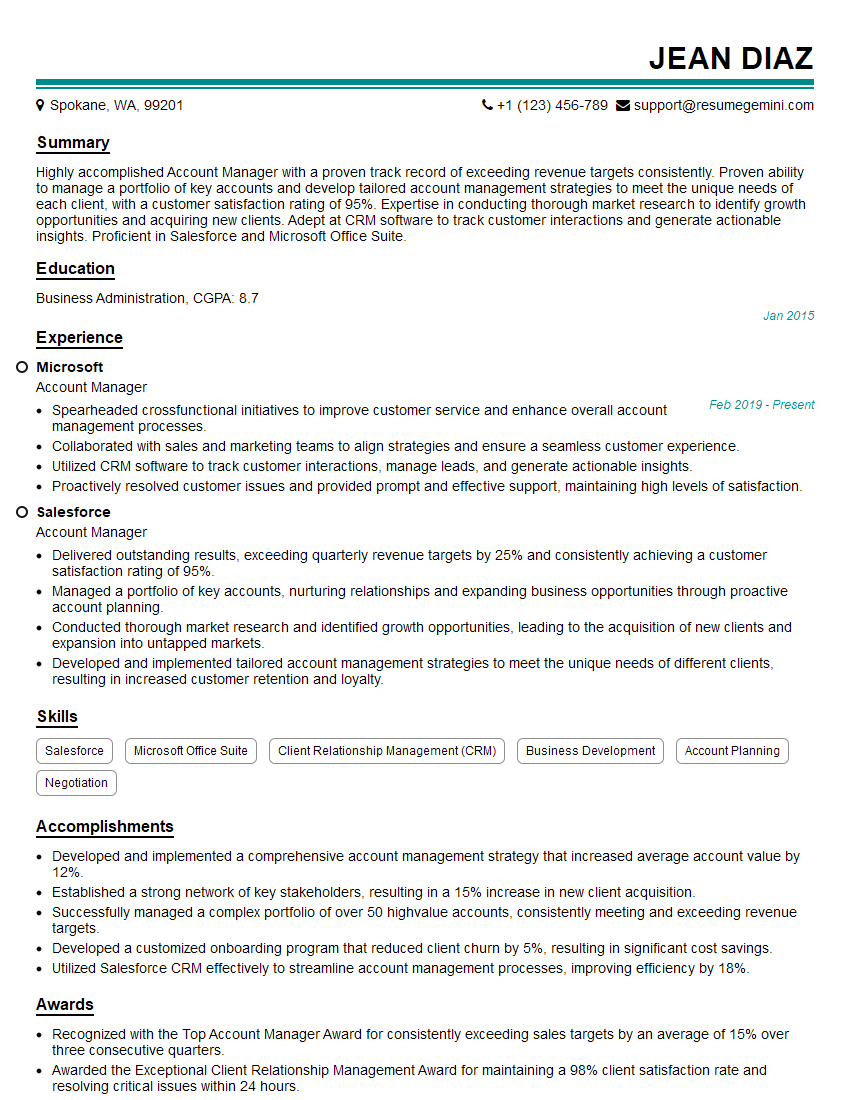
Account Manager Resume Sample
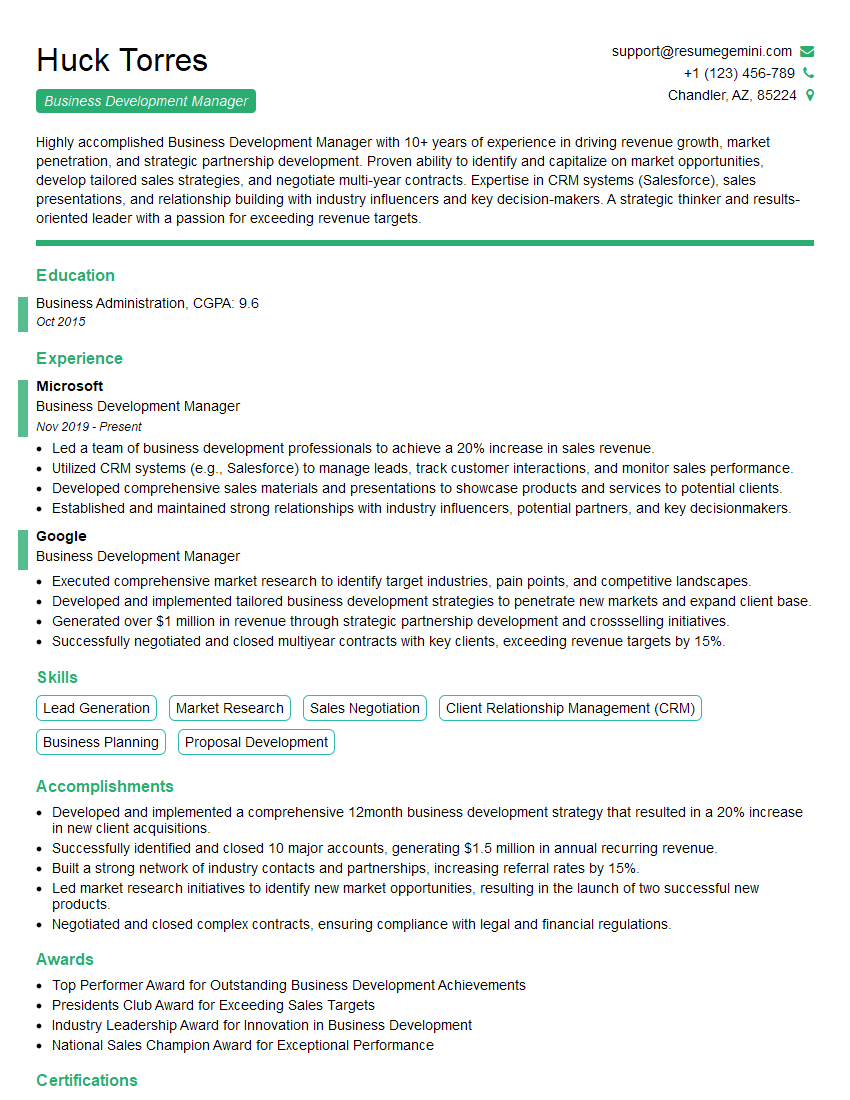
Business Development Manager Resume Sample
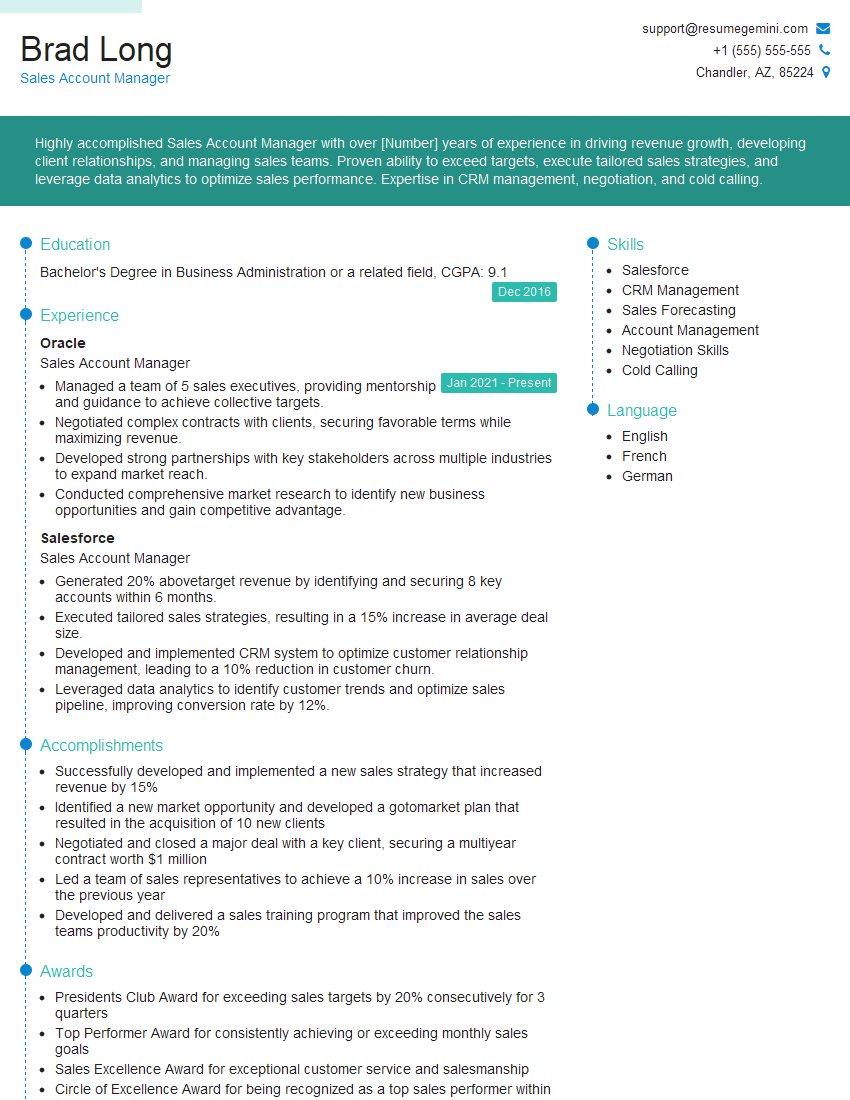
Sales Account Manager Resume Sample

Customer Service Manager Resume Sample
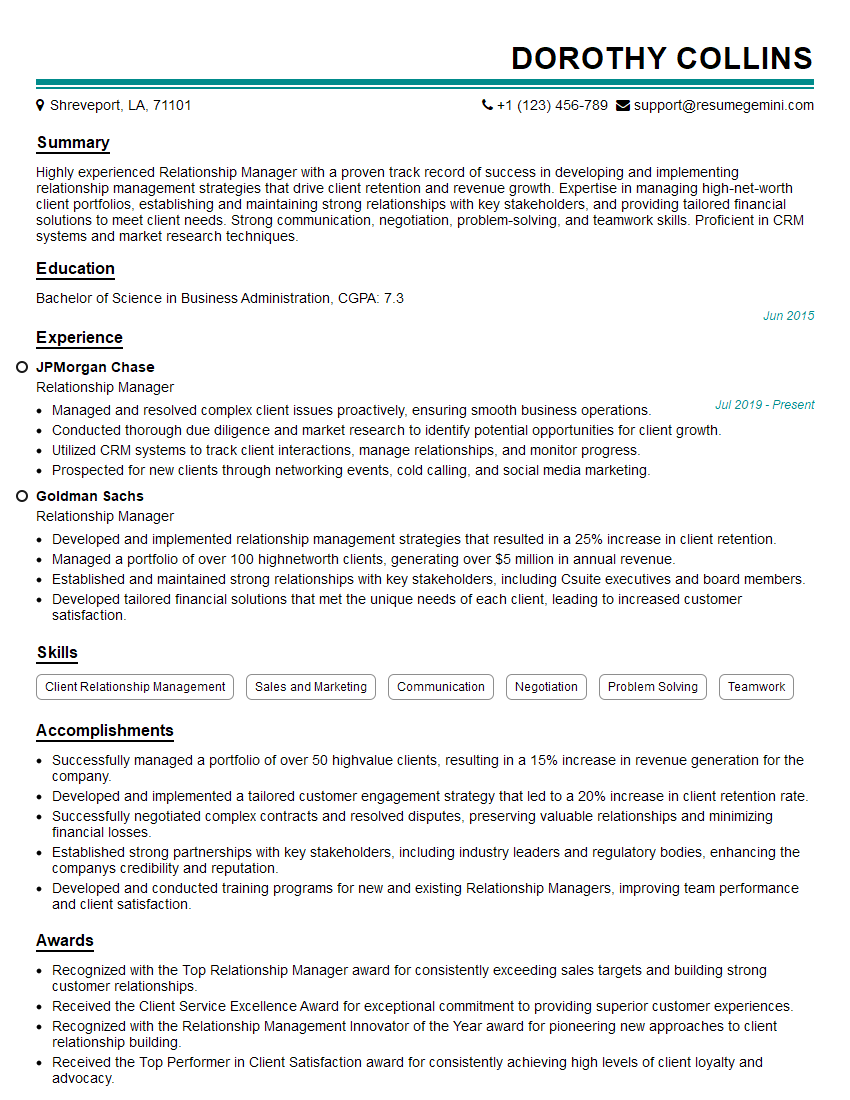
Relationship Manager Resume Sample
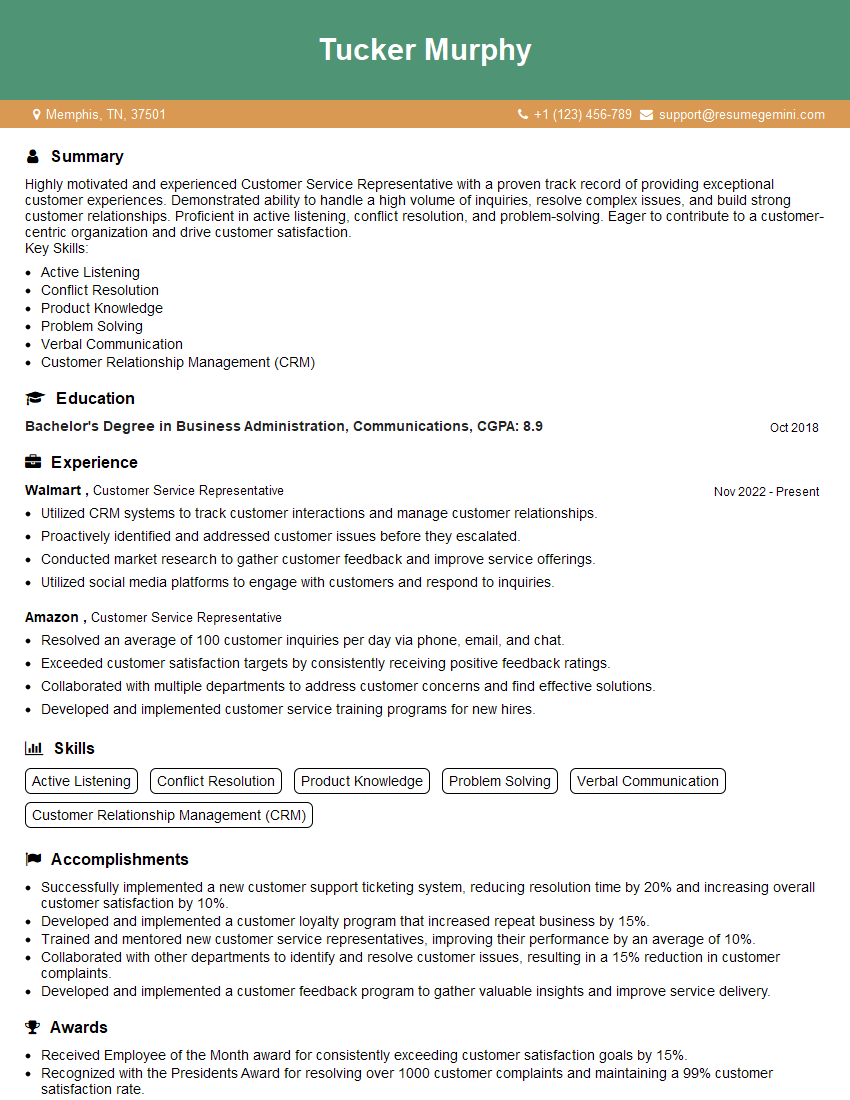
Customer Service Representative Resume Sample
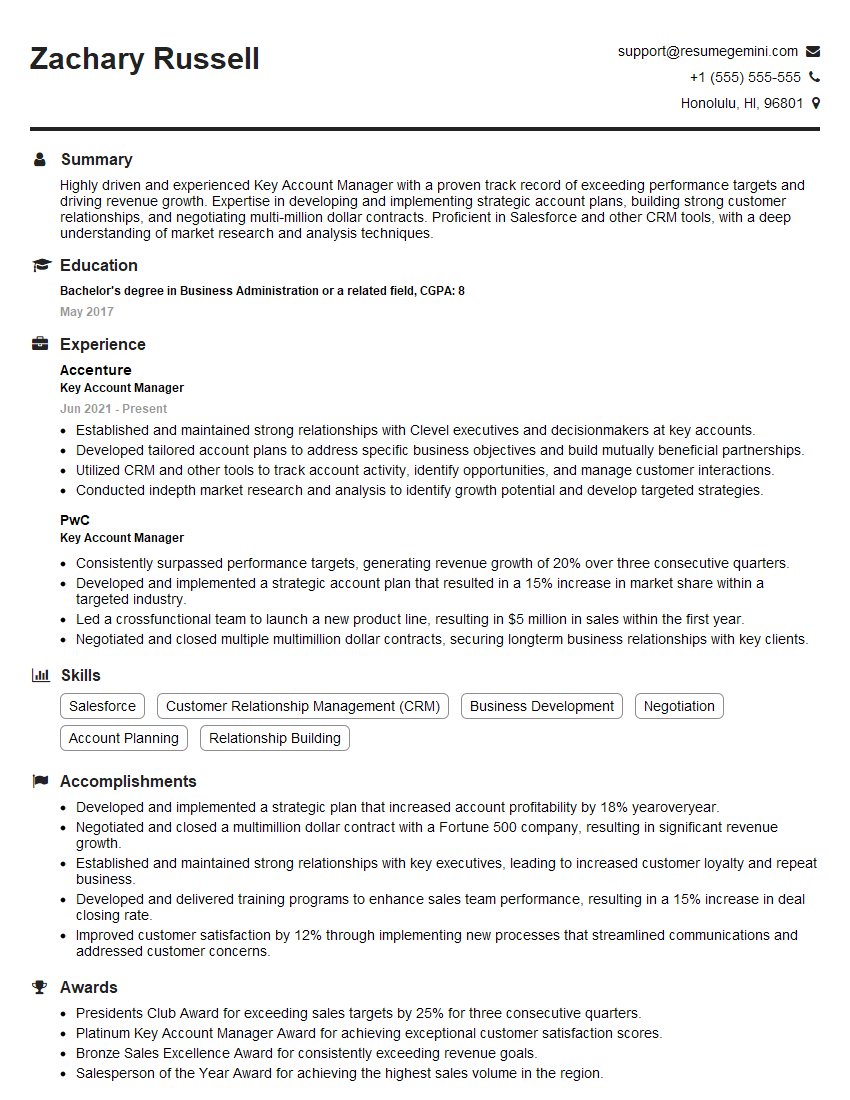
Key Account Manager Resume Sample
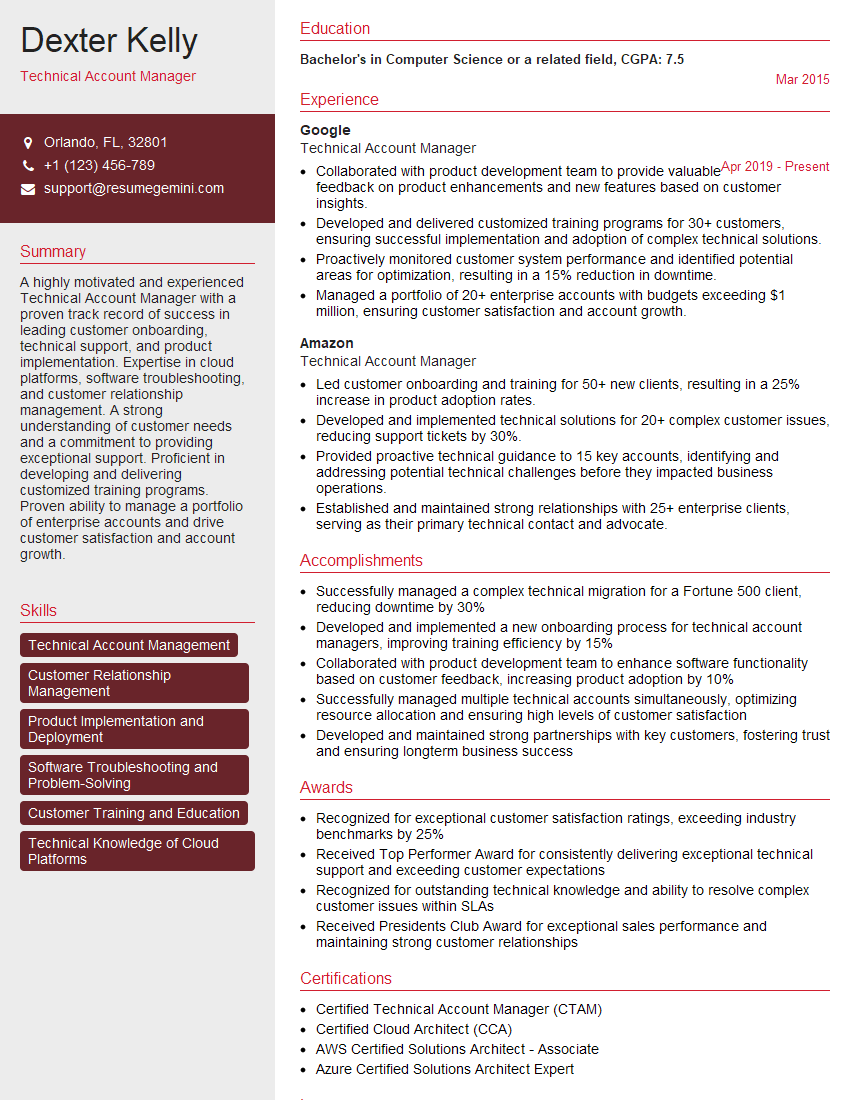
Technical Account Manager Resume Sample
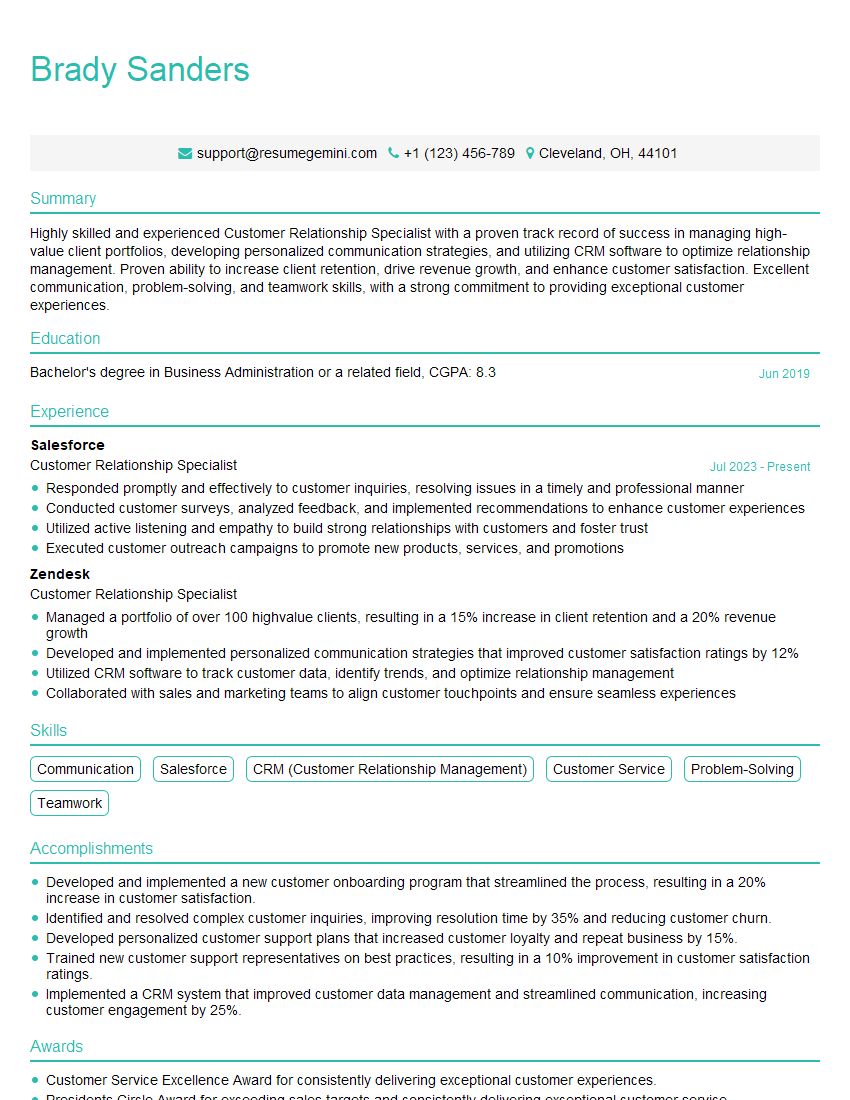
Customer Relationship Specialist Resume Sample
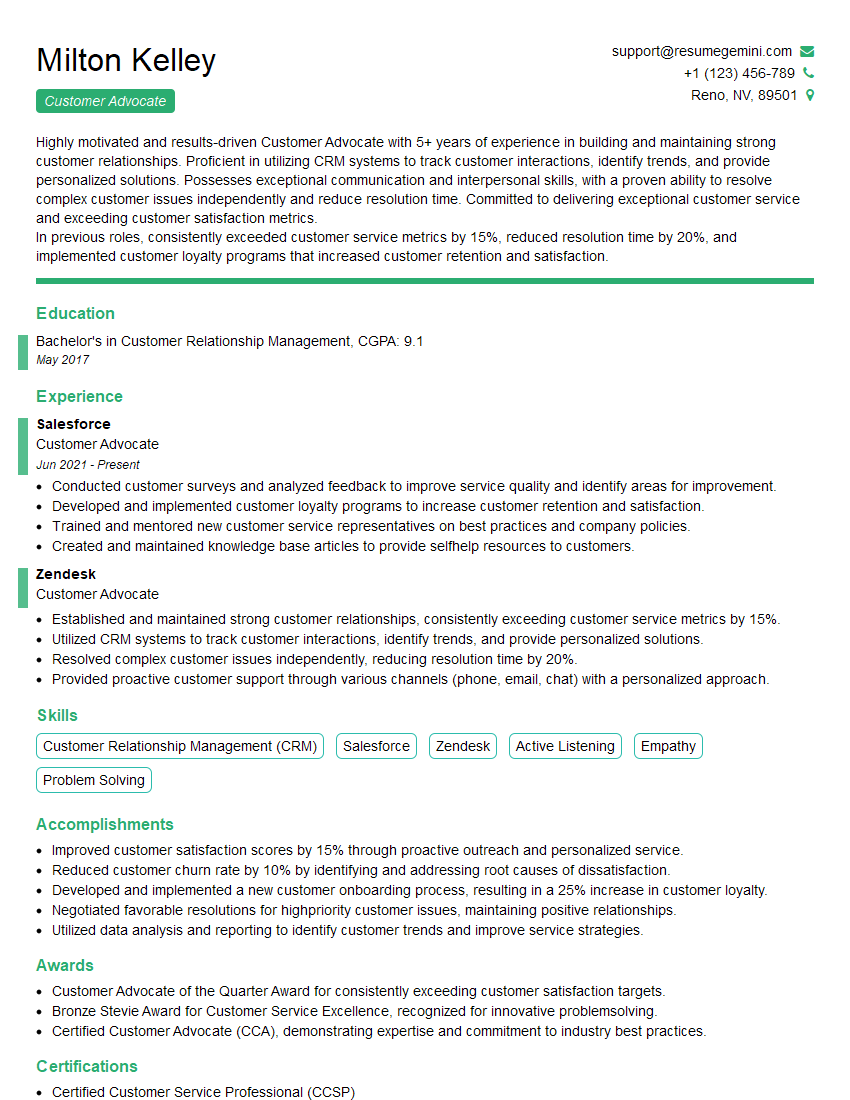
Customer Advocate Resume Sample
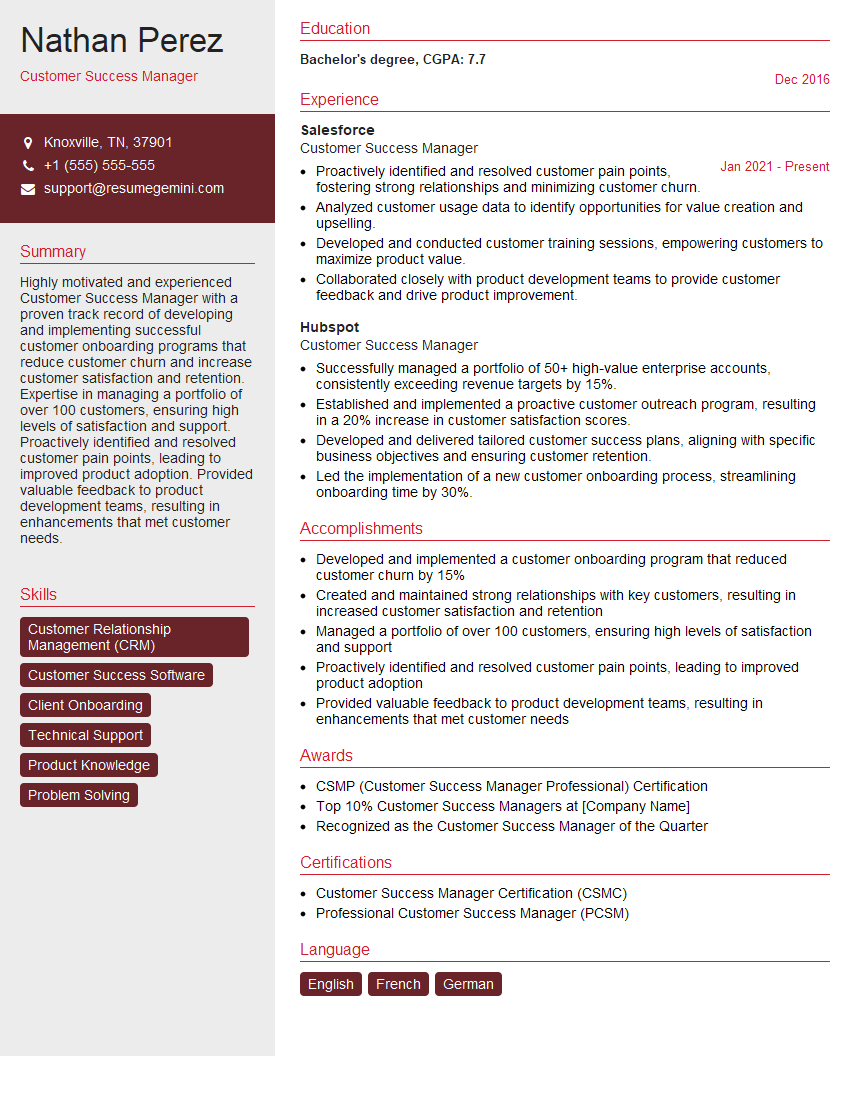
Customer Success Manager Resume Sample
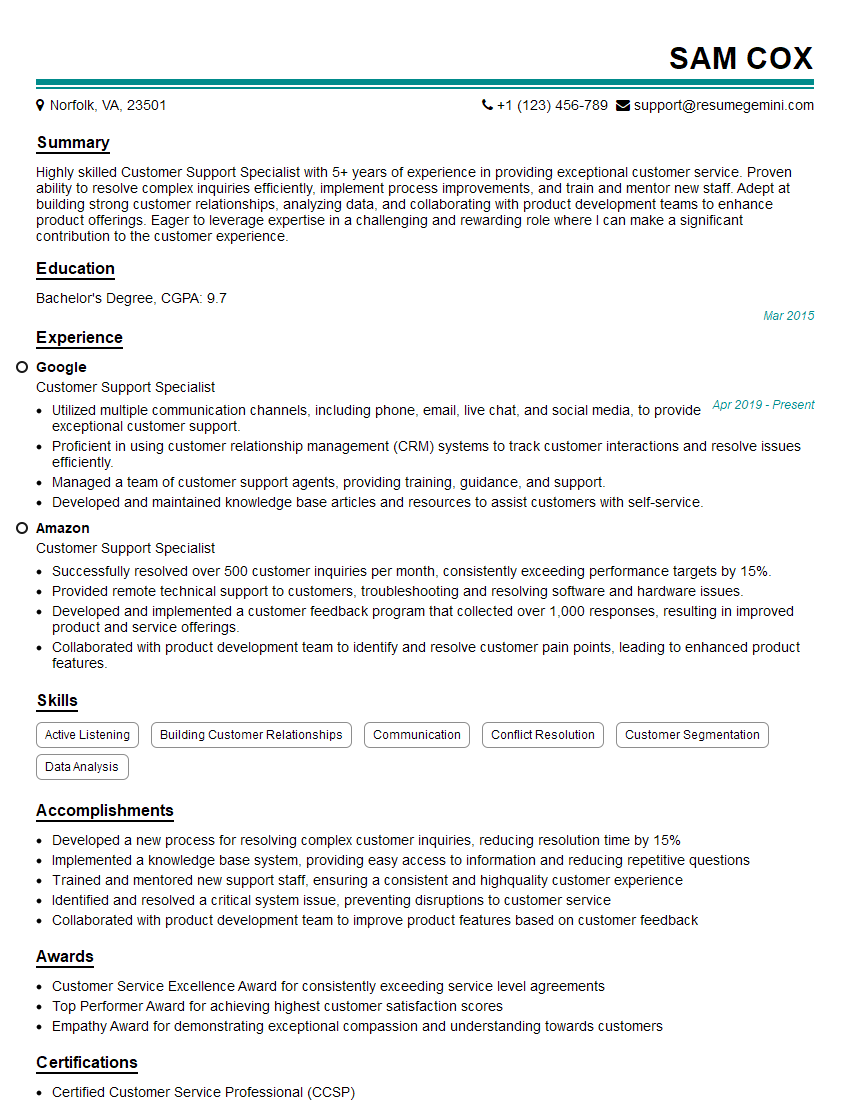
Customer Support Specialist Resume Sample
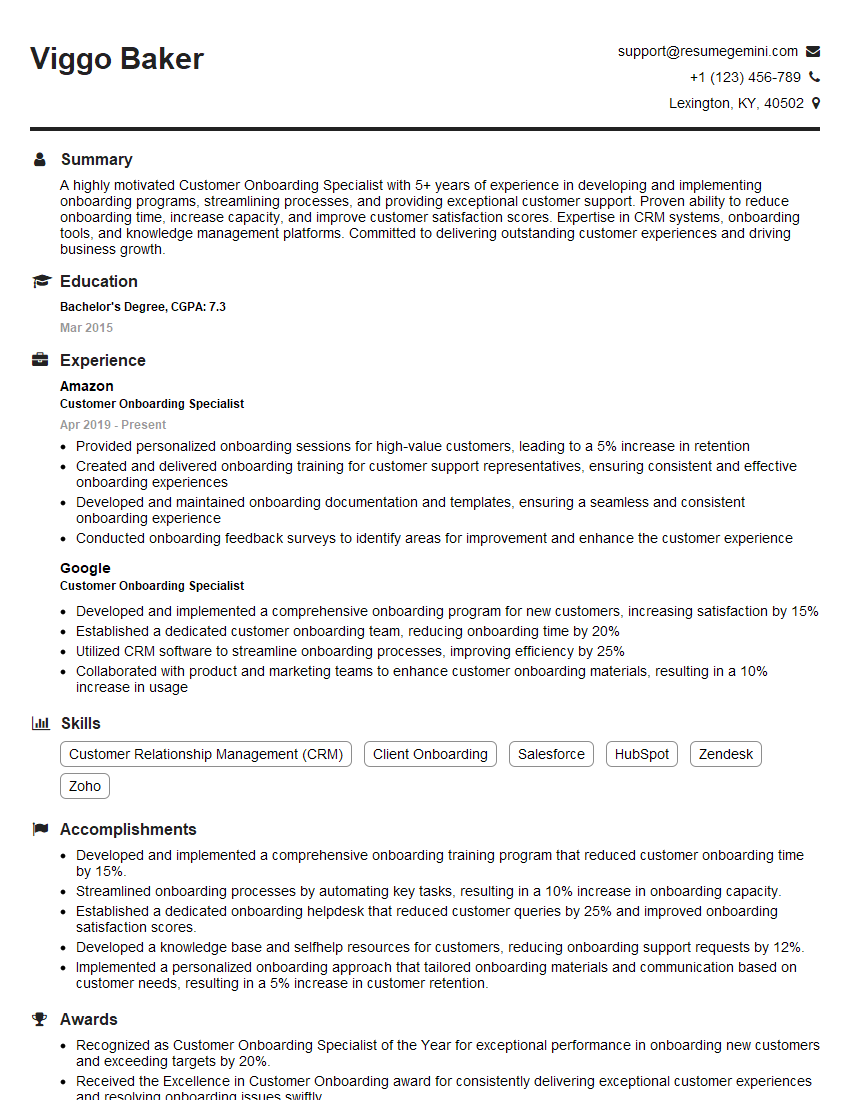
Customer Onboarding Specialist Resume Sample
- Account Manager
- Business Development Manager
- Sales Account Manager
- Customer Service Manager
- Relationship Manager
- Customer Service Representative
- Key Account Manager
- Technical Account Manager
- Customer Relationship Specialist
- Customer Advocate
- Customer Success Manager
- Customer Support Specialist
- Customer Onboarding Specialist
Explore more articles
Users Rating of Our Blogs
Share Your Experience
We value your feedback! Please rate our content and share your thoughts (optional).
What Readers Say About Our Blog
Amazing blog
Interesting Article, I liked the depth of knowledge you’ve shared.
Helpful, thanks for sharing.