Preparation is the key to success in any interview. In this post, we’ll explore crucial Electrical Certification interview questions and equip you with strategies to craft impactful answers. Whether you’re a beginner or a pro, these tips will elevate your preparation.
Questions Asked in Electrical Certification Interview
Q 1. Explain the NEC (National Electrical Code) and its importance.
The National Electrical Code (NEC) is a widely adopted set of standards for electrical wiring and installation in the United States. It’s essentially a rulebook ensuring safety and preventing electrical hazards in buildings and structures. Think of it as the ‘bible’ for electricians. The NEC isn’t a law itself, but it’s adopted and enforced by local authorities, becoming legally binding in most jurisdictions. Its importance lies in its ability to minimize fire risks, electrocution hazards, and other electrical dangers. Regular updates ensure the NEC stays current with technological advancements and evolving safety concerns, incorporating best practices and addressing newly discovered risks. For example, recent revisions heavily focus on the integration of renewable energy sources and arc-flash mitigation techniques.
Q 2. Describe different types of electrical grounding systems.
Electrical grounding systems are crucial for safety, diverting fault currents away from potentially hazardous situations. Several types exist, each with its purpose:
- Grounding Electrode System: This is the fundamental system, typically using a ground rod driven into the earth. This provides a low-resistance path for fault currents to flow safely to the earth.
- Equipment Grounding: This connects metal parts of electrical equipment to the grounding electrode system, preventing dangerous voltage buildup on these surfaces. A common example is the grounding wire in a three-pronged plug.
- System Grounding: This connects the neutral point of a power system to earth, providing a reference point for voltage and further reducing the risk of shock.
- Plate Grounding: Uses a large metal plate buried in the earth, often preferred in areas with high soil resistivity.
The choice of grounding system depends on various factors, such as soil conditions, the type of electrical system, and the size of the installation. A poorly designed grounding system can lead to dangerous electrical shocks or even fires.
Q 3. What are the safety procedures for working with high-voltage equipment?
Working with high-voltage equipment demands stringent safety measures to prevent severe injuries or fatalities. These procedures are critical:
- Lockout/Tagout (LOTO): This procedure is mandatory for de-energizing equipment before any work begins. It involves physically locking out the power source and tagging it to indicate that the equipment is out of service.
- Personal Protective Equipment (PPE): This includes insulated gloves, safety glasses, arc flash protective clothing (depending on voltage), and safety footwear. The choice and quality of PPE are critical and must be appropriate for the voltage level.
- Voltage Verification: Before touching any equipment, always use a non-contact voltage tester to confirm that the equipment is indeed de-energized. Never rely solely on the LOTO procedure.
- Proper Training: Extensive training on high-voltage safety procedures and the use of appropriate tools and equipment is paramount. This includes understanding arc flash hazards and risk assessment.
- Working in Teams: High-voltage work should ideally be performed by a team, where one person oversees safety aspects while others perform the tasks.
Neglecting these safety procedures can result in severe electric shock, burns, or even death. These procedures are non-negotiable for anyone working with high-voltage systems. I always prioritize safety, making sure every step is followed meticulously.
Q 4. How do you interpret electrical schematics and blueprints?
Interpreting electrical schematics and blueprints requires understanding electrical symbols and their interconnections. Schematics use standardized symbols to represent components like switches, resistors, capacitors, and power sources. Blueprints, on the other hand, show the physical layout of the electrical system within a building, showing the location of conduits, panels, and other equipment. Interpreting them effectively involves understanding the relationship between the schematic’s logical representation and the blueprint’s physical reality. For instance, you might see a circuit breaker symbol on the schematic and then locate its physical placement within the electrical panel on the blueprint. Tracing the connections between components and identifying the flow of electricity is crucial. Experience allows you to quickly grasp the overall functionality and potential problem areas. A thorough understanding of how different components interact is fundamental. For example, understanding the color codes of wires is crucial in identifying which wire goes to which location.
Q 5. Explain the difference between AC and DC electricity.
The key difference between AC (Alternating Current) and DC (Direct Current) lies in the direction of electron flow. In DC, electrons flow consistently in one direction, like water flowing down a river. This is the type of electricity used in batteries. In AC, electrons periodically change direction, oscillating back and forth, similar to a wave in the ocean. This is the electricity used in most homes and industries. AC has advantages in transmission over long distances due to the ease of stepping up and down voltage using transformers. DC is often preferred in applications requiring smooth, consistent power, such as electronic devices.
Q 6. What are the common causes of electrical faults?
Electrical faults can stem from several sources:
- Overloads: Drawing more current than the circuit can handle, often due to too many appliances or faulty equipment.
- Short Circuits: Unintentional connections between the hot and neutral wires, resulting in a massive current flow.
- Ground Faults: A connection between a live wire and earth, usually causing a current leakage.
- Open Circuits: A break in the circuit, disrupting the flow of electricity.
- Loose Connections: Poorly tightened connections leading to high resistance and overheating.
- Worn-out Wiring: Aging insulation and damaged wires increase the risk of short circuits and fire.
Identifying the root cause requires a systematic approach, combining visual inspection, testing with multimeters, and sometimes specialized equipment.
Q 7. Describe your experience with troubleshooting electrical problems.
I have extensive experience in troubleshooting electrical problems, ranging from simple residential issues to complex industrial malfunctions. My approach is always systematic. I start by assessing the situation, gathering information, and identifying potential causes. This might involve interviewing the client or reviewing maintenance logs. Next, I use appropriate testing equipment, such as multimeters and clamp meters, to pinpoint the fault. For example, I once diagnosed a recurring power outage in an industrial facility by using a thermal imager to detect an overheating connection in a high-current busbar, which was overlooked in previous inspections. My experience allows me to make informed decisions and resolve problems efficiently and safely. The key to effective troubleshooting is a combination of practical skills, technical knowledge, and attention to detail. Documenting every step of the process is paramount, so any future issues can be handled efficiently and repeat issues can be readily avoided.
Q 8. How do you ensure compliance with electrical safety regulations?
Ensuring compliance with electrical safety regulations is paramount for preventing accidents and ensuring the safety of both people and property. My approach is multifaceted and begins with a thorough understanding of the relevant codes and standards, such as the National Electrical Code (NEC) in the US or equivalent regulations in other regions. This involves staying updated on any revisions or amendments.
Secondly, I meticulously follow these codes during every stage of an electrical project, from design and planning through installation, testing, and documentation. This includes using approved materials and techniques. Regular inspections are crucial, serving as checkpoints to identify and rectify any non-compliance issues promptly. Finally, comprehensive documentation, including permits, inspection reports, and as-built drawings, provides a clear audit trail and demonstrates adherence to regulations.
For example, if I’m working on a commercial building project, I’d meticulously check that all wiring is properly grounded, using appropriately sized conductors and protection devices. I’d also ensure that all junctions and connections are properly secured and protected to prevent short circuits or accidental contact.
Q 9. Explain the process of installing and testing electrical circuits.
Installing and testing electrical circuits is a systematic process that demands precision and attention to detail. It starts with careful planning, including the design of the circuit layout, the selection of appropriate wiring, and the calculation of the load. This design phase also incorporates safety measures such as arc fault circuit interrupters (AFCIs) and ground fault circuit interrupters (GFCIs) where necessary.
Installation involves running the wiring according to the chosen method (e.g., conduit, cable tray), making secure connections, and ensuring proper grounding. Each circuit needs to be individually tested after installation and before energization. This typically involves using a multimeter to check for continuity, insulation resistance, and voltage. Testing ensures that the circuit functions correctly and doesn’t present any safety hazards. Finally, detailed documentation of all testing results is essential for record-keeping and future maintenance.
Imagine installing a lighting circuit in a new home. After carefully running the wiring and making all connections, I’d use a multimeter to verify the circuit’s continuity, making sure there are no breaks in the wire. Then, I’d check the insulation resistance to confirm that the insulation is intact and prevents shocks. Finally, after turning on the circuit breaker, I’d use the multimeter to verify the correct voltage is present.
Q 10. What are the different types of electrical wiring methods?
Various electrical wiring methods exist, each with its advantages and disadvantages depending on the application. Common methods include:
- Conduit Wiring: Wires are run inside metallic or non-metallic conduits, offering excellent protection against physical damage and environmental factors. This is a common choice for commercial and industrial settings.
- Cable Tray Systems: Used for larger projects with many cables, this system offers organized routing and easier maintenance access.
- Surface Mounting: Wires are affixed directly to the surface of walls or ceilings, using surface mount raceways. This is often used for renovations or where conduit installation is impractical.
- Concealed Wiring: Wires are hidden within walls or ceilings, requiring careful planning and execution. This is a common method in new construction.
- Armored Cable (AC): A type of cable with a metallic outer sheath providing protection against physical damage. Often used in simpler installations.
The choice of wiring method depends on factors such as the type of building, the environment, the number of circuits, and cost considerations. For instance, in a harsh industrial environment, conduit wiring would be preferred for its superior protection. In a residential setting, concealed wiring might be the aesthetic choice.
Q 11. Describe your experience with electrical load calculations.
Electrical load calculations are fundamental to designing safe and efficient electrical systems. I have extensive experience performing these calculations, using various methods to determine the total power demand of a building or system. This involves identifying all loads, including lighting, appliances, HVAC equipment, and other electrical devices. The calculations consider the voltage, current, and power factor of each load. Once the total load is determined, I can size the appropriate service equipment, such as the main breaker panel, service conductors, and transformers. I’m proficient in using both manual calculation methods and software tools designed for this purpose.
For instance, in a recent project involving a small office building, I calculated the load for each branch circuit (lighting, outlets, HVAC) individually, then summed them up to determine the total demand on the main panel. Based on the total calculated load, I specified a main service panel with the required capacity and selected appropriately sized conductors and protection devices.
Q 12. How do you select appropriate electrical protective devices?
Selecting appropriate electrical protective devices is crucial for safety. The choice depends on factors like the type of circuit, the load current, the voltage, and the type of fault protection required. Common protective devices include:
- Circuit Breakers: These automatically interrupt the current flow in case of an overload or short circuit.
- Fuses: Similar to circuit breakers, these melt and break the circuit when an excessive current flows.
- Ground Fault Circuit Interrupters (GFCIs): These protect against ground faults, which can cause electric shocks. They are commonly used in kitchens, bathrooms, and outdoor areas.
- Arc Fault Circuit Interrupters (AFCIs): These protect against arc faults, which can lead to electrical fires. They are typically used in bedrooms and living areas.
Selecting the appropriate device requires understanding the specific requirements of the circuit. For example, a GFCI would be necessary in a bathroom to prevent electric shock if someone were to touch a faulty appliance while in contact with water. Incorrect selection can lead to electrical hazards.
Q 13. What are the safety precautions for working at heights involving electrical work?
Working at heights involving electrical work presents significant safety risks. My approach to mitigating these risks always prioritizes safety. This begins with a thorough risk assessment, identifying potential hazards like falls, electrical shocks, and exposure to weather. Appropriate personal protective equipment (PPE) is essential, including fall protection harnesses, insulated tools, and safety footwear. Before commencing work, I’d ensure proper access is established using safe scaffolding or aerial lifts. I’d always work with a qualified spotter and employ lockout/tagout procedures to de-energize equipment and prevent accidental energization. Regular inspections of equipment and the worksite are vital to ensure the ongoing safety of all personnel.
For example, while working on overhead power lines, I’d use a properly rated harness and lifeline system to prevent falls. The equipment would also be tested and inspected regularly. I’d utilize insulated tools and follow strict lockout/tagout procedures before carrying out any maintenance or repair work.
Q 14. Explain the use of different electrical testing instruments (e.g., multimeter, clamp meter).
Various electrical testing instruments are indispensable for ensuring the safety and functionality of electrical systems. I regularly use instruments like:
- Multimeter: A versatile tool that measures voltage, current, and resistance. I use it to check for continuity, verify voltage levels in circuits, and test insulation resistance.
- Clamp Meter: This measures current without breaking the circuit, making it useful for measuring current in live conductors. This is crucial for verifying load currents and troubleshooting circuit issues.
- Megger (Insulation Resistance Tester): Measures the insulation resistance of cables and equipment. This is vital for detecting insulation breakdown which could lead to shocks or faults.
- Loop Impedance Tester: Measures the impedance of the loop circuit and helps determine the protective device’s performance.
For example, using a multimeter, I can check the voltage of an outlet to ensure it is within the acceptable range. A clamp meter allows me to measure the current drawn by a motor without interrupting its operation, ensuring that it isn’t overloaded. The Megger helps identify weak points in the insulation of a cable, preventing potential hazards before they escalate.
Q 15. How do you handle emergency situations involving electrical hazards?
Handling electrical emergencies requires a calm, methodical approach prioritizing safety. My first step is always to ensure my own safety and the safety of others. This involves immediately isolating the power source if possible – turning off breakers, unplugging equipment, or using appropriate lockout/tagout procedures. If the situation involves a fire, I’d immediately call emergency services and evacuate the area, following established emergency protocols. Only after the immediate danger has been mitigated would I begin assessing the damage and initiating repairs, adhering strictly to relevant safety standards and regulations. For instance, if I encounter an individual suffering from an electrical shock, I would never touch them directly but rather use a non-conductive material like a wooden object to move them away from the electrical source before administering first aid.
I’ve experienced several instances where quick thinking prevented further complications. One involved a faulty wire sparking in a server room; immediate isolation of the affected circuit and evacuation prevented a potentially catastrophic fire. Safety training and adherence to established safety procedures are critical aspects of my professional practice.
Career Expert Tips:
- Ace those interviews! Prepare effectively by reviewing the Top 50 Most Common Interview Questions on ResumeGemini.
- Navigate your job search with confidence! Explore a wide range of Career Tips on ResumeGemini. Learn about common challenges and recommendations to overcome them.
- Craft the perfect resume! Master the Art of Resume Writing with ResumeGemini’s guide. Showcase your unique qualifications and achievements effectively.
- Don’t miss out on holiday savings! Build your dream resume with ResumeGemini’s ATS optimized templates.
Q 16. Describe your experience with electrical panel installations and maintenance.
I have extensive experience with electrical panel installations and maintenance, encompassing various panel types and voltages, from small residential panels to larger industrial systems. My experience covers the entire process: from initial design and layout considering load calculations and future expansion needs, to the physical installation, wiring, testing, and commissioning of the panel. This includes careful selection of circuit breakers, ensuring proper grounding, and meticulous adherence to NEC (National Electrical Code) standards. Maintenance involves regular inspections, thermal imaging to detect potential overheating issues, tightening connections, and replacing faulty components. I’m also experienced in upgrading existing panels to meet increased load demands or to incorporate modern safety features like arc fault circuit interrupters (AFCIs).
For instance, I recently worked on upgrading an outdated electrical panel in a commercial building. The existing panel was overloaded and prone to tripping, causing significant disruption to the business. I conducted a thorough load calculation, designed a new panel layout, coordinated with other trades, and safely installed the new panel, eliminating the tripping issues and providing a safer, more efficient power distribution system.
Q 17. What are your experiences with various types of transformers?
My experience encompasses a broad range of transformers, including power transformers, distribution transformers, instrument transformers (current and potential transformers), and isolation transformers. I understand the principles of operation for each type, including their applications and limitations. Power transformers, for example, are used for stepping up or stepping down voltages in high-power transmission and distribution systems. I’m familiar with different cooling methods employed in transformers (e.g., oil-filled, dry-type), their construction, and testing procedures (e.g., oil testing, winding resistance tests). Understanding the vector group of a transformer is crucial for correct connection and avoiding phase imbalances. Instrument transformers, on the other hand, are essential for metering and protection systems, providing scaled-down versions of voltage and current for safe measurement and relay operation.
In one project, I had to troubleshoot a faulty distribution transformer causing intermittent power outages in a residential area. Through systematic testing and analysis, I identified a shorted winding, justifying its replacement and restoring reliable power supply to the community.
Q 18. Explain different motor control methods (e.g., starters, VFDs).
Several motor control methods exist, each with specific applications. Simple motor starters, like across-the-line starters, offer a straightforward on/off control, suitable for smaller motors with lower inrush currents. However, these starters can subject the motor to high starting stresses. For larger motors or situations requiring smoother starts, reduced inrush current, and adjustable speed, Variable Frequency Drives (VFDs) are essential. VFDs control the motor’s speed by varying the frequency of the power supply. They are commonly used in industrial applications like pumps, fans, and conveyors. Other methods include reduced-voltage starters (autotransformers, wye-delta starters), which limit the inrush current but may still cause some stress. Soft starters offer a gradual increase in voltage and torque, minimizing stress on the motor and the power system.
I’ve successfully implemented VFDs in a manufacturing plant, improving motor efficiency and significantly reducing energy consumption. The precise speed control also optimized the production process, reducing wear and tear on the equipment. Selecting the appropriate motor control method depends on several factors, including motor size, load characteristics, and desired control features.
Q 19. How familiar are you with different types of electrical distribution systems?
My familiarity with electrical distribution systems extends to various configurations, including radial systems, ring main systems, and interconnected systems. Radial systems are simple and cost-effective, suitable for smaller areas, but offer limited redundancy. Ring main systems provide improved reliability through redundant paths but are more complex to design and protect. Interconnected systems, typical in larger grids, offer high reliability and flexibility. I understand the principles of voltage regulation, protection schemes (relays, circuit breakers), and fault current calculations within each system. I’m also familiar with different grounding techniques, such as grounding grids and electrode grounding, and their impact on safety and system performance. Furthermore, understanding the differences between high-voltage and low-voltage systems is crucial for ensuring safety and efficient operation.
A recent project involved assessing the distribution system of a large industrial facility and recommending improvements to enhance reliability and safety. This included analyzing load flows, identifying potential weak points, and proposing upgrades to the protection system and substation equipment. Careful consideration was given to minimizing disruption during the upgrades.
Q 20. Explain the concept of power factor correction.
Power factor correction involves improving the power factor of an electrical system. The power factor represents the ratio of real power (used to do actual work) to apparent power (the total power drawn). A low power factor indicates that a significant portion of the apparent power is reactive power, which does not contribute to useful work but still stresses the system. This is often caused by inductive loads like motors and transformers. Power factor correction is achieved by adding capacitive loads to the system, which counteract the inductive reactance. Capacitors are commonly used for this purpose and can be installed individually or in banks. Improved power factor reduces energy losses, increases system efficiency, and reduces the demand charge on electricity bills.
Power Factor = Real Power / Apparent Power
I’ve implemented power factor correction in several projects, resulting in significant cost savings for clients. For example, a factory experiencing high electricity bills due to a low power factor benefited significantly from the installation of a capacitor bank, substantially reducing both their energy consumption and their electricity bills.
Q 21. What is your experience with electrical system design software?
I’m proficient in several electrical system design software packages, including AutoCAD Electrical, EPLAN Electric P8, and SKM PowerTools. These tools enable me to create detailed electrical schematics, perform load calculations, design panel layouts, and conduct short-circuit and coordination studies. AutoCAD Electrical, for instance, allows me to create intelligent drawings, automatically generating wiring lists and reports. EPLAN Electric P8 supports collaborative design and offers comprehensive project management features. SKM PowerTools helps me analyze the electrical system’s performance, identifying potential weaknesses and ensuring proper protection. Proficiency in these software tools significantly improves the efficiency and accuracy of electrical design, minimizing errors and ensuring compliance with safety standards.
In a recent project, I used SKM PowerTools to model a large industrial power system, identifying potential overcurrent issues in the distribution system. This analysis allowed me to design a more robust protection scheme and prevent potential damage and downtime in the event of a fault.
Q 22. Describe your experience working with different types of lighting systems.
My experience encompasses a wide range of lighting systems, from traditional incandescent and fluorescent to modern LED and intelligent lighting controls. I’ve worked on projects involving various lighting technologies, including high-bay lighting for industrial facilities, low-bay lighting for commercial spaces, and sophisticated architectural lighting designs for residential buildings. For example, in one project, we replaced an aging fluorescent system in a large warehouse with energy-efficient LED high-bay fixtures, resulting in significant cost savings and improved illumination uniformity. This involved careful calculations of lumen output, color temperature, and fixture spacing to ensure optimal performance and compliance with relevant lighting codes. Another project involved designing a smart lighting system for an office building, utilizing sensors and occupancy detectors to automatically adjust lighting levels based on ambient light and occupancy, further maximizing energy efficiency and minimizing operating costs.
- Incandescent: Simple, readily available, but inefficient and short-lived.
- Fluorescent: More efficient than incandescent but contains mercury and can be prone to flickering.
- LED: Highly efficient, long-lasting, and available in various color temperatures and dimming options. Offers excellent control via smart systems.
- High-Intensity Discharge (HID): Used in high-bay applications, offering high lumen output, but requires specialized ballasts and has a longer startup time.
Q 23. How do you ensure the safety and efficiency of electrical systems?
Ensuring safety and efficiency in electrical systems is paramount. My approach involves a multi-faceted strategy, beginning with meticulous design adhering to all relevant codes (NEC, IEC etc.). This includes proper grounding, bonding, and overcurrent protection. Regular inspections and testing are crucial – we utilize thermal imaging to identify potential hotspots, insulation resistance tests to detect deterioration, and arc flash studies to assess and mitigate risks. Efficient system design incorporates measures like power factor correction to reduce energy waste and harmonic distortion. In addition to preventative maintenance, we leverage predictive maintenance techniques, such as monitoring vibration and temperature changes in critical equipment to anticipate potential failures before they occur. Think of it like a comprehensive health checkup for your electrical system. Regular checkups prevent costly failures and ensure continuous, safe operation.
For example, in one project, a thermal imaging scan revealed a loose connection in a panelboard which, if left unchecked, could have resulted in overheating and a potential fire. This proactive approach minimized potential hazards and downtime.
Q 24. What are your strategies for managing electrical projects effectively?
Effective electrical project management requires a systematic approach. I utilize project management methodologies like Agile or Waterfall, tailoring them to the specific project needs. This includes detailed planning with clear scopes of work, timelines, and budgets. Regular communication with stakeholders is vital, ensuring transparency and addressing any potential issues promptly. I leverage project management software to track progress, manage resources, and maintain accurate documentation. Risk management is an integral part of my process, identifying potential challenges early on and developing mitigation strategies. For instance, in one large-scale renovation project, we developed a detailed risk assessment, identifying potential delays due to material shortages and scheduling conflicts. We then proactively sourced materials from multiple vendors and implemented a flexible scheduling system, successfully completing the project on time and within budget.
Q 25. Explain your experience with Arc Flash Hazard analysis and mitigation.
Arc flash hazard analysis is a critical aspect of electrical safety. My experience includes performing arc flash studies using software like ETAP or SKM, to determine incident energy levels and arc flash boundaries. This involves detailed modeling of electrical systems, considering factors like fault currents, equipment impedances, and protective device settings. Based on the study results, we develop appropriate mitigation strategies, such as implementing arc flash labeling, using personal protective equipment (PPE) appropriate for the hazard level, and implementing engineering controls like arc flash relays and improved system grounding. For instance, a recent study revealed a high incident energy level in a specific panelboard. This led to the installation of arc flash relays, reducing the incident energy to a safer level, and the implementation of a robust PPE program for technicians working near this equipment. The goal is always to minimize the risk to personnel and ensure safe working conditions.
Q 26. Describe your experience with electrical system inspections and reporting.
Electrical system inspections are a regular part of my work. These inspections involve a thorough visual examination of all electrical equipment and wiring, looking for signs of damage, wear, or code violations. We also perform functional tests to ensure that protective devices operate correctly. My reports meticulously document all findings, including photographs and detailed descriptions of any deficiencies. These reports include recommendations for corrective actions, prioritized by urgency and potential risk. We utilize standardized reporting formats for clarity and consistency. For example, a recent inspection revealed a deteriorated grounding conductor in a commercial building. This was clearly documented in the report along with a recommendation for immediate replacement to ensure continued grounding and safety of the electrical system.
Q 27. How do you stay up-to-date with changes in electrical codes and regulations?
Staying current with electrical codes and regulations is crucial. I actively participate in industry organizations such as IEEE and NFPA, attending conferences and workshops to keep abreast of the latest advancements. I subscribe to relevant industry publications and regularly review updates to the National Electrical Code (NEC) and other applicable standards. Online resources and professional development courses also play a significant role in my continuous learning. It’s not simply enough to know the codes; understanding the rationale behind them is key to effective and safe electrical system design and maintenance. This ongoing learning process ensures that my work consistently meets or exceeds industry best practices and legal requirements.
Q 28. Explain your understanding of renewable energy systems integration with electrical grids.
My understanding of renewable energy systems integration involves the technical aspects of connecting renewable energy sources, like solar PV and wind turbines, to the existing electrical grid. This requires careful consideration of factors such as power quality, voltage regulation, and grid stability. We analyze the impact of intermittent renewable energy sources on grid frequency and voltage, and implement solutions such as energy storage systems (batteries) and advanced grid management techniques to mitigate these effects. The integration process requires detailed system studies and compliance with grid interconnection standards set by utility companies. For instance, in a project involving a large-scale solar farm, we conducted extensive studies to ensure that the solar power plant could safely and reliably connect to the grid, minimizing any negative impact on power quality or grid stability.
Key Topics to Learn for Your Electrical Certification Interview
- Electrical Codes and Standards: Understand the nuances of national and local electrical codes (e.g., NEC), including safety regulations and their practical implications in various settings.
- Circuit Analysis and Design: Master the principles of Ohm’s Law, Kirchhoff’s Laws, and AC/DC circuit analysis. Be prepared to discuss circuit design methodologies and troubleshooting techniques.
- Power Systems: Gain a solid understanding of power generation, transmission, distribution, and protection. Familiarize yourself with different types of power systems and their components.
- Electrical Machines and Drives: Develop a strong grasp of the operation and control of various electrical machines (motors, generators, transformers) and drive systems. Be ready to discuss efficiency and maintenance aspects.
- Instrumentation and Control Systems: Understand the principles of measurement, instrumentation, and control systems used in electrical applications. This includes sensors, transducers, and control algorithms.
- Protection and Safety: Demonstrate a thorough understanding of electrical safety practices, protective devices (circuit breakers, fuses, relays), and grounding techniques. Highlight your commitment to safety in your work.
- Problem-Solving and Troubleshooting: Prepare to discuss your approach to identifying and resolving electrical faults. Showcase your analytical skills and ability to apply theoretical knowledge to real-world scenarios.
Next Steps: Elevate Your Career with Electrical Certification
Mastering Electrical Certification opens doors to exciting career advancements and higher earning potential. It validates your expertise and demonstrates your commitment to professional excellence. To maximize your job prospects, it’s crucial to create a compelling and ATS-friendly resume that highlights your skills and achievements effectively.
ResumeGemini is a trusted resource to help you build a professional resume that stands out. Using ResumeGemini, you can craft a document that showcases your qualifications perfectly for the electrical certification field. We provide examples of resumes tailored to Electrical Certification to help guide you in the process. Take the next step toward your dream career – build a powerful resume with ResumeGemini today!
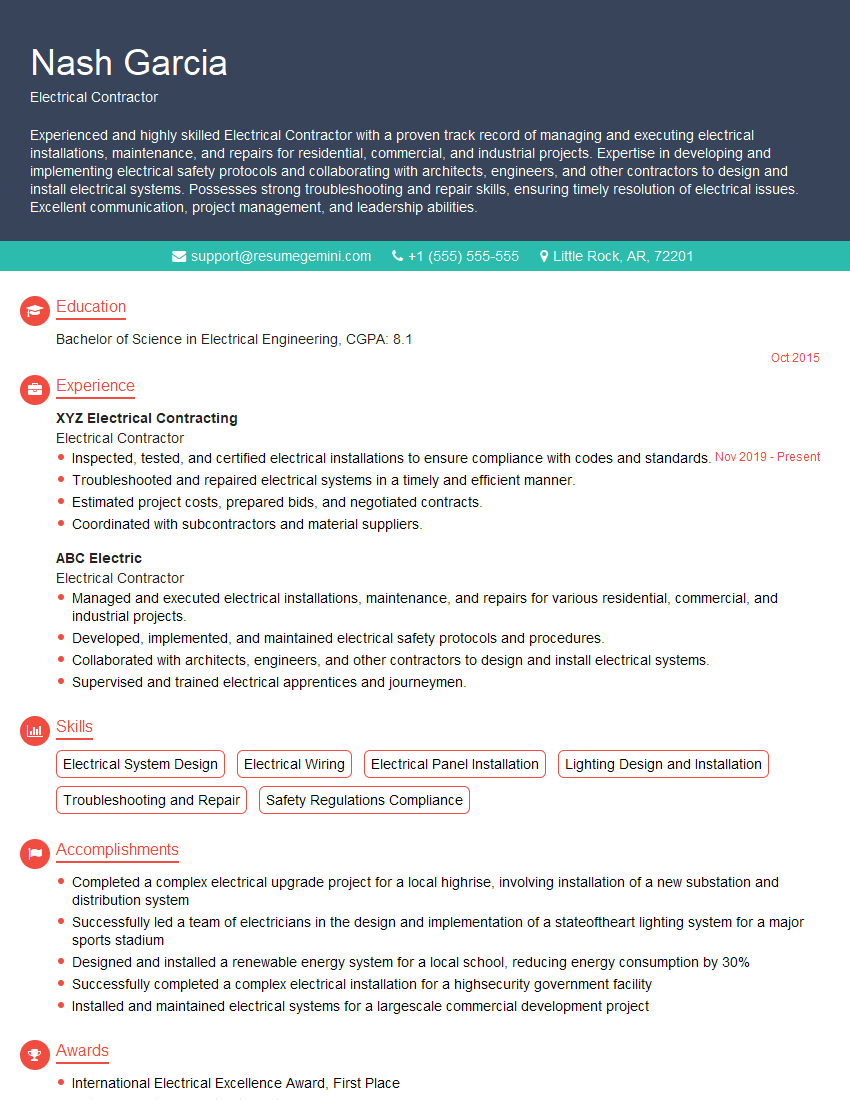
Electrical Contractor Resume Sample
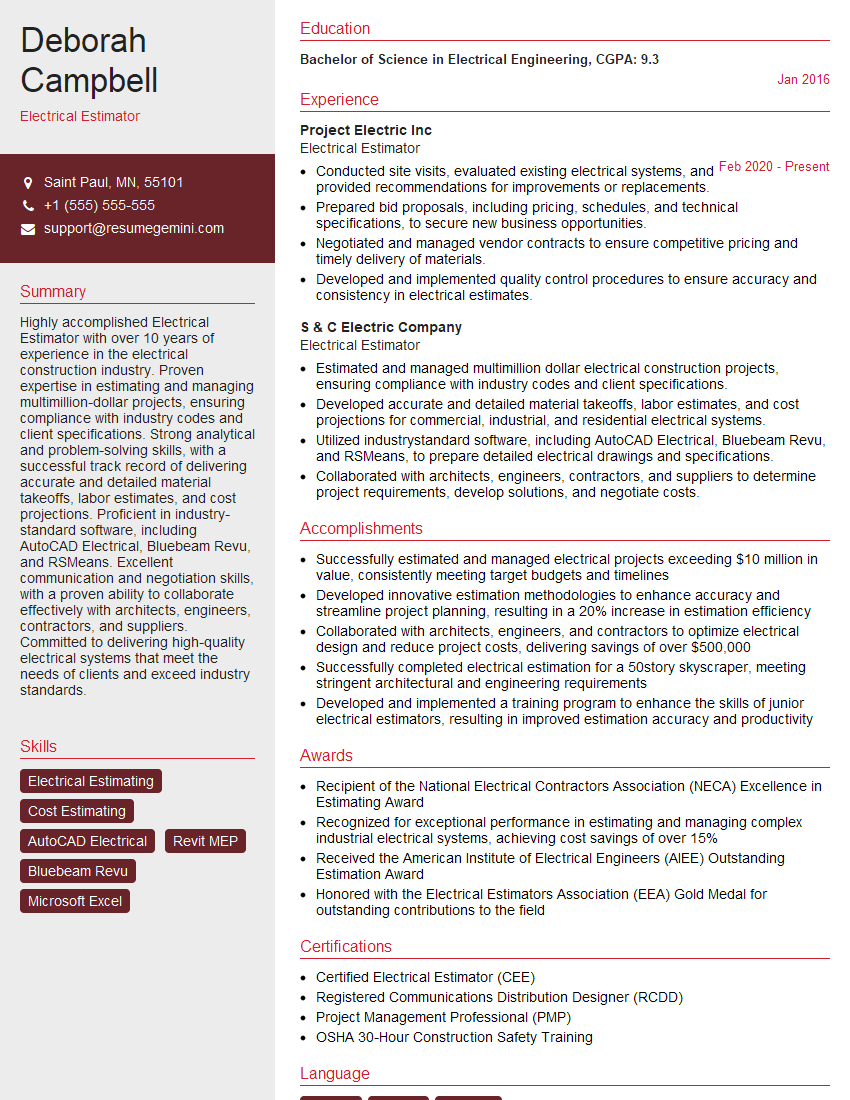
Electrical Estimator Resume Sample
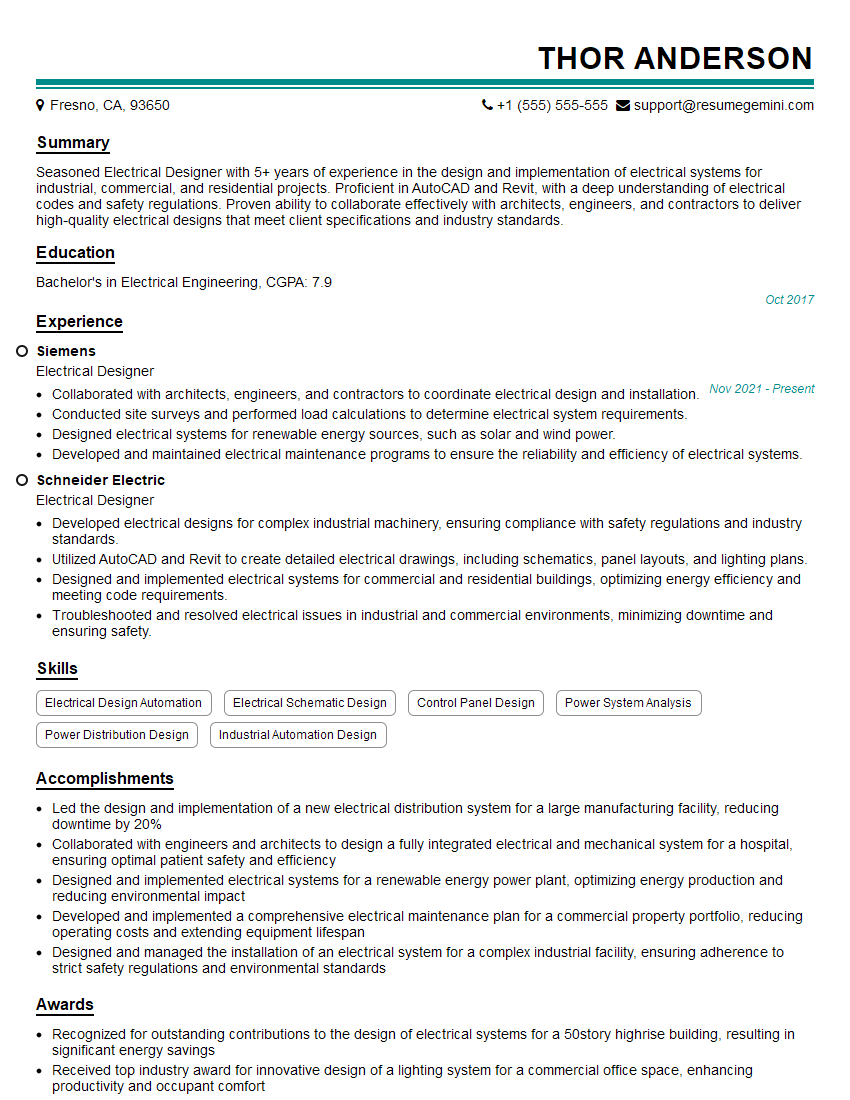
Electrical Designer Resume Sample
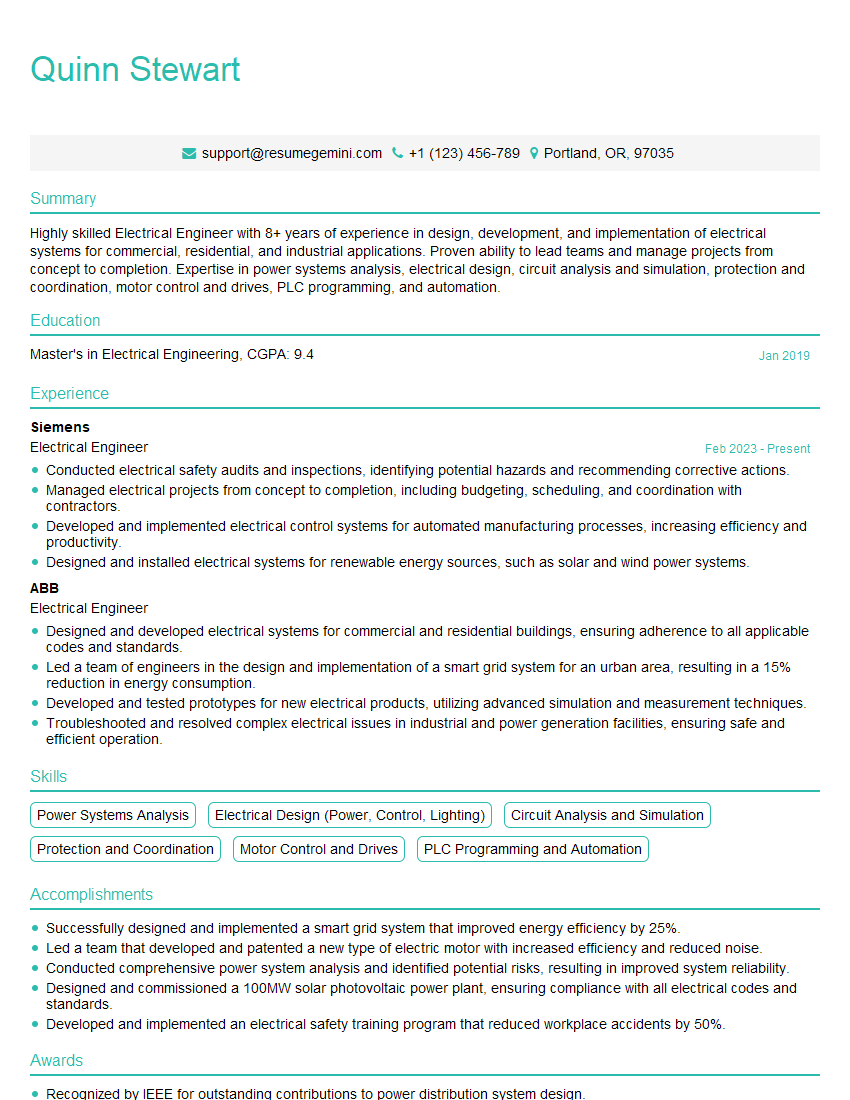
Electrical Engineer Resume Sample
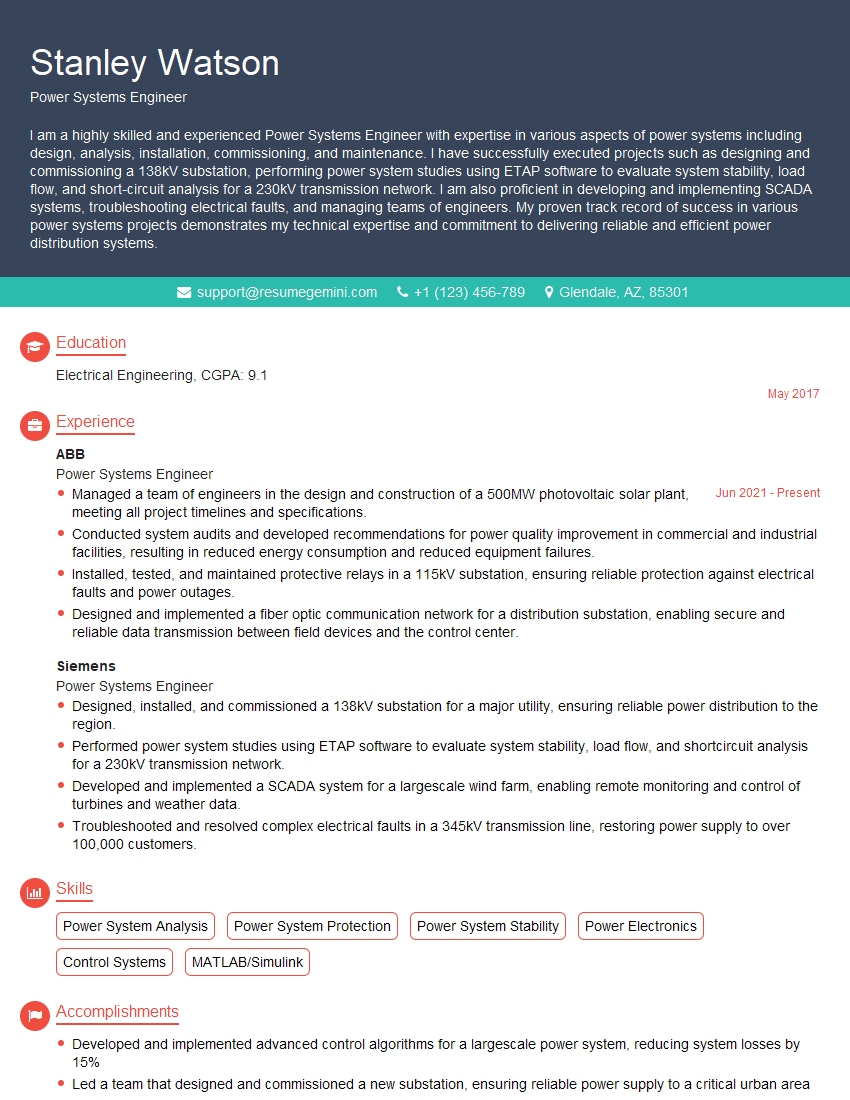
Power Systems Engineer Resume Sample

Electrical Drafter Resume Sample
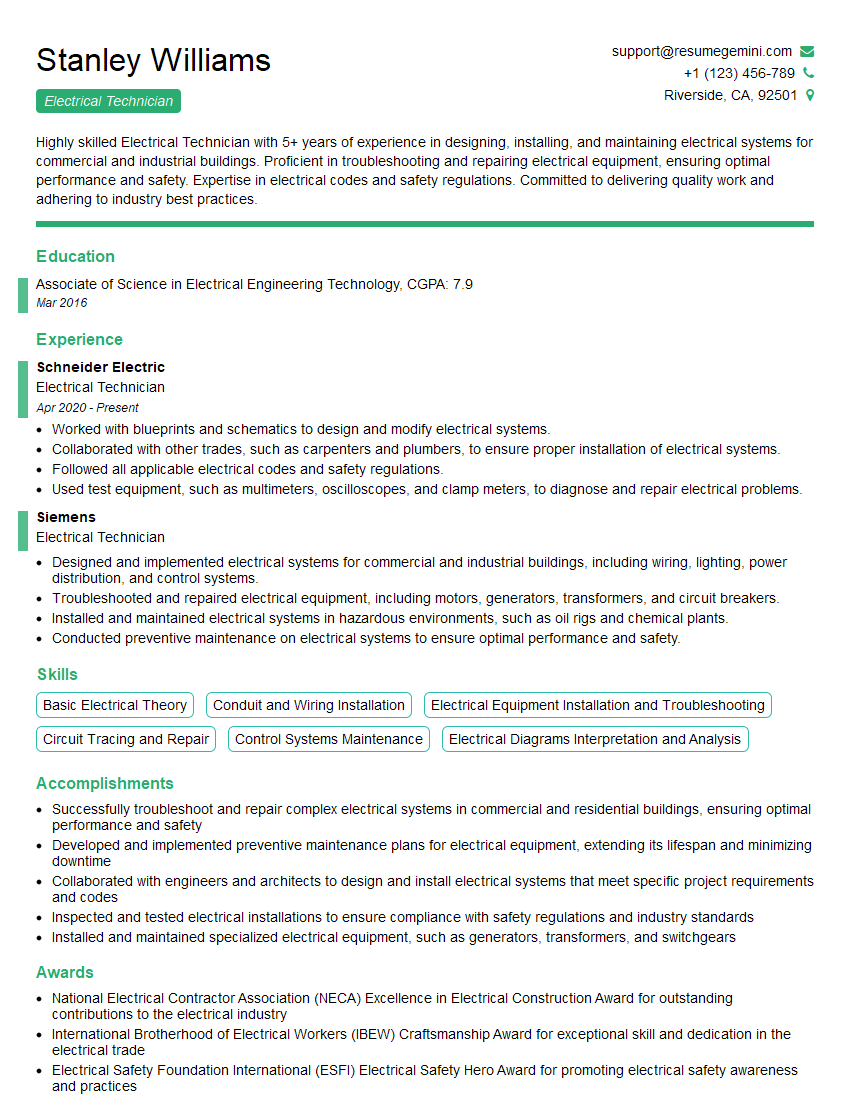
Electrical Technician Resume Sample
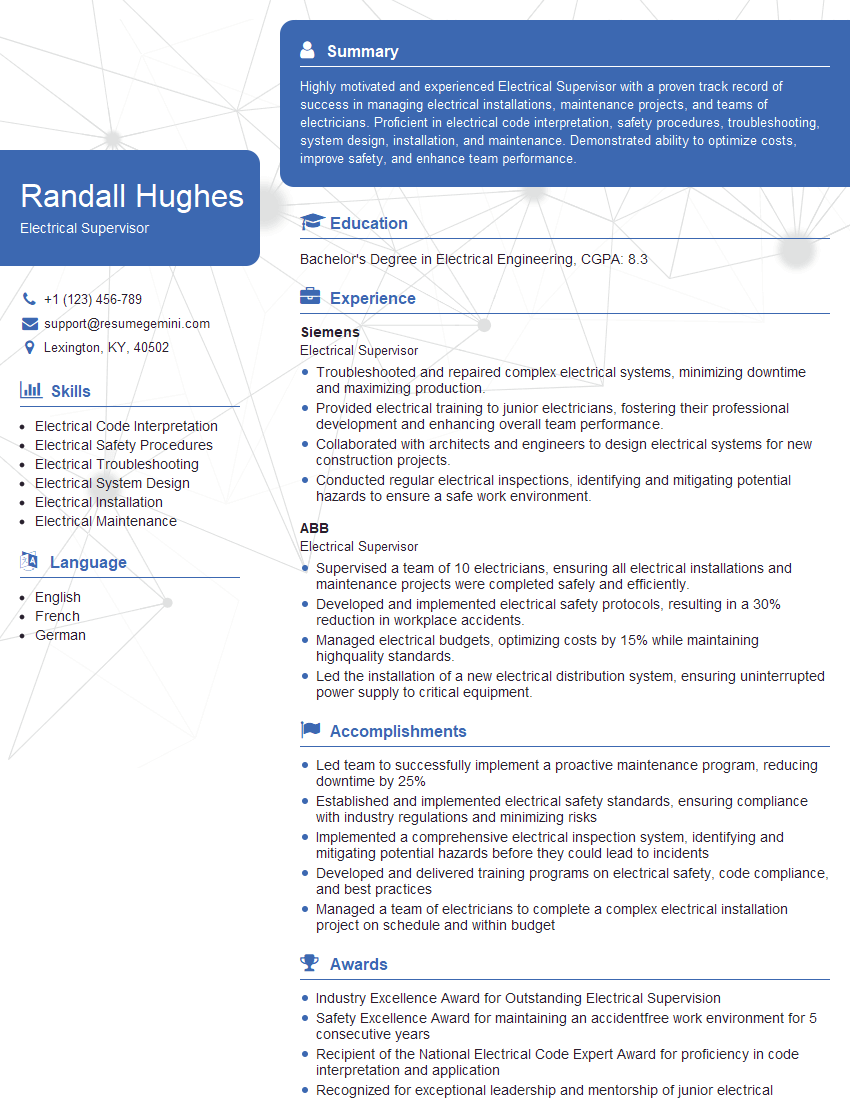
Electrical Supervisor Resume Sample
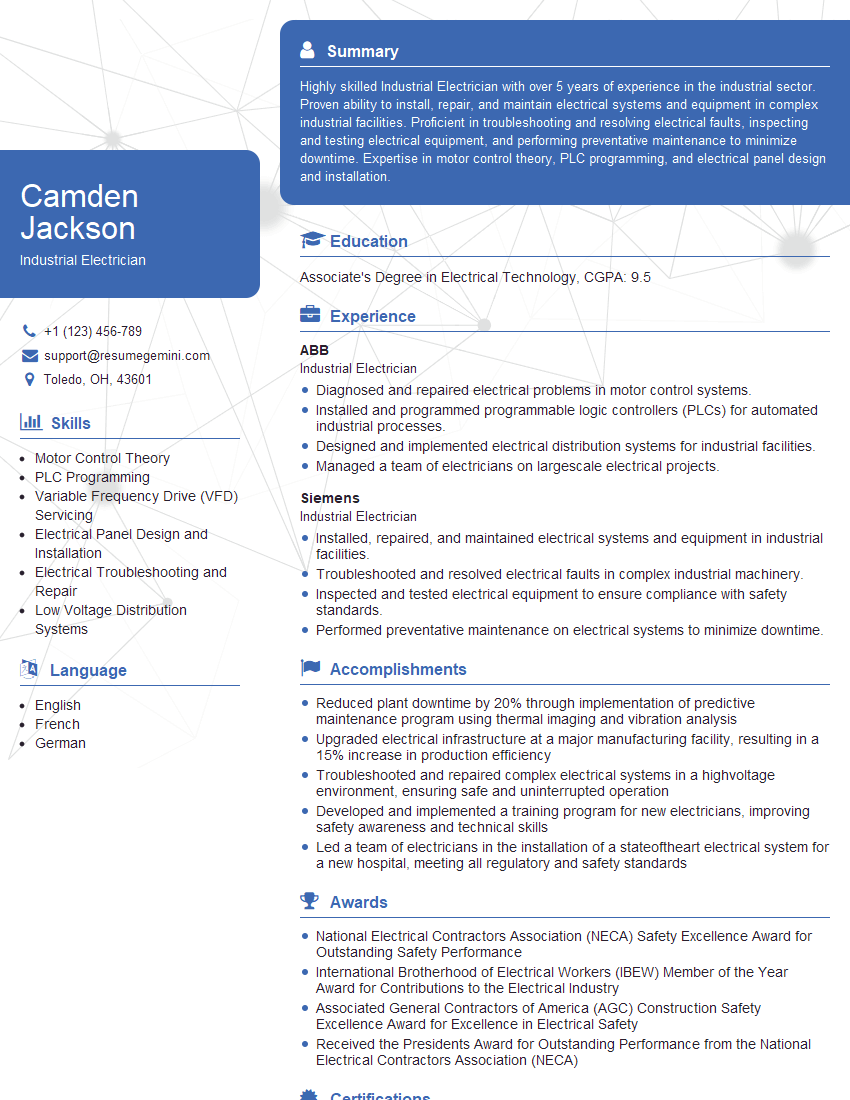
Industrial Electrician Resume Sample

Maintenance Electrician Resume Sample

Solar Panel Installer Resume Sample
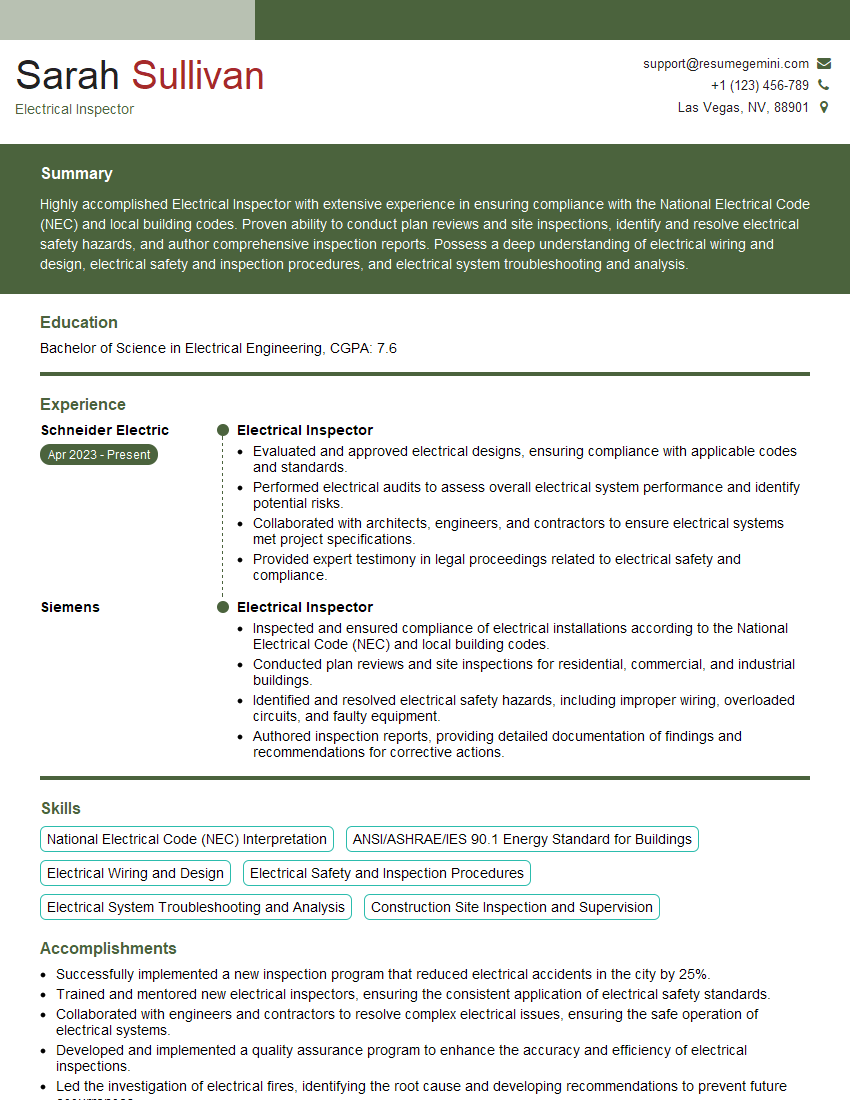
Electrical Inspector Resume Sample
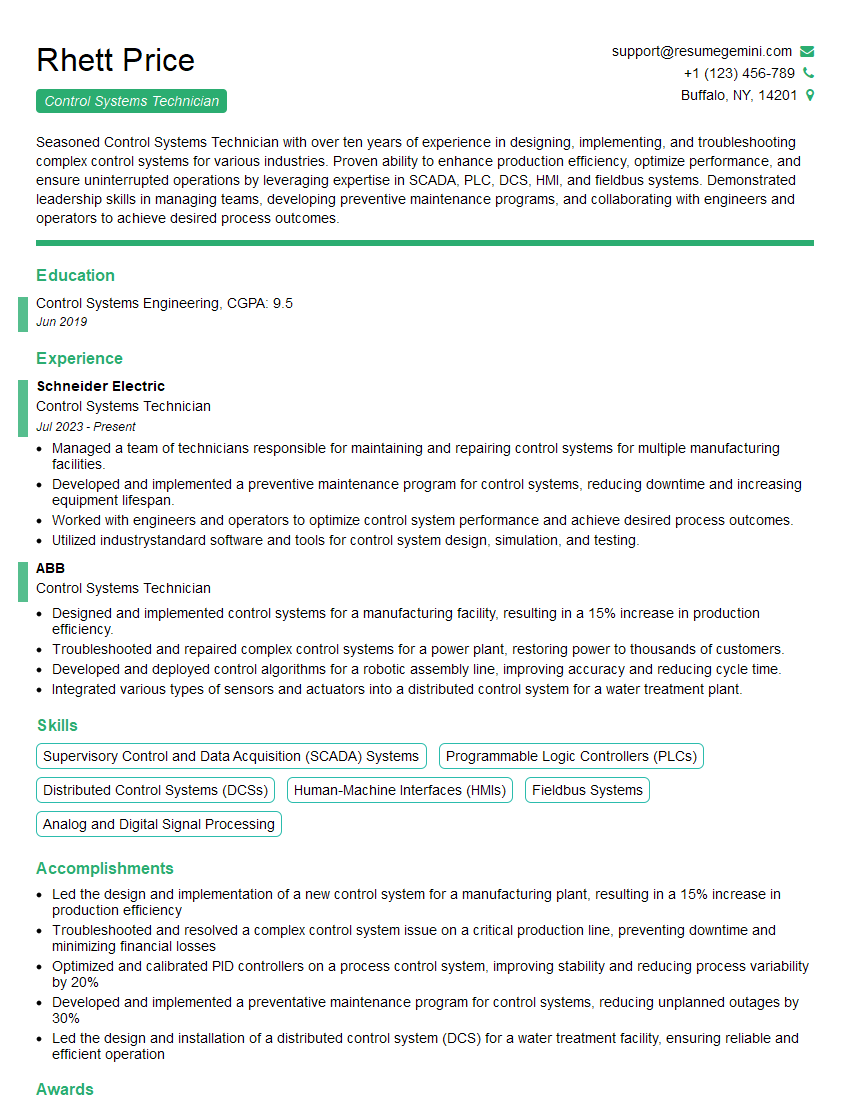
Control Systems Technician Resume Sample
Explore more articles
Users Rating of Our Blogs
Share Your Experience
We value your feedback! Please rate our content and share your thoughts (optional).
What Readers Say About Our Blog
Amazing blog
Interesting Article, I liked the depth of knowledge you’ve shared.
Helpful, thanks for sharing.