Interviews are opportunities to demonstrate your expertise, and this guide is here to help you shine. Explore the essential Fine Woodworking interview questions that employers frequently ask, paired with strategies for crafting responses that set you apart from the competition.
Questions Asked in Fine Woodworking Interview
Q 1. Explain the difference between various wood joinery techniques (e.g., mortise and tenon, dovetail, biscuit, dowel).
Wood joinery is the art of connecting pieces of wood, and different techniques offer varying strengths, aesthetics, and complexity. Let’s explore some key methods:
- Mortise and Tenon: This classic joint involves a projecting ‘tenon’ on one piece fitting snugly into a recessed ‘mortise’ on another. It’s strong, versatile, and can be hidden for a clean look. Think of the legs and rails of a sturdy table.
- Dovetail: Known for its strength and attractive appearance, dovetail joints use interlocking ‘tails’ and ‘pins’ shaped like the tails of a dove. These are often seen in drawers and fine furniture, offering exceptional resistance to racking (twisting).
- Biscuit: A simpler, faster joint using thin, oval-shaped biscuits (wood wafers) inserted into slots cut into the joining pieces. Glue holds the biscuits and pieces together. Great for quick assembly and less visible joinery, suitable for shelves or cabinet carcasses.
- Dowel: Dowel joints use cylindrical dowels (small wooden pegs) inserted into holes bored in both pieces. They offer decent strength and are relatively simple to make. Often found in chair construction or less visible areas.
The choice of joint depends on the project’s requirements. For example, a strong, visually appealing chest of drawers would call for dovetails, whereas a simple shelf might use biscuits or dowels for speed and efficiency.
Q 2. Describe your experience with different wood types and their properties (hardwoods vs. softwoods).
My experience spans a wide range of wood types, each with unique characteristics influencing its suitability for different projects. Hardwoods, typically denser and harder than softwoods, generally offer superior durability and strength, making them ideal for furniture and fine woodworking. Softwoods, while less durable, are often easier to work with and more affordable, suitable for construction or less demanding projects.
- Hardwoods: Examples include oak (strong, durable, beautiful grain), mahogany (rich color, luxurious), cherry (warm tones, good workability), walnut (dark, elegant), maple (hard, light-colored).
- Softwoods: Examples include pine (affordable, easy to work with, knots common), fir (straight grain, good for framing), cedar (aromatic, naturally resistant to decay).
I’ve learned to select wood based on its intended use, desired aesthetic, and budget. For example, a fine dining table might use quarter-sawn oak for its strength and beautiful grain pattern, while a simple garden bench could utilize pressure-treated pine for its durability and weather resistance. The choice always depends on a holistic assessment of project requirements.
Q 3. What are the common wood finishing techniques, and which ones are best suited for different projects?
Wood finishing protects the wood, enhances its appearance, and can add durability. Numerous techniques exist, each with its strengths:
- Oil finishes: (e.g., linseed oil, tung oil) penetrate the wood, enhancing its natural beauty and offering some protection. They’re easy to apply and maintain but offer less durability than other finishes.
- Varnish: Provides a hard, durable, and protective layer with a glossy or satin sheen. It’s highly protective but can be challenging to apply flawlessly.
- Shellac: A natural resin-based finish, shellac offers a warm, amber tone and is easy to repair. It’s less durable than varnish but excellent for accentuating wood grain.
- Lacquer: Dries quickly and provides a tough, durable finish. It’s readily available in various sheens.
- Polyurethane: A very durable and water-resistant finish; however, it can mask the natural beauty of the wood.
The best choice depends on the project and desired outcome. A delicate wooden bowl might benefit from a food-safe oil finish, whereas a kitchen table would benefit from the durability of polyurethane.
Q 4. How do you select the appropriate tools and equipment for a specific woodworking project?
Tool selection is crucial for a successful project. It hinges on several factors:
- Project complexity: A simple project might require only basic hand tools, while a complex piece needs specialized power tools.
- Wood type: Hardwoods necessitate sharp, robust tools, while softwoods are easier to work with.
- Desired finish: Specific tools are needed for certain finishes; for example, a sprayer for lacquer or a polishing system for a high-gloss finish.
For example, building a simple bookshelf might involve a hand saw, chisel, clamps, and sandpaper. Constructing a complex inlaid table would necessitate a planer, jointer, router, various chisels, and possibly a CNC machine for precise cuts and shaping.
Thorough planning, which includes outlining the required steps, ensures that all necessary tools are gathered in advance. This prevents project delays and improves overall workflow.
Q 5. Describe your experience with hand tools versus power tools.
Both hand and power tools have their place in the workshop. Hand tools provide precision, control, and a deeper understanding of the material, which I find incredibly valuable. They offer greater control in intricate work. Power tools increase speed and efficiency for more extensive projects or repetitive tasks. I often combine them for optimal results.
Hand tools: Chisels, planes, saws, hand drills – these allow for meticulous cuts and shaping, ideal for fine details and intricate joinery. For instance, I prefer carving decorative elements with hand tools.
Power tools: Table saw, router, planer, sander – these accelerate the process, particularly for repetitive cuts or large-scale shaping. I use my table saw for precise rip cuts when building larger pieces of furniture.
The integration of hand and power tools depends on the project’s scale, complexity, and personal preference. A well-equipped workshop includes both.
Q 6. How do you ensure the accuracy and precision of your cuts and joinery?
Accuracy and precision are paramount. Several strategies contribute to this:
- Sharp tools: Dull tools lead to inaccuracies and tear the wood, so regular sharpening is essential. For example, a sharp chisel produces clean, precise mortises and tenons.
- Precise measuring and marking: Use accurate measuring tools (steel rulers, squares) and precise marking techniques (marking gauges, pencils) to create accurate layouts. This is critical for joinery.
- Appropriate jigs and fixtures: Jigs and fixtures (e.g., miter boxes, doweling jigs) aid accuracy in repetitive operations. For example, a miter box helps create perfectly angled cuts for picture frames.
- Test cuts and adjustments: Always test cuts on scrap wood to check settings and adjust accordingly before cutting final pieces.
- Careful assembly: Use appropriate clamps and techniques to ensure parts are properly aligned during assembly.
Each step requires concentration and attention to detail. A slight error in measurement or a dull tool can ruin an entire project.
Q 7. Explain your process for creating a woodworking design from concept to finished product.
My process is iterative and involves several key stages:
- Conceptualization: This involves brainstorming ideas, sketching designs, and researching inspiration. This stage includes understanding the project’s functionality and intended use.
- Design refinement: I refine the initial concept through detailed drawings, considering joinery, materials, and aesthetics. Digital modeling software may be used to visualize the final product.
- Material selection: Choosing the appropriate wood species, considering factors like durability, aesthetics, and budget. I also select appropriate finishes at this stage.
- Construction: This involves cutting, shaping, and assembling the pieces using the chosen techniques. I carefully follow my plans, making adjustments as needed.
- Finishing: Applying the chosen finish to protect the wood, enhance its appearance, and provide the desired level of durability.
- Quality control: Thoroughly inspecting the finished piece for any imperfections and making necessary corrections before final delivery. This might involve sanding or light repairs.
Throughout the process, documentation (photos, notes) is crucial for troubleshooting and future reference. Each project teaches new things; I often adapt my process based on experience and the specific demands of the project.
Q 8. How do you manage your time and resources effectively when working on a project?
Effective time and resource management in woodworking is crucial for completing projects on time and within budget. I approach this through a multi-stage process. First, I meticulously plan the project, breaking it down into smaller, manageable tasks. This involves creating a detailed schedule, accounting for material procurement, tool preparation, and each step of the woodworking process. I use Gantt charts or similar project management tools to visualize the timeline and dependencies between tasks.
Second, I meticulously source materials. Knowing the specific wood type needed, I’ll factor in lead times for sourcing and drying (which can significantly impact a project timeline). Similarly, I inventory my tools and identify any needed supplies well in advance to avoid delays.
Third, I prioritize tasks based on their criticality and dependencies. Some steps, like joinery, are critical and must be completed before others, like finishing. Finally, I regularly monitor my progress, adapting the schedule as necessary and managing unforeseen issues proactively.
For instance, on a recent project involving intricate marquetry, I initially underestimated the time required for precise inlay work. By closely monitoring my progress and adjusting the schedule, I was able to stay on track without compromising quality.
Q 9. Describe your experience with wood drying and its impact on the final product.
Wood drying is absolutely paramount in woodworking. The moisture content of wood directly impacts its stability and the final product’s longevity. Wood that’s too wet will shrink and warp as it dries, leading to cracks, splits, and ultimately, a ruined piece. Conversely, wood that’s too dry can become brittle and prone to cracking during processing or later in its life.
My experience involves using both kiln-dried lumber and air-drying lumber. Kiln drying is a faster method, ideal for commercially available wood, but it can sometimes lead to internal stresses if not done carefully. Air drying is a slower, more traditional approach, allowing for more gentle and even drying. It’s crucial to understand the wood species, its thickness, and the local climate to determine the best drying method and duration. I often use a moisture meter to precisely monitor the wood’s moisture content throughout the drying process, ensuring it reaches the optimal level before use.
For example, when crafting a fine table, using improperly dried wood would result in significant warping over time, compromising the structural integrity and aesthetic appeal of the finished piece.
Q 10. How do you troubleshoot common woodworking problems?
Troubleshooting woodworking problems requires a systematic approach. I begin by carefully examining the issue, identifying the root cause. Is it a problem with the wood itself (e.g., knots, warping), a joinery issue (e.g., loose tenons, misaligned joints), or a finishing problem (e.g., uneven color, bubbling)?
Once the root cause is determined, I address it using appropriate techniques. For example, a warped board might require planing or steaming to correct its shape. A loose tenon might need to be reglued, while an uneven finish might need sanding and reapplication. I often refer to reference books, online resources, or consult with other experienced woodworkers for additional perspectives.
Recently, I encountered a situation where a client’s cherry table showed significant expansion after the finish had dried. By investigating, I discovered that the wood’s moisture content was higher than expected at the time of finishing, leading to the expansion. The solution was to carefully sand the expanded area and reapply finish to restore a level surface.
Q 11. What safety precautions do you take while working with woodworking tools and machinery?
Safety is my utmost priority. My workshop is equipped with appropriate safety features and I adhere to strict safety protocols. This includes using personal protective equipment (PPE) such as safety glasses, hearing protection, dust masks, and gloves consistently. Before operating any machinery, I always ensure all guards are in place and functioning correctly.
I maintain a clean and organized workspace to prevent accidents caused by tripping hazards. Tools are stored properly when not in use. I also regularly inspect my tools for damage or wear and replace them as needed. When using power tools, I always ensure the wood is securely clamped to prevent kickback. Additionally, I regularly review safety procedures and attend workshops to stay current on best practices.
For example, when using a table saw, I always use a push stick to avoid hand injuries and ensure the blade is properly adjusted and guarded. A similar careful approach is taken with every tool and machine in my shop.
Q 12. How do you maintain and care for your tools and equipment?
Proper tool maintenance is essential for both safety and performance. After each use, I clean my tools thoroughly, removing sawdust and debris. Sharpening and honing are crucial steps; dull tools are dangerous and inefficient. I use sharpening stones and honing guides to maintain the sharpness of my chisels, plane blades, and other hand tools.
Power tools require regular maintenance, too. I inspect cords for damage, lubricate moving parts as needed, and regularly check belts and blades for wear. I also follow manufacturer’s recommendations for maintenance and replacement of components. For example, I regularly clean and oil my joiners and planers to maintain their accuracy and longevity.
I store my tools in a dry, dust-free environment to prevent rust and corrosion. Hand tools are stored in tool rolls or chests, arranged according to type. Power tools are stored in designated areas to prevent damage and ensure easy access.
Q 13. Describe your experience working with different types of wood finishes (e.g., lacquer, polyurethane, shellac).
I’ve extensive experience with various wood finishes, each with its own unique properties. Shellac, a natural resin finish, provides a warm, amber tone and is easy to apply, but can be less durable than other options. Lacquer dries quickly and offers a hard, protective finish, suitable for high-traffic areas. Polyurethane is another popular choice, offering excellent durability and protection from moisture and scratches. The specific finish selected greatly depends on the project and client preferences.
When applying a finish, proper surface preparation is critical. The wood needs to be sanded smoothly and any imperfections addressed before application. I usually apply multiple thin coats, allowing each coat to dry thoroughly between applications. I often use techniques like rubbing between coats with fine steel wool or abrasive pads to achieve a perfectly smooth finish. The finish itself can be applied using brushes, spray guns, or rags, depending on the material and desired result.
For example, on a fine antique reproduction, I might opt for shellac to match the historical appearance, while a modern kitchen table might benefit from the durability of polyurethane.
Q 14. What is your experience with woodworking plans and blueprints?
Woodworking plans and blueprints are essential for translating design concepts into reality. I’m adept at reading and interpreting various types of plans, including those that are hand-drawn, computer-generated, or even just sketches. A good plan clearly outlines dimensions, joinery details, and materials lists, and I check for accuracy and completeness before beginning a project.
Beyond simply following plans, I’m also comfortable adapting and modifying plans based on client requests or material availability. Understanding the underlying principles of joinery and construction allows me to make informed changes while maintaining the structural integrity and aesthetic appeal of the piece. I often use CAD software to create or modify plans, enabling precise design and efficient material usage.
For example, I recently adapted a traditional Windsor chair design to incorporate a client’s request for a specific wood species. This required careful consideration of the wood’s properties and adjustments to the joinery to maintain stability.
Q 15. How familiar are you with CAD software for woodworking design?
My familiarity with CAD software for woodworking design is extensive. I’m proficient in several programs, including SketchUp, Fusion 360, and AutoCAD. I use these tools not just for creating detailed 2D and 3D models of projects, but also for generating accurate cut lists, optimizing material usage, and visualizing the final product before construction begins. For example, when designing a complex curved staircase, I’d use Fusion 360 to model the individual components, ensuring a perfect fit and minimal waste. The ability to manipulate the 3D model allows me to experiment with joinery, assess structural integrity, and refine the design until I’m completely satisfied before even picking up a saw.
Beyond modeling, these programs are crucial for communication with clients. Sharing a detailed 3D render helps clients visualize the finished piece, leading to fewer misunderstandings and revisions later in the process.
Career Expert Tips:
- Ace those interviews! Prepare effectively by reviewing the Top 50 Most Common Interview Questions on ResumeGemini.
- Navigate your job search with confidence! Explore a wide range of Career Tips on ResumeGemini. Learn about common challenges and recommendations to overcome them.
- Craft the perfect resume! Master the Art of Resume Writing with ResumeGemini’s guide. Showcase your unique qualifications and achievements effectively.
- Don’t miss out on holiday savings! Build your dream resume with ResumeGemini’s ATS optimized templates.
Q 16. Describe your approach to resolving conflicts or disagreements within a team setting.
Resolving conflicts within a team requires open communication and a collaborative spirit. My approach is to first actively listen to each team member’s perspective, ensuring everyone feels heard and understood. Then, I facilitate a discussion to identify the root cause of the disagreement, focusing on the project goals and finding common ground. If necessary, I propose solutions that incorporate elements of everyone’s ideas, fostering a sense of ownership and shared responsibility. For example, if a disagreement arose regarding the choice of wood for a project, I’d facilitate a discussion weighing the pros and cons of each option – cost, availability, aesthetic appeal, and suitability for the project’s function – to arrive at a mutually agreeable decision.
Ultimately, the goal is to find a solution that benefits the project as a whole, maintains team morale, and strengthens working relationships.
Q 17. Have you ever had to work with damaged or flawed wood? How did you handle it?
Working with damaged or flawed wood is a common occurrence. My approach depends on the nature and extent of the damage. Minor imperfections, like small knots or splits, can often be incorporated into the design creatively, adding character to the piece. For example, a knot might become a focal point, subtly highlighted by the finish. Larger defects, such as cracks or significant decay, require more careful consideration. I’d assess the structural integrity, determining if the wood can be salvaged. This might involve using epoxy to repair cracks, carefully removing damaged sections, or using the imperfect piece for less critical elements of the project.
If the damage is too extensive, I’d prioritize using sound wood, adjusting the design as needed to avoid the compromised section. Honesty and transparency with the client are paramount in such situations; explaining the options and implications is key.
Q 18. Explain your experience with different types of wood stains and how to achieve consistent color.
My experience with wood stains encompasses a wide variety of types, from oil-based to water-based, and from pigmented to transparent stains. Achieving consistent color requires a methodical approach. Preparation is crucial: the wood surface must be sanded smoothly and evenly to ensure even stain absorption. The type of wood itself also impacts how the stain will look – hardwoods often accept stain differently than softwoods.
Applying stain in thin, even coats, with light sanding between coats, prevents blotchiness. Testing the stain on a scrap piece of the same wood is essential to predict the final color. For complex projects, I use a spray gun for consistent application and coverage. Finally, using a sealant or topcoat will protect the stain and enhance its longevity. Each project requires a tailored approach, but consistent technique ensures consistent and predictable results.
Q 19. How do you ensure the structural integrity of your woodworking projects?
Ensuring structural integrity is paramount in woodworking. It starts with selecting appropriate wood species for the specific application, considering factors like strength, durability, and resistance to bending and stress. Then, careful joinery is essential – mortise and tenon, dovetail, and other robust joints are selected based on the load-bearing requirements of the project. I always employ sound woodworking techniques and avoid weak points. For example, when building a table, I’d use robust joinery for the legs and apron, ensuring stability and longevity. In addition, I carefully consider the grain orientation and incorporate bracing where needed to reinforce joints or distribute weight effectively.
Finally, regular checks during construction and meticulous attention to detail throughout the process help identify and rectify any potential weakness before the project is completed.
Q 20. Describe your experience with inlay or marquetry techniques.
I have significant experience with both inlay and marquetry techniques. Inlay involves inserting contrasting pieces of wood (or other materials) into grooves cut into the primary wood surface. Marquetry is a more intricate form of inlay, often using thin veneers of various woods to create complex patterns. Both techniques require precise planning, careful cutting, and meticulous assembly. For example, when creating a marquetry panel, I would first design the pattern using CAD software, then carefully cut the veneers using a coping saw or scroll saw, ensuring clean edges. This requires a steady hand and sharp tools. Each piece is carefully glued and fitted into place, and then the surface is meticulously sanded and finished to achieve a seamless effect.
The precision and artistry involved in these techniques add a significant level of detail and elegance to any woodworking project.
Q 21. How do you handle customer feedback and project revisions?
Customer feedback is invaluable. I actively solicit feedback throughout the project, from initial design discussions to final delivery. I maintain open communication channels, ensuring clients feel comfortable expressing their thoughts and concerns. Positive feedback is appreciated and helps reinforce best practices, while constructive criticism is vital for identifying areas for improvement. If revisions are requested, I discuss the feasibility and cost implications transparently with the client. My approach prioritizes understanding the client’s needs and finding solutions that meet their expectations, maintaining a collaborative approach throughout the process.
The goal is to deliver a project that exceeds client expectations and fosters a positive ongoing relationship.
Q 22. What are your strategies for staying organized and efficient in a busy workshop?
Organization is paramount in a woodworking shop. Think of it like a well-oiled machine – every part needs its place for optimal efficiency. My strategy centers around three key areas: spatial organization, workflow management, and inventory control.
Spatial Organization: My workshop is zoned for specific tasks. I have a dedicated area for cutting, one for assembly, one for finishing, and so on. Tools are meticulously stored in designated locations, categorized by function and frequency of use. Think of it like a chef’s kitchen – everything is within easy reach and logically placed.
Workflow Management: I plan projects meticulously, breaking them down into smaller, manageable steps. This minimizes wasted time searching for tools or materials. I utilize a Kanban-style system – a simple whiteboard where I track the progress of each project, moving cards from ‘To Do’ to ‘In Progress’ to ‘Complete’. This keeps me focused and avoids getting bogged down.
Inventory Control: I maintain a detailed inventory of my wood stock, hardware, and consumables. This prevents unnecessary purchases and ensures I have the necessary materials on hand for each project. A simple spreadsheet works wonders here, and I regularly update it after each project completion. Knowing exactly what I have avoids frustrating delays.
Q 23. Describe your experience working with exotic hardwoods.
Working with exotic hardwoods is a rewarding but demanding experience. The beauty and rarity of these woods are undeniable, but their unique properties require specialized techniques. I’ve worked extensively with species like Brazilian Rosewood, African Mahogany, and Bubinga. Each presents its own challenges.
Hardness and Durability: Many exotic hardwoods are incredibly dense and hard, requiring sharper tools and more careful cutting to prevent tear-out. I often employ specialized techniques like using slower feed rates and sharper blades on my planer and jointer.
Oil and Resin Content: Some exotic woods contain high levels of oils and resins, which can dull tools quickly and affect the finish. Regular sharpening is crucial, and I often use specialized finishes designed for oily woods to ensure proper adhesion.
Cost and Availability: Exotic hardwoods are expensive and can be difficult to source. Careful planning and efficient use of material are essential to avoid waste. I always create detailed cut lists to minimize material usage.
Sustainability Concerns: It’s important to source exotic hardwoods responsibly, ensuring the wood comes from sustainable, legally harvested sources. I always check certifications and support responsible vendors.
Q 24. What is your understanding of wood grain orientation and its influence on design and strength?
Wood grain orientation is fundamental in woodworking. It dictates the strength, stability, and aesthetic appeal of a finished piece. Imagine wood grain as the fibers in a fabric; running with the grain provides strength and flexibility, while running against it weakens the structure.
Strength: Wood is strongest when the force is applied parallel to the grain. Bending or stressing wood across the grain will significantly weaken it and increase the risk of breakage. For example, the legs of a chair are strongest when the grain runs vertically from the floor to the seat.
Stability: The grain orientation influences the wood’s response to changes in humidity and temperature. Wood expands and contracts more across the grain than along it. This must be considered when designing projects to avoid warping or cracking. For instance, wide panels are more stable when their grain runs the length of the panel rather than across its width.
Aesthetic Appeal: Grain patterns create visual interest. The direction and character of the grain significantly impact the visual outcome of a piece. A skilled woodworker can use the grain pattern creatively, enhancing the beauty of the final product through careful board selection and design.
Q 25. How do you manage waste and disposal in a woodworking shop?
Waste management is crucial for environmental responsibility and maintaining a safe and clean workspace. My approach involves a combination of reduction, reuse, and responsible disposal.
Waste Reduction: I meticulously plan my cuts and utilize offcuts for smaller projects or to create useful items. I prioritize efficient use of materials to minimize waste generation from the outset.
Reuse: Dust collection systems are essential. The collected sawdust can be used in composting or as a soil amendment. Offcuts can be repurposed for smaller projects, like tool handles or decorative items. Creativity here is key.
Responsible Disposal: I dispose of hazardous waste like finishes and solvents according to local regulations. This includes proper labeling and delivery to designated hazardous waste collection centers. For regular wood waste, I often utilize local recycling centers or composting facilities.
Q 26. Explain your experience with different types of adhesives for woodworking.
Adhesives are the backbone of many woodworking projects. Different projects call for different adhesives, each with its own strengths and limitations. My experience encompasses several types:
Wood Glue (Animal or PVA): This is my workhorse. It’s strong, relatively inexpensive, and readily available. Ideal for most furniture and structural applications.
Epoxy Resin: Excellent for filling gaps, bonding dissimilar materials, and creating incredibly strong joints. Its high cost and longer curing time make it less suitable for every project, but it’s crucial for specialized projects.
Urethane Adhesive (Construction Adhesive): Strong and versatile, but not ideal for fine woodworking due to its potential for discoloration and longer open time.
Contact Cement: For laminating veneers or applying edge banding, this adhesive provides excellent bond strength upon contact.
Choosing the right adhesive is crucial for project success. Factors like wood type, joint design, and environmental conditions all influence the selection process.
Q 27. What are some common problems encountered during the finishing process, and how do you prevent or solve them?
Finishing is the culmination of the woodworking process, but it can be fraught with problems. Common issues include:
Brush Marks: Using the right brush and technique is crucial. Applying thin coats and allowing adequate drying time between coats prevents brush marks.
Dust Nibs: A clean workspace is essential. Using a tack cloth to remove dust before each coat prevents nibs. A well-ventilated workspace is also important to prevent dust buildup.
Uneven Finish: Proper surface preparation is paramount. Sanding to a smooth finish before applying any stain or varnish is essential for a uniform coating.
Runs and Sags: Applying thin coats and avoiding over brushing are essential to prevent runs and sags. The right viscosity of finish is also important.
Careful preparation, proper technique, and the right tools are key to avoiding these problems. A test run on scrap wood is always recommended before applying finish to the final piece.
Q 28. Describe your understanding of wood movement and how to account for it in your designs.
Wood movement, caused by changes in moisture content, is a significant factor in woodworking. Ignoring it can lead to warping, cracking, and overall failure of the finished product. Understanding and accounting for this movement is crucial.
Understanding the Process: Wood expands and contracts more across the grain than along it. Changes in humidity are the biggest factor. High humidity leads to expansion, while low humidity leads to contraction.
Design Considerations: For example, when designing a tabletop, it’s crucial to use wood that has been acclimated to the environment it will be in. I also account for wood movement by incorporating expansion and contraction joints into the design.
Material Selection: Certain species are more stable than others. Hardwoods generally exhibit less movement than softwoods. Using wood properly dried and acclimated to the intended environment minimizes movement.
Construction Techniques: Techniques like biscuit joining or mortise and tenon are less susceptible to movement induced stress than simple glue-ups.
By understanding wood movement and incorporating appropriate design and construction techniques, I can ensure the longevity and stability of my work.
Key Topics to Learn for Fine Woodworking Interview
- Wood Selection and Properties: Understanding different wood species, their grain patterns, hardness, workability, and suitability for specific projects. Practical application: Explaining the choice of wood for a particular piece based on its intended use and aesthetic goals.
- Joinery Techniques: Mastery of various joinery methods like mortise and tenon, dovetail, dado, and biscuit joints. Practical application: Describing the advantages and disadvantages of different joinery techniques for specific applications, including considerations for strength, aesthetics, and ease of construction.
- Finishing Techniques: Knowledge of various finishing methods including staining, sealing, lacquering, and polishing. Practical application: Explaining the process of selecting and applying a finish to achieve a desired look and durability.
- Tool Knowledge and Usage: Familiarity with hand tools (chisels, planes, saws) and power tools (routers, planers, jointers). Practical application: Demonstrating understanding of safe and efficient tool operation and maintenance.
- Project Planning and Design: Ability to read and interpret plans, create designs, and manage projects effectively. Practical application: Explaining the steps involved in planning a woodworking project, including material estimation, time management, and problem-solving strategies.
- Woodworking Safety: Understanding and adhering to safety protocols and best practices to prevent accidents. Practical application: Describing safety procedures for using specific tools and machinery.
- Problem-Solving and Troubleshooting: Ability to identify and resolve common woodworking challenges. Practical application: Describing how to address issues like wood warping, joint misalignment, or finish imperfections.
Next Steps
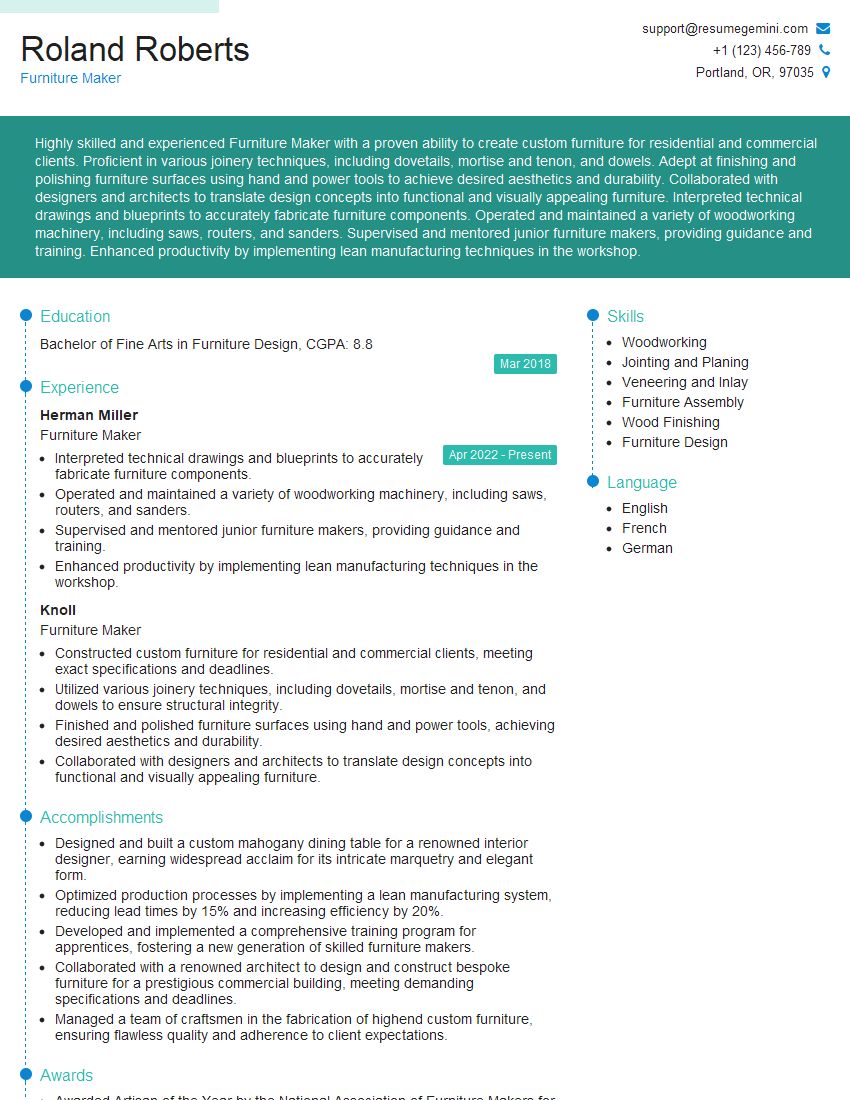
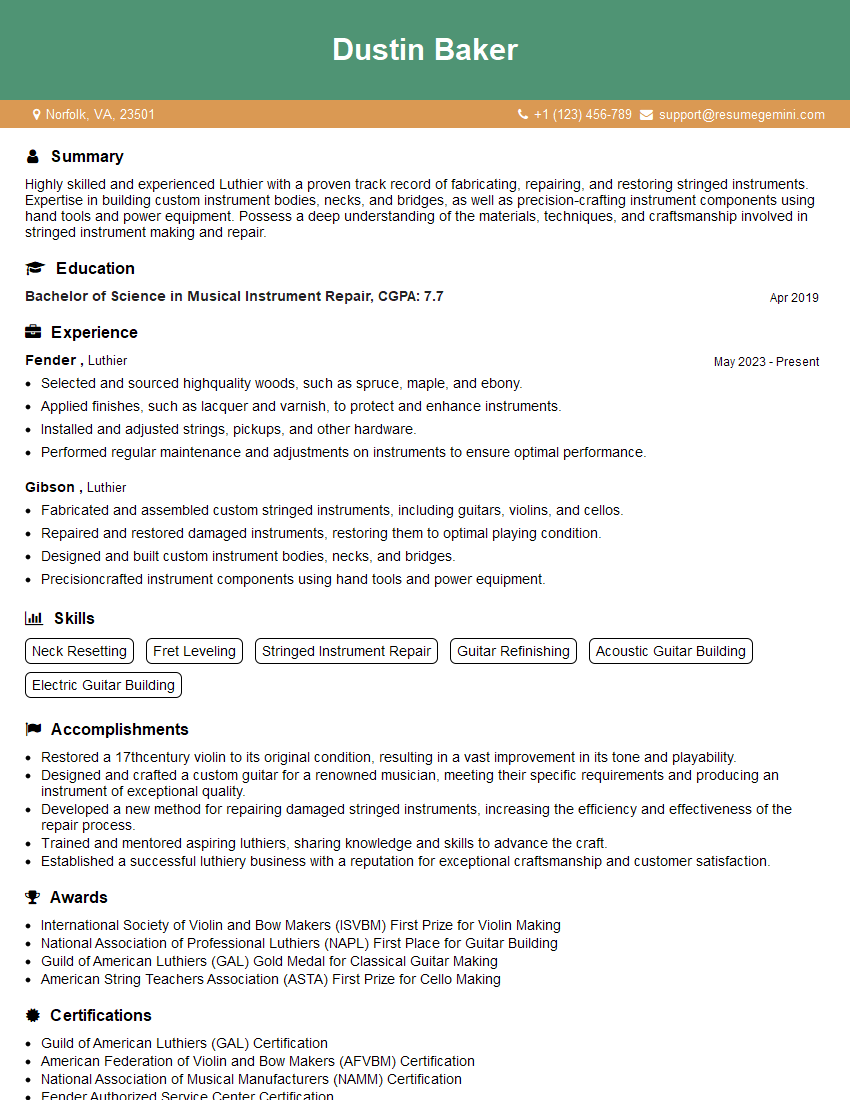
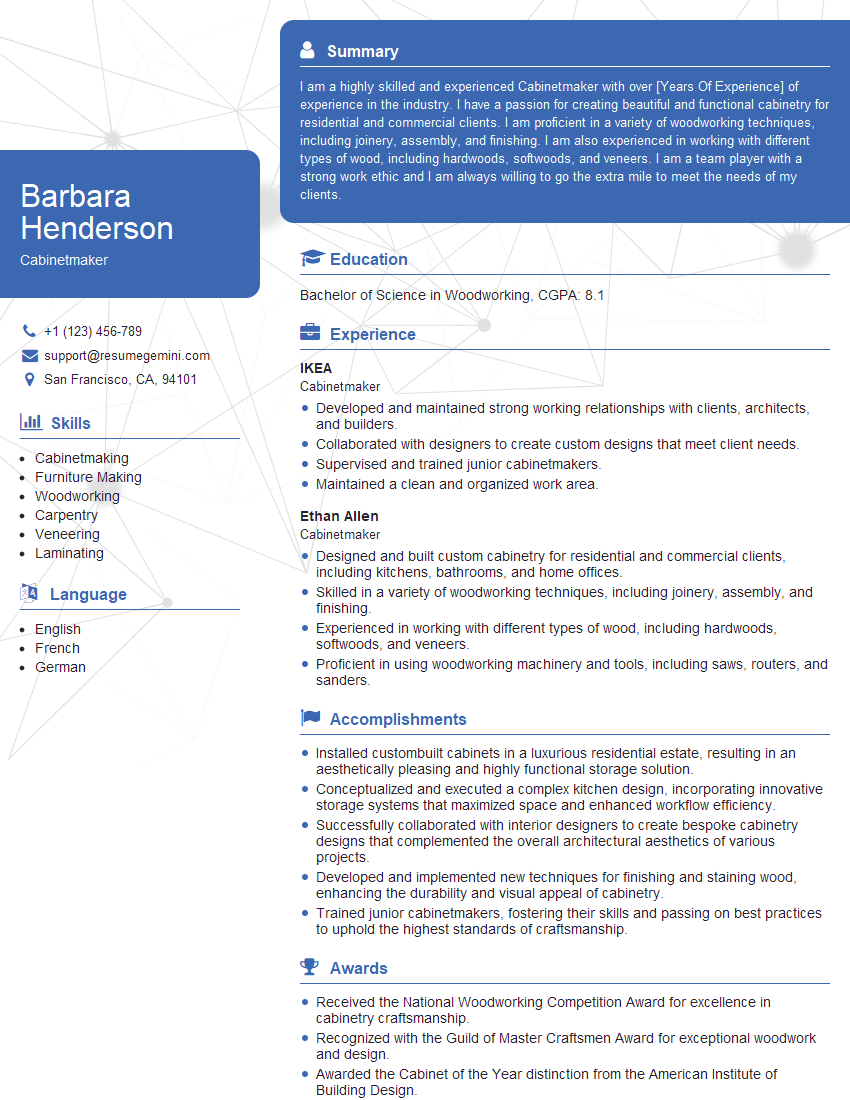
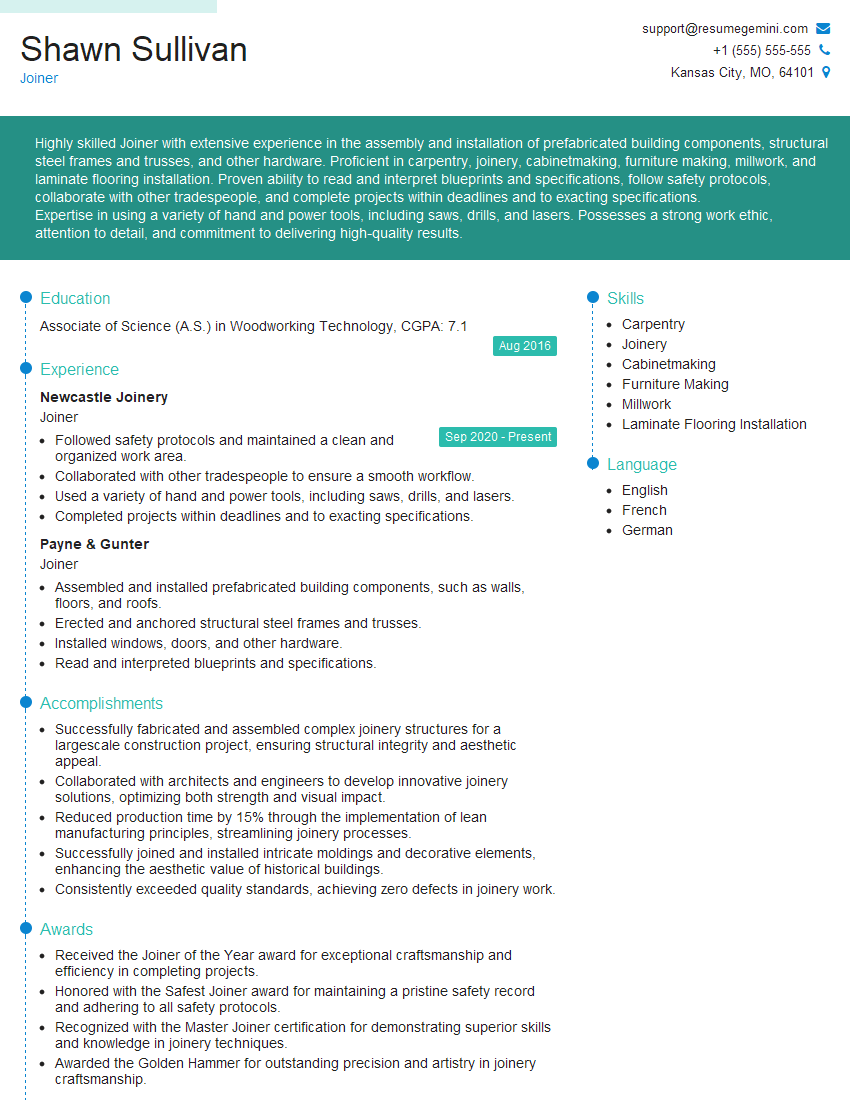
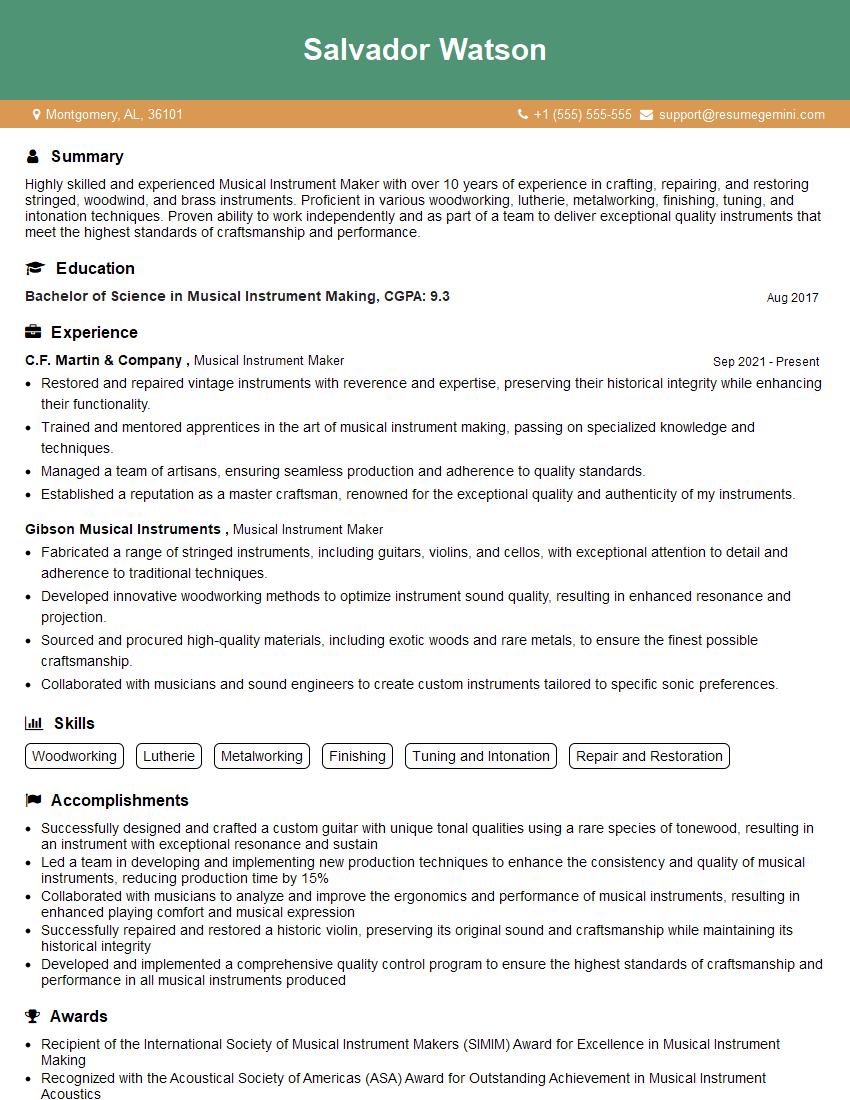
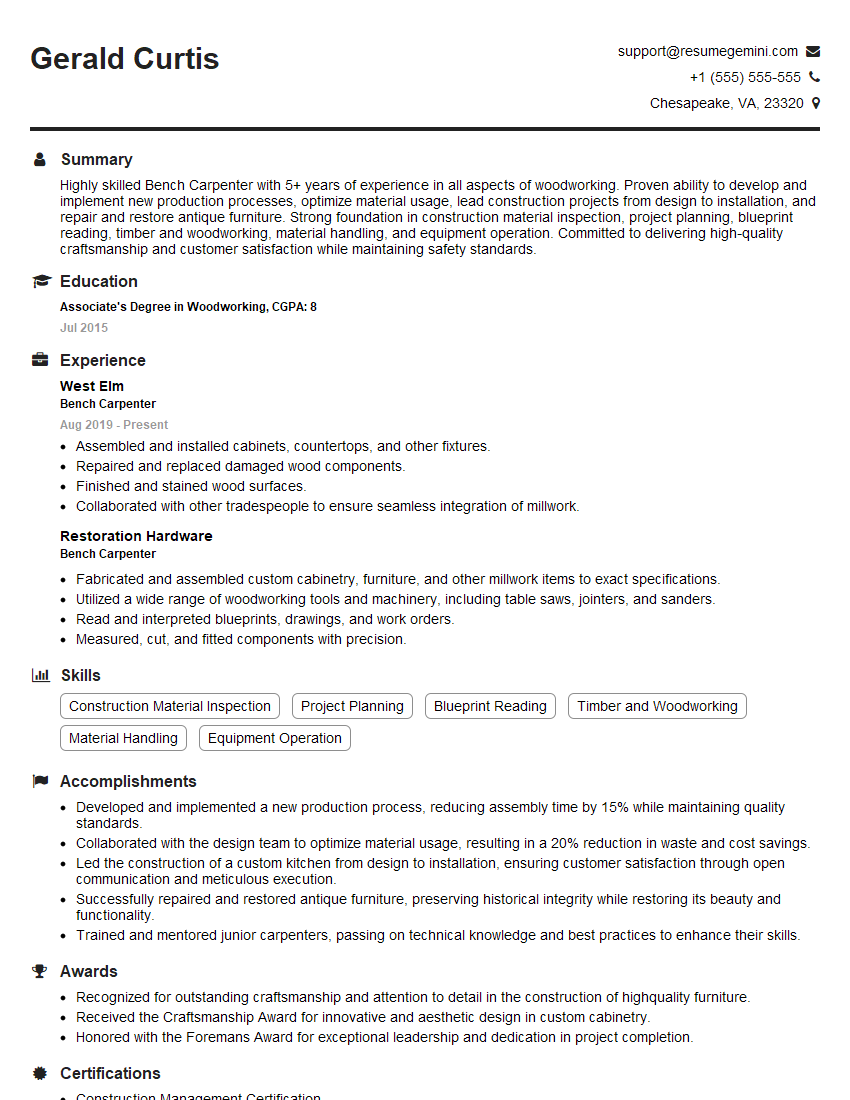
Mastering fine woodworking skills opens doors to rewarding and diverse career opportunities, from crafting custom furniture to working in restoration and conservation. To maximize your job prospects, it’s crucial to present your qualifications effectively. Creating an ATS-friendly resume is essential for getting your application noticed by employers. ResumeGemini is a trusted resource that can help you build a professional and impactful resume that highlights your skills and experience. Examples of resumes tailored to the fine woodworking field are available to guide you.
Explore more articles
Users Rating of Our Blogs
Share Your Experience
We value your feedback! Please rate our content and share your thoughts (optional).
What Readers Say About Our Blog
Amazing blog
Interesting Article, I liked the depth of knowledge you’ve shared.
Helpful, thanks for sharing.