Feeling uncertain about what to expect in your upcoming interview? We’ve got you covered! This blog highlights the most important HVAC Certification interview questions and provides actionable advice to help you stand out as the ideal candidate. Let’s pave the way for your success.
Questions Asked in HVAC Certification Interview
Q 1. Explain the difference between a heat pump and a furnace.
While both heat pumps and furnaces provide heating, they differ significantly in how they achieve it. A furnace is a combustion-based system; it burns fuel (natural gas, propane, oil) to generate heat, which is then distributed through ductwork. Think of it like a giant, controlled bonfire. It’s excellent for heating but doesn’t offer cooling. A heat pump, on the other hand, is a more sophisticated system that works on a refrigeration cycle, moving heat rather than generating it. In heating mode, it extracts heat from the outside air (even in cold temperatures) and transfers it indoors. In cooling mode, it reverses the process, moving heat from inside to outside. Imagine it as a highly efficient ‘heat shuffler.’ Therefore, heat pumps offer both heating and cooling capabilities, resulting in higher energy efficiency in many climates.
In short: Furnaces generate heat through combustion; heat pumps move heat via a refrigeration cycle.
Q 2. Describe the refrigeration cycle in detail.
The refrigeration cycle is the heart of a heat pump’s operation and also crucial for air conditioning systems. It’s a continuous loop involving four key components: the compressor, condenser, expansion valve, and evaporator.
Compressor: This component compresses the refrigerant, raising its temperature and pressure. Think of it as the ‘pump’ in the system.
Condenser: Here, the high-pressure, high-temperature refrigerant releases heat to the outside air (in cooling mode) or to the indoor air (in some heat pump configurations for defrosting). The refrigerant then changes from a gas to a liquid.
Expansion Valve: This valve restricts the flow of the liquid refrigerant, causing a sudden drop in pressure and temperature. This is a crucial step for the heat transfer process.
Evaporator: The low-pressure, low-temperature refrigerant absorbs heat from the inside air (in cooling mode) or from the outside air (in heating mode), causing it to evaporate back into a gas. This is where the ‘cooling’ or ‘heating’ effect happens.
The refrigerant then cycles back to the compressor, completing the loop. The entire cycle is driven by the compressor’s power. Understanding this cycle is essential for diagnosing and troubleshooting refrigeration system issues.
Q 3. What are the common types of refrigerants and their environmental impact?
Many refrigerants exist, each with varying environmental impacts. Older refrigerants like R-22 (HCFC-22) and R-12 (CFC-12) are now phased out due to their significant ozone depletion potential (ODP). They contribute to the hole in the ozone layer. R-22 is being replaced by R-410A, a blend of HFCs (Hydrofluorocarbons), and newer refrigerants like R-32 (a single HFC) and R-1234yf (another HFC) are gaining popularity. While HFCs don’t deplete the ozone layer, they are potent greenhouse gases with high global warming potentials (GWPs). This means they contribute to climate change.
The industry is moving towards refrigerants with lower GWP and ODP. Natural refrigerants like propane (R-290), ammonia (R-717), and carbon dioxide (R-744) are gaining traction, offering environmentally friendly alternatives. The choice of refrigerant significantly influences a system’s environmental impact, and HVAC technicians must be aware of the regulations and best practices related to their handling and disposal.
Q 4. How do you troubleshoot a malfunctioning thermostat?
Troubleshooting a malfunctioning thermostat involves a systematic approach. First, visually inspect the thermostat for obvious issues like loose wires, a tripped breaker, or a blown fuse (check the breaker box). Then:
Check power supply: Ensure the thermostat is receiving power. A simple way is to use a voltage tester to check the wires going to the thermostat.
Verify wiring connections: Carefully inspect all wire connections for tightness and corrosion. Loose or corroded connections can disrupt the electrical signal and prevent proper operation. Refer to wiring diagrams if needed.
Test the thermostat’s functionality: Attempt to change the temperature settings. If the system doesn’t respond, the thermostat itself might be faulty and need replacement.
Check the system’s other components: If the thermostat seems to be working correctly, the problem might lie within the HVAC unit itself (e.g., a faulty compressor or blower motor). Further diagnostics might be required.
Consult the thermostat’s manual: It often includes troubleshooting guides and error codes that might pinpoint the issue.
Remember, always turn off the power to the system before working on the wiring. A multimeter can be a valuable tool for testing voltage and continuity.
Q 5. Explain the principles of airflow and ductwork design.
Airflow and ductwork design are crucial for efficient HVAC system performance. Proper airflow ensures even temperature distribution and prevents energy waste. The principles involve:
Proper sizing: Ductwork should be appropriately sized to match the system’s capacity and the building’s heating and cooling loads. Undersized ducts restrict airflow, leading to inadequate heating or cooling; oversized ducts lead to inefficient operation.
Air pressure: Maintaining the correct air pressure within the duct system is essential. A balanced system ensures even airflow throughout the building, preventing pressure imbalances that cause drafts or noisy operation. This often involves adjusting dampers within the ductwork.
Leakage: Leaks in the ductwork can significantly reduce efficiency. Leaky ducts waste energy by allowing conditioned air to escape into unconditioned spaces. Regular inspection and sealing are vital.
Insulation: Insulating ductwork, especially in unconditioned spaces, minimizes heat loss or gain, improving efficiency and reducing energy consumption. This is particularly important in attics, crawl spaces, and basements.
Duct layout: The optimal duct layout minimizes bends and obstructions, promoting smooth airflow and reducing friction losses. Long, convoluted duct runs can impact efficiency.
Proper duct design and installation are critical for a comfortable and energy-efficient home or building.
Q 6. How do you diagnose and repair a leaking refrigerant line?
Diagnosing and repairing a leaking refrigerant line requires specialized knowledge and equipment. Never attempt repairs without proper training and certification. Here’s a general outline:
Locate the leak: Use an electronic leak detector to pinpoint the exact location of the leak. Sometimes, visual inspection can reveal obvious leaks, but a detector is essential for finding smaller, harder-to-detect leaks. Refrigerant dye can also be injected to help visualize leaks under UV light.
Isolate the section: Once the leak is located, the affected section of the line needs to be isolated by closing appropriate valves. This prevents further refrigerant loss.
Repair or replace: Small leaks might be repairable using specialized leak sealant or patches. Larger leaks often require replacing the damaged section of the line. Proper brazing techniques are needed for joining copper refrigerant lines.
Evacuate and recharge: After the repair, the system needs to be thoroughly evacuated to remove any air and moisture. Then, the system is recharged with the correct amount of refrigerant.
Leak check: A final leak check is essential to ensure the repair was successful and there are no further leaks.
Working with refrigerants requires adherence to safety regulations and proper disposal procedures for any recovered refrigerant.
Q 7. Describe the different types of HVAC system controls.
HVAC systems utilize various control methods to regulate temperature and airflow. These include:
Thermostats: These are the most common controls, allowing users to set desired temperatures and operating modes (heating, cooling, fan only). They can be basic mechanical types or advanced programmable or smart thermostats with remote access and energy-saving features.
Humidistats: These controls monitor and regulate humidity levels. They’re often integrated into HVAC systems to enhance comfort and prevent mold growth.
Pressure switches: These monitor pressure within the refrigerant lines or airflow within the ductwork. They ensure safe and efficient operation by activating safety shutdowns if pressure levels are outside the acceptable range.
Safety controls: These include high-temperature limit switches, flame sensors (for furnaces), and pressure relief valves, which protect the system from damage or dangerous situations.
Sequence controllers: These manage the operation of multiple components within a complex HVAC system, such as staging multiple compressors or modulating airflow based on temperature needs.
Building management systems (BMS): In larger buildings, a centralized BMS might oversee the entire HVAC system, allowing for remote monitoring, control, and optimization of energy efficiency.
The type of control system depends on the size and complexity of the HVAC system.
Q 8. What safety precautions do you take when working with refrigerants?
Working with refrigerants requires meticulous attention to safety. Refrigerants, depending on their type, can be toxic, flammable, or contribute to ozone depletion. My top priority is always personal safety and environmental protection.
- Personal Protective Equipment (PPE): I always wear safety glasses, gloves appropriate for the refrigerant (e.g., nitrile for most refrigerants), and closed-toe shoes. For larger jobs or those involving potentially higher concentrations of refrigerant, a respirator might be necessary.
- Proper Ventilation: I ensure adequate ventilation in the workspace to prevent the buildup of refrigerant vapors. This often involves opening windows and using fans to create airflow, or even using specialized ventilation equipment for confined spaces.
- Leak Detection and Repair: I utilize electronic leak detectors to identify leaks promptly and accurately. Once a leak is found, I meticulously repair it according to manufacturer specifications, using the correct brazing techniques and materials, ensuring a leak-free system.
- Refrigerant Handling Procedures: I follow all manufacturer’s instructions and relevant EPA regulations for handling refrigerants. This includes proper cylinder handling, recovery and recycling procedures, and responsible disposal of used refrigerants.
- Emergency Preparedness: I’m familiar with emergency response procedures in case of refrigerant exposure or accidental release, and know how to contact emergency services if needed.
For example, during a recent service call, I discovered a refrigerant leak in a rooftop unit. After properly ventilating the area and donning my PPE, I used an electronic leak detector to pinpoint the leak’s location. Following safety protocols, I carefully repaired the leak and then performed a pressure test to confirm the repair was successful. The entire process was documented meticulously, adhering to best practices for refrigerant handling.
Q 9. How do you calculate the BTU requirements for a space?
Calculating BTU (British Thermal Unit) requirements for a space is crucial for proper system sizing. BTUs measure the amount of heat energy needed to raise the temperature of one pound of water by one degree Fahrenheit. We need to consider several factors to accurately determine the BTU requirements:
- Climate Zone: The local climate significantly influences heating and cooling loads. A hotter, more humid climate will require a higher BTU system than a temperate one.
- Room Dimensions and Insulation: Larger rooms and poorly insulated spaces will need more BTUs to maintain the desired temperature. Insulation’s R-value plays a key role here.
- Number of Windows and their Orientation: South-facing windows, for example, receive more solar heat gain, increasing the cooling load. The type of window glazing also matters.
- Occupancy: The number of people in the space contributes to heat gain (body heat). Appliances and lighting also generate heat.
- Desired Temperature Difference: The difference between the inside and outside temperature impacts the BTU requirements. A larger temperature difference requires a more powerful system.
There are various calculation methods, including manual calculations using industry standards and specialized software. Many contractors use online calculators or software that takes into account all these factors to provide a more accurate estimate. While I’m skilled in manual calculations, I typically utilize software for larger or more complex projects to ensure accuracy and efficiency. For instance, I recently used such software for a new construction project to precisely determine the BTU needs for a multi-zone HVAC system, which resulted in an optimal system design and avoided costly oversizing or undersizing.
Q 10. Explain the function of a condenser coil and evaporator coil.
The condenser coil and evaporator coil are essential components of any refrigeration cycle, working together to transfer heat and cool or heat a space. They’re essentially heat exchangers.
- Evaporator Coil: This coil is located inside the conditioned space (e.g., inside an air handler or within a duct system for air conditioning). It’s where the refrigerant absorbs heat from the air. The refrigerant, in a low-pressure, low-temperature state, evaporates as it absorbs heat, lowering the air temperature. Think of it as a ‘cold sponge’ soaking up heat from the air.
- Condenser Coil: This coil is typically located outside (in an outdoor unit) and is responsible for releasing the heat absorbed by the refrigerant in the evaporator coil. The refrigerant, now under high pressure and high temperature, releases its heat to the outside air. Fans help accelerate this heat transfer. Think of it as a ‘hot sponge’ releasing heat to the surrounding environment.
In a typical air conditioning system, the refrigerant circulates between these two coils, constantly absorbing heat inside and releasing it outside, thereby cooling the interior space. In a heat pump, the cycle reverses, with the condenser coil acting as the evaporator, allowing it to extract heat from the outside air to heat the interior space.
Q 11. How do you perform a proper HVAC system startup and commissioning?
Proper HVAC system startup and commissioning is critical to ensure efficient and safe operation. It’s more than just turning the system on.
- Pre-commissioning Inspection: Before startup, a thorough inspection is necessary. This includes checking refrigerant charge, electrical connections, gas lines (for heating systems), and ensuring all components are correctly installed and functioning properly. Leak checks are crucial here.
- System Startup: Start the system slowly, monitoring all parameters (temperatures, pressures, airflow) carefully. This gradual startup allows for any minor issues to be identified and addressed before they escalate.
- Performance Testing and Adjustments: After the initial startup, several performance tests are needed. This might include measuring airflow, refrigerant pressure, and temperature differentials across the evaporator and condenser coils. Adjustments to airflow, refrigerant charge, and other parameters are made as needed to optimize the system’s performance.
- Documentation: Maintain comprehensive records of the commissioning process, including pre-startup inspections, test results, adjustments made, and any noted issues or remedies. This documentation is crucial for future troubleshooting and maintenance.
- Final Inspection and Handover: A final inspection confirms that the system meets design specifications and operates efficiently and safely. A comprehensive handover to the client (including the operation and maintenance manuals) concludes the process.
For example, during a recent commissioning, we found a slight refrigerant undercharge after the initial tests. By adding a small amount of refrigerant, we optimized the system’s efficiency and ensured it met the manufacturer’s performance specifications. All findings and adjustments were carefully documented.
Q 12. What are the common causes of inefficient HVAC systems?
Inefficient HVAC systems can result from various issues, leading to higher energy bills and reduced comfort. Common causes include:
- Dirty Air Filters: Clogged air filters restrict airflow, reducing the system’s efficiency and potentially causing damage to components. Regular filter changes are essential.
- Leaking Ducts: Air leaks in the ductwork cause energy loss and reduce the system’s effectiveness. Proper sealing and insulation of ducts are important for optimal performance.
- Refrigerant Leaks: Low refrigerant levels reduce the system’s cooling or heating capacity, leading to higher energy consumption and potentially damaging the compressor.
- Improperly Calibrated Thermostats: An incorrectly calibrated thermostat can lead to inconsistent temperatures and increased energy use.
- Dirty or Damaged Coils: Dirty coils (evaporator and condenser) impede heat transfer, lowering efficiency. Damage to the coils themselves also reduces performance.
- Malfunctioning Compressor: The compressor is the heart of the system, and a malfunctioning compressor leads to significant inefficiencies and potential breakdowns.
- Insufficient Insulation: Poor insulation in the building envelope results in significant heat loss in winter and heat gain in summer, requiring the HVAC system to work harder.
For instance, I recently diagnosed an inefficient system with excessively high energy consumption. After a thorough inspection, I found significant duct leaks, a dirty condenser coil, and a nearly empty refrigerant charge. Addressing these issues – sealing the ducts, cleaning the coil, and recharging the system – restored the system’s efficiency significantly, resulting in substantial energy savings for the client.
Q 13. Describe the process of cleaning and maintaining an air conditioning coil.
Cleaning and maintaining an air conditioning coil (evaporator or condenser) is crucial for maintaining system efficiency and preventing premature failure.
- Safety First: Always disconnect the power to the unit before starting any cleaning procedure. Wear appropriate PPE, including gloves and safety glasses.
- Initial Inspection: Assess the coil’s condition. Note the extent of dirt buildup, any signs of damage, and any debris present.
- Cleaning Method: For evaporator coils (often within easy access), a gentle cleaning with a coil cleaner and a brush or vacuum is typically sufficient. For condenser coils, a garden hose with a low-pressure nozzle can be effective. Avoid using high-pressure water, as this can damage the fins. For significant buildup, professional cleaning may be needed.
- Drying: After cleaning, allow the coil to dry completely before powering the unit back on. This prevents potential damage from short circuits.
- Post-Cleaning Inspection: After drying, check the coil again to ensure it is clean and free of debris. Inspect for any damage that might have occurred during the cleaning process.
For example, I recently cleaned a severely clogged condenser coil. After safely disconnecting the power, I used a coil cleaner and a brush to remove the accumulated dirt and debris. Then, I rinsed it gently with a low-pressure garden hose, ensuring thorough drying before re-energizing the unit. This significantly improved the system’s efficiency and reduced its energy consumption.
Q 14. How do you interpret and troubleshoot HVAC system error codes?
HVAC systems use error codes to indicate problems. Interpreting these codes is crucial for efficient troubleshooting. The codes vary depending on the manufacturer and system type, so having access to the system’s manual is essential.
- Consult the Manual: The first step is to locate the system’s manual and use the error code lookup table. This provides a description of the error and potential causes.
- Visual Inspection: Once you know the potential problem indicated by the error code, conduct a visual inspection. Check the components related to the code for any obvious issues (e.g., loose connections, damaged wiring, obstructions).
- Systematic Troubleshooting: Follow a systematic approach, ruling out potential causes one by one. This may involve using diagnostic tools, such as multimeters or refrigerant pressure gauges.
- Record-Keeping: Maintain thorough records of the error codes, troubleshooting steps taken, and the final resolution. This helps in future troubleshooting and identifies recurring problems.
For example, I recently encountered an error code indicating a frozen evaporator coil. Referring to the manual and conducting a visual inspection, I discovered a restricted airflow due to a clogged air filter. After replacing the filter, the error code cleared, and the system resumed normal operation. This highlights the importance of regular maintenance and preventative measures.
Q 15. What are the different types of HVAC system filters and their effectiveness?
HVAC system filters are crucial for maintaining indoor air quality and the efficiency of your system. They come in various types, each with varying effectiveness. The effectiveness is primarily determined by the Minimum Efficiency Reporting Value (MERV) rating, a scale from 1 to 16, where higher numbers indicate greater efficiency.
- Fiberglass Filters (MERV 1-4): These are the cheapest and most common, but offer the lowest efficiency. They primarily capture larger dust particles and are best for basic filtration. Think of them as a basic sieve.
- Pleated Filters (MERV 5-10): These offer more surface area than fiberglass filters, leading to higher efficiency in capturing smaller particles like pollen and pet dander. They’re a good balance between cost and effectiveness. Imagine a more intricate sieve.
- HEPA Filters (MERV 13-16): High-Efficiency Particulate Air filters are the most effective, capable of capturing 99.97% of particles 0.3 microns in size or larger. These are ideal for individuals with allergies or respiratory sensitivities, but can restrict airflow and require more frequent changes.
- Electrostatic Filters: These filters use static electricity to attract and trap particles, often offering a good balance of efficiency and airflow. Think of them as using a magnet to capture dust.
Choosing the right filter depends on your needs and budget. For general use, a pleated filter (MERV 8-10) is often a good compromise. However, if you have allergies or specific concerns, a HEPA filter might be a better choice, despite potentially needing more frequent replacements.
Career Expert Tips:
- Ace those interviews! Prepare effectively by reviewing the Top 50 Most Common Interview Questions on ResumeGemini.
- Navigate your job search with confidence! Explore a wide range of Career Tips on ResumeGemini. Learn about common challenges and recommendations to overcome them.
- Craft the perfect resume! Master the Art of Resume Writing with ResumeGemini’s guide. Showcase your unique qualifications and achievements effectively.
- Don’t miss out on holiday savings! Build your dream resume with ResumeGemini’s ATS optimized templates.
Q 16. Describe your experience with different types of HVAC equipment.
Throughout my career, I’ve worked extensively with a wide range of HVAC equipment, from residential split systems to large commercial chillers. My experience includes:
- Residential Systems: I’m proficient in diagnosing and repairing issues with heat pumps, air conditioners, furnaces (both gas and electric), and their associated components like thermostats and ductwork. For example, I recently troubleshooted a heat pump experiencing defrost issues, ultimately tracing the problem to a faulty defrost sensor.
- Commercial Systems: I have experience with larger systems like rooftop units, chillers (absorption and centrifugal), and air handlers. One memorable project involved optimizing the energy efficiency of a large office building’s HVAC system by implementing a building automation system (BAS).
- Specific Equipment Types: I’m familiar with various brands and models, understanding their unique characteristics and maintenance requirements. This includes variable refrigerant flow (VRF) systems and geothermal heat pumps, both of which are increasingly popular for their efficiency.
This diverse experience allows me to approach any HVAC challenge with a broad perspective and a practical understanding of various technologies.
Q 17. How do you handle customer complaints and resolve issues effectively?
Handling customer complaints requires empathy, effective communication, and a systematic approach. My process involves:
- Active Listening: I carefully listen to the customer’s concerns, allowing them to fully explain the issue without interruption. This helps build rapport and demonstrate that I value their experience.
- Thorough Investigation: I conduct a detailed inspection of the system to identify the root cause of the problem. This often involves using diagnostic tools and my technical expertise.
- Clear Explanation: Once the problem is identified, I explain it clearly and concisely to the customer, using non-technical language where appropriate. I also explain the proposed solution and its cost.
- Solution Implementation: I promptly implement the agreed-upon solution, ensuring the customer is kept informed throughout the process.
- Follow-up: After the work is completed, I follow up with the customer to ensure their satisfaction and address any remaining questions or concerns. A positive follow-up can turn a negative experience into a positive one.
For example, I once had a customer complaining about inconsistent temperatures. After a thorough investigation, I discovered a problem with the ductwork, causing significant air leaks. Explaining the issue and the solution to the customer resulted in their satisfaction and a positive review.
Q 18. What are the common causes of frozen evaporator coils?
A frozen evaporator coil is a common problem in air conditioning systems. Several factors can contribute to this:
- Insufficient Airflow: Restricted airflow across the evaporator coil prevents heat transfer, causing the coil to freeze. This can be due to dirty air filters, frozen condensate drain lines, or blocked airflow due to obstructions in the ductwork. Imagine trying to cool a pan of water without letting air circulate around it—the water will freeze.
- Low Refrigerant Charge: A low refrigerant charge reduces the system’s cooling capacity, forcing the evaporator coil to operate at lower temperatures, increasing the risk of freezing. This is like trying to cool your house with a refrigerator that is almost empty.
- Restricted Refrigerant Flow: Blockages in the refrigerant lines, such as a clogged filter drier or expansion valve, can also cause the evaporator coil to freeze.
- Faulty TXV (Thermostatic Expansion Valve): A malfunctioning TXV can cause an improper amount of refrigerant to reach the evaporator coil, leading to freezing.
- Improper Airflow Direction: Airflow direction problems may cause uneven refrigerant distribution across the coil, resulting in icing.
Addressing these issues requires a systematic approach, starting with checking the airflow, then moving to refrigerant levels and component functionality. Proper diagnosis is key to effective repair.
Q 19. Explain the importance of proper ventilation and indoor air quality.
Proper ventilation and indoor air quality (IAQ) are paramount for occupant health, comfort, and productivity. Poor IAQ can lead to various health problems, including allergies, asthma, and other respiratory illnesses.
Importance of Ventilation: Ventilation systems introduce fresh outside air and remove stale indoor air, reducing the concentration of pollutants such as carbon dioxide, volatile organic compounds (VOCs), and biological contaminants. This helps maintain a comfortable and healthy indoor environment. Think of it like regularly changing the air in a room to prevent it from becoming stuffy and musty.
Importance of Indoor Air Quality: IAQ encompasses the overall quality of the air inside a building, including the levels of pollutants, humidity, and temperature. Maintaining good IAQ requires controlling sources of pollution, using effective filtration, and providing adequate ventilation. Regularly changing air filters, cleaning ductwork, and performing regular maintenance are all critical aspects of maintaining good IAQ.
The interaction between ventilation and IAQ is crucial. A well-ventilated space with appropriate filtration can significantly improve IAQ, leading to better occupant health and well-being. Conversely, poor ventilation can exacerbate poor IAQ, resulting in a less healthy and comfortable indoor environment.
Q 20. How do you perform a system pressure test?
Performing a system pressure test is a crucial step in HVAC maintenance and troubleshooting. It helps identify leaks and assess the overall integrity of the refrigerant lines. The procedure typically involves:
- Isolate the System: Disconnect the system from the power supply and close the service valves on both the liquid and suction lines.
- Connect Gauges: Connect appropriate gauges to the service ports of the system.
- Evacuate the System: Use a vacuum pump to remove air and moisture from the system. This is critical to prevent contamination and damage.
- Introduce Nitrogen: Introduce nitrogen gas into the system to a predetermined pressure. The pressure level depends on the system’s type and design.
- Monitor Pressure: Monitor the pressure for any drops, indicating a possible leak. A leak detector can aid in pinpointing its location.
- Repair Leaks (if any): If a leak is detected, it must be repaired before proceeding.
- Charge the System: After leak repair and confirmation of system integrity, the system is ready to be charged with refrigerant.
Safety precautions, including using appropriate personal protective equipment (PPE) and following all safety regulations, are crucial throughout this process. Using nitrogen instead of refrigerant for pressure testing minimizes the risk of refrigerant leaks and potential harm to the environment.
Q 21. What are the safety regulations associated with working on HVAC systems?
Safety regulations associated with working on HVAC systems are stringent and vary by location, but several key principles apply universally:
- Personal Protective Equipment (PPE): Always wear appropriate PPE, including safety glasses, gloves, and respiratory protection, to protect against potential hazards such as refrigerant leaks, electrical shocks, and sharp objects.
- Refrigerant Handling: Refrigerants can be harmful to the environment and human health. Handle them with care, following proper procedures for recovery, recycling, and disposal. Many refrigerants require specialized certifications to handle.
- Electrical Safety: Always disconnect the power supply before working on electrical components of the system to avoid electric shock. Lockout/Tagout procedures are essential.
- Confined Space Entry: When working in confined spaces such as crawl spaces or attics, follow appropriate safety protocols, including proper ventilation and monitoring of oxygen levels.
- Fall Protection: Use fall protection equipment when working at heights.
- Proper Tools and Equipment: Use appropriate tools and equipment that are in good working condition. Improper tools can lead to accidents and injuries.
- Awareness of Hazards: Be aware of potential hazards such as sharp edges, hot surfaces, and moving parts. Take necessary precautions to prevent injuries.
Regular training and adherence to safety standards are paramount for preventing accidents and ensuring a safe working environment. Following local regulations and employer-specific safety protocols is crucial.
Q 22. Describe your experience with different types of ductwork materials.
My experience encompasses a wide range of ductwork materials, each with its own strengths and weaknesses. Choosing the right material depends heavily on the application, budget, and building codes.
- Galvanized steel: This is a very common choice due to its durability, strength, and resistance to corrosion. It’s ideal for high-velocity systems and areas requiring robust construction. However, it’s more expensive and susceptible to rust if not properly sealed.
- Aluminum: Lighter and less expensive than steel, aluminum is a good option for low-velocity systems. Its lightweight nature makes installation easier, but it’s less robust and can be prone to damage during installation if not handled carefully. I’ve often used it in residential settings.
- Fiberglass: A popular choice for residential applications, fiberglass ductwork is flexible, lightweight, and relatively inexpensive. Its excellent insulation properties reduce energy loss. However, it’s less durable than metal and susceptible to damage from pests and moisture. Proper sealing is crucial.
- Flexible duct: Used primarily for short runs and connections, flexible duct is convenient for tight spaces. However, it’s less efficient than rigid ductwork due to increased friction and air leakage. It requires meticulous installation to prevent leaks and ensure proper airflow.
In my experience, selecting the appropriate material involves considering factors like system pressure, airflow requirements, environmental conditions, budget constraints, and accessibility for installation. I always prioritize proper sealing and insulation regardless of the material selected to maximize efficiency and minimize energy loss.
Q 23. How do you determine the correct size of an HVAC system for a given space?
Determining the correct HVAC system size involves a precise calculation considering several key factors. It’s not simply about the square footage; it’s about the total heat load and cooling load of the space. Undersizing leads to insufficient heating or cooling, while oversizing results in inefficient operation and higher energy bills.
Here’s a breakdown of my process:
- Calculate the heating load: This involves considering factors like climate, building insulation, window area, and the number of occupants. I use Manual J (or equivalent) calculations to determine the BTU (British Thermal Unit) requirements for heating the space.
- Calculate the cooling load: Similar to the heating load calculation, this considers factors like climate, building insulation, window area, solar gain, and internal heat sources (appliances, lighting). Again, Manual J (or equivalent) calculations are crucial here.
- Consider air changes per hour (ACH): This factor accounts for the rate at which air is exchanged within the space. Higher ACH usually means a larger system is required for proper ventilation.
- Select the equipment: Based on the calculated heating and cooling loads, I select an appropriately sized furnace, air conditioner, or heat pump. I always check the manufacturer’s specifications to ensure compatibility and proper operation within the load parameters.
- Ductwork design: Proper ductwork design is vital to distribute the air evenly throughout the space. I ensure correct duct sizing and appropriate airflow velocity to avoid pressure drops and ensure effective heat transfer.
I rely on industry-standard software and calculations to ensure accuracy. A properly sized system provides optimal comfort while minimizing energy consumption and operational costs.
Q 24. Explain the principles of psychrometrics.
Psychrometrics is the study of the thermodynamic properties of moist air. Understanding psychrometrics is essential for HVAC professionals because it helps us understand how temperature, humidity, and pressure affect air and how we can manipulate these properties to create a comfortable and efficient indoor environment.
Key principles include:
- Dry-bulb temperature: The temperature of air measured by a standard thermometer.
- Wet-bulb temperature: The temperature air would reach if it were cooled to saturation (100% relative humidity) by evaporating water into it.
- Relative humidity (RH): The ratio of the amount of water vapor present in the air to the maximum amount of water vapor the air can hold at a given temperature.
- Dew point: The temperature at which the air becomes saturated and water vapor begins to condense.
- Enthalpy: The total heat content of the air, including both sensible heat (temperature) and latent heat (humidity).
By understanding these properties and their relationships, we can design and troubleshoot HVAC systems to effectively control temperature and humidity levels, ensuring occupant comfort and energy efficiency. For example, we use psychrometric charts to determine the required cooling load, determine the effect of dehumidification, and understand the impact of different ventilation strategies. A thorough understanding of psychrometrics is critical for diagnosing and solving problems related to humidity and temperature control.
Q 25. What are the different methods used for HVAC system balancing?
HVAC system balancing ensures that the airflow throughout the system is properly distributed, preventing under- or over-pressurization in different zones. This is crucial for both comfort and energy efficiency. Several methods are employed:
- Manual Balancing: This involves using balancing dampers located within the ductwork to adjust airflow to each zone. A technician measures the airflow using a flow hood or pressure gauge and adjusts dampers until the desired airflow is achieved for each zone. This method is time-consuming and requires skilled technicians to accurately achieve optimal airflow distribution.
- Automatic Balancing Valves: These valves automatically adjust airflow based on pressure differences. They are often preferred in larger systems as they provide continuous self-regulation and minimize manual adjustments. These can be more expensive up front.
- Commissioning: A comprehensive process that includes testing and balancing as well as other verification procedures to ensure that the system is installed and operating according to the design specifications. This method verifies both equipment performance and air distribution.
- Computerized Balancing: Specialized software and sensors are used to monitor and automatically control airflow throughout the system. This method offers high accuracy and efficiency but typically requires specialized equipment and trained personnel.
The choice of balancing method depends on the size and complexity of the system, budget considerations, and the desired level of precision. Regardless of the method, proper balancing is critical for optimal system performance and energy efficiency.
Q 26. How do you use a multimeter to troubleshoot HVAC components?
A multimeter is an indispensable tool for troubleshooting HVAC components. It allows us to measure voltage, current, and resistance, providing valuable insights into the electrical health of various system components.
Here are some examples of how I use a multimeter:
- Checking voltage at a contactor coil: I would set the multimeter to the appropriate AC voltage range and check for the correct voltage across the coil terminals. A lack of voltage might indicate a faulty thermostat, wiring issue, or a problem with the power supply.
- Measuring capacitor capacitance: A multimeter with capacitance measurement capability can test the capacitor for degradation. A low capacitance reading could indicate a faulty capacitor requiring replacement.
- Testing the continuity of a heating element: I use the multimeter in continuity mode to check for shorts or open circuits in heating elements. An open circuit would indicate a burned-out element requiring replacement.
- Measuring resistance in a blower motor winding: Measuring the resistance of each winding allows for identification of shorted or open windings, indicating a potential motor problem.
Safety precautions are paramount. I always disconnect power before working with any electrical components and use appropriate safety measures to prevent electrical shocks. My understanding of electrical safety procedures and my proficient use of a multimeter are critical skills in my troubleshooting process.
Q 27. Describe your experience with using HVAC diagnostic software.
I have extensive experience with various HVAC diagnostic software packages, utilizing them to enhance troubleshooting efficiency and accuracy. These software packages allow for data logging, trend analysis, and fault identification, saving valuable time and resources.
Specific software I’m proficient with includes [mention specific software examples – e.g., Carrier’s eManager, Trane’s Tracer Summit]. These software packages allow me to:
- Access real-time data: Monitor system parameters such as temperatures, pressures, and airflow rates, allowing for immediate identification of potential issues.
- Analyze historical data: Identify trends and patterns indicative of impending failures or inefficiencies, allowing for proactive maintenance and repairs.
- Generate reports: Produce detailed reports documenting system performance, diagnostics, and maintenance activities.
- Troubleshoot equipment malfunctions: Utilize the software’s diagnostic capabilities to pinpoint the root cause of equipment malfunctions more efficiently.
My proficiency in using these software packages streamlines my diagnostic process, leading to faster resolution times and increased system uptime. This translates into improved customer satisfaction and cost savings for both clients and myself. I’m always updating my knowledge and skills to stay current with the latest advancements in this critical aspect of HVAC work.
Q 28. What are the latest trends and technologies in the HVAC industry?
The HVAC industry is constantly evolving, driven by the need for greater energy efficiency, improved indoor air quality, and sustainable practices. Several key trends and technologies are shaping the future:
- Smart HVAC systems: Integration of smart technologies allows for remote control, automated scheduling, and predictive maintenance. This optimizes energy consumption and improves occupant comfort.
- Variable refrigerant flow (VRF) systems: VRF systems offer precise control over temperature in individual zones, resulting in enhanced energy efficiency compared to traditional systems.
- Heat pump technology advancements: Improved heat pump designs are extending their effectiveness in colder climates, making them a more viable alternative to traditional heating systems.
- Increased use of renewable energy: Integration of solar power and geothermal energy into HVAC systems is gaining traction, reducing reliance on fossil fuels and promoting sustainability.
- Improved air filtration: Demand for enhanced indoor air quality is driving the development of advanced filtration systems, including HEPA filters and UV-C sterilization technologies.
- Building automation systems (BAS): Advanced BAS provide centralized control and monitoring of HVAC systems, optimizing performance across the entire building.
I actively stay abreast of these developments through industry publications, training courses, and professional networking, ensuring I’m prepared to implement these advanced technologies to enhance the efficiency, sustainability, and overall performance of HVAC systems.
Key Topics to Learn for Your HVAC Certification Interview
Ace your interview by mastering these fundamental areas of HVAC knowledge. Remember, a deep understanding of both theory and practical application is key.
- Refrigerant Systems: Understand various refrigerant types, their properties, and the implications of proper handling and disposal. Be prepared to discuss practical applications like troubleshooting refrigerant leaks and optimizing system efficiency.
- HVAC System Components: Demonstrate a thorough knowledge of compressors, condensers, evaporators, expansion valves, and other critical components. Practice explaining their functions and how they interact within the system. Consider troubleshooting scenarios involving malfunctioning components.
- Electrical Systems: Familiarize yourself with wiring diagrams, motor controls, safety procedures, and troubleshooting electrical issues in HVAC systems. Be ready to discuss practical applications of electrical theory in HVAC contexts.
- Air Distribution and Ductwork: Master the principles of air distribution, including duct design, sizing, and balancing. Practice explaining how proper ductwork impacts system performance and energy efficiency. Consider scenarios involving airflow issues.
- Safety and Codes: Demonstrate a strong understanding of relevant safety regulations and building codes related to HVAC installation and maintenance. Be prepared to discuss practical applications of these codes and their importance in ensuring safe and compliant installations.
- Troubleshooting and Diagnostics: Practice identifying and diagnosing common HVAC problems. Develop strong problem-solving skills, focusing on systematic approaches and effective use of diagnostic tools. Be prepared to explain your troubleshooting process.
- Energy Efficiency and Sustainability: Understand the principles of energy-efficient HVAC design and operation. Be prepared to discuss strategies for optimizing energy consumption and reducing environmental impact.
Next Steps: Unlock Your HVAC Career Potential
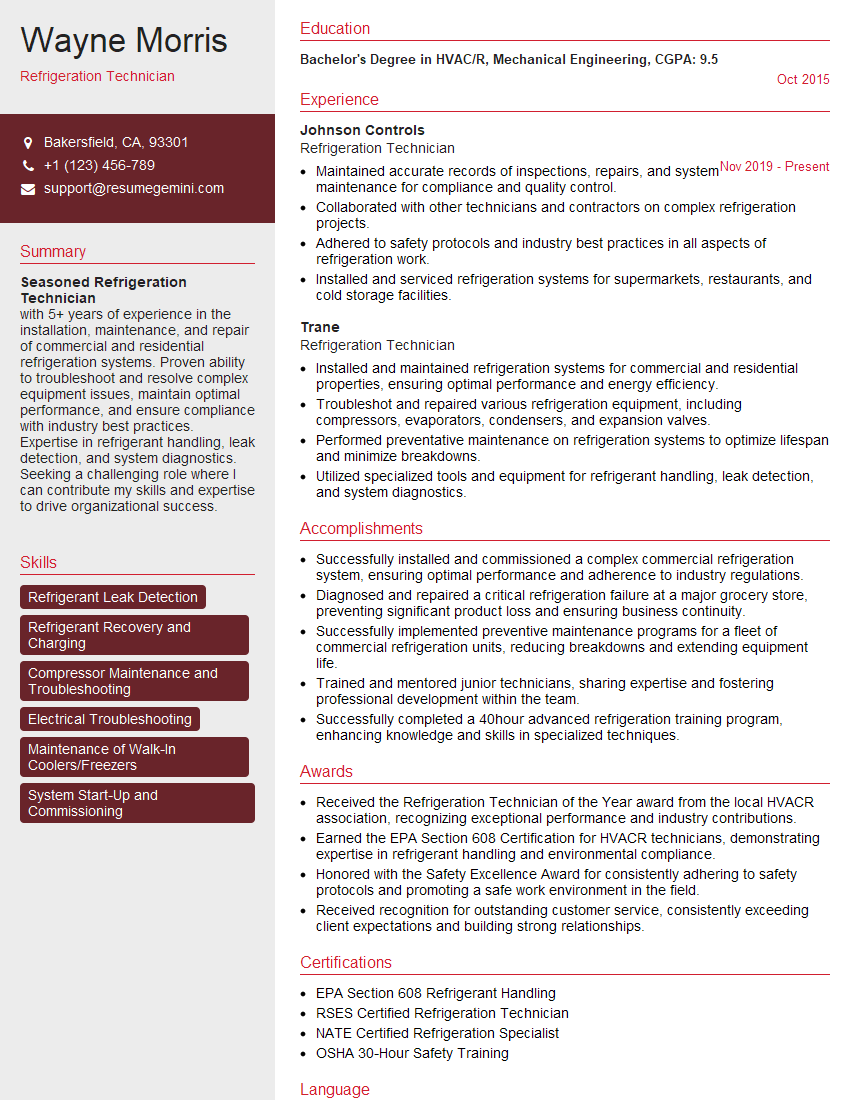
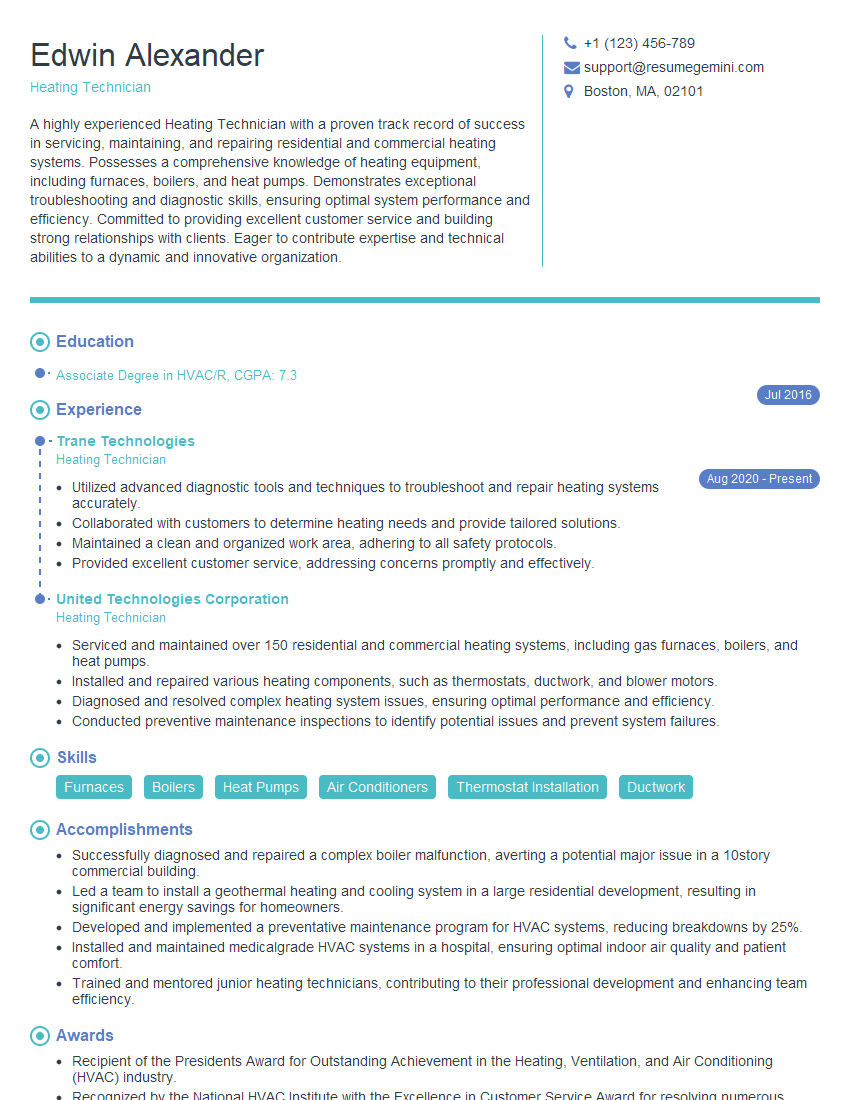
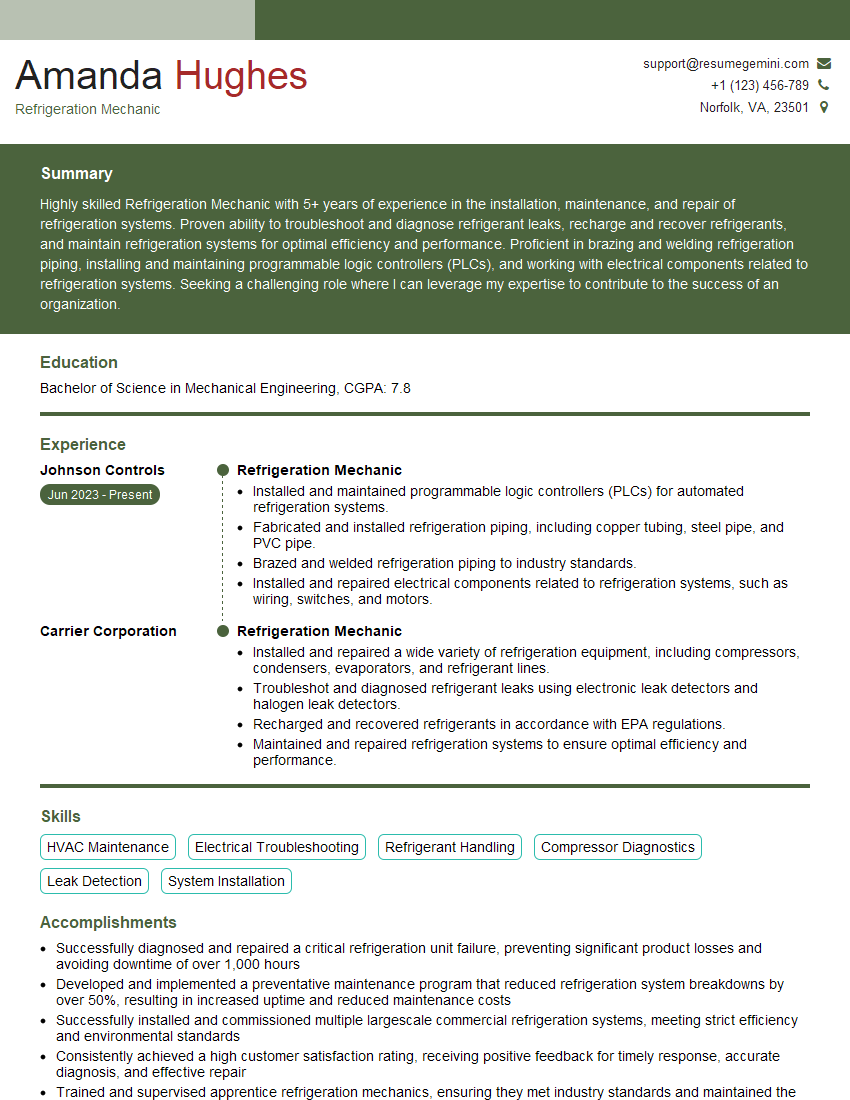
Earning your HVAC certification is a significant step towards a rewarding and prosperous career. To maximize your job prospects, invest time in crafting a compelling, ATS-friendly resume that highlights your skills and experience. ResumeGemini can be a valuable resource in this process, helping you create a professional resume that stands out. They provide examples of resumes tailored to HVAC certifications, giving you a head start on building a winning application.
Explore more articles
Users Rating of Our Blogs
Share Your Experience
We value your feedback! Please rate our content and share your thoughts (optional).
What Readers Say About Our Blog
Amazing blog
Interesting Article, I liked the depth of knowledge you’ve shared.
Helpful, thanks for sharing.