Feeling uncertain about what to expect in your upcoming interview? We’ve got you covered! This blog highlights the most important ICAO Phraseology and Communication Protocols interview questions and provides actionable advice to help you stand out as the ideal candidate. Let’s pave the way for your success.
Questions Asked in ICAO Phraseology and Communication Protocols Interview
Q 1. What is the standard ICAO phraseology for requesting takeoff clearance?
The standard ICAO phraseology for requesting takeoff clearance is concise and follows a specific format. It usually begins with identifying your aircraft, stating your intentions, and specifying the runway you intend to use. A typical example would be: "Tower, [Aircraft callsign], request takeoff runway [Runway designation]". For instance, a pilot might say: "Tower, N123XY, request takeoff runway 27." The controller then grants clearance or provides instructions.
It’s crucial to use the correct runway designation, as using the wrong one can lead to serious consequences. Always confirm the clearance you are given.
Q 2. Explain the difference between ‘read back’ and ‘confirmation’ in ATC communications.
While both ‘read back’ and ‘confirmation’ acknowledge ATC instructions, there’s a crucial difference. ‘Read back’ involves repeating the entire instruction verbatim, ensuring the pilot understood it correctly. This is particularly important for complex clearances. Think of it as a safety check, like double-checking a prescription from your doctor. An example is: "[ATC instruction]... N123XY reads back: [ATC instruction]"
Confirmation, on the other hand, is a shorter acknowledgement indicating understanding without full repetition. It might be a simple "Wilco" (will comply) or "Affirmative", suitable for simpler instructions. Using ‘wilco’ implies understanding and compliance, whereas ‘affirmative’ only indicates understanding. It’s vital to use the appropriate response for the complexity of the instruction.
Q 3. How would you handle a situation where you receive an unclear transmission from a pilot?
Receiving an unclear transmission is a critical situation demanding immediate action. The first step is to politely request clarification. You can say something like: "[ATC callsign], say again" or "[ATC callsign], unable to copy, request repetition".
If the transmission remains unclear after a repetition, you should try to decipher the parts you understood and carefully consider what you think the instruction might have been. However, if you remain uncertain, you must request further clarification and acknowledge that you don’t fully understand the instruction and are not prepared to proceed without confirmation. Never attempt to follow instructions you are unsure of. Safety is paramount.
Q 4. What are the key elements of a standard ATC communication?
A standard ATC communication typically includes these key elements: Callsign Identification: The aircraft or controller identifies itself. Location: Specifies the geographical location (e.g., airport, altitude, heading). Instructions/Information: The core content of the message, like clearance, instructions, or information. Confirmation/Read-back: Acknowledges the received information. Using this structure consistently maintains clarity and safety.
For example: "[ATC callsign], [Aircraft callsign], [Location], Cleared for takeoff Runway 27." Each part is essential to ensuring safety and avoiding misunderstandings.
Q 5. Describe the importance of brevity and clarity in ATC communications.
Brevity and clarity are paramount in ATC communication because lives depend on it. In the fast-paced environment of air traffic control, concise language prevents delays and misunderstandings that could lead to accidents. Imagine having to decipher long, rambling sentences while managing multiple aircraft. It’s like working on a construction site where all instructions need to be precise for everyone’s safety.
Clarity ensures everyone is on the same page. Ambiguity can lead to fatal errors. Standard phrases and established protocols, such as ICAO phraseology, minimize the risk of misinterpretation.
Q 6. How do you use phonetic alphabet in ICAO communication?
The phonetic alphabet (Alpha, Bravo, Charlie, etc.) is used to prevent confusion with similar-sounding numbers and letters. Each letter is assigned a unique word that is distinctly different to avoid any misunderstanding, even with background noise or radio interference. For example, instead of saying ‘B’ you say ‘Bravo’. This ensures that even with poor reception, no letters or numbers are mistaken for each other. When providing a transponder code, such as 1234, you would say ‘One Two Three Four’. The use of phonetic alphabet ensures clear and accurate transmission of all alphanumeric information.
This is crucial for identifying aircraft, runways, and other critical information where ambiguity can be dangerous. It’s like using a special code to make sure your message gets across without errors, particularly helpful when radio conditions are challenging.
Q 7. Explain the concept of ‘urgency’ and ’emergency’ in ATC communications.
In ATC communications, ‘urgency’ and ’emergency’ signify different levels of criticality. An emergency signals an immediate threat to life or property, requiring immediate attention. The pilot would typically use the word ‘PAN PAN’ (repeated thrice), followed by a brief description of the emergency. Example: "PAN PAN PAN, [Aircraft callsign], Mayday, engine fire."
Urgency indicates a situation requiring prompt attention, but it doesn’t necessarily pose an immediate threat. A pilot might use the word ‘MAYDAY’ (repeated thrice) for emergency situations and ‘PAN PAN’ (repeated thrice) for urgency situations. The pilot would use the word ‘urgency’ followed by a description of the situation. For example: "Urgency, [Aircraft callsign], experiencing significant icing conditions." The difference is crucial to prioritize the controller’s response.
Q 8. What are some common sources of communication errors in ATC?
Communication errors in Air Traffic Control (ATC) can stem from various sources, broadly categorized into human factors, technical issues, and environmental influences.
- Human Factors: These are the most prevalent, encompassing issues like misinterpretations due to language barriers, distractions (e.g., workload, fatigue), poor pronunciation, ambiguous phrasing, and failures in active listening. For example, a controller might inadvertently use non-standard phraseology, leading to a pilot’s misunderstanding.
- Technical Issues: Radio interference, equipment malfunctions (e.g., faulty microphones or receivers), and inadequate communication infrastructure (e.g., signal strength issues) can significantly impede clear communication. Imagine a situation with static interference making it hard to discern crucial instructions.
- Environmental Influences: High noise levels in the cockpit or control tower, and even weather conditions (like strong winds impacting radio communication) can all negatively impact the clarity and effectiveness of communication.
Minimizing these errors requires rigorous training, standardized procedures, regular equipment maintenance, and the implementation of robust communication protocols, including the use of readbacks and confirmations to ensure accurate message transmission.
Q 9. How would you handle a communication breakdown with a pilot?
Handling a communication breakdown involves a systematic approach focused on re-establishing contact and ensuring safety.
- Attempt to re-establish contact: Try different frequencies or communication methods if possible. Repeat the message clearly and slowly, varying tone and inflection to improve clarity.
- Use alternative methods: If voice communication fails, explore alternative means like data-link (if available) or consider visual signals for basic instructions, like hand signals for taxiing on the ground.
- Alert relevant personnel: Inform supervisors or other controllers of the breakdown to initiate contingency plans and coordinate with nearby units.
- Prioritize safety: The paramount concern is safety. If the communication breakdown impacts safe separation or flight operations, initiate emergency procedures as required. This could involve instructing the pilot to maintain their current altitude or heading until communication is re-established.
- Document the incident: After the communication is restored, thoroughly document the nature of the breakdown, the steps taken to address it, and any consequences or lessons learned. This aids in identifying contributing factors and preventing future occurrences.
Q 10. What is the correct phraseology for issuing a traffic advisory?
Traffic advisories inform pilots about other aircraft’s positions relative to their own, helping maintain safe separation. The phraseology follows a specific format ensuring clarity and consistency. A typical example:
Traffic [Aircraft identification] [Relative position] [Distance] [Altitude]Example: Traffic Cessna 1234, 1 o'clock, 5 miles, same altitude. This indicates that Cessna 1234 is located one hour position (30 degrees to the right) of the receiving aircraft, five miles away and at the same altitude.
Other phrases might include: ‘in sight,’ ‘closing,’ or specific directions like ‘behind you,’ or ‘ahead of you’. The information provided should always be concise, precise, and relevant to the pilot’s immediate needs.
Q 11. Explain the concept of ‘separation’ in ATC and its relevance to communication.
In ATC, ‘separation’ refers to the minimum distance or time interval maintained between aircraft to prevent collisions. This is crucial for safety, and effective communication is the backbone of maintaining it.
Communication plays several vital roles:
- Conveying aircraft positions: Controllers utilize radar and other means to track aircraft positions, relaying this information to pilots via advisories and instructions.
- Issuing separation instructions: To maintain safe separation, controllers issue instructions to alter headings, altitudes, or speeds as necessary. The clarity and precision of these instructions are vital to avoid conflicts.
- Coordinating between sectors: When an aircraft transits different control sectors, effective communication between controllers is essential to ensure seamless handover and uninterrupted separation.
- Handling emergencies: In emergencies, timely and accurate communication is critical to enable immediate separation measures and facilitate a safe resolution.
Breaks in this communication chain can result in loss of separation, increasing the risk of accidents. Thus, clear, concise, and precise communication is paramount.
Q 12. How do you convey altitude restrictions to a pilot using ICAO phraseology?
Altitude restrictions are conveyed using specific ICAO phraseology. For example, to restrict an aircraft to a maximum altitude, one would say:
Climb to and maintain [altitude]Example: Climb to and maintain flight level 350. This means the aircraft should climb to flight level 350 and maintain that altitude.
For minimum altitude restrictions, use:
Maintain at least [altitude]Example: Maintain at least flight level 100. This indicates the aircraft must not descend below flight level 100.
The use of ‘flight level’ (FL) is standard for altitudes above transition altitude, while below it, altitudes are specified in feet (e.g., 5000 feet).
Q 13. What is the procedure for handling a pilot’s request for a change of flight level?
A pilot’s request for a flight level change is handled systematically:
- Pilot’s request: The pilot will typically request a specific flight level, specifying the desired level and the reason. Example:
Request flight level 290 for better reception. - Controller’s assessment: The controller assesses the request considering traffic, weather, and airspace constraints. This involves checking for conflicts with other aircraft.
- Controller’s response: The controller will either approve the request with a clear instruction (e.g.,
Climb to flight level 290) or deny it, offering an alternative or explaining the reason for refusal. A common response for denial might be:Unable, maintain present level due to traffic. - Confirmation (or denial): The pilot will read back the instruction or understand the denial. This confirmation prevents misunderstandings.
Throughout this process, the controller maintains a clear and accurate record of the communication, reflecting both the request and the response.
Q 14. How would you issue instructions for a holding pattern?
Issuing instructions for a holding pattern requires precise and unambiguous phraseology to ensure the pilot understands the location, direction, and details of the pattern. The instruction will typically include:
- Holding location: Usually a navigational aid (e.g., VOR, NDB) or a geographical point.
- Holding course: The magnetic heading of the outbound leg.
- Leg length: This could be expressed in minutes (e.g., 1-minute legs) or nautical miles.
- Direction of turn: Left or right turns.
Example: Hold southeast of VOR 115.3 MHz, inbound course 120 degrees, right turns, 1-minute legs.
Further instructions could specify specific altitudes or the frequency to contact. Always remember clear and concise communication prevents misinterpretations in these potentially complex maneuvers.
Q 15. What are the potential communication challenges associated with different types of aircraft?
Communication challenges with different aircraft types stem primarily from variations in their capabilities and operational procedures. For instance, a large, modern airliner equipped with advanced communication systems will have different needs and capabilities than a smaller, older general aviation aircraft.
- Technology Differences: Older aircraft might rely on less sophisticated communication technology, leading to potential issues with clarity or reception. They may not have the same data link capabilities for efficient information exchange as newer aircraft.
- Pilot Experience: The level of experience and proficiency in using communication protocols can significantly impact communication effectiveness. A new pilot may take longer to understand or respond to ATC instructions compared to an experienced pilot.
- Language Barriers: Even with standardized phraseology, language differences can still pose a challenge. Clear pronunciation and a willingness to clarify any misunderstood terms are crucial.
- Operational Procedures: Different aircraft types may have different operational constraints that influence how and when they communicate. For example, a helicopter might require more frequent updates due to its maneuverability and sensitivity to wind conditions.
- Radio Frequency Issues: Different aircraft might operate on different frequencies, increasing the chances of interference and communication difficulties. Careful frequency management by both ATC and pilots is key.
Consider a scenario where a small, single-engine aircraft, with limited communication equipment, encounters a sudden emergency in an area with weak signal reception. This creates a very different challenge than communicating with a large jetliner equipped with multiple redundant communication systems.
Career Expert Tips:
- Ace those interviews! Prepare effectively by reviewing the Top 50 Most Common Interview Questions on ResumeGemini.
- Navigate your job search with confidence! Explore a wide range of Career Tips on ResumeGemini. Learn about common challenges and recommendations to overcome them.
- Craft the perfect resume! Master the Art of Resume Writing with ResumeGemini’s guide. Showcase your unique qualifications and achievements effectively.
- Don’t miss out on holiday savings! Build your dream resume with ResumeGemini’s ATS optimized templates.
Q 16. Explain the use of standardized phraseology in improving safety.
Standardized phraseology is paramount to aviation safety. It minimizes ambiguity, reduces the potential for misinterpretations, and ensures clarity during often high-pressure situations. Imagine a controller instructing a pilot with ambiguous language – a potential for disaster could quickly arise.
- Clarity and Precision: Standardized phrases eliminate the need for open-ended communication, reducing the likelihood of misunderstandings due to variations in language or interpretations.
- Efficiency: Precise phrasing saves time in critical situations. Controllers can quickly convey complex information in a streamlined manner, allowing pilots to react promptly.
- Error Reduction: Using consistent language dramatically lowers the risk of errors from mishearing or misinterpreting instructions.
- Global Standardization: ICAO’s standard phraseology ensures universal understanding, irrespective of a pilot’s nationality or language. This is especially important during international flights.
For example, instead of saying ‘Turn left,’ a controller would use the standard phrase ‘Turn left heading two seven zero.’ This provides the pilot with precise direction and heading, leaving no room for ambiguity.
Q 17. Describe the role of standard phraseology in preventing misunderstandings.
Standard phraseology’s primary function is to prevent misunderstandings by creating a common language for communication between pilots and air traffic controllers. It eliminates ambiguity by replacing informal language with precise, universally understood terms.
- Structured Communication: Standard phraseology follows a structured format, ensuring all essential information is conveyed systematically. This helps avoid omissions and inconsistencies.
- Elimination of Jargon: Standard terms replace informal language, which can vary significantly between individuals and regions, promoting a shared understanding.
- Emphasis on Confirmation: The process often requires pilots to read back instructions, confirming their understanding and giving the controller an opportunity to correct any errors.
Imagine a controller saying ‘You’re cleared to land.’ While seemingly clear, it lacks the precision of a standard phrase such as ‘Cleared to land runway two seven, wind calm.’ The standard phrase leaves no room for debate about the runway or wind conditions.
Q 18. What is your understanding of the importance of using standard frequencies?
Using standard frequencies is critical for maintaining efficient and reliable communication in the airspace. These frequencies are designated for specific purposes and are monitored by ATC and other relevant services. Deviating from these frequencies can lead to significant safety issues.
- Organized Communication: Using standard frequencies ensures orderly communication and reduces the likelihood of overlapping transmissions or interference. A system using assigned frequencies prevents confusion between aircraft and ATC.
- Emergency Communication: Emergency frequencies are specifically designed for rapid and urgent communication during crisis situations. Knowing and using these frequencies appropriately is vital.
- Effective Coordination: Standard frequencies facilitate efficient coordination between pilots and ATC, which is critical for safe and orderly air traffic management.
- Reduced Interference: Using standard frequencies, combined with coordinated frequency changes, ensures a system that minimizes radio interference between aircraft.
Using non-standard frequencies can result in delays, missed communications, and potentially hazardous situations. The standardized system exists to optimize safety and efficiency.
Q 19. How would you handle a situation where a pilot is not complying with your instructions?
Non-compliance with instructions necessitates a calm but firm approach, prioritizing safety. My response would follow a structured methodology:
- Initial Confirmation: Verify that the pilot has received and understood the instructions. ‘N1234, confirm you understood my previous instructions to turn right heading one-two-zero.’
- Clarification: Attempt to understand the reason for non-compliance. ‘N1234, can you state the reason for deviating from my instructions?’
- Re-Issuance: Clearly and firmly re-issue the instructions, using the standard phraseology. ‘N1234, turn right heading one-two-zero immediately.’
- Escalation: If non-compliance persists, escalate the situation to a supervisor. The safety of all airspace users needs to be prioritized. Document the entire conversation with details about the time, aircraft, frequency, and nature of the non-compliance.
- Emergency Procedures: If the non-compliance creates an immediate safety risk, initiate the appropriate emergency procedures. Contact other agencies, like law enforcement, as required.
The goal is always to resolve the situation safely and efficiently while adhering to all safety regulations. Documentation is key for ensuring appropriate follow-up and potential investigation.
Q 20. What are the consequences of incorrect or unclear ATC communication?
Incorrect or unclear ATC communication can have severe consequences, ranging from minor inconveniences to catastrophic accidents. The impact is directly related to the severity and nature of the miscommunication.
- Near Misses and Accidents: Misunderstood instructions can lead to near misses or collisions between aircraft. Inaccurate information about weather, terrain, or other aircraft can also result in serious incidents.
- Delays and Inefficiencies: Unclear communication can lead to delays in departure, arrival, or en-route operations, causing inefficiencies in air traffic flow.
- Increased Stress Levels: Ambiguous instructions or unclear communication lead to increased stress levels among pilots and air traffic controllers, potentially affecting performance and decision-making.
- Investigations and Penalties: Serious incidents stemming from miscommunication trigger investigations, potentially resulting in fines or sanctions for involved parties.
An example is a miscommunication about the runway assignment – it could result in a collision if one aircraft is directed to a runway already occupied.
Q 21. What is the proper phraseology for declaring an emergency?
The proper phraseology for declaring an emergency varies slightly depending on the specific situation and the phase of flight, but the core message should always be clear, concise, and unambiguous. The pilot should state the nature of the emergency and the aircraft’s current situation.
A typical example would be: MAYDAY, MAYDAY, MAYDAY, this is N1234, we have a (type of emergency), requesting immediate assistance.
Following this initial declaration, the pilot should provide essential information, such as:
- Aircraft registration: (e.g., N1234)
- Type of emergency: (e.g., engine fire, loss of communication, etc.)
- Current position: (e.g., 10 miles south of airport XYZ, at altitude 5000 feet)
- Intended action: (e.g., diverting to airport XYZ)
The emphasis is on brevity, clarity, and immediately relaying vital information to enable rapid response from ATC and emergency services.
Q 22. What phraseology would you use for directing a pilot to land?
Directing a pilot to land involves clear and concise instructions, ensuring the pilot understands the runway and any specific procedures. The phraseology depends on the context, but a common approach is to use a command followed by the runway designation. For example:
Cleared to land Runway 27.(This is for a standard approach)Cleared to land Runway 12, expect ILS approach.(This specifies the navigational aid)Cleared to land Runway 09, wind 270 degrees at 15 knots.(This adds crucial meteorological information)
It’s crucial to always verify the pilot’s understanding. If the situation is complex, further clarification might be needed. For instance, if there are multiple aircraft on the same approach, additional instructions like ‘Follow preceding aircraft’ might be used. The key is to be precise, unambiguous and to confirm the pilot understands the instructions before the aircraft initiates the landing.
Q 23. How do you handle conflicting instructions from another controller?
Conflicting instructions from another controller are a serious safety concern. The primary rule is to immediately resolve the conflict and ensure only one set of instructions is given to the pilot. This usually involves:
- Contacting the other controller: Establish communication to understand the discrepancy and clarify the situation.
- Determining the priority: Depending on safety and operational needs, one set of instructions takes precedence. This might depend on the urgency or potential hazards. For example, safety-critical instructions (e.g., avoidance of other traffic) always supersede other instructions.
- Coordinating Instructions: Agree on a resolution. This may involve issuing a revised instruction to the pilot, or canceling one of the conflicting instructions.
- Informing the pilot: Communicate the resolved instruction to the pilot clearly and concisely, acknowledging any previous instructions that were superseded.
- Reporting the incident: Following the incident, a formal report is typically filed outlining the conflicting instructions, the resolution, and any safety implications.
Imagine two controllers accidentally giving different altitudes to the same aircraft – immediate coordination is essential to prevent a potential collision. The process requires calm, efficient communication and clear prioritization of safety.
Q 24. How would you prioritize communication in a high-traffic environment?
Prioritizing communication in high-traffic environments is critical for safety and efficiency. This usually involves:
- Using standardized phraseology: Clear, concise communication avoids ambiguity and misunderstandings.
- Emergency situations first: Aircraft in distress or imminent collision risks always take precedence. All other communications are temporarily suspended.
- Separation maintenance: Maintaining safe distances between aircraft is paramount. Controllers may use short, direct commands to ensure appropriate separation is maintained.
- Using efficient communication techniques: Avoid lengthy conversations. Get straight to the point. For example, instead of saying ‘I am requesting you to expedite your departure,’ a simple ‘Expedite departure’ will suffice.
- Handling routine tasks efficiently: For non-urgent situations, using concise commands like ‘Cleared for takeoff’ or ‘Cleared to approach’ can save time and reduce communication load.
Think of it like an air traffic orchestra – each controller is responsible for a particular section of aircraft, conducting their communications smoothly and prioritizing safety above all else. During peak times, efficient communication is vital to avoid any conflict or safety hazards.
Q 25. Describe the process of coordinating with other ATC units.
Coordinating with other ATC units is essential for seamless air traffic flow. This involves:
- Pre-flight briefings: Controllers often brief each other on traffic flow and potential conflicts before handovers.
- Handoffs: When an aircraft transfers from one sector to another, controllers coordinate the handover, ensuring clear communication and the safe transfer of responsibility.
- Frequency coordination: Using established frequencies and procedures guarantees efficient and reliable communication between controllers.
- Sharing information: This includes weather reports, aircraft status, and any potential conflicts.
- Using established protocols: These protocols ensure that handovers are conducted smoothly, minimizing any risk or disruption.
This is akin to relay runners in a race – each runner (controller) is responsible for a part of the journey, working together to successfully and safely pass the baton (aircraft) to the next stage of the flight.
Q 26. What safety measures are in place to ensure clear communication in ATC?
Several safety measures ensure clear communication in ATC:
- Standardized phraseology: Using specific, internationally recognized phraseology minimizes ambiguity.
- Redundant systems: ATC uses backup communication systems to address equipment failures.
- Regular training and proficiency checks: Controllers undergo rigorous training to ensure they are proficient in communication protocols and emergency procedures.
- Recording of communications: All communications are recorded for safety review and incident investigation purposes.
- Use of standard operating procedures (SOPs): SOPs establish clear guidelines for communication, handling emergencies, and coordinating with other units.
These measures function similarly to a multi-layered safety net. Each component contributes towards minimizing the possibility of communication failure. The combination provides a robust system aimed at ensuring safe and effective air traffic management.
Q 27. How would you explain a complex instruction to a pilot in a clear and concise manner?
Explaining complex instructions requires a structured approach:
- Break down the instructions: Divide the instructions into smaller, manageable steps. For example, instead of giving a long list of instructions, break it down into several steps, giving one at a time.
- Use simple language: Avoid jargon and technical terms that the pilot may not understand. Use plain and straightforward language.
- Confirm understanding: After each step, ask the pilot to repeat the instruction to verify understanding. For example, you could ask ‘Say again my instruction’.
- Repeat instructions as needed: If the pilot seems unsure, repeat the instructions clearly and slowly.
- Provide context: Explain the reason for the instructions and the potential consequences of not following them. Contextualizing the instructions helps the pilot understand the overall picture.
Imagine teaching someone to bake a cake – you wouldn’t just throw all the ingredients and instructions at them at once. Instead, you’d break it down step-by-step, ensuring each step is understood before moving on. The same principle applies to giving instructions to pilots. Clear, step-by-step communication is essential to maintain safety.
Key Topics to Learn for ICAO Phraseology and Communication Protocols Interview
- Understanding Basic ICAO Phraseology: Mastering fundamental terms, abbreviations, and standard phrase structures used in air traffic control communications. This includes understanding the structure of transmissions and the purpose of each element.
- Emergency and Urgent Communications: Learn how to effectively communicate during emergency situations, employing the correct terminology and procedures to ensure clarity and efficiency. Practice conveying urgency and critical information concisely.
- Clearance and Instruction Interpretation: Develop the ability to accurately interpret and understand ATC clearances and instructions, identifying potential ambiguities and seeking clarification when necessary. Practice applying this in different scenarios.
- Use of Standard Phraseology in Various Scenarios: Practice applying ICAO phraseology in different operational contexts, such as departure, approach, and en-route communication. This includes understanding the specific terminology relevant to each phase of flight.
- Communication Procedures: Learn the specific procedures for establishing and maintaining communication with air traffic control, including the use of appropriate frequencies and call signs. Understand how to handle communication failures and interruptions.
- Error Prevention and Correction: Understand procedures for identifying and correcting errors in communication, minimizing potential misunderstandings. Learn the proper use of readbacks and confirmation techniques.
- Communication with Different Aircraft Types: Familiarize yourself with communication protocols specific to various aircraft types and their operational needs. This includes understanding any unique communication requirements.
- Applying Situational Awareness: Demonstrate understanding of how effective communication relies on maintaining excellent situational awareness and using this information to improve communication efficiency and safety.
Next Steps
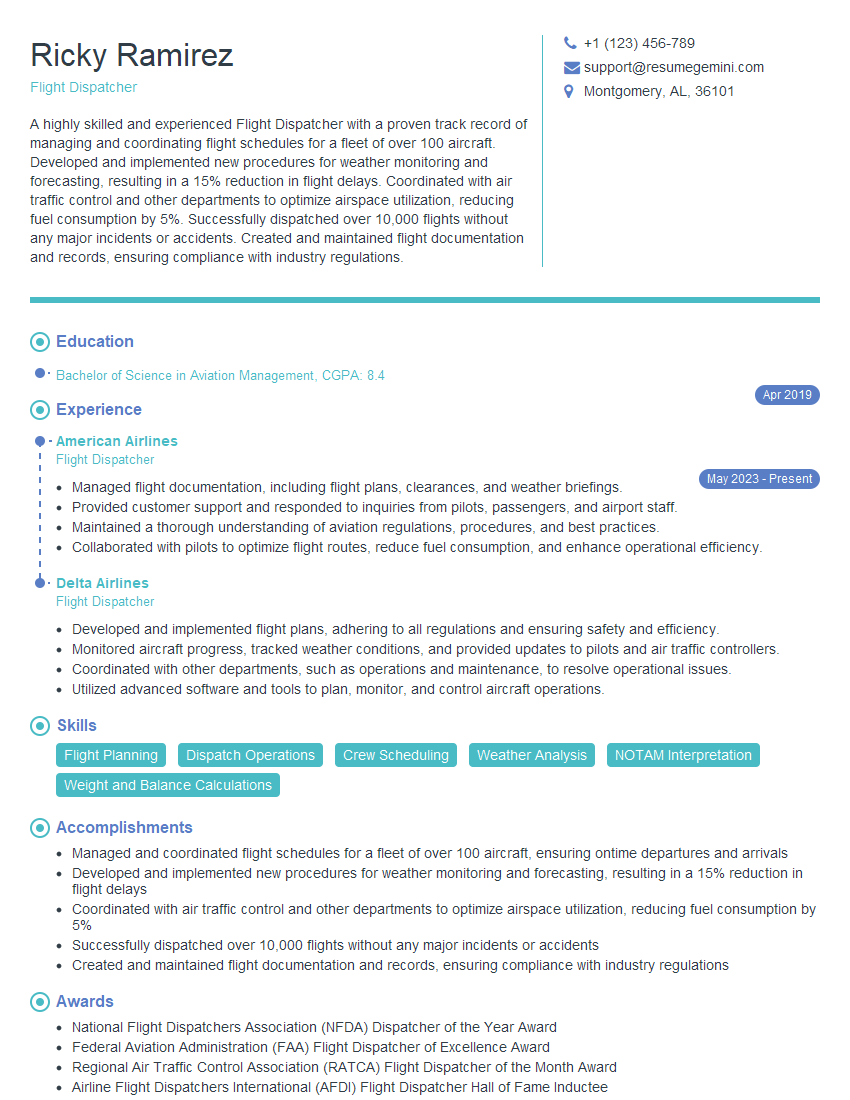
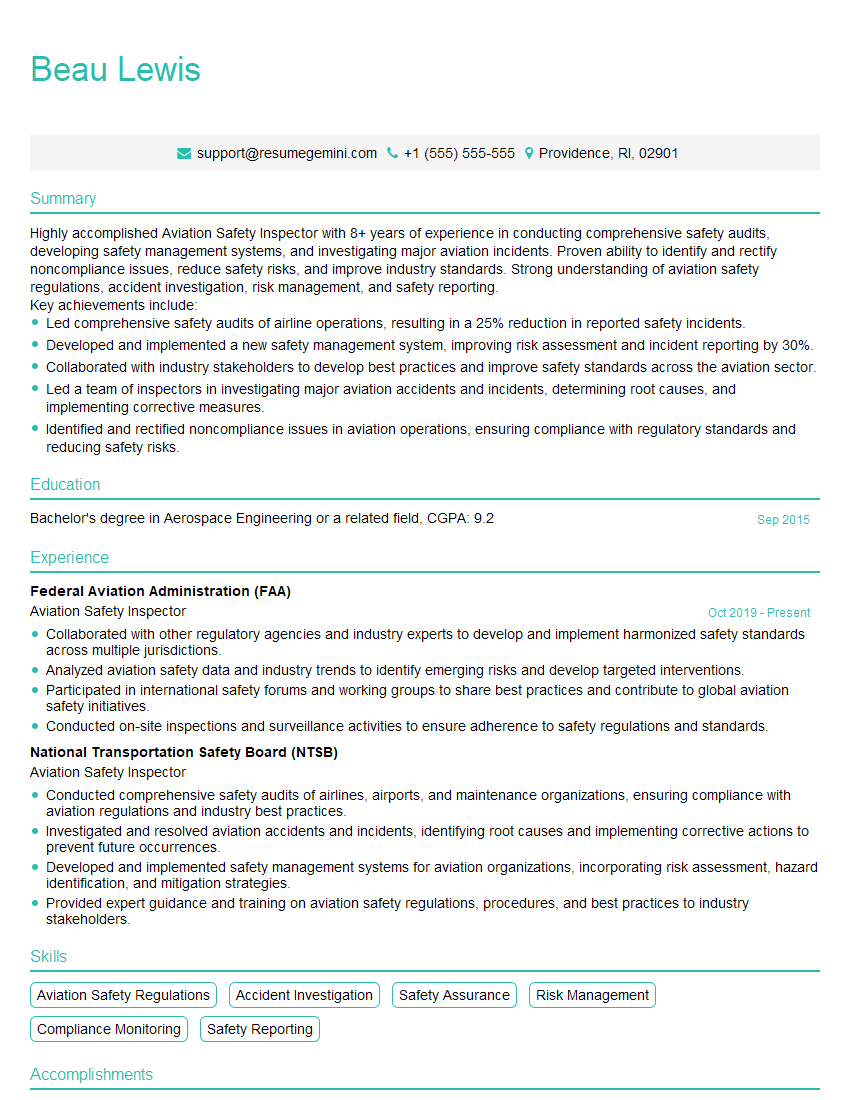
Mastering ICAO Phraseology and Communication Protocols is crucial for a successful career in aviation, demonstrating your commitment to safety and professionalism. A strong understanding of these protocols significantly enhances your job prospects and positions you as a highly competent candidate. To further strengthen your application, creating an ATS-friendly resume is essential. We highly recommend utilizing ResumeGemini to build a professional and effective resume that highlights your skills and experience. ResumeGemini provides examples of resumes tailored to ICAO Phraseology and Communication Protocols to help you craft a winning application.
Explore more articles
Users Rating of Our Blogs
Share Your Experience
We value your feedback! Please rate our content and share your thoughts (optional).
What Readers Say About Our Blog
Amazing blog
Interesting Article, I liked the depth of knowledge you’ve shared.
Helpful, thanks for sharing.