Cracking a skill-specific interview, like one for Job Estimating and Costing, requires understanding the nuances of the role. In this blog, we present the questions you’re most likely to encounter, along with insights into how to answer them effectively. Let’s ensure you’re ready to make a strong impression.
Questions Asked in Job Estimating and Costing Interview
Q 1. Explain the difference between a detailed estimate and a conceptual estimate.
The key difference between detailed and conceptual estimates lies in their level of precision and the information available at the time of estimation. A conceptual estimate, also known as a preliminary or order-of-magnitude estimate, is a rough approximation of the project cost, typically made very early in the project lifecycle when design details are scarce. It’s often based on similar past projects or historical data and can have a significant margin of error (e.g., +/- 30%). Think of it as a ballpark figure, useful for initial feasibility studies or securing preliminary funding.
A detailed estimate, on the other hand, is a much more precise calculation, developed after detailed design plans are available. It involves a thorough quantity takeoff (measuring all materials and labor required), assigning unit costs to each item, and summing up all the costs to arrive at a comprehensive project cost. The margin of error for a detailed estimate is significantly lower (e.g., +/- 10% or less) and forms the basis for accurate budgeting and cost control throughout the project.
Example: Imagine you’re planning to build a house. A conceptual estimate might be based on the square footage and the average cost per square foot of similar houses in your area. A detailed estimate would involve itemizing the costs of every single element – lumber, concrete, labor for foundation, framing, roofing, plumbing, electrical, finishes, etc. – providing a much clearer picture of the final cost.
Q 2. What are the common methods used for quantity takeoff?
Quantity takeoff (QTO) is the process of systematically measuring the quantities of materials and labor needed for a construction project. Several methods are used, each with its strengths and weaknesses:
- Manual Takeoff: This traditional method involves physically measuring dimensions from blueprints or drawings using a scale and calculator. It’s labor-intensive but allows for a high degree of accuracy and understanding of the project details. It’s also valuable for complex projects where software might struggle.
- Digital Takeoff: This utilizes specialized estimating software to measure quantities directly from digital plans (PDFs, CAD files, etc.). This method significantly speeds up the process and reduces human error. Software can automatically calculate areas, volumes, and lengths.
- Combination Method: Many estimators use a combination of manual and digital methods, leveraging the strengths of each. For instance, they might use software for simple elements and manual takeoff for complex or unusual features.
Example: For a flooring project, manual takeoff might involve using a tape measure to determine the room dimensions and then calculating the square footage. Digital takeoff would involve importing the floor plan into software and using the software’s tools to automatically measure and calculate the area.
Q 3. Describe your experience with different estimating software.
I have extensive experience with various estimating software packages, including industry-leading solutions like PlanSwift, On-Screen Takeoff, and BidClerk. My proficiency extends beyond basic quantity takeoff; I am adept at using the advanced features of these programs for generating reports, cost tracking, and integrating with other project management software. Each software has its own strengths. For example, PlanSwift excels in its ease of use for producing detailed estimates, while On-Screen Takeoff is known for its powerful features for complex projects. I have also worked with more general project management tools such as Microsoft Project and Primavera P6 which aid in budget management and scheduling. My selection of software depends heavily on the specific project requirements and the client’s preferences.
Beyond the software itself, I understand the critical importance of data accuracy and proper setup within these platforms to ensure reliable estimates. I regularly participate in training and updates to maintain my expertise on the latest features and improvements within these tools.
Q 4. How do you account for risk and uncertainty in your estimates?
Accounting for risk and uncertainty is crucial for realistic estimating. I employ several strategies:
- Contingency Reserves: I allocate a percentage of the total estimated cost (typically 5-15%, depending on project complexity and risk) as a contingency reserve to cover unforeseen events, cost overruns, or design changes. This provides a buffer against potential problems.
- Risk Assessment: I conduct a thorough risk assessment, identifying potential risks (e.g., material price fluctuations, weather delays, labor shortages) and assigning probabilities and potential impacts to each risk. This allows for a more informed allocation of contingency reserves.
- Sensitivity Analysis: I perform sensitivity analysis by varying key cost drivers (e.g., labor rates, material prices) to understand the potential impact on the overall estimate. This helps to identify critical factors that need closer monitoring and control.
- Historical Data Analysis: I leverage past project data to inform my risk assessment. Analyzing previous projects helps to identify common risks and their historical impact, leading to more accurate estimations for future projects.
Example: If there’s a risk of a material shortage, I might include a contingency reserve to cover the potential cost of sourcing the material from an alternative supplier, even if it’s more expensive.
Q 5. What is your process for developing a project budget?
My process for developing a project budget involves a structured approach that ensures accuracy and completeness:
- Gather Information: Collect all relevant project documentation including plans, specifications, and scope of work.
- Perform Quantity Takeoff: Accurately measure all materials and labor requirements using appropriate methods (manual or digital).
- Assign Unit Costs: Determine unit costs for all materials and labor based on current market prices, supplier quotes, and historical data.
- Calculate Total Costs: Multiply quantities by unit costs to determine the total cost for each item and then sum all costs to arrive at the total project cost.
- Add Contingency Reserves: Include a contingency reserve to account for unforeseen costs and risks.
- Develop Budget Schedule: Outline a detailed breakdown of how the budget will be spent over time, tied to project milestones.
- Review and Validate: Thoroughly review the budget with stakeholders to ensure accuracy and agreement.
This process results in a comprehensive budget that serves as a roadmap for managing project finances throughout the lifecycle.
Q 6. How do you handle change orders and their impact on the project budget?
Change orders are inevitable in construction projects. My approach to handling them involves:
- Formal Documentation: All change orders must be documented formally, clearly specifying the changes, their impact on scope, schedule, and cost.
- Cost Impact Analysis: I carefully analyze the cost implications of each change order, considering material costs, labor, and any potential delays.
- Negotiation: I work with the client to negotiate a fair and reasonable price for the change order, ensuring transparency and agreement.
- Budget Update: I promptly update the project budget to reflect the approved change orders, ensuring that the project remains financially viable.
- Tracking and Reporting: I maintain accurate records of all change orders, their costs, and their impact on the project schedule. Regular reports keep stakeholders informed.
By following this systematic approach, I minimize the negative impact of change orders on the project budget and maintain control over project finances.
Q 7. Explain the concept of contingency reserves in project estimating.
Contingency reserves are funds set aside within a project budget to cover unforeseen costs or risks that may arise during project execution. They act as a buffer to absorb unexpected events without jeopardizing the project’s completion or causing significant cost overruns. The size of the contingency reserve is determined by several factors including the project’s complexity, duration, historical data, and the level of risk associated with specific project elements. A well-defined contingency plan outlines the specific scenarios for which the reserve will be used, ensuring that the funds are utilized effectively and transparently.
Example: A contingency reserve might be allocated to cover potential cost increases in material prices due to market fluctuations, unanticipated site conditions during excavation, or unexpected delays due to adverse weather. The reserve provides financial flexibility to address these issues without compromising project goals.
Q 8. Describe your experience with value engineering.
Value engineering is a systematic method of analyzing a project to identify ways to improve functionality while reducing costs. It’s not about cutting corners, but about finding smarter, more efficient solutions. My experience involves proactively identifying areas where we can achieve equivalent or even better performance at a lower cost without compromising quality or safety.
For example, on a recent construction project, the initial design specified high-end imported marble for the lobby flooring. Through value engineering, we explored alternative materials like engineered stone, which offered a comparable aesthetic appeal at a significantly lower cost, and possessed better durability. We presented this analysis to the client, highlighting the cost savings and the superior durability. This resulted in a substantial budget reduction without sacrificing the project’s overall look and feel. Another example involves exploring alternative construction methods. We might compare the costs and timelines of traditional methods versus prefabricated modules to see if a more efficient approach is possible.
Q 9. How do you manage and track project costs throughout the project lifecycle?
Managing and tracking project costs requires a robust system that incorporates several key elements. I typically employ a combination of project management software and spreadsheets. From the initial budget creation, we break down the project into work packages or tasks, each assigned a specific budget. We regularly update the cost tracking system throughout the project lifecycle.
This involves monitoring actual costs against the budgeted amounts, identifying variances, and investigating the root causes of any deviations. We use earned value management (EVM) techniques, which compare planned progress against actual progress and cost to provide a clear picture of the project’s health. Regular progress meetings and reporting to stakeholders are crucial for transparency and proactive issue resolution.
For instance, we might track materials costs against purchase orders, labor hours against timesheets, and equipment usage via rental agreements. This granular tracking allows us to pinpoint areas of potential overspending promptly. The chosen software generates customized reports, providing visual representations of cost performance, assisting in strategic decision-making.
Q 10. How do you identify and mitigate potential cost overruns?
Identifying and mitigating potential cost overruns is a proactive process, not a reactive one. It starts with a thorough initial estimate that considers all possible contingencies. Regular cost monitoring and variance analysis, as previously described, is fundamental. Proactive communication with all stakeholders is also critical.
Specific strategies include:
- Contingency Planning: Building a contingency buffer into the initial estimate to account for unforeseen circumstances.
- Regular Progress Reviews: Conducting frequent reviews to identify and address issues early.
- Change Management: Establishing a formal change management process to control the impact of changes on the project budget.
- Risk Assessment: Proactively identifying and assessing potential risks, developing mitigation plans for each.
- Value Engineering (as discussed above): Continuously seeking ways to optimize costs without sacrificing quality.
For example, if we anticipate potential delays due to weather conditions, we might include additional buffer time and resources in the schedule and budget. Or if a specific material faces supply chain issues, we might explore suitable substitutes early in the planning stages to avoid delays and price hikes.
Q 11. What are some common sources of error in cost estimating?
Errors in cost estimating are common and can stem from several sources. Some of the most frequent include:
- Incomplete Scope Definition: Failing to fully define the project scope leads to omissions in the estimate.
- Inaccurate Quantity Takeoffs: Errors in measuring quantities of materials or labor required.
- Incorrect Pricing: Using outdated or inaccurate pricing information for materials, labor, or equipment.
- Overlooking Indirect Costs: Failing to account for indirect costs such as permits, insurance, and overhead.
- Unrealistic Schedules: Assuming unrealistic schedules that lead to cost overruns due to rushed work or overtime.
- Lack of Experience: Insufficient experience in similar projects can lead to inaccurate estimations.
Imagine omitting a critical component from the design; this results in cost overruns during construction. Or if labor costs are underestimated due to a faulty understanding of local wage rates, this directly impacts the project’s bottom line. A thorough review process using multiple methods of estimating helps to reduce such errors.
Q 12. How do you ensure the accuracy of your cost estimates?
Ensuring accuracy in cost estimates involves a multi-faceted approach. It’s not just about plugging numbers into a formula; it demands expertise and attention to detail. Key methods include:
- Detailed Scope Definition: Creating a comprehensive and unambiguous project scope statement.
- Accurate Quantity Takeoffs: Employing meticulous measurement techniques and utilizing software for accurate quantity calculations.
- Multiple Estimating Methods: Using a combination of estimating methods (e.g., bottom-up, top-down, parametric) to cross-check results.
- Realistic Schedules: Developing realistic schedules that account for potential delays and inefficiencies.
- Peer Reviews: Having other experienced estimators review the estimate to identify potential errors or omissions.
- Regular Updates: Updating the estimate as the project progresses and new information becomes available.
- Historical Data Analysis: Leveraging historical data on similar projects to refine estimates (discussed further in the next question).
For example, comparing estimates generated using different methods allows us to identify discrepancies and refine our understanding. Using historical data on similar projects to inform our estimates greatly improves their accuracy, particularly regarding labor and material costs.
Q 13. Explain the importance of historical cost data in estimating.
Historical cost data is incredibly valuable for improving the accuracy of future estimates. It allows us to understand past project performance, identify trends, and refine our estimation techniques. By analyzing past projects, we can establish benchmarks for labor rates, material costs, and overall project durations. We can also identify potential risks and cost drivers to better anticipate future challenges.
For instance, if historical data shows that a specific type of foundation consistently exceeded the estimated cost in past projects, we can incorporate a higher contingency factor in future estimates for similar projects. Or if a particular material consistently experienced price fluctuations, historical data can help us predict and account for such variability in future projects. The use of this data contributes to both more accurate and reliable estimates, minimizing the likelihood of cost overruns and improving overall project profitability.
Q 14. What are your preferred methods for presenting cost estimates to clients?
Presenting cost estimates to clients requires clarity, transparency, and a client-centric approach. I typically use a combination of methods to ensure effective communication.
I start with a concise summary that highlights the key cost figures and the overall project budget. Then, I present a detailed breakdown of the cost components, explaining the rationale behind each figure. This allows the client to understand how the final cost was derived. Visual aids, such as charts and graphs, are helpful in conveying complex information clearly. Finally, I offer a clear explanation of the contingency buffer and potential risks, fostering open discussion and collaborative decision-making.
We often employ interactive presentations, using software to allow clients to explore the budget details at their own pace, asking questions as they review the materials. A written report is always provided as well, serving as a permanent record of the estimate and any associated assumptions.
Q 15. How do you communicate effectively with project teams and stakeholders regarding cost?
Effective communication about cost is crucial for project success. My approach involves tailoring the message to the audience. With project teams, I use clear, concise language, focusing on individual tasks and responsibilities, providing regular updates on budget allocation and potential risks. I might use visual aids like charts and graphs to illustrate progress against budget. With stakeholders, I maintain a higher-level view, focusing on key performance indicators (KPIs) like overall cost variance and the project’s financial health. I ensure transparency by proactively communicating potential cost overruns and mitigation strategies, presenting options and recommendations in a way that is easily understandable and actionable. For example, I might explain a cost overrun in terms of percentage of the total budget rather than raw numbers, making the impact more easily grasped.
Regular meetings, both formal and informal, are vital. I use these opportunities to answer questions, address concerns, and proactively solicit feedback to ensure everyone is aligned on cost-related matters. Finally, I document all communication and decisions, creating a clear audit trail for future reference.
Career Expert Tips:
- Ace those interviews! Prepare effectively by reviewing the Top 50 Most Common Interview Questions on ResumeGemini.
- Navigate your job search with confidence! Explore a wide range of Career Tips on ResumeGemini. Learn about common challenges and recommendations to overcome them.
- Craft the perfect resume! Master the Art of Resume Writing with ResumeGemini’s guide. Showcase your unique qualifications and achievements effectively.
- Don’t miss out on holiday savings! Build your dream resume with ResumeGemini’s ATS optimized templates.
Q 16. Describe your experience with different types of contracts (e.g., lump sum, cost-plus).
I have extensive experience with various contract types. Lump sum contracts are straightforward: a fixed price is agreed upon upfront, covering all project deliverables. My role involves meticulous upfront estimating to accurately account for all potential costs. A crucial aspect here is managing risk—identifying potential unknowns and incorporating contingency buffers into the estimate. I’ve successfully delivered several projects under lump sum contracts, consistently meeting the agreed-upon budget and timeline. One example was a renovation project where careful planning and accurate material costing were key to staying within budget.
Cost-plus contracts, conversely, involve reimbursing the contractor for actual costs incurred, plus a predetermined fee or percentage. This type of contract is suitable for projects with evolving scopes or high uncertainty. My focus shifts to meticulous cost tracking and reporting. I utilize detailed time sheets, material receipts, and subcontractor invoices to maintain transparency and ensure accurate cost accounting. I have experience implementing robust cost control systems and regular reporting mechanisms to monitor expenses and manage the project’s financial health within these types of contracts. I worked on a complex research and development project using a cost-plus contract, requiring constant monitoring of expenses and frequent communication with the client about expenditures and project milestones.
I also have experience with other contract types like time and materials, target cost contracts, and guaranteed maximum price (GMP) contracts. Each demands a unique approach to estimating and cost control, and I adapt my methods accordingly.
Q 17. How do you determine the appropriate level of detail required for an estimate?
The appropriate level of detail in an estimate depends on various factors: the project’s size and complexity, the client’s requirements, and the project phase. Early-stage estimates often require a higher-level, ‘order of magnitude’ approach, focusing on broad cost categories. This might involve using parametric estimating techniques, relying on historical data and industry benchmarks. For instance, for a large-scale construction project, initial estimates might focus on cost per square foot, adjusted for complexity and location.
As the project progresses and more information becomes available, the estimate becomes more detailed. For detailed design and construction phases, we move towards a bottom-up approach, breaking down the project into smaller, manageable components and estimating their costs individually. This might involve detailed material takeoffs, labor hour calculations, and subcontractor bids. The goal is to achieve an acceptable level of accuracy while balancing the time and resources invested in estimation. Overly detailed estimates early on can be inefficient; conversely, insufficient detail later in the project can lead to inaccurate cost projections and potential budget overruns. It’s a balance that requires experience and judgment.
Q 18. How do you handle conflicting priorities between cost, schedule, and scope?
Conflicts between cost, schedule, and scope are inherent in many projects. My approach involves using a collaborative, iterative process to achieve a balance. The first step is clear communication and prioritization. We involve all stakeholders in discussions to understand their priorities and constraints. For example, if the client prioritizes a faster schedule, we might explore options for accelerating certain tasks, even if it means slightly higher costs. We might use techniques like crashing the schedule or employing additional resources, but always with transparent cost implications clearly outlined.
Then, I utilize a structured approach like a trade-off analysis, identifying possible adjustments to each element (cost, schedule, scope) and assessing their relative impact. This could involve using a decision matrix that weights each element’s importance and evaluates the consequences of various adjustments. Visual tools like a three-point constraint diagram (cost/scope/time) can help visualize the interdependencies and trade-offs. Finally, I document all decisions and their rationale, providing transparency and accountability.
Q 19. What is your process for reviewing and approving subcontractor bids?
My process for reviewing and approving subcontractor bids involves a multi-step approach to ensure both cost-effectiveness and quality. First, I review the bid documentation for completeness, ensuring it addresses all project requirements and specifications. This involves checking for clarity in scope of work, payment terms, insurance coverage, and compliance with relevant regulations. Next, I compare bids from multiple subcontractors, considering not just the price but also their reputation, experience, and past performance. I may check references and verify their qualifications and licenses.
Cost analysis is crucial. I scrutinize the bid components, identifying any discrepancies or unrealistic pricing. I might compare the bid with my own internal estimates to assess its reasonableness. I also consider potential risks and contingencies, adding appropriate buffers if necessary. Finally, after thorough review and analysis, I prepare a recommendation, clearly outlining the rationale for selecting a particular subcontractor. This recommendation, along with supporting documentation, goes through a formal approval process before the contract is awarded. This rigorous process ensures that we secure the best value for our project while mitigating potential risks.
Q 20. Describe your experience with using earned value management (EVM) for cost control.
Earned Value Management (EVM) is a powerful technique for project cost control. My experience involves using EVM to track progress, monitor costs, and forecast future performance. The core of EVM is the integration of scope, schedule, and cost. We establish a baseline plan that defines the project scope, schedule, and budget. Then, throughout the project lifecycle, we regularly measure the earned value – the value of work completed – against the planned value and the actual cost. This allows us to calculate key metrics such as:
- Schedule Variance (SV): Earned Value (EV) – Planned Value (PV)
- Cost Variance (CV): Earned Value (EV) – Actual Cost (AC)
- Schedule Performance Index (SPI): EV/PV
- Cost Performance Index (CPI): EV/AC
These metrics provide insights into project performance, identifying potential issues early on. For example, a negative CV indicates a cost overrun, while an SPI less than 1 suggests schedule delays. By monitoring these metrics and analyzing variances, we can proactively adjust our plans to mitigate risks and stay within budget. I have successfully utilized EVM on numerous projects, significantly improving cost control and project predictability.
Q 21. How do you use technology to improve the efficiency and accuracy of your estimates?
Technology plays a vital role in improving the efficiency and accuracy of my estimates. I utilize various software tools and platforms to streamline the estimation process. Estimating software helps automate calculations, track resources, and generate detailed reports. These tools allow for scenario planning and ‘what-if’ analysis, enabling exploration of different cost options and mitigation strategies. For example, I might use software to model the impact of material price fluctuations on the overall project budget. This helps in making informed decisions and ensuring cost-effectiveness.
Cloud-based platforms enable collaboration and real-time data sharing, facilitating efficient communication and coordination among team members and stakeholders. Data analytics tools help analyze historical data to identify trends, improve accuracy in forecasting, and refine estimation models. BIM (Building Information Modeling) software, for example, allows for detailed 3D modeling of projects, enabling more precise material quantity takeoffs and cost estimations. Integrating these technologies has dramatically improved our estimation accuracy and reduced the time required for preparing estimates.
Q 22. How do you stay current with the latest trends and best practices in cost estimating?
Staying current in cost estimating requires a multi-pronged approach. It’s a dynamic field impacted by technology, market fluctuations, and evolving regulations. I actively participate in professional organizations like the Association for the Advancement of Cost Engineering (AACE International), attending webinars and conferences to learn about the latest software, methodologies, and industry best practices. I also subscribe to relevant industry publications and journals, keeping abreast of new research and case studies. Furthermore, I actively network with other estimators, participating in online forums and attending local industry events to share knowledge and learn from others’ experiences. This holistic approach ensures I remain at the forefront of the field.
Q 23. Explain your understanding of indirect costs and how they are included in estimates.
Indirect costs, unlike direct costs (directly attributable to a specific project like materials or labor), are those overhead expenses necessary for the project to happen but not directly tied to a specific task. Think of it like this: direct costs are the ingredients for a cake, while indirect costs are the oven, the electricity to run it, and the chef’s salary. Examples include rent, utilities, insurance, administrative salaries, and equipment maintenance. In estimating, indirect costs are usually factored in as a percentage of the direct costs, often called an ‘overhead rate’. This rate varies depending on the company’s structure and industry. For instance, a construction company might have a 15% overhead rate, meaning that for every $100 in direct costs, they add $15 for indirect costs. This percentage is carefully calculated based on historical data and projections. More complex methods, like activity-based costing, can also be used for more precise allocation, especially on large-scale projects.
Q 24. Describe a situation where you had to make a difficult decision regarding cost trade-offs.
On a recent project, we faced a choice between using prefabricated components and traditional on-site construction. Prefabrication promised faster completion but came with a higher upfront cost. Traditional methods were cheaper initially but risked significant delays due to weather and potential labor shortages. We carefully analyzed the cost-benefit trade-offs, considering potential penalties for delays against the savings from traditional methods. We used risk analysis techniques and created multiple scenarios, weighing the probabilities of each outcome against the associated costs. After thorough evaluation, we opted for prefabrication because while more expensive upfront, the reduced risk of delays and the overall faster project completion ultimately saved money and avoided potential financial penalties. This decision was documented meticulously, providing justification for the choice.
Q 25. How do you factor in labor costs and material price fluctuations into your estimates?
Fluctuations in labor costs and material prices are significant challenges in accurate estimating. To mitigate this, I use several strategies. For labor, I establish baseline rates based on historical data and current market analysis, then incorporate a contingency factor to account for potential wage increases or labor shortages. This contingency is often expressed as a percentage, reflecting the level of uncertainty. For materials, I use pricing databases and regularly updated market indices. I also build in escalation clauses into the estimate, especially for long-term projects. These clauses adjust material costs based on pre-defined indices or actual price changes, ensuring the estimate reflects the current market conditions throughout the project’s life cycle. Furthermore, I maintain strong relationships with suppliers, securing price quotes and negotiating favorable terms to minimize uncertainty.
Q 26. What is your experience with preparing and presenting bid proposals?
I have extensive experience in preparing and presenting bid proposals. My approach is to craft a clear, concise, and persuasive document that highlights the value proposition, not just the price. I start by thoroughly understanding the client’s needs and requirements. Then, I structure the proposal logically, starting with an executive summary, followed by a detailed breakdown of the scope of work, methodology, timeline, and, of course, the cost estimate. This includes justifying the pricing, highlighting any value-added services, and outlining risk mitigation strategies. I support the proposal with relevant visuals, charts, and graphs to enhance understanding and reinforce key points. Finally, I practice the presentation, ensuring a confident and articulate delivery. The goal is not only to win the bid but also to build trust and rapport with potential clients, laying the groundwork for a successful long-term relationship.
Q 27. Explain the importance of proper documentation in cost estimating.
Proper documentation is paramount in cost estimating. It ensures transparency, accountability, and allows for easy auditing and future reference. Comprehensive documentation protects against disputes, allows for better project control and management, and serves as a valuable learning tool for future projects. My documentation includes detailed spreadsheets outlining all costs, assumptions, and calculations. I also maintain a record of all communication, including email exchanges, meeting minutes, and change orders. Furthermore, I incorporate a version control system to manage revisions and ensure everyone is working with the most current version. This systematic approach safeguards against misunderstandings and allows for effective tracking of changes and adjustments throughout the project lifecycle.
Q 28. How do you prioritize tasks and manage your time effectively when working on multiple estimates simultaneously?
Managing multiple estimates simultaneously requires efficient prioritization and time management. I use a project management system, often incorporating a Kanban board or similar visual tool, to track the status of each estimate. I prioritize tasks based on deadlines and urgency, focusing on the most critical aspects of each project. I break down large tasks into smaller, manageable chunks, assigning specific time slots for each. Furthermore, I leverage time-blocking techniques, dedicating specific blocks of time to concentrate on one estimate at a time, minimizing distractions. Regular review meetings with myself and the project team ensure alignment and allow for timely identification and resolution of any potential roadblocks. This structured approach prevents feeling overwhelmed and ensures all estimates are completed accurately and within the stipulated deadlines.
Key Topics to Learn for Your Job Estimating and Costing Interview
- Direct Costs: Understanding and accurately calculating material, labor, and equipment costs. Consider factors like waste, spoilage, and potential price fluctuations.
- Indirect Costs: Mastering the inclusion of overhead, profit margins, and contingency planning into your estimates. Practice allocating these costs effectively across different projects.
- Estimating Techniques: Familiarize yourself with various methods like top-down, bottom-up, and parametric estimating. Be prepared to discuss their strengths and weaknesses and when each is most appropriate.
- Risk Assessment and Mitigation: Demonstrate your ability to identify potential risks and develop strategies to mitigate them, impacting the accuracy and reliability of your estimates.
- Software Proficiency: Highlight your experience with relevant estimating software and demonstrate your ability to use it efficiently and accurately. Be ready to discuss specific software you’ve used.
- Cost Control and Tracking: Explain your understanding of monitoring actual costs against estimated costs, identifying variances, and implementing corrective actions.
- Project Budgeting: Show your ability to create and manage detailed project budgets, aligning them with the overall company financial goals.
- Communication and Collaboration: Emphasize your skills in effectively communicating estimates, justifications, and potential cost overruns to clients and stakeholders.
- Legal and Regulatory Compliance: Demonstrate your awareness of relevant building codes, safety regulations, and other legal considerations that affect project costing.
Next Steps
Mastering Job Estimating and Costing is crucial for career advancement in the construction and project management fields. It opens doors to higher-paying roles with increased responsibility and career progression. To maximize your job prospects, creating a strong, ATS-friendly resume is paramount. ResumeGemini is a trusted resource for building professional resumes that get noticed. Leverage their tools and expertise to craft a compelling document that showcases your skills and experience. Examples of resumes tailored to Job Estimating and Costing are available to help guide you.
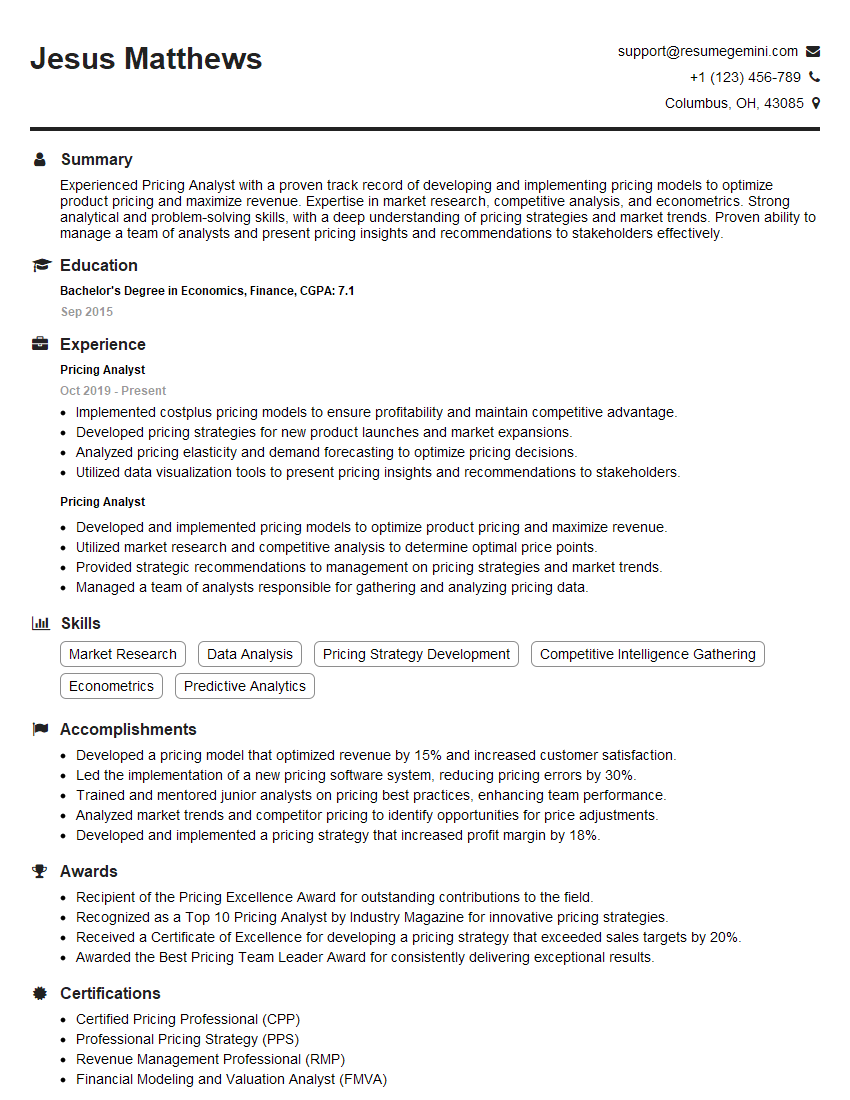
Pricing Analyst Resume Sample
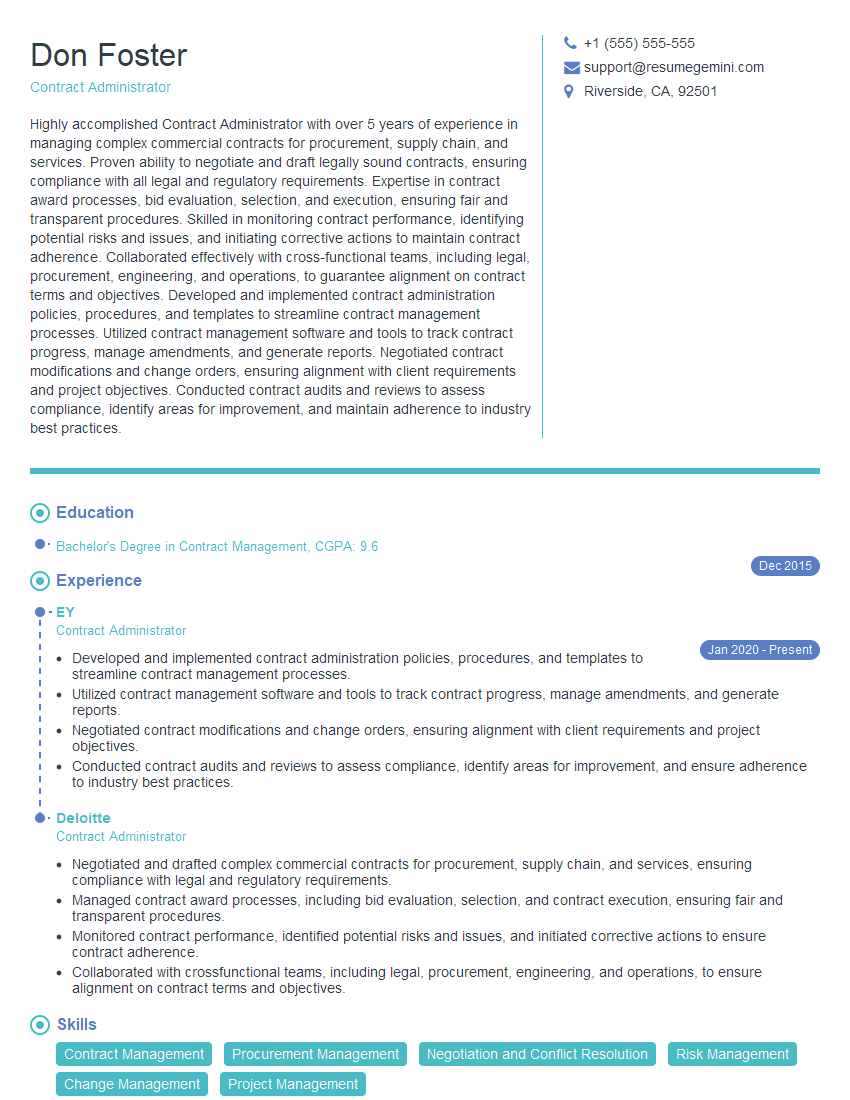
Contract Administrator Resume Sample
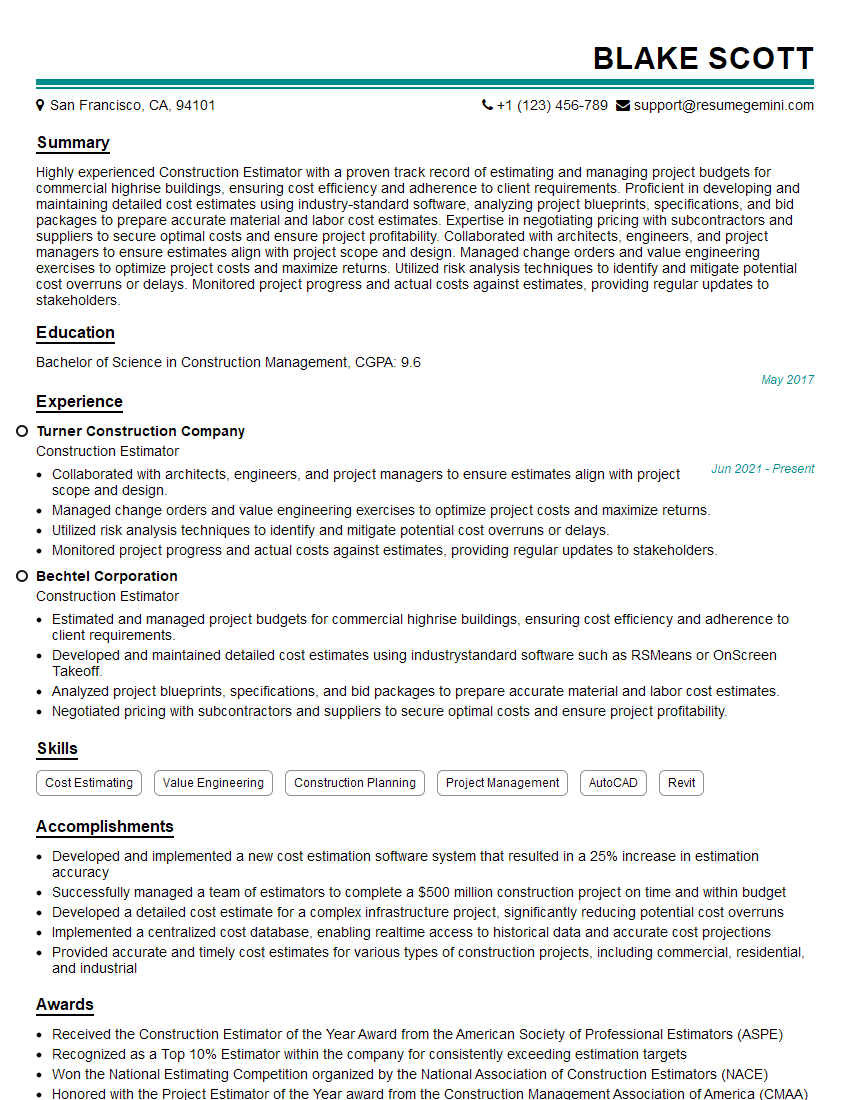
Construction Estimator Resume Sample
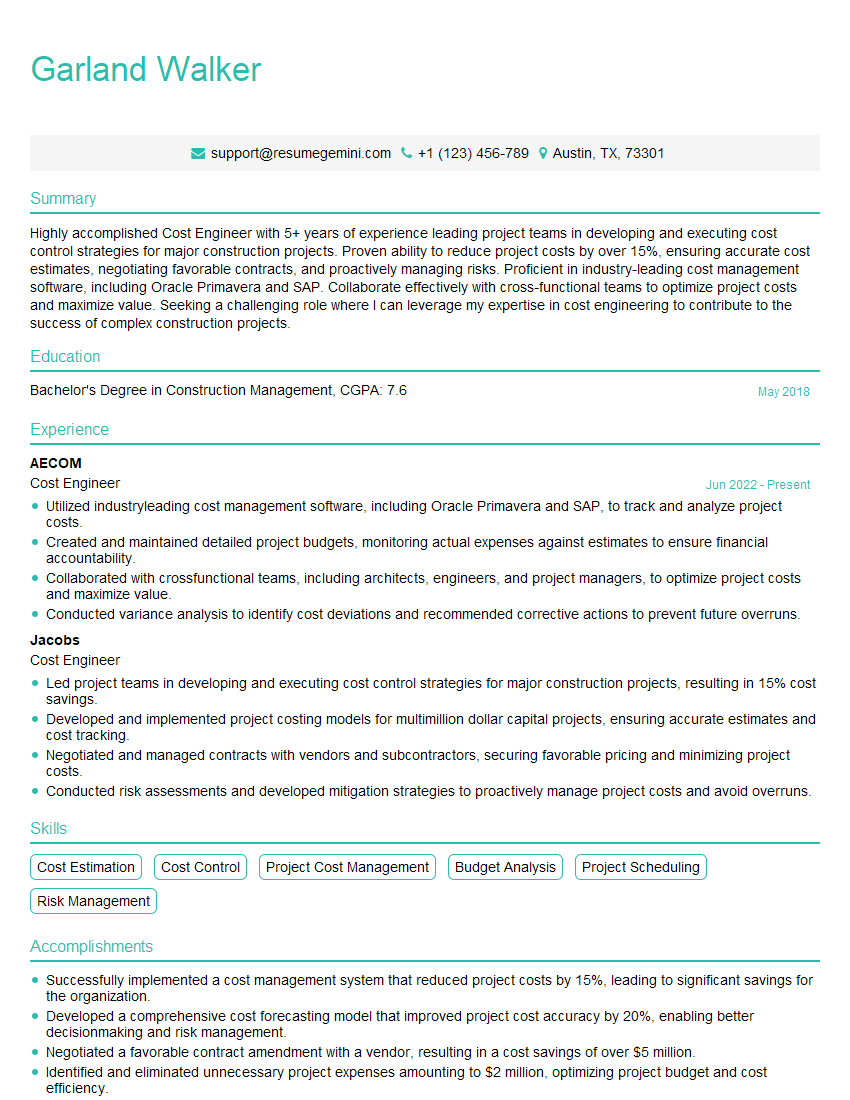
Cost Engineer Resume Sample
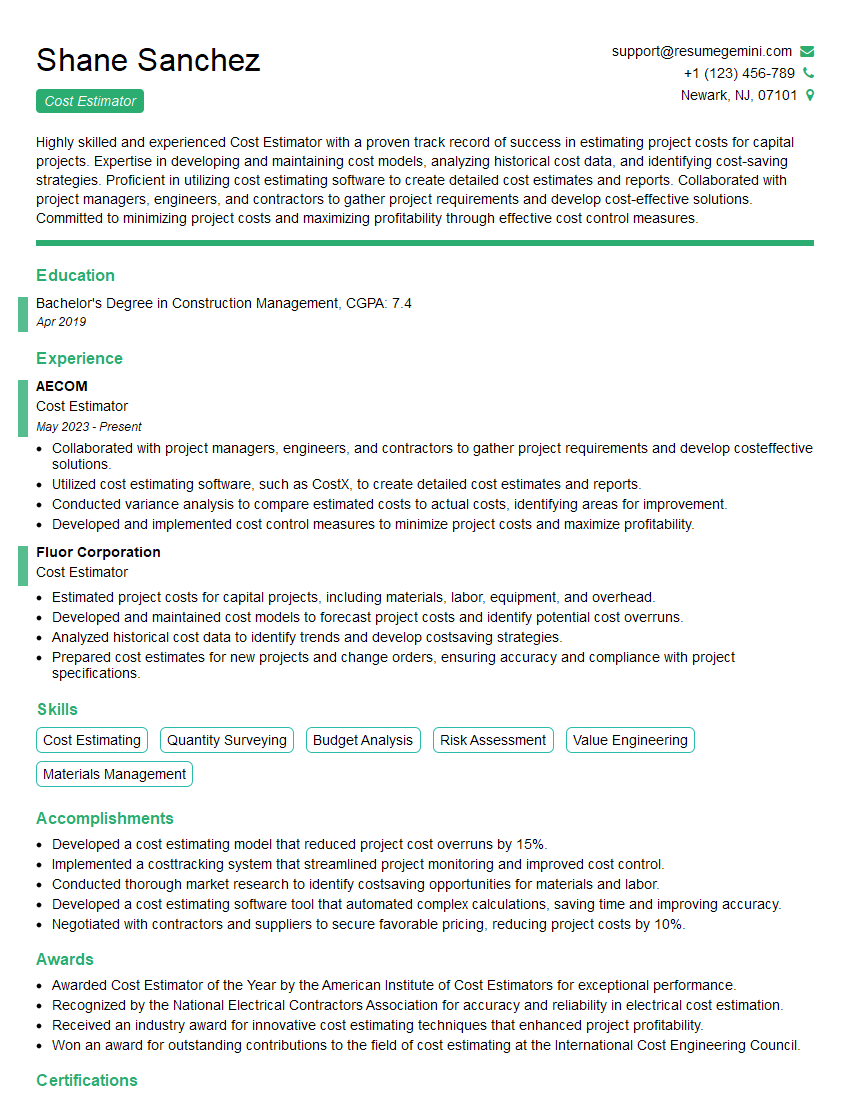
Cost Estimator Resume Sample
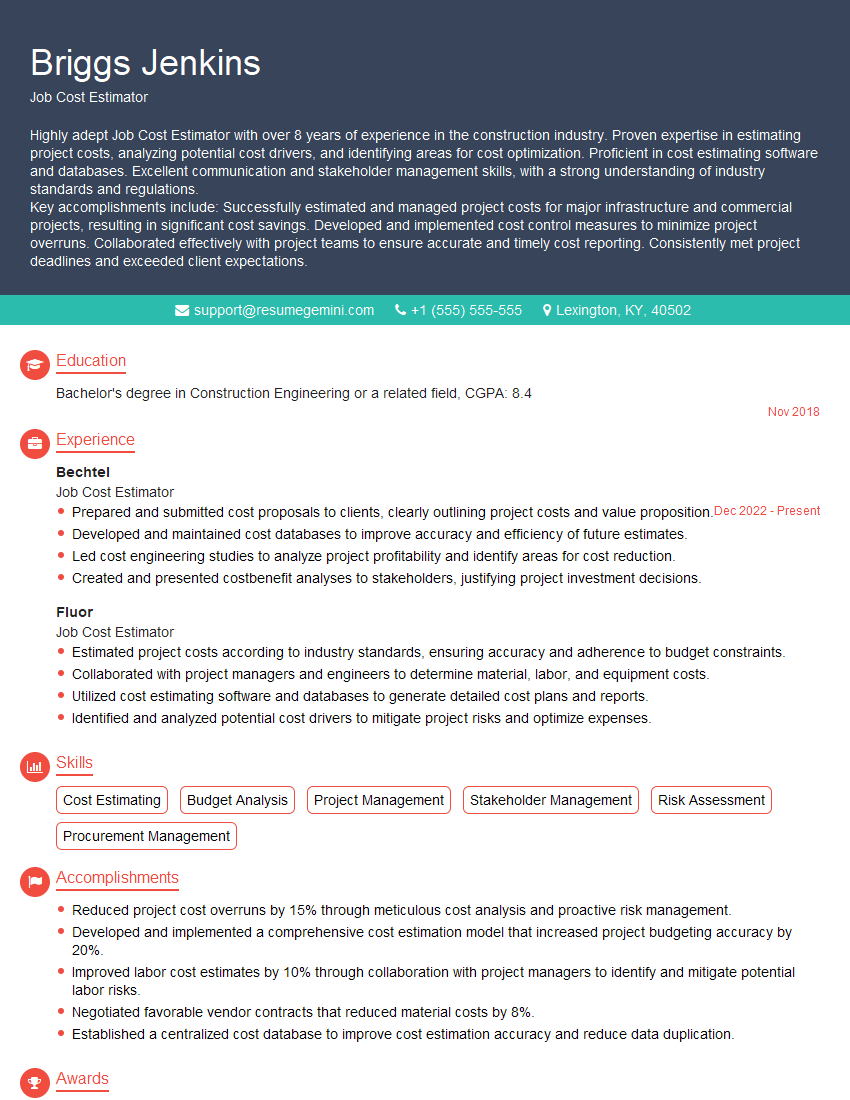
Job Cost Estimator Resume Sample
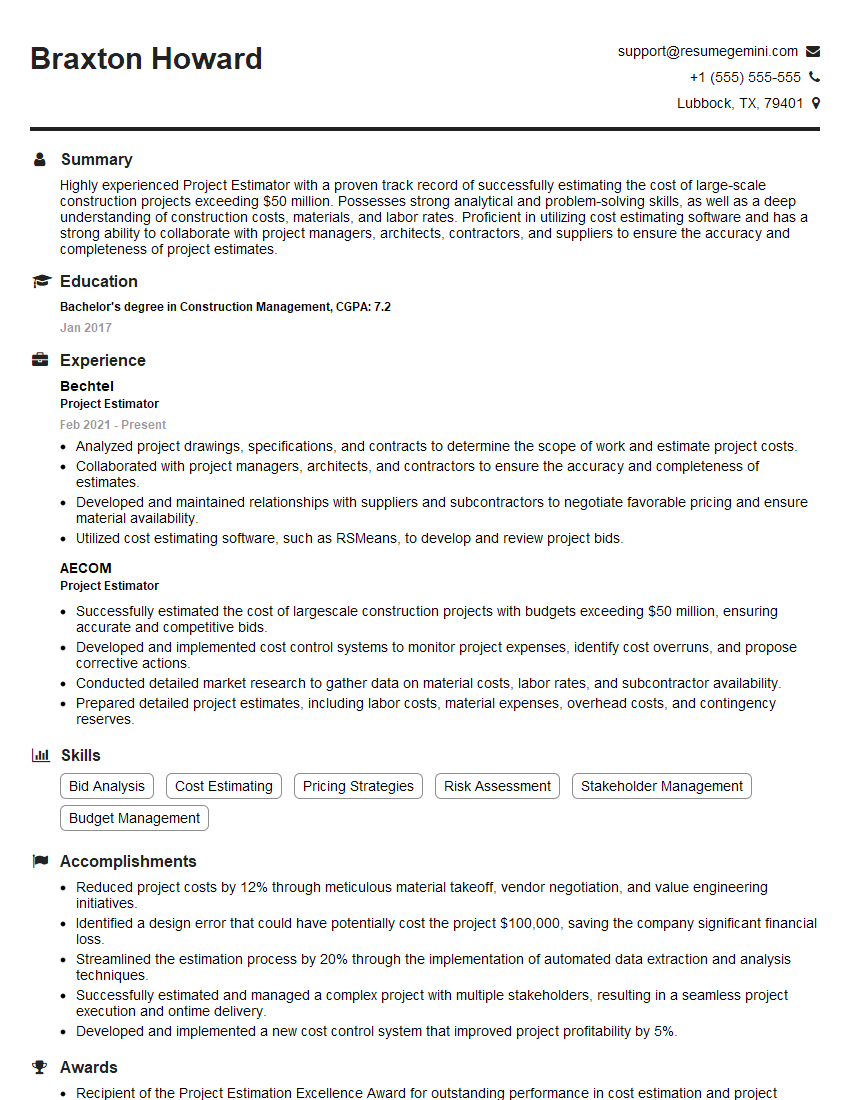
Project Estimator Resume Sample
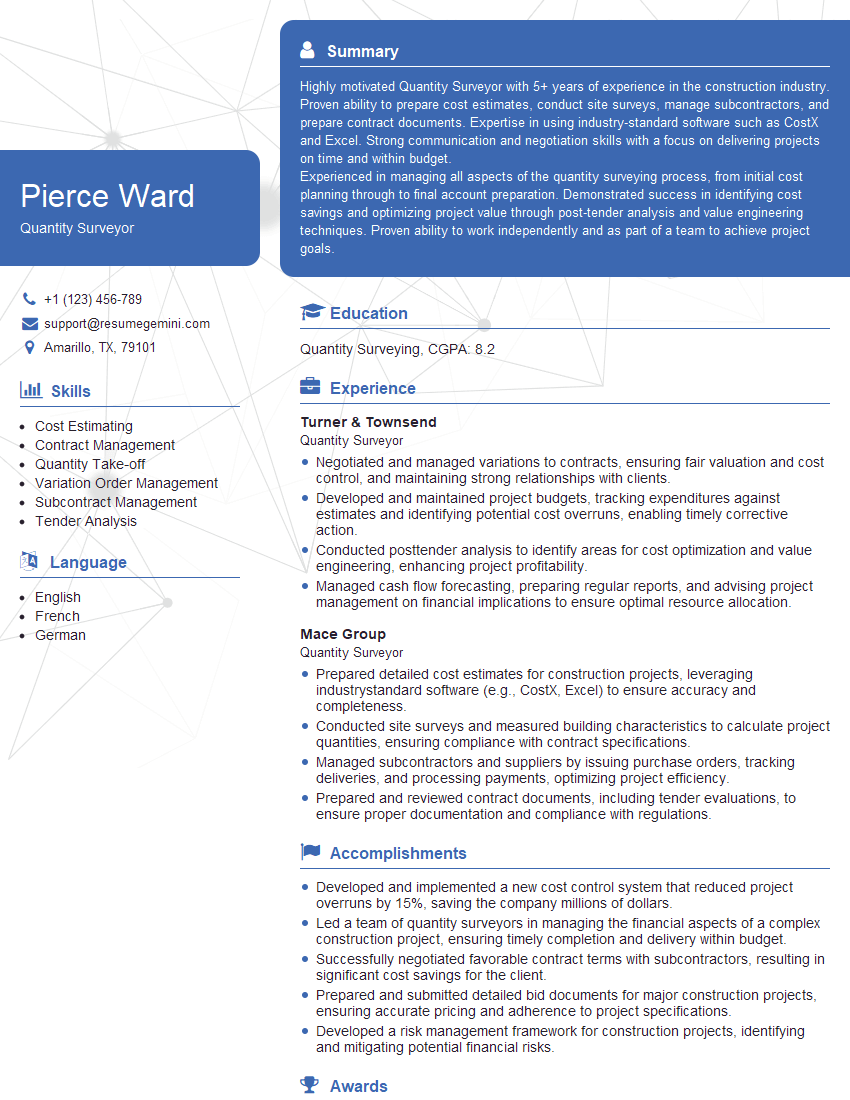
Quantity Surveyor Resume Sample
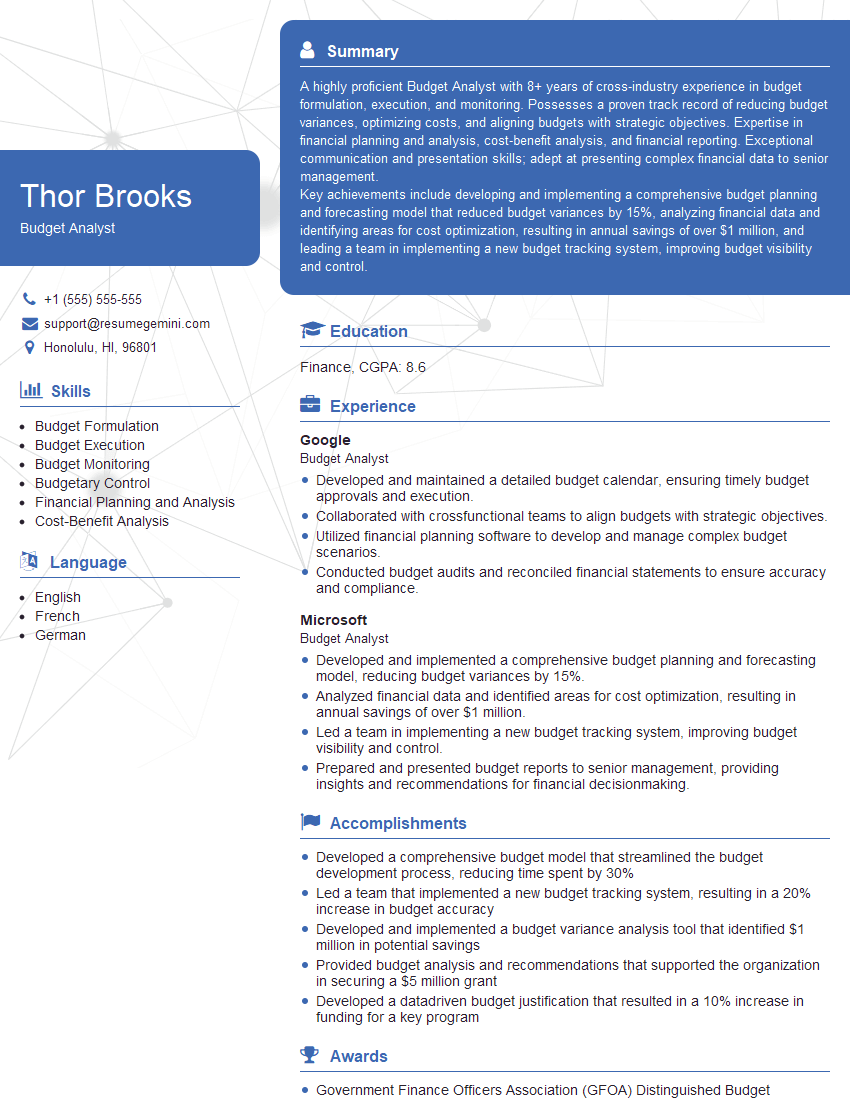
Budget Analyst Resume Sample

Value Engineer Resume Sample
Explore more articles
Users Rating of Our Blogs
Share Your Experience
We value your feedback! Please rate our content and share your thoughts (optional).
What Readers Say About Our Blog
Amazing blog
Interesting Article, I liked the depth of knowledge you’ve shared.
Helpful, thanks for sharing.