Unlock your full potential by mastering the most common Length measurement and inspection interview questions. This blog offers a deep dive into the critical topics, ensuring you’re not only prepared to answer but to excel. With these insights, you’ll approach your interview with clarity and confidence.
Questions Asked in Length measurement and inspection Interview
Q 1. Explain the difference between accuracy and precision in length measurement.
Accuracy and precision are crucial in length measurement, but they represent different aspects of measurement quality. Think of it like archery: accuracy refers to how close your arrows are to the bullseye (the true value), while precision refers to how close your arrows are to each other.
Accuracy refers to how close a measured value is to the true value. A highly accurate measurement means the result is very near the actual length. For example, if a part is 10cm long, and your measurement is 10.01cm, that’s more accurate than a measurement of 9.8cm.
Precision refers to the reproducibility of a measurement. A precise measurement is one that yields consistent results when repeated multiple times under the same conditions. If you measure the 10cm part multiple times and get readings of 10.01, 10.02, and 10.00 cm, that’s high precision, even if the average (10.01cm) is slightly off the true value.
It’s possible to have high precision but low accuracy (all arrows clustered together, but far from the bullseye), high accuracy but low precision (arrows scattered around the bullseye), or ideally, both high accuracy and high precision.
Q 2. Describe various methods for length measurement (e.g., calipers, micrometers, CMMs).
Several methods exist for length measurement, each with varying levels of precision and application:
- Vernier Calipers: These hand-held instruments use a vernier scale to provide precise readings, typically to 0.01mm or 0.001 inches. They’re versatile and used for measuring external and internal dimensions, depths, and steps. Imagine using them to measure the diameter of a pipe or the thickness of a metal sheet.
- Micrometers: Offering even higher precision than calipers (typically to 0.001mm or 0.0001 inches), micrometers use a rotating thimble to achieve fine measurements. They are excellent for measuring small parts and ensuring tight tolerances, perhaps the thickness of a very thin wire.
- Coordinate Measuring Machines (CMMs): These are advanced, computer-controlled systems used for highly accurate 3D measurements. CMMs utilize probes to scan objects and create digital models, providing precise dimensional information of complex parts. They are commonly found in manufacturing and quality control settings where extremely high accuracy is demanded, like in the aerospace industry for measuring turbine blades.
- Optical Comparators: These instruments project an enlarged image of the part onto a screen, allowing for precise measurements of angles and distances. Useful for inspecting intricate features and checking conformity to a template. Imagine using them to inspect the fine details on a printed circuit board.
Q 3. What are the common sources of error in length measurement?
Several factors can introduce errors in length measurements:
- Instrument Error: Calibration drift, wear, and tear on the measuring instrument (like a damaged caliper jaw) can cause inaccuracies.
- Environmental Factors: Temperature fluctuations can affect the dimensions of both the part and the measuring instrument, leading to errors. Similarly, humidity can impact measurements.
- Operator Error: Incorrect reading of scales, parallax error (viewing the scale at an angle), and applying incorrect force when measuring can all contribute to errors.
- Part Variation: The part itself might not be perfectly uniform in shape or dimensions, leading to inconsistencies in measurements. This is particularly relevant with mass produced components.
- Vibration and Shock: External vibrations or impacts can disturb the measurement process, especially with precision instruments like CMMs.
Q 4. How do you ensure the accuracy of your measuring instruments?
Ensuring the accuracy of measuring instruments involves a multi-pronged approach:
- Regular Calibration: Instruments should be calibrated at regular intervals by a qualified technician against traceable standards. This verifies their accuracy and corrects for any drift.
- Proper Handling and Storage: Instruments should be handled carefully to prevent damage and stored in a controlled environment to minimize the effects of temperature and humidity.
- Visual Inspection: Before each use, visually inspect the instrument for any signs of damage or wear. Replace or repair damaged instruments.
- Proper Technique: Ensure that operators are properly trained in the correct measurement techniques to minimize operator error.
- Regular Maintenance: Depending on the instrument, regular cleaning and lubrication might be necessary to maintain its functionality.
Q 5. Explain the concept of calibration and its importance in length measurement.
Calibration is the process of comparing a measuring instrument’s readings to a known standard, to ensure its accuracy. It’s the cornerstone of reliable length measurement. Imagine using a faulty ruler – you wouldn’t get accurate measurements. Calibration is like verifying the ruler is accurate.
Importance: Calibration is crucial for ensuring that measurements are reliable and traceable. In many industries, traceability to national or international standards is a regulatory requirement. Inaccurate measurements can lead to costly errors, such as manufacturing parts that don’t meet specifications, or quality control issues. Inaccurate measurements can even lead to safety concerns in certain applications.
Q 6. What are the different types of gauges used in length inspection?
Various gauges are used for length inspection, depending on the specific application and required precision:
- Plug Gauges and Ring Gauges: These are used to check the diameter of holes and shafts, respectively. They’re often used for go/no-go checks.
- Snap Gauges: These provide rapid checks for the dimensions of parts. A spring-loaded mechanism allows for quick and easy measurement.
- Thickness Gauges: These are used to measure the thickness of materials such as sheet metal or plastic.
- Depth Gauges: Designed to measure the depth of holes or recesses.
- Pin Gauges: Used to check the diameter of small holes.
The choice of gauge depends on the part’s size, required tolerance, and inspection method.
Q 7. How do you interpret measurement data and identify trends?
Interpreting measurement data involves more than just looking at individual readings. It’s about identifying patterns, trends, and potential sources of error.
Statistical analysis plays a key role. This might involve calculating the mean, standard deviation, and range of measurements to understand the variability in the data. Control charts can be used to monitor the stability of the measurement process over time. Identifying outliers (measurements that significantly deviate from the rest of the data) can help pinpoint potential problems.
Visual representations like histograms and scatter plots can help reveal trends and patterns in the data more effectively. For example, a histogram could show the distribution of measurements, revealing whether they’re normally distributed or skewed, hinting at potential biases or issues.
By systematically analyzing measurement data, one can identify potential sources of error, ensure the accuracy of measurements, and make informed decisions about the quality of the parts being inspected. Trends might indicate a need for recalibration of equipment, a review of measurement procedures, or improvements in the manufacturing process itself.
Q 8. Describe your experience with statistical process control (SPC) in length measurement.
Statistical Process Control (SPC) is crucial in length measurement for maintaining consistent product quality. It involves using statistical methods to monitor and control a process, identifying variations and preventing defects. In my experience, I’ve extensively used control charts, specifically X-bar and R charts, to track the average length and range of measurements from samples. For instance, if I’m measuring the length of a manufactured part, I’d collect data from multiple samples over time, plot it on the chart, and look for patterns indicating shifts in the process average or increased variability. Control limits, calculated based on historical data, define acceptable variation. If a point falls outside these limits, it signals a potential problem requiring investigation – perhaps a machine needs recalibration or a material flaw has appeared. I also utilize capability analysis to determine if the process is capable of meeting the specified tolerance. This helps determine if adjustments are needed to maintain a certain sigma level.
For example, in a project involving the production of precision shafts, we used X-bar and R charts to monitor the shaft length. Initially, the process was unstable, with points consistently falling outside the control limits. Through root cause analysis, which involved checking the machine’s calibration, tool wear, and material consistency, we were able to identify and resolve the issues. Following the correction, the process stabilized within the control limits, resulting in a significant reduction in defective parts.
Q 9. How do you handle discrepancies between measurements?
Discrepancies in length measurements require a systematic approach to resolution. First, I’d verify the measurement method by checking the instrument’s calibration and the measuring technique. Are we using the correct instrument for the required precision? Is the operator following the prescribed procedure? Sometimes seemingly insignificant factors like temperature or humidity fluctuations can introduce errors. Then, I’d re-measure the part using a different instrument or by a different operator. If the discrepancy persists, I would investigate potential sources of error. This might involve checking the part itself for defects or inconsistencies, or examining the manufacturing process for anomalies that could lead to variations in length. I’d then document all findings, including the measurements and the troubleshooting steps taken, as evidence supporting any conclusions. In the event of critical discrepancies that cannot be directly explained, a thorough root cause analysis may be necessary, potentially involving consultations with engineering and manufacturing.
Think of it like a detective investigation – we need to gather all the evidence (measurements, conditions, procedures) to build a case and explain the deviation. The aim isn’t just to resolve the immediate discrepancy but also to prevent similar issues in the future.
Q 10. What are your preferred methods for documenting inspection results?
Comprehensive documentation is paramount in length measurement inspection. My preferred methods include using a combination of digital and physical records. Digitally, I utilize purpose-built software systems such as LIMS (Laboratory Information Management Systems), which allow for automated data logging, traceability, and easy retrieval of results. Such systems have the capacity to track individual measurement points, associate them with specific parts or batches and generate automated reports. Physical documentation typically involves detailed inspection reports using standardized forms, including clear identification of the part, the date and time of inspection, the instrument used, the measurement values, and any deviations or non-conformances. Photographs, sketches, or detailed descriptions of any defects found are also crucial. All documentation is securely stored and maintained in compliance with the applicable standards and regulatory requirements.
Using both digital and physical formats provides redundancy and allows for a multi-faceted approach to data management. This is crucial for both ongoing quality control and future audits.
Q 11. Explain your understanding of GD&T (Geometric Dimensioning and Tolerancing).
Geometric Dimensioning and Tolerancing (GD&T) is a standardized system for specifying and communicating engineering tolerances. Unlike traditional tolerancing methods that solely focus on individual dimensions, GD&T uses symbols and concise language to define the permissible variations in form, orientation, location, and runout of features on a part. It addresses the complete geometry of the part, making it far more precise and less ambiguous than simple plus/minus tolerances. Understanding GD&T is fundamental because it ensures that a part’s functional requirements are met and that the manufacturing process can produce consistent, high-quality parts. It allows designers and manufacturers to communicate clearly and efficiently, minimizing misunderstandings and errors.
Imagine building a complex assembly. Traditional tolerances might leave room for parts to not fit together properly, even if each individual dimension is within its limit. GD&T, on the other hand, provides a much tighter control over the overall geometry, ensuring proper functionality.
Q 12. How do you interpret GD&T symbols on engineering drawings?
Interpreting GD&T symbols requires a thorough understanding of their meanings and applications. Each symbol represents a specific geometric characteristic, such as flatness, straightness, circularity, cylindricity, parallelism, perpendicularity, angularity, position, and runout. The symbols are accompanied by numerical values representing the allowed tolerance zone. For example, a position symbol with a tolerance zone indicates how much a feature’s center point can deviate from its nominal location. A perpendicularity symbol specifies the maximum allowable angle deviation from a true perpendicular. Reading the associated tolerance zone and material modification symbols is critical to understanding the allowable deviation and how to interpret the measurements within the context of the drawing. My approach involves carefully examining the symbols, associated dimensions, and feature control frames on the engineering drawing to create a comprehensive understanding of the acceptable geometrical variations for each component.
Learning GD&T is like learning a new language, but once mastered, it provides an invaluable skill set for ensuring high precision and accurate manufacturing.
Q 13. How do you select the appropriate measuring instrument for a given task?
Selecting the right measuring instrument depends entirely on the task’s precision requirements, the part’s geometry, and the available resources. For instance, a simple ruler might suffice for rough measurements, but high-precision applications demand instruments capable of micron-level accuracy. I consider the following factors: required accuracy, part size and geometry, material properties, accessibility of measuring points, and budget constraints. If high accuracy is needed, I might choose a CMM or a laser interferometer. For smaller parts with complex geometries, optical comparators or vision systems might be appropriate. For simpler, larger parts, dial calipers, vernier calipers, or height gauges might suffice. Always ensuring the instrument is properly calibrated and the operator is trained in its use is vital to obtaining reliable results.
Choosing the wrong instrument is like trying to use a spoon to hammer a nail – it might work in a pinch, but it won’t be efficient or accurate.
Q 14. What is your experience with Coordinate Measuring Machines (CMMs)?
I have extensive experience with Coordinate Measuring Machines (CMMs), both touch-probe and non-contact scanning types. I’m proficient in operating various CMM brands and software packages, including programming inspection routines, creating inspection plans, analyzing measurement data, and generating reports. My work with CMMs has included complex parts requiring high precision and accuracy, like automotive components, aerospace parts, and medical implants. I understand the importance of proper calibration, environmental control, and probe selection to ensure accurate results. I’m familiar with various probing techniques and the use of different probe styles to meet the specific geometrical requirements of a particular part. Beyond basic measurements, I can perform complex geometric analysis using CMM software, verifying features such as surfaces, curves, and angles against the specifications.
CMMs are incredibly powerful tools, allowing for the highly precise measurement of complex parts. However, their effective use requires both technical skill and a deep understanding of measurement principles.
Q 15. Describe your experience with different CMM probing techniques.
My experience with CMM probing techniques spans various types, each chosen strategically based on the part’s geometry and material. I’m proficient with touch-trigger probes, which are ideal for simple shapes and offer high accuracy. Think of them as a highly precise finger, gently contacting the surface to record a point. These are excellent for initial inspection and point-to-point measurements.
I’m also adept at using scanning probes, which significantly increase efficiency, especially for complex curves and surfaces. Imagine a high-resolution stylus tracing a contour – they gather a continuous stream of data, dramatically reducing measurement time. This is particularly useful when dealing with freeform surfaces or intricate geometries. For example, I’ve used scanning probes extensively to inspect turbine blades, capturing the subtle variations in their aerodynamic profiles.
Finally, my expertise includes optical probes, particularly useful for non-contact measurements of delicate or fragile parts. These are like a sophisticated camera, capturing images to determine dimensions; they eliminate the risk of surface damage, a crucial benefit when dealing with precision optics or microelectronics. I frequently use this type for inspecting surface finish and detecting minor defects invisible to touch probes.
Career Expert Tips:
- Ace those interviews! Prepare effectively by reviewing the Top 50 Most Common Interview Questions on ResumeGemini.
- Navigate your job search with confidence! Explore a wide range of Career Tips on ResumeGemini. Learn about common challenges and recommendations to overcome them.
- Craft the perfect resume! Master the Art of Resume Writing with ResumeGemini’s guide. Showcase your unique qualifications and achievements effectively.
- Don’t miss out on holiday savings! Build your dream resume with ResumeGemini’s ATS optimized templates.
Q 16. How do you ensure the proper setup and operation of a CMM?
Proper CMM setup and operation is paramount for accurate measurements. It’s a multi-step process beginning with environmental considerations. Temperature and humidity must be stable, as they can affect the machine’s structure and the part’s dimensions. Think of it like baking a cake – if your oven temperature fluctuates, the cake won’t turn out right.
Next, the machine’s calibration is critical. We use certified artifacts to verify the accuracy of its axes and probe, much like calibrating a scale before weighing produce. Regular calibrations, documented meticulously, ensure ongoing accuracy.
Before each measurement, we perform a probe setup, checking its stylus configuration and contact force. An improperly configured probe can lead to inaccurate data, like using a worn-out ruler. We also perform a part alignment, carefully positioning the workpiece using fixtures and software routines for optimal data acquisition.
Throughout the measurement process, we monitor the CMM’s performance, checking for vibrations, drift, and other potential issues. This consistent attention ensures the data’s integrity, providing the confidence of accurate and repeatable results.
Q 17. What software packages are you familiar with for dimensional inspection?
My experience encompasses a range of software packages for dimensional inspection, including industry-standard applications such as PC-DMIS, Calypso, and Geomagic Qualify. I’m proficient in programming routines within these platforms, creating custom measurement plans tailored to specific part geometries and inspection requirements.
For example, in PC-DMIS, I’m skilled at creating automated routines for repetitive measurements, significantly improving efficiency. I can program the CMM to automatically measure dozens of identical parts, consistently capturing the necessary data and generating reports with minimal manual intervention. This saves time and reduces human error.
My skills extend to utilizing these packages for data analysis and reporting. I’m comfortable generating comprehensive reports that include graphical representations, statistical analyses, and comparisons against CAD models, ensuring clear and concise communication of results to engineering and quality control teams.
Q 18. Describe your experience with automated inspection systems.
I’ve worked extensively with automated inspection systems, incorporating both robotic arms and vision systems. These systems provide significant advantages in speed, repeatability, and overall efficiency, particularly in high-volume manufacturing environments. Imagine an assembly line where parts are automatically checked for defects without human intervention.
My experience includes programming and troubleshooting these systems, utilizing various programming languages (e.g., RAPID for ABB robots) to create automated measurement routines. This involves integrating the robot’s movements with the CMM’s measurement capabilities, ensuring seamless data acquisition. For instance, I integrated a vision system with a robot to automatically pick up parts, position them on the CMM, and then automatically measure key features.
Moreover, I’m familiar with the data management aspects of automated systems, handling large datasets and integrating the inspection results with manufacturing execution systems (MES). This level of integration allows for real-time process monitoring and quality control, minimizing downtime and improving overall product quality.
Q 19. How do you handle non-conforming parts or measurements?
Handling non-conforming parts or measurements requires a systematic approach. The first step is careful documentation – meticulously recording the deviation from specifications and documenting the specific measurements. This provides crucial evidence for troubleshooting.
Next, I analyze the root cause of the non-conformity. Was there a problem with the part’s manufacturing process, a calibration error, or an issue with the measurement system? A thorough investigation often involves comparing the data against CAD models, examining previous inspection data, and potentially conducting further tests.
Once the root cause is identified, we implement corrective actions. This might involve adjusting the manufacturing process, recalibrating the equipment, or modifying measurement procedures. We also determine the appropriate disposition of the non-conforming parts – repair, rework, or scrap, depending on the severity of the deviation and the cost-effectiveness of remediation.
Finally, we maintain a record of the corrective actions and implement preventative measures to avoid similar problems in the future. This closed-loop approach ensures continuous improvement in quality and efficiency.
Q 20. What are your strategies for improving measurement efficiency and accuracy?
Improving measurement efficiency and accuracy is an ongoing pursuit. My strategies involve optimizing measurement routines, reducing setup times, and ensuring the use of appropriate tooling. For example, using custom fixtures significantly reduces part setup time, saving valuable time in a production environment.
Regular calibration and maintenance of equipment is paramount. A well-maintained CMM is more accurate and reliable, directly impacting the quality of results. Employing statistical process control (SPC) techniques helps to identify trends and potential problems early on, preventing significant deviations and ensuring measurement consistency.
Investing in advanced software and techniques, such as automated measurement routines and advanced data analysis, further enhances efficiency. These automation methods can reduce the manual effort required for measurement, while data analysis can identify potential trends or sources of error in the manufacturing process.
Lastly, continuous training and professional development are key. Staying updated with the latest techniques and technologies ensures we maintain the highest standards of accuracy and efficiency in our measurements.
Q 21. How do you maintain a clean and organized workspace in a measurement lab?
Maintaining a clean and organized measurement lab is crucial for both accurate measurements and safety. A cluttered workspace increases the risk of accidents and can hinder efficient workflow. It’s like a surgeon’s operating room – cleanliness is paramount.
We implement a 5S methodology – Seiri (sort), Seiton (set in order), Seisō (shine), Seiketsu (standardize), and Shitsuke (sustain) – to ensure a consistently clean and organized environment. This systematic approach ensures that only essential tools and equipment are kept in the lab, everything has its designated place, and regular cleaning is performed.
Proper storage of equipment and parts is vital. We use designated cabinets, racks, and containers to organize tools, fixtures, and reference standards. This system prevents damage and allows for easy retrieval of items. Regular cleaning procedures, including dust removal and surface cleaning, are vital to maintain the precision of the measuring equipment.
Moreover, we implement a system for managing documentation, ensuring that all calibration records, measurement reports, and other relevant documents are properly stored and easily accessible. This allows for effective tracking and analysis of data, contributing to continuous improvement and adherence to quality standards.
Q 22. Describe your experience with different materials and their impact on measurement.
Different materials exhibit varying properties that significantly influence measurement accuracy. For instance, the thermal expansion coefficient dictates how much a material expands or contracts with temperature fluctuations. Measuring a steel part on a hot day versus a cold day will yield different results unless temperature compensation is applied. Similarly, surface finish impacts the reliability of contact measurements. A rough surface might lead to inconsistent readings with a dial indicator compared to a smooth, polished surface. Materials like rubber or flexible plastics present additional challenges as their dimensions can change under stress or with time.
My experience encompasses a wide range of materials including metals (steel, aluminum, titanium), plastics (polypropylene, ABS), composites (carbon fiber reinforced polymers), and ceramics. For each, I select appropriate measurement techniques and tools to minimize errors. For example, when measuring a soft material like rubber, I’d use a non-contact method like optical scanning to avoid deformation, while a rigid metal part might be measured directly with a CMM (Coordinate Measuring Machine) or dial caliper.
Q 23. How do you deal with complex geometries during measurement?
Measuring complex geometries requires a multi-faceted approach. Simple calipers or rulers are inadequate for intricate shapes. Instead, I utilize a combination of techniques and tools. For example, for parts with complex curves, I’d employ a CMM or a 3D scanner to capture the complete geometry. These tools can create a digital model, enabling precise measurements of distances, angles, and radii at numerous points. For less complex parts, I might use specialized tools like dial indicators with different contact points or optical comparators to check against pre-defined templates. Furthermore, understanding geometric dimensioning and tolerancing (GD&T) is crucial to interpreting measurement data and assessing part conformance to specifications.
A common approach involves breaking down a complex shape into simpler, measurable segments. Then, I combine the individual measurements to obtain the overall dimensions, carefully accounting for any potential errors or uncertainties at each step. This often involves the use of trigonometry and geometry principles to derive required measurements from accessible ones. Imagine measuring the diameter of a cylindrical part with a tapered end; I would divide it into multiple zones and take measurements at each. I would also consider using a specialized tool to measure the taper angle.
Q 24. Explain your understanding of measurement uncertainty.
Measurement uncertainty is the range of values within which the true value of a measurement is expected to lie. It’s not just about the accuracy of the measuring instrument, but also includes factors like operator error, environmental conditions, and the inherent variability of the material being measured. Understanding and quantifying uncertainty is vital for reliable measurement. A small uncertainty indicates high precision and confidence in the results, while large uncertainty raises concerns about the validity of the data.
Uncertainty is usually expressed as a ± value alongside the measured value (e.g., 10.00 mm ± 0.02 mm). Calculating uncertainty involves considering all contributing sources. This can be done using statistical methods, and standards like ISO/IEC 17025 provide guidelines. For example, I might account for the instrument’s resolution, repeatability of the measurement, calibration uncertainty of the instrument, and the environmental temperature variations in my uncertainty calculations.
Q 25. How do you ensure traceability of measurements?
Traceability in measurement ensures that a measurement can be related to internationally recognized standards. This is critical for ensuring the reliability and comparability of measurements across different locations and times. Traceability is achieved through a chain of calibrations. My measuring instruments are regularly calibrated against traceable standards, typically national standards or those maintained by accredited calibration laboratories.
Calibration certificates provide documented evidence of the traceability chain, linking my instruments to the primary standards. These certificates specify the uncertainty associated with the calibration process, which contributes to the overall measurement uncertainty. Maintaining meticulous records of calibrations and their associated documentation is vital for demonstrating traceability and adhering to quality standards like ISO 9001.
Q 26. What are your experience with using and maintaining various measuring tools like dial indicators and optical comparators?
I have extensive experience with dial indicators and optical comparators. Dial indicators are precision instruments used for measuring small displacements or deviations. They are versatile and employed for checking surface flatness, parallelism, and run-out. Regular maintenance includes cleaning the contact point, checking for proper function, and verifying the accuracy through comparison with a known standard.
Optical comparators project a magnified image of a part onto a screen, allowing for precise comparison against a master template or drawing. This is beneficial for checking intricate shapes and features. Maintaining an optical comparator involves ensuring the light source is clean and properly adjusted and periodically checking the accuracy of the projection system. I am also skilled in using other precision measuring tools, including CMMs (Coordinate Measuring Machines), laser scanners, and profilometers.
Q 27. Describe a situation where you had to troubleshoot a measurement problem.
During a project involving the inspection of injection-molded plastic parts, we noticed inconsistencies in the measurements of a critical dimension using our standard CMM. The parts appeared to be outside the specified tolerance, but the cause was unclear. After carefully investigating, I realized that the clamping force on the CMM fixture was causing a slight deformation of the plastic parts, affecting the measurements. We corrected this by using a softer clamping method and adding padding to reduce stress on the parts.
To troubleshoot this issue, I followed a systematic approach: First, I repeated the measurements to rule out operator error. Then I investigated the measurement setup, reviewing the fixture design and the CMM’s parameters. Finally, I conducted controlled experiments to identify the cause of the discrepancies. The problem was solved through careful modification of the measurement process, and this experience highlighted the need for thorough consideration of how the measurement process itself could influence results, even with sophisticated equipment.
Q 28. How do you stay updated on the latest advancements in length measurement technology?
Staying updated in this field is crucial. I regularly attend industry conferences and workshops, and participate in professional development courses to learn about the newest technologies and techniques. I am also a member of relevant professional organizations (e.g., ASME, ASQ) that provide access to publications, webinars, and networking opportunities. I actively read trade journals and technical publications related to precision measurement, focusing on advancements in optical metrology, laser scanning, and CMM technology. I also stay abreast of changes and updates to relevant standards like ISO and ASME Y14.5.
Furthermore, I actively research new technologies through online resources and manufacturer websites. This allows me to evaluate the potential benefits of new measuring instruments and software for improved efficiency and accuracy in our measurement processes. Continual learning is essential for maintaining my expertise and adapting to the ever-evolving landscape of length measurement technology.
Key Topics to Learn for Length Measurement and Inspection Interviews
- Measurement Fundamentals: Understanding different units of length (metric and imperial), precision vs. accuracy, and sources of measurement error.
- Calibration and Verification: Processes for calibrating measuring instruments (e.g., calipers, micrometers, CMMs), understanding calibration certificates, and performing verification checks.
- Measuring Instruments: Detailed knowledge of various instruments used in length measurement, their applications, limitations, and proper usage techniques (e.g., Vernier calipers, micrometers, optical comparators, Coordinate Measuring Machines (CMMs)).
- Statistical Process Control (SPC): Applying statistical methods to analyze measurement data, identifying trends, and controlling process variation for improved quality.
- Inspection Techniques: Mastering visual inspection methods, understanding GD&T (Geometric Dimensioning and Tolerancing), and interpreting engineering drawings and specifications.
- Data Analysis and Reporting: Effectively presenting measurement data, generating reports, and identifying areas for improvement based on collected data.
- Problem-Solving and Troubleshooting: Developing strategies to identify and resolve measurement discrepancies, understanding potential sources of error, and implementing corrective actions.
- Health and Safety: Understanding and adhering to safety protocols and regulations related to the use of measuring instruments and inspection equipment.
- Specific Industry Applications: Researching the specific applications of length measurement and inspection within your target industry (e.g., manufacturing, construction, automotive).
Next Steps
Mastering length measurement and inspection is crucial for a successful career in many high-demand fields. Proficiency in these skills demonstrates attention to detail, problem-solving abilities, and a commitment to quality – highly valued attributes in today’s competitive job market. To maximize your job prospects, it’s essential to create an ATS-friendly resume that effectively showcases your qualifications. ResumeGemini is a trusted resource that can help you build a professional and impactful resume. They offer examples of resumes tailored to Length Measurement and Inspection roles, providing you with a valuable head start in your job search.

Quality Control Manager Resume Sample
Reliability Engineer Resume Sample
Process Engineer Resume Sample
Test Engineer Resume Sample
Manufacturing Engineer Resume Sample
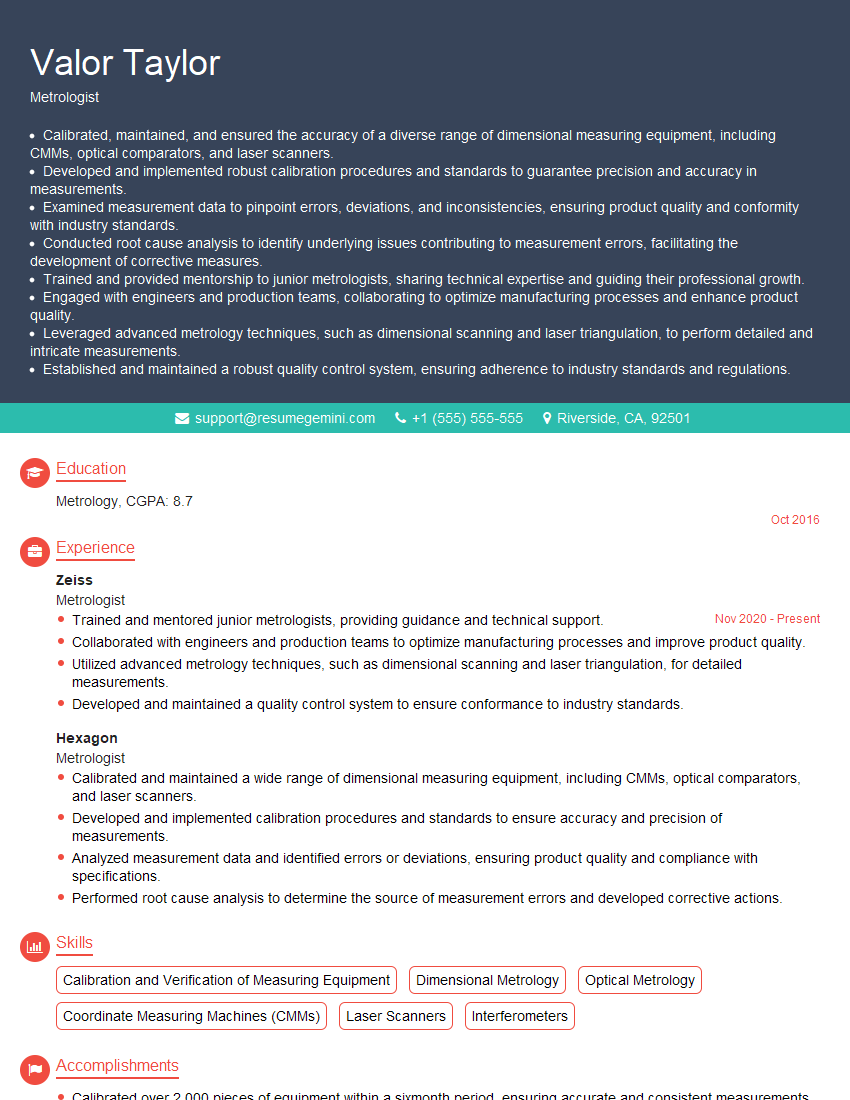
Metrologist Resume Sample
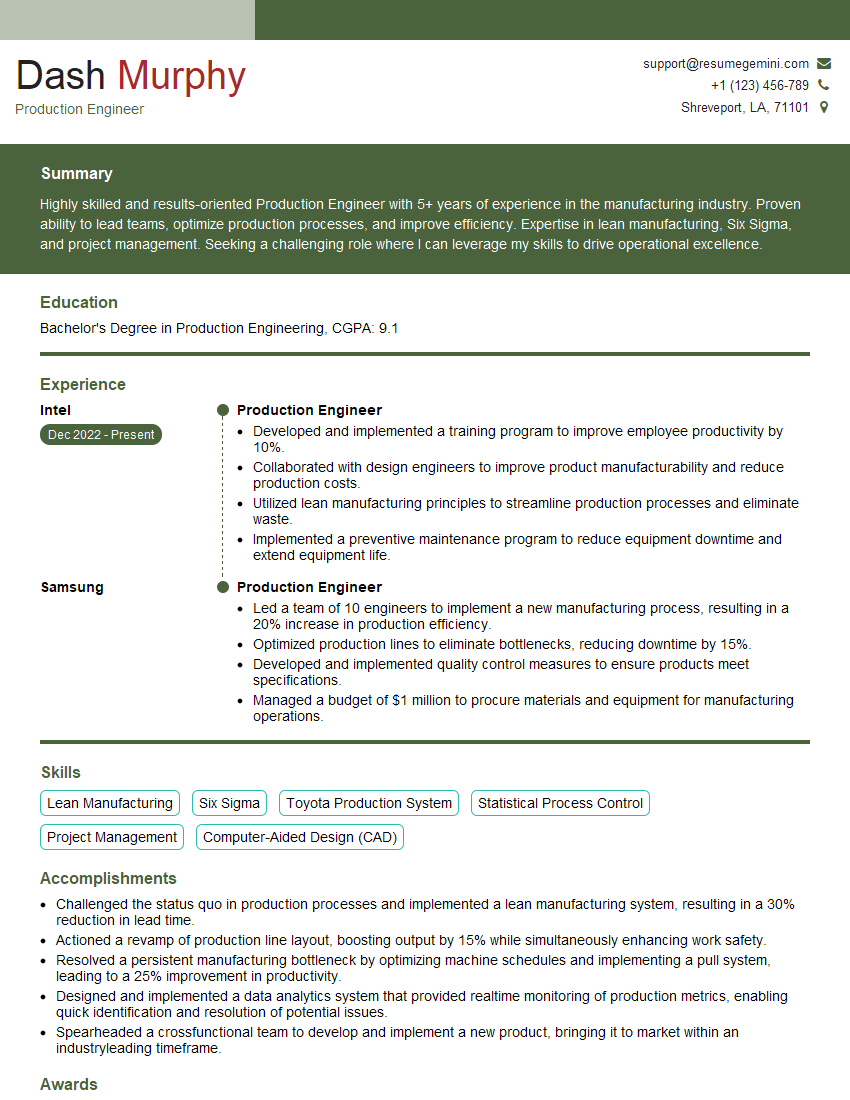
Production Engineer Resume Sample
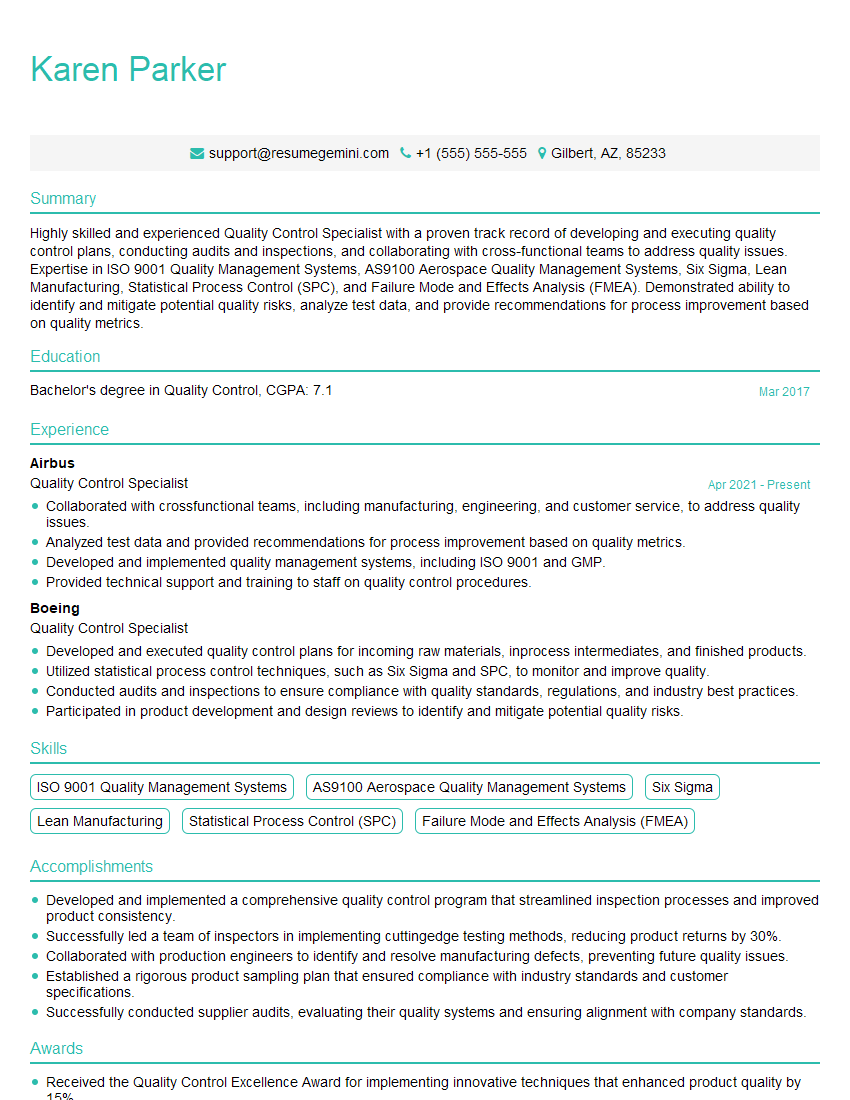
Quality Control Specialist Resume Sample

Quality Assurance Engineer Resume Sample
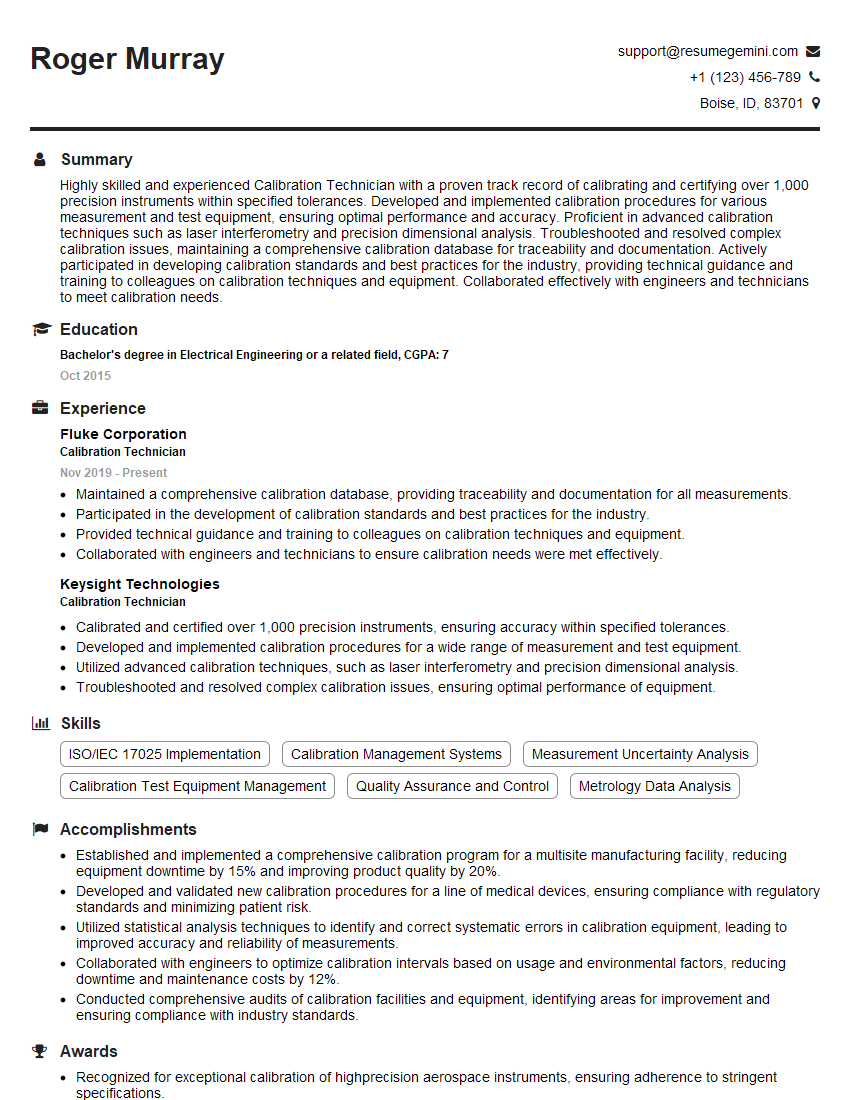
Calibration Technician Resume Sample

Manufacturing Technician Resume Sample
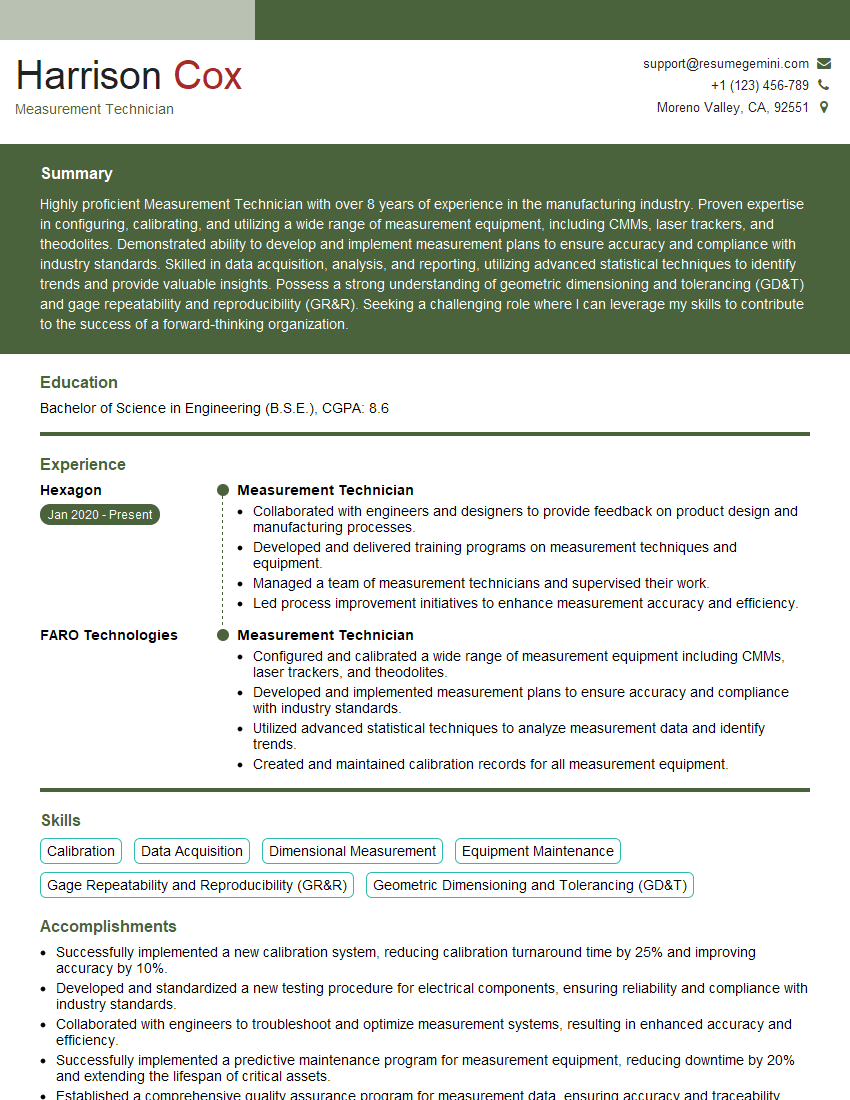
Measurement Technician Resume Sample
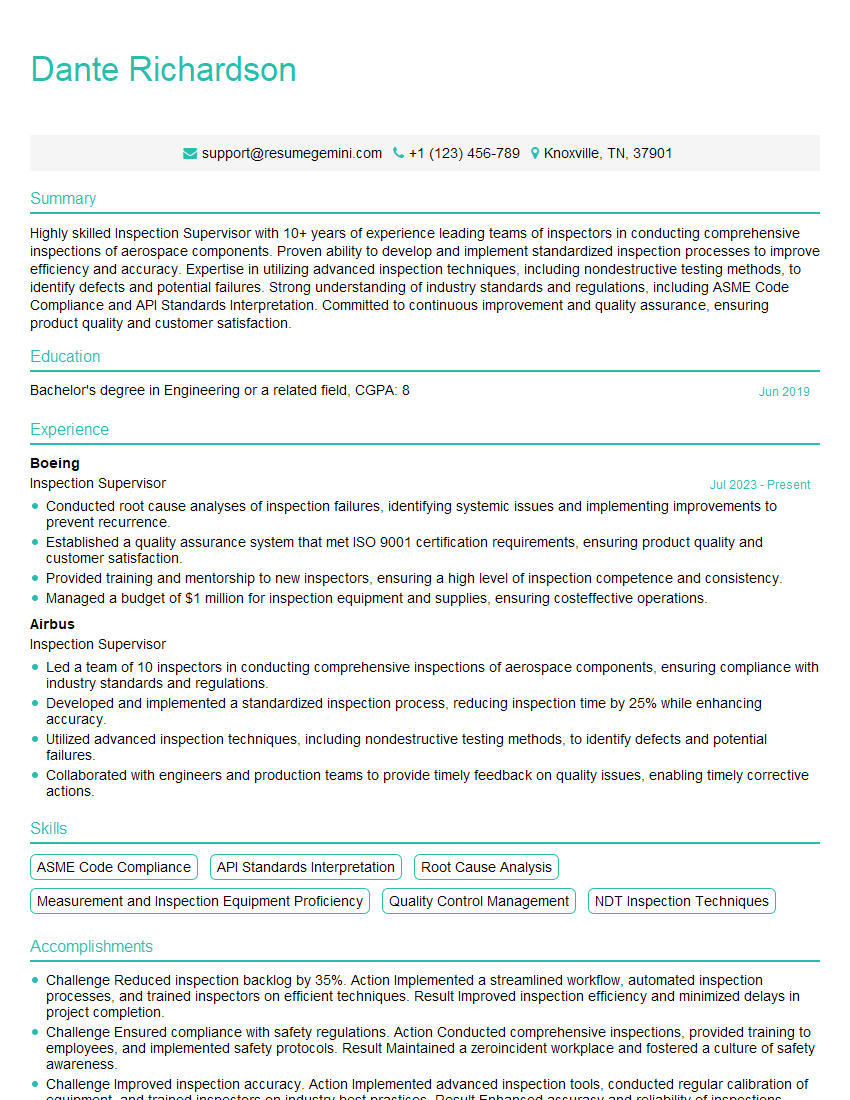
Inspection Supervisor Resume Sample
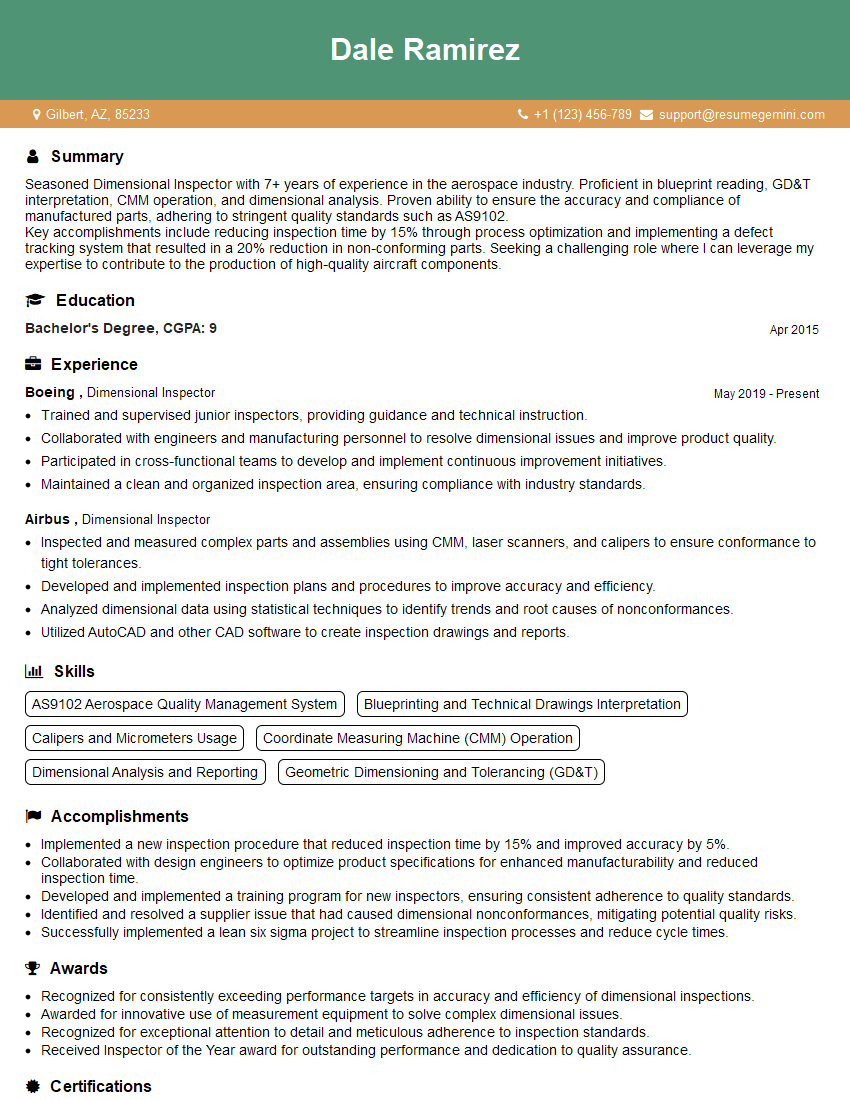
Dimensional Inspector Resume Sample
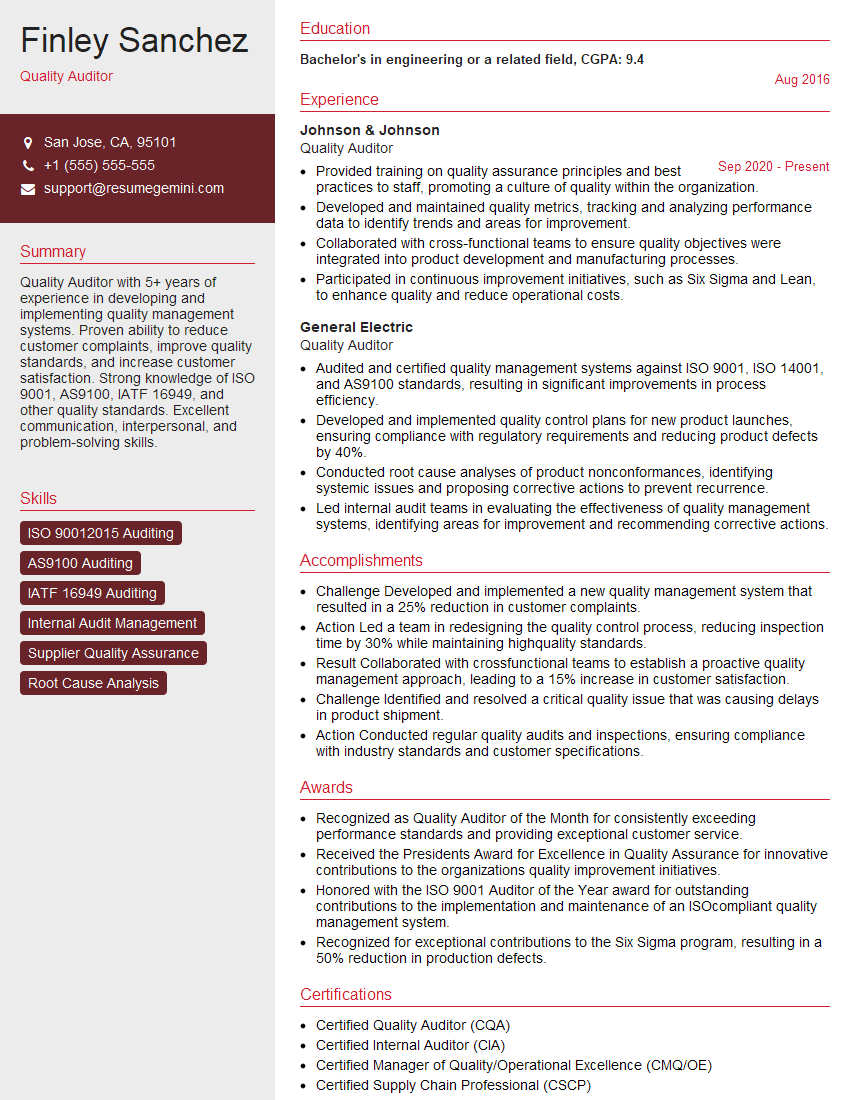
Quality Auditor Resume Sample

Quality Control Inspector Resume Sample
- Quality Control Manager
- Reliability Engineer
- Process Engineer
- Test Engineer
- Manufacturing Engineer
- Metrologist
- Production Engineer
- Quality Control Specialist
- Quality Assurance Engineer
- Calibration Technician
- Manufacturing Technician
- Measurement Technician
- Inspection Supervisor
- Dimensional Inspector
- Quality Auditor
- Quality Control Inspector
Explore more articles
Users Rating of Our Blogs
Share Your Experience
We value your feedback! Please rate our content and share your thoughts (optional).
What Readers Say About Our Blog
Amazing blog
Interesting Article, I liked the depth of knowledge you’ve shared.
Helpful, thanks for sharing.