Interviews are more than just a Q&A session—they’re a chance to prove your worth. This blog dives into essential Live Event Sound Mixing interview questions and expert tips to help you align your answers with what hiring managers are looking for. Start preparing to shine!
Questions Asked in Live Event Sound Mixing Interview
Q 1. Describe your experience with different types of microphones and their applications in live sound.
My experience with microphones spans a wide range, from dynamic to condenser, and ribbon mics. The choice depends heavily on the application. Dynamic microphones, like the Shure SM58, are workhorses known for their durability and resistance to feedback. They’re ideal for vocals, particularly in loud environments like rock concerts, because they handle high sound pressure levels (SPL) well. Condenser microphones, such as the Neumann U 87, are more sensitive and capture a wider frequency range, making them perfect for capturing subtle nuances in acoustic instruments or delicate vocals in a studio or controlled environment. However, they require phantom power and are more susceptible to handling noise and feedback. Ribbon microphones, like the Royer R-121, offer a unique, warm sound with a characteristic proximity effect, often used for guitar amps or other instruments where a vintage tone is desired. They’re fragile and require careful handling. For instance, I’d use a cardioid dynamic mic for a lead vocalist in a loud club setting to minimize feedback, but a large-diaphragm condenser for recording a solo acoustic guitar performance in a quieter space, prioritizing detail and clarity.
- Dynamic: Shure SM58 (vocals), Sennheiser e609 (snare drum)
- Condenser: Neumann U 87 (vocals, acoustic instruments), AKG C414 (multi-purpose)
- Ribbon: Royer R-121 (guitar amps, other instruments needing a vintage sound)
Q 2. Explain the concept of gain staging and its importance in a live sound setting.
Gain staging is the process of setting the input and output levels of each component in your audio chain to achieve the best possible signal-to-noise ratio while avoiding distortion. Think of it like adjusting the volume on each step of a water pipe to ensure a smooth flow. In live sound, it’s crucial for maintaining a clean, strong signal from the microphone all the way to the speakers. Poor gain staging can lead to noise, distortion, and reduced headroom – meaning less dynamic range and less ability to handle loud peaks. I always start by setting the gain on the microphone preamplifier so the input signal is around -18dBFS to -12dBFS on the console. Then, I adjust the channel faders, aux sends, and output levels accordingly, ensuring adequate headroom throughout. I’d also monitor meters closely to avoid clipping. Imagine a vocalist singing softly, then suddenly belting out a high note. A properly gain-staged system will handle both without distortion. Poor gain staging might result in quiet whispers being lost in the noise floor or loud parts being clipped, creating an unpleasant harsh sound.
Q 3. How do you troubleshoot feedback issues during a live performance?
Feedback is that ear-piercing squeal that comes when a microphone picks up sound from a monitor or speaker. Troubleshooting it requires a systematic approach. I first identify the offending frequency by slowly raising the gain of the affected channel until the feedback starts. Then, I’ll use a graphic EQ to notch out that specific frequency, essentially creating a dip in the response curve. If it’s a persistent problem, I’ll try reducing the gain on that channel or adjusting microphone placement, pointing it further away from the speakers or using a more directional mic. Sometimes, simply turning down the monitor volume for the affected instrument can help. Other times, physical changes like moving the monitor or microphone are necessary. It’s a bit like playing a game of audio ‘Whac-a-Mole’. Each feedback issue needs a unique solution.
- Identify the frequency: Gradually increase gain to pinpoint feedback
- Notch out the frequency: Use a graphic EQ to create a dip in the response curve
- Reduce gain/adjust microphone placement/monitor level: Make adjustments to the audio chain.
Q 4. What are your preferred methods for EQing vocals and instruments in a live mix?
EQing vocals and instruments in a live mix is about shaping the sound to fit the overall mix and to improve clarity and presence. For vocals, I typically focus on cutting frequencies that are muddy or harsh, rather than boosting. For example, I might cut around 250Hz to reduce muddiness, and around 5kHz to tame harshness. Then, I might subtly boost around 2-4kHz to improve clarity and presence. For instruments, the approach is more specific to each instrument’s characteristics and role in the mix. A bass guitar, for example, might need a boost around 80Hz to 100Hz for warmth and body, but cutting in the 250-500Hz range to avoid muddiness in the low-mid range. Drums would be equalized for each individual piece; a kick drum might need low-end boost, while the snare might benefit from midrange sculpting. The goal is a balanced, clear mix that translates well in the venue’s acoustics. I always listen critically to the mix, making adjustments as needed to ensure a cohesive and impactful sound. It’s like sculpting with sound.
Q 5. Explain your process for setting up a monitor mix for a band.
Setting up monitor mixes is crucial for a band’s performance. I begin by talking to each member about their needs – what do they need to hear themselves and from other bandmates? This is an important collaborative process. I then create separate mixes for each musician, often using aux sends on the main console. A vocalist might need their own voice prominently in their monitor, along with a bit of kick drum and guitar to keep the rhythm. A guitarist might need their own instrument louder, along with the bass and drums. The drummer usually needs a fairly comprehensive mix, including their own kit and all other parts so they can play their role accurately within the context of the song. The goal is to provide each band member with a mix that allows them to play their part confidently and accurately, without being overwhelmed by other instruments. I use a combination of EQ and dynamics processing in the monitor mixes to create a balanced and clear sound for each performer. It’s a balancing act between individual needs and the overall sonic coherence of the entire band on stage.
Q 6. Describe your experience with digital audio consoles and their functionalities.
I have extensive experience with digital audio consoles from various manufacturers, including Yamaha, DiGiCo, and Avid. These consoles offer a vast array of features compared to analog consoles. The ability to recall settings, create complex routing schemes, and utilize onboard effects processing is a significant advantage in live sound. I utilize the automation features to manage complex transitions, such as level changes, dynamic processing, and EQ. For example, I can pre-program different scenes for various parts of a show, making smooth transitions and adjustments during a performance much easier. The detailed feedback and visual metering of digital consoles also assist in preventing errors and making precise adjustments. The flexibility offered by digital consoles allows for sophisticated sound design, and the ability to save and recall scenes is a time saver, allowing for rapid setup and efficient workflow. Digital consoles have revolutionized live sound.
Q 7. How do you handle unexpected equipment failures during a live event?
Handling unexpected equipment failures requires a calm, methodical approach. My first step is to assess the situation quickly: what exactly failed, and how critical is it to the show? I have backup equipment on hand for common failures; for example, I always bring extra microphones, cables, and a spare power supply. If a microphone fails, I have a quick replacement ready. If it’s something more complex, like a channel failing on the console, I may need to reroute signals or use a backup console if possible. Communication with the band is key – keeping them informed of the issue and any necessary adjustments allows them to adapt their performance, and minimizes disruption to the overall show. Having a prepared plan and some redundancies built into your workflow is key to preventing complete chaos in these situations. In this field, you can never be too prepared!
Q 8. Explain your understanding of signal flow in a live sound system.
Signal flow in a live sound system describes the path an audio signal takes from its source to the listener’s ears. Imagine it like a river flowing from its source (the mountains) to the sea (the audience’s ears). Understanding this flow is crucial for troubleshooting and achieving a great mix.
- Source: This is where the sound originates – microphones, instruments, playback devices.
- Preamplification: Microphones and instruments often need a boost; preamps provide this. Think of this as the water being channeled into a larger stream.
- Mixing Console: This is the central hub, where individual signals are routed, processed, and combined. It’s like a dam controlling the water flow.
- Processing: Equalization (EQ), compression, and effects (reverb, delay) shape the sound. This is like filtering and cleaning the water.
- Amplification: Power amplifiers boost the signal to drive loudspeakers. This increases the volume and power of the water flow.
- Loudspeakers: These convert the electrical signal into sound waves, distributing the sound to the audience. This is the river reaching the sea.
- Monitoring: The sound engineer monitors the sound through their headphones or monitors to make adjustments. This is like a sensor checking the water quality.
For instance, a vocalist’s microphone signal goes from the mic, through the preamp, into a channel on the mixing console, undergoes EQ and compression, then is sent to the main output, amplified, and finally played through the main PA system.
Q 9. What are your strategies for managing multiple input sources in a complex live mix?
Managing multiple input sources requires a structured approach. I employ several strategies:
- Pre-Production Planning: Careful planning with the stage manager and band is vital. Knowing the setlist, instrument types, and mic placement ahead of time helps immensely. I’ll create a channel list and assign inputs accordingly.
- Input Grouping and Submixing: For instance, all drums might be grouped together and submixed to control their overall volume and EQ. This simplifies the main mix.
- Color-Coding and Labeling: I meticulously label channels and use color-coding on the console to visually separate different instrument groups or vocalists. This helps maintain organisation in chaotic situations.
- Aux Sends and Returns: Aux sends allow me to send individual signals to monitoring mixes (for musicians) or effects processors. Returns bring the processed signals back into the main mix. This is especially useful for complex effects or stage monitoring.
- Digital Audio Workstations (DAWs): In larger events, DAWs like Ableton Live or Pro Tools allow for flexible routing, virtual instruments and advanced signal processing.
During a recent show with 8 musicians and 4 backing vocalists, I used submixes for drums, brass, and backing vocals. This allowed me to quickly adjust the overall balance and create space in the mix. I also extensively used aux sends for monitoring mixes, ensuring each musician had a clear and comfortable stage monitor mix.
Q 10. How do you work effectively with other members of the production team?
Effective teamwork is the cornerstone of successful live sound. Open communication and mutual respect are essential. I prioritize:
- Pre-Show Meetings: Thorough discussions with the lighting director, stage manager, and bandleader ensure everyone is on the same page regarding timing, cue points, and potential issues.
- Clear Communication: I use clear and concise language to explain technical aspects to non-technical members of the team and always solicit input and feedback.
- Active Listening: Paying close attention to the band’s needs and the audience’s reaction is crucial for making adjustments and ensuring everyone is happy with the sound.
- Problem-Solving Collaboration: If issues arise, I work collaboratively to find solutions – for example, if a monitor mix isn’t working, I might collaborate with the stage technician to fix any issues with the monitor wedges or cabling.
On one occasion, the lighting director’s setup interfered with my microphone placement. Open dialogue allowed us to find a compromise that satisfied both our needs.
Q 11. Describe your experience with different types of loudspeaker systems and their applications.
My experience encompasses various loudspeaker systems. The choice depends on the venue, budget, and the type of event:
- Point Source Systems: Ideal for smaller venues or applications requiring focused sound. These are like single spotlights, projecting sound in a specific direction.
- Line Array Systems: These are arrays of smaller speakers stacked vertically, providing even sound coverage over large distances. This is like a floodlight, covering a wider area with even illumination.
- Subwoofers: Essential for reproducing low frequencies, giving depth and power to the sound. These are like the bass drum of a sound system.
- Stage Monitors: These are loudspeakers placed on stage for musicians to hear themselves and the band. These are the musicians’ personal sound system.
For instance, a large outdoor concert would use a line array system for wide coverage, supplemented by numerous subwoofers for impactful bass. A smaller intimate club would benefit from point source speakers, perhaps with a single subwoofer.
Q 12. Explain your understanding of room acoustics and their impact on live sound.
Room acoustics significantly impact live sound. Understanding factors like:
- Reverberation: The persistence of sound after the original source has stopped. Too much can create muddiness and lack of clarity.
- Reflection: Sound waves bouncing off surfaces. These can create echoes or unwanted coloration.
- Absorption: Materials that absorb sound energy, reducing reflections. Think of carpets, curtains, and acoustic panels.
- Room Modes: Standing waves that can create uneven frequency response within the room.
Before a show, I’ll assess the venue’s acoustics. If excessive reverberation is an issue, I might use shorter reverb times on my effects or employ acoustic treatment if possible. Understanding room modes helps in positioning loudspeakers to minimize uneven sound distribution.
Q 13. How do you ensure clarity and intelligibility in a live vocal mix?
Clarity and intelligibility in a vocal mix require attention to detail:
- Microphone Technique: Proper mic placement and choice are essential. Using appropriate techniques avoids proximity effect and reduces unwanted noises.
- Equalization (EQ): Carefully shaping the vocal frequencies enhances clarity. Removing muddiness in the low-mids and boosting presence in the high-mids helps the vocals cut through the mix.
- Gate and Compression: Gates reduce background noise, while compression evens out vocal dynamics, preventing peaks from distorting.
- De-essing: This reduces harsh sibilance (hissing sounds) in vocals.
- Monitoring: Employing good quality monitoring allows accurate adjustments and prevents feedback issues.
I once had to deal with a vocalist whose microphone picked up too much background noise. Employing a dynamic mic with a gate solved this and ensured vocal clarity.
Q 14. What are your methods for achieving a balanced and consistent sound throughout a venue?
Achieving a balanced and consistent sound involves several techniques:
- Speaker Placement: Precise placement of loudspeakers ensures even coverage and minimizes unwanted reflections.
- Delay Systems: In larger venues, delay systems synchronize the arrival of sound from different loudspeakers, creating a seamless listening experience.
- EQ and Processing: Adjusting EQ across the loudspeaker system compensates for frequency response variations across the venue.
- Sound Checks and System Tuning: Using measurement tools (like Smaart) and careful sound checks during setup ensures the system is tuned for the specific venue.
- Mixing Techniques: Utilizing techniques like panning and careful grouping of instruments assists in producing an even sound stage.
I recently used delay systems in a large warehouse for a concert. By carefully calibrating the delays across the multiple speaker clusters, we avoided phasing and ensured an evenly distributed, high-quality listening experience for the whole audience.
Q 15. Describe your experience with different types of audio processing equipment (compressors, gates, etc.).
Audio processing is fundamental to live sound. Compressors, gates, EQs, and limiters are my everyday tools. Compressors even out dynamic range, preventing loud peaks from overwhelming quieter parts. Think of it like a shock absorber for sound – it smooths out the ride. I frequently use them on vocals and instruments prone to sudden volume changes. Gates, on the other hand, silence unwanted noise between sounds. Imagine a vocalist’s mic picking up the rumble of the crowd during pauses; a gate mutes that noise until the singer begins again. EQ (Equalization) shapes the frequency balance, allowing me to boost or cut specific frequencies to enhance clarity and remove muddiness. For example, I might boost the high-mids on a vocal to give it presence or cut low frequencies on a bass drum to reduce mud. Limiters provide a ceiling to prevent signal overload, protecting speakers and maintaining consistent levels.
I’ve used a wide variety of processors, from classic hardware units like the dbx 166XL compressor to modern digital processors within digital mixing consoles and plugins. My choice depends on the specific needs of the event and the budget. For example, a smaller, more intimate acoustic gig might just require some subtle compression on vocals and a bit of EQ to shape the room sound, while a large rock concert will likely require more substantial use of compression, limiting, and dynamic processing across multiple channels.
Career Expert Tips:
- Ace those interviews! Prepare effectively by reviewing the Top 50 Most Common Interview Questions on ResumeGemini.
- Navigate your job search with confidence! Explore a wide range of Career Tips on ResumeGemini. Learn about common challenges and recommendations to overcome them.
- Craft the perfect resume! Master the Art of Resume Writing with ResumeGemini’s guide. Showcase your unique qualifications and achievements effectively.
- Don’t miss out on holiday savings! Build your dream resume with ResumeGemini’s ATS optimized templates.
Q 16. How do you use delay and reverb effectively in a live sound mix?
Delay and reverb are crucial for creating depth and atmosphere in a live mix. Delay is a repetition of a sound after a short period, creating the feeling of space and spaciousness. Think of the classic slapback echo on a guitar – a short delay creating a rhythmic accent. Reverb, on the other hand, is a more ambient effect simulating the reflection of sound in a space. It can add warmth and richness, suggesting the size and character of a room.
I use delay subtly on vocals for a subtle thickening effect and carefully applied reverb to create a sense of space, depending on the venue and artist preference. For example, a large stadium show might call for a more expansive, larger reverb setting on vocals than an intimate club performance. Using these effects improperly can lead to muddy mixes and phase cancellation, so careful positioning and control are critical. Too much delay can make the sound muddy, while too much reverb can make it sound unnatural or overly echoey. I constantly adjust both parameters based on the feedback of the artists and my own ears to find the sweet spot for each individual performance and venue.
Q 17. Explain your understanding of wireless microphone systems and their limitations.
Wireless microphone systems offer freedom and mobility for performers, but they come with limitations. The main challenges are interference, dropouts, and range limitations. Interference can occur from other wireless devices operating on the same or adjacent frequencies, resulting in unpleasant noise or a complete loss of signal. Dropouts, or sudden interruptions, can be caused by interference, poor antenna placement, or low battery power. The range of a wireless mic system is limited by the power of the transmitter and receiver, and signal strength can be affected by obstacles like walls or large crowds.
To mitigate these problems, I always meticulously plan wireless frequency coordination, ensure proper antenna placement, and regularly check battery levels. I might employ multiple frequency channels for redundancy or use directional antennas to limit interference and extend range. Also, I typically incorporate wireless receivers that are compliant with professional standards which help combat much of the interference.
Q 18. How do you handle stage volume and monitor levels to maintain a balanced mix?
Maintaining a balanced mix between stage volume and monitor levels is a constant juggling act. High stage volumes can lead to feedback and bleed between instruments, while inadequate monitor levels make it difficult for performers to hear themselves properly. This is where good communication and careful monitoring are essential.
My approach involves establishing clear communication with the performers, setting appropriate monitor mixes before the show, and using the sound reinforcement system as an aid to achieving a good balance. I usually employ a process of starting with low stage and monitor volumes, gradually increasing them while carefully listening for feedback and ensuring that the performers have an adequate monitor mix. I often use a combination of aux sends to create custom monitor mixes for individual performers and use a stage volume control system to help maintain a balance across the stage.
Q 19. Describe your experience with IEM (In-Ear Monitors) systems.
In-Ear Monitors (IEMs) have revolutionized live sound by providing musicians with a consistent and isolated monitoring experience. They eliminate stage volume issues by allowing performers to hear their own mixes through custom earpieces. I’ve extensive experience setting up and managing IEM systems. This typically involves creating individual monitor mixes for each performer, adjusting levels and EQ according to their preferences, and ensuring proper frequency allocation to avoid interference between multiple IEM systems. The process involves close collaboration with the musicians to understand their specific listening needs.
In many scenarios, IEM’s are superior to floor monitors, especially in situations where the environment is too loud or the floor monitoring setup is too complex to be practical. The customization possibilities of IEM’s give the performers a better sounding mix and can help to eliminate feedback problems that floor monitors are prone to.
Q 20. How do you manage the audio for multiple performers with different sound requirements?
Handling multiple performers with diverse needs requires careful planning and flexible mixing techniques. I begin by understanding each performer’s individual sound requirements—their preferred instrument levels, EQ, and effects. Then, I work with them to create personalized monitor mixes using IEMs or stage monitors. It’s a process of careful listening, observation, and communication. During the performance, I use the mixer’s functionality to adjust levels and EQ in real time, ensuring that each performer’s sound remains balanced within the overall mix. I might employ a sub mixer to consolidate multiple instruments into a single mix to simplify the process of balancing many individual channels. This allows me to focus on the overall balance of the performance.
An example could be balancing a powerful lead vocal with a quiet acoustic guitar, ensuring the acoustic guitar isn’t lost in the mix. This might involve boosting the high frequencies and compression on the acoustic guitar, while also carefully controlling the volume and EQ of the lead vocal to ensure the acoustic guitar is properly heard while still retaining clarity on the lead vocals.
Q 21. Explain your process for creating a sound check and tuning the PA system.
A sound check is critical for a successful live performance. My process typically begins by walking through the venue, assessing the acoustics and potential problem areas. This informs my approach to positioning microphones, speakers, and monitoring equipment. Then, I start with a basic PA system tuning by setting appropriate levels for different frequency bands. I then work with each performer to ensure their instrument sounds balanced, both individually and as part of the whole mix. I listen for any potential feedback issues by using pink noise and a specific frequency sweep and address them using EQ and other techniques. A crucial step is checking monitor mixes to ensure performers can comfortably hear themselves and other instruments. I also regularly check overall levels by having the band play at different volumes to identify potential limiting factors and adjust as necessary.
The goal of the sound check is not just to make sure everything works but also to establish a collaborative environment where performers and I can communicate effectively to optimize sound quality. This also helps to ensure the performers are happy with their monitor mixes, ultimately impacting their performance. This includes verifying that the PA is working effectively, there are no noticeable feedback issues, and the overall sound of the PA system is appropriately balanced for the venue.
Q 22. What are your methods for addressing audience feedback regarding sound quality?
Addressing audience feedback on sound quality is crucial for a successful live event. My approach is multifaceted and begins with proactive monitoring. I constantly listen to the mix from different points in the venue, ideally using a mix of stage monitors and audience-positioned listening posts. This helps me understand how the sound translates to the listeners.
If I receive direct feedback, I treat each comment with respect and try to understand the specific issue. For example, if someone complains about the vocals being too quiet, I immediately check my levels and EQ settings. If it’s a more general complaint like ‘the sound is muddy,’ I’ll systematically analyze the frequency spectrum, looking for overlapping frequencies or excessive bass buildup. I might then adjust the EQ, compression, or even the placement of microphones on stage to address this. I also consider the source of the feedback; is it a single isolated comment or a widespread concern? This guides my response. Finally, I document the feedback and the adjustments I made, creating a valuable record for future events.
Q 23. Describe your experience with digital audio workstations (DAWs) for live sound applications.
While DAWs (Digital Audio Workstations) are predominantly used for recording and post-production, their application in live sound is becoming more prevalent, particularly with advanced digital mixing consoles. I’ve used DAWs extensively for pre-show preparation, such as creating virtual sound checks by importing multitrack recordings of the band’s rehearsals. This allows me to fine-tune my mix before the actual event. DAWs are also useful for creating effects sends and returns, especially complex ones that would be difficult to program directly on the console. For example, I might use a DAW to create a custom reverb tailored to the venue’s acoustics. However, the real-time processing capabilities and low latency of dedicated live sound consoles are still essential for the fluidity of a live performance. Using a DAW in live sound requires careful planning to prevent latency issues which could be disruptive to the performers.
Q 24. How do you maintain a high level of organization and efficiency during a busy live event?
Maintaining organization and efficiency during a busy live event is paramount. My strategy centers on meticulous preparation and clear communication. Before the event, I create a detailed setup sheet that includes channel assignments, equipment placement, and cable routing diagrams. This avoids confusion and speeds up the setup process. During the event, I use a color-coded system for my patch bay and cables; this helps me quickly identify each input/output. Efficient communication with the stage manager and performers is crucial. I use clear hand signals and establish a reliable communication channel to address any issues promptly. A well-organized console layout is also vital; it should be intuitive, allowing me to quickly access crucial controls. I also frequently save snapshots of my mix at key points in the event, which enables me to quickly recall previous settings if needed.
Q 25. Explain your understanding of health and safety regulations pertaining to live sound equipment.
Health and safety regulations related to live sound equipment are critical and must be strictly adhered to. This includes understanding and complying with electrical safety codes, ensuring proper grounding and using certified equipment. I always perform thorough equipment checks before each event, ensuring that cables are free from damage and connections are secure. I also ensure that all equipment is within its safe operating limits, avoiding overloading circuits. Furthermore, I’m mindful of noise levels and the potential for hearing damage, using appropriate hearing protection myself and working to maintain safe sound pressure levels for both the performers and the audience. I am familiar with relevant workplace health and safety regulations and am always up-to-date with best practices to minimize risks associated with the handling and operation of live sound equipment.
Q 26. How do you adapt your mixing style to accommodate different musical genres?
Adapting my mixing style to different genres is a key aspect of my work. Each genre has its unique sonic characteristics and demands. For example, a heavy metal concert requires a powerful and aggressive mix with prominent guitars and drums, often utilizing extensive distortion and compression. In contrast, a jazz performance might favor a more transparent and delicate mix, highlighting the nuances of individual instruments. My approach involves understanding the dynamics, instrumentation, and overall feel of the genre. I might use different equalization techniques, compression settings, and reverb characteristics to achieve the desired effect. I also consider the preferences of the performers, tailoring the mix to their vision. Essentially, my aim is to create a mix that enhances the musical performance while staying true to the genre’s identity.
Q 27. Describe a time you had to solve a complex technical problem during a live event. What was the solution?
During a large outdoor festival, a sudden thunderstorm caused a power surge that fried a crucial power amplifier. This resulted in the loss of all sound from the main PA system mid-performance. My immediate response was to maintain calm and assess the situation. I worked with the stage manager to quickly isolate the affected amplifier, ensuring no further damage. Simultaneously, I switched to a backup system we had prepared for just such an emergency – a smaller, but still capable, PA system. We had already prepped the backup with essential instruments routed through it during soundcheck. The transition wasn’t seamless, the smaller PA had less power, but it allowed the show to continue without a complete shutdown. The solution was a combination of pre-emptive planning (having a backup system), quick problem identification, and efficient coordination with the team.
Q 28. What are your strategies for minimizing noise and interference in a live sound environment?
Minimizing noise and interference in a live sound environment is critical for a clean and professional sound. My strategies begin with proper cable management and grounding. I use high-quality shielded cables to reduce hum and interference, ensuring all equipment is properly grounded. I also utilize balanced cables whenever possible, as they offer better noise rejection. During setup, I identify and minimize potential sources of noise, such as fluorescent lights or nearby electrical equipment, by positioning microphones strategically. I use appropriate gain staging to prevent clipping and noise amplification, ensuring a healthy signal-to-noise ratio. Regular maintenance and calibration of equipment are essential in preventing unwanted noise. In some cases, I’ll utilize noise gates to eliminate unwanted background sounds. Careful attention to detail in these areas is essential in creating a clean, professional audio experience.
Key Topics to Learn for Live Event Sound Mixing Interview
- Sound System Fundamentals: Understanding PA systems, microphones, speakers, mixers, and signal flow. Practical application: Troubleshooting common issues like feedback and low volume.
- Microphone Techniques: Selecting appropriate microphones for various sound sources (vocals, instruments, ambient). Practical application: Optimizing microphone placement for optimal sound quality and minimizing unwanted noise.
- EQ, Compression, and Dynamics Processing: Mastering equalization, compression, and gating techniques for achieving balanced and clear mixes. Practical application: Addressing frequency clashes and controlling dynamic range for a polished final product.
- Mixing Consoles and Digital Audio Workstations (DAWs): Proficiency in operating mixing consoles (analog and digital) and relevant DAW software. Practical application: Efficiently routing signals, adjusting levels, and utilizing effects processors.
- Monitoring and In-Ear Systems: Setting up and managing stage monitors and in-ear monitoring systems for performers. Practical application: Ensuring clear communication and comfortable listening levels for performers.
- Live Sound Reinforcement Techniques: Understanding delay, reverb, and other effects to create a spacious and engaging soundscape. Practical application: Adapting your mix to the acoustics of different venues.
- Troubleshooting and Problem Solving: Identifying and resolving technical issues quickly and efficiently under pressure. Practical application: Handling unexpected equipment failures or audio problems during a live performance.
- Health and Safety Regulations: Adhering to relevant health and safety regulations regarding sound levels and equipment handling. Practical application: Protecting yourself and others from hearing damage and ensuring a safe working environment.
Next Steps
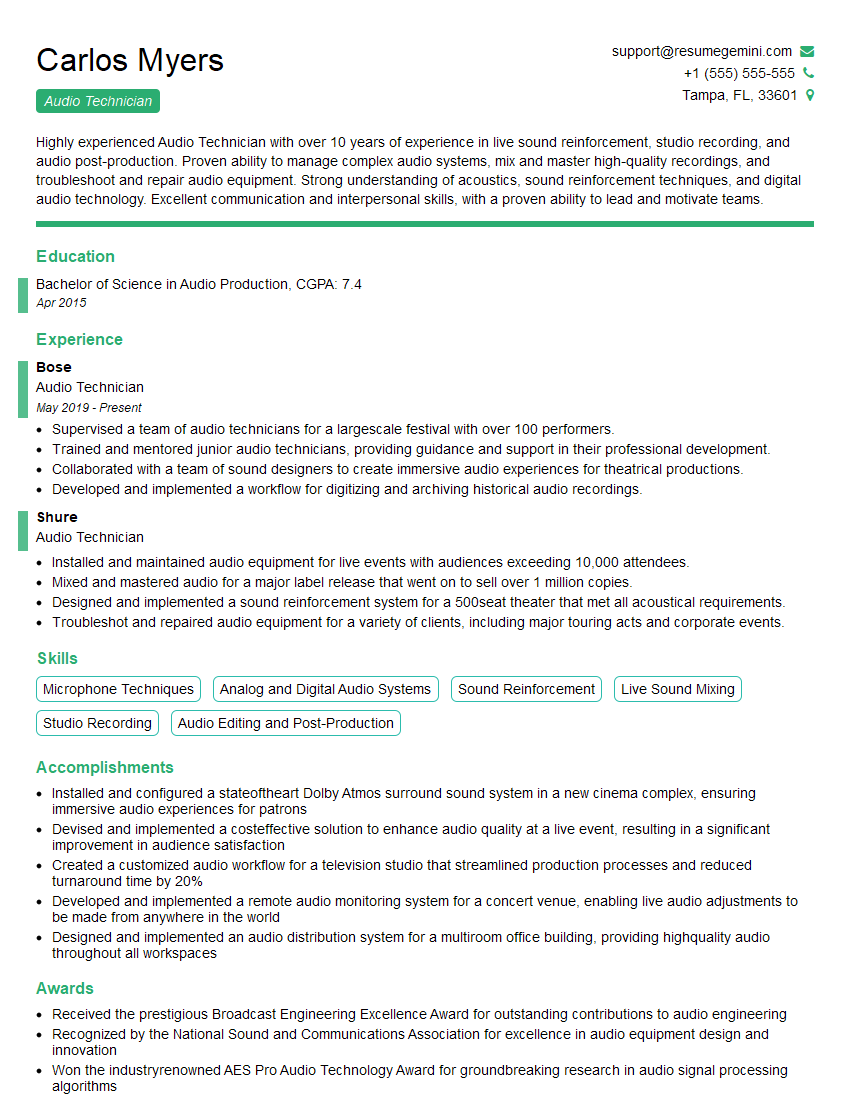
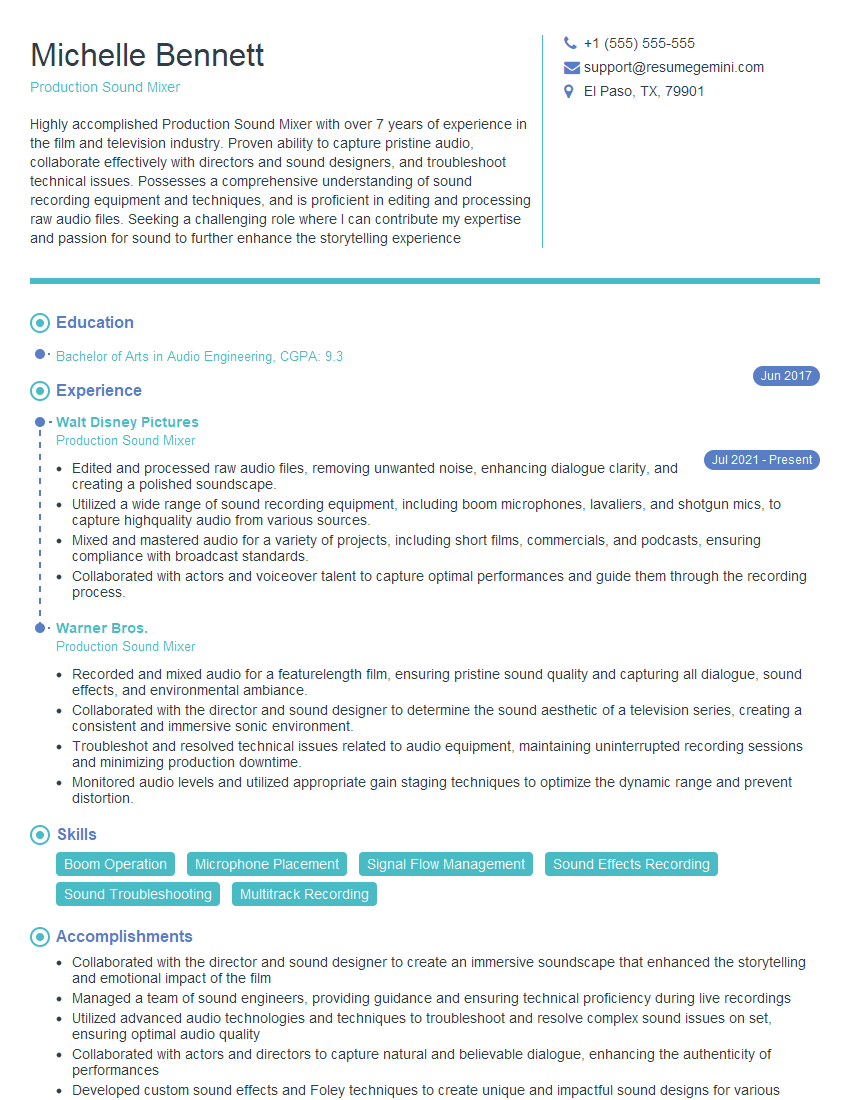
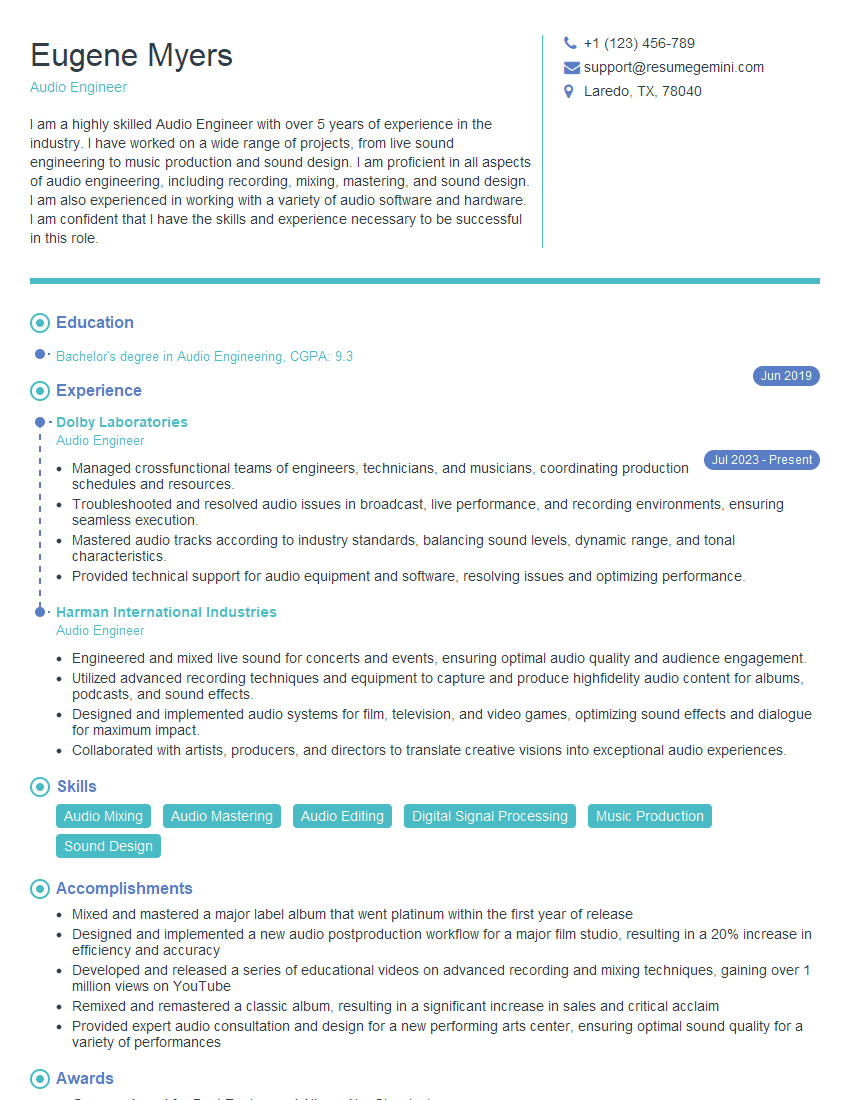
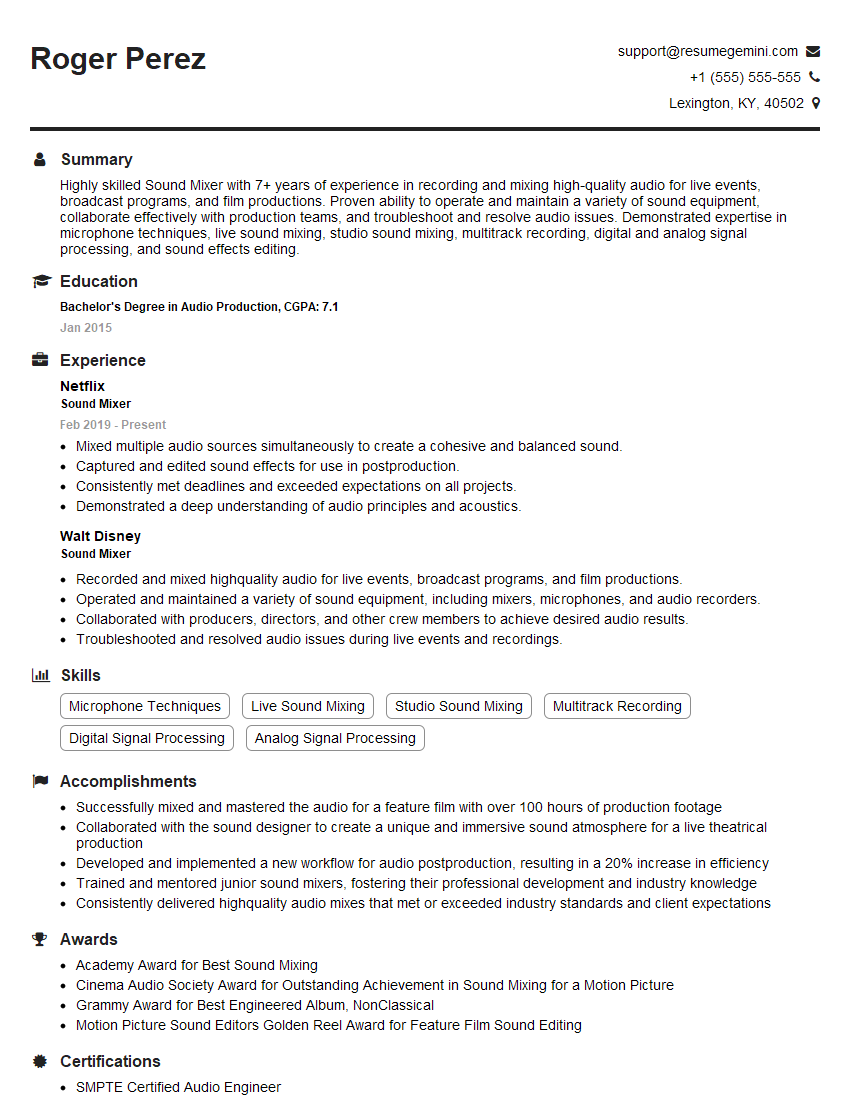
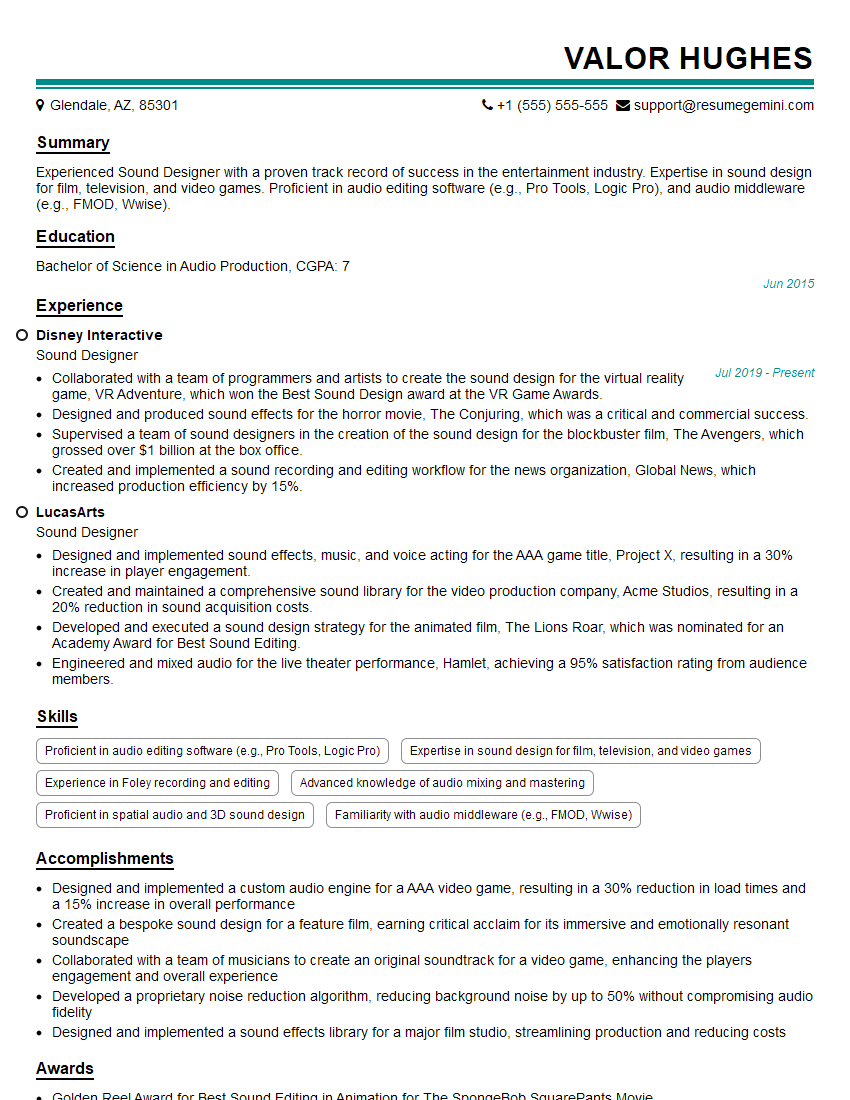
Mastering live event sound mixing opens doors to exciting career opportunities in a dynamic and creative field. To maximize your job prospects, creating a strong, ATS-friendly resume is crucial. ResumeGemini is a trusted resource that can help you build a professional and impactful resume tailored to the specific requirements of live event sound mixing roles. Examples of resumes tailored to this field are available through ResumeGemini to help you craft a compelling application that highlights your skills and experience effectively.
Explore more articles
Users Rating of Our Blogs
Share Your Experience
We value your feedback! Please rate our content and share your thoughts (optional).
What Readers Say About Our Blog
Amazing blog
Interesting Article, I liked the depth of knowledge you’ve shared.
Helpful, thanks for sharing.