Interviews are more than just a Q&A session—they’re a chance to prove your worth. This blog dives into essential Materials Estimating interview questions and expert tips to help you align your answers with what hiring managers are looking for. Start preparing to shine!
Questions Asked in Materials Estimating Interview
Q 1. Explain the process of developing a materials estimate.
Developing a materials estimate is a crucial step in any construction project, ensuring the project stays on budget. It involves a systematic process of identifying all materials needed, quantifying their quantities, and determining their costs. Think of it like creating a detailed shopping list for a large-scale project.
- Plan Review: This starts with thoroughly reviewing the project plans and specifications. This includes architectural drawings, structural plans, and any relevant specifications. We identify every material, from concrete and steel to paint and fixtures.
- Quantity Takeoff: Next, we perform a quantity takeoff – a precise measurement of the amount of each material required. This may involve using software or manually measuring from blueprints. For instance, calculating the cubic yards of concrete needed for a foundation or the square footage of drywall needed for interior walls.
- Pricing: We then obtain current unit prices from suppliers, considering factors like material type, quantity discounts, and delivery costs. We always get multiple quotes to ensure competitiveness. Sometimes, we may need to factor in lead times to account for potential delays.
- Labor Calculation (Optional): Depending on the scope, the estimate might also include labor costs. However, this often falls under a separate labor estimate.
- Summary and Report: Finally, we compile all the information into a comprehensive materials estimate report, including a detailed breakdown of costs and potential risks. This is a crucial document for clients, contractors, and project managers.
For example, estimating the materials for a residential house would involve breaking down the project into smaller components like the foundation, framing, roofing, and finishes, then calculating materials for each separately. This allows for better cost control and easier identification of potential issues.
Q 2. What software are you proficient in for materials estimating?
I’m proficient in several software packages commonly used for materials estimating. My expertise includes:
- On-Screen Takeoff (OST): This software is incredibly efficient for digital takeoff from blueprints and plans, allowing for precise quantity calculations and seamless integration with other project management tools.
- PlanSwift: Similar to OST, PlanSwift provides a user-friendly interface for taking off quantities and generating detailed estimates. It also has features for managing multiple projects and collaborating with teams.
- Excel: While not a dedicated estimating program, Excel remains a valuable tool for organizing data, performing calculations, and creating summary reports. I use it for tasks such as creating cost comparisons or performing sensitivity analysis on material prices.
My experience using these tools allows me to quickly and accurately generate comprehensive materials estimates, saving time and improving accuracy.
Q 3. How do you handle changes to project specifications after the initial estimate?
Handling changes after the initial estimate is a common occurrence. My approach is transparent and methodical.
- Document Changes: All changes to project specifications must be formally documented and approved by all relevant stakeholders. This prevents misunderstandings and ensures everyone is on the same page.
- Revised Takeoff: I then re-perform the quantity takeoff for the affected areas, carefully adjusting the material quantities to reflect the new specifications.
- Update Pricing: New unit prices are obtained, taking into account any price fluctuations since the initial estimate. This may require contacting suppliers for updated quotations.
- Cost Impact Analysis: A detailed cost impact analysis is created, showing the difference between the original estimate and the revised estimate. This clearly outlines the cost implications of each change.
- Revised Estimate: Finally, a revised materials estimate is issued, incorporating all changes and updates.
This process ensures that any changes are accurately reflected in the project budget, minimizing surprises and disputes later on.
Q 4. Describe your experience with different estimating methods (e.g., detailed, unit price, parametric).
My experience encompasses various estimating methods, each suited to different project types and levels of detail.
- Detailed Estimating: This method involves a comprehensive breakdown of all materials, with precise quantities and costs. It’s ideal for complex projects requiring high accuracy, like large commercial buildings, where even minor errors can have significant financial implications.
- Unit Price Estimating: This is a faster, less detailed approach where costs are estimated based on pre-determined unit prices (e.g., cost per square foot for flooring). It’s suitable for projects with well-defined scopes and readily available unit price data. This can be used for smaller projects or initial budget estimates.
- Parametric Estimating: This sophisticated method uses statistical models and historical data to estimate costs based on project parameters (e.g., square footage, building type). It’s efficient for large-scale projects or conceptual planning, providing a quick overview of potential costs. It’s less precise than detailed estimating but valuable for early decision making.
I select the appropriate method based on project complexity, available data, and time constraints. For example, I’d use detailed estimating for a custom-designed home, unit pricing for a simple renovation, and parametric estimating for a preliminary budget for a large apartment complex.
Q 5. How do you account for waste and contingency in your estimates?
Waste and contingency are vital considerations in materials estimating. Ignoring them can lead to significant cost overruns.
- Waste Factor: A waste factor is added to the material quantities to account for material loss due to cutting, breakage, or spoilage. The percentage varies depending on the material (e.g., higher for lumber than for concrete). This is based on industry standards and my experience with similar projects.
- Contingency Factor: A contingency factor is added to the overall estimate to cover unforeseen costs, including price increases, material shortages, or unexpected site conditions. This typically ranges from 5% to 15%, depending on project complexity and risk. For example, a project with uncertain site conditions might necessitate a higher contingency.
These factors ensure the estimate accounts for potential uncertainties, preventing budget overruns. For example, when estimating drywall, I would add a 5-10% waste factor to account for cuts and damaged sheets. A contingency of 10% might be included to handle potential price increases or unexpected repairs.
Q 6. How do you identify and mitigate potential risks in materials pricing?
Identifying and mitigating risks in materials pricing requires proactive measures.
- Market Research: I regularly monitor market trends for construction materials. This includes tracking price fluctuations, supply chain issues, and potential shortages. Industry publications and online resources are invaluable for this.
- Supplier Relationships: Building strong relationships with reliable suppliers is crucial. This helps secure competitive pricing, better communication, and potentially access to materials during shortages. Multiple sourcing strategies help to mitigate supply chain disruptions.
- Price Escalation Clauses: In some contracts, I incorporate price escalation clauses that allow for adjustments to material costs if prices rise significantly beyond the initial estimate. This protects both the client and the contractor from unforeseen increases.
- Early Procurement: For materials with potentially volatile prices, we may consider early procurement to lock in current prices and avoid future price increases.
For example, during periods of high inflation, I proactively secure material quotes early, incorporate price escalation clauses into contracts and communicate potential price volatility to my clients. This demonstrates a high degree of responsibility and careful financial planning.
Q 7. Explain your experience with different types of construction projects.
My experience spans a range of construction project types:
- Residential Construction: This includes single-family homes, multi-family dwellings, and renovations. I’ve worked on projects ranging from small-scale remodeling jobs to large custom homes.
- Commercial Construction: My expertise includes working on office buildings, retail spaces, and industrial facilities. This involves working with more complex specifications and larger-scale material quantities.
- Infrastructure Projects: I have some experience with smaller infrastructure projects, such as roadwork and utility installations. This requires a specialized understanding of materials specific to those projects.
This diverse experience allows me to adapt my estimating techniques to different project requirements and maintain high accuracy across various sectors. I’m comfortable working on projects of varying complexity and scale.
Q 8. How do you manage and prioritize multiple estimating projects simultaneously?
Managing multiple estimating projects effectively requires a structured approach. I employ a project management system, typically a software solution like MS Project or Asana, to track deadlines, allocate resources, and monitor progress across all projects. Prioritization is key; I use a combination of methods like the MoSCoW method (Must have, Should have, Could have, Won’t have) and urgency/importance matrices to determine which tasks and projects demand immediate attention. For instance, a project with a tight deadline and significant financial implications would naturally take precedence over a less urgent project. Regular review meetings help maintain visibility and ensure adjustments are made proactively.
Imagine juggling several balls; each represents a project. My project management system is the net that keeps them from falling. Prioritization ensures I focus on the most crucial balls first.
Q 9. How do you ensure accuracy in your materials estimates?
Accuracy in materials estimating is paramount. My process involves several layers of verification. It begins with meticulously detailed plans and specifications; I use quantity take-off software to generate precise measurements. Next, I cross-reference these measurements with supplier catalogs and price lists, accounting for waste factors and potential material variations. Regular audits of my estimate against historical data and industry benchmarks help refine my accuracy. Finally, I perform a thorough review before submitting the estimate, checking for any inconsistencies or overlooked items.
For example, if estimating concrete, I wouldn’t just calculate the volume; I’d consider waste, potential spillage, and the need for extra material for unforeseen circumstances, increasing the quantity by 5-10% to account for these factors.
Q 10. Describe your process for reviewing and validating subcontractor estimates.
Reviewing subcontractor estimates demands a critical eye. I begin by thoroughly comparing their quotes against the project specifications to ensure complete coverage of the work scope. Then I check the unit prices against market rates and my own cost database to identify any potential overcharges. I scrutinize the materials specifications for compatibility and quality. Finally, I look for clear and unambiguous descriptions of the work, payment schedules, and potential liability clauses. I will often contact the subcontractor to clarify any uncertainties or discrepancies before approving the estimate.
Imagine it like a financial audit – every line item needs scrutiny to ensure fairness and alignment with project objectives.
Q 11. How familiar are you with building codes and regulations impacting materials selection?
I’m very familiar with building codes and regulations impacting materials selection. My knowledge extends to local, state, and national codes, encompassing fire safety, accessibility, energy efficiency, and environmental regulations. I utilize resources like the International Building Code (IBC) and relevant agency websites to stay updated. This knowledge directly impacts material choices, ensuring compliance and minimizing potential legal issues. For example, choosing fire-rated drywall in specific areas, selecting energy-efficient windows, or using sustainable materials per local mandates. Ignoring these codes can result in costly rework or project delays.
Staying abreast of building codes isn’t optional; it’s a critical part of responsible and compliant estimating.
Q 12. Explain your approach to resolving discrepancies between estimated and actual material costs.
Discrepancies between estimated and actual material costs require careful investigation. First, I identify the specific items with cost variations. Then, I examine potential causes: changes in material pricing, unforeseen site conditions, inaccurate quantity take-offs, or variations in labor costs. Documentation and change orders are essential for justifying cost adjustments. I often create a detailed variance report highlighting the reasons for the discrepancy and propose corrective actions for future projects to improve accuracy.
A thorough post-project analysis helps learn from past mistakes and refine the estimating process. This ensures greater accuracy in future endeavors.
Q 13. How do you deal with material shortages or delays?
Material shortages or delays are a significant challenge in construction. My response involves proactive risk management. I utilize multiple suppliers, ensuring alternative sourcing options are available. I maintain strong relationships with key suppliers to gain preferential treatment during shortages. In case of delays, I work closely with the project team to find suitable substitute materials or adjust the project schedule as necessary. Communication with stakeholders is crucial to manage expectations and minimize disruption.
Having a backup plan for material sourcing is crucial; it’s like having a spare tire in your car – you hope you don’t need it, but it’s essential to have.
Q 14. How do you utilize historical data to improve estimating accuracy?
Historical data is invaluable in improving estimating accuracy. I maintain a comprehensive database of past projects, including material costs, quantities used, and actual versus estimated figures. I use this data to identify trends, adjust waste factors, and refine my pricing models. For example, by analyzing historical data on concrete usage in similar projects, I can more accurately predict the amount needed for a new project and reduce waste. Regular review and updating of this database ensures its ongoing relevance and effectiveness.
Think of historical data as a roadmap—it guides us toward more accurate and efficient estimating practices.
Q 15. What are the key factors to consider when analyzing material pricing?
Analyzing material pricing requires a multifaceted approach. It’s not just about finding the cheapest option; it’s about finding the best value considering quality, availability, and long-term costs. Key factors include:
- Unit cost: This is the price per unit of measure (e.g., price per square foot of lumber, price per linear foot of pipe). Understanding variations in unit cost based on quantity purchased (bulk discounts) is crucial.
- Market conditions: Material prices fluctuate based on supply and demand, seasonality, and global events. Staying updated on market trends through industry publications and supplier relationships is essential.
- Lead times: The time it takes to receive materials impacts project scheduling and can lead to delays and increased costs. Faster delivery often comes with a premium.
- Transportation and delivery costs: These can significantly impact the total cost, especially for bulky or heavy materials. Location of the project and supplier are key considerations.
- Quality and specifications: Different grades of materials exist, impacting price and performance. Understanding the project’s specific requirements and selecting the appropriate material grade is vital.
- Waste factor: Consider anticipated material waste during cutting, handling, and installation. This factor is crucial for accurate quantity estimation and budget planning.
- Supplier reliability and reputation: Choosing a reliable supplier ensures timely delivery and consistent material quality. Checking references and past performance is important.
For example, if I’m estimating lumber for a deck, I wouldn’t simply choose the cheapest option. I’d compare the price per board foot of different lumber grades, considering the required strength and durability for the project, factoring in potential waste, and checking the lead time and delivery cost from various suppliers to determine the best overall value.
Career Expert Tips:
- Ace those interviews! Prepare effectively by reviewing the Top 50 Most Common Interview Questions on ResumeGemini.
- Navigate your job search with confidence! Explore a wide range of Career Tips on ResumeGemini. Learn about common challenges and recommendations to overcome them.
- Craft the perfect resume! Master the Art of Resume Writing with ResumeGemini’s guide. Showcase your unique qualifications and achievements effectively.
- Don’t miss out on holiday savings! Build your dream resume with ResumeGemini’s ATS optimized templates.
Q 16. How do you communicate your estimates effectively to clients and stakeholders?
Effective communication of estimates is crucial for client satisfaction and project success. My approach involves:
- Clear and concise reporting: I use easy-to-understand language, avoiding technical jargon whenever possible. The report clearly outlines the quantities, unit prices, and total costs for each material.
- Visual aids: I frequently include tables and charts to visually represent the data, making it easier to grasp at a glance. Sometimes, I even create a short presentation summarizing key findings.
- Detailed breakdown: The estimate isn’t just a total cost; it’s a detailed breakdown of individual components, explaining the reasoning behind each cost. This allows the client to understand where their money is going.
- Transparency and open communication: I am always available to answer questions and address concerns. I proactively communicate any potential risks or cost implications.
- Regular updates: For large or complex projects, I provide regular updates to keep clients informed of any changes in material pricing or project scope.
- Version control: Each estimate revision is clearly documented and communicated, ensuring everyone works with the most current information.
For example, with a recent residential project, I presented a summary table with total material costs and a separate detailed spreadsheet showing the quantity, unit price, and source for each item, accompanied by a short presentation explaining the overall cost and potential cost-saving measures.
Q 17. Describe your experience working with different types of construction drawings.
I have extensive experience working with various construction drawings, including architectural plans, structural drawings, MEP (Mechanical, Electrical, and Plumbing) drawings, and specifications. My experience includes:
- Architectural drawings: These drawings provide the overall layout and design of the building, including dimensions, wall types, roof details, and window and door schedules, which are crucial for estimating quantities of exterior and interior finishes.
- Structural drawings: These drawings show the structural elements of the building, such as beams, columns, and foundations, providing information necessary for estimating concrete, steel, and other structural materials.
- MEP drawings: These drawings detail the locations of plumbing fixtures, electrical outlets, HVAC systems, which are essential for estimating plumbing pipes, electrical wiring, and HVAC equipment.
- Specifications: These documents provide detailed descriptions of materials and construction methods, ensuring the correct materials are included in the estimates. I’m proficient in interpreting and cross-referencing these specifications with the drawings.
I’m adept at extracting the necessary information from these drawings using both manual methods (takeoffs) and digital takeoff software. I understand the nuances and potential discrepancies between different drawing sets and am skilled in resolving conflicts.
Q 18. How do you handle complex or ambiguous project specifications?
Handling complex or ambiguous specifications requires a systematic approach. My strategy involves:
- Clarification with stakeholders: I directly contact the architect, engineer, or client to clarify ambiguous sections. This ensures I’m using the correct assumptions in my calculations.
- Research and industry standards: If clarification isn’t immediately possible, I research industry best practices and standards to make informed decisions. This often involves consulting relevant codes and guidelines.
- Scenario planning: For areas with significant uncertainty, I create multiple estimate scenarios based on different interpretations. This allows the client to understand the range of potential costs.
- Detailed documentation: I carefully document all assumptions, decisions, and clarifications made during the estimation process. This ensures transparency and accountability.
- Contingency planning: I always include a contingency factor in the estimate to account for unforeseen issues or changes in specifications.
For example, if a specification mentions ‘high-quality’ flooring without specific details, I’d first clarify the intended material and grade with the architect, or if that is not possible, I’d price out several options (e.g., different hardwood types) and present them to the client as potential scenarios.
Q 19. How do you validate the accuracy of your takeoff?
Validating takeoff accuracy is a critical step. My methods include:
- Double-checking: I always perform a second independent review of the takeoff, often employing a different method or software to identify potential discrepancies.
- Cross-referencing: I cross-reference the takeoff quantities with the project drawings and specifications to ensure consistency.
- Software validation: When using digital takeoff software, I verify the accuracy of the software settings and parameters. Regular software updates are important to ensure accuracy.
- Unit checks: I meticulously verify the units of measurement (e.g., square feet, cubic yards, linear feet) used in the takeoff to avoid calculation errors.
- Peer review: For complex projects, I involve a peer review process where another experienced estimator reviews the takeoff and calculations.
- Site verification (when possible): When feasible, I conduct a site visit to verify dimensions and quantities. This is particularly valuable for complex or irregular shapes.
For instance, after a digital takeoff, I’d manually check a sample of areas to confirm the software’s accuracy, paying close attention to units and potential measurement inconsistencies.
Q 20. Explain your understanding of unit pricing and its applications.
Unit pricing is the practice of assigning a cost per unit of measure to a specific material or labor task. It’s a fundamental concept in materials estimating.
Applications:
- Detailed cost breakdown: Unit pricing allows for a granular cost analysis, making it easier to identify areas for potential cost savings.
- Accurate quantity estimation: By establishing unit costs, one can accurately estimate the total cost of materials needed based on project quantities.
- Comparative analysis: Unit pricing facilitates comparing the cost-effectiveness of different materials or construction methods.
- Progress tracking: Unit pricing allows for better progress tracking by monitoring the cost per unit completed.
- Change order management: If project scope changes, unit pricing simplifies the calculation of cost adjustments.
Example: If the unit price for installing drywall is $2 per square foot, and the project requires 1000 square feet of drywall installation, the estimated cost for this task will be $2000. This simple approach allows for quick and easy cost tracking and adjustment.
Q 21. How do you integrate sustainability considerations into your material estimates?
Integrating sustainability into material estimates requires considering environmental, social, and economic impacts throughout the project lifecycle.
- Embodied carbon: I research and consider the embodied carbon footprint of different materials. This refers to the greenhouse gas emissions associated with the manufacturing, transportation, and installation of materials. Options with lower embodied carbon are prioritized.
- Recycled and reclaimed materials: I investigate the availability and cost-effectiveness of using recycled or reclaimed materials, which reduce the demand for virgin resources and minimize waste.
- Locally sourced materials: Using locally sourced materials reduces transportation emissions and supports the local economy. I explore local suppliers and their offerings.
- Sustainable certifications: I look for materials with recognized sustainability certifications (e.g., FSC certified wood, LEED certified products), providing assurance of their environmental performance.
- Waste management strategies: I incorporate waste reduction strategies into the estimation process, accounting for material waste and disposal costs. This might involve optimizing material cutting or specifying materials that produce less waste.
- Lifecycle cost analysis: This considers the total cost of ownership of different materials over their lifespan, including maintenance, repairs, and eventual disposal, to make informed decisions.
For example, when estimating lumber for a project, I would compare the cost and embodied carbon of sustainably harvested wood certified by the Forest Stewardship Council (FSC) with other options, considering transportation distances and potential waste factors. This ensures the most sustainable choice is made without sacrificing project feasibility.
Q 22. What is your experience with value engineering in relation to material selection?
Value engineering in material selection involves finding cost-effective alternatives without sacrificing quality or performance. It’s a crucial part of my process. I approach it systematically, starting with a thorough understanding of the project requirements. Then I explore various materials, comparing their cost, durability, lifespan, and environmental impact. For instance, on a recent project, the initial design specified solid mahogany for the flooring. Through value engineering, I proposed a high-quality engineered hardwood that achieved a similar aesthetic appeal at a significantly lower cost. This saved the client considerable money without compromising the project’s overall look and feel. I meticulously document these analyses, presenting the client with clear comparisons and justifications for the recommended material changes. The key is demonstrating that the value isn’t just about the initial cost but the overall lifecycle cost of the material.
Q 23. Explain your knowledge of different material pricing strategies.
Material pricing strategies vary widely. Some common methods include: Unit Pricing, where materials are priced per unit (e.g., price per square foot of lumber, per linear foot of pipe). Total Price simply provides a total cost for a specific quantity. Project-Based Pricing is a bundled price inclusive of labor and material, commonly used in smaller scale projects. Value-Based Pricing is more complex and considers not just the raw material cost, but also the material’s contribution to the overall project value and longevity. For instance, a high-performance insulation might have a higher upfront cost but reduce long-term energy expenses. I always carefully evaluate the project’s needs and negotiate with multiple suppliers to achieve the best pricing based on quantity discounts, lead times, and current market conditions. Understanding market trends and contract negotiations are essential for favorable pricing.
Q 24. How do you manage and track your materials estimate throughout the project lifecycle?
Material estimate management is an ongoing process. I typically start with a detailed takeoff from the project blueprints, using specialized software to quantify materials needed. This initial estimate is then refined as the project develops. I use a cloud-based spreadsheet system to track changes, incorporating vendor quotes, material delivery schedules, and any necessary adjustments based on site conditions or design modifications. Regular updates are provided to the project team, flagging potential cost overruns or shortages early on. The system also allows for easy cost comparison between different material options and provides a complete audit trail of every change. This ensures transparency and accountability throughout the project lifecycle. Regular meetings with the project team ensure everyone is on the same page.
Q 25. Describe your experience with different types of building materials.
My experience spans a wide range of building materials including lumber (various grades and species), concrete (different mixes and strengths), steel (structural and reinforcing), masonry (brick, block, stone), insulation (various types and R-values), roofing materials (asphalt shingles, tile, metal), and finishes (paints, flooring, drywall). I’m also familiar with sustainable materials like bamboo, recycled content products, and various engineered wood products. Knowing the properties, limitations, and appropriate applications of these materials is crucial for accurate estimating and ensuring project success. Understanding the environmental implications and cost-benefit analysis of different materials is key to making well-informed decisions for my clients.
Q 26. What are the common challenges faced in Materials Estimating and how have you overcome them?
Common challenges in materials estimating include inaccurate drawings, incomplete specifications, fluctuating material prices, and unforeseen site conditions. For example, outdated drawings can lead to significant material overages or shortages. To mitigate these issues, I proactively engage with architects and engineers early in the design phase to clarify specifications and obtain the most up-to-date drawings. I utilize multiple sources for price information and build in contingency buffers to account for price fluctuations and potential site issues. Regular site visits help identify unexpected challenges early on, enabling timely adjustments to the estimates. Clear communication and thorough documentation are crucial in managing these challenges and ensuring the estimate remains accurate and reliable.
Q 27. How do you stay current with industry trends and changes in materials pricing?
Staying current requires a multi-pronged approach. I subscribe to industry publications and online resources that track material prices and new product introductions. I attend industry conferences and workshops to learn about the latest trends and technologies. Maintaining strong relationships with suppliers allows me access to the most current pricing and product information. Regularly reviewing market reports and analyzing historical data enables me to predict potential fluctuations and adjust estimates accordingly. This proactive approach helps me to remain competitive and provide my clients with the most accurate and up-to-date estimates.
Q 28. Describe a situation where your estimating skills significantly impacted a project’s success.
On a recent large-scale commercial project, the initial estimate provided by another estimator significantly underestimated the cost of specialized steel required for the structure. My thorough review of the design specifications and consultation with multiple steel suppliers revealed this error. I provided a revised estimate that accurately reflected the true cost of the steel, preventing a potential budget crisis. This resulted in significant cost savings for the client in the long run by allowing us to proactively address potential issues early on and secure better pricing through strategic planning and supplier negotiation. This experience underscored the importance of meticulous attention to detail and thorough research in material estimating.
Key Topics to Learn for Materials Estimating Interview
- Takeoff Techniques: Mastering various methods for accurately quantifying materials needed from blueprints and specifications (e.g., manual takeoff, digital takeoff software). This includes understanding different measurement units and conversion factors.
- Material Databases & Pricing: Familiarity with industry-standard material databases and understanding how to source accurate and up-to-date pricing information. This includes understanding price fluctuations and their impact on estimates.
- Waste Factor Calculation: Accurately calculating material waste based on project specifics, material type, and construction methods. This involves understanding different waste factors and their application.
- Labor & Equipment Cost Estimation: Understanding how labor and equipment costs integrate into the overall materials estimate. This might include familiarity with different costing models and labor rates.
- Software Proficiency: Demonstrating competency in relevant software tools used for materials estimation and project management (mention specific software if applicable to the target audience). This includes showcasing proficiency in data entry, report generation, and data analysis.
- Estimating Accuracy & Error Analysis: Understanding the importance of accuracy in materials estimating and the ability to identify and analyze potential sources of error. This includes developing strategies for minimizing errors and ensuring project success.
- Project Planning & Scheduling: Demonstrating an understanding of how material estimation integrates into the overall project planning and scheduling process. This includes knowledge of material delivery timelines and potential delays.
Next Steps
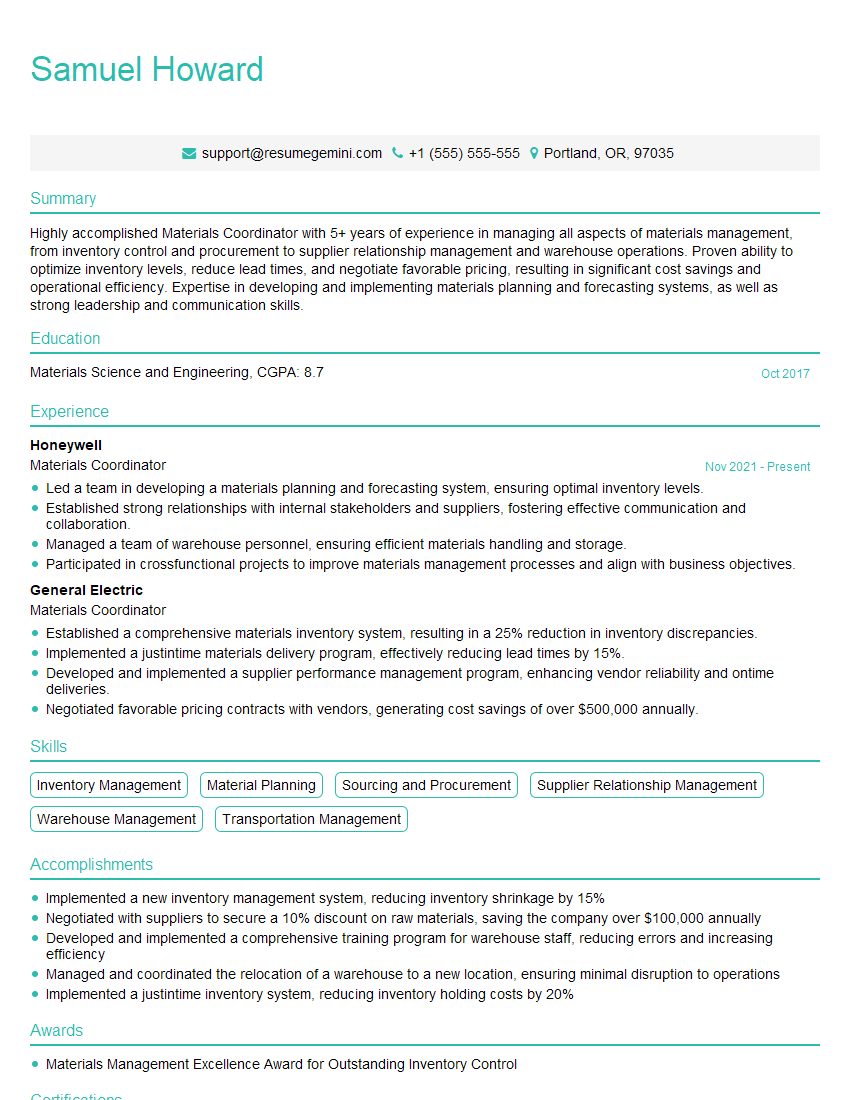
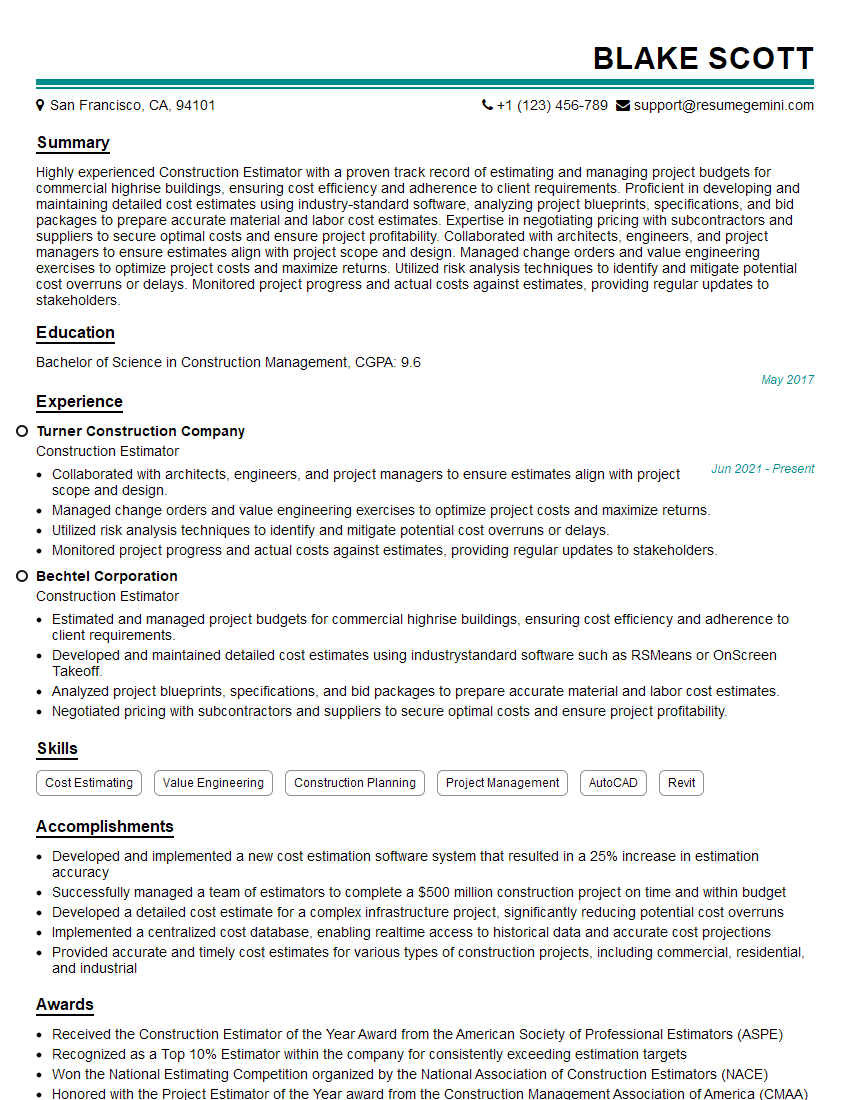
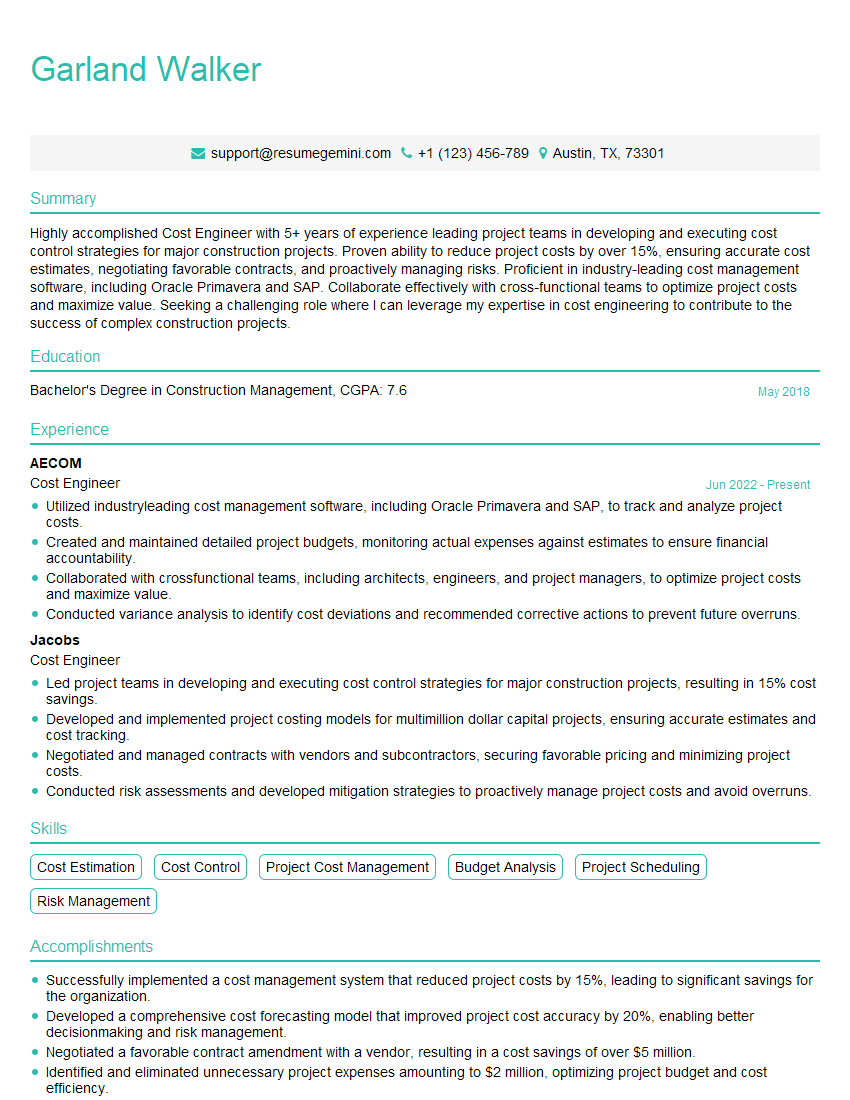
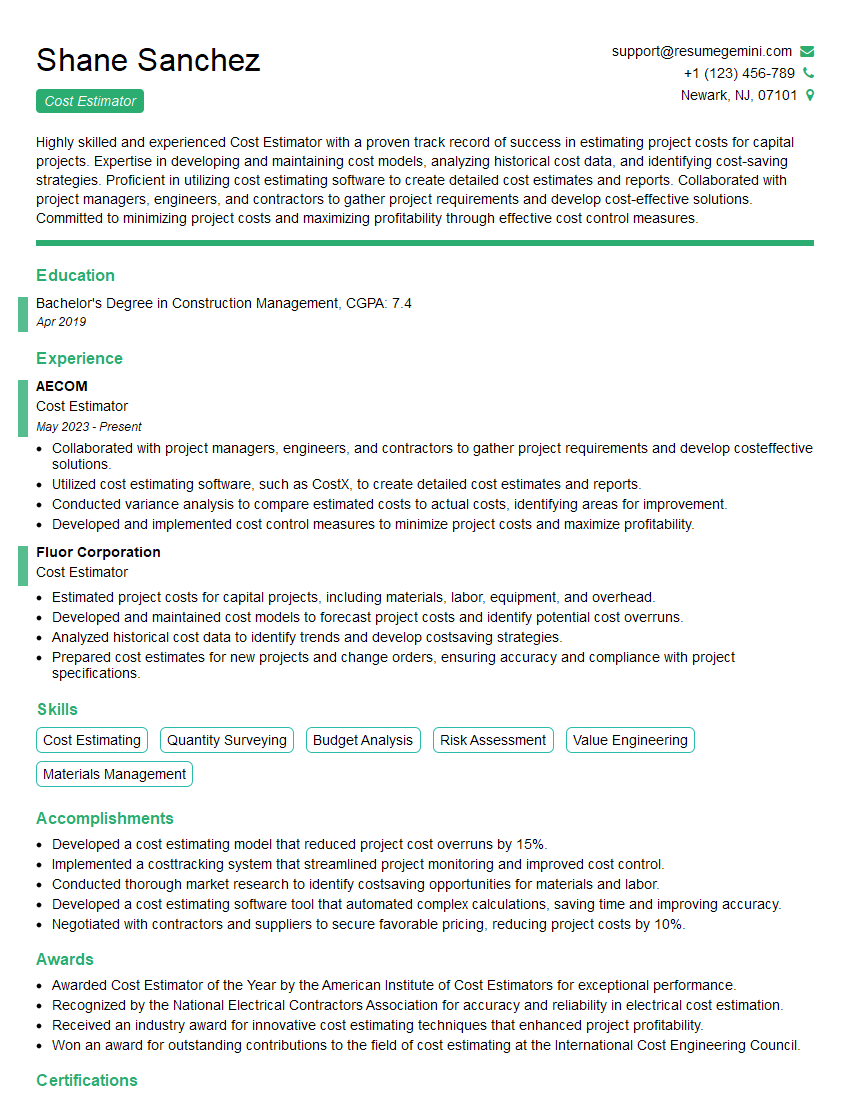
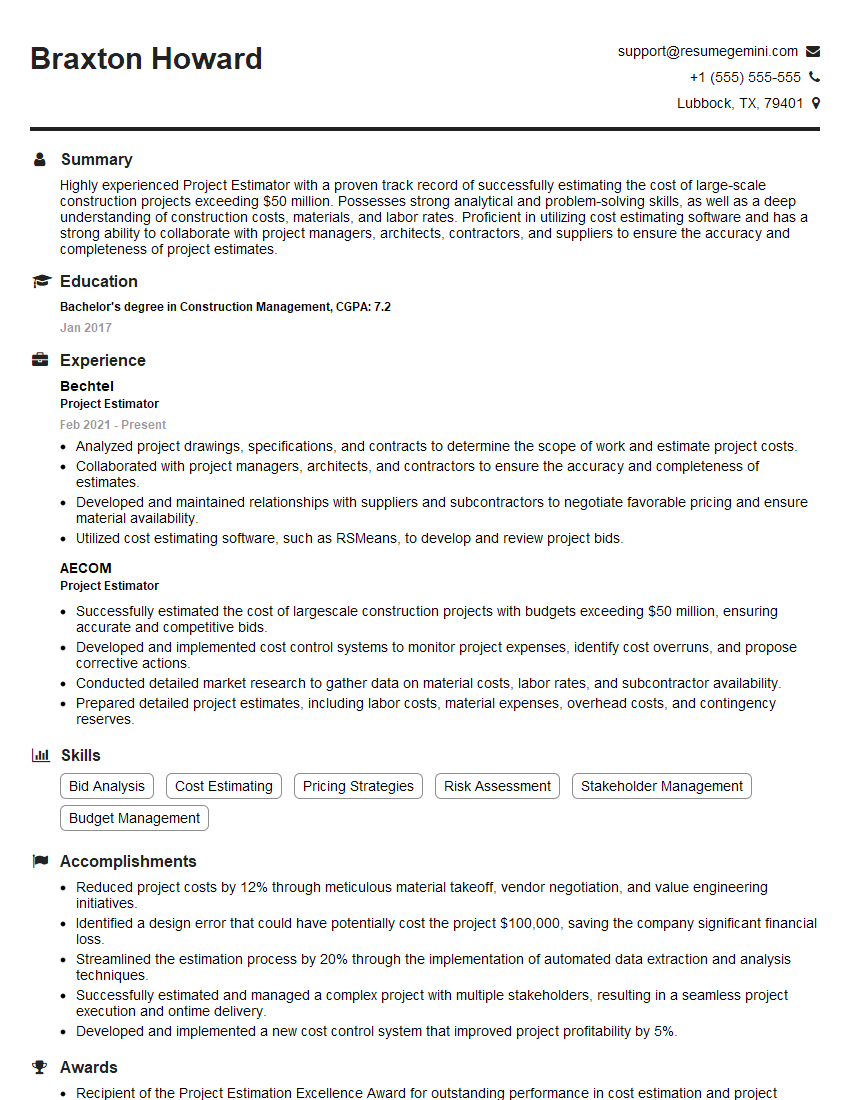
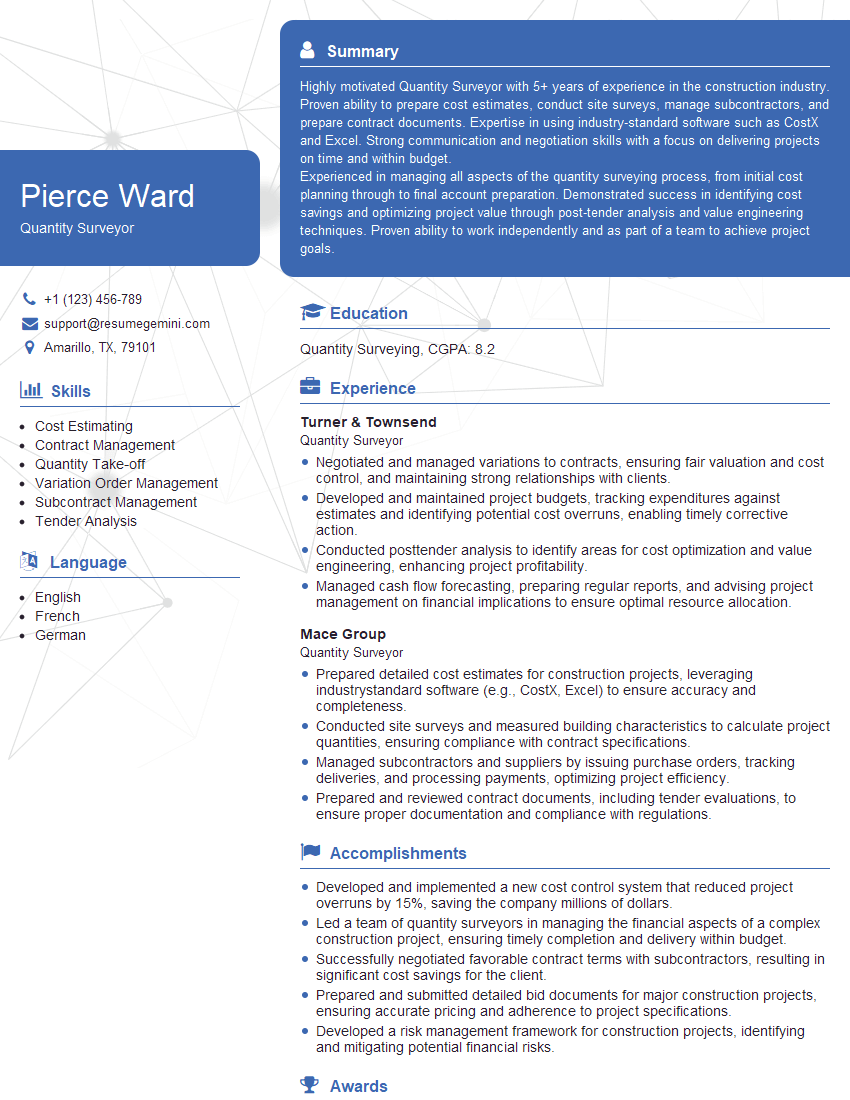
Mastering materials estimating is crucial for career advancement in the construction and engineering industries. A strong grasp of these skills demonstrates a commitment to efficiency, accuracy, and cost control – highly valued attributes in any project-based environment. To maximize your job prospects, crafting an ATS-friendly resume is essential. ResumeGemini can help you build a powerful, professional resume that highlights your skills and experience effectively. Examples of resumes tailored to Materials Estimating are available to guide you. Take the next step towards your dream career today!
Explore more articles
Users Rating of Our Blogs
Share Your Experience
We value your feedback! Please rate our content and share your thoughts (optional).
What Readers Say About Our Blog
Amazing blog
Interesting Article, I liked the depth of knowledge you’ve shared.
Helpful, thanks for sharing.