The thought of an interview can be nerve-wracking, but the right preparation can make all the difference. Explore this comprehensive guide to Preservation Framing interview questions and gain the confidence you need to showcase your abilities and secure the role.
Questions Asked in Preservation Framing Interview
Q 1. Describe the different types of mat boards used in preservation framing and their applications.
Mat boards are the foundation of preservation framing, providing a crucial buffer between the artwork and the glass or acrylic. They also enhance the visual presentation. Different types offer various benefits:
- Alpha-cellulose mats: These are the gold standard for archival framing. Made from 100% cotton or alpha-cellulose fibers, they’re acid-free, lignin-free, and buffered to maintain a neutral pH, preventing damage to the artwork. They’re ideal for all types of artwork, especially valuable pieces requiring long-term preservation.
- Museum boards: Similar to alpha-cellulose mats, these are also acid-free and lignin-free, offering excellent archival qualities. They often come in a wider range of colors and textures, though they may not always be buffered.
- Cotton rag boards: These are made from 100% cotton fibers and offer good archival properties, though they might be slightly more acidic than alpha-cellulose boards. They’re a cost-effective alternative for less sensitive artwork.
The choice of mat board depends on the artwork’s sensitivity and the desired aesthetic. For instance, a fragile watercolor would demand an alpha-cellulose mat, while a less sensitive print might suffice with a museum board. The color and texture of the mat can complement the artwork or create a striking contrast, becoming part of the overall design.
Q 2. Explain the importance of proper hinging techniques for preserving artwork.
Proper hinging is crucial for preventing damage to artwork, especially delicate pieces like watercolors or prints. Improper hinging can lead to tears, creases, and even discoloration. The goal is to attach the artwork to the mat board in a way that allows for expansion and contraction without causing stress.
The best method is to use acid-free hinges made of Japanese tissue paper and wheat starch paste. These hinges are incredibly thin and flexible. They are applied to the back of the artwork in a small area, usually along an edge. The artwork is then carefully adhered to the mat board. The hinge acts as a flexible joint allowing the artwork to move slightly without causing damage. Avoiding direct contact of the artwork with the mat board by hinging is vital for long-term preservation. A good analogy is to imagine trying to keep a small, delicate plant intact – you wouldn’t clamp it rigidly, but support it gently.
Q 3. What are the key considerations when selecting glazing for a preservation frame?
Glazing selection is critical for protecting artwork from UV light damage, dust, and potential physical harm. The key considerations are:
- UV Protection: Glazing should offer high levels of UV filtration (ideally 99% or more) to prevent fading and discoloration. This is especially important for photos and watercolors which are particularly vulnerable to UV rays.
- Clarity: The glazing material should be optically clear to ensure the artwork is viewed without distortion. High-quality acrylic or glass is essential.
- Reflection: Minimize reflections by considering the type of glazing and its anti-reflective properties. Anti-reflective glass or acrylic is often recommended for reducing glare and improving visibility.
- Material Properties: Acrylic offers greater protection against breakage than glass, making it a suitable choice for artwork at risk of being bumped or touched frequently. Glass, however, offers superior clarity.
For instance, for a valuable oil painting, you might use museum-quality glass with high UV protection. For a less sensitive print in a high-traffic area, acrylic might be a safer and more practical option.
Q 4. How do you determine the appropriate frame size and style for a given artwork?
Choosing the right frame size and style is a balance between aesthetics and preservation. The frame should complement the artwork without overpowering it. Here’s the process:
- Artwork Size: The frame’s interior dimensions must accommodate the artwork and its matting, leaving sufficient space around the art without excessive blank space. Generally, at least a half-inch to one-inch border is advisable.
- Mat Width: The mat helps create visual balance and provides a clean separation between the artwork and the frame.
- Frame Style and Material: Frame style should complement the artwork’s period and style. The frame material (wood, metal, etc.) should be carefully considered; traditional wood frames are often favoured for their elegance and ability to enhance artwork but require careful treatment to avoid pest damage.
- Frame Depth: The depth of the frame should be sufficient to protect the artwork and its glazing while not being overly bulky.
For a delicate 18th-century watercolor, a narrow, simple, gilded frame would be appropriate. A bold, modern photograph might be suited to a wider, bolder frame in a contrasting material. It’s always best to consider both the artwork’s characteristics and the space where it will be displayed.
Q 5. Explain the process of creating a custom-fit archival mat.
Creating a custom-fit archival mat requires precision and attention to detail. Here’s the step-by-step process:
- Measurements: Precisely measure the artwork and determine the desired mat opening size, leaving sufficient spacing around the artwork. This must include allowance for hinging.
- Mat Cutting: Using a high-quality mat cutter, cut the mat board to the correct size. Precision is paramount to ensure a clean, professional look.
- Window Cutting: Carefully cut the window opening for the artwork, ensuring a precise fit. Use a sharp blade and take your time to avoid mistakes. Use a bevel cutter for aesthetic purposes.
- Finishing: Clean the edges and inspect for any imperfections. If any minor imperfections are present these are typically addressed during the final fitting stage.
Using a professional mat cutter is recommended, as it ensures accuracy and prevents damage to the mat board. A template can be used to ensure consistency for multiple mat boards. The process may appear simple but requires practice and a keen eye for detail to ensure that the mat properly displays the art while being durable and preserving the piece.
Q 6. What are the different types of UV filtration available for glazing, and their effectiveness?
Several types of UV filtration are available for glazing:
- UV-absorbing glass: This glass contains additives that absorb UV radiation. The effectiveness varies widely, with some types offering up to 99% UV protection.
- UV-absorbing acrylic: Similar to UV-absorbing glass, acrylic can be formulated with UV absorbers. Acrylic is generally more resistant to breakage but can exhibit greater reflectivity.
- UV-blocking films: These films are applied to the glazing to enhance UV protection. They are a good addition to glazing that doesn’t offer sufficient protection.
The effectiveness of UV filtration is measured in the percentage of UV radiation blocked. A higher percentage means greater protection. Aim for glazing with at least 99% UV protection for optimal preservation. You should be aware that UV-filtering effectiveness can degrade over time, highlighting the need for regular inspections.
Q 7. Describe your experience working with different types of artwork (e.g., paintings, photographs, textiles).
My experience spans a broad range of artwork types, each presenting unique preservation challenges. I’ve worked extensively with:
- Paintings: From delicate watercolors requiring meticulous hinging and specialized matting to oil paintings needing robust framing to prevent damage from temperature and humidity fluctuations. I have experience with conservation-grade materials and methods for fragile pieces including historic works.
- Photographs: Preserving photographs requires attention to light sensitivity and proper handling to avoid fingerprinting. I utilise archival materials to prevent fading and deterioration, taking special consideration for various photographic processes.
- Textiles: Textiles require specialized framing techniques to avoid stretching and strain. Proper support and spacing are paramount, and often, conservation framing requires custom solutions to prevent damage to the fibres. I’m adept in working with delicate materials and employing appropriate support techniques.
Each artwork presents a puzzle – understanding its materials, age, and condition is vital before deciding on the best framing strategy. A detailed assessment is always the first step in my process, ensuring that the selected frame, mat, and glazing are appropriate and will safeguard the piece for future generations.
Q 8. How do you address potential issues such as mold or insect damage during framing?
Mold and insect damage are serious threats to artwork. Addressing them requires a multi-step approach before even beginning the framing process. First, a thorough inspection is crucial. We look for signs of infestation, like webbing, frass (insect droppings), or discoloration suggesting mold growth. If mold is present, the artwork needs professional cleaning by a conservator specializing in art restoration. This might involve carefully removing the affected areas or using specialized cleaning solutions. For insect damage, the artwork may need to be frozen to kill any remaining insects and their larvae. This is done gradually to avoid further damage to the artwork itself. After the conservation treatment, the artwork should be fully inspected again for lingering issues before framing begins. Only then can we proceed to use archival-quality materials to prevent further damage and protect the piece within the frame.
Imagine a valuable antique map showing signs of mildew. We wouldn’t just frame it; we’d send it to a conservator to carefully clean and stabilize it before we’d even consider framing using acid-free materials.
Q 9. What are the best practices for storing framed artwork?
Proper storage is just as crucial as careful framing. Framed artwork should be stored in a cool, dry, and dark place. Fluctuations in temperature and humidity are major enemies of artwork, causing warping, cracking, and fading. Direct sunlight should be absolutely avoided. Ideally, the storage area should have a stable temperature of around 68-72°F (20-22°C) and a relative humidity of 45-55%. Artwork should be kept away from dust, pollutants, and any potential sources of moisture. Using acid-free storage boxes or protective sleeves further enhances its longevity.
Think of it like keeping fine wine: you wouldn’t leave it in direct sunlight or a humid basement. Similar care is needed for precious artwork.
Q 10. Explain the importance of using acid-free materials in preservation framing.
Acid-free materials are fundamental to preservation framing. Standard materials often contain lignin, a natural component of wood pulp that releases acids over time. These acids gradually degrade the artwork, causing discoloration, embrittlement, and even complete deterioration. Acid-free materials, on the other hand, are specially manufactured to maintain a neutral pH, preventing this chemical breakdown. This includes using acid-free mat boards, backing boards, and glazing materials. Choosing archival-quality materials ensures the artwork’s longevity and protects its value.
It’s like comparing a regular paper photograph to one printed on archival paper. The archival print will last decades longer due to the lack of acids and other degrading agents.
Q 11. Describe your experience with different framing techniques for various artworks (e.g., float mounting, fillet mounting).
My experience encompasses a wide range of framing techniques tailored to the artwork’s characteristics and the client’s preferences. Float mounting is ideal for showcasing delicate items like botanical prints or drawings, allowing a small space between the artwork and the mat, creating a clean, modern look. Fillet mounting, using thin strips of mat board to create a decorative border, adds visual interest and protects the artwork’s edges. For canvases, careful stretching and bracing are crucial to prevent sagging. Three-dimensional objects might require custom cradles or shadow boxes for support and protection. The choice of technique always involves careful consideration of the artwork’s fragility, dimensions, and the desired aesthetic result.
For example, a fragile watercolor would benefit from float mounting to avoid pressure, while a thick oil painting might require a sturdy backing board for additional support.
Q 12. How do you maintain accurate records and documentation throughout the framing process?
Maintaining accurate records is essential for accountability and future reference. For each project, I meticulously document every step. This includes a detailed description of the artwork, the materials used (with manufacturers’ names and lot numbers for traceability), the framing techniques employed, and any challenges encountered. Photographs are taken throughout the process, particularly highlighting any unique features or conservation steps. All this information is carefully stored in a digital database, cross-referenced with client information and project invoices. This ensures we can easily trace the history of any framed piece and provides valuable information for future conservation efforts.
Imagine a museum curator needing information about a framed artwork. Detailed documentation is crucial for understanding the piece’s history, conservation details, and the integrity of the framing.
Q 13. Describe a time you had to troubleshoot a challenging framing project. How did you resolve it?
I once received a very large and unusually shaped antique map with delicate hand-coloring. The sheer size made it challenging to find suitable archival materials that were both large enough and strong enough to support it without causing stress to the map itself. The solution involved custom-cutting oversized acid-free mat boards and employing a reinforced backing board with conservation-quality hinges. Careful planning and execution were crucial to prevent damage during handling and assembly. The result was a beautifully framed and well-preserved piece that celebrated the map’s unique shape and size, a testament to the importance of adapting and finding creative solutions.
Q 14. What are the common environmental hazards that can damage artwork, and how can framing mitigate these risks?
Common environmental hazards include fluctuating temperature and humidity, direct sunlight (UV radiation), airborne pollutants, and even pests. These can cause fading, discoloration, cracking, embrittlement, and insect damage. Preservation framing mitigates these risks by creating a protective barrier. UV-filtering glazing blocks harmful ultraviolet radiation, preventing fading. The controlled environment within the frame, coupled with the use of acid-free materials, slows down the deterioration process. Regular inspection and careful storage further enhance the artwork’s protection.
Think of a framed artwork as a tiny ecosystem. Proper framing provides a stable and protective environment that minimizes environmental hazards.
Q 15. What software or tools do you use to create framing plans?
Creating precise framing plans requires specialized software. While some framers still rely on hand-drawn sketches, I primarily utilize CAD software – specifically, I’m proficient with AutoCAD and Vectorworks. These programs allow for accurate measurements, detailed material specifications, and the creation of professional-looking blueprints. They’re essential for complex projects and ensure minimal waste and maximum efficiency. For example, when working on a large-scale tapestry, I use the software to precisely calculate the size and number of spacers needed for proper support, avoiding potential damage to the artwork during the process. Another key advantage is the ability to easily modify the design based on client feedback or material availability. I also use simple spreadsheet software to track materials, costs, and client details, maintaining a clear project workflow.
Career Expert Tips:
- Ace those interviews! Prepare effectively by reviewing the Top 50 Most Common Interview Questions on ResumeGemini.
- Navigate your job search with confidence! Explore a wide range of Career Tips on ResumeGemini. Learn about common challenges and recommendations to overcome them.
- Craft the perfect resume! Master the Art of Resume Writing with ResumeGemini’s guide. Showcase your unique qualifications and achievements effectively.
- Don’t miss out on holiday savings! Build your dream resume with ResumeGemini’s ATS optimized templates.
Q 16. How do you handle the complexities of framing oversized or unusually shaped artwork?
Framing oversized or unusually shaped artwork presents unique challenges, demanding creative solutions and meticulous planning. My approach begins with a thorough assessment of the piece’s dimensions, weight distribution, and fragility. For instance, a large, irregularly shaped canvas might require a custom-built backing board with strategically placed supports to prevent sagging or warping. I’ll utilize CAD software to create a detailed plan, including the precise cutting angles and support structure design. Unusual shapes necessitate careful consideration of the frame’s profile and construction to complement the artwork’s unique form. I might employ specialized techniques like building a custom frame from multiple smaller sections for ease of handling and installation or utilize lightweight, yet strong, materials to minimize strain. Client communication is key; we’ll discuss various options, carefully weighing aesthetics with structural integrity and preservation needs. A recent project involved a massive, circular map; we constructed a segmented frame that could be easily assembled and disassembled, while also incorporating a concealed support system for long-term stability.
Q 17. Explain your understanding of the ethical considerations in the handling and preservation of artwork.
Ethical considerations are paramount in preservation framing. It’s about more than just aesthetics; it’s about safeguarding cultural heritage and preserving artwork for future generations. This involves using archival-quality materials that are inert and won’t damage the artwork over time. Acid-free mat boards, conservation-grade glass, and pH-neutral wood are non-negotiable. Transparency and honesty with clients are crucial. I fully disclose all materials used, their potential limitations, and the expected lifespan of the frame. Any intervention, no matter how minor, must be reversible without harming the piece. Furthermore, I’m committed to respecting the artistic intent and historical context of the artwork; any framing choices must enhance, not detract, from its value. I had a case where a client wanted to frame a historically significant watercolor painting with a highly ornate frame. While it appealed aesthetically, I explained how the intense detailing could potentially detract from the delicacy of the art. We worked together to select a more understated frame, emphasizing the artwork’s inherent beauty and preserving its historical significance.
Q 18. What are the different types of wood used in preservation framing, and their suitability for various applications?
The choice of wood in preservation framing is crucial for its stability and archival properties. Common choices include hardwoods like maple, oak, and cherry, known for their strength and durability. However, their suitability depends on the artwork’s size and weight. For larger pieces, oak or maple provides exceptional support. For smaller, lighter works, cherry or other less dense hardwoods might suffice. The wood must be carefully selected and properly prepared to ensure it’s free from acids, chemicals, and excessive moisture content. The use of kiln-dried wood is preferred to minimize shrinkage and warping. In some cases, I might use hardwoods that have been specifically treated for archival purposes. For ultra-sensitive artwork, I would consider using alternative materials such as archival-quality aluminum or wood composites. The key is understanding the properties of the wood and carefully matching them to the specific needs of the artwork. Improper wood selection can lead to damage of the artwork; the wood could leach harmful substances, warp, and cause stress.
Q 19. Describe your experience with working within a team or with clients.
Collaboration is vital in my work. I routinely work with conservators, art handlers, and museum professionals to ensure best practices are followed for handling and framing. I actively listen to their insights and integrate their expertise into the project. With clients, my approach is based on open communication and mutual understanding. I explain the technical aspects of preservation framing in clear and accessible language, offering various solutions to meet their needs while prioritizing the artwork’s long-term health. I guide them through the selection process, ensuring their choices align with preservation standards. Recently, I worked with a team of conservators to frame a series of delicate botanical illustrations. Our collaborative efforts ensured the artwork was safely handled, properly supported, and presented in a frame that met both aesthetic and preservation requirements. The project’s success was a direct result of successful teamwork and effective client communication.
Q 20. How do you stay updated with the latest advancements in preservation framing techniques?
Staying abreast of the latest advancements is essential in this ever-evolving field. I actively participate in professional organizations such as the American Institute for Conservation (AIC) and attend workshops and conferences. I regularly read journals and publications dedicated to conservation framing, such as the AIC’s newsletter. Networking with other preservation framers and attending industry trade shows provides invaluable insights into new materials, techniques, and best practices. This ensures my skills remain current and allows me to adopt the most effective and responsible approaches to framing.
Q 21. Describe your understanding of the importance of adhering to museum standards in conservation framing.
Adhering to museum standards in conservation framing is not merely a best practice; it’s a necessity for ensuring the long-term preservation of artwork. These standards dictate the use of archival-quality materials that prevent degradation, the avoidance of techniques that could harm the artwork, and a focus on reversibility. This includes using acid-free mats and boards, conservation-grade glass or acrylic, and non-reactive adhesives. Museum standards emphasize the proper support of the artwork to minimize stress and warping, including the appropriate use of spacers and hinging techniques. I ensure all materials are documented, and my framing process is thoroughly documented to track any interventions. Following these standards reflects a commitment to professional responsibility and the ethical obligation to preserve cultural heritage. It’s more than just following guidelines; it’s safeguarding valuable objects for generations to come.
Q 22. What are the health and safety precautions you take during the framing process?
Safety is paramount in preservation framing. We always work in a well-ventilated area, minimizing dust exposure with the use of HEPA filtered vacuum systems and respirators when handling potentially harmful materials. Sharp tools, like mat knives and corner cutters, are handled with extreme care, and appropriate safety glasses are worn at all times. We utilize proper lifting techniques to avoid strains and injuries when working with heavier frames and artwork. For example, when handling large pieces, we use two-person lifts and specialized equipment such as frame carriers. We also maintain a clean and organized workspace to prevent accidents. Regularly scheduled safety checks of our tools and equipment further mitigate potential risks.
Q 23. How do you ensure the longevity and protection of artwork using preservation framing techniques?
Longevity and protection are achieved through meticulous attention to detail. We use archival-quality materials – specifically, acid-free mats, backing boards, and glazing – to prevent the artwork from degrading due to exposure to harmful chemicals. UV-filtering glazing is crucial to shield the artwork from damaging ultraviolet light. Proper spacing between the artwork and glazing prevents pressure and condensation. Museum-quality framing techniques, such as hinge mounting (for delicate items) or float mounting (allowing for air circulation), ensure that the artwork is not directly contacting potentially acidic materials. This approach significantly extends the lifespan and maintains the vibrancy of the artwork. For instance, I recently framed a delicate watercolor where hinge mounting was critical in preventing damage to the artwork.
Q 24. Explain your knowledge of different types of adhesives used in archival mounting.
Archival mounting necessitates adhesives that are pH neutral and reversible. Common examples include wheat starch paste, which is a traditional and reliable option, and methyl cellulose paste, known for its excellent clarity and strength. Pressure-sensitive adhesives are generally avoided due to their potential acidity and permanent bonding, although some archival-quality, removable pressure-sensitive tapes are available for specific situations. The choice of adhesive depends heavily on the artwork’s material and fragility. For instance, a delicate silk screen print might require wheat starch paste for its gentleness, while a thicker canvas print might benefit from methyl cellulose paste for its stronger bonding properties. It is essential to thoroughly test any adhesive on an inconspicuous area of the artwork before proceeding with the complete mounting.
Q 25. Describe your experience with managing budgets and timelines in a preservation framing project.
Budget and timeline management are integral parts of successful preservation framing projects. Before commencing any project, I thoroughly discuss client requirements, material choices, and labor costs to provide a detailed quote. This quote includes a realistic timeframe based on the complexity of the project and my workload. I use project management software to track progress, deadlines, and material procurement. Should unforeseen complications arise (like damaged artwork requiring extra conservation work), I promptly inform the client and offer transparent solutions, adjusting the timeline and budget as necessary, maintaining open communication throughout the entire process. For example, recently a client’s request for intricate hand-cut mats extended the estimated timeline which was communicated clearly and accepted by the client.
Q 26. How do you assess the condition of artwork prior to framing?
Artwork assessment is the foundation of successful preservation framing. I begin with a careful visual inspection, noting any damage, discoloration, or previous repairs. This often includes magnification to examine minute details and assess the artwork’s overall condition. Depending on the artwork’s value and fragility, I may use specialized tools or consult with a conservator for a more thorough evaluation. I document all observations, including photographs, to inform framing decisions and provide a record for future reference. A detailed report of this assessment becomes part of the project documentation ensuring the client is completely aware of the artwork’s condition and the framing plan.
Q 27. Explain how you would handle a situation where a client requests an inappropriate framing technique for a particular artwork.
When a client requests an inappropriate framing technique, my approach is one of education and collaboration. I politely explain the potential risks of their suggested method to the artwork’s integrity, providing clear examples and visual aids. I offer alternative, preservation-focused techniques, emphasizing the long-term benefits of safeguarding the artwork. I’ll present different options within their budget. Ultimately, my aim is to guide the client towards the best decision for the artwork’s longevity, not merely fulfilling their initial request. Building trust and rapport is key – a satisfied client values the preservation of their artwork much more than a fast and potentially damaging solution.
Q 28. Describe your familiarity with various types of framing hardware and their functionalities.
I have extensive experience with various framing hardware, from traditional wood frames to contemporary metal options. I understand the importance of choosing hardware that complements the artwork’s style and provides secure support. This includes different types of hinges, corner blocks, and glazing systems. For example, I’m adept at using different types of point blocks in floating mounts for fine art prints and photographs. For museum-quality framing, I select archival-quality hardware that is acid-free and corrosion-resistant to prevent damage to the artwork over time. Additionally, my experience extends to the different types of hanging systems, including wire hanging, D-rings and sawtooth hangers, ensuring that the artwork is securely displayed and avoids damage during hanging and display.
Key Topics to Learn for Preservation Framing Interview
- Understanding Archival Materials: Learn about the different types of materials requiring preservation framing (e.g., paper, photographs, textiles) and their unique vulnerabilities.
- Matting and Mounting Techniques: Master the principles of proper matting and mounting to ensure artifact protection and aesthetic appeal. Understand different techniques and their suitability for various materials.
- Framing Materials Selection: Become proficient in choosing appropriate framing materials (glass, backing boards, spacers) based on archival standards and the specific needs of the artwork.
- Environmental Considerations: Understand the impact of light, temperature, and humidity on artwork preservation and how framing can mitigate these factors. Discuss UV filtering options and climate control strategies.
- Pest and Mold Prevention: Learn about common threats to archival materials and how proper framing can help prevent damage from pests and mold growth.
- Conservation Ethics: Familiarize yourself with ethical considerations in preservation framing, including reversibility and the long-term impact of your choices.
- Practical Applications: Be prepared to discuss case studies or specific projects where you applied preservation framing techniques. Highlight problem-solving skills in addressing unique challenges.
- Industry Standards and Best Practices: Demonstrate familiarity with relevant professional organizations, guidelines, and best practices in the field of conservation framing.
Next Steps
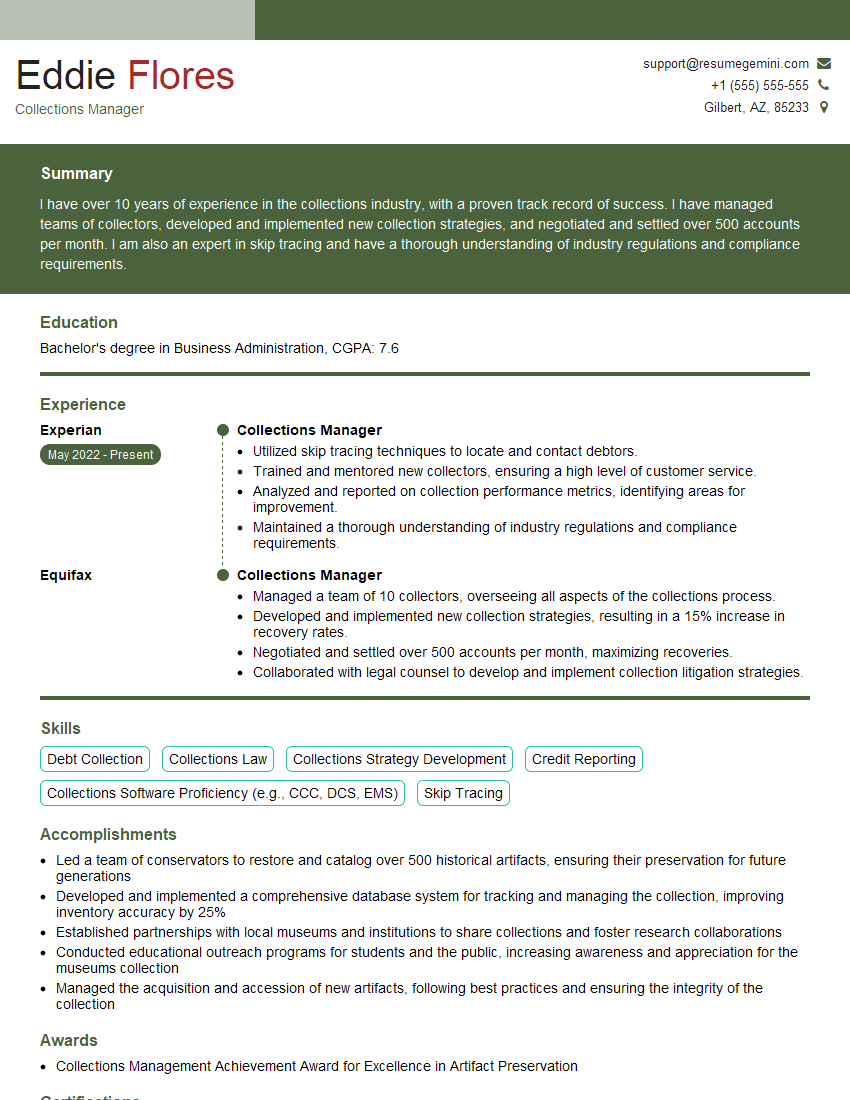
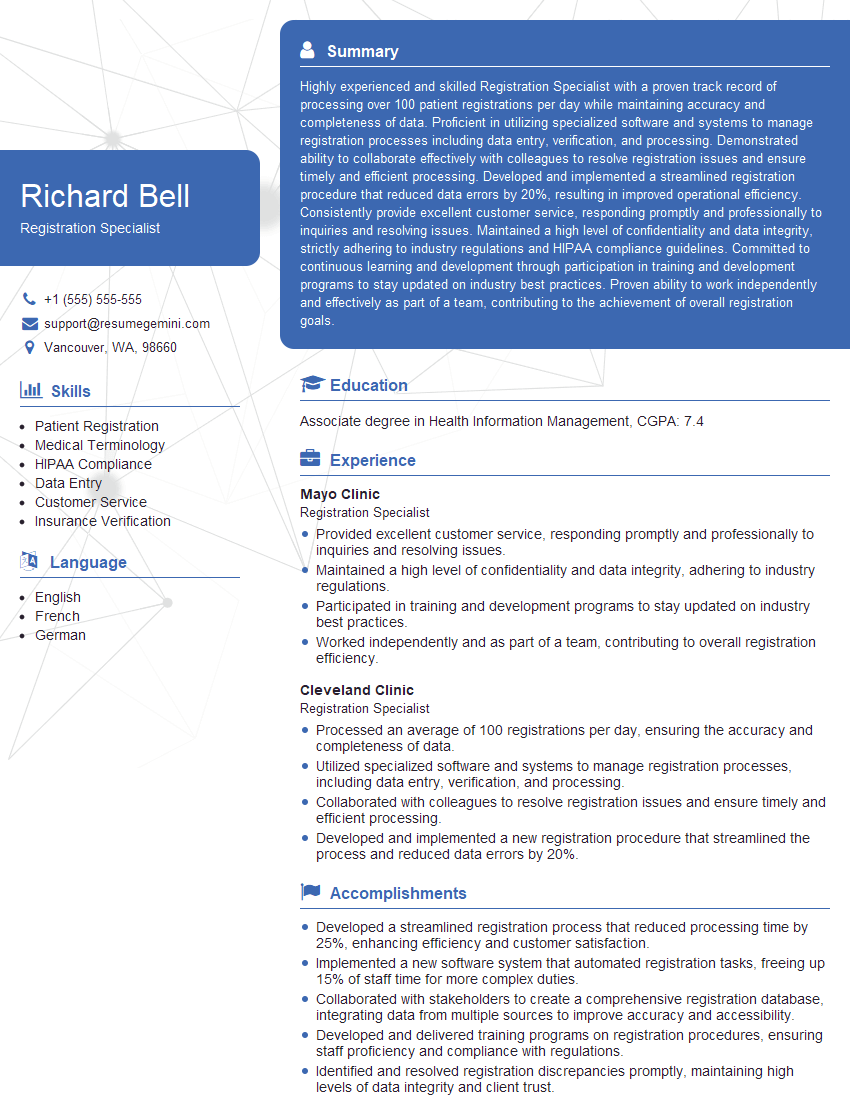
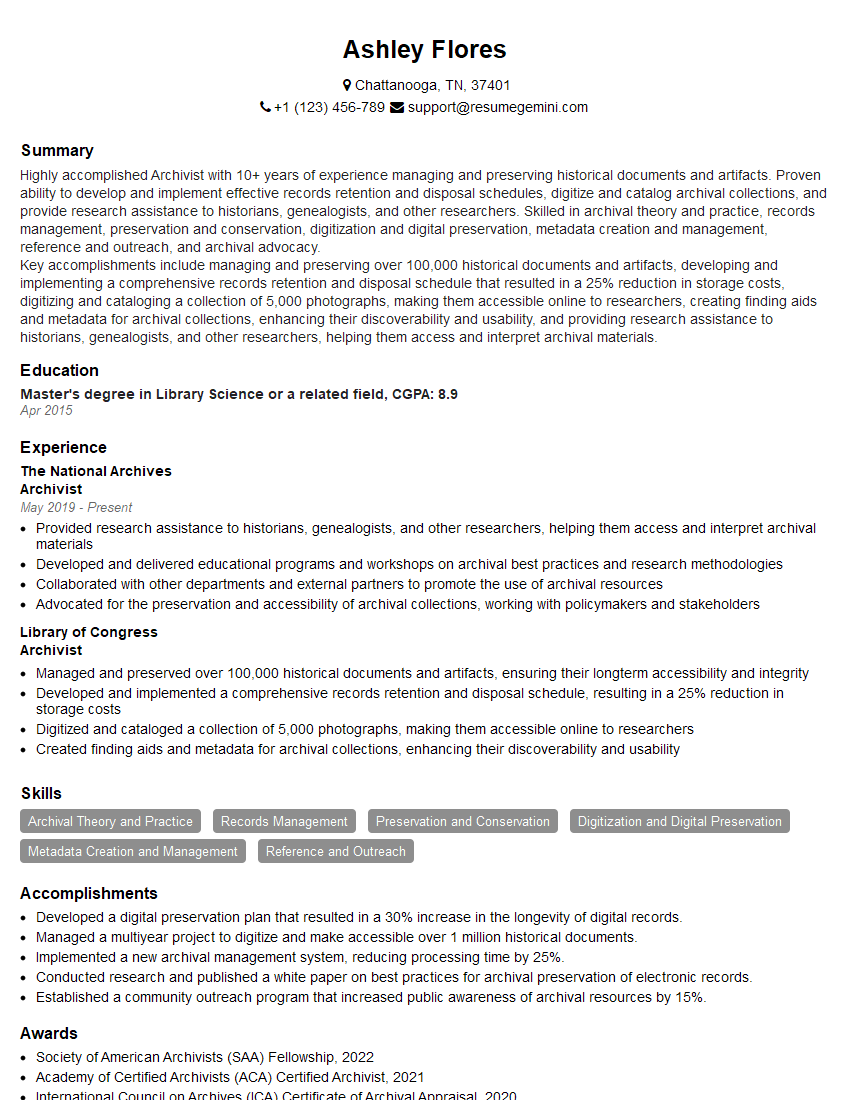
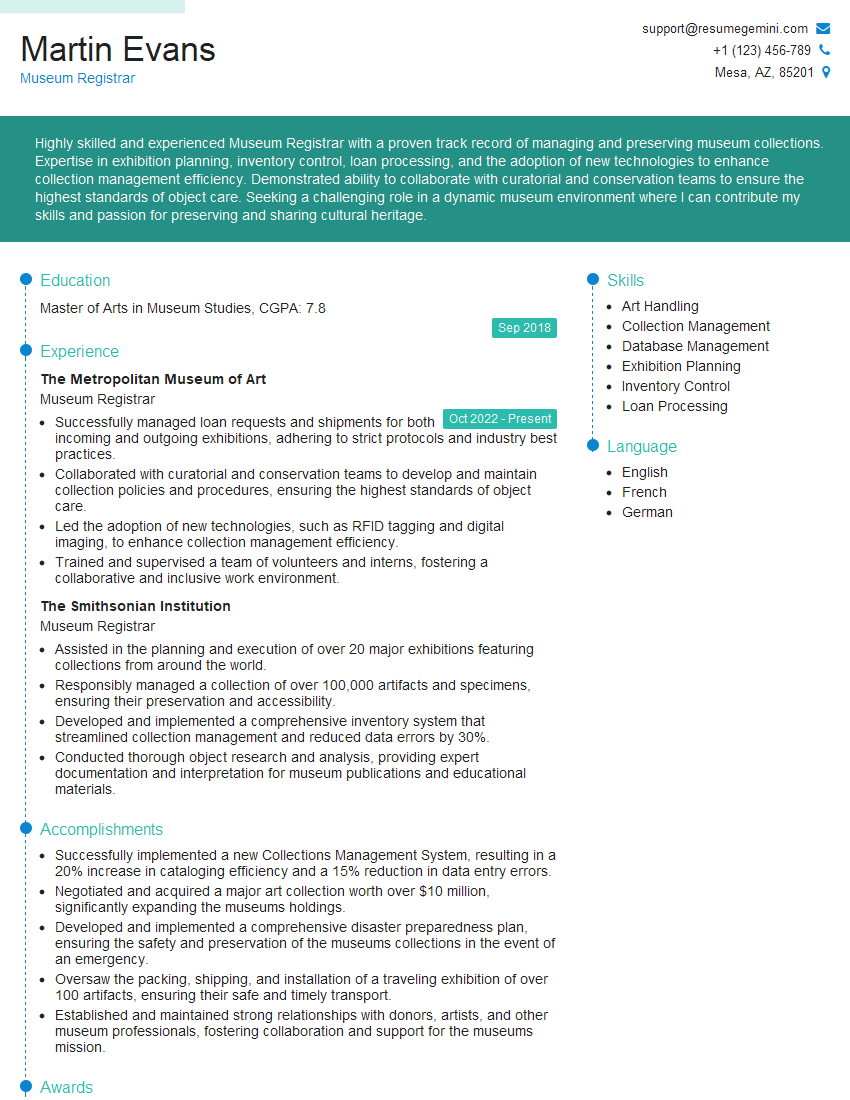
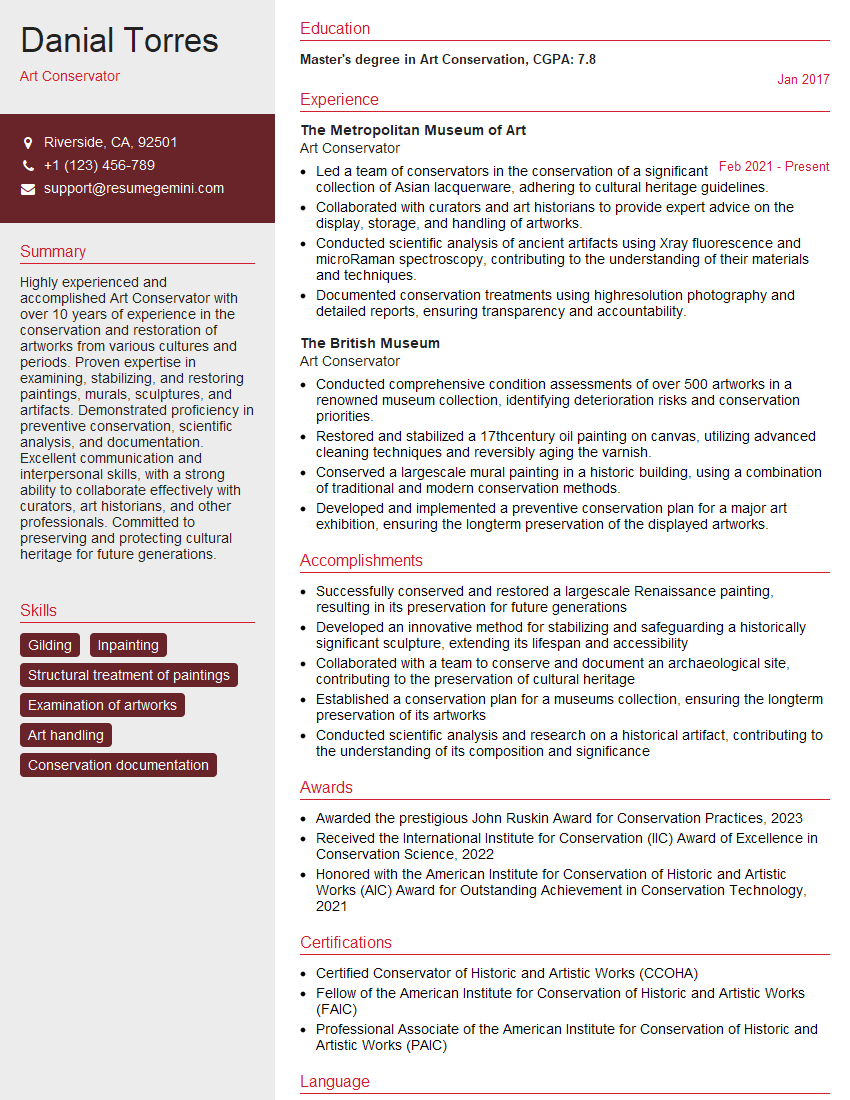
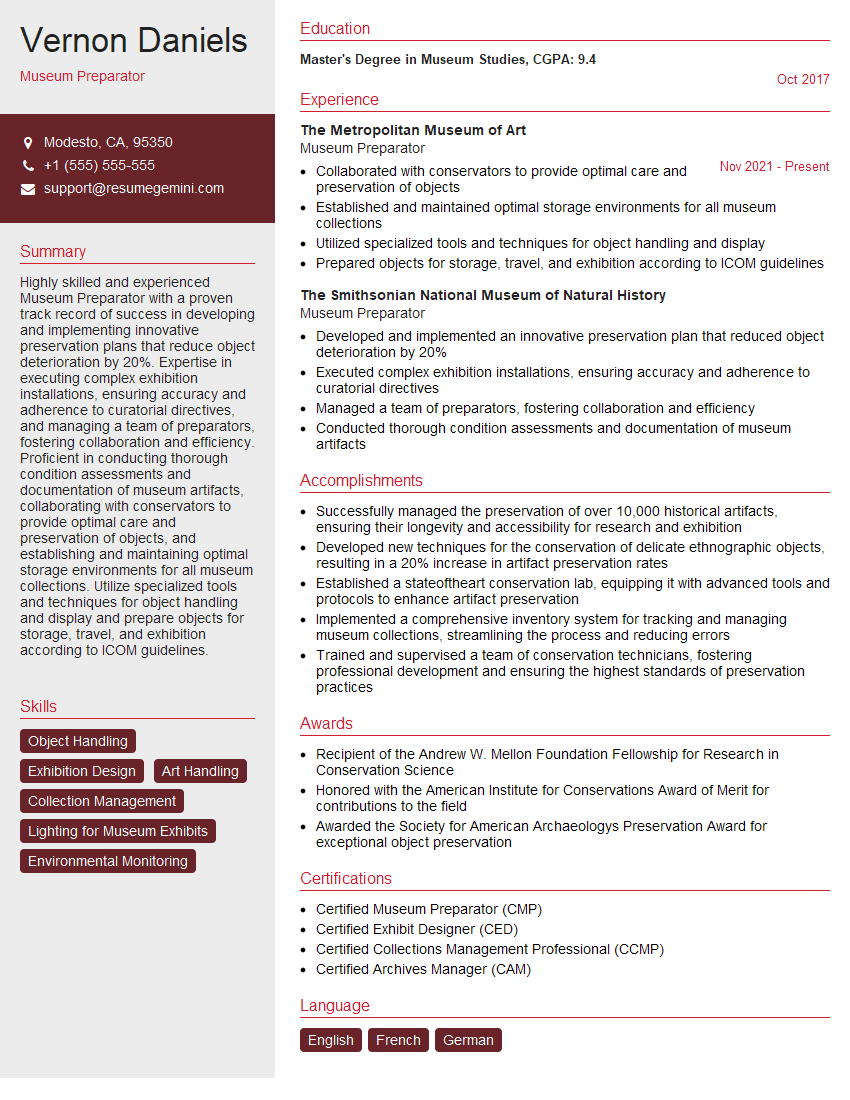
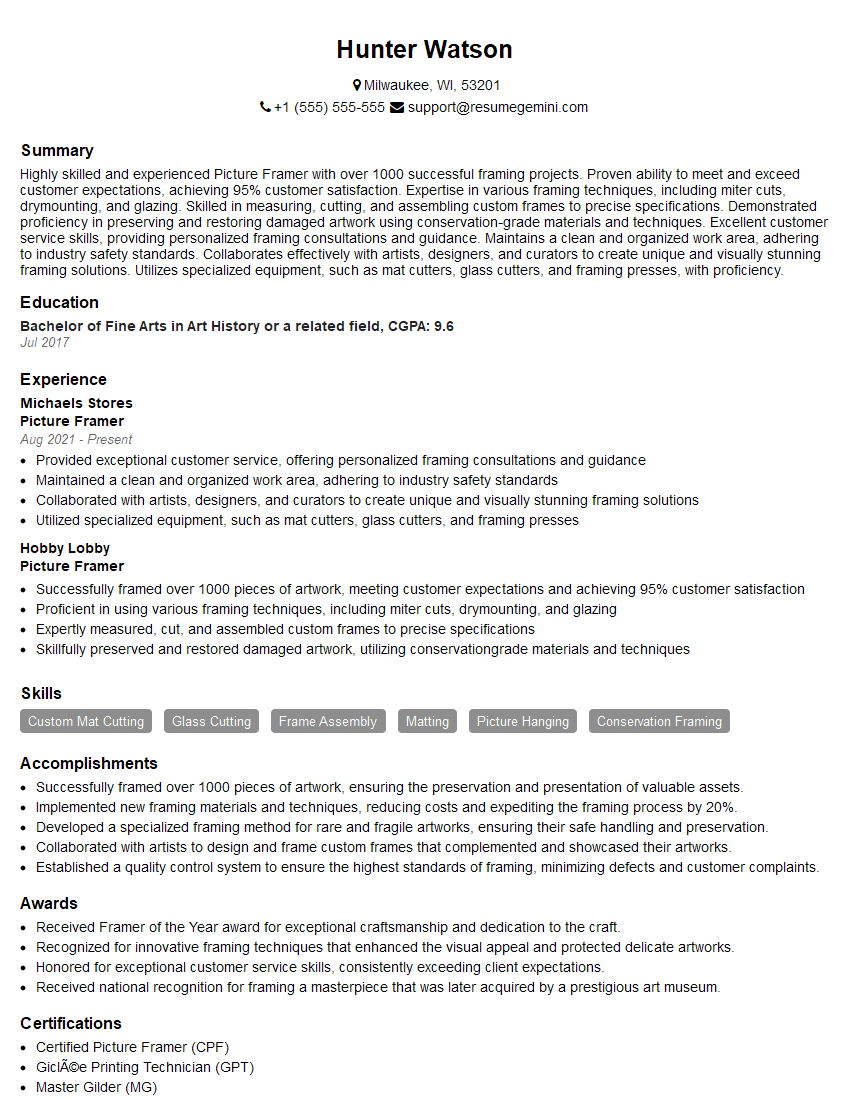
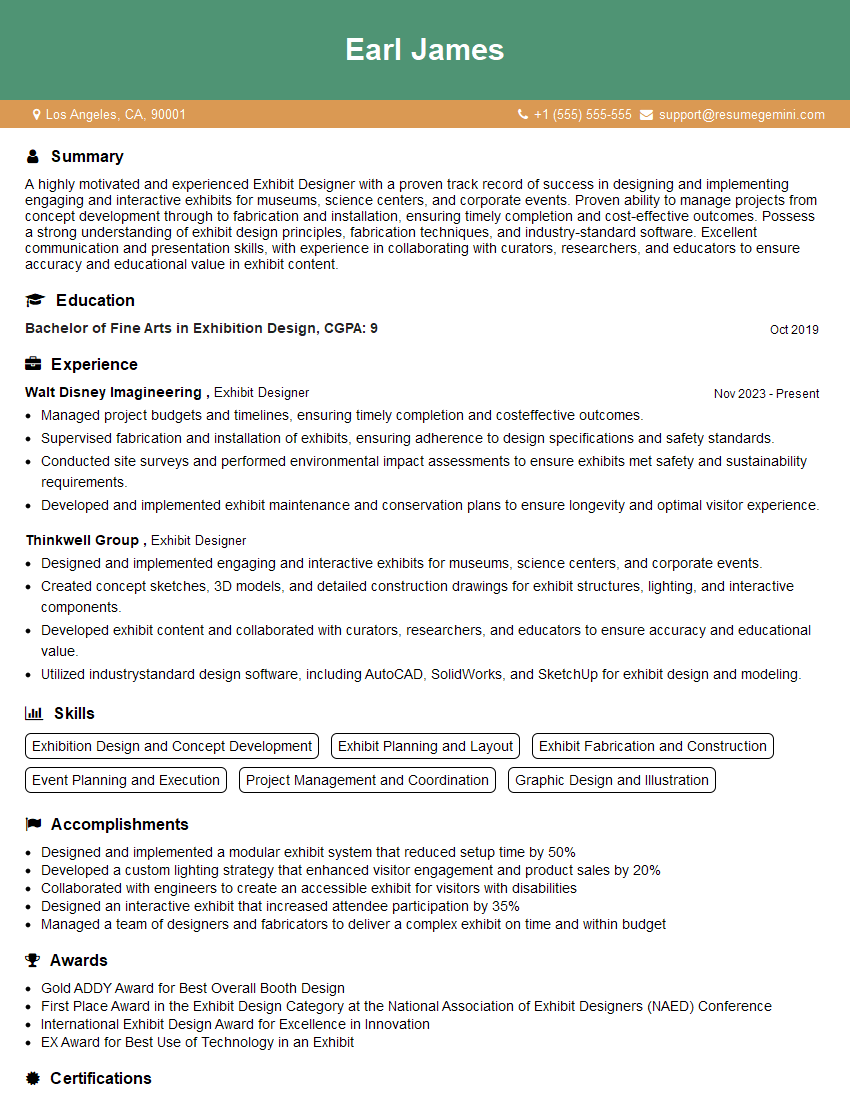
Mastering preservation framing opens doors to rewarding careers in museums, galleries, archives, and private conservation practices. A strong understanding of these techniques is highly valued by employers and demonstrates a commitment to the careful handling and long-term safeguarding of cultural heritage. To enhance your job prospects, it’s crucial to have a professional, ATS-friendly resume that effectively showcases your skills and experience. We highly recommend using ResumeGemini, a trusted resource, to craft a compelling resume that highlights your expertise in preservation framing. Examples of resumes tailored to this field are available to guide you. Take the next step towards your dream career today!
Explore more articles
Users Rating of Our Blogs
Share Your Experience
We value your feedback! Please rate our content and share your thoughts (optional).
What Readers Say About Our Blog
Amazing blog
Interesting Article, I liked the depth of knowledge you’ve shared.
Helpful, thanks for sharing.