Are you ready to stand out in your next interview? Understanding and preparing for Social Media Marketing and Monitoring interview questions is a game-changer. In this blog, we’ve compiled key questions and expert advice to help you showcase your skills with confidence and precision. Let’s get started on your journey to acing the interview.
Questions Asked in Social Media Marketing and Monitoring Interview
Q 1. Explain your social media marketing strategy for a new product launch.
My social media marketing strategy for a new product launch hinges on a multi-phased approach focusing on building anticipation, generating excitement, and driving conversions. It begins with a thorough understanding of the target audience and their preferred social media platforms. This informs platform selection and content strategy.
Pre-Launch Phase: This involves teasing the product through captivating visuals and short videos, highlighting key features and benefits without fully revealing the product. We’d use engaging contests and giveaways to grow our audience and capture leads. Consider using influencer marketing to reach a wider audience and leverage their credibility.
Launch Phase: The actual launch day is a critical moment. We would utilize a coordinated campaign across all chosen platforms, leveraging paid advertising for maximum reach. This is also a great time to issue a press release and encourage user-generated content through contests and challenges.
Post-Launch Phase: The post-launch focus shifts to engagement and nurturing. We’d monitor social listening to address feedback, answer questions, and build community. Retargeting campaigns would focus on those who interacted but didn’t convert. We would also analyze the campaign’s performance and make data-driven adjustments to improve the return on investment.
Example: For a new sustainable clothing line, we might use Instagram for visually appealing content, TikTok for short, trending videos, and Facebook for detailed product information and community building.
Q 2. How do you measure the success of a social media campaign?
Measuring the success of a social media campaign requires a holistic approach, considering both quantitative and qualitative data. We don’t just focus on vanity metrics like likes and followers. Instead, we look at data that directly relates to business objectives.
Quantitative Metrics: These are the numbers. We track website traffic driven from social media, leads generated, conversion rates (from clicks to purchases), and return on ad spend (ROAS). We also examine engagement rates (likes, shares, comments), reach, and impressions.
Qualitative Metrics: This is about understanding the *why* behind the numbers. We analyze the sentiment of comments and messages, looking for mentions of the brand, product feedback, and overall brand perception. This data helps understand the effectiveness of the messaging and identify areas for improvement.
Example: A successful campaign might show a significant increase in website traffic from social media, a high conversion rate from social media leads, and positive sentiment in user comments.
Q 3. What key performance indicators (KPIs) do you track for social media?
The KPIs I track for social media are directly tied to business goals. They vary depending on the campaign, but commonly include:
- Website Clicks/Traffic: Measures how effectively social media drives traffic to the website.
- Conversion Rate: Tracks the percentage of website visitors who complete a desired action (e.g., purchase, signup).
- Engagement Rate: Measures the level of interaction (likes, comments, shares) with posts.
- Reach and Impressions: Indicates the number of unique users who saw the content and the total number of times the content was displayed.
- Return on Ad Spend (ROAS): Measures the revenue generated for every dollar spent on social media advertising.
- Customer Acquisition Cost (CAC): Calculates the cost of acquiring a new customer through social media.
- Brand Mentions and Sentiment: Tracks how often the brand is mentioned and the overall sentiment (positive, negative, neutral).
By tracking these KPIs, I can identify what’s working well and what needs improvement, leading to more effective social media strategies.
Q 4. Describe your experience using social media analytics tools.
I have extensive experience using various social media analytics tools, including:
- Native Analytics: Each platform (Facebook, Instagram, Twitter, etc.) offers its own analytics dashboard, providing valuable insights into audience demographics, post performance, and campaign results.
- Google Analytics: Integrates with social media to track website traffic originating from these platforms, providing a complete picture of the user journey.
- Hootsuite Insights/Sprout Social: These platforms offer a comprehensive view of social media performance, including competitive analysis, sentiment tracking, and brand monitoring.
- Other specialized tools: Depending on the project’s needs, I might leverage tools like Brand24 or Talkwalker for more robust social listening and competitive analysis.
I’m adept at using these tools to extract meaningful data, identify trends, and make data-driven decisions to optimize social media campaigns.
Q 5. How do you identify and engage with your target audience on social media?
Identifying and engaging my target audience involves a multi-pronged approach. First, I develop detailed buyer personas that include demographics, interests, online behavior, and pain points. Then, I use social media’s built-in targeting options to reach the right people.
Targeting: This goes beyond simple demographics. I use interests, behaviors, and even custom audiences (based on website visitors or email lists) for precise targeting.
Engagement: Once we’ve reached our target audience, engaging them requires creating high-quality, relevant content that resonates with their needs and interests. We actively participate in conversations, respond to comments and messages promptly, run polls and Q&A sessions, and use relevant hashtags to increase visibility.
Listening: Social listening is key. We monitor conversations about our brand and industry to understand what people are saying and identify opportunities for engagement. This could include monitoring relevant keywords, hashtags, or mentions of competitors.
Example: For a skincare brand targeting millennials, we might use Instagram’s detailed targeting options to reach users interested in beauty, health, and sustainability. We’d use engaging visuals, interactive stories, and user-generated content to build a community.
Q 6. How do you handle negative feedback or comments on social media?
Handling negative feedback on social media requires a calm, professional, and empathetic approach. The goal is to address concerns, protect the brand’s reputation, and potentially turn a negative experience into a positive one.
Step 1: Acknowledge and Respond Promptly: Show that you’re listening and value customer feedback. A simple “Thank you for your feedback. We’re looking into this” can go a long way.
Step 2: Empathize and Validate: Understand the customer’s perspective, even if you don’t agree with their assessment. Let them know you understand their frustration.
Step 3: Offer a Solution: If the issue is solvable, offer a concrete solution, whether it’s a refund, replacement, or a simple apology.
Step 4: Take the Conversation Offline (If Necessary): If the issue is complex or sensitive, move the conversation to a private message or phone call to protect the customer’s privacy and handle the situation more efficiently.
Step 5: Learn from the Feedback: Use negative feedback as an opportunity for improvement. What are the underlying issues that caused the negative experience? What can be improved?
Example: If a customer complains about a defective product, I’d apologize, offer a replacement or refund, and potentially offer a discount on their next purchase. This turns a negative experience into an opportunity to demonstrate excellent customer service.
Q 7. What are some common social media marketing challenges, and how do you overcome them?
Social media marketing presents several challenges, but with a strategic approach, they can be overcome:
- Staying Current: Algorithms and platforms are constantly evolving, requiring constant learning and adaptation.
- Measuring ROI: Attributing specific sales or leads to social media efforts can be challenging.
- Competition: The social media landscape is highly competitive, requiring creative and strategic planning.
- Negative Feedback Management: Handling criticism and negative comments requires skill and tact.
- Time Commitment: Effective social media management is time-consuming, requiring dedicated resources.
Overcoming these challenges: Continuous learning, leveraging analytics tools, developing a well-defined strategy, having a dedicated team, and investing in paid advertising are some key strategies to tackle these challenges.
Example: To stay current with algorithm changes, I regularly attend industry conferences, read reputable publications, and experiment with different content formats. This ensures my strategies remain effective.
Q 8. What experience do you have with paid social media advertising?
My experience with paid social media advertising spans over five years, encompassing various campaign types across platforms like Facebook, Instagram, LinkedIn, and Twitter. I’ve managed budgets ranging from a few hundred dollars to tens of thousands, focusing on achieving specific KPIs (Key Performance Indicators) like lead generation, brand awareness, and website traffic. I’m proficient in utilizing different bidding strategies, targeting options, and ad formats to optimize campaign performance. For example, I recently ran a highly successful LinkedIn campaign for a B2B SaaS company, using account-based marketing (ABM) techniques to target specific decision-makers within their ideal customer profile. This resulted in a 30% increase in qualified leads within three months, exceeding our initial projections. I’m also well-versed in A/B testing different ad creatives and copy to continuously improve campaign effectiveness.
I understand the importance of meticulously tracking campaign performance, using tools like Google Analytics and native platform analytics dashboards. This data-driven approach allows me to make informed decisions, optimize budgets, and consistently achieve optimal results. I am comfortable working with different campaign objectives, from driving immediate conversions to fostering long-term brand building.
Q 9. Describe your experience using different social media platforms.
My experience with social media platforms is extensive and multifaceted. I’m highly proficient in using Facebook, Instagram, Twitter, LinkedIn, and TikTok, understanding the nuances of each platform’s audience, algorithm, and best practices. On Facebook, I’ve managed pages for both large corporations and small businesses, employing strategies for community building and engaging with followers. Instagram has been a focus for visual content creation and influencer marketing campaigns. Twitter has been instrumental for real-time engagement and brand monitoring. LinkedIn allows me to cultivate professional relationships and engage in B2B marketing efforts. TikTok, with its unique short-form video approach, allows tapping into the younger demographics.
More than just using these platforms, I understand their unique strengths. For instance, I wouldn’t use TikTok for a high-end jewelry brand in the same way I’d leverage LinkedIn for B2B SaaS. Content strategy needs to be tailored for each unique platform audience. I adeptly adapt my strategies to fit each platform, and constantly analyze performance metrics to improve content and engagement.
Q 10. How do you stay up-to-date on the latest social media trends?
Staying current in the ever-evolving world of social media requires a multi-pronged approach. I subscribe to industry newsletters like Social Media Examiner and follow key influencers on various platforms. I actively participate in relevant online communities and attend webinars and conferences to learn from experts and network with peers. I regularly monitor social media analytics dashboards and industry reports for emerging trends. Furthermore, I frequently analyze competitor strategies to identify best practices and opportunities for innovation. Essentially, it’s a combination of proactive learning and staying tuned into the conversations happening within the industry.
I also believe in hands-on experimentation. I often test new features and platform updates to see firsthand how they might benefit my clients’ strategies. This direct experience allows for practical application of knowledge and more informed decision making.
Q 11. How do you create engaging and shareable social media content?
Creating engaging and shareable social media content is a blend of art and science. It starts with understanding your target audience: their interests, needs, and pain points. Once you know your audience, you can tailor content to resonate with them. This means creating a mix of content types – images, videos, stories, text posts, and live streams – to keep things fresh and engaging. High-quality visuals are paramount; remember, people are visual creatures. Strong storytelling is also critical. People connect with authentic narratives.
Think about incorporating interactive elements such as polls, quizzes, and Q&A sessions to foster audience participation. Clear calls to action (CTAs) are essential, guiding users towards desired behaviors, like visiting your website or making a purchase. I also use analytics to understand what content resonates most with the audience, allowing for continuous optimization. A/B testing different approaches is vital for maximizing impact. For instance, for one client I A/B tested different image styles and captions to find out which created the most engagement leading to better ROI.
Q 12. What is your experience with social media scheduling tools?
I have extensive experience with various social media scheduling tools, including Hootsuite, Buffer, Sprout Social, and Later. Each platform offers unique features, and my choice depends on the specific needs of a project. For instance, Later is excellent for visual platforms like Instagram, while Hootsuite provides more robust analytics and reporting. I’m adept at using these tools to schedule posts across multiple platforms in advance, ensuring consistent and timely content delivery. This frees up time to focus on other aspects of social media management, like community engagement and campaign optimization.
Beyond scheduling, I leverage these tools for social listening, monitoring brand mentions, and tracking campaign performance. The ability to manage multiple accounts from a single dashboard increases efficiency and allows for a holistic view of social media activity. This streamlined approach contributes to better organizational and results.
Q 13. How do you manage multiple social media accounts simultaneously?
Managing multiple social media accounts effectively requires a structured approach. I utilize social media management tools like those mentioned previously, which allow for centralized scheduling and monitoring across different platforms. However, more than just software, it’s about strategic organization. I create detailed content calendars tailored for each platform, ensuring consistency and alignment with overall marketing goals. I often delegate tasks using project management software to maximize efficiency and collaboration, if applicable. Regular reporting on key performance indicators (KPIs) for each account provides a clear picture of performance and informs future strategies.
Furthermore, I define clear roles and responsibilities, if working with a team, creating a collaborative workflow. Regular team meetings are crucial to align everyone on priorities and address any challenges. This ensures cohesive branding and messaging across all accounts, preventing inconsistencies and maximizing the impact of our efforts.
Q 14. Explain your process for creating a social media content calendar.
Creating a social media content calendar is a crucial step in successful social media marketing. It’s essentially a roadmap outlining your social media activity over a specific period, typically monthly or quarterly. I begin by defining overarching marketing goals, aligning them with business objectives. Next, I brainstorm content ideas based on those goals, keeping the target audience firmly in mind. These ideas are then categorized by platform and content type (e.g., blog posts, images, videos, etc.). I’ll also consider seasonal trends and relevant events.
The calendar should include specific dates and times for posting, as well as assigned team members if applicable. This structured approach ensures consistent posting and prevents last-minute scrambling. It’s also crucial to leave room for flexibility; real-time events or trending topics may require adjustments. Finally, the calendar should be reviewed and updated regularly, ensuring alignment with evolving marketing objectives and audience response. Using a spreadsheet or dedicated project management software can simplify this process. A well-constructed content calendar acts as a central hub, streamlining social media efforts and driving greater efficiency.
Q 15. How do you use social listening to inform your marketing strategy?
Social listening is the process of monitoring online conversations and mentions related to your brand, industry, competitors, and relevant keywords. It’s like having a highly trained ear constantly listening to what people are saying about you. I use social listening to inform my marketing strategy in several key ways:
Identifying emerging trends and opportunities: By tracking mentions and hashtags, I can spot trends before they become mainstream. For example, if I see a sudden surge in conversations about a specific product feature, I can adapt my content strategy to highlight that feature.
Understanding customer sentiment: Social listening helps gauge how people feel about my brand – positive, negative, or neutral. This provides crucial insights to improve products, services, and customer experiences. If I see a lot of negative feedback about slow shipping times, I can prioritize solutions for that area.
Identifying potential crises: Early detection of negative sentiment or negative press allows proactive crisis management. Imagine if a competitor launches a new product and suddenly, I see a significant number of people expressing dissatisfaction with our current offerings on Twitter – I can immediately begin crafting a response or develop new strategies.
Improving content strategy: The topics and language used in social conversations can inform the creation of engaging and relevant content. If I see high engagement around a particular topic, I will incorporate that into future posts and campaigns.
Competitive analysis: Monitoring competitors’ social media activity helps understand their strategies, identify their strengths and weaknesses, and create better campaigns. For instance, seeing what kind of content resonates with their audience can inform my content creation strategy.
Career Expert Tips:
- Ace those interviews! Prepare effectively by reviewing the Top 50 Most Common Interview Questions on ResumeGemini.
- Navigate your job search with confidence! Explore a wide range of Career Tips on ResumeGemini. Learn about common challenges and recommendations to overcome them.
- Craft the perfect resume! Master the Art of Resume Writing with ResumeGemini’s guide. Showcase your unique qualifications and achievements effectively.
- Don’t miss out on holiday savings! Build your dream resume with ResumeGemini’s ATS optimized templates.
Q 16. How do you ensure brand consistency across all social media platforms?
Brand consistency across all social media platforms is crucial for building a strong brand identity. Think of it like having a consistent personality – you wouldn’t want to act completely differently with your friends than you do with your family. To maintain brand consistency, I focus on these areas:
Consistent brand voice and tone: I define a clear brand voice and tone guide, ensuring all content, from captions to comments, reflects our brand personality (e.g., playful, professional, authoritative). This is documented and shared with the team.
Consistent visual identity: This includes using the same logo, color palette, fonts, and image style across all platforms. We use a style guide that serves as a central repository for all visual assets.
Consistent messaging: All content should align with the overall brand message and marketing objectives. We have regular team meetings to ensure alignment and to discuss upcoming campaigns.
Centralized content calendar: This ensures all posts are scheduled and approved beforehand, avoiding conflicting messages or accidental posting errors. This calendar is updated continuously and accessible to all relevant team members.
Regular audits and reviews: We conduct regular reviews of our social media presence to ensure consistency and identify areas for improvement. This feedback loop is essential for maintaining consistency over time.
Q 17. What is your experience with social media crisis management?
Social media crisis management requires quick thinking, decisive action, and empathy. My experience includes developing and executing crisis communication plans, proactively monitoring social media for potential issues, and responding swiftly and transparently to negative feedback or criticism. For example, I once handled a situation where a false product defect was widely circulated on Twitter. My approach involved:
Rapid assessment of the situation: I quickly determined the extent of the problem, identifying the source and spreading misinformation.
Developing a clear and concise response: We crafted a statement addressing the concerns and providing factual information.
Engaging with concerned customers directly: We responded to individual comments and messages, addressing their concerns with empathy and providing solutions.
Working with internal teams: I collaborated with the product and PR teams to determine the best course of action, ensuring everyone was aligned and informed.
Monitoring the situation closely: Even after the initial response, we continued to monitor social media for further developments and adjust our strategy as needed.
Transparency and authenticity are key during a crisis – it’s always better to address issues directly and openly than to ignore them.
Q 18. How do you collaborate with other marketing teams or departments?
Collaboration is essential for effective social media marketing. I work closely with various teams, including:
Marketing team: We align social media campaigns with overall marketing goals, ensuring consistency in messaging and brand identity. This typically involves regular brainstorming sessions and progress reporting.
Sales team: We leverage social media to generate leads and support sales initiatives, sharing relevant information and promoting special offers.
Product team: We work closely to incorporate customer feedback received via social media into product development and improve existing offerings.
Public relations team: We coordinate media outreach and announcements across social media channels, ensuring consistent messaging across various platforms.
Customer service team: I collaborate to resolve customer issues raised on social media and ensure rapid responses to complaints or questions.
I utilize project management tools and regular meetings to foster clear communication and efficient workflows with each team.
Q 19. How do you measure the ROI of your social media efforts?
Measuring the ROI of social media is crucial for demonstrating the value of our efforts. While it’s not always easy to directly attribute sales to social media, I use a combination of metrics to assess performance:
Website traffic and conversions: Tracking clicks from social media posts to the website and subsequent conversions (e.g., purchases, sign-ups) helps demonstrate direct impact.
Brand awareness and engagement: Measuring metrics like reach, impressions, likes, comments, shares, and follower growth provides insights into brand visibility and audience engagement.
Lead generation: Tracking lead generation from social media campaigns, especially through forms or landing pages, provides a clear measure of success.
Customer acquisition cost (CAC): Comparing the cost of social media marketing campaigns to the number of acquired customers helps evaluate efficiency.
Sentiment analysis: Tracking shifts in positive or negative sentiment provides insights into the impact of campaigns on brand perception.
I regularly report these metrics and analyze them to optimize future campaigns and demonstrate the overall impact of social media on the business.
Q 20. What is your experience with social media A/B testing?
A/B testing is critical for optimizing social media performance. It’s like conducting a scientific experiment to see which approach works best. I use A/B testing to compare different elements of my campaigns, including:
Image and video formats: Comparing engagement rates for different types of visual content to determine what resonates most with the audience.
Copy variations: Testing different headlines, captions, and calls to action to see which performs best.
Posting times: Testing different posting times to identify optimal times for reaching the target audience.
Ad targeting: Testing different audience targeting parameters to refine ad campaigns and improve ROI.
Hashtags: Comparing different hashtag combinations to see which drive the most engagement.
I use social media analytics platforms to set up and analyze A/B tests, ensuring that the variations are only different in one aspect to clearly attribute changes in performance.
Q 21. Describe your process for reporting social media performance.
My process for reporting social media performance involves a structured approach that combines quantitative and qualitative data. I typically create reports that include:
Key performance indicators (KPIs): These include metrics like reach, engagement, website traffic, conversions, and sentiment.
Visualizations: I use charts and graphs to represent the data clearly and concisely, making the information easily digestible.
Comparative analysis: I compare current performance to previous periods, highlighting trends and identifying areas of improvement or concern.
Qualitative insights: I include key insights gathered from social listening, monitoring comments, and analyzing audience engagement patterns.
Actionable recommendations: The reports always include actionable recommendations based on the data analysis, suggesting improvements to future campaigns or strategies.
I typically use reporting dashboards that automate data collection and visualization, making the reporting process efficient and time-saving. I present these reports regularly to stakeholders to keep them updated on our progress and to secure buy-in for future strategies.
Q 22. How do you adapt your social media strategy to different platforms?
Adapting a social media strategy across platforms isn’t about a one-size-fits-all approach; it’s about understanding the nuances of each platform’s user base and its inherent strengths. Think of it like choosing the right tool for the job – a hammer is great for nails, but not so much for screws.
- Platform-Specific Content Formats: Instagram thrives on visually appealing content like high-quality images and short videos. LinkedIn, on the other hand, favors professional articles and thought leadership pieces. Twitter excels at concise updates and engaging conversations. You wouldn’t post a lengthy blog post on Instagram and expect high engagement; likewise, a single image wouldn’t cut it for a LinkedIn discussion.
- Audience Demographics & Behavior: Consider your target audience’s demographics and online behavior. Are they primarily on TikTok, engaging with short-form videos, or are they on Facebook, looking for community and long-form discussions? Tailoring your content to resonate with each platform’s unique audience is key. For example, a younger audience might respond better to humor and trendy sounds on TikTok, whereas a professional audience on LinkedIn will appreciate insightful content related to their industry.
- Platform-Specific Features: Leverage each platform’s unique features. Utilize Instagram Stories for behind-the-scenes content, LinkedIn articles for building thought leadership, or Twitter polls to engage in quick discussions.
- Metrics and Analytics: Different platforms offer varying metrics. Pay close attention to engagement rates (likes, comments, shares), reach, and website clicks on each platform to measure the success of your strategy and make data-driven adjustments. Regularly track these metrics and compare them across platforms to understand what works best where.
For instance, a campaign for a new line of sustainable clothing might leverage Instagram’s visual appeal with high-quality product photos and videos showcasing the clothing’s eco-friendly aspects. On LinkedIn, the campaign might focus on the brand’s ethical sourcing practices and commitment to sustainability, appealing to a more professional audience.
Q 23. What experience do you have with influencer marketing?
My experience with influencer marketing spans several years, involving collaborations with influencers across various niches and platforms. I’ve worked with micro-influencers (those with smaller, highly engaged followings) and macro-influencers (those with larger audiences), selecting them based on their relevance to the brand, audience alignment, and engagement rate.
My approach goes beyond simply sending products; it involves developing tailored campaign strategies. This includes:
- Identifying and Vetting Influencers: I thoroughly research potential influencers to ensure their audience aligns with our target demographic and their values match our brand’s ethos. I don’t just look at follower count; authentic engagement is paramount.
- Campaign Strategy Development: I work closely with influencers to develop creative and engaging content ideas that are in line with both their brand and ours. We define clear objectives, key performance indicators (KPIs), and reporting mechanisms.
- Content Creation & Approval: I provide creative guidelines to ensure brand consistency and compliance with advertising regulations. We maintain open communication throughout the content creation process to ensure the final product reflects both parties’ visions.
- Performance Measurement & Reporting: I track key metrics such as reach, engagement, website traffic, and sales conversions to evaluate the campaign’s success and make data-driven improvements in future collaborations.
In one recent campaign, a collaboration with a micro-influencer specializing in sustainable living resulted in a 25% increase in website traffic and a 15% boost in sales for our eco-friendly product line. This demonstrates the effectiveness of a targeted influencer marketing approach.
Q 24. How do you handle comments or content that violate your brand guidelines?
Handling comments or content that violates brand guidelines requires a swift and consistent approach that balances protecting the brand’s image while upholding a respectful dialogue with the community. My strategy follows these steps:
- Immediate Assessment: Comments and content are reviewed to determine if they violate guidelines (e.g., hateful speech, spam, misinformation).
- Consistent Enforcement: Violations are addressed according to a pre-defined process. This may involve deleting comments, blocking users, or issuing warnings depending on the severity of the offense.
- Transparency & Empathy (when appropriate): If a comment is simply critical but not abusive, a measured response acknowledging the user’s perspective can foster positive engagement. However, this should never compromise brand values.
- Proactive Monitoring: Consistent monitoring of comments and posts is vital to identify and address issues before they escalate. Social listening tools can be particularly helpful here.
- Documentation: Maintaining a record of violations and actions taken ensures consistency and accountability.
For example, if a user posts a comment containing hateful language, it would be immediately deleted, and the user might be blocked. If a comment is simply negative feedback about a product, a thoughtful response acknowledging the concern and offering a solution would be provided. This nuanced approach balances brand protection with community engagement.
Q 25. What social media platforms are you most proficient in?
I’m most proficient in several platforms, each with its strengths. My expertise includes:
- LinkedIn: For professional networking, B2B marketing, and thought leadership content.
- Instagram: For visual storytelling, engaging with a younger demographic, and driving brand awareness through aesthetically pleasing content.
- Twitter: For real-time engagement, news dissemination, and quick responses to customer queries.
- Facebook: For community building, targeted advertising, and reaching a broad audience.
- TikTok: For reaching younger audiences and leveraging trending audio and video formats.
However, my proficiency extends beyond just using these platforms; it’s about understanding their respective algorithms, analytic tools, and advertising capabilities. I can effectively create and manage campaigns across these platforms, tailoring the content and approach to maximize engagement and achieve specific marketing objectives.
Q 26. How do you prioritize tasks and manage your time effectively?
Effective time management and task prioritization are crucial in social media marketing. I use a combination of strategies to stay organized and productive:
- Prioritization Matrix: I employ an Eisenhower Matrix (urgent/important) to categorize tasks, focusing on high-impact activities first. This ensures I’m working on the most critical tasks that will generate the biggest return on investment.
- Project Management Tools: Tools like Asana or Trello help me track projects, deadlines, and team collaboration. This provides a clear overview of all ongoing tasks and their status.
- Time Blocking: I allocate specific time blocks for dedicated tasks. For example, I might schedule two hours for content creation, one hour for community engagement, and another for analyzing data. This focused approach enhances productivity and reduces context switching.
- Batching Similar Tasks: I group similar tasks together to improve efficiency. For instance, I’ll respond to all comments at once, instead of scattering it throughout the day. This minimizes distractions and allows for more focused work.
- Regular Review and Adjustment: I regularly review my schedule and prioritize tasks based on changing business needs. Flexibility and adaptability are essential in the ever-evolving world of social media.
This structured approach ensures that I consistently meet deadlines and achieve marketing objectives without feeling overwhelmed. It’s all about working smarter, not harder.
Q 27. Describe your experience with using social media for lead generation.
My experience with social media for lead generation is extensive. I’ve successfully implemented strategies that convert social media engagement into qualified leads. My approach includes:
- Targeted Advertising: Utilizing platform-specific advertising options to reach potential customers based on demographics, interests, and behaviors. This ensures that marketing efforts are highly focused and efficient.
- Compelling Content: Creating engaging content—videos, articles, infographics—that offer valuable information and solves a problem for the target audience. This encourages users to engage, learn more, and ultimately convert into leads.
- Call-to-Actions (CTAs): Including clear and concise CTAs in social media posts and ads, guiding users towards desired actions like downloading resources, signing up for newsletters, or requesting a demo. A strong CTA is vital for driving conversions.
- Landing Pages: Creating dedicated landing pages for social media campaigns, optimizing them for conversions and tracking lead information. These pages provide a seamless user experience after clicking a CTA.
- Lead Magnets: Offering valuable resources like ebooks, webinars, or checklists in exchange for contact information. This incentivizes users to provide their details, generating qualified leads.
For instance, in a recent campaign for a SaaS product, a series of informative videos on LinkedIn, combined with targeted ads and a clear CTA to request a demo, generated a 30% increase in qualified leads within one month.
Q 28. How do you ensure compliance with social media advertising regulations?
Ensuring compliance with social media advertising regulations is paramount. My approach prioritizes adherence to guidelines set by organizations like the FTC (Federal Trade Commission) and similar bodies in other regions. Key aspects of my compliance strategy include:
- Disclosure of Sponsored Content: Clearly labeling all sponsored posts and ads using appropriate hashtags or disclosures like “#ad” or “sponsored.” This ensures transparency and prevents misleading consumers.
- Accurate Representation: Ensuring all claims made in ads are truthful and substantiated. Exaggerated or false claims can lead to legal issues and damage brand reputation.
- Privacy Policy Compliance: Adhering to privacy policies related to data collection and usage, complying with regulations like GDPR (General Data Protection Regulation) and CCPA (California Consumer Privacy Act).
- Targeting Restrictions: Avoiding discriminatory targeting practices, ensuring ads are not directed at protected groups in a biased manner.
- Regular Audits & Updates: Staying up-to-date with evolving regulations and conducting regular audits of advertising campaigns to identify and address any potential compliance issues.
Understanding and complying with these regulations not only protects the brand from legal repercussions but also builds trust with consumers, fostering long-term relationships and a positive brand image.
Key Topics to Learn for Your Social Media Marketing and Monitoring Interview
- Social Media Strategy Development: Understanding how to define target audiences, set measurable goals, and create content calendars aligned with business objectives. Practical application: Developing a social media strategy for a hypothetical client, including platform selection and KPI definition.
- Content Creation and Curation: Mastering various content formats (text, image, video) and understanding how to curate engaging content from various sources. Practical application: Analyzing existing social media content and suggesting improvements for engagement and reach.
- Social Listening and Monitoring: Utilizing tools to track brand mentions, competitor activity, and industry trends. Practical application: Describing how you would use social listening to identify and address a potential brand crisis.
- Community Management: Engaging with followers, responding to comments and messages, and building a positive brand reputation. Practical application: Developing strategies for handling negative feedback and fostering positive online interactions.
- Social Media Advertising: Understanding different ad formats, targeting options, and campaign optimization techniques across various platforms. Practical application: Outlining a social media advertising campaign for a specific product or service, including budget allocation and key performance indicators (KPIs).
- Analytics and Reporting: Interpreting social media data to measure campaign performance and identify areas for improvement. Practical application: Analyzing social media analytics and presenting key findings to stakeholders in a clear and concise manner.
- Platform-Specific Expertise: Demonstrating a strong understanding of the nuances of different platforms (e.g., Facebook, Instagram, Twitter, LinkedIn, TikTok) and their respective best practices. Practical application: Comparing and contrasting the optimal strategies for different social media platforms.
- Legal and Ethical Considerations: Understanding copyright laws, privacy policies, and ethical guidelines related to social media marketing. Practical application: Discussing the implications of a potential social media campaign that might raise ethical concerns.
Next Steps
Mastering Social Media Marketing and Monitoring is crucial for a successful and rewarding career in today’s digital landscape. It opens doors to diverse roles and allows you to make a significant impact on a company’s brand and bottom line. To significantly boost your job prospects, create an ATS-friendly resume that highlights your skills and experience effectively. ResumeGemini is a trusted resource that can help you build a professional and impactful resume tailored to the demands of this competitive field. Examples of resumes specifically designed for Social Media Marketing and Monitoring roles are available to help you get started.
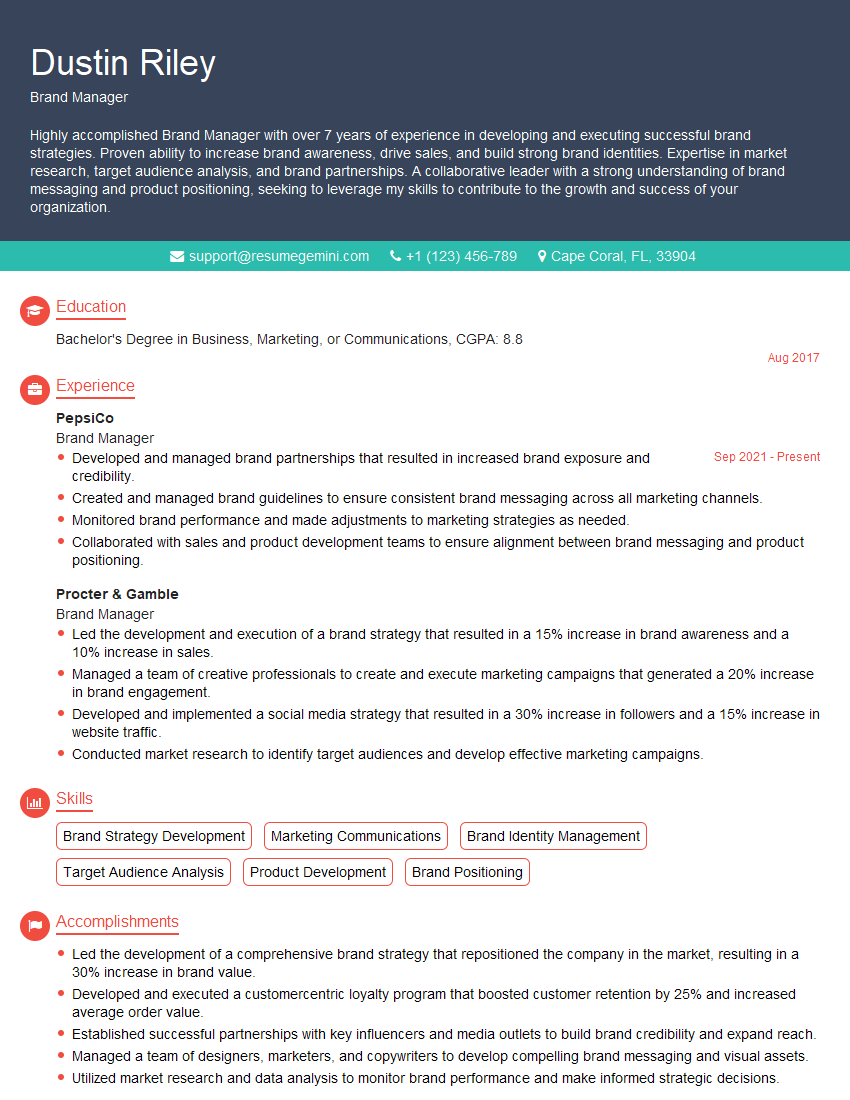
Brand Manager Resume Sample
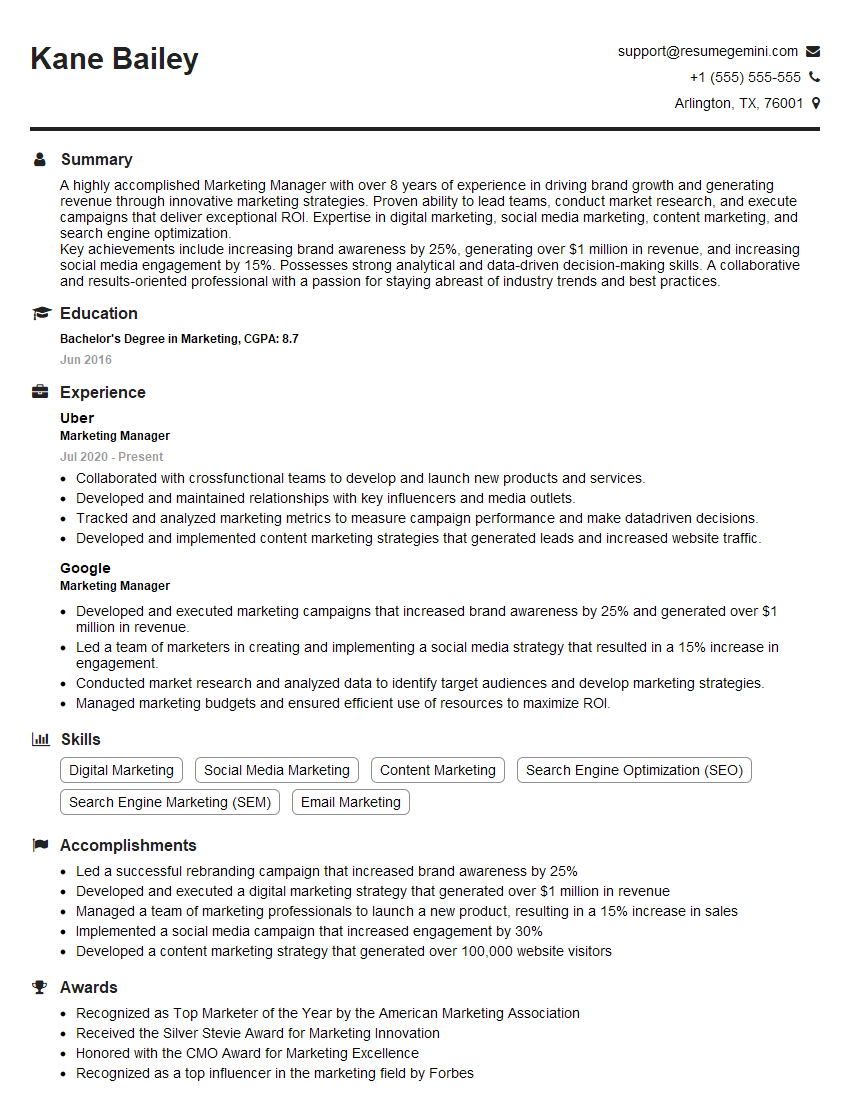
Marketing Manager Resume Sample

Marketing Communications Manager Resume Sample
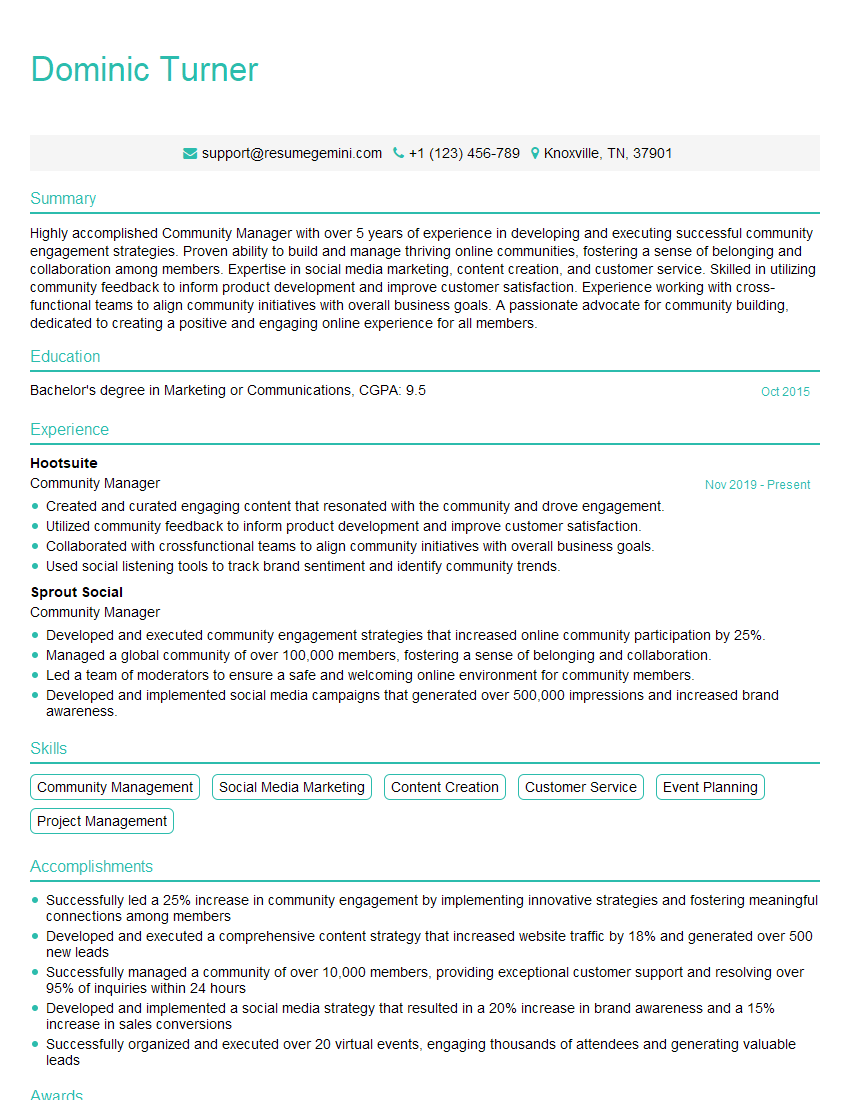
Community Manager Resume Sample
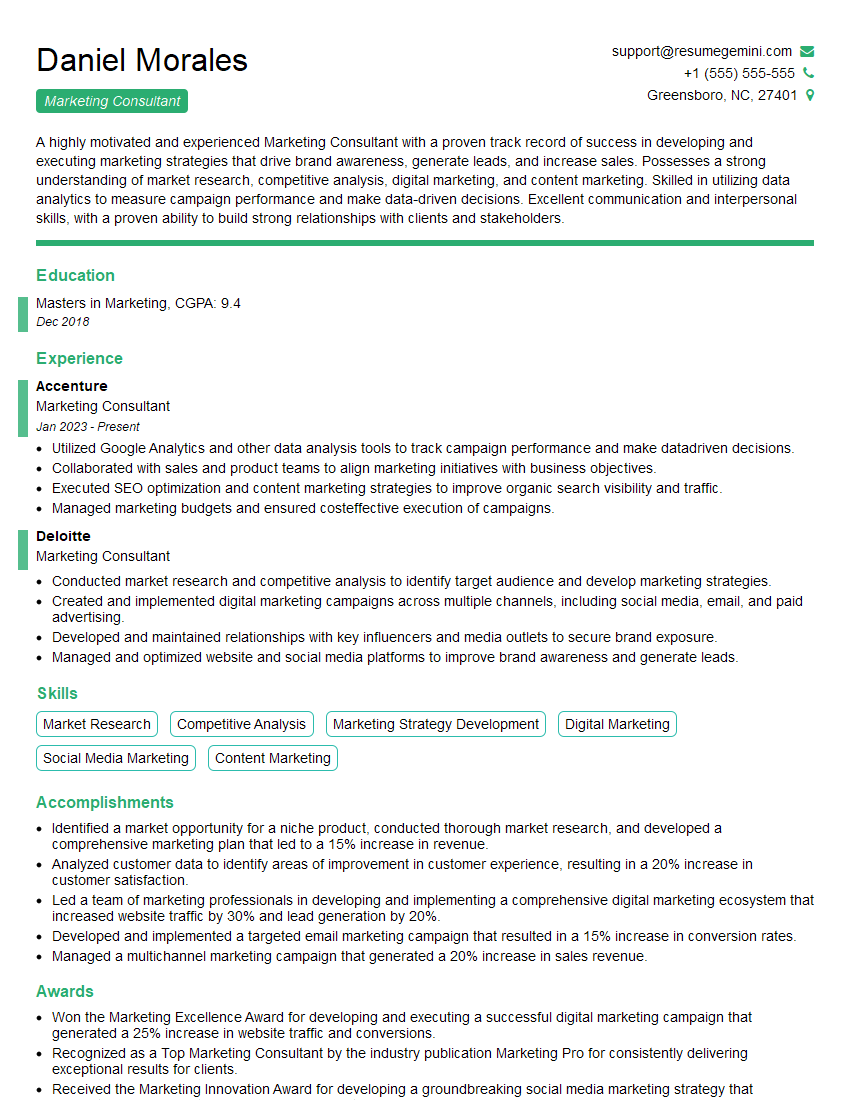
Marketing Consultant Resume Sample

Social Media Manager Resume Sample
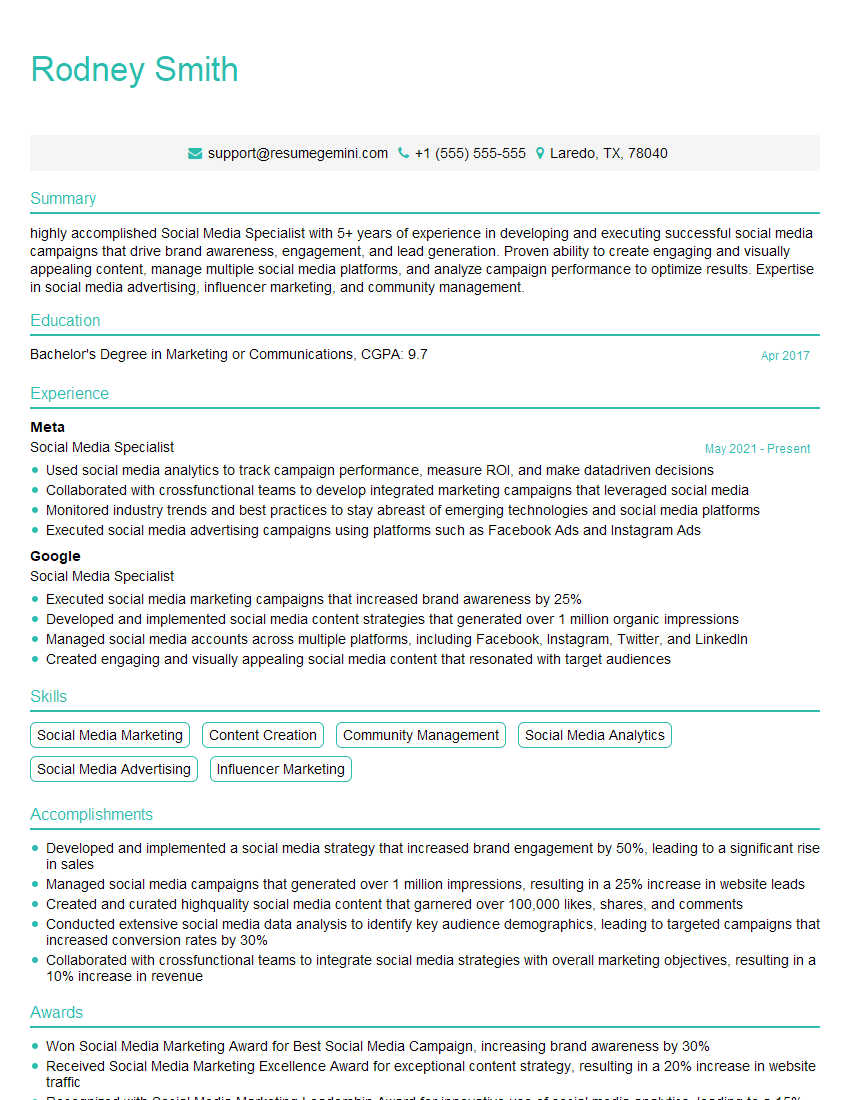
Social Media Specialist Resume Sample
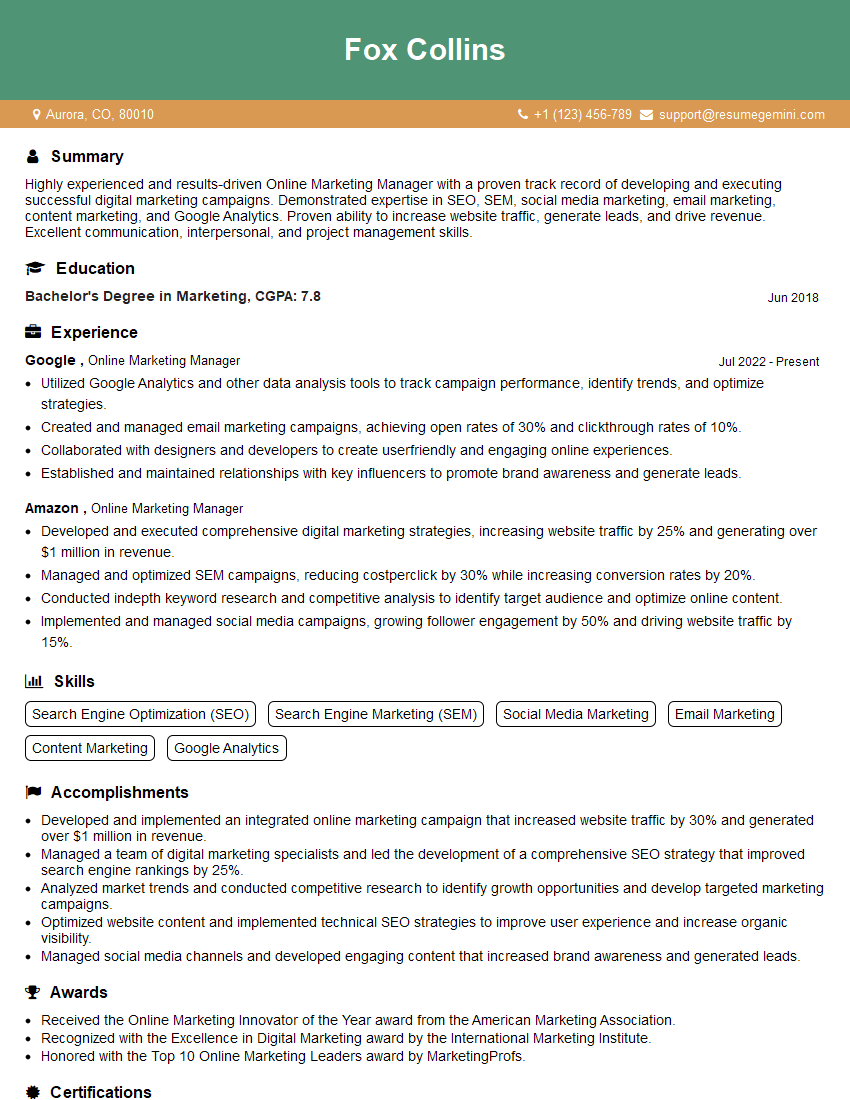
Online Marketing Manager Resume Sample
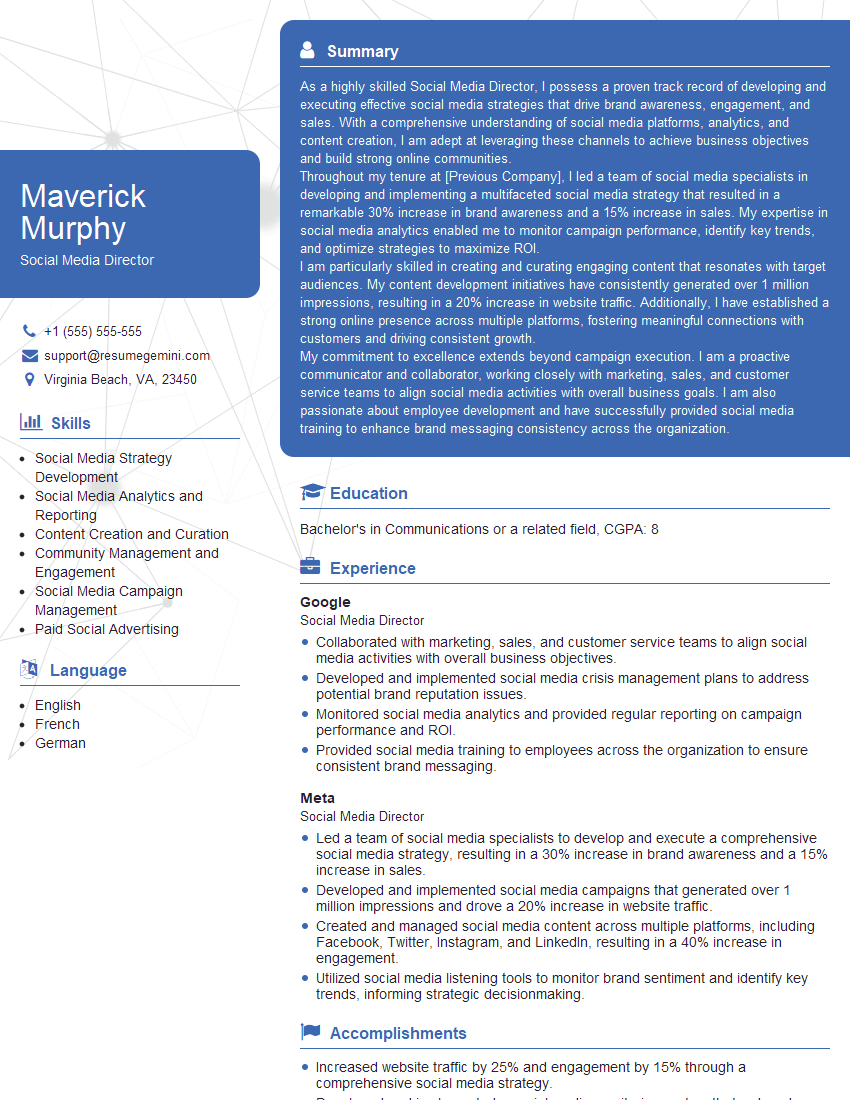
Social Media Director Resume Sample
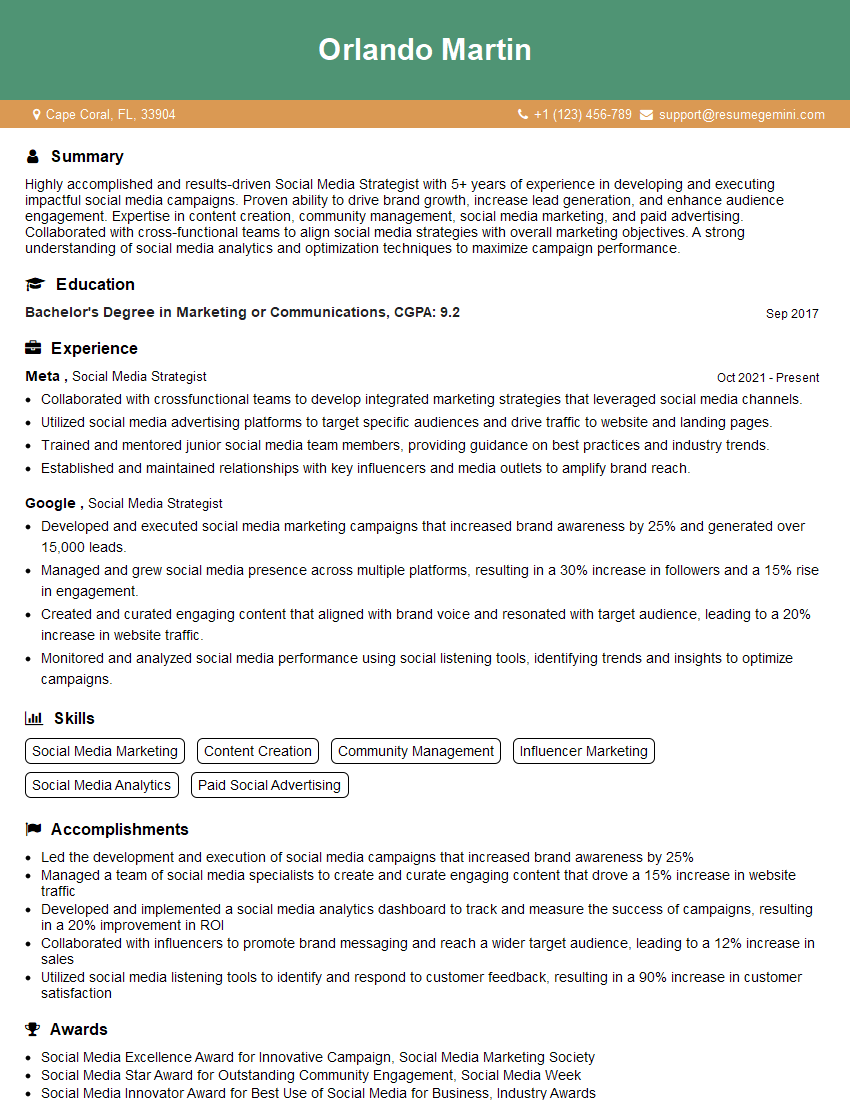
Social Media Strategist Resume Sample
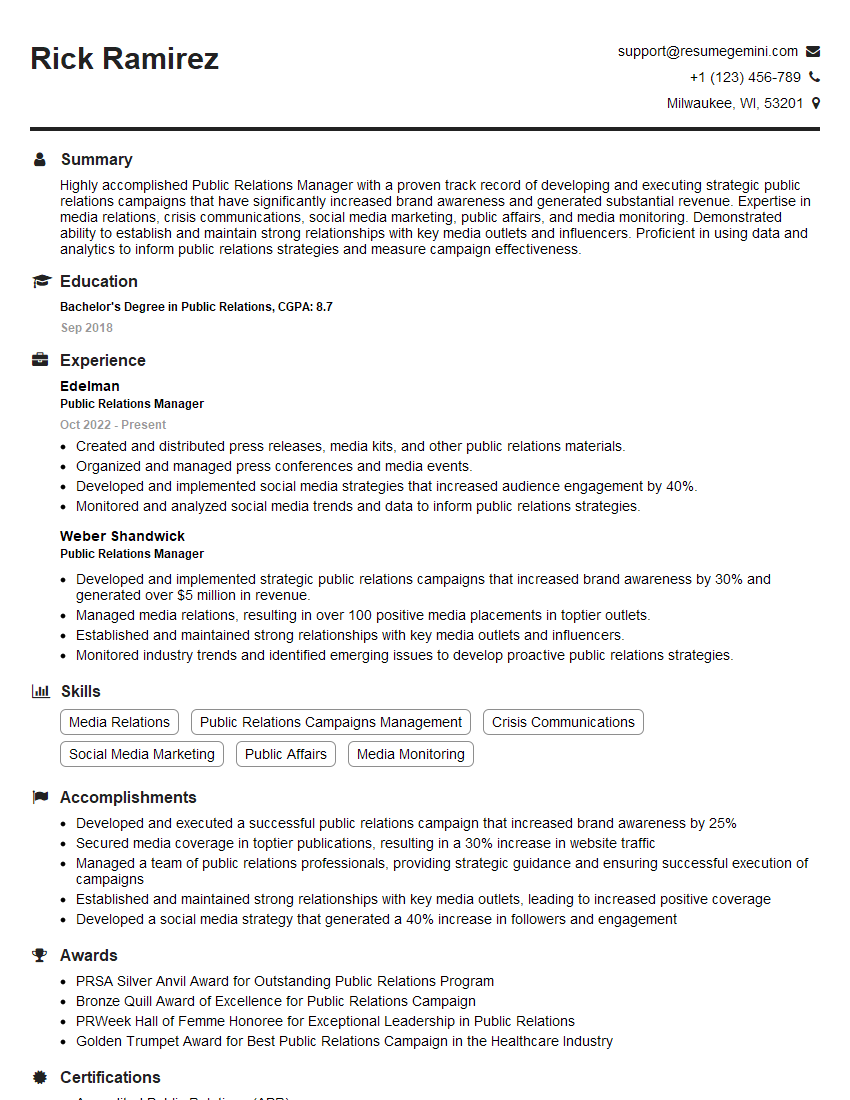
Public Relations Manager Resume Sample
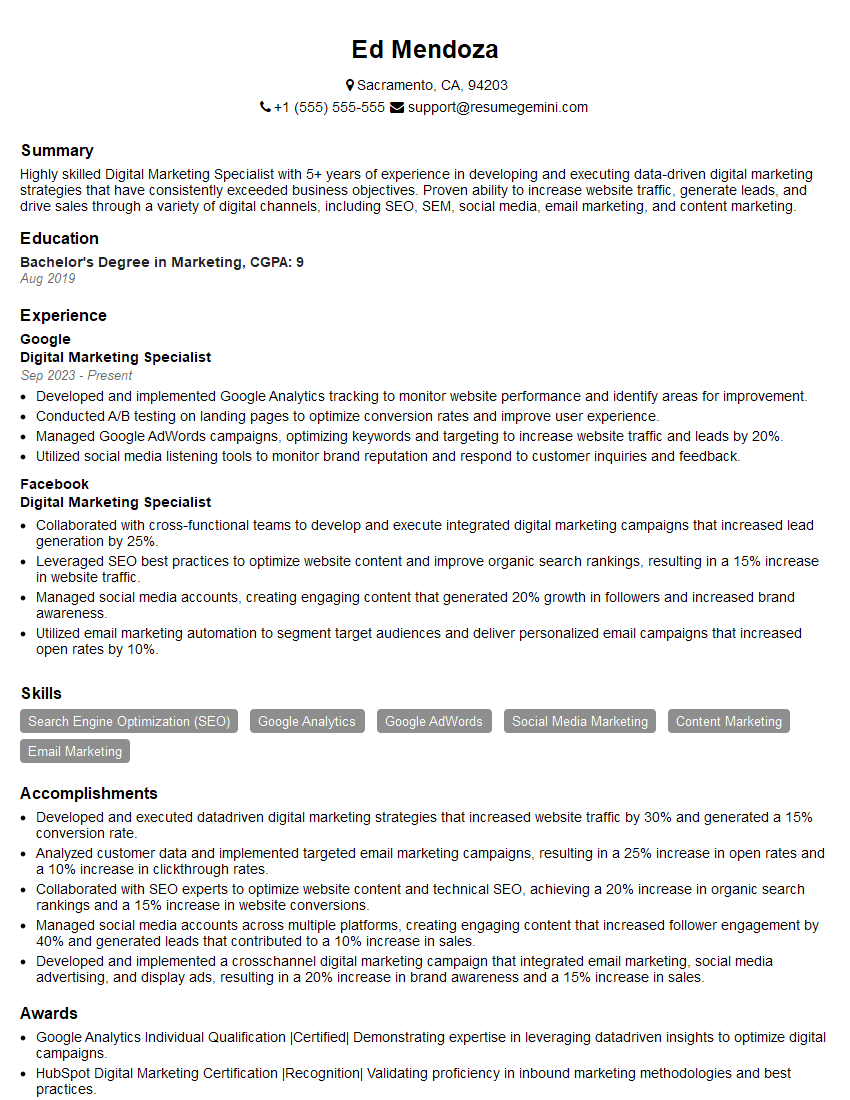
Digital Marketing Specialist Resume Sample

Content Creator Resume Sample
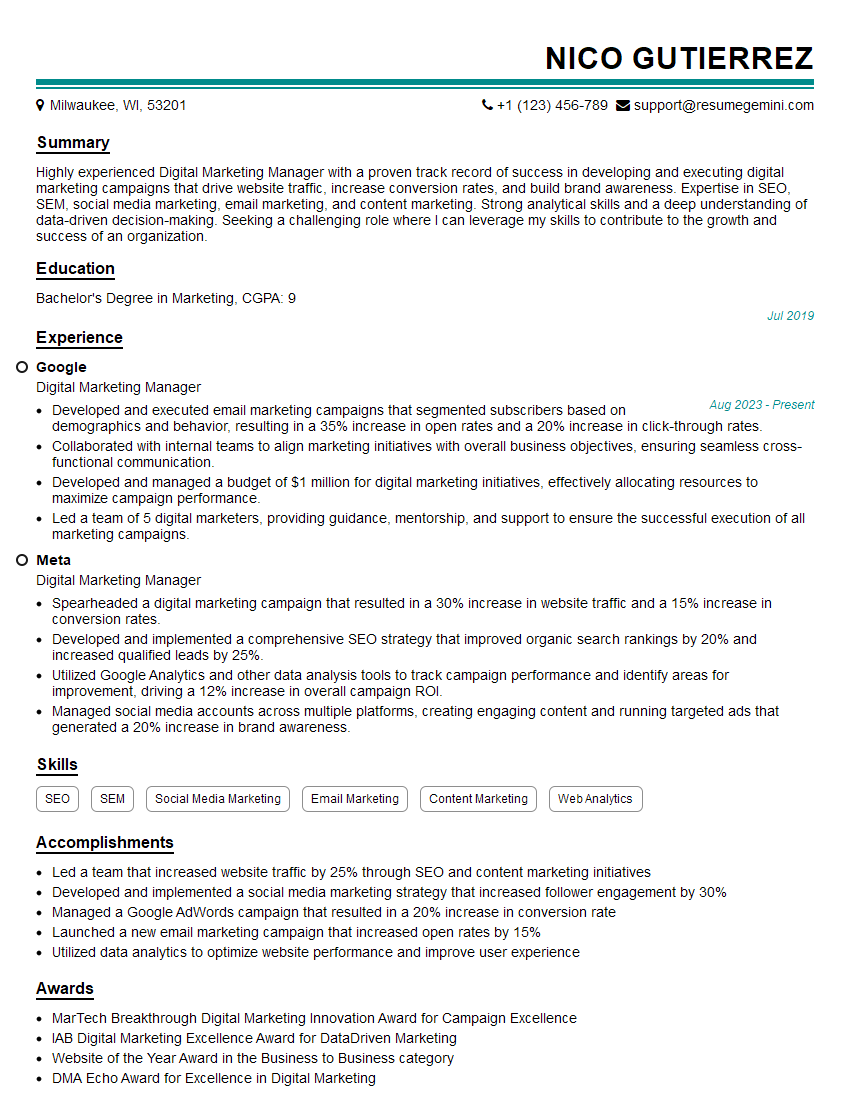
Digital Marketing Manager Resume Sample
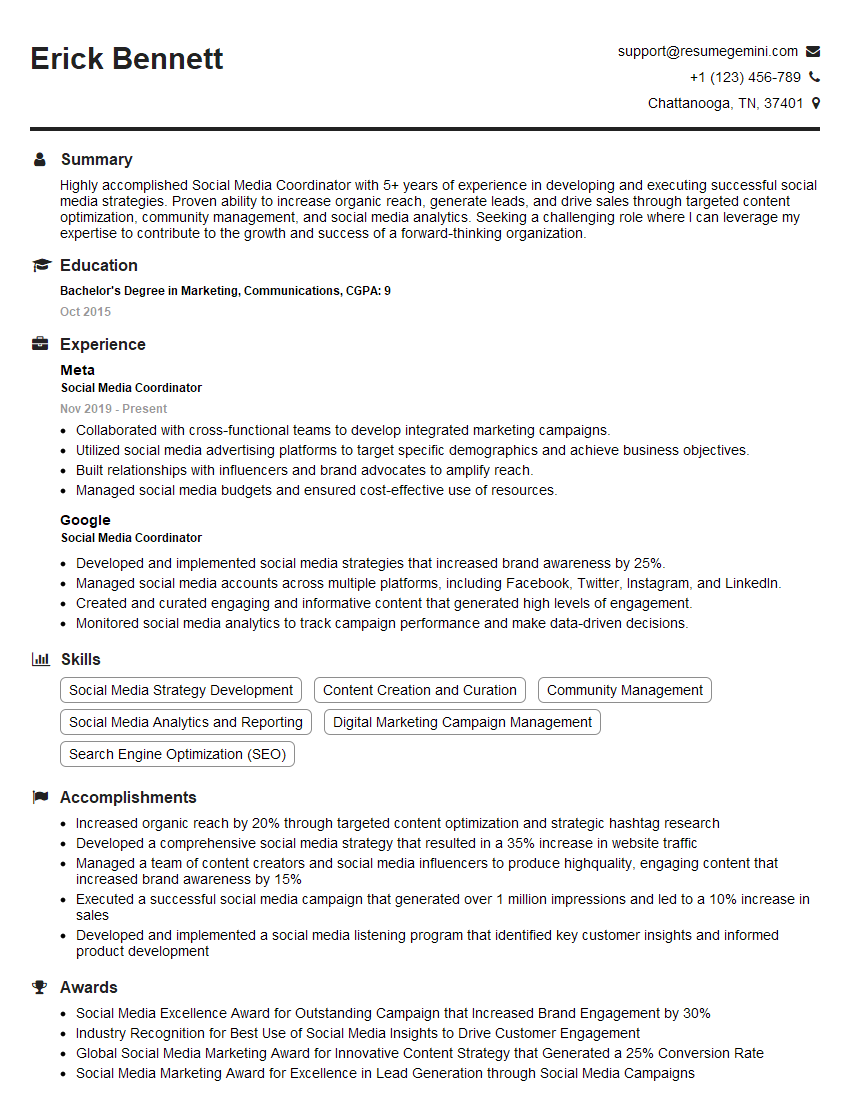
Social Media Coordinator Resume Sample
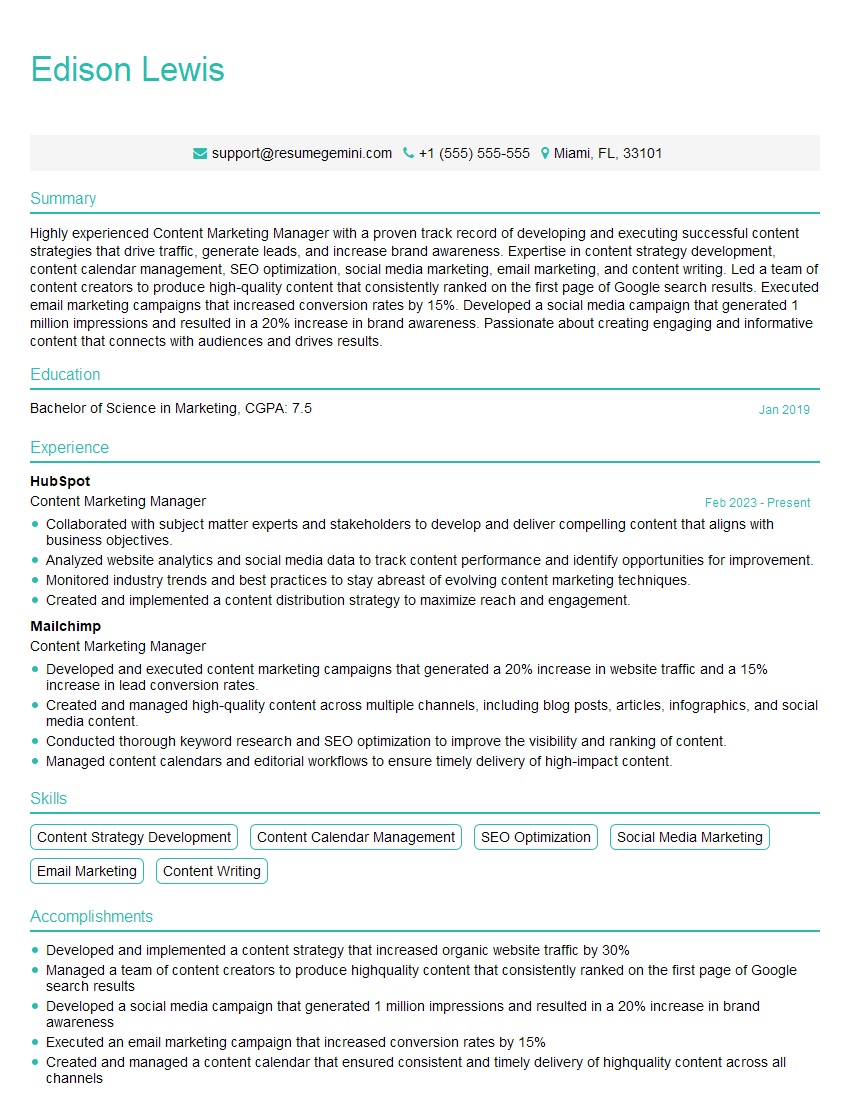
Content Marketing Manager Resume Sample

Social Media Marketing Manager Resume Sample

Influencer Marketing Manager Resume Sample
- Brand Manager
- Marketing Manager
- Marketing Communications Manager
- Community Manager
- Marketing Consultant
- Social Media Manager
- Social Media Specialist
- Online Marketing Manager
- Social Media Director
- Social Media Strategist
- Public Relations Manager
- Digital Marketing Specialist
- Content Creator
- Digital Marketing Manager
- Social Media Coordinator
- Content Marketing Manager
- Social Media Marketing Manager
- Influencer Marketing Manager
Explore more articles
Users Rating of Our Blogs
Share Your Experience
We value your feedback! Please rate our content and share your thoughts (optional).
What Readers Say About Our Blog
Amazing blog
Interesting Article, I liked the depth of knowledge you’ve shared.
Helpful, thanks for sharing.